

Mechanical

Fuel-switching challenges expected to ease
Climate, cost and capacity pose fuel-switching challenges for building owners looking to curb greenhouse gas emissions in line with Canada’s target for a 40 per cent reduction below 2005 levels by 2030.

Flammable refrigerants spark GHG reductions
Researchers and manufacturers have now done much of the work to prepare for the HFC phase-down, but codes and standards will need to catch up before a new generation of lower-GWP refrigerants can be used.

Know your way around indoor air quality improvement
Controlling indoor air quality is vital to reducing infection risk and improving health and safety in any facility.

Home owners and builders lack awareness of IAQ health risks
After exposure to scientific findings, the number of homeowners who viewed their homes as somewhat or very unhealthy more than tripled.

IAQ combos arresting airborne spread of COVID
Commercial building operators could use a combination of air exchange, filtration and purification to comply with the industry-leading guidance for arresting airborne spread of pathogens and contaminants.

Maintaining schools for second pandemic winter
Every team should create a checklist, and then continually review their internal systems—floor by floor—to reveal any possible failure points.
Guidelines inform resilient healthcare facilities
Newly released guidelines offer a standard for approaching the planning and designing of healthcare facilities from a resiliency perspective.

Digitizing fire protection for facility inspections
With fire equipment, the biggest culprit for non-compliance issues usually involves obstructions blocking fire extinguishers and hoses from view.

A cybersafe return to the workplace
At last, our buildings are ready to catch up with the conveniences and expectations that future users have come to expect in the 21st century—and COVID has been the much-needed accelerant for this transformation in the building industry.

Campus high-rise brings health to new heights
Dingy is a word that conjures thoughts of old institutional spaces. Academic buildings with dimly-lit hallways and windowless classrooms punctured with fluorescent glare. Rarely are
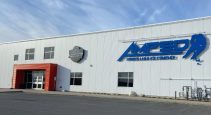
Ottawa hockey facility a zero carbon first
How AMPED Sports Lab and Ice Complex in Ottawa, Ontario, became the first Zero Carbon Building Performance Standard certified arena.

Pandemic intensifies evolving role of FM
Facility managers are no longer viewed as a back-office function, but rather “a strategic instrument to attract and retain talent and create a great experience,”

New chapter for Edmonton Public Library
The Edmonton Public Library recently revamped its flagship branch: the Stanley A. Milner Library.

Rethinking the demands of facility operations
Facility owners and managers must rethink the demands of existing operations and systems to deal with rapidly fluctuating capacity.
Blazing a trail for zero carbon in Nova Scotia
The zero carbon project marks an evolution in warehouses and, more broadly, the potential for a lower-emitting industrial sector.
Virus hastens new tower at St. Michael’s Hospital
A much anticipated, and unfinished, addition to St. Michael’s Hospital in Toronto was fast-tracked to keep pace with a fast-moving pandemic.
A new home for first responders in Delta, B.C.
The facility brings together a multi-purpose satellite fire station, a live-fire training building, and a municipal emergency operations centre.