



Institutional

Legionnaires outbreak renews focus on facility risk
A recent Toronto Public Health investigation has identified a cooling tower at the Toronto Transit Commission’s Hillcrest Complex as the source of a Legionnaires' disease outbreak.

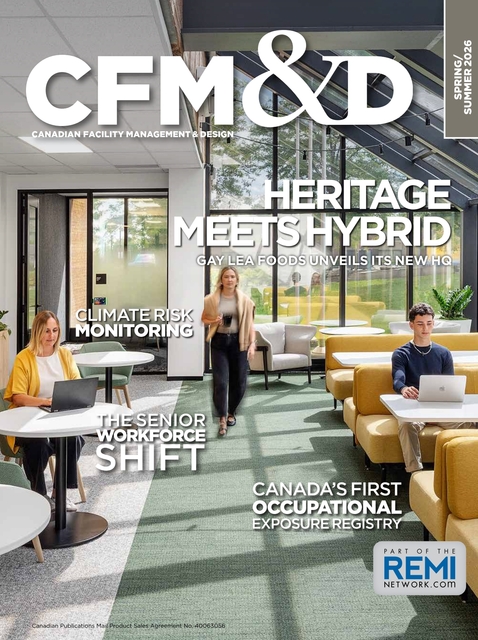
Preparing for the senior workforce shift
More Canadians over the age of 65 are continuing to work, whether full time, part time, or through multiple jobs. For employers, this is no longer a temporary trend; it is a workforce shift that is reshaping hiring, workplace policies, accommodations, benefits, and long-term planning.

Tech access to boost occupants’ IAQ oversight
Greater access to low-cost indoor air quality (IAQ) sensors may create new scrutiny for facility management teams.

How FMs influence organizational success
FMs often work behind the scenes, but their influence is also strategic, human-centred, and essential to organizational resilience.

Unified data transforming P3 facility management
Bringing together BIM, IoT sensors, CMMS platforms and digital twin environments into a unified operational view, can help facility teams move beyond reactive decision-making towards more predictive, informed and proactive management.

Barrier-free facilities prioritize lived experience
A crop of new barrier-free facilities are championing the lived experience of people with disabilities through flexible lay-outs and sensory-conscious spaces.

Occupational exposure registry a first in Canada
Ontario-based workers can now track their exposure to 11 hazardous substances through Canada’s first-ever occupational exposure registry (OER). The province’s newly launched online portal is

Women could help close skilled trades labour gap
Women are significantly underrepresented in the skilled trades sector, which directly limits the pool of qualified workers that the facilities management industry depends on.

FMs brace for rising workloads and tight budgets
The facility management industry is preparing for higher workloads, modest budget growth and a more deliberate approach to staffing and project risk over the next year.

Five AI insights for FMs in 2026
The facility management field faces a range of challenges and opportunities in 2026 as technology drives change across the industry.

Accessibility-first focus strengthens communities
Accessibility is frequently sidelined during building and public-space design, with key features added long after construction is completed. This approach reinforces the notion that such

Neurodiversity claims workplace design spotlight
As workplaces respond to evolving employee preferences, attention is turning to an overlooked source of talent: neurodivergent employees.

A new prescription for campus design at TMU
Toronto Metropolitan University's new medical school has transformed a former civic centre into a hub for healthcare education. It's tackling a doctor shortage while bringing the local community into the heart of a campus for services.

Workforce barriers persist for Indigenous Peoples
Indigenous participation in Ontario’s economy is vital for advancing both community prosperity and broader business growth. Yet many Indigenous people face persistent barriers to education and employment.

Study spotlights FM value in early project phases
Facility managers are often integrated into capital projects during the commissioning or post-occupancy phases, after critical decisions affecting long-term operations have been made.

N.S. requires workplace harassment policies by September
The policy aims to prevent and respond to physical and psychological harassment from co-workers, supervisors, and external sources such as clients, contractors and customers.

Digitizing compliance at Yonge Sheppard Centre
Besides fire code and occupational health and safety frameworks, restroom cleaning practices are now top of mind.