


Sustainable Practices
Port of entry prioritizes stress-reducing design
Moriyama Teshima Architects designed a calming campus that reflects Canada’s natural history amidst an otherwise hyper-surveillanced area.

Gay Lea’s new HQ honours agricultural heritage
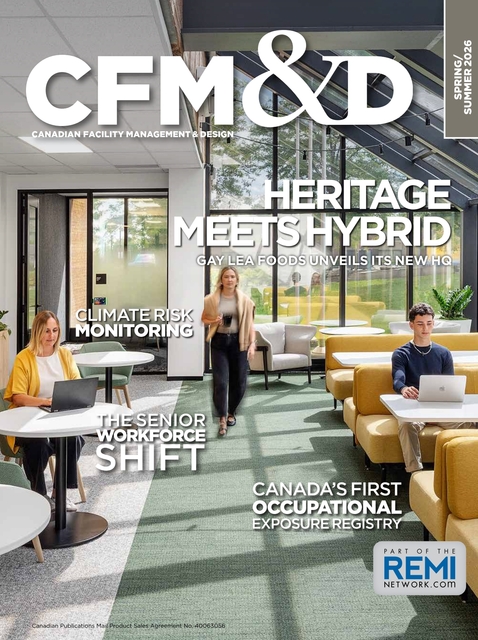
Moving to a collaborative hybrid office marks a new chapter for Gay Lea Foods—one that blends agricultural heritage with a modern vision of work.
Feds have hazy read on climate risk exposure
Key federal departments are scrambling to catch up with climate risk assessments and response plans after the Auditor General of Canada uncovered gaps in monitoring and a slow rollout of adaptive actions.
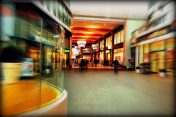
Smart tech retrofits revitalize aging retail spaces
Aging retail buildings, once the backbone of bustling commercial districts, are now environmental and financial liabilities.
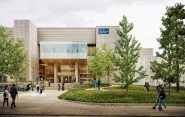
A new prescription for campus design at TMU
Toronto Metropolitan University's new medical school has transformed a former civic centre into a hub for healthcare education. It's tackling a doctor shortage while bringing the local community into the heart of a campus for services.

Safety gaps flagged in Canadian workplaces
Most respondents who reported experiencing a work-related incident or illness (or knowing someone who has) say it was stress-related, with this figure being significantly higher in Canada.
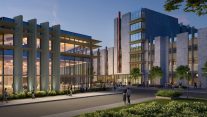
Trent U plans Canada’s largest mixed-use building
The growth of Trent University continues with a groundbreaking project. Construction has officially begun on Gidigaa Migizi College and the new Otonabee College residence.

Toronto offers heads-up on emission thresholds
Toronto could join the slate of North American jurisdictions that impose thresholds for allowable greenhouse gas emissions from buildings sometime later this year.

Lack of regulations and data hinder LCA progress
Selecting the lowest carbon-emitting products across a building’s material portfolio could reduce emissions by more than one-third, according to new global findings.

Creating longevity-ready communities
The global population of humans living to 100 and older is predicted to increase to nearly 3.7 million by 2050, but current institutions and policies are unprepared for this growing life expectancy.

Healthcare facilities launch nature-based programs
In healthcare facilities, where sterile aesthetics replace trees, plants and flowers, nature-based interventions can support the well-being of patients and staff who spend much of their time indoors.

Aquatic facility makes a splash in B.C.
The təməsew̓txʷ Aquatic and Community Centre in New Westminster, B.C., was named after the playful, curious nature of a sea otter, in turn, reflecting the kind of visitor experience the local community was hoping to create at the newly completed facility.

New water use initiatives afloat in summer 2024
New water use initiatives from the Canadian government and the Open Standards Consortium for Real Estate (OSCRE) have been unveiled for public input over the course of summer 2024.

Plastic chemicals face growing scrutiny
The United Nations Environment Assembly adopted a resolution on March 2, 2022, to end plastic pollution by 2040.
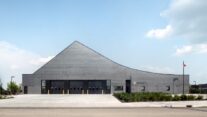
Civic spaces rise to net-zero heights in Edmonton
Fire stations have evolved into a much broader sense of community as cities seek to reduce greenhouse gas emissions and reach net-zero targets partially through design.

A first Passive House retrofit in Halifax
Once complete, it will serve as an inspiration for others pursuing deep retrofits of existing buildings, an endeavour that offers the most hope for reducing greenhouse gas emissions in Halifax.

CRE fosters all-in approach to decarbonization
Daunting net zero targets in the buildings sector are spurring an all-in approach to decarbonization that assigns roles to finance, engineering, management and operational teams.