



Institutional

Barrier-free facilities prioritize lived experience
A crop of new barrier-free facilities are championing the lived experience of people with disabilities through flexible lay-outs and sensory-conscious spaces.

Accessibility-first focus strengthens communities
Accessibility is frequently sidelined during building and public-space design, with key features added long after construction is completed. This approach reinforces the notion that such

A new prescription for campus design at TMU
Toronto Metropolitan University's new medical school has transformed a former civic centre into a hub for healthcare education. It's tackling a doctor shortage while bringing the local community into the heart of a campus for services.

Study spotlights FM value in early project phases
Facility managers are often integrated into capital projects during the commissioning or post-occupancy phases, after critical decisions affecting long-term operations have been made.

Transforming the Hazel McCallion Central Library
When the Hazel McCallion Central Library was added to the Mississauga Civic Centre in 1991, its postmodern aesthetic and dark layout remained primarily unchanged for nearly three decades.

Repurposing Canada’s religious buildings
As church congregations dwindle across Canada and the cost to maintain their faith-built spaces increases, ideas abound for how to repurpose these buildings into potential
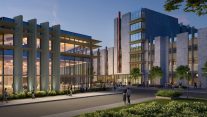
Trent U plans Canada’s largest mixed-use building
The growth of Trent University continues with a groundbreaking project. Construction has officially begun on Gidigaa Migizi College and the new Otonabee College residence.

Library reno reinvents modernist school building
For more than 70 years, Centennial College’s Story Arts Centre has occupied a restored Toronto’s Teachers’ College building, designed by Peter Dickinson who played a pivotal role in developing mid-century modern architecture in post-World War II Canada.

FMs ponder procurement amid trade war
Facility management professionals are preparing action plans in light of potential tariff impacts and sharing how the situation is creating unity within the sector.

FM industry preps for fallout of tariffs
The U.S.-imposed tariffs on Canadian goods and Ottawa’s retaliatory measures will impact facility management across North America.

Lack of regulations and data hinder LCA progress
Selecting the lowest carbon-emitting products across a building’s material portfolio could reduce emissions by more than one-third, according to new global findings.

Creating longevity-ready communities
The global population of humans living to 100 and older is predicted to increase to nearly 3.7 million by 2050, but current institutions and policies are unprepared for this growing life expectancy.

Aquatic facility makes a splash in B.C.
The təməsew̓txʷ Aquatic and Community Centre in New Westminster, B.C., was named after the playful, curious nature of a sea otter, in turn, reflecting the kind of visitor experience the local community was hoping to create at the newly completed facility.

Plastic chemicals face growing scrutiny
The United Nations Environment Assembly adopted a resolution on March 2, 2022, to end plastic pollution by 2040.

Visualizing office activity with advanced tech
Given the pressure to align with emerging industry standards, incorporating cutting-edge facility management technology is essential to ensure the seamless operation of commercial spaces.

Canada far from meeting accessibility goals
Federally-regulated organizations will need to prioritize specific actions that advance accessibility and disability inclusion by 2040.

A technological revolution for P3
A common fear we hear is that P3s are just too complex, a reputation certainly undiminished by the last three years of challenges, including a global health crisis, major supply chain disruption, labour shortages, inflation, and rising commodity prices.