

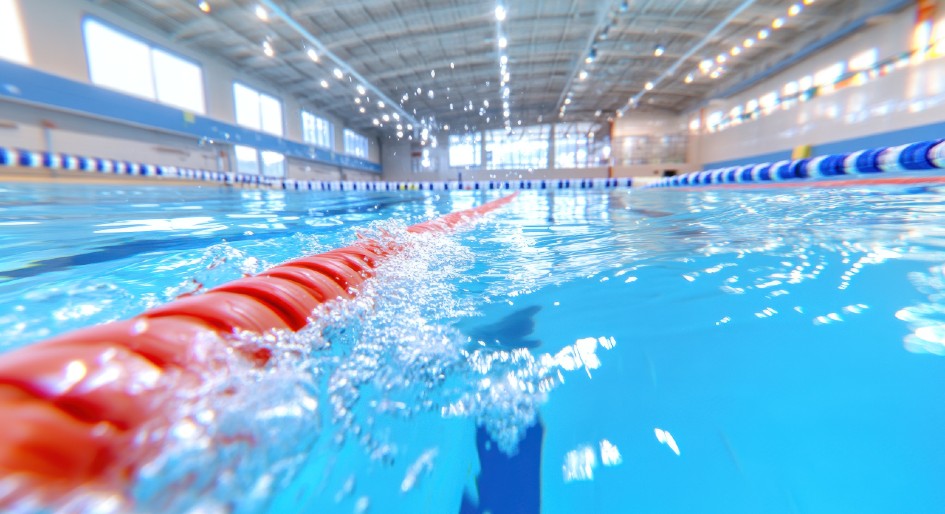
Recreational facilities across Vancouver face higher operating costs and lagging service delivery in the absence of a capital asset management framework (CAMF). A new report from the city’s Auditor General Mike Macdonell found that 24 community centres, 14 pools and eight indoor rinks were not aligning with strategic goals, meeting service level priorities, or optimizing their lifecycles.
Many inefficiency-related issues stem from broader systemic challenges. In total, the 46 facilities have an estimated infrastructure funding deficit of $33 million annually, which is part of the city’s overall infrastructure deficit of $500 million per year. As it stands, the city has no set plan to close this funding gap. Meanwhile, several facilities are nearing the end of their useful lives and becoming more expensive to operate.
“The City has limited resources and will have to continue to prioritize where they will be spent and where trade-offs will be made,” Macdonell wrote. “The implication of this reality is that if maintenance and renewal gaps are not bridged through taxpayer funding or other means, the City will have to make the difficult decision as to which assets are a priority – ones it will keep and replace – and which assets it will decommission and not replace and, by extension, which services will be discontinued.”
The performance audit covered a period between January 2019 and June 2024 and included site visits and documentation from the city and Vancouver Board of Parks and Recreation (Park Board), which are both responsible for maintaining these recreational centres.
Since few audit criteria were satisfied, the report concluded with 13 recommendations aimed at improving asset management practices and guiding decision-making to prioritize facility investments. The findings focus on three key areas: strategy, governance and the financial state of facilities; the asset management lifecycle; and performance measuring and monitoring.
Focusing on strategy, governance and financial status
Although the city and Park Board have established several goals for recreational facilities, there has been a lack of alignment between parties. For instance, the Mount Pleasant Pool was identified as a priority for renewal in the 2023-26 capital plan, but it was not approved by Council due to funding challenges.
The auditor recommends implementing an asset management framework to prioritize needs and establish a long-term vision to support services and allocate investments to achieve them. As well, the Park Board and real estate, environment and facilities management (REFM) arm of the city are advised to develop a plan that aligns with this framework. Doing so will help identify and allocate funding to levels of service. On a border scale, the plan can be used as input for city-wide facility priorities.
In 2022, when the city identified its major infrastructure funding gap and a revenue generating strategy to partially address it, specific analysis for recreational facilities was not completed. The audit also found that lifecycle costs relative to desired service levels were not fully calculated. To remedy this, the audit suggests consolidating lifecycle costs estimates for recreation facilities to support long-term planning, updating the funding gap to reflect these costs and analyzing this gap relative to community levels of service.
Asset lifecycle management
The audit also examined operating and capital maintenance and the major capital projects program. Findings reveal that REFM used two systems for asset management that were sufficient for storing information and data but not well integrated for analysis or reporting purposes. This created a challenge for generating in-depth insights. Moving forward an integrated information technology solution can support effective capital asset management and reporting.
Meanwhile, a preventative maintenance program was in place for Park Board facilities, however, it lacked formal adjustments for aging assets and predictive maintenance capabilities, which limited their performance and lifespan. Work is now underway on a process that assesses the effectiveness of preventative maintenance schedules and leverages data analytics to inform predictive maintenance.
There were delays in closing work orders and issues with data accuracy despite the use of a demand maintenance program. Deferrals can increase the risk of breakdowns and compromise service levels leading to long-term repair costs and safety concerns, so the need to improve data reliability is key.
A reactive approach has been used to maintain recreational facilities that were not prioritized for capital maintenance investment. Last year, brine pipe leak beneath the ice surface at two different rinks caused soft spots. A temporary repair offered short-term mitigation at both locations. Such issues highlight how deferred maintenance and outdated systems increase operational disruptions.
Looking at REFM’s capital maintenance program, funding levels were insufficient to address forecast costs related to critical needs. A balanced maintenance strategy can shift the focus towards planned and predictive maintenance. A risk and criticality matrix could determine which broken-down components can be fixed without causing disruption.
On a positive note, the city has adopted some foundational elements of good asset management practices; however, there also needs to be a standardized framework for prioritizing recreational renewal, replacement and disposal projects to support more transparent decision-making.
Robust measurement and monitoring
Key performance indicators (KPIs) that integrate measures of use, maintenance and cost efficiency can be implemented into current metrics. The audit advises more robust performance reporting; however, the city recognizes this is contingent on adequate resourcing. REFM’s ability to meet performance targets will be constrained without sufficient investment.
Overall, while the report places emphasis on internal shortcomings, it highlights broader systemic challenges that have contributed to chronic underfunding across operating budgets and capital renewal plans.
“The lack of sustained investment has contributed to a growing backlog of renewal needs, reduced asset reliability, and increased risk exposure,” the report affirms. “These outcomes are not solely the result of internal management decisions but reflect broader structural and fiscal realities across all departments.”
These include high public expectations, which continue to rise with more demand for accessible, high-quality facilities, while reactive maintenance displaces strategic priorities due to unavailable funds.
The report concluded with a note that steps have already been taken towards many of these improvements, with targets set for the 2027-2030 capital plan. In response, Armin Amrolia, deputy city manager and acting general manager of real estate and facilities management, and Steve Jackson, general manager of the Park Board, said executing these goals will require resources and organizational capacity to prioritize them over competing priorities.
“Many of the comments and recommendations contained within the report will inform senior management in updating asset management frameworks, facility plans, processes and reporting on assets and service levels, and identifying funding gaps,” they said. “Development of multi-year action plans will aim to balance fiscal resources with prioritized, step-by-step improvements over time to assets and services. We look forward to working with the Auditor General to implement the City’s response and next steps as outlined.”
To read more about next steps, the audit of recreation facility asset management can be accessed here.