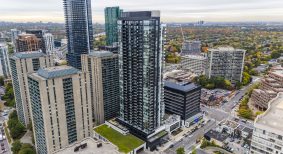






As Canada’s apartment sector faces higher operating costs alongside stricter carbon reduction requirements, building owners are being pushed to rethink how their properties consume and waste energy. According to leading energy-efficiency experts, the most successful owners in 2026 aren’t just swapping out lightbulbs or tuning boilers—they’re embracing a new generation of upgrades that deliver deeper savings, support electrification, and create smarter, more resilient assets.
Among the most significant opportunities are deep energy retrofits. While not a new concept, these upgrades have become strategic necessities in Canada’s major markets. Designed to achieve energy reductions of 50 per cent or more, whole building retrofits are now considered one of the most effective ways to future-proof a property. Projects typically involve high-performance insulation, advanced air sealing, triple pane windows, modernized HVAC systems, and balanced ventilation improvements.
“Deep energy retrofit projects can dramatically reduce heating loads, which is especially important in Canada’s climate,” said Scott Rouse, Managing Partner at Energy@Work. “When done well, they can improve tenant comfort, support long-term asset value, and align with municipal and federal net zero objectives. For owners planning to hold their buildings over the long term, they represent one of the strongest pathways to meaningful performance improvement.”
Existing Building Commissioning
According to Rouse, another approach gaining popularity for its simplicity and faster payback is Existing Building Commissioning (EBCx), a systematic, data driven process used to evaluate and optimize the performance of systems in an existing building. Essentially, EBCx involves investigating how equipment and controls actually operate, identifying inefficiencies or functional issues, and implementing operational improvements that enhance energy performance, occupant comfort, and overall system reliability. The process emphasizes understanding real world building behaviour, fine tuning system interactions, and ensuring that the building operates as intended throughout its lifecycle.
“From our experience, these opportunities have relatively short paybacks, especially when supported by available incentive programs,” he said. “It is also helpful to evaluate saving opportunities by grouping electricity, natural gas, water, and capital measures separately so each can be assessed based on avoided cost, implementation cost, and available utility or program incentives.”
Electrification
Meanwhile, building electrification—the process of transitioning a building’s energy systems from fossil fuel based equipment, such as natural gas boilers, furnaces, and water heaters, to high-efficiency electric technologies—is accelerating steadily across Canada, driven by both policy and economics. According to Brandon Young, BC Hydro’s Director of Energy Management and Innovation, heat pumps in particular are becoming the upgrade of choice for apartment owners looking to cut emissions without sacrificing performance. The Multi-Unit Residential Building Retrofit Program—offered jointly by BC Hydro and the Government of B.C.—has been supporting eligible retrofit projects across the province since September 2024. A key feature of the program is the “Opportunity Assessment,” which provides a high-level roadmap for transitioning buildings from electric baseboards or fossil fuels to high efficiency electric systems.
“We’re seeing tremendous momentum from building owners who want to improve comfort, reduce emissions, and prepare their buildings for the future,” he said. “More than 600 submissions have come into the program since 2024, and the strong uptake of Opportunity Assessments shows that owners are actively exploring how to transition to high efficiency electric systems. It’s clear that the shift toward electrification is well underway in B.C.’s multi-unit housing sector.”
BC Hydro is also seeing strong demand for heat pump upgrades specifically. Through the Condo and Apartment Rebate Program, launched in July 2025, there have already been 226 heat pump rebate applications—an indication that owners are increasingly prioritizing efficient heating and cooling solutions.
While heat pump retrofits involve higher upfront costs, incentives are helping make these projects viable. Installed costs typically range from about $6,500 for a single head mini split to around $18,000 for multi-head systems, depending on building conditions. Electrifying heating, domestic hot water, and ventilation can nearly eliminate operational carbon emissions thanks to BC Hydro’s clean electricity (98% of the power generated comes from clean and renewable resources), while also improving comfort, indoor air quality, and resilience during extreme heat and wildfire smoke.
“We know that upfront costs and technical complexity can be barriers, that’s why we’re continuing to expand our support, including a new energy advisor service that will give building owners access to expert guidance as they move from assessment to implementation,” he said.
Other trends reshaping multifamily buildings
In addition to investing in deep energy retrofits, EBCx, and electrification, many Canadian apartment owners are turning to the following tools and strategies to further amplify their efficiency gains.
Smart Controls & Automation
These low capex, software driven upgrades are quick to deploy and often deliver payback within a year. For owners managing multiple properties, their scalability is a major advantage—helping tackle the hidden waste that still drains energy in many buildings. Popular upgrades include:
• Smart plugs and sockets to eliminate phantom loads
• Automated shutdown schedules for common areas
• Real time energy monitoring platforms
• Portfolio wide control standardization
Data Driven Energy Governance
Regulators, investors, and today’s climate conscious tenants increasingly demand verified proof of energy and carbon reductions. As a result, many Canadian apartment owners are investing heavily in measurement, verification, and reporting tools. Beyond compliance, owners who can demonstrate real reductions are better positioned for financing, incentives, and long-term asset resilience. Must-have tools in this area include:
• Verified energy data tied to financial reporting
• Portfolio-level dashboards for energy and carbon performance
• Standardized M&V frameworks across all properties
Demand Management for Electrified Buildings
As buildings electrify with heat pumps, EV chargers, and smart controls, managing electrical demand becomes increasingly complex. Avoiding peak time spikes is essential—helping owners sidestep costly demand charges while reducing pressure on aging electrical infrastructure. Common strategies include:
• Load shifting software
• Smart EV charging
• Thermal storage integration
• Device-level demand control
Building a clear strategy
The energy-efficiency landscape is evolving fast, and shifting global economics only add to the complexity. To stay competitive, apartment owners need a clear strategy. Here are four guiding principles to help chart the path forward:
1. Think holistically, not piecemeal – Integrate upgrades into a long-term plan rather than tackling them as isolated fixes.
2. Embrace electrification early – Position your buildings for future standards and incentives by starting the transition now.
3. Use data to guide decisions – Let real-time insights drive smarter investments and operational improvements.
4. Prioritize upgrades with both immediate and long-term ROI – Focus on improvements that deliver quick wins while strengthening long-term asset value.