



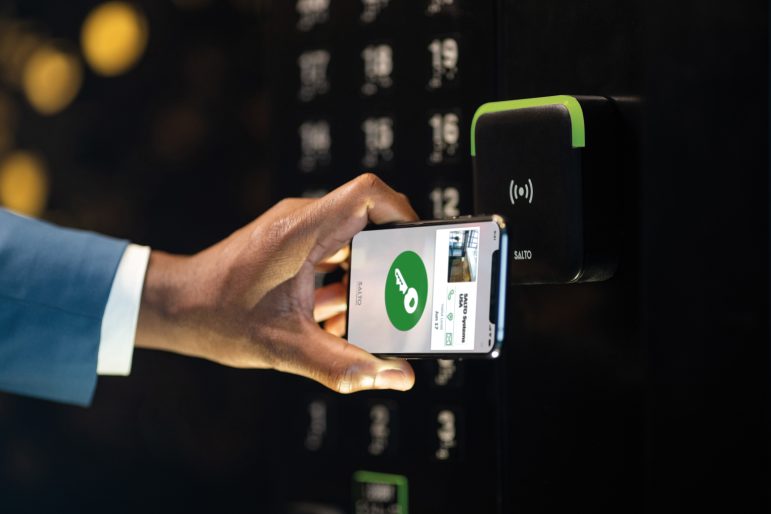
For multifamily property managers, the balance between security and convenience has long been a delicate one. Traditionally, physical credentials have been the cornerstone of access systems. However, the advent of modern, secure physical and mobile credentials is reshaping the industry – demonstrating that enhanced security and resident convenience can coexist.
According to Preston Grutzmacher, the Residential Business Leader for Salto in North America, “The technology is changing fast. What was considered secure just a few years back can now be hacked with a little tech savviness and cheap app. The goal is to let people in – but do it in a safer, more convenient, smarter way.”
The pitfalls of traditional physical credentials
For years, 125 kHz prox credentials have been the standard for physical access control. They are inexpensive, compatible with nearly every access control system, and come in a variety of form factors. Unfortunately, their widespread use has exposed a significant vulnerability: their ease of cloning. With minimal technical know-how and readily available tools, these legacy credentials can be duplicated, compromising the security of the entire access control system – along with the people and property it was designed to protect.
Similarly, MIFARE Classic credentials, once considered highly secure, have also become susceptible to unauthorized duplication as more advanced cloning devices have become available. These devices have proliferated as they’ve become cheaper and more widely available online. This vulnerability underscores the need for the industry to shift towards more secure technologies.
Advancements in secure physical credentials
Enter 13.56 MHz MIFARE DESFire EV3 credentials. These secure credentials are at the forefront of modern access control solutions. With a robust security protocol, they provide a level of security that is far superior to the preceding technologies. They are competitively priced, compatible with most modern access control systems and wall readers, and they also work with many smart locks for residential unit access.
The rise of mobile credentials
While 13.56 MHz smart cards are a major improvement, they may still face future challenges as technology and cyber-criminal tactics evolve. Mobile credentials, by contrast, represent the pinnacle of convenience and cybersecurity in access control – in part because they can be updated via software to stay ahead of the cybersecurity curve. The inherent security features of modern smartphones, such as biometric authentication and secure elements, provide an additional layer of protection against unauthorized access.
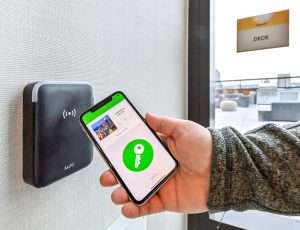
By leveraging the ubiquitous nature of smartphones, mobile credentials deliver a frictionless experience for users, allowing them to gain access with a device they already carry while enhancing building security for all residents.
Despite the benefits of mobile credentials, property managers must recognize that some residents or staff may always prefer a physical credential – something that doesn’t need a battery or software to work. In these instances, it is crucial to avoid legacy physical credentials and opt for secure credentials like MIFARE DESFire EV3.
By adopting a hybrid approach that offers both secure physical credentials and mobile options, properties can cater to diverse resident preferences while maintaining a high security standard and a positive user experience. Some access control platforms like Salto’s Homelok, an all-in-one smart access solution for multifamily buildings, have embraced the hybrid credential model and have hardware and software designed to accommodate legacy credentials, secure MIFARE DESFire EV3 credentials, and the latest in BLE mobile access and NFC-based credentials in mobile wallet apps.
A new era in security and a foundation for the future
This evolution of access control systems is a testament to the industry’s drive for innovation. Secure 13.56 MHz credentials and mobile credentials are not just a step forward; they are a significant leap towards a future where security is seamless, and the resident experience is front and centre.