



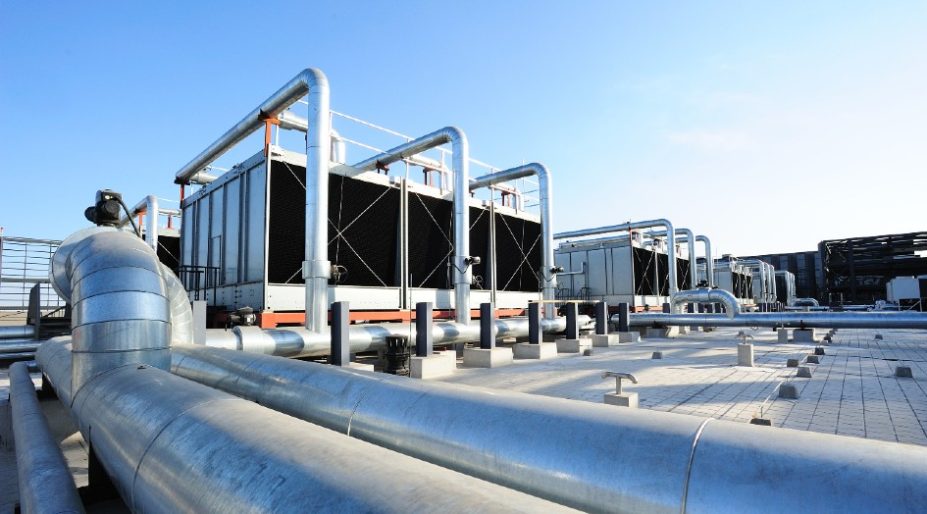
A recent Toronto Public Health investigation identified a cooling tower at the Toronto Transit Commission’s Hillcrest Complex as the source of a Legionnaires’ disease outbreak this past summer. The incident, which occurred within a one-kilometre radius of the Bathurst and Dupont intersection and resulted in six confirmed cases, has prompted facility management professionals to raise awareness about preparedness gaps.
“We have seen outbreaks over the years, and they can be costly to mitigate and create bad PR and liability for facility managers and owners,” says Tom Peter, senior vice-president of regulatory business practice at First Onsite Property Restoration.
Cooling towers are a typical source for Legionella growth. The bacteria thrive under ideal conditions that include a water temperature between 20 and 50 degrees Celsius, a lack of disinfection, and the presence of organic debris and biofilms.
“The cooling towers are large and typically elevated on rooftops, and if there is an aerosolized mist and a slight breeze, the droplets with Legionella bacteria can be dispersed and people can be exposed a few blocks away,” warns Peter.
The issue is especially pertinent near hospitals or nursing homes. Some people who have been exposed to Legionella may never exhibit symptoms; whereas compromised individuals, such as the elderly and individuals with respiratory health issues, face a higher risk of illness.
Cooling towers aren’t the only culprit. Legionella bacteria are present in many water sources. with the right temperature and biofilm. Peter says many incidents have been traced to decorative fountains. If left uncleaned and untreated they can aerosolize water and Legionella bacteria. Shower heads that have accumulated biofilms are another source of exposure.
“As an industrial hygienist, I think of these things wherever I go: fountains, mists, water parks, produce markets with mists, and especially ponds with fountains,” Peter muses. “We know that ponds can have Legionella, and a fountain in a pond can aerosolize all kinds of potential pathogens. We know ponds do not get treated, so when I see a pond with a fountain, I typically will stay upwind from the mist.”
Contamination control
Facility managers can help minimize Legionella risks by regularly cleaning and treating cooling towers. Periodic testing and inspections can also help determine the appropriate cleaning frequency.
Overall, cooling towers require a thorough cleaning if biofilms accumulate or a test detects elevated Legionella levels. The process entails removing scale, debris and biofilms, and potential mechanical scrubbing or power washing, before applying an antimicrobial solution.
“There are many antimicrobial chemicals on the market for treating systems for Legionella bacteria,” Peter explains. “There are chemicals for descaling, and there is a broad spectrum of bactericides, fungicides, and algicides. The decision on what chemicals to use is determined by the system, compatibility with components, the environment, and what is the safest and most effective.”
Reducing health and liability risks
Preventive maintenance and documentation can further reduce health and liability risks. Various programs in Canada and the United States prescribe specific methods and procedures. Peter recommends following guidance from Public Services and Procurement Canada (PSPC), National Research Council of Canada, and the National Joint Council.
The Centers for Disease Control and Prevention and the National Institute for Occupational Safety and Health, two agencies based in the U.S., offer other resources. In New York City, legislation requires that cooling towers are tested for Legionella every 90 days.
“In 2015, NYC had an outbreak, and since that outbreak they have implemented regulations for cooling towers, mandating registration of cooling towers, inspection and maintenance of cooling towers, among other requirements,” says Peter. ““Facility managers can decide to take the advice of the agencies and go beyond what is required, or do the minimum that is required and take a risk.”
PSPC has a rigorous five-step program to control the growth of Legionella in federal building water systems. Here is a summary:
- Design buildings and install new systems to minimize risk;
- Implement a control management program: this is a specific plan for each building to identify areas of risk and control measures;
- Maintenance and prevention: control water temperatures, improve water flow, and treat the water;
- Testing: PSPC may perform monthly testing; and
- Clean, disinfect, and retest: if Legionella levels exceed 1,000 colony-forming units per millilitre (CFU/mL), there should be mandatory cleaning and disinfection.
Creating a disaster response plan
Before an incident occurs, Peter recommends training staff to be aware of potential sources of Legionella. As well, facility managers should implement an inspection and management plan, document inspection and maintenance, and create a plan of action in case of an outbreak. A Legionella outbreak plan should involve internal staff, outside contractors, testing companies, and any related agencies.
“I know facility managers have a lot on their to-do lists, and things change from day to day and sometimes hour to hour, but they need to think about prioritizing the high-risk or potential-risk items,” he urges. “Legionella is one of those high-risk items.”