



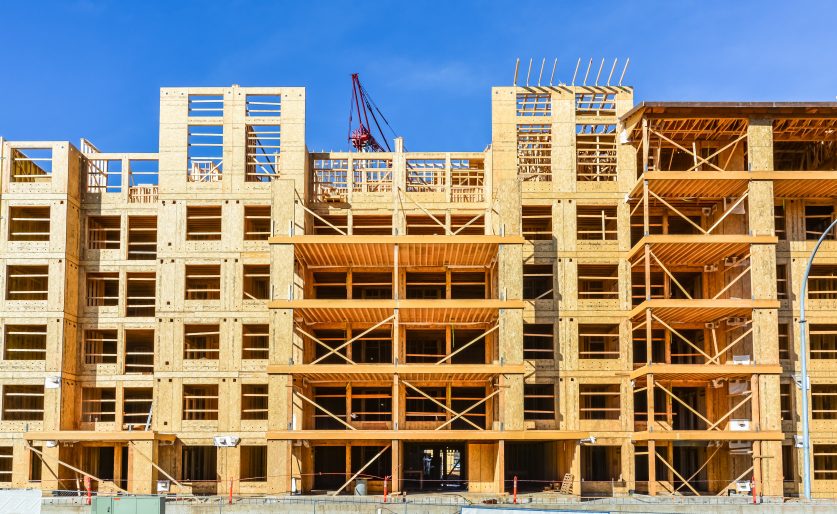
The brewing tension between Canada and the United States has escalated into a full‑blown trade war, disrupting cross‑border supply chains, driving up the cost of construction materials, and threatening to throw the timelines of major housing projects into disarray. After negotiations between the two countries collapsed on August 22, Prime Minister Carney warned that Canada “will not allow its economy—or its workers—to be destabilized by sudden, unilateral trade actions,” emphasizing that the government is prepared to defend Canadian industries while working to restore predictability at the border.
Developers already grappling with labour shortages, high interest rates, and soaring land costs, now face a destabilizing force that could impact every aspect of the construction process. According to Richard Lyall, President of RESCON, the U.S.-imposed 50 per cent Section 338 tariff on $20–28 billion (USD) of Canadian goods—layered on top of Canada’s 25 per cent counter‑tariff on U.S. steel and aluminum in effect since March 2025—will have significant consequences.
“Earlier estimates already put the tariff‑driven cost‑load on new Ontario homes at $15,000 to $25,000 per unit,” he said. “With Canada expected to retaliate on September 8, adding costs on appliances, electronics, pulp and paper, among other products, that number will be pushed even higher, especially for high‑rise projects, where structural steel, mechanical systems, and elevator packages compound every increase.”
Before the current U.S. administration withdrew from key CUSMA obligations and suspended major provisions, the Canada–U.S. construction supply chain operated as a seamless, high‑volume machine. Lumber, steel, aluminum, prefabricated components, and energy inputs moved across the border daily—often multiple times—with virtually no friction. That reliability has evaporated. What was once a predictable two‑day delivery window now routinely stretches to five or six, according to cross‑border freight carriers and customs brokers who cite routine secondary inspections, slowed paperwork, and clearance delays as the new norm.
“Canadian softwood lumber already faces combined U.S. duties and Section 232 tariffs exceeding 45 per cent,” said Kim Haakstad, interim President of the BC Lumber Trade Council. “Section 338 now extends this high-tariff environment to a much broader range of Canadian forest products and building materials, including plywood, engineered wood products, pulp, paper and other value-added products.”
Haakstad added that the tariffs don’t just raise costs on both sides of the border—they actively destabilize an integrated North American supply chain. Canadian lumber and forest products underpin jobs and communities across Canada while supplying U.S. builders and consumers with the essential materials they depend on to build and renovate homes.
The steel market is showing similar strain. Canada’s construction sector still remembers the shock of 2018, when U.S. tariffs sent domestic steel prices soaring more than 20 per cent. Early data from Statistics Canada shows steel prices are climbing again, with contractors reporting quotes that expire within days instead of weeks.
“The construction industry continues to build through uncertainty, but contractors are facing increasing pressures in getting the job done,” said Rodrigue Gilbert, President of the Canadian Construction Association (CCA). “Slowing economic growth along with a volatile trade environment are creating added costs and administrative burdens across the industry.”
Meanwhile, the U.S. housing market is feeling the shock as well. American builders, who depend heavily on Canadian lumber and engineered wood, report that the new tariffs are driving up costs for both single‑family homes and multifamily projects. Robert Dietz, Chief Economist at the National Association of Home Builders, has long warned that rising material and regulatory costs constrain supply and erode affordability. The trade war has now amplified those pressures—and with Ottawa’s retaliatory tariffs on U.S. building materials set to strike, prices on American steel, machinery, and manufactured goods will go up, making imported materials even more expensive. Add in labour market challenges, rising wage pressures, and heightened border‑related delays, and the damage is expected to linger, leading to fewer homes being built, possibly for years to come.
Broader economic consequences
The long‑term implications of the trade war reach far beyond construction sites and border checkpoints, according to a new report prepared for the Canadian American Business Council (CABC) by Oxford Economics. Released in late August, the analysis underscores the depth of Canada–U.S. economic integration and how mutually beneficial that relationship has been for decades. It finds that cross‑border integration has consistently delivered economic gains for businesses, workers, and consumers in both countries, with manufacturing industries emerging as the most exposed to any disruption in that system. Ultimately, the report is blunt in its conclusion: tariffs do not expand the American manufacturing sector, nor do they meaningfully reduce the U.S. trade deficit.
“The U.S.–Canada relationship is one of the most integrated economic partnerships in the world, supporting millions of jobs, driving innovation, and strengthening our collective competitiveness,” said Beth Burke, CEO of the CABC. “The choices made today will determine North America’s economic competitiveness for decades to come. Businesses on both sides of the border are looking for predictability.”
That warning resonates across the housing and construction sectors, and beyond. The conflict may be unfolding at the border, but its consequences are landing in Canadian living rooms, rental listings, and construction trailers. Tariffs raise costs, border delays slow projects, and the result is the same on both sides of the border: higher housing prices, fewer homes, and worsening affordability.