





Vacancy rates for purpose-built rentals climbed across major Canadian cities throughout 2025, with the national rate reaching 3.1 per cent. This marks an increase from 2.2 per cent in 2024 and sits above the national 10-year average, according to Canada Mortgage and Housing Corporation’s (CMHC) 2025 Rental Market Report.
The rise was largely driven by historically high rental unit completions and slower population and economic growth. Rental condominium apartment vacancies also increased but remained well below purpose-built levels.
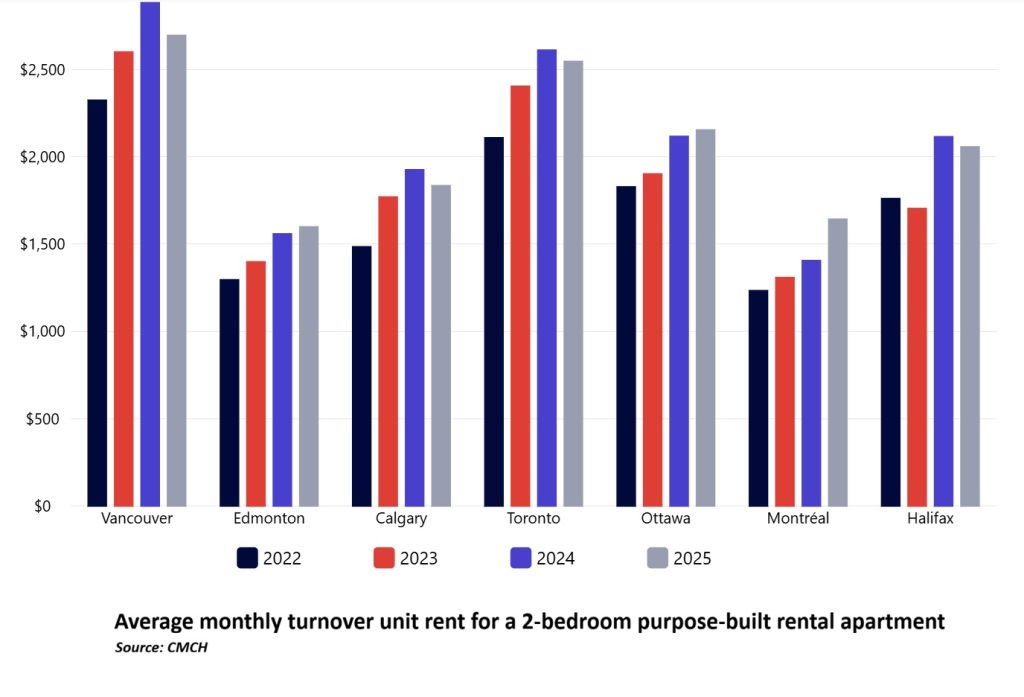 Despite landlords competing more aggressively to attract tenants—sometimes lowering asking rents or offering incentives—affordability remains a pressing issue. The average rent paid for two-bedroom units rose 5.1 per cent, fueled in part by higher repricing at turnover when units are newly leased.
“The tight conditions that defined rental markets in the past few years in Canada’s largest cities loosened in 2025,” said Tania Bourassa-Ochoa, CMHC’s Deputy Chief Economist. “Historically high rental supply completions combined with weaker demand caused by slower population and economic growth led to a rise in vacancy rates in many large cities,” “Purpose-built rental operators responded to these market conditions by offering incentives to new tenants, such as a month of free rent, moving allowances and signing bonuses. However, affordability is still a challenge in most markets, as the supply of units affordable to lower income households remains low.”
Regional highlights
- Toronto: Purpose-built apartment vacancy rates hit 3% for the first time since the pandemic, driven by declining immigration, reduced demand from international students, and economic uncertainty. Rental condo vacancies stayed low at 1%. Turnover rents declined, boosting renter mobility and pushing turnover rates to 8.7%, up from record lows.
- Vancouver: Vacancy rates in purpose-built rentals reached 3.7%, the highest since 1988. Rent growth slowed to a two-decade low as record supply entered the market and population growth eased. Affordability challenges persist, particularly for lower-income households.
- Montreal: Both purpose-built and condo rental vacancies rose due to fewer non-permanent residents, including temporary workers and international students. Average rents grew 7.2%, outpacing income growth and worsening affordability, largely due to higher lease renewal increases.
- Calgary: Vacancy rates held steady at 5% as strong demand matched rapid supply growth. Purpose-built rental supply expanded by 11%, the fastest pace in decades, though concentrated in higher-end units.
- Edmonton: Purpose-built vacancies rose to 3.8% amid strong completions and slower household formation. Over 2,000 rental condos were added, raising their share of the rental market to 37%. Condo vacancies remained low at 1.7%, reflecting strong demand for modern units.
- Ottawa: Vacancy rates edged up to 3%. Newly built units had the highest vacancy rates at 6.7%, more than double the city average. Lower-rent units remained tight, with vacancies under 1%, keeping turnover historically low.
- Halifax: Vacancy rates increased slightly as migration slowed and supply grew from record completions. Rents still rose 6.7%, straining affordability. A 29% rent gap between turnover and non-turnover units kept turnover rates low.
Click here for more: Inside Canada’s 2025 rental market: Key trends and insights | CMHC