Articles Archive - Page 346 of 928 - REMINET
REMI

B.C. begins bringing hospital staffing back in-house

British Columbia is returning to in-house hospital staffing in what the Ministry of Health says is an attempt to improve wages, provide a better work environment, and make frontline work more desirable for potential employees.

In particular, the government intends to ensure that workers in acute care facilities will have more consistent, safe and stable patient care by bringing in thousands of support service workers and services that were previously contracted out back to work directly for health authorities.

In B.C., these hospital staffing services have been contracted to private companies for almost two decades.

Beginning this fall, B.C. will serve notice under the terms of 21 commercial service contracts and start a phased approach to repatriating housekeeping and foodservice contracts. The move, it says, will improve wages, working conditions, and job security and stability for approximately 4,000 workers who rely on their jobs, and the countless patients that they help each day.

By promoting stable and effective hospital staffing, the government will be better positioned to offer attractive jobs options to people interested in joining the workforce.

To address inequality and enhance working conditions for employees in healthcare facilities, the government is ensuring that workers have the benefits, wages, and working conditions that they deserve to be able to help patients. Evidence has shown that employees who feel secure and safe in their jobs provide higher-quality care for people, and in turn, employers can attract and retain staff at a higher and more consistent level.

“Having fought for the rights of workers, I understand how devastating it can be when these entitlements are taken away,” says Harry Bains, Minister of Labour. “Restoring these rights for thousands of health-care workers in B.C. is a step towards better wages, job security, and improved working conditions.”

The government is currently working with the Hospital Employees’ Union, health authorities, and contractors on a phased-in plan that allows employers to address this change in a way that strengthens and enhances the health system’s services.

Security, privacy and the rise of smart homes

What security and privacy threats should condo communities watch out for due to the rise of internet-connected smart home devices?

Smart environments have been around for several decades. Technology used to control microwaves, fridges and lights, has been emerging and proliferating since the ’90s. I remember then being able to hack a microwave using a software development platform called micro-java. Yes, I was successful and was very proud of my accomplishment. My name flashed on the screen whenever the timer ended.

What is a smart environment?

A smart environment is a location (house, office, condo) in which technology is implemented into the building’s structures to provide automation, monitoring and convenience. The technology can include mechanisms that monitor and control HVAC, security, temperature, fire suppression systems, lighting, window treatment, appliances and personal assistants.

From a security perspective, let’s break down a smart environment into two blocks – buildings and residents. Each block has their own technology, expectations, complexities, privacy concerns and connectivity practices.

Residents are concerned primarily with appliances, personal assistants and personally operated technology that operates from their personal WIFI and network access. In most circumstances, network connectivity is separate from that of the building. Tenant systems frequently have greater access to personal information, including access to computer systems and printers that are part of the home network.

Buildings are concerned with large scale systems, including access control, environmental systems, security and employee management. The systems are frequently larger, more expensive and updated less frequently than tenant-based systems, thus decreasing the potential for security concerns to be addressed in a timely fashion. Building systems are frequently considered more accessible by the professional criminal due to their age and lack of security measures.

Four preventive measures

The type of threats and common problems associated with smart environments have not changed throughout the years. What has changed is the degree of awareness in owners and the proliferation of the technology, both which lead to a greater opportunity for attack. Unfortunately, as we see an increase in smart technology use, the fundamental practices associated with smart technology security have not changed or improved. Consider the following:

Close the points of access: Points of access include network access ports (the holes in the wall for network cables) as well as wireless access points. Professional criminals will survey a building for different ways in which they can physically access a technology structure. The greater the number of access points, the greater the opportunity of success. Buildings and residents should provide WIFI access to authorized individuals only, with guest access being restricted to the Internet. In addition, buildings should be aware of what access ports are in use, disconnecting any that are not operational and physically reviewing ports on a frequent basis for unauthorized devices. These devices can be as small as a USB key.

Update your technology: Smart technology has a lot of moving parts, even within some of the smaller bundles. It is important that every component of that technology bundle be updated consistently and replaced prior to being categorized as “end of life.” Unpatched and unsupported technology are two of the most common problems in smart environments and a leading cause of exploitation. For example, an HVAC system running Windows 7 can be exploited to permanently disable environmental controls, change settings or gain access to other systems. This is done by taking advantage of a vulnerability in an unpatched HVAC system or the associated operating system.

Organize your technology into segments: Segmentation is a term in security, which essentially means to break into small groups. Think of it as disease control. By creating small, isolated groups we reduce the risk of one group being affected by the problems of another group. For example, if your HVAC system is affected by a hacker, the hacker does not have the ability to exploit the security or lighting system.

Segmentation occurs through network controls such as firewalls and routers and creates boundaries around technology addresses, creating closed communities. While operational teams can still access each technology, the technologies themselves are organized so they are unaware of each other, or access is permitted through small and well-controlled access points.

Buildings can create large groupings such as environmental, security, elevators or smaller groupings such as HVAC, lighting, fire suppression systems, elevator, door systems, camera systems, etc. Residents, at a minimum, should segment their computers for home and work from other technology.

Add a firewall: Firewalls are the foundation to security. They are the digital walls that protect your castle and reduce the opportunity for an attack to be successful. Firewalls are established to limit what services are available, where they can be accessed from and even who can access it. In addition, firewalls allow you to review and address potential attempts to gain access to different parts of your environment.

Be sensible. Not paranoid

It’s hard to avoid smart home technologies. Technology that monitors and alerts us is part of everything from microwaves and dishwashers to air conditioning units, TVs and cameras. We can see who is at our front door through our phone and get alerts when the dryer turns off. What is important is to be sensible versus paranoid.

Know what is connected in your environment. Keep your environment updated and invest in a little bit of time to protect your home from outside threats.

Bryan Zarnett is managing director of security consulting at Cytelligence, a leading international cyber security boutique based in Toronto. Bryan has been a passionate and active member of the IT community since the late 1980s offering thought-leadership, coaching and consulting in the areas of computer security, software architecture, design and development in addition to methodology implementation. Bryan has worked in a variety of industries including law enforcement, financial, manufacturing and legal. [email protected]

Clark Builders selected for Dawson Creek Hospital

The Clark Builders consortium has been selected for the new $377 million Dawson Creek Hospital.

The next step is the Design-Build Agreement request for proposals. This involves Clark Builders-Turner-HDR Architecture submitting design and cost proposals to Northern Health for the new hospital.

Execution of the Design-Build Agreement is anticipated to take place in 2022 and construction to begin shortly after. The hospital is expected to be ready for patients in 2026.

“The selection of the team that will design the new hospital means another important milestone has been reached for people in the region,” said Adrian Dix, Minister of Health. “The new and bigger facility will deliver public health-care services to people in the South Peace for decades to come.”

The new building will be approximately 19,400 square metres (209,000 square feet) and have 70 beds, which is an increase of 24. The emergency department will also increase in size, with treatment spaces increasing from 10 to 15.

As well, the new facility will continue to provide a range of surgical services as well as chemotherapy, ambulatory care, radiology, clinical support and pharmacy services.

There will also be space for a laboratory and diagnostic imaging, and a perinatal unit including labour, delivery, recovery and post-partum rooms and a nursery to support new parents and families. Mental health service delivery will be brought up to modern standards with a new inpatient suite and an increase of beds from 15 to 18.

The new hospital will be located on the territory of Treaty 8 First Nations. Local First Nations will be consulted throughout the project to ensure culturally appropriate spaces are available, which will also include a non-denominational spiritual room for use by people of all cultures and faiths.

The project budget will be shared by the provincial government, through Northern Health, and the Peace River Regional Hospital District, which will contribute $150.2 million. The existing hospital will remain operational during the construction of the new hospital.

The three proponents shortlisted for the Design Early Works Agreement (DEWA) were:

  • Clark Builders-Turner-HDR Architecture;
  • SBW-Kinetic-Wright Construction with KRA and Gibbs Gage Architects; and
  • Graham Design Builders and Diamond Schmitt Architects Inc.

5 ways to mitigate losses from water damage

For most people, the word “flood” conjures images of large-scale natural disasters like the Southern Alberta flood of 2013 or the Fort McMurray flood of 2020. While climate change has increased the prevalence of these weather-induced disasters, floods caused by plumbing and appliance failures happen daily—and sadly, they are often preventable.

All-tolled, flooding is the leading loss driver for real estate owners in Canada, making it all the more surprising that the majority of property owners are not prepared for it when it occurs. According to findings from a recent national survey, 57 per cent of Canadians said they have not taken any steps to protect their property in case of a flood, while a similar number indicated they are “not concerned” about the portential for water damage in the future.

For apartment owners seeking to renew their insurance policies, the difference between sinking or swimming often comes down to whether improvements have been made to the building’s plumbing infrastructure or whether a water risk mitigation plan has been implemented. In other words, preventing water damage should be high on every apartment owner and property manager’s list of concerns.

Consider this common scenario:

A tenant on the fourth floor experiences a flood due to a leaky pipe or a toilet malfunction, and subsequently, every apartment unit below it now has water damage. Costs in this case would add up very quickly. To make matters worse, a majority of Canadians wrongly assume their insurance will cover them. What’s more, the average insurance claim for water damage costs about $10,000—not an insignificant sum.

For owners of newer multifamily buildings, don’t think you’re immune to this scenario. In addition to tenants potentially being negligent, infrastructure problems can create their own risks—from aging pipes and poor water chemistry to improperly installed plumbing systems.

But water damage doesn’t have to be a big deal, provided it’s not an annual occurrence. Insurers look carefully at a property that files annual claims for water damage, and they may either increase insurance premiums or deny coverage outright. As a result, many buildings require tenants to carry full policies covering property and liability, which transfers the liability from the building owner to the tenant. After all, the main exposure for tenants is damage to contents.

Going back to the scenario above, if each tenant has appropriate coverage, the tenants living on lower floors are covered by the insurer of the fourth-floor tenant.

A proactive approach:

Some losses can be managed through tenant coverage, but the apartment owner and property manager are still responsible for taking care of building-wide issues, such as the plumbing system. Insurers may prefer certain plumbing systems over others, but insurance premiums will depend largely on the size of the deductible (retained risk), and the risk mitigation strategies that are employed.

Here are five steps every building owner should take to lower their risk of losses due to water damage: 

  1. Perform a cost-benefit analysis. Make sure you know what kind of plumbing you have in your building and determine if it needs to be corrected or updated. This may involve completely replacing the system, or it may simply require replacing fittings or certain pipes. Learn about the different plumbing systems to ensure you are making the right choice for your apartment building.
  2. Create a water damage mitigation plan. Planning ahead helps in very situation and knowing what to do after a flood is no different. Find a water remediation expert you trust and keep their contact information handy. The larger the damaged area, the more expensive the repair. Make sure you call that expert the moment you notice a problem to minimize the cost. Templates are available to create a simple Domestic Water Emergency Response Plan (DWERP). Pro tip: Secure business interruption insurance just in case you need to shut down the building and send your tenants elsewhere. Your plan can also include strategies for keeping the building open.
  3. Perform regular maintenance. When the experts regularly inspect your apartment building, you may be able to avoid several issues completely. Schedule routine inspections of plumbing infrastructure, especially as part of an insurance renewal application. The inspector should look for leaks and sewer pipe backup, as well as confirm that sinks and tubs are draining properly and that the water pressure is calibrated correctly.
  4. Monitor equipment. A huge number of claims come from damaged equipment, but again, inspecting the equipment regularly can keep problems at bay. Be sure to schedule routine maintenance and monitor of all your equipment, regardless of its age or status.
  5. Increase the deductible. For some apartment building owners, choosing a policy with a higher deductible is the right way to go. This strategy leaves the owner responsible for a larger amount of claim costs, but it also means a lower premium. This works primarily with well-maintained buildings, so consider your circumstances carefully before taking this step.

You wouldn’t wait for a fire to burn down your building before learning about fire safety; don’t wait for a flood before learning about water damage mitigation. Every plan you make now will help you manage your risk and keep costs manageable.

Chris Della Mora is a senior risk consultant, located at the HUB Toronto office where he supports regional and international activities. He currently runs the Manufacturing specialty group within HUB’s Risk Services Division, and has a focus on helping clients reduce their property loss exposures.


Celebrating International Housekeepers and Environmental Services Week

The Indoor Environmental Healthcare and Hospitality Association (IEHA) is encouraging the cleaning and maintenance industry to take time to celebrate and thank housekeeping and environmental services (EVS) staff during International Housekeepers and Environmental Services Week from September 12 to 18, 2021.

IEHA, a division of ISSA, has served as the official sponsor of International Housekeepers and Environmental Services Week since it was first established in 1981.

Celebrated annually during the second full week of September, International Housekeepers and Environmental Services Week encourages the industry to pause and honour the hardworking individuals who help keep facilities clean. In particular, IEHA calls upon facility managers and contract cleaning supervisors to show appreciation in their own unique way to their staff of cleaning professionals.

“I invite you to give sincere thanks and proper recognition to the frontline staff for all that they do. As leaders in your organization, I encourage you to make a commitment and recognize the frontline workers that you manage. The world views cleaning in a different light in recent years, and the work that they do is essential to human health and safety,” said Michael Patterson, IEHA Executive Director.

IEHA offers the following suggestions to managers and supervisors for a successful International Housekeepers and Environmental Services Week:

  • Show the relationship between work accomplished by the housekeeping or the environmental services (EVS) department and staff, and how it impacts patient care, hotel guests, the public, and those living in a home away from home.
  • Demonstrate the increased housekeeping expectations required by the administration and other departments.
  • Promote the importance of the cleaning industry and the value that cleaning brings to the facility.
  • Encourage continuous education for your staff.
  • Recognize workers’ personal records of achievement and length of service.
  • Thank each housekeeper or EVS team member on behalf of IEHA and explain how much they are valued.
  • Present awards to staff to show them you appreciate their accomplishments.

Find out more about the week here.

POTUS plans to enforce vaccination for large cleaning companies

Under a new plan proposed by U.S. President Joe Biden, all organizations with 100 or more employees — including large cleaning companies and building service contractors (BSCs) — would have to mandate that their workers receive vaccination against COVID-19 or undergo at least weekly COVID-19 testing.

The U.S. Department of Labor’s Occupational Safety and Health Administration (OSHA) intends to issue an emergency temporary standard to implement the measure, which would cover approximately 80 million private-sector workers south of the border.

Businesses that don’t comply may face fines of up to US$14,000 per violation, and employers would also have to give workers paid time off to get vaccinated or to recover from any side effects of getting vaccinated.

The Biden administration also plans to require vaccination for workers including cleaning staff in most healthcare settings that receive Medicare or Medicaid reimbursement, applying to about 50,000 health providers.

RELATED: The whys and hows of COVID-19 vaccination

The president is also expected to issue an executive order to require federal workers and contractors to be vaccinated, again including janitorial and maintenance staff. Workers in certain educational settings would also need to be vaccinated.

The new requirements are part of an initiative to boost the rate of vaccination, improve access to testing, and make COVID-19 treatments more widely available.

At this stage, though, it is not clear whether the rule would apply to all employees or only those who work in company offices or facilities. The timeframe for implementation is also a little murky, but there will likely be a deadline by which employers must comply.

Real estate deals hit record volume in Q2

Investors closed nearly $14 billion worth of commercial real estate deals in the second quarter of 2021, making it Canada’s most active quarter ever for non-M&A investment volume. CBRE’s newly released Canada Investment MarketView charts a 29 per cent jump in sales volume from the first quarter of this year and a 149 per cent increase from Q2 2020.

In total, 2,550 transactions occurred during the quarter with deals in excess of $20 million accounting for more than $6 billion of the sales volume. The Q2 deal tally adds to $10.8 billion worth in Q1, contributing to a 62.6 per cent gain in sales value compared to the first half of 2020 and a nearly 52 per cent increase in the number of transactions.

“Investment activity has built over the first half of 2021 due to significant capital backlogs, a growing pipeline of property listings and an improving COVID outlook,” CBRE analysts state. “The second quarter results also marked the fourth consecutive quarter of non-M&A volume growth for the nation — a strong indicator of rising conviction across the investment landscape.”

Private buyers instigated the largest share of the deals, representing 44.6 per cent of sales volume, but other kinds of investors had a more significant presence than in Q1. REITs/real estate operating companies and private equity each accounted for 15.3 per cent of sales volume with pension funds/advisors taking an 11.8 per cent share. Foreign investors also upped their purchasing activity, equating to 7.5 per cent of Q2 sales volume, and are expected to be more prevalent in Q3 and Q4 as COVID-19-related travel restrictions lift.

Looking to the six property sectors and nine markets CBRE surveys, industrial, multifamily and ICI land dominated deal activity, while investors gravitated to Toronto, Vancouver and Montreal. In particular, CBRE analysts deem Toronto and Vancouver have now made a “full recovery” with investment back at pre-pandemic levels. Toronto saw $4.9 billion in deal volume during the quarter, up from $1.5 billion in Q2 2020; Vancouver welcomed $3.2 billion in transactions, also up from about $1.5 billion in Q2 2020.

The Waterloo, Ontario market also registered an impressive year-over-year 255 per cent gain, with $1.226 billion in deals in Q2 2021 versus $345.8 million in Q2 2020. While Q2 deal volume was a more modest $326 million in London, Ontario, it amounted to the most dramatic jump in any market, at 416 per cent above the $63.3 million in investment transactions recorded in Q2 2020.

CBRE analysts suggest both the latter markets benefit from their location in southwest Ontario. “Investor demand from groups priced out of the nearby GTA has continued to build as listings activity has increased in line with rollbacks of COVID lockdown measures,” they note.

The office sector was unique in experiencing a drop in deal volume, posting sales at $1.056 billion in Q2 2021 versus $1.180 billion in Q2 2020. Industrial sales surpassed $4 billion, followed by multifamily at $3.7 billion and ICI land at $2.9 billion. Meanwhile, investors are turning back to retail, with more than $2 billion in deal volume in Q2 2021 compared to just $831 million in Q2 2020.

“Investors continued to target the sectors with strongest underlying fundamentals and long-term outlooks in the second quarter,” CBRE analysts observe. “The retail sector has seen renewed interest from investors as lockdown measures have been rolled back and in-person shopping has been allowed to resume in most geographies. The office and hotel sectors continued to see the lowest activity given the uncertainty regarding secular trends within each asset class. Despite the muted investment totals, however, each of these sectors recorded quarter-over-quarter increases in investment activity in Q2 2021.”

Mark Hentze joins Dialog as design practice leader

Mark Hentze has joined Dialog as sport and recreation design practice leader. He will collaborate with teams on community and high performance recreation projects ranging from community centres, aquatics, ice arenas, spectator venues.

Prior to joining Dialog, he was a leader with high-profile firms in North America, including Interplan, PBK (now Arch 49), and most recently as a partner with CEI Architecture (now HDR Architecture).

Recognized for his breadth of knowledge in sport and recreation design, Hentze will further bolster Dialog’s expertise in this area, working closely with partner Marion LaRue, pursuing community and high performance recreation projects.

“If I have a specific fire that burns,” says Hentze. “it’s the idea of developing the best sport and recreation practice in the country, which is the primary reason I wanted to join Dialog.”

Having developed more than 90 sport and community projects across Canada and internationally, his notable projects include the Steppe Arena in Ulaanbataar, Mongolia; the Aldergrove Credit Union Community Centre and Delbrook Recreation Centre in British Columbia; the Nexsource Centre in Sylvan Lake, Alberta; and the Paul Reynold Centre in Newfoundland, which was awarded the Lt. Governors Award in Architecture.

Hentze sits as chair of the IAKS Ice Facilities Design Experts Circle, and was a contributing author to the recently published Understanding the Active Economy and Emerging Research on the Value of Sports, Recreation and Wellness.

Prior to joining Dialog, he was a partner at CEI Architecture from 2004 to 2015, and led the development of CEI’s sport sector into being one of the prominent sport architecture practices in Canada.

Highlight projects at CEI included Poirier Sport Centre, Coquiltam, Winsport Canada , Calgary (in collaboration with GEC), Nanaimo Ice Centre, SFU Lorne Davies Complex, UBC Sport Hall of Fame, Edmonds Recreation Centre, Cloverdale and Chuck Bailey Recreation Centres in Surrey.


M2M SQUARED helps fill multi-gen housing gap

In a city flooding with studios and one-bedroom suites, the second phase of Aoyuan International’s M2M will almost double the amount of two-bedroom and up units compared to many projects in the Greater Toronto Area.

The two-tower M2M SQUARED, to be located in the 8.6-acre, master-planned North York community, will include almost 46,000 square feet of community centre space and roughly 11,000 square feet of daycare facilities at its base, which features indoor and outdoor play zones that promote tactile and sensory exploration.

M2M SQUARED

Inside the podium of M2M SQUARED, a community centre will provide much needed recreation and community space for the entire neighbourhood. Designed by Wallman Architects, the community centre looks onto the new public park and features a double-height gym, basketball court and running track.

“Our intention with M2M from the very beginning was to create a true family-oriented community,” says Fan Yang, General Manager Canada, Aoyuan International. “We wanted to develop a project that would bring families peace of mind knowing they would have convenient access to parks, childcare and other recreational amenities.

“We also looked at our suite designs, how units’ efficiency and functions could be maximized, so that families could actually live in our community and feel comfortable living in an urban part of the city.”

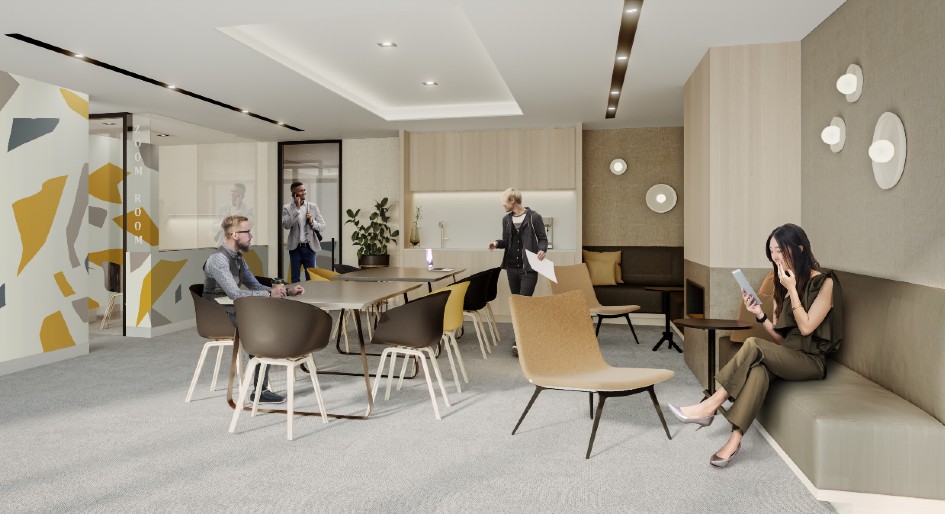
Plans call for a range of indoor and outdoor recreational spaces to accommodate residents of different ages. Indoor amenities include a fitness centre, yoga and dance studio, a hobby room, children’s playroom, two co-working lounges with dedicated rooms for video calls and meetings, multipurpose entertainment lounge, games room and party lounges.

M2M SQUARED

The co-working lounge

Indoor spaces flow seamlessly into outdoor recreational spaces that includes an adult lap swimming pool and shallow wading pool with playful pebble seating, shaded lounge and BBQ areas, as well as a putting green, bocce ball court and outdoor yoga deck and gym.

Three levels of outdoor green spaces create ‘vertical parks’ within the M2M community to encourage a healthy and balanced lifestyle. Additionally, green roofs provide fresh air and calming views for tower units.

M2M SQUARED

The Tea Garden

“Shared outdoors spaces are landscaped with natural materials and native flora to promote wellness, physical exercise, yoga, and meditation,” says Robert Ng, principal, NAK Design Strategies. “M2M’s outdoor spaces give residents a relief from chaotic city life and a sense of belonging within the community.”

Interior amenity spaces by Toronto-based interior design firm Figure3 leverage biophilic design, taking cues from nature and the planned landscaping surrounding the community. “We are using nature-inspired patterns, textures and colours, and natural-looking materials, to ensure the amenity spaces and suite interiors truly reflect Aoyuan’s intention to bring a sense of wellness throughout for this project,” says Figure3 Principal Dominic De Freitas.

Suites are thoughtfully designed to maximize efficiencies of everyday life. Kitchens and bathrooms feature integrated storage solutions, with wood grain cabinetry and porcelain countertops and backsplashes.

Suites at M2M SQUARED will range from one- to three-bedrooms, and will also include two-storey townhomes.


New vision for amenity spaces emerges at Leaside Common

The design of a new mid-rise condo development in the Leaside neighbourhood of Toronto will incorporate a new vision for amenity spaces that builds resilience in multi-unit residential settings.

Leaside Common—a project by Gairloch Developments and Harlo Capital, will appear like two boutique buildings attached at the hip. Clouded in glass, the central connection introduces a design concept called the Nest, a shared open space on each floor that brings both sides of the development together.

The Nest will function as both a co-working lounge and a community hub where people can congregate. At nine storeys, the condominium will span 103 metres and feature 198 units ranging from studios to three-bedroom penthouse suites, including 10 townhomes.

Leaside Common

Said to invoke “the grandeur of a high-rise turned on its side,” the development is encased in dual-tone bricks and features vertical windows in a modern simplicity. The brick pattern is sculpted to appear like a moving accordion. Balconies with integrated planters are purposeful in their design to create luxurious balconies and terraces.

“You don’t see a lot of brick in the city used in this way,” says Heather Rolleston, principal and design director at BDP Quadrangle. “The façade has movement, and a unique texture that makes the building feel luxurious. It’s akin to a woven blanket that welcomes you in.

“I think modern simplicity is something that Gairloch does well. We worked together on their 383 Sorauren project, which went on to receive a Toronto Urban Design award.”

Leaside Common

Balconies at Leaside Common

Gairloch has already started to build roots in the neighbourhood with its 1414 Bayview project, currently under construction at the south end of Leaside’s high street. This new project will be located steps from the brand-new Bayview-Eglinton LRT.

“After having lived in the Leaside-Bennington neighbourhood, my admiration and understanding for the community has only grown,” says Bill Gairdner, founder and president of Gairloch Developments. ”It’s been an honour and a privilege to have the opportunity to develop two mid-rise developments on the same street in such a great neighbourhood. I believe that this project embraces the exciting changes that are coming to this node of the city with a building design that will hopefully stand the test of time.”

For interior amenities and suite designs, Gairloch retained Sixteen Degree Studio, known for working with single-family homes in Midtown Toronto.

“We tried to put ourselves in the many different shoes of the purchasers of Leaside Common, pulling from our client experience and single-family home designs,” says Stephanie Vermeulen, co-founder and Principal at Sixteen Degree Studio. “Our goal was to ensure a design aesthetic that will feel current for many years to come.”

Residential units offer robust natural light throughout. Finishes include oak flooring, Caesarstone countertops in a cloudy white with grey marble veining, and polished chrome hardware. Custom-designed Italian kitchens include integrated appliances, flat cabinetry, robust storage and under cabinet lighting. Transitioning between kitchen and living space, kitchen islands are designed for comfortably dining.

“Our preference is for clean kitchen designs with concealed storage to hide clutter,” adds Kelly Doyle, co-founder and principal at Sixteen Degree Studio. “In open plans, the defining features of the kitchen itself should be subtle, opening up more opportunities for kitchen and living spaces to serve multiple functions in the home. We feel this is especially important in condo design.”

Building on the theme of a warm brick building embedded in lush neighbourhood greenery, the designers aspired to bring natural outdoor elements to the interior amenity spaces. For example, dapple lighting, or lighting that appears to be filtered through the leaves of trees, is reflected in the lobby with Canadian-designed fixtures. Nature inspired colour palette for the furniture and décor is juxtaposed with textured metallic wall coverings.

Condo amenities at Leaside Common consisting of a multi-purpose party room features a direct link to outdoor BBQs and dining amenities. Communal workplaces are well lit with natural lighting from the west window paneling, and the gym amenities look onto Bayview Avenue.


New role with ongoing purpose for Bala Gnanam

Bala Gnanam has joined the staff of the Building Owners and Managers Association (BOMA) of Canada as vice president, sustainability, advocacy and stakeholder relations. It’s a new role, but with the ongoing purpose of championing climate action and building performance improvements in the commercial real estate sector, following more than a dozen years of work on the same front with BOMA Toronto.

Bala Gnanam joins staff of BOMA Canada“As we enter a new era and launch significant new projects, Bala’s leadership will help us drive BOMA Canada forward,” says Benjamin Shinewald, president and chief executive officer of BOMA Canada. “Bala has been a trusted colleague and mentor. We’ve collaborated frequently and his counsel has always been generous, progressive and wise.”

An engineer with Certified Energy Manager (CEM) and Certified Demand Side Manager (CDSM) designations from the Association of Energy Engineers, Gnanam sits on the board of Toronto’s Clean Air Partnership and is a member of the Climate Reality Leadership Corps. He holds a Bachelor of Engineering from Ryerson University and Bachelor of Science in Mathematics from Dalhousie University. Earlier this year, he was named to the Independent Electricity System Operator’s stakeholder advisory committee in Ontario.

“Bala has been a key member of the BOMA Toronto team and its successes, and his departure is bittersweet”, says Susan Allen, president and chief executive officer of BOMA Toronto. “I am pleased that Bala is staying within the BOMA family and that he will continue to serve the broader BOMA-in-Canada community.”

Measurable actions convey diversity resolve

Tying corporate pledges to measurable actions has been a proven formula for navigating change and opening up new business opportunities in commercial real estate. Industry insiders involved in many of those initiatives — whether related to sustainability, proptech or other kinds of repositioning and investment strategies — are endorsing the same tactics to broaden the base, leadership structure and decision-making insight of the real estate workforce.

“We need to give diversity, equity and inclusion the space it belongs in our industry,” says Sunita Mahant, head of global initiatives, diversity, equity and inclusion, and senior director of legal affairs with Ivanhoé Cambridge. “Some of our industry leaders have put this at the forefront. It is a business priority; it is built into their strategic plans today. But I think we are lagging behind. If you take a look at the industry as a whole, and compare ourselves to other industries, we have a lot of work to do.”

She and other likeminded proponents have coalesced into the recently launched CREED (commercial real estate equity and diversity) Council — which officially delivered a call to action via an introductory online forum and panel discussion earlier this summer — to build a supporting network and offer resources. Thus far, the CREED Council’s 22-member volunteer board of directors is influentially placed in senior management roles in property management, development, leasing, finance/investment and various professional support services, and 12 organizations, including commercial real estate companies, industry associations and service providers, have also signed on as partners in the effort.

Joining Mahant in the panel discussion, Sonny Kalsi, chief executive officer of BentallGreenOak (BGO), outlined his company’s hiring policy, adopted in 2020, requiring that two-thirds of new employees be women or minorities. Given the turnover of approximately 100 to 150 staff annually across the property management/property fund firm’s employment base in Canada, the United States, Europe and Asia, he sees the policy as an instrument to meaningfully rebalance the composition of BGO’s workforce and make it more reflective of the general population.

“Unfortunately, this is an industry that has not been super diverse,” he said. “There are a lot of things that you can and cannot control as a company. You can control who you hire. You can control who you promote. You can control what opportunities you make available.”

Dismissing the perceptions of observers who would term the initiative “revolutionary”, Kalsi suggests it’s more straightforwardly “math” since women make up 50 per cent of the population and visible minorities account for 40 per cent of the U.S. population and more than 52 per cent in Toronto, where one of BGO’s four key global offices is located. The mandate is also in keeping with the kinds of key performance indicators that real estate owners/managers typically apply to track progress on strategic priorities.

“Inherently, we need to put quantitative measures in,” Kalsi maintained. “Ultimately, everything we all do for a living is very quantitative. It’s how we do the things we do, and how our success is measured.”

Rallying in-house resources and wielding outside influence

Additionally, Mahant calls for dedicated resources both to translate strategic plan statements into measurable actions and to promote those goals and actions across all business and operational divisions. She also notes that companies like Ivanhoé Cambridge, the real estate arm of Caisse de dépôt et placement du Québec, and BGO, the real estate arm of Sun Life Financial, can wield the clout of their institutional connections.

“Just like any other business strategy in the real estate sector, we need to invest in who is going to execute this plan. You can have the best strategy in the world, but having an intentional people strategy is how we’re going to succeed,” she urged. “We have so much power and ability to influence. I think it starts with these conversations with the partners that we sit with, where we invest our money, who we’re partnering with, and really sitting down and making sure that our goals and our values are aligned.”

Pino Di Mascio, head of impact strategy and delivery with Dream Unlimited Corp., tallied the many contractors, suppliers, skilled trades and labourers involved in construction and operations, all which present opportunities for real estate companies to persuasively makes their preferences known.

“One of the unique aspects of our industry is that we can be involved in this on two different fronts,” he said. “That can be thought through in social procurement strategies so that the partners that we’re working with understand what our values are, and we encourage them to work towards similar goals and objectives.”

Turning to the other front, he addressed career development within real estate organizations. Dream, a real estate investment trust (REIT) with more than $12 billion in assets under management throughout North America and Europe, has labelled its own in-house program, “Diversity, Inclusion and Advancement” to emphasize that the executive ranks particularly require attention.

“You can see lots of organizations are starting to become better at reflecting the broader diversity at a full organizational level. Once you get into more senior manager roles, it is less diverse,” Di Mascio said. “There are less opportunities, and creating those pathways in organizations is extremely important.”

Examining biases and redefining meritocracy

Tridel Corporation, a Toronto-based developer specializing in high-rise condominium projects, also moved to make those pathways more transparent. As a third-generation member of the company’s founding family, Andrea Del Zotto, director and executive vice president, reflected on some of the distinctive aspects of family businesses and some of the common scenarios that any company might encounter in adjusting its corporate culture.

Clear statements of Tridel’s criteria for advancement and the company’s behavioural code are part of a package of new measures it has introduced in the months since several galvanizing motivators in 2020. That includes both the homicidal racism of George Floyd’s murder in Minnesota and racial harassment much closer to home with a series of hateful messages left on Toronto construction sites. In response, Tridel revised its established marketing tagline from “Built for Life” to “Built for Respect” and began scrutinizing its own management practices with the help of an outside consultant.

“When we started, it was the senior level of leadership participating in something called an IDI assessment, which is intercultural development inventory, and it’s a tool that measures how well you’ve developed your intercultural skills,” Del Zotto recounted. “In our recruitment and hiring, we’ve created an accountability network. Our communications are now audited for diversity, and we are looking at targets for underrepresented groups and then measuring against those targets.”

Many commercial real estate companies are now similarly grappling with acknowledging and counterbalancing biases in recruitment, promotions and allocation of professional opportunities. The panellists all agreed that the industry’s traditional view of meritocracy needs to be revised to account for the challenges — or lack thereof — candidates have faced and surmounted to arrive at their current standing.

“Much of the first step toward creating inclusion has been about understanding biases and maybe understanding that we carry more than we thought we did. So we can look at how we interview or how we recruit or how we deal with eliminating some of that stuff. That’s the first step,” Di Mascio advised. “The one after that is acknowledging the systemic barriers that actually exist that prevent true meritocracy from being realized.”

Kalsi credited BGO’s hiring policy for creating the parameters in which candidates with non-conventional qualifications can gain employers’ attention — maintaining that those “who went to the right schools and had the right internships” and have “really, really relevant experience” have the advantage of being conspicuous, but aren’t necessarily more promising.

“The easier thing to do is hire (candidate) A. The harder thing to do is give (candidates) B or C a shot and help them grow, and that’s what we’re going to continue to push ourselves to do,” he affirmed.

Building industry momentum and consensus

Early participants in the CREED Council see it as a mechanism for building industry momentum and consensus around pursuing and achieving equity, diversity and inclusion — perhaps somewhat in the way that collegial yet competitive programs like GRESB and race2reduce have supported industry efforts in ESG and climate action.

“We should be working very closely across companies, across the industry, to help each other, push each other. If we can achieve those quantitative outcomes, then it challenges others to try to do the same or do better.” Kalsi said.

“We have a lot of great organizations within our industry and I think CREED will be very helpful for all of these organizations to help us move forward and build better,” Mahant concurred.

“We’re all starting at different places and points, but we all have to make a conscious effort. We’re already perhaps being reactive, not as proactive as we like to think we should be,” Del Zotto mused. “It’s not easy. It’s uncomfortable at times. It’s awkward and you’re afraid of saying the wrong thing. I would say: Get comfortable with discomfort and just do it.”

Barbara Carss is editor-in-chief of Canadian Property Management.

Keeping cleaning workers happy and motivated

Like so many industries, many building service and cleaning contractors have reported difficulties in finding new cleaning workers in recent months.

Even when companies do find new workers, turnover can be regular and costly with employees often moving on in a relatively short period of time.

This is nothing new for the cleaning industry, but the continuing effects of the pandemic have exacerbated the problem.

A new study published in July 2021 by the Manufacturing Institute’s Center for Manufacturing Research and the American Psychological Association, has implications for cleaning contractors. It found that most workers stay with their employers not only because they enjoy the work but also due to the training and development programs on offer.

Nearly seven in 10 workers under the age of 25 remain with their current company because of these opportunities. Competitive pay and benefits are of course important, but so is work that increases positive experiences on the job.

Also of note is the conclusion that workers who feel valued are much more likely to be engaged with their work, and less likely to feel stressed or leave their jobs. Ensuring every employee understands how their efforts are linked to the company’s overall success is one of the most successful worker-retention strategies

Matt Morrison, an industry veteran and communications manager at Kaivac, highlights four key measures that the cleaning and maintenance industry should keep in mind in its interactions with cleaning workers.

  1. To help employees enjoy their work, stress the importance of their work: they are keeping people healthy.
  2. To keep younger workers on the job, turn to new technologies such as onboard training technologies. Some are placed directly on cleaning equipment, allowing new staffers to learn and practice cleaning tasks at their own pace.
  3. Promote from within. It helps your staff feel they are valued and that they have a future working for your firm.
  4. Start an employee recognition program. Recognizing staffers for doing something exceptional can significantly improve the worker retention of all staffers.

Opening new doors at Buckingham Condos

The newest condos-to-be flaunt amenities like pet spas, yoga rooms and libraries—perks that future resident’s look forward to. But what is sometimes missing from the list of niceties are technologies that respond to crucial issues like safety and security.

As society ushers in an era of smart home technology that is more adaptable and efficient, some developers are pushing this to the top of a pile of conveniences—for owners aging in place or buyers looking for extra protection from building emergencies or unwanted visitors.

One of them is Vandyk Properties. As the first private developer to have signed a binding agreement with Metrolinx for a transit-oriented community in Ontario, the city builder is bringing an integrated home technology system to its Buckingham Condos.

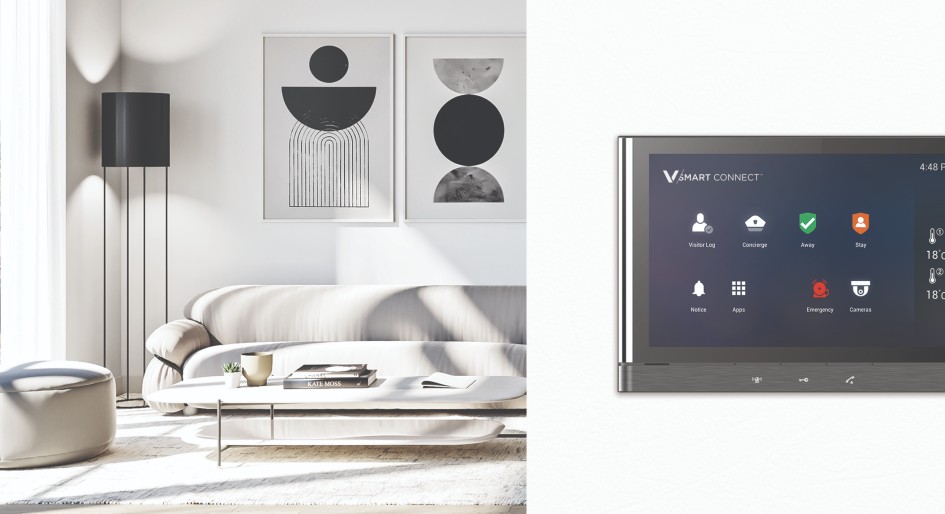
The trio of towers will span 1.85 million square feet in the upcoming Grand Central Mimico mixed-use community in South Etobicoke. Every suite will have a wall pad and smartphone app that owners can control from anywhere.

The whole intent of the wall pad is that it’s accessible, whether that means controlling the temperature within a suite or calling for elevator access in the morning. Owners can also load the wall pad set-up onto any smart device as an app.

Remote caregiving

When it comes to remote caregiving, the technology may be a most important amenity as it creates a family support service for elderly purchasers. For instance, parents can give access to their children to monitor and assist with any heating or cooling issues, or to make sure doors are locked.

Domenic Zita, executive vice president and managing director of operations at Vandyk Properties, says children unable to contact their parents can actually see if they left their suite; the technology records residents entering and exiting. Remote caregivers, with access, are immediately alerted to potentially larger emergencies like faulty smoke detectors or water leaks.

On the flipside, investors can remotely monitor what is happening from within their unit, as well. Sometimes, tenants aren’t always cognizant of reporting problems in a timely manner. “The biggest issue most people find is they have a leak and don’t know they have a leak,” Zita points out. “The technology can implement leak detection in all the devices where you would detect a leak as it begins, as opposed to one that is hidden and all of a sudden there is damage.”

The magic touch

Before the pandemic, the developer envisioned a touchless suite entry system for the design, where owners use their smartphones to gain access from the condo’s exterior all the way through to their units. “What we’ve all gone through this last year—avoiding shaking hands and touching things— the actual suite entry door system is moving in that direction where you’re not physically touching a handle to get in,” Zita adds. “To us, it’s one of the most important factors of the technology.”

As it eliminates the need for keys, owners who forget to lock their suite doors can do so from their cars in the parking garage. Investors renting out a unit can also assign access to this lock without worrying about retrieving keys from a tenant.

Conveniences like this bring in question the possibility of unit break-ins. As Zita explains, the system is fully secured. “The platform is designed so that it is no different than secured banking softwares,” he says. “There are measures put in place and many security back-checks that prevent someone from hacking into the system.”

Identifying trespassers

Owners can also monitor who is contacting them for permission into the condo, as there are known cases where trespassers will ring various units until someone lets them inside. The software sends a visual record of anyone ringing for access. “It’s one way so the person in the lobby contacting you can’t see you, but you can see them,” says Zita. “From a security level, the system helps promote fully integrated security through the whole development.”

Buckingham Condos

The wall pad set-up at Buckingham loads onto any smart device as an app.

The technology also reads the license plates of vehicles belonging to owners or their visitors registered in the system. Driving up, rather than pressing a button and a security guard opens the gate, the system connects a license plate to a unit number and allows the driver into the selected parking area, which also helps track security threats.

A local feel

As part of the whole program integrated software, retail vendors within the buildings or surrounding community can connect into the app. “A homeowner doesn’t have to search the internet to find the closest shoe repair or pizza place,” Zita adds. “They have this instant connection.”

The idea is that it glues together a very mixed-use community and creates a local feel. Condo dwellers use the app to reach restaurants and services and receive critical building notices, classified ads and amenity bookings. In a way, it builds social connections, which, in turn, is another form of security.

As the first phase of the Grand Central Mimico development, The Buckingham is currently under construction and already sold out. The towers, all ranging in height, connect together through the podium, with 20,000 square feet of retail space, to be anchored by an urban grocery store and restaurants and about 30,000 square feet of office space. Kohn Partnership Architects is the designer, with Figure3 as the interior design partner.

Buckingham Condos

The Buckingham Condos at Grand Central Mimico will connect together through a mixed-use podium.

Key approvals for dispensing equipment

Hydro Systems, a world leader in delivering chemical dispensing and dosing solutions, has a free white paper on approvals for dispensing equipment.

“Electrical, Mechanical & Plumbing Approvals for Chemical Dispensers” offers a closer look at industry standards such as ASSE 1055, Underwriter’s Laboratory (UL), Canadian Standards Association (CSA), and Conformité Européenne (CE) and the importance of choosing products that have undergone rigorous testing.

“Many of the dispensing systems installed in North America have not undergone the necessary testing to ensure safety and compliance with important safety standards,” said John Goetz, Global Product Manager, Hydro Systems.

“This white paper offers insights on various standards and tests that facility managers and the chemical companies should look for in order to keep their people, partners, and buildings safe.”

The white paper details electrical, mechanical and fire safety testing, including electromagnetic compatibility, Ingress Protection, and glow wire flammability tests. It details various certification marks that facility managers can review and explains why these are important. The paper also covers correct installation procedures to ensure long-term success with dispensing equipment.

Facility managers interested in installing dispensers can download the content for free here.

Getting UV-C air purifier placement right

As they struggle to reopen, many facilities are turning to using a UV-C air purifier to remove airborne contaminants, including the pathogens that cause coronavirus.

According to the Centers for Disease Control and Prevention (CDC), these devices can be used in “many different settings, such as residential, commercial, educational, and healthcare. The technology uses ultraviolet (UV) energy to inactivate (kill) microorganisms, including viruses, when… installed correctly.”

It’s this last point that causes some concern. Many times, UV-C air purifiers are not installed correctly in offices and schools. This can reduce their effectiveness by as much as 50 per cent.

To help prevent this from happening, Gretchen Friedrich with industry supply chain experts AFFLINK, which markets UV-C air purifiers, recommends the following:

  1. Place a larger air purifier three to five feet off the ground, or it can be mounted on a wall; a smaller unit can be placed directly on a desk or counter.
  2. Placing near a doorway helps the UV-C system capture airborne impurities, so they are not inhaled by those in the work area.
  3. Doors, however, should remain closed as much as possible. “‘Fresh air’ often brings in pollen, dust, and pollutants from the outside along with contaminants,” adds Friedrich.
  4. Similarly, a UV-C air purifier can be placed near windows; “once again, the air purifier helps capture impurities before they contaminate a room.”
  5. Never place a UV-C air purifier behind furniture. This can significantly reduce the system’s effectiveness.
  6. Never use two different types (brands) of air purifiers in the same area; they should all be manufactured by the same manufacturer to work most effectively.
  7. Avoid placing air purifiers near electrical devices such as copiers. Electrical interference can result.

“There is also the issue [as to] how many UV-C air purifiers are necessary for a work area,” says Friedrich. “It’s based on several factors, including room dimensions. Consultation with a reputable UV-C distributor can help determine how many systems are needed in a specific setting.”

Lemay announces 13 appointments

Lemay has announced 13 appointments, including three new senior partners and a new chief operating officer (COO). Additionally, the team has named two new discipline directors, a new associate, and six project directors.

The architecture firm says these appointments demonstrate the deep correlation between the firm’s success and the talent and professional development of team members.

“We want to allow each person to grow in their role and have their skills recognized and put to use,” said Louis T. Lemay, president of Lemay.

The appointments are:

  • Amro El Chabti has been appointed as a senior partner, business development, USA & Middle East;
  • Jean-François Gagnon has been appointed as a senior partner, design;
  • Lucie St-Pierre has been appointed as a senior partner, dites and territory;
  • Annie Hotte has been appointed as COO;
  • Julia Easto has been appointed as discipline director, interior design;
  • Audrey Girard has been appointed partner and continues her role as discipline director of urban planning and design;
  • Marie-Eve Parent has been appointed discipline director, landscape architecture.

In addition, Julie Cicciarello, Georges Dakak, Julia Easto, Aslam Kassam, Marc-André Lemaire Perreault and Khaled Sleiman have been named project directors.

Lemay continues to grow its team with numerous positions available in its five Canadian offices.