




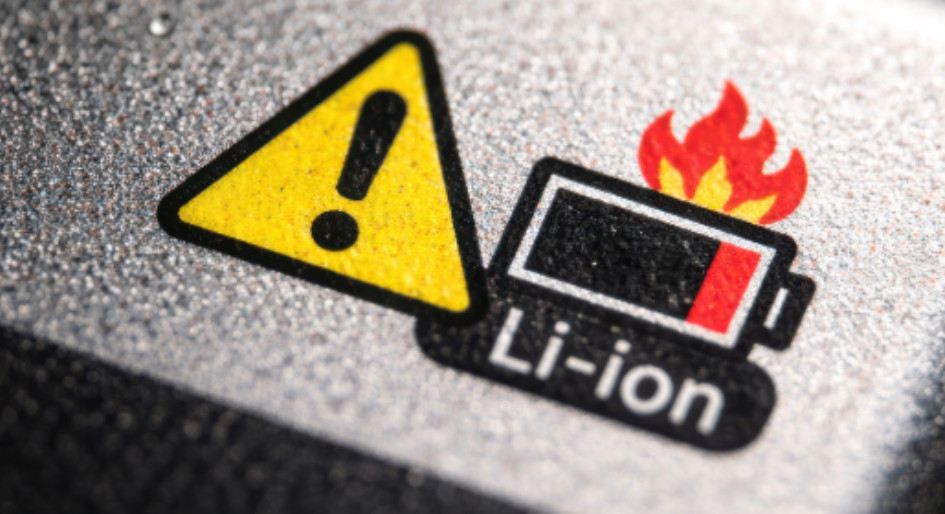
The energy transition comes with a risk management learning curve as one potentially hazardous mainstay gives way to another. The pervasive presence of flammable hydrocarbons has long been an unthinkingly accepted fact of the built environment and transportation systems, but safety assurances and public familiarity with battery basics are at an earlier evolutionary stage.
A newly announced round of grants dispersed through the Canadian government’s zero-emissions vehicle infrastructure program (ZEVIP) includes funds for the Canadian Association of Fire Chiefs (CAFC) to produce national fire safety guidance and an associated digital gateway to resources. Meanwhile, fire code developers in the United States have released a new chapter containing provisions for lithium-ion and lithium metal batteries in advance of the scheduled 2027 update to the International Fire Code (IFC), which serves as the model national code in the U.S. and is widely referenced beyond that country.
“As our society moves toward a more electrified future, the presence of lithium-ion batteries has transitioned from a specialized technology to a ubiquitous component of daily life,” notes the accompanying guidance from the International Code Council (ICC). “By accelerating the availability of the 2027 battery provisions, ICC is ensuring that code officials are not ‘playing catch-up’ with technology but are instead equipped to facilitate innovation safely as soon as possible.”
This new chapter 43 consolidates some provisions from disparate locations within earlier editions of the code and introduces measures for other activities and circumstances that have not previously been regulated. It does not apply to stationary energy storage systems, which are currently covered in a dedicated National Fire Protection Association (NFPA) standard that will continued to be referenced, but addresses a broad sweep of battery use, handling and mitigating safeguards across the rest of the built environment.
The code developers frame this as five distinct but interrelated risk management categories:
- R&D, manufacturing and/or recycling;
- storage in indoor and outdoor spaces;
- charging, operation and/or repair of micromobility devices, appliances, robotic and industrial equipment;
- fire detection and suppression measures; and
- labelling, fire safety plans and other communications to inform first responders.
The new chapter also addresses portable power packs and the storage of other types of non-lithium batteries, such as lead-acid and nickel-cadmium.
“The safety considerations presented by current and emerging battery technology warrant action now,” the ICC guidance states. “Through proactive leadership and rigorous science, we can embrace the benefits of new energy technologies while maintaining our unwavering commitment to public safety.”
The early release of the model code chapter occurs with good timing to complement the CAFC’s efforts to synthesize existing standards and recommended best practices into comprehensive and practical fire safety guidance for EV charging infrastructure. Project proponents have promised a toolkit of options for local officials, emergency responders, building designers, developers, operators and their service providers related to policy development, emergency response preparedness, planning, training and public education.
“Emerging technologies can hold promise for a greener future, but also need new fire, emergency and life safety considerations. This project can help consolidate questions and available responses, allowing different groups to become aware of, and manage this information going forward,” says Tina Saryeddine, the CAFC’s executive director.
The initiative is sponsored under ZEVIP’s awareness building stream, and comes after the federal government conducted a preliminary consultation process last winter to gather feedback on the potential introduction of mandatory requirements for lithium-ion batteries and consumer products that contain them. The Canada Consumer Product Safety Act (CCPSA) authorizes regulations that place controls on products that could negatively affect human health and/or safety, but, to date, there are no regulations specific to lithium-ion batteries. (Both the United States and the European Union do stipulate compliance with specified safety criteria.)
The government’s exploratory inquiries — related to mandatory certification of required performance criteria and parameters for safe operation — do not apply to electric vehicles or micromobility devices like E-bikes and E-scooters since they fall under the auspices of the Motor Vehicle Safety Act. However, CAFC touched on those issues in its submission to the consultation, citing insight garnered through its annual survey of Canadian fire departments.
“The Great Canadian Fire Census 2025 indicates that about 96 per cent of urban centres are responding to lithium-ion battery fires that are also present in electric vehicles. Toronto Fire Service reported a 162 per cent rise in lithium-ion battery fires and recommended that consumers only use manufacturers’ batteries for their devices, avoid second-hand or off-market batteries and avoid making modifications to the batteries,” the submission states. “Safe storage, packaging and labelling practices, as well as public awareness campaigns on the safe use of lithium-ion batteries, will help reduce any safety risks to consumers.”
The latter considerations are particularly important since safeguards in the battery design may not function as intended if its compromised through misuse, inappropriate storage or exposure to other hazards. This is where clear manufacturers’ instructions to identify compatible charging equipment, warnings at the retail interface, certification and associated authenticating symbols can guide consumer decision-making.
Firefighting responses are also evolving. The CAFC submission reiterates that battery-source fires burn hotter and faster than other types and “there is no consensus on how to best extinguish them”. It calls for more research into suppression methods, more training for fire departments, more R&D for effective personal protective equipment and careful scrutiny of the risks in the context of taller wood frame construction and the push for single-staircase multi-storey configurations in some jurisdictions.
“While lithium-ion battery technology is progressing with improved battery management systems, safety regarding storage or installation locations, education on the risks, or awareness of the consequences of misuse is not,” the CAFC submission maintains.
Health Canada, the sponsoring department for the preliminary consultation, is assessing the responses. Any subsequent regulatory proposals will trigger further public consultation.