Articles Archive - Page 333 of 928 - REMINET
REMI

AFBC Architecture Awards winners announced

Winners of the AFBC Architectural Awards of Excellence were announced on November 3, 2021, at the Polygon Gallery in North Vancouver.

The AFBC Architectural Awards of Excellence are the highest level of architectural awards in B.C. The jury reviewed more than 106 submissions in order to select the recipients. The jury measured the overall quality of each submission based on the following criteria: Theory and Design Principles, Program and Client, Context and Site, Budget and Time Constraints, and Sustainability Principles.

The Lieutenant Governor of British Columbia Awards in Architecture recognize excellence in completed architectural projects led or designed by AIBC members. Four projects received the Lieutenant Governor of British Columbia Award in Architecture – Medal:

  • Nanaimo Airport (photo above) by the office of mcfarlane biggar architects & designers inc. in association with Checkwitch Poiron Architects Inc.
  • Full House by Leckie Studio Architecture + Design Inc. and Gaile Guevara Studio Ltd.
  • Vancouver House by DIALOG BC Architecture Engineering Interior Design Planning Inc., in association with Bjarke Ingels Group (BIG), and James K.M. Cheng Architects (advising architect).
  • Upper Skeena Recreation Centre by John Hemsworth Architecture Inc.

Seven projects received a Design Excellence Award:

  • Nanaimo Airport by the office of mcfarlane biggar architects & designers inc. in association with Checkwitch Poiron Architects Inc.
  • Full House by Leckie Studio Architecture + Design Inc. and Gaile Guevara Studio Ltd.
  • Vancouver House by DIALOG BC Architecture Engineering Interior Design Planning Inc., in association with Bjarke Ingels Group (BIG), and James K.M. Cheng Architects (advising architect).
  • The Shipyards by DIALOG BC Architecture Engineering Interior Design Planning Inc.
  • Clayton Water Reservoir by Local Practice Architecture + Design Ltd.
  • Pearl Block by D’Arcy Jones Architects.
  • Upper Skeena Recreation Centre by John Hemsworth Architecture Inc.

The Emerging Firm Award  went to Stark Architecture Ltd. The Innovation Award went to 1 Lonsdale by John Hemsworth Architecture Inc. and the Unbuilt Award was given for Prototype Infill Station by Perkins + Will Canada Architects Co.

Three Equity Awards went to Tsawwassen First Nation Youth Centre by Mackin Architects Ltd.; Rick Hansen Foundation Accessibility Certification Cost Comparison Feasibility Study by hcma architecture + design; and  NƏ́C’AʔMAT CT Strathcona Library / YWCA Cause We Care House by DIALOG BC Architecture Engineering Interior Design Planning Inc.

wood works

Three Special Jury Awards went to: Gastown Child Care Centre by Acton Ostry Architects, SoLo by Perkins + Will Canada Architects Co. and Shift House by Measured Architecture Inc.

One of Brampton’s first high-rise condos launches

As Brampton, Ontario forecasts a 25 per cent growth in population over the next 20 years, National Homes and Brixen Developments teamed up to launch one of the first high-rise condominiums in the city that will bring 350 suites to the area.

DUO Condos will be a 2.6-acre community, at the corner of Malta and Steeles. As its name implies, two towers will connect through an expansive outdoor courtyard, setting a new benchmark for transit-oriented, high-rise developments along with this node. The majority of suites include a balcony or terrace, extending residents’ lifestyles beyond their homes.

The Brampton Gateway LRT, which is slated for fall 2024, connects residents to Mississauga, serving 19 stops on the way to Port Credit GO Station. The new community is also  connected to major Highways, with access to Toronto by car in less than 30 minutes.

“Since 1992, we have had the great privilege of contributing to Brampton’s growth and evolution, including the development of over 1,850 homes in eight communities,” says Jason Pantalone, president and managing partner, National Homes. “Brampton is quickly becoming a new urban centre with its own distinct identity, and we’re thrilled to bring one of the city’s first high-rise condos to life, setting a benchmark for quality in a shared vision with Brixen Developments.”

Andrew Iacobelli, co-founder, Brixen Developments, says it will be “a model for thoughtful communities and bring much-needed housing options and amenities that cater to the evolving demographics of the city.”

Designed by global architecture firm, IBI Architects, DUO Condos features sawtooth balconies and juxtaposes black and white materiality. A brick podium aligns with the character of the low-rise neighbourhood and creates a warm streetscape experience. As the viewer’s eye looks up, the tower creates a strong, modern presence with black metal and glass.

Complementing Brampton’s Active Transportation Master Plan (ATMP), DUO Condos will have a central courtyard that serves as the heart of the community, creating an animated, active public realm.

The brick-paved, landscaped courtyard, inspired by a European piazza, will act as a thoroughfare from the low-rise neighbourhood to Steeles Avenue, which will be pedestrianized as part of the ATMP.

The outdoor space has been created for residents and the wider community to walk, cycle, or simply sit and enjoy. Spilling out onto the courtyard is 3,500 square feet of ground-floor retail for the first building, creating a new, urban destination for dining and exploring the city.

“Creating a strong sense of place and moments of surprise were integral to the design of DUO Condos,” says Mansoor Kazerouni, global director of buildings, IBI Architects. “That comes through in the break between the towers, where an opening draws you in to discover a beautifully landscaped courtyard with an expansive patio and a potential café or retail offering. The design was done sensitively, contextually and in a manner that’s responsive to its surroundings.”

The interiors at DUO Condos are designed by EsQape Design, who embraced flexible spaces that cater to a variety of residents. The spaces are light, functional, and luxurious. A grand two-storey lobby features light colours and finishes complemented by black accents and detailing.

Prior to embarking on the design process, EsQape, National Homes, and Brixen consulted multiple focus groups to inform which amenities would be most suitable for the future residents in this evolving neighbourhood. The result includes: a dining and social room, which features a full kitchen and bar; a co-working space for a variety of needs, featuring small nooks for independent working and large, open-plan tables for collaboration. In consultation with a fitness consultant, an expansive fitness studio features a cardio section, yoga, pilates, spinning and a separate room for private classes or a group session.

The first tower is a 26-storey, 350 suite condominium with options for a studio, one bedroom, one-plus flex space, two bedrooms and two-plus den.


Le Sherbrooke launches in Montreal’s Golden Square Mile

Le Sherbrooke will bring 515 suites to the heart of Montréal’s Golden Square Mile as Broccolini launched its latest residential project on November 6.

Le Sherbrooke was designed by Neuf architect(e)s and is inspired by the Art Nouveau movement that was popular at the turn of the 20th century. It evokes both Montréal’s rich history as well as its reputation as a cosmopolitan forward-looking city.

“For us, this is an exceptional project that blends the historical character of a unique neighbourhood with a contemporary lifestyle and timeless luxury,” said Anthony Broccolini, COO of Broccolini. “Le Sherbrooke is a reflection of the vision we have for the City of Montréal and for Montrealers.”

At 25 storeys, Le Sherbrooke will offer suites, ranging from studios to penthouses, as well as a multitude of amenities (semi-Olympic indoor pool, sauna, virtual golf, etc.), all in a setting conceived by designer Andres Escobar.

“We want to pay homage to the unique heritage of the Golden Square Mile by creating an environment worthy of the illustrious residences of the neighbourhood,” added Broccolini. “We created an interior courtyard, complete with a magnificent sculpture, as well as a winter garden on the roof, an absolutely unique space that is a tribute to the conservatories of the 19th century estates.”

Delivery of the units is scheduled for 2025.


Overdue property reassessment raises alarm

Ontario’s overdue property reassessment is on hold until at least 2024, leaving many commercial ratepayers with a further wait to realize tax reductions from pandemic-related value erosion. As announced last week in the provincial economic statement, market values from January 2016 will remain the benchmark for apportioning the municipal property tax burden for the 2022 and 2023 tax years — a decision that is projected to produce significant tax shifts when new assessments are finally in place and to prompt more appeals to Ontario’s Assessment Review Board in the interim.

“It’s not a market based system anymore because we’re too far removed,” asserts David Gibson, a property tax consultant and director with Yeoman & Company Paralegal Professional Corporation. “The four-year assessment cycle is already too long. At best, it should be one; at worst, it should be two years. Now, the 2016 base year is going to be seven years old before it’s replaced.”

The Ontario government maintains this third postponement of a new assessment cycle, which was initially set to begin in 2021, arises from input received through its ongoing review of property assessment and taxation, involving consultations with municipalities, residential and commercial taxpayers, and industry associations. The start-date was first pushed to 2022 and then to an unspecified date — which was nevertheless widely believed to be 2023 because the provincial Assessment Act has been amended to establish January 2021 as the base date for the market valuations — in response to the COVID-19 pandemic. That’s also the given rationale for the further delay.

“During these consultations, the government heard a wide range of views expressed by municipal and taxpayer representatives. The government has considered the advice that was received and has concluded that the priority is maintaining stability for taxpayers and municipalities at this time,” the economic statement confirms.

Alternatively, Gibson speculates that neither the provincial government nor municipal councils are keen to have updated property assessment notices arrive in voters’ mailboxes in the election year of 2022. He recalls the upheaval in the late 1990s when market value assessment was first introduced province-wide to adjust valuations that often had not been scrutinized in dozens of years. At the time, many homeowners feared that significant increases in assessed values would translate into directly corresponding increases in taxes.

“Elected officials don’t want a scenario where residential ratepayers get new assessment notices saying that in 2016 the market value was $1 million and now the market value is $2 million. They don’t want the ‘Does that mean my taxes are doubling?’ narrative during an election,” Gibson hypothesizes.

Assessments look back to 2016 market conditions

On the non-residential side of the ledger where assessment is tied to income-producing capacity, locking in 2016 market values for at least one extra year is a financial blow for many hotels, office buildings and retail centres. With the switch to a 2021 base year, 2020 income statements will be factored into the Municipal Property Assessment Corporation’s (MPAC) modelling, better reflecting the pandemic’s affect on value.

“Long delays in updating assessments are known to create inequities in taxation. It’s bad news particularly for those businesses most impacted by declining revenues and property values as a result of the economic fallout of the pandemic,” says Terry Bishop, president, property tax, for Altus Group in Canada. “While the Province’s stated priority is to maintain stability for taxpayers and municipalities, the last thing businesses need is stability of their tax levies when revenues have fallen dramatically.”

“With much industry devastation and depressed revenues since March of 2020, it is not acceptable to see the 2023 tax year assessments being based on pre-COVID values, and values that will be seven years old by that timeframe,” concurs Tony Elenis, president and chief executive officer of the Ontario Restaurant, Hotel and Motel Association (ORHMA). “ORHMA is disappointed in the Ontario government further postponing property tax reassessment until 2024.”

On the flipside, the delayed reassessment will provide more lead time before expected property tax increases for warehouse/distribution and logistics facilities and  multifamily rental buildings. In other Canadian jurisdictions where annual reassessment exercises occurred this year — including Alberta, British Columbia, Nova Scotia and New Brunswick — the booming light industrial sector has been on the receiving end of tax shifts within the commercial property class. Meanwhile, the multifamily sector has experienced an influx of investment capital in recent years, driving up values.

“From that perspective, looking back in the rearview mirror six or seven years doesn’t hurt them,” Gibson notes. “But, as values go up, tax rates come down. It’s not an all sum game.”

The 1990s provide a cautionary reminder

Christopher Jobe, Toronto manager for the commercial real estate advisory firm, Turner Drake & Partners, projects a major change in the status quo when the reassessment finally occurs.

“Compression in capitalization rates over the seven-year span separating the valuation dates would see values increase by as much as 30 to 60 per cent in some property classes — industrial, multi-residential and some retail, in particular — even before consideration of improvements in operating performance,” he says. “Increases on a number of sectors — hospitality, power centres, and some enclosed and neighborhood retail — are expected to be much more temperate and, in some instances, assessed values could potentially decrease.”

However, the shifts won’t necessarily fully favour the latter group of properties immediately. When recalibration of outdated assessments created extreme tax shifts within property tax classes in the late 1990s, it also spawned an elaborate cap and clawback apparatus that some municipalities, such as Toronto, still employ today. This places a ceiling on annual assessment-related tax increases for designated hard-hit properties but, to balance out revenue collection, reduces decreases that should be assigned to other properties.

“The complicated systems of capping, clawbacks and phase-ins were necessary in order to protect both properties from large increases and municipalities from lost revenues. These measures, while welcome by many, have the concomitant impact of decreasing the simplicity and transparency of the taxation system,” observes Giselle Kakamousias, vice president, property tax, with Turner Drake & Partners. “In my opinion, the gold standard is annual reassessment with a current base date, as is revenue neutrality — i.e. any increase in the assessment base sees a corresponding decrease in tax rates.”

Similarly, the newly released Altus 2021 property tax rate benchmark report for 11 major Canadian cities links many of the peculiarities of Ottawa’s and Toronto’s property tax culture to this late ’90s era, and to the preceding long-delayed reassessment at the source of the manoeuvrings. “The hangover from this unprecedented delay in updating assessments remains in Toronto and Ottawa to this date, having the greatest inequities in taxation and the least transparent tax system of all the cities covered in this survey,” it states.

Beyond waiting for a new assessment, property owners can appeal to Ontario’s Assessment Review Board (ARB) for an adjustment to the assessed value, and both Bishop and Gibson foresee more commercial landlords will make those efforts in 2022 and 2023. That avenue of appeal is based on equity — a stipulation in the Assessment Act that directs the ARB to reduce the assessed value, even if it is proved to be accurate, if it can be shown that similar properties in the area have lower assessed values.

Notably, the Act does not allow assessed values to be adjusted upward on properties found to have inequitable below-market assessments so appellants face only the costs of the process itself. That could prove increasingly worthwhile if the resulting discount is in place for an extended period .

“It’s going back to being like the ‘80s and ‘90s where it’s just chasing to save tax dollars, not looking at market value,” Gibson submits. “If we continue on this path, we’re going to end up in an environment where it’s 1998 all over again.”

Barbara Carss is editor-in-chief of Canadian Property Management.

5 benefits of outsourcing cleaning services

Though many pandemic restrictions have eased and case numbers have fallen, it remains a challenging time for cleaning services providers and workers. Amid the already difficult climate, the cleaning industry – along with many others – has been suffering something of a labour crisis, with many business owners forced to overburden employees and reduce output.

These tough circumstances inhibit the quality of service, which is a huge dilemma given the increased expectation from the industry and the general public of enhanced cleaning and maintenance. Cutting corners is certainly not the answer, and as a result, many businesses are turning to facilities management companies to help with tasks like cleaning and disinfecting.

Outsourcing cleaning services to third-party providers can help to mitigate these impacts, writes Eric Roudi, CEO of commercial cleaning and facility services provider OpenWorks.

Roudi notes several ways that businesses can benefit from hiring a team of experts, not least that it can save time and effort in hiring and training workers and offers invaluable peace of mind, leaving managers free to focus their time, money, and resources on better investments.

Also, facilities management companies have access to the latest commercial-grade technology that makes conducting cleaning services far more efficient, such as industrial floor scrubbers vs a mop and bucket. Facilities management companies also have access to disinfecting technology and products that can be difficult for non-facilities management businesses to obtain.

Ultimately, working with a facilities management company can reduce the strain on time and resources, limit turnover, and increase employee satisfaction. It may not be a solution that is the best fit for everyone, and each facility manager should assess their own circumstances, but at a time when businesses are struggling to find and keep good workers, turning to outsourced facilities management can help managers maintain consistent and quality cleaning and facilities services.

Edmonton Valley Line West LRT wins P3 honours

Edmonton’s Valley Line West LRT, a critical new Alberta transit project, is among the five winners of the 2021 National Awards for Innovation and Excellence in Public-Private Partnerships.

The winning projects are located in Alberta, Ontario, Newfoundland and Labrador, and Bermuda – marking only the second time in its history the awards have recognized an international project. All showcase how partners are continuing to adapt and refine the ‘made-in-Canada’ P3 model to create, deliver, operate and maintain innovative and transformative infrastructure for their communities.

“Despite another tremendously challenging COVID-19 pandemic year, it is inspiring to recognize the calibre of projects and partners that rose above these difficulties to reach financial close, begin construction, and successfully complete and begin to maintain or operate these critical infrastructure projects,” said Mark Bain, chair of CCPPP’s board of directors and partner at Torys. “Congratulations to all five winners of this year’s National Awards for Innovation and Excellence in Public-Private Partnerships.”

Gold Award, Project Development
Valley Line West LRT, Alberta

This $2.67-billion, 14-kilometre light-rail extension is the second stage of the City of Edmonton’s Valley Line. The design-build-finance project, which entered its RFP phase and reached financial close during the pandemic in 2020,  bundles together design, system integration and construction into one contract. It also is the first to embed a community benefits agreement for a major capital project in Edmonton. With its 14 street-level stops and two elevated stations, the extension will help connect city neighbourhoods and reduce congestion, with LRT stops downtown, at all major city hospitals and the city’s largest tourist attraction, West Edmonton Mall. Once the west line is operational, both stages of the Valley Line will operate contiguously with no transfer points or perceived break in service for passengers despite the fact both are being delivered using different P3 consortiums, noted the awards committee.

Partners: City of Edmonton and Marigold Infrastructure Partners

The other four winners are:

  • Cortellucci Vaughan Hospital, Ontario
  • L.F. Wade International Airport Redevelopment Project, Bermuda
  • New Adult and Mental Health Addictions Facility, Newfoundland and Labrador
  • GO Rail Expansion – Highway 401 Rail Tunnels, Ontario

Presented by The Canadian Council for Public-Private Partnerships (CCPPP) since 1998, the prestigious awards will be presented virtually at P3 2021, CCPPP’s annual conference, on Wednesday, November 17. The winners of the 2021 Champion Awards will also be presented at this time.

Top interior designers honoured by IDIBC

The Interior Designers Institute of B.C. (IDIBC) held its annual Awards of Excellence event virtually on November 5. The Shine Awards celebrate the outstanding achievements of the province’s registered interior designers.

This year the judges awarded four Awards of Excellence and 10 Awards of Merit across the various categories.

“We are very pleased to recognize and showcase some of the outstanding talent among British Columbia’s Registered Interior Designers,” says IDIBC president Jennifer Heffel, and principal at HB Design in Vancouver. “The Awards this year show a lot of softer elements overall. The textures, curves and warm colour palettes create a sense of calm and comfort. Now as we emerge from our cocoons, we appreciate these quiet, intimate transitional spaces. We are so proud to honour these designers.”

The Interior Designer of the Year Award went to Jennifer Kurtz of KurtzDesign for Member’s Lounge, which also won an Award of Excellence. The project saw the dramatic transformation of a billiard room into a new member’s lounge at a Vancouver private club.

The other three 2021 Awards of Excellence winners were:

BlueArck – Edit Studios. Photo: Ema Peter

There were also 10 Awards of Merit:

  1. Makena Road, Stephanie Brown Inc.
  2. Private Residence, Box Interior Design
  3. The Cabana, Andrea McLean Studio Inc
  4. Tapestry Victoria Harbour, BBA Design
  5. HI Jasper Hotel, Area 3 Design
  6. Sidecut, Box Interior Design
  7. Beach House Restaurant, Earls Restaurant
  8. Kerrisdale Lumber, SSDG Interiors
  9. Kiaro Cannabis, Evoke International
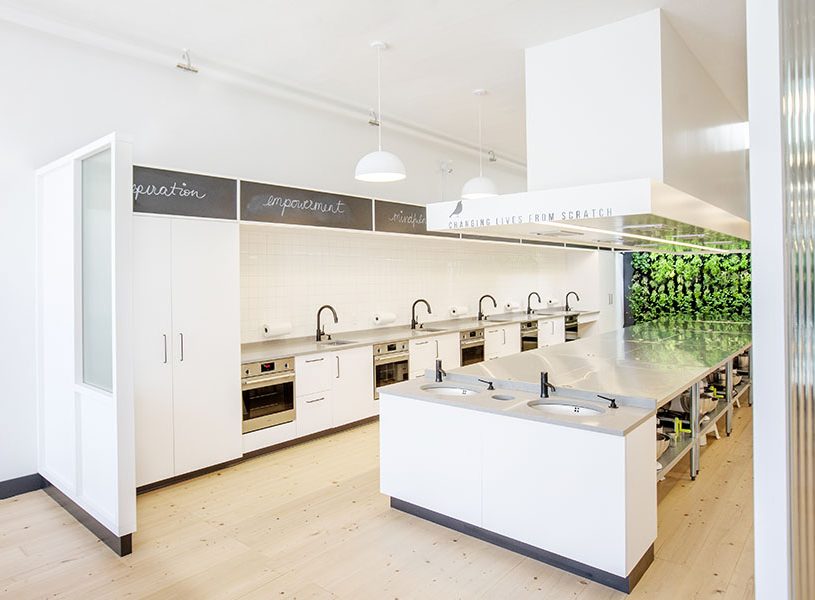
  10. Little Kitchen Academy, Evoke International


Little Kitchen Academy, Evoke International. Photo: Janis Nicolay


Killam Apartment REIT reports robust growth

In a recent operational update, Killam Apartment REIT reported net earlings of $46.6 million, marking an exceptional third quarter for the Halifax-based group. Killam attributes this robust growth to acquisitions and completed new developments, increased earnings from its existing portfolio, and fair value gains on investment properties driven by revenue growth and cap-rate compression.

“Killam’s third quarter earnings growth momentum and operating performance were very strong,” noted Philip Fraser, President and CEO. “The same property net operating income (“NOI”) growth of 7.4 per cent in Q3-2021 is a reflection of the resilient demand for apartments, the rebound of our seasonal manufactured home communities  and strong leasing in our commercial segment. Given these trends, Killam expects same property NOI growth to exceed 4.0 per cent for 2021.”

Subsequent to the quarter’s end, Killam Apartment REIT invested $118.3 million in four new properties located in Charlottetown, Moncton and Edmonton.” These are new, high-quality assets that complement our existing portfolio,” Fraser said. “We have had robust growth year-to-date and have added 1,601 apartment units from our acquisitions and development programs.”

The reported net income of $46.6 million for Q3-2021 is an increase of $9.1 million over Q3-2020, while the generated NOI of $50.5 million is a 16.8 per cent increase from $43.2 million for the same period a year ago.

Development pipeline

Killam continues to advance its development pipeline with five active developments underway, totalling 685 units for an expected total development cost of $328.1 million ($236.5 million for Killam’s ownership interest). Year-to-date, Killam has invested $51.8 million in active development projects, the majority of which was funded through construction loans.

Killam’s three recently completed developments include Nolan Hill, Shorefront, and 10 Harley, which contributed $0.7 million in FFO growth during Q3-2021. These developments are fully leased and are expected to contribute $3.0 million in FFO on an annualized basis.

Killam began expanding into new markets in earnest in 2019.

For the full update, click here.

6 ways to prepare for increased foot traffic

As more people return to public facilities, consumers, and employees continue to have heightened expectations of facility cleanliness. Additionally, the increase in facility foot traffic may lead to the spread of “forgotten” pathogens, such as influenza and norovirus, through contaminated surfaces and infected individuals.[1]

Fortunately, facilities can implement cleaning protocols to maintain consumer and staff confidence while helping to reduce the spread of germs in facilities.

Foot traffic is coming

North Americans travelled less than ever before due to cancelled trips in 2020. As vaccine distribution continues, more people are expected to resume activities such as air travel, visiting restaurants, and staying in hotels. For example, on June 2, 2021, TSA screened nearly 1.6 million people throughout the U.S. compared to 304,436 travellers on the same day in 2020. Similarly, a new survey found that 92 per cent of Americans are poised to “travel with a vengeance” this year to make up for over a year of lost trips.[2]

Businesses can prepare for a greater resurgence of foot traffic by implementing strong cleaning and hygiene protocols.

Six steps to prepare for increased traffic

  1. Address high-touch surfaces. Facility managers may wish to determine priority areas and high-touch surfaces that need more attention than others. This is especially important for addressing flu viruses that can survive on some surface for up to two days.[3]
  2. Determine sanitizing and disinfecting procedures. Different areas may call for specific cleaning procedures depending on their location, traffic level, and purpose. Sanitizers can reduce germs to a safe level and usually do not need a rinse afterwards since the product can air-dry for 30 seconds.[4]. On the other hand, a broad-spectrum disinfectant applied with electrostatic sprayers can help provide greater surface coverage. It reduces the amount of time taken to clean and greatly improves the control and spread of viruses.[5] If you’re ever unsure of what to use and where, always remember to check product labels before use.
  3. Maintain floors with mats. Floors are the first thing customers notice when they walk in. Poorly maintained floors could result in a negative brand image and require an expensive floor replacement earlier than expected. Strategically placing mats at front entryways and throughout the facility can reduce the spread of dirt and debris. Proper mat maintenance is critical to ensure long-lasting effectiveness. Ignoring care lessens their ability to trap dirt and limit odours. Facility managers who wish to purchase their mats must clean and vacuum them regularly. However, taking mats outside to shake off excess dirt and dust is time-consuming. Receive clean, high-quality mats consistently by partnering with a qualified service professional that offers a mat rental program. Mats are professionally laundered on a regular basis to prevent an “inkpad” effect from a dirty mat. A qualified service professional provides freshly cleaned replacement mats while cleaning the dirty ones.
  4. Perform washroom deep cleaning. Washrooms are a point of concern for guests and staff, with 90 per cent of U.S. adults believing employers should deep clean workplace washrooms regularly to benefit the health and wellness of employees.[6] Facilities can conduct high-pressure cleaning to remove build-up from floors, toilets, urinals, partitions, and other washroom surfaces. After the high-pressure cleaning process, use vacuum extraction to remove the contaminants from the washroom, reducing the risk of cross-contamination and the growth of odour-causing bacteria. However, high-pressure equipment can be expensive and deep cleaning is a time-consuming process for employees. Outsourcing deep washroom cleaning can help employees save time with their daily cleaning tasks.
  5. Install touchless dispensers. To increase consumer and staff confidence, businesses may install touch-free soap, sanitizer, and paper towel dispensers to help reduce germs’ spread. Touchless paper towel dispensers are preferable to hot air dryers that spread 60 times more bacteria than warm dryers and 1,300 times more than paper towels.[7] Patrons can grab the door handle with a paper towel when exiting the washroom to avoid spreading germs onto freshly washed hands. Be sure to place trash receptacles near the exit door so users can discard the used paper towels to circumvent leaving trash in the facility.
  6. Keep supplies in stock. With the onset of the COVID-19 pandemic, supply chain disruptions caused many essential items to become unavailable. Businesses needed to maintain a sizable inventory to ensure crucial supplies were always available. Unfortunately, this is not always possible without supplies taking up space or costing too much money. A rental services provider can help alleviate some of the stress and cost because supplies are predictable and delivered through a regularly scheduled maintenance program. Facility managers and cleaning professionals can focus on high-priority tasks because they don’t have to spend time managing inventory.

Supplies to consider include cleaning chemicals, washroom supplies, disinfecting and sanitizing wipes, hand sanitizer, and PPE. Properly stocked washrooms are fundamental as a lack of washroom supplies is one of the most common customer complaints. Having PPE available can also help assure staff and customers that a business prioritizes health and safety.

Preparing for full capacity

If there’s anything the pandemic taught us, it’s that the public’s heightened awareness around cleaning is here to stay. Following best practices and implementing cleaning and hygiene protocols can help businesses prepare for increased visitor foot traffic this summer.

John Engel is the director of marketing for the Facility Services division of Cintas. John has more than 13 years of industry experience and is currently responsible for product line management and development. For more information about facility services offerings from Cintas, visit cintas.com/facilityservices.

[1] https://www.mayoclinic.org/diseases-conditions/viral-gastroenteritis/expert-answers/stomach-flu/faq-20057899#:~:text=The%20viruses%20that%20cause%20gastroenteritis,food%20also%20can%20cause%20norovirus.

[2] https://press.priceline.com/worklifebalancesurvey/

[3] https://www.cdc.gov/flu/resource-center/images/multi-language-pdfs/contamination_cleaning_english_508.pdf?web=1&wdLOR=c6F6475BC-194A-4F3E-BD95-2CAFF3776563

[4] https://restaurant.org/articles/news/clean-sanitize-disinfect-whats-the-difference

[5] https://info.waxie.com/blog/disinfectant-applicators-electrostatic-vs.-non-electrostatic-sprayer-devices

[6] https://www.cleanlink.com/news/article/Survey-Shows-Workers-Value-Restroom-Care–25246

[7] https://sfamjournals.onlinelibrary.wiley.com/doi/full/10.1111/jam.13014

Chemical dispenser selection tips & best practices

Perceived cleanliness has always been able to make or break a company’s reputation, but that is two-fold as the pandemic continues. People are on high alert and want reassurance that public spaces are being properly cleaned and disinfected.

With supply shortages, many businesses have been forced to use different cleaning chemical brands in order to maintain their cleaning routines without lapse. While chemicals work wonders to keep indoor environments clean and safe, they can also be extremely hazardous and even fatal if used improperly. In fact, according to the Centers for Disease Control and Prevention (CDC), during the beginning of the pandemic from January through March of 2020, poison centres received 45,550 exposure calls related to cleaners and disinfectants, a 20.4 per cent increase from 2019.

So, how can organizations ensure they are cleaning both effectively and safely?

Systems that support the cleaning process

Chemical dispensers, while not new, have become increasingly popular and have helped organizations safely and easily adopt new chemicals since they eliminate the need for employees to pour, measure, or mix chemicals. These wall-mounted or portable systems house one or multiple chemicals, depending on the user’s cleaning needs.

A chemical dispenser works by diluting a specific ratio of concentrated chemicals with water and dispensing it into the appropriate container. Users simply connect to a water source and the chemical dispenser releases an accurate solution designed to tackle the cleaning task at hand. This ensures cleaning agents are always working to their optimal performance and helps eliminate the need to reclean. Beyond enhancing safety and accuracy, dispensers are also cost-effective systems since they control the amount of chemical being delivered.

Tips for selecting and implementing a chemical dispenser

Chemical dispensers continue to evolve and innovate, and now there are a variety of convenient solutions to meet a range of needs. Whether you’re cleaning surfaces, warewashing, or laundering, it’s important to understand the options available in order to select the right system. B

elow are best practices for selecting a chemical dispenser:

  • Do your research – Partner with a vendor that designs dispensers to meet your specific applications. Look for high-quality systems that are intuitive, easy-to-use and, most importantly, accurate. A quality system should be able to fill all types of containers with proper dilution by taking water pressure and level into account. This ensures that the solution will always be primed for optimal performance. Look for systems that are easy to maintain and provide specific maintenance instructions and troubleshooting to help avoid costly repairs and downtime.
  • Consider an all-in-one system – Facilities that require the use of multiple chemicals to complete cleaning tasks should consider an all-in-one system. These wall-mounted units provide a one-stop shop for cleaning products. Look for a colour-coded system that allows dilution control for multiple chemicals at multiple flow rates. In addition, opt for a system that safely stores each chemical behind locked enclosures to maximize safety.
  • Consider portable solutions – Portable dispensing solutions offer added cleaning flexibility. If you have a smaller operation, a handheld chemical dispenser with an adjustable flow rate provides a low-cost, transportable option. Select a unit with a lightweight ergonomic design that is easy to use, grip, and lock. For larger facility areas, select a portable unit that has the ability to switch from foaming to spraying. Foaming is an efficient way to clean and sanitize large areas as it allows the cleaning chemical to penetrate the entire surface, including hard-to-reach places. Look for a tether design that enables users to connect to containers of any size or with any thread.
  • Get connected – For laundry and dishwashing solutions, consider systems that leverage cloud-based Internet of Things (IoT) platforms. This allows real-time visibility to help improve operations and access to historical data to help identify and resolve productivity issues. Select a vendor that uses the latest security and encryption techniques to protect your sensitive information. Real-time access and visibility helps ensure dishes and linens stay spotless around the clock.
  • Train staff – Regardless of how user-friendly your dispensers are, training is always imperative when introducing new cleaning equipment. It gives staff the confidence and know-how to perform their tasks correctly each and every time. Educate employees regarding the proper personal protective equipment to wear, the chemicals inside each dispenser, what they do, how they work, and what surfaces they should be applied to. Thoroughly demonstrate how to operate dispensers so employees can confidently and safely use them, especially portable solutions in customer-facing areas.

Safe, quality results

Modern chemical dispensers are an ideal way for facilities to ensure surfaces and items are truly clean with the right concentration of cleaning chemical. Beyond providing accurate cleaning and disinfecting solutions, these systems protect employees from chemical exposure and eliminate chemical overuse or underuse.

For optimal performance, it’s important for businesses to carefully select precise, high-quality dispensers designed to meet their specific cleaning applications. The result is a cleaner, healthier environment and a cleaning team that can successfully keep up with today’s expectations and infectious disease risks.

Scott Campbell is a global product manager for Hydro Systems, a world leader in delivering chemical dispensing and dosing solutions. For more information, visit www.hydrosystemsco.com.     

ISSA Canada to launch annual membership directory

At a time when ensuring the reliability and verification of cleaning services has never been more important for facility managers and the general public, what better way is there to ensure consumers know who to buy their cleaning products and services from than a membership directory geared specifically towards the Canadian marketplace?

ISSA Canada, the Canadian arm of the worldwide cleaning association, is releasing a new annual membership directory early in 2022. The online directory will not only list all of ISSA Canada’s members from coast to coast, but it will also be a major resource to encourage buyers of cleaning products and services to purchase from the verified professional providers that make up ISSA Canada’s membership.

The launch of the new membership directory goes hand-in-hand with a major marketing initiative commencing in early 2022 that is geared towards casting the cleaning industry (and the association’s valued members) even further into the limelight.

The goal of the campaign is to build awareness of cleaning and disinfection as a pivotal means of protecting public health and, in turn, drive demand for and recognition of ISSA members’ products and services.

ISSA Canada is planning to champion this initiative across the country to ensure consumers are aware of the names of and services offered by the true industry leaders.

ISSA Canada is currently in the membership renewal process. Find out more.

An all-in-one show

In addition to the directory, REMI Network publisher MediaEdge Communications has partnered with ISSA Canada and the International Facility Managers Association (IFMA) to host the in-person REMI Show, IFMA Global, and ISSA Show Canada all under one roof at the Metro Toronto Convention Centre on June 8 and 9, 2022.

With a theme of “Reset for the New Clean,” this leading industry event will also bring members to the forefront as their product innovations and professional services are celebrated on the trade show floor. ISSA Canada is currently vetting industry professionals across all sectors to ensure that a high-quality educational program will be delivered. Stay tuned for more details.

Moving ahead at MJW

It’s time to look forward at the MJW Team (divisions of Metro Jet Wash Corporation). After one of the most disruptive years on record, the waste equipment cleaning specialist is eager to enter 2022 with fresh insights and renewed optimism.

“The property management community hasn’t had it easy over the last year and a half,” says Linda Passarelli, Office Manager with the MJW Team. “We all had to adapt in some way or another, and now the most important thing is how we’re moving ahead.”

Metro Jet WashFor Passarelli and the team at MJW, one of the biggest takeaways from the global pandemic has been the need to double down on workplace health and safety.

“We’ve always had very strict rules when it came to cleaning, wearing personal protective equipment, and following hygiene protocols on-site because our jobs take us to some of the dirtiest places in buildings and facilities,” she notes. “That being said, the pandemic reinforced how important those measures were to keeping everyone safe, including the residents and property management teams we encounter every day.”

Certainly, adds Brian De Carli, Vice President with MJW, “The MJW Team has always been very strict and has always strongly enforced health and safety measures prior. We’re definitely evolving more and more each day as a company and not stopping now.”

Adapting to client preferences

Health and safety considerations have become a chief focus for property management teams. As a result, MJW has seen a surge in demand for its power washing and cleaning services, be it for compactors, chutes, drains, catch basins, or underground garages and parking lots. Moreover, says MJW Team Division Lead Andrew De Bartolo, clients are requesting more extensive and frequent cleanings in order to stay ahead of health risks: “More and more, we’re being asked to go in there and we’re disinfecting chute doors and flaps on every floor just to give occupants that extra level of protection.”

Metro Jet WashAs Metro Jet Vac Division Lead Cassandra Mammoliti notes, “When things are visibly clean, it makes everybody feel that the environment is safer and more comfortable to live in. It also gives property managers (PMs) that extra peace of mind, so it’s a win for all.”

For added peace of mind, MJW has rolled out several promotions and campaigns aimed at helping property management staff tackle their enhanced hygiene obligations. Today, the corporation offers yearly cleaning and maintenance packages, cleaning bundles, and discount offers for new and current customers to make its cleaning services as worry-free and cost-effective for its clients.

“PMs have got enough to deal with. There’s so much on their plates managing these buildings, so if we could somehow cut a good portion of that and take care of it and then make life easy for them, then that’s our goal,” says De Carli.

Hybrid communications

Face-to-face customers interactions aren’t over, but business communications aren’t likely to return to “normal” any time soon. With many property teams still split between on-site and remote offices, service providers like MJW have adapted to a more “hybrid” approach to customer contact.

“Before the pandemic, we were mostly communicating with property managers in person. Now, though, a lot of those people are working digitally, so we’ve also started doing things a lot more digitally or over the phone while trying to keep that personal touch wherever possible,” says De Bartolo.

Nevertheless, there is a sense that the work-from-home life is growing thin among property managers and their staff who have spent a bulk of their time offsite in 2021 and are anxious to get back into action.

“A lot of people want to get back into the office or have done so already, so we’re working with a mix of digital and in-person communications,” he adds. “The priority on our end is to recognize how our customers prefer to interact and make it as easy as possible for them to do so.”

Building momentum

2020 and 2021 have kept the MJW Team on its toes. That’s to be expected for a team that specializes in keeping people’s homes, offices, and working spaces clean. And while the job has been far from easy, Mammoliti says it helps to have a solid crew: “We’re lucky in that we have an amazing team that communicates well and has remained positive throughout this whole crisis. So, while it has been one of our busiest years, we’ve been able to pull together and be there for our clients.”

As for what comes next, De Bartolo adds, “We’re continually looking forward and asking ourselves how we can better serve our customers? How can we make the job easier for a property manager? Like a lot of companies out there, it’s all about evolving and continually learning how we can be better.”

Adds Passarelli: “We’re excited for what’s ahead.”

Learn more about The MJW Team (divisions of Metro Jet Wash Corporation) at www.mjwcanada.ca or contact the team directly at 416-741-3999 or toll free at 1-844-669-3999.

BCBT names Brynn Bourke as executive director

The BC Building Trades (BCBT) has named Brynn Bourke to the position of executive director of the 40,000-member organization. Bourke is the first woman to lead the council in its more than 50-year history.

Bourke was named interim executive director in the fall of 2020, replacing Andrew Mercier, who was elected NDP MLA for Langley in the 2020 provincial election.

“After an exhaustive executive search, it became more than apparent that the best person for the job, the person who will do the highest level of work and the person who has earned respect from every corner of our industry is Brynn Bourke,” said Al Phillips, BCBT president. “She is the right person for the job by every account.”

She served as interim executive director during the second wave of the COVID-19 pandemic, when the industry was changing rapidly in order to meet the dueling demands of the economy and workers’ health and safety.

“Brynn took on the role in an interim capacity in the middle of a global pandemic,” said Phillips. “As challenging as that was, she nonetheless affirmed herself to be an instinctive, assertive and accountable leader.”

For her part, Bourke is ecstatic to continue advancing the interests of construction workers.

“Our members are some of the hardest working people in B.C. Every day, our members are out there, working in all sorts of weather, in all sorts of locations and conditions, building the monuments and skylines that make up our province,” said Bourke. “I’m proud that I get to represent these workers and do everything I can to make their lives better and safer.”

Under Bourke’s leadership, BCBT has fought for improved safety for construction workers amid COVID-19 and a thoughtful economic recovery plan that leaves no worker behind.

Bourke is also passionate about equity and diversity in the trades and skilled trades certification, the latter informed by the 10 years she spent as the BCBT’s in-house apprenticeship specialist.

Before joining BCBT in 2012, Bourke held outreach, engagement and communications portfolios for progressive leaders in the provincial and federal governments.

COVID impacts linger for commercial ratepayers

Montreal continues to impose the greatest burden on its commercial property tax base of any of the 11 major Canadian cities scrutinized in Altus Group’s annual breakdown of property tax rates and commercial-to-residential property tax ratios. In 2021, Montreal’s commercial ratepayers paid $36.24 per $1,000 of assessed value, representing a tax rate 4.17 times greater than that applied on the city’s residential properties.

That’s well above the average tax rate of $23.88 per $1,000 of assessed value across all 11 cities and the average commercial-to-residential tax ratio of 2.73-to-1, and dramatically higher than the rates and apportionments in Saskatoon and Regina at the low end of the scale. However, Montreal’s tax rate this year was slightly more moderate than in 2020, when commercial ratepayers were levied $36.99 per $1,000 of assessed value.

The decrease is due to a province-wide property tax freeze that the Quebec government invoked for 2021 as one of its pandemic relief measures. Commercial ratepayers in Quebec City also saw a nominal dip in the property tax rate, as did residential property taxpayers in both cities.

In contrast, Vancouver’s year-over-year commercial property tax rate spiked up considerably in 2021 when the provincial government withdrew pandemic-related concessions on education property tax that had been offered in 2020. The city still recorded the lowest commercial tax rate for 2021 among the 11 surveyed — at $9.97 per $1,000 of assessed value — but that was a 48 per cent increase from 2020.

Vancouver’s commercial ratepayers also carry one of the most disproportionate shares of the property tax burden, with a tax rate that is 3.41 times higher than that applied to the city’s residential properties. Vancouver homeowners and residential landlords experienced a 0.1 per cent dip in their property tax rate for 2021, nudging it down to $2.92 per $1,000 of assessed value.

“The COVID-19 pandemic has had a deep impact on municipal finances across Canada. A long period of government economic support programs and funding commitments have stretched budgets and will continue to do so possibly for years to come,” observes Michael Brooks, chief executive officer of REALPAC, which has had a long affiliation with the annual property tax report.” We continue to see the importance of competitive and fair property tax rates to the overall economic performance of cities and point to further reductions in tax ratios as a strong and progressive way to ‘build back better’.”

A small majority of the cities — 6 of 11 — exhibited year-over-year shrinkage in commercial-to-residential tax ratios, although eight still tax commercial properties at rates that are more than double the residential property tax rate, while the commercial rate is at least 1.5 times higher than the residential rate everywhere. A larger number of cities — 8 of 11 — adjusted the 2021 commercial property tax rate downward from 2020 levels.

Increasing commercial property tax rates in Edmonton and Calgary — at 8.7 per cent and 6.2 per cent respectively — are largely attributed to the pandemic’s negative impact on property values. A new assessment, pegged to values as of July 2020, trimmed away more than 7 per cent of the value of Edmonton’s commercial assessment base and about 5 per cent of commercial assessed value in Calgary. Upward adjustments in tax rates were then required for both cities to meet their budgets.

Tax shifts anticipated with reassessment

Altus analysts suggest that could be foreshadowing future tax shifts in cities where reassessments are not as timely as the annual exercises in Vancouver, Calgary, Edmonton and Halifax. There were already provincial differentiations in the length of assessment cycles and choice of base dates for valuation, but pandemic-related postponements of scheduled reassessments in Ottawa, Toronto and Winnipeg have intensified that discordance.

“It’s a big issue that some assessments are on track to be seven years outdated,” warns Terry Bishop, Altus Group’s president, property tax, in Canada.

That’s the case in Ottawa and Toronto as all Ontario municipalities and their ratepayers wait for the provincial government to set a date for the next reassessment. Prior to the COVID-19 pandemic, a new four-year assessment cycle had been scheduled to begin in January 2021, which would tie assessments to property values as of January 2019. That schedule was scrapped in the spring of 2020, and January 2023 is now the earliest possible start-date for the next assessment cycle.

Until that cycle begins, assessments in Ottawa and Toronto will still be pegged to property values as of January 2016. The lag-time is not as lengthy in Winnipeg, but assessments will be nearly five years out of date — based on property values as of April 2018 — by the time the current assessment cycle, which was extended an extra year for pandemic-related reasons, draws to a close.

“When assessments are allowed to become more outdated, inequities, or unfairness, in the distribution of taxes creeps into the system. The result is typically large shifts in relative assessments, between property tax classes and amongst properties within a tax class, when the next reassessment does occur,” the Altus report states. “Full marks to British Columbia, Alberta and Nova Scotia for keeping their assessments current.”

Commercial ratepayers in Ottawa and Toronto were beneficiaries of other provincial decisions related to property tax this year. A move to harmonize the business education tax (BET) rate at 0.88 per cent province-wide offset increases in the municipal portion of tax levy both cities. A 10.2 per cent decline in the BET rate for 2021 helped deliver a 0.6 per cent decrease in Ottawa’s total commercial property tax, while Toronto’s commercial property tax rate fell 3.2 per cent with the assistance of a 7.9 per cent year-over-year drop in the BET rate.

Without that assistance, Toronto would have interrupted a 13-year track record of lowering the commercial tax rate, which is aligned with the city’s longstanding goal to narrow the commercial-to-residential tax ratio to 2.5-to-1. As of 2021, that ratio is at 3.44-to-1.

Meanwhile, the timely flow-through of Halifax’s annual reassessment process can be seen in the city’s tax rates this year. At 2.78-to-1 the commercial-to-residential tax ratio is above the average for the 11 cities, but tax rates fell for both commercial and residential ratepayers in 2021.

“The municipality benefited from a booming residential sector fueled by out-of-province buyers and implemented austerity measures resulting in lower municipal expenses,” the Altus report notes.

Vancouver Art Gallery receives $100 million gift

The Vancouver Art Gallery (VAG) is receiving a $100 million donation from the Audain Foundation, to support the creation of a new building in downtown Vancouver. This is the largest single cash gift to an art gallery in Canadian history.

“We hope the splendid new building will work well to exhibit the work of our leading artists as well as introduce youngsters to the wonders of art. Vancouver has been good to our family, so we are thrilled to have this opportunity to join the City of Vancouver, the B.C. government, the Chan family, and many other generous donors in making this important project a reality,” said Michael Audain, chairman of the Audain Foundation.

The VAG has been planning, for more than a decade, to move to a new site. The Vancouver Art Gallery at the Chan Centre for the Visual Arts will be located between Cambie and Beatty streets, with a front entrance on Georgia Street, in downtown Vancouver. It will include more than 80,000 square feet of exhibition space, more than double the existing space

The building is being designed by Swiss architects Herzog & de Meuron together with Vancouver architects Perkins & Will, in consultation with Coast Salish artists. This consultation is reflected in the building’s design and its use of sustainable practices. The new Gallery will be the first Passive House art gallery in North America, a voluntary standard for energy efficiency which significantly reduces the building’s ecological footprint.

“We are very grateful for this gift from the Audain Foundation which brings us significantly closer to reaching our goal,” says Anthony Kiendl, CEO and director of the Vancouver Art Gallery. “Our objective is to raise an additional $160 million from the private and public sectors — and we hope this historic donation will encourage others in our community and across the country to support our vision.”

The legalities of vaccine policies in condos

Condominiums under the Condominium Act (the Act) are deemed to be the occupiers of their common elements for liability purposes, and as the occupiers of their common elements, have a duty of care under the Occupiers’ Liability Act, (the OLA) to ensure the reasonable safety of indoor common element amenity users.

Condos also have an obligation under the Occupational Health and Safety Act, (the OHSA) to take every precaution reasonable in the circumstances to protect the safety of their on-site employees and contractors. Consequently, under the OHSA and the OLA, condos are required to take reasonable measures to limit the spread of COVID-19 as they have an obligation to protect amenity users and on-site employees from potential exposure.

In an effort to comply with their obligations under the OHSA and OLA, an increasing number of condos within the last two months have implemented mandatory vaccination policies, which apply to indoor common element amenity users and on-site employees.

Although these policies are largely supported by public policy in Ontario, concerns have been raised with respect to the authority of condos to unilaterally implement such policies, as well as the legal protections available to amenity users and employees.

Workplace vaccination policies

Toronto’s chief medical officer of health has strongly recommended that employers in Toronto institute workplace vaccination policies, in addition to other measures, to protect their employees and the public from COVID-19.

The foregoing recommendation would apply to condos in Toronto; however, a workplace vaccination policy implemented by a condo, including a condo situated in Toronto, would still have to be reasonable and comply with existing legislation.

If a condo’s workplace is unionized (i.e., the employment of the condominium’s cleaners, superintendent or security staff is governed by a collective agreement), the condo would be prohibited from unilaterally implementing a vaccination policy.

If a condominium’s workplace is not unionized, the condo would be permitted to unilaterally implement a vaccination policy and require that all employees comply.

In the latter scenario, barring discrimination under the Human Rights Code, (the code), if an employee is unwilling to comply with a condo’s vaccination policy, the condo would be permitted to terminate the employee’s employment on a without cause basis. In doing so, the condo would have to provide the employee with pay in lieu of reasonable notice of termination, in addition to any other pay and/or benefits that employee may be entitled to upon the termination of their employment, under statute, contract and/or common law.

As the presence of unionized workplaces in condos is becoming more prevalent, any condos considering a workplace vaccination policy should first consult with their solicitor.

Exemptions under the code

The Ontario Human Rights Commission (the OHRC) released a policy statement on September 22, 2021, advising that implementing vaccination policies to protect people at work or when receiving services is permissible under the code. However, protections must be put in place to make sure people who are unable to be vaccinated for code-related reasons are reasonably accommodated.

In this regard, it is possible that an amenity user or employee may claim that they are exempt from a vaccination policy under the code on the basis that: (a) they have a religious objection that prohibits them from getting vaccinated against COVID-19; (b) they have a medical exemption that prohibits them from being fully vaccinated against COVID-19; and/or (c) they are unable to receive the COVID-19 vaccine for disability-related reasons that are unrelated to a medical exemption.

Creed and religion

The code prohibits discrimination based on creed, which can include religious beliefs and non-religious belief systems that resemble religion. In the September 22, 2021 policy statement issued by the OHRC, the OHRC advised that “personal preferences or singular beliefs do not amount to a creed for the purposes of the code”.

Accordingly, if an amenity user or employee chooses not to be vaccinated because of a personal preference, this would not amount to a creed for the purposes of the code. As such, said amenity user or employee would not be entitled to accommodation under the code on this ground alone.

In order to support an exemption based on a creed under the code, the amenity user or employee would have to provide objective evidence that their claimed creed has a connection to an organization or community that professes a shared system of belief, which prohibits them from getting vaccinated against COVID-19.

Medical exemptions and disability

The College of Physicians and Surgeons of Ontario (the CPSO) stated that the very few and rare medical conditions that would medically prohibit someone from getting vaccinated against COVID-19 include: (i) a severe allergy or anaphylactic reaction to a previous dose of a COVID-19 vaccine or to any of its components, which has been confirmed by an allergist or immunologist; and (ii) a diagnosis of myocarditis ((inflammation of the heart muscle) or pericarditis (inflammation of the sac around the heart) after receiving an mRNA vaccine.

The OHRC encourages condos that voluntarily implement vaccination policies to require that anyone alleging they are medically exempt from being fully vaccinated must provide a written document, supplied by a physician or by a registered nurse extended class or nurse practitioner. The document must state they are exempt for a medical reason and how long the exemption applies.

Other disability-related needs

It is also possible that an amenity user or employee could claim they are unable to receive the vaccine as a result of a disability-related need that they suffer from, which is unrelated to a medical exemption. To date, the OHRC has provided no guidance with respect to this possible category of exemption; however, it is presumed that this potential category could apply if an amenity user or employee suffered from a mental health condition that made it difficult or barred them from getting vaccinated.

Privacy rights

Accessing an individual’s confidential medical information, which includes an individual’s vaccination status and COVID-19 test results, is only permitted by consent, pursuant to legislation or contract, or to the extent that such information is demonstrably required and permitted by law for a particular purpose.

At the date of this article, condominiums are only permitted to collect medical information regarding: an amenity user’s vaccination status and/or COVID-19 test results if the amenity user consents to the collection; and an employee’s vaccination status and/or COVID-19 test results if the employee consents to the collection or if the collection is permitted pursuant to the employment contract between the condo and the employee.

Although the federal Personal Information Protection and Electronic Documents Act (PIPEDA) and provincial Personal Health Information Protection Act (PHIPA) do not strictly apply to condos in Ontario, the principles set out in the foregoing should be used to help create a privacy policy. Such a policy should be implemented or updated in conjunction with a vaccination policy.

The recommended privacy policy should advise amenity users and employees of the following, at a minimum: (a) the nature and extent of the information being collected; (b) the purposes for which such collection is being conducted; (c) where the information will be stored; (d) who it will be shared with; and (e) when and how it will be destroyed.

Seek professional assistance

The law and recommendations detailed above are general in nature and are subject to change as the law on this particular matter develops. Accordingly, a condo considering implementing a vaccination policy should first consult with their solicitor, who can assist with the requested policy, in addition to keeping the condo apprised of any applicable changes.

If a condo is considering implementing a vaccination policy, it is advised that it be in conjunction with a privacy policy and a human rights policy to reduce the condominium’s exposure to potential liability under the code. This ensures that accommodation requests are handled in a timely and consistent manner, while protecting the privacy rights of amenity users and employees.

Ashley Winberg is a corporate lawyer specializing in condominium law at Elia Associates. She assists a diverse array of condominium boards and management companies throughout Ontario on all matters relating to condominium governance and management. She is also the chair of CCI Huronia’s Communication Committee, a director on CCI Huronia’s Board of Directors, and a member of CCI Toronto’s Volunteer Committee and CCI Toronto’s By-Law SubCommittee.


Disabilities undermined during company hires

An estimated 40 per cent of people living with disabilities said companies fall short when it comes to hiring those who are disabled. The new study from the non-profit Angus Reid Institute, in partnership with the Rick Hansen Foundation (RHF), found that barriers also persist within the workforce. Another 39 per cent, said Canadian companies have a way to go when it comes to supporting their employees who have a disability.

Those with more severe disabilities had the least favourable views. Nearly half of this group stated that companies are bad at hiring those with disabilities, while 46 per cent said the same about the supports corporate Canada offers.

A ways to go

Previous studies in partnership with the RHF have found that there is broad-based support for improved accessibility within Canadian society. A 2019 study found that seven-in-ten think universal accessibility should be the goal for newly constructed buildings.

However, despite this support, disability advocates have highlighted that many barriers to accessibility persist and that there remains much room for improvement across Canada. The majority of Canadians in this study highlight that disability should be included in equity, diversity, and inclusion policies in the workplace.

There are also variations in opinion by age and gender. More disabled women said companies are doing a poor job of hiring those with disabilities (45 per cent) than their male counterparts (35 per cent). Of note, those at earlier stages of their careers have the most negative assessments: over half (of those with a disability between the ages of 18 and 34 said companies do either a bad or terrible job when it comes to hiring disabled Canadians.

Further challenges within the workplace can range from inaccessible workplaces (cubicles or offices not having enough space for wheelchair users, no elevators, etc.) to an absence of  appropriate tools for the job (screen readers, modified workstations, etc.). Men living with disabilities seemed more complimentary of such job supports than one-third of women who felt the same.

Meanwhile, 62 per cent of respondents said they would be more likely to give their business to a company or organization  if they knew that they had specific policies to support those living with disabilities.

Read the full report including detailed tables and methodology here.

Read an accessible version of the report here.