




At a stadium, restroom traffic surges at halftime. An arena has its intermission rush. At an airport, several arriving flights can send travelers onto the same concourse at once. Facility teams must get guests through their own business peaks while keeping the space ready for the next wave.
One of the clearest signs a restroom needs attention is work that staff must repeat throughout every rush. If employees spend down times replenishing supplies, emptying bins, and clearing discarded paper from the floor, those tasks take time away from spills, cleaning other areas, and guest needs. When the same issues reoccur, operators need to understand what is creating the workload.
Congestion is another warning sign. A line can form even when stalls are available, and guests waiting inside or outside the restroom can obstruct walking paths. For high-traffic venues, the useful question is not simply how quickly a fixture works, but how the entire restroom performs when a crowd arrives at once.
Watch what happens during a rush
A restroom may look clean and adequately equipped between events, but to really understand whether it works, you need to observe it during the rush.
Where does the line begin? Do people wait at the sinks while stalls go unused? Are guests gathering in a narrow path to the exit? Does the queue outside block concourse traffic? These observations can reveal problems that fixture counts alone will miss.
Accessibility also belongs in that assessment: a route that works when the room is empty may be difficult for someone using a mobility aid or traveling with a child once a crowd forms. Operators should consider whether all guests can approach and use each fixture comfortably during the busiest times.
Once those trouble spots are clear, look for ways to improve movement. Guests should be able to move from the entrance to the stalls, then to handwashing, hand drying, and the exit without repeatedly crossing one another’s paths. Sometimes a small adjustment helps: moving a freestanding bin, changing where a cleaning cart is parked, or directing a queue away from the entrance. Larger projects can use peak period observation to guide fixture placement for more efficient operations.
Plan maintenance around the crowd
A cleaning schedule based only on the clock can miss the moments when a restroom needs the most attention. Staff may encounter depleted supplies just as a crowd arrives or find that waste accumulates faster than scheduled checks can address it.
Event schedules provide a better starting point, so teams can inspect and replenish restrooms before doors open, check them before a predictable break, and address problems once the crowd has moved through.
Each check serves a different purpose. Before a rush, confirm that soap, hand-drying options, and fixtures are ready for heavy use. During the busy time, keep walking paths clear and respond to immediate problems. Afterward, address spills, waste, and equipment issues before the next wave arrives.
The pattern varies by venue, of course. Stadiums and arenas can plan around periods and intermissions. Entertainment venues may see their heaviest traffic before a performance or immediately after it ends. Airports must account for flight banks, delays and changing gate activity, while facility restrooms may be at their busiest as people start to head home for the day. Cleaning and staffing should reflect those rhythms.
Keep track of the tasks that repeatedly interrupt staff, such as frequent supply replenishment, overflowing bins or recurring congestion – this can help identify where an operational change is needed. The aim is to address the cause of repeated work, not merely add another check to the schedule.
Evaluate the whole operating picture
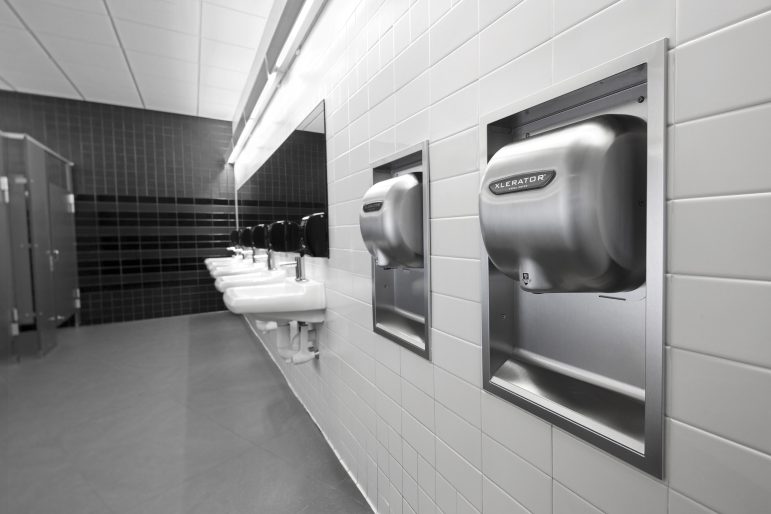
With those patterns identified, operators can assess equipment choices for their effect on both guests and staff. If towel replenishment and disposal repeatedly pull employees away from other needs, hand dryers offer one way to reduce that workload. They remove the need to stock and dispose of single-use paper towels at the drying station, although they still require cleaning and service.
Placement matters alongside equipment selection. Where will people stand while drying their hands? Can others still reach the sinks and exit? What cleaning and service will the equipment require?
Touchless technology also belongs in this evaluation: sensor-operated faucets, soap dispensers, and hand dryers allow guests to complete their handwashing and drying routine without manually activating each fixture. Operators should assess sensor responsiveness, ease of use, and maintenance needs to ensure these features work consistently during heavy traffic.
For any fixture change, consider accessibility, installation requirements, durability, upkeep, and operating costs alongside guest movement. When possible, test a proposed change in one restroom before applying it throughout a venue. Observe it during comparable busy periods and ask the employees who maintain it what has changed in their workload.
Then measure what matters: where queues form, whether supplies run out, and which maintenance requests recur. Guest comments can identify a troublesome location or time; staff reports can help explain the cause. Together, those observations provide a sound basis for decisions than an inspection made when the venue is quiet.
A well-run restroom rarely becomes the most memorable part of an experience, but it can certainly leave a negative impression if handled incorrectly, and facility teams have the time, data, and opportunity to optimize that experience during a busy rush with a proactive approach.
Kim Lynch is director of marketing at Excel Dryer, where she helps shape the company’s brand and marketing strategy. With more than 20 years of experience, she brings a broad marketing perspective and a focus on building brand awareness and connecting with customers across channels.