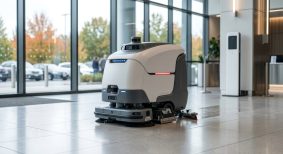



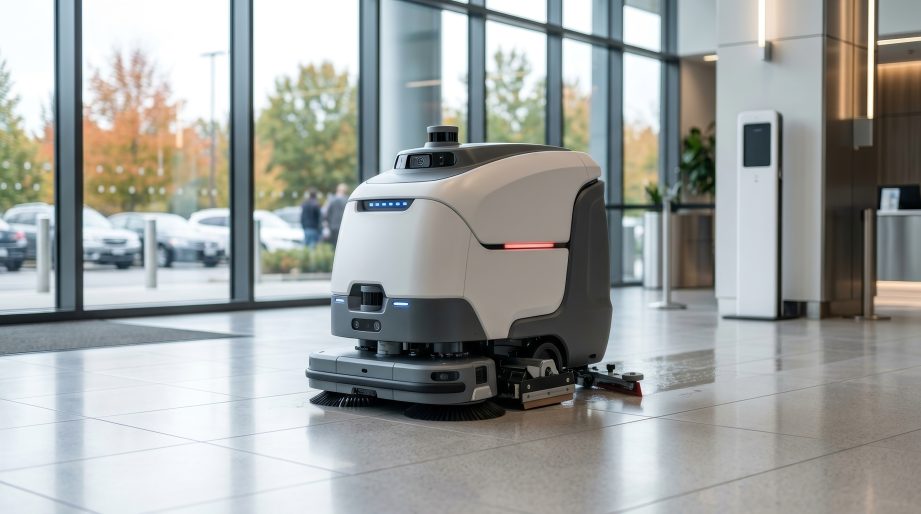
Facility maintenance teams are being asked to accomplish more with the resources they have. At the same time, many facilities are dealing with labour shortages, expanding square footage and increasing expectations for cleanliness, safety, and accountability. One technology that is beginning to change how facilities approach routine floor care is autonomous cleaning equipment.
The value of autonomous cleaning is not simply that a machine can clean a floor without someone standing behind it; the larger opportunity is to rethink how a facility uses its people, equipment and time.
Automating the repetitive work
Floor cleaning is an important part of facility maintenance, but much of it is repetitive and predictable. The same corridors, warehouse aisles, production areas, and common spaces may need to be cleaned on a daily or scheduled basis.
Autonomous cleaners can be programmed to perform these routine tasks according to predetermined routes and
schedules. Once the cleaning plan has been established, the equipment can repeatedly perform the same work while facility personnel focus their attention elsewhere. This creates an opportunity for maintenance and custodial managers to look at labour differently. The objective is not necessarily to replace the person doing the cleaning. Instead, autonomous equipment can take on some of the repetitive machine operation that consumes a significant portion of an employee’s workday.
That employee can then spend more time on tasks that require human judgment and attention, like detail cleaning, restrooms, high-touch areas, inspections, spills, special projects, preventive maintenance, and responding to changing conditions throughout the facility.
The machine handles repetitive work; the employee handles the work that requires a person.
Efficiency is more than cleaning speed
When discussing automation, it is easy to focus on how quickly a machine can clean a particular area. But efficiency should be measured more broadly. A facility has to consider how much labour is required to accomplish the entire cleaning program, how consistently the work is completed, and how employees’ time is being utilized.
An autonomous cleaner can continue performing its assigned routine without requiring a custodian to continuously operate the machine, and that can allow a facility to get more productive work from the same workforce.
For facilities facing staffing challenges, this can be especially important. Rather than asking an already stretched custodial team to simply work faster, automation provides the option to change how the work is performed.
Creating a record of the work
One of the less obvious advantages of autonomous cleaning is documentation. Facility managers are responsible for knowing whether important maintenance and cleaning activities are actually being completed. Traditional cleaning programs can depend heavily on checklists, logs, and employee reports.
Autonomous cleaning systems can provide digital information showing cleaning activity, including routes, areas covered, and cleaning cycles. That creates a different level of accountability: instead of simply reporting that a floor was cleaned, management can have a digital record showing where the machine traveled and when the cleaning took place. Over time, that information can also help managers evaluate cleaning schedules and identify areas where routes or frequencies need to be adjusted.
For facilities with large footprints, multiple shifts or geographically separated areas, having that information available can become a valuable management tool.
An additional safety tool
Safety should also be part of the conversation. Custodial employees routinely operate equipment around people, vehicles, machinery, and other activity within a facility. Autonomous equipment equipped with modern navigation and obstacle-detection technology can perform designated cleaning routes while reducing the amount of time an employee must spend directly operating the machine.
This does not eliminate the need for proper training, supervision, or established safety procedures. Autonomous equipment still needs to be integrated into the facility’s operating environment correctly. However, it can become another tool in a facility’s safety strategy.
Consistent floor care also matters. Dirt, debris, and other housekeeping issues can contribute to unsafe conditions, particularly in high-traffic or industrial environments. A cleaning program that is consistent and documented can help facility managers better manage those conditions.
The bigger question for facility managers
Perhaps the most important question isn’t, “Can an autonomous cleaner do this job?” The more useful question may be, “What can my employees accomplish while the autonomous cleaner is doing the routine work?”
That question shifts automation from being simply an equipment purchase to becoming a workforce-management strategy.
A facility’s custodial employees bring experience, judgment and the ability to respond to situations that a machine cannot. Giving them more time to use those skills can make the entire operation more effective.
Autonomous cleaning will not be the right solution for every facility or every cleaning task. But where there are large areas of repetitive floor cleaning, predictable routes, and a need for better utilization of labour, it can provide an additional option.
The future of facility maintenance is unlikely to be about choosing between people and technology. It will be about determining where technology can perform repetitive tasks consistently while people focus on the work that requires human judgment.
Automation, when implemented thoughtfully, can give facility managers something increasingly valuable: more productive use of their people, more consistent routine cleaning, and better visibility into the work being performed.
Mike Fraley is President of TaskPointe Automation Systems, a company focused on helping commercial and industrial facilities evaluate robotic automation for repetitive tasks. Fraley works with facility and maintenance professionals to identify applications where autonomous technology may improve efficiency, consistency and productivity. TaskPointe provides onsite demonstrations and facility analysis to help organizations evaluate where automation can fit within their existing operations.