





As housing needs evolve across Canada, short-term rentals (STRs) are gaining traction among professionals on assignment, relocating families, and travellers seeking flexible, home-like accommodations. Unlike hotels or year-long rental leases, STRs offer convenience, comfort, and adaptability, making them an increasingly popular choice. Between 2017 and 2023, the number of STRs in Canada surged by nearly 60 per cent, reflecting a broader shift in how people live, travel, and work. This rapid growth is prompting some property managers to reconsider their strategies and explore the potential of short-term rental models, especially in provinces like B.C. and Ontario, where STR growth has been the highest.
That said, transitioning from long-term to short-term rental management requires a clear understanding of regulatory frameworks, operational shifts, and financial trade-offs. According to the Canada Mortgage and Housing Corporation (CMHC), STRs are most common in neighbourhoods with strong transit access and proximity to downtown amenities. Their affordability and high turnover potential allow owners to generate consistent income without relying on premium rents. Their appeal includes:
- Flexible terms – they are Ideal for seasonal stays, work assignments, or family visits.
- Low-commitment trials – they provide an easy way for prospective residents to test a city before committing.
- Fully furnished convenience – enabling turnkey living for those avoiding furniture purchases or moves.
 Local rules and zoning
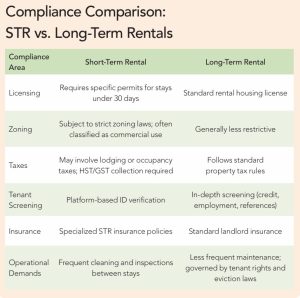
In Canada, municipalities impose a range of restrictions on short-term rentals (STRs), including licensing fees, zoning limitations, and specific tax requirements, all of which can impact profitability and scalability. Property owners looking to transition should stay fully compliant to avoid financial penalties. This includes securing and renewing required permits, declaring rental income and remitting applicable taxes such as HST or GST, keeping up with evolving local bylaws, and clearly communicating guest rules such as quiet hours, parking expectations, and recycling protocols. It also helps to build community trust by engaging with neighbours, addressing concerns proactively, and encouraging guests to support nearby businesses.
Operational considerations
Transitioning to STRs involves more than regulatory compliance—it also demands operational agility and consistent service delivery. One of the most significant shifts occurs with staffing, given the higher turnover rates require more frequent housekeeping and maintenance to ensure units are clean, functional, and ready for incoming guests.
Technology also plays a critical role in STR operations. Dynamic pricing tools are essential for optimizing rental rates during peak seasons or local events, particularly in high-demand areas such as downtown cores or beachside communities. These tools allow property managers to respond quickly to market fluctuations and maximize revenue potential.
ROI and revenue models
While STRs offer the potential for higher gross revenue, they also come with increased operational costs and management demands. Compared to long-term rentals, STRs benefit from higher nightly rates and flexible pricing strategies, but they rely heavily on tourism trends and seasonal demand. Furnishing requirements are more extensive, with fully equipped units demanding greater upfront investment. Maintenance is more frequent due to guest turnover, and specialized insurance policies are often necessary to cover short-term risks.
In contrast, long-term rentals provide steady income, lower setup costs, and reduced management intensity. Before making the shift, property managers should conduct detailed occupancy forecasts and cost-benefit analyses to determine whether the STR model aligns with their financial goals and market conditions.
Resident and neighbour experience
In mixed-use or multi-unit communities, maintaining a positive experience for both short-term guests and long-term residents is essential. Property managers should establish clear property rules and expectations, communicate noise and conduct policies transparently, and maintain open channels for feedback and concerns. Reinforcing a sense of community and mutual respect helps foster a welcoming environment and minimizes friction between different types of tenants. A well-managed resident experience not only enhances the property’s reputation but also reduces turnover and builds long-term tenant loyalty.
Building a sustainable STR strategy
Successfully integrating STRs into a property portfolio requires strategic planning, adaptability, and continuous performance review. Property managers who monitor guest feedback, stay informed about local regulation changes, and refine operational systems are best positioned to sustain profitability and long-term success. By balancing short-term opportunities with long-term stability, STRs can complement traditional leasing models and evolve alongside shifting market demands.
Ellen O’Connor is the Marketing & Leasing Manager at Accora Village (Ferguslea Properties), Canada’s largest privately owned rental community.