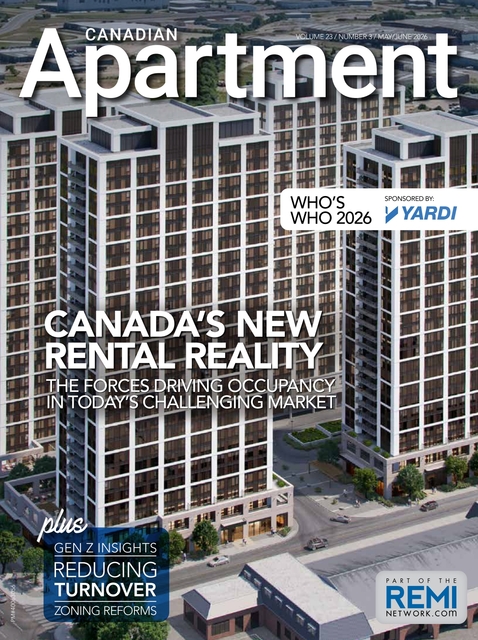






Canada’s rental market continued its steady cooldown at the end of 2025, with new data showing the most prolonged period of rent declines in more than a decade. The latest National Rent Report from Rentals.ca and Urbanation found that the average asking rent for all residential properties fell 2.3 per cent year‑over‑year in December to $2,060. This marked the fifteenth straight month of annual declines and pushed rents to their lowest point in 30 months. Even with the recent pullback, average rental prices remained 14.1 per cent higher than in December 2019, underscoring the sharp escalation that followed the pandemic.
“After a sharp run-up coming out of COVID, rents in Canada have been on a downward trend for more than a year,” said Shaun Hildebrand, President of Urbanation. “The demand and supply factors that were pushing rents higher between 2022 and 2024 reversed during 2025. A combination of record-high apartment completions, population growth slowing down, economic uncertainty, and affordability challenges has worked together to push down rents. Looking ahead, rents are likely to continue trending down in the near-term as these conditions persist.”
Across 2025 as a whole, average asking rents declined 3.1 per cent — a larger annual drop than those recorded during the height of the pandemic. Still, rent growth since 2020 has averaged 2.9 per cent per year, roughly in line with long‑term historical trends.
Secondary market units continued to lead the downturn, while purpose‑built rentals remained comparatively stable, slipping just 1.0 per cent annually to an average of $2,049. Three‑bedroom units were the only category to see an increase, rising 0.2 per cent to $2,501. One‑bedroom and two‑bedroom units posted declines of 3.1 and 1.6 per cent, respectively. Condo rents fell 4.0 per cent to $2,131.
Provincially, the sharpest declines in rental prices occurred in British Columbia (-5.4%) and Ontario (-3.2%), where rents are now nearly 10 per cent lower than two years ago. Saskatchewan stood out as the country’s strongest‑performing market, with rents rising 7.1 per cent year‑over‑year while remaining more than 30 per cent below the national average.
Among major cities, Vancouver (-7.9%), Toronto (-5.1%), and Calgary (-5.0%) saw the steepest annual drops, with Vancouver and Toronto hitting their lowest rent levels since early 2022. Edmonton was the lone major market to post growth, inching up 0.8 per cent.