




Articles Archive - Page 409 of 928 - REMINET
REMI

The rise of the hybrid office

As a result of COVID-19, the workplace will be forever changed. Instead of a step back in time, this era will be a catalyst for positive change: we will be moving forward to a new place, modified in strategic ways, incorporating new practices, new protocols and new technologies.

The future of work will integrate the lessons learned from our extended time working from home, an experience that many businesses have transitioned to with minimal friction, and free us from preconceived notions about place and productivity.

While the Gensler U.S. Work From Home Survey 2020 shows with real data that most people want to return to the office the majority of their week, employees also want a future in which they have more choice and agency than they did before the pandemic. Despite declarations from some that full-time work-from-home arrangements will remain after COVID-19 restrictions are lifted, there are many indicators that permanent work-from-home arrangements are not sustainable for culture, innovation and talent development, nor is it a replacement for the speed of trust and collaboration that’s built through face-to-face work. Collaborative work moves forward at the speed of trust that is built into our relationships.

So why do people want to return to the office?

Research shows that the top reason people want to come back to the office is the people. In fact, 54 per cent of respondents from Gensler’s survey say their colleagues are what they miss the most about the office. While work-from-home has made it possible to keep momentum for most work functions, it is not a perfect substitute for work that’s done together.

This all begs for a change in how the workplace functions. As we start making the transition back to the office, and as we resettle more permanently, the kinds of collaboration, teamwork and meetings that make up our daily work lives will need to embrace a new “hybrid reality” — a blend of analog and virtual participation that could redefine how we accomplish work going forward.

What will the new hybrid office look like?

While empty in the short term, a return to the office demands that we create an ecosystem of workplace experiences that employees cannot get at home in order for a hybrid future to be successful.

Productivity myths around working from home have been thoroughly debunked. In fact, a report from NordVPN (March 2020) revealed that Canadians increased their average workday by 2 hours since the onset of the pandemic. We know that focused work can happen successfully at home.

Remote work has also made it clear which spaces best facilitate collaboration, focus, learning and socializing. What’s emerging is a hybrid future, with people working and collaborating from home and from the office. When people return to the office, 60 per cent reported they expect more choices in how to work, including increased opportunities to work remotely.

Right-sizing spaces for hybrid work behaviours requires the office of the future to align meeting spaces to the types of collaboration that occur in-office as opposed to virtually, for example; in the future, generative ideation meetings will be prioritized as in-person events, whereas evaluative decision-making meetings will happen virtually. Built on the idea that with fewer employees physically present on any given day, offices can offer more flexibility of layout and management.

This will require an enhanced technology infrastructure to support seamless virtual connection opportunities in the physical workplace, ensuring the collaboration experience is consistent for both in-person and virtual participants.

Other technology interventions that will affect facilities’ teams and building managers will be intelligent rooms that will enable staff to manage how they use shared spaces through smartphone apps. Gathering spaces, meeting rooms, phone rooms and focus hubs will be catalogued and available for reservation at the touch of a screen. Space booking will be enhanced by allowing employees to order catering, adjust AV, lighting and temperature all from the same management system. Guests will be able to check into the building via the same system and be screened, then given the necessary directions to the meeting room or workspace.

A natural consequence of smart offices is that they will enable service teams to either hold slots for cleaning or use the available data to identify high-traffic areas to focus their cleaning efforts. Maintenance teams will also use the data from meeting room booking systems in order to plan cleaning when areas have been vacated.

Ultimately, the hybrid office will have at its heart a planning principle based on people rotating in and out of the office, with flexible schedules they have more control over than ever. Its biggest draw will be more varied workspaces for collaboration, a refuge from a distraction-filled home and, more importantly, a place for human connection.

Annie Bergeron is the design director at Gensler.
Upgrading Fire Safety with Compliance Connect

Keeping pace with fire safety compliance is difficult but critical nonetheless. And when it comes to protecting the safety of property and occupants, there’s no room for “good enough.” Fortunately, while the task of managing inspections, reports, and interactions has traditionally been time-consuming and demanding, there are now technologies and services that can do the heavy lifting.

“One of the main challenges for property owners and managers is simply collecting, storing, and managing all the various reports they need to stay on top of fire safety regulations,” says Allena Goodyear, Manager of Life Safety Services with LRI Engineering Inc. (LRI) “The problem is fire safety documents come in by hand, email, or through other systems. Without some way of keeping track of all that, you run the risk of missing or misplacing documents.”

What’s more, Goodyear adds, the inability to find important fire safety reports when needed can result in fire code violations – or worse – the possibility of overlooking requirements that helps keep building occupants safe.

A better, more connected way

Technology and third-party expertise can bring relief to many property management operations, and fire safety compliance is no different. LRI’s Compliance Connect, for example, is a program launched on December 1 that blends digital solutions and professional auditing services to help property teams stay ahead of their fire safety responsibilities throughout the year.

“The goal of Compliance Connect is to offer a program which includes a software platform that helps building owners simplify their required maintenance requirements under the fire code by making sure everything they need is held and tracked in one location,” explains Goodyear.

Through Compliance Connect, users can track which documents have been submitted, which are past due, and which may be missing altogether. Moreover, it provides a colour-coded overview of a building’s fire safety compliance progress and alerts the appropriate people when corrective actions are required.

Compliance Connect’s software can also be used to store and manage documents for other compliance programs, (e.g., health and safety, HR, security, etc.), enabling it to double as an all-around digital storage tool.

Providing a digital hub for document storage is just one part of LRI’s fire safety compliance solution. The other is delivering third-party audits of its clients’ fire safety records to ensure nothing is missed or falling short of fire code requirements. These audits include a full suite of services, including document reviews, recommendations, fire safety system life cycle assessments, budget planning consulting, or replacements of fire safety equipment.

Ultimately, adds Goodyear, “The idea is to make fire code compliance simpler and more streamlined for property management teams on a daily basis. Beyond that, we’re here to serve as a partner in ensuring they’re meeting all fire code expectations.”

Remote collaboration

Compliance Connect delivers an online benefit to property management teams, especially in an era of work-from-home staff and hybrid teams. By providing all (approved) staff access to a single online hub, the program helps teams stay in sync and track any deviations that may result from the pandemic.

“It’s been a unique year, to say the least; and although fire code responsibilities have remained in place, there are a host of restrictions and health considerations that have led to delays or backlogs,” notes Goodyear, adding, “As the world becomes ‘normal’ again, Compliance Connect will help teams stay on course and make sure things aren’t falling through the cracks during a busy and difficult time.”

Hands-on support

Many property management operations stand to benefit from modern technology. Still, there remains a demand for specialized, human services. To that end, LRI is confident that the Compliance Connect program will bring added efficiency, accountability, and peace of mind to what can be an arduous process.

“Fire safety compliance isn’t static. It’s not something you put in a binder and dust off when it comes time to fill out some forms,” says Goodyear. “So while we design and implement a fire alarm systems for our clients, it’s important that we also work with property teams to make sure they’re maintained and operating the way they’re intended.”

Learn more about LRI Engineering and Compliance Connect. Visit www.lrifire.com or email [email protected].

Rethinking the demands of facility operations

In March, buildings around Canada transitioned from full to low occupancy in a matter of days. As safety quickly became top priority, business spaces emptied, and habits and routines shifted dramatically. Canadians started spending the majority of their time at home—working, studying, shopping, and even exercising. As organizations consider how to get back to work, there is still significant uncertainty around the ability to physically return to buildings in the way we did pre-pandemic.

In responding to the impacts of COVID-19, facility managers are facing added complexity on how to manage these physical assets. While safety remains the top priority, facility owners and managers must also rethink the demands of existing operations and systems and look for new ways to deal with rapidly fluctuating capacity.

Buildings are huge energy consumers and are responsible for nearly one-third of the world’s energy consumption, so it is critical that we make the most out of the energy they use and find ways to optimize. Along with basic heating, cooling and lighting needs, more and more of our buildings are electrified and digitized. From computers and smart devices to the networks that connect it all, we rely on this technology to make our buildings work.

These two challenges—capacity fluctuations and energy efficiency—go hand-in-hand. Better facility management will ultimately have an impact on achieving greater efficiency and higher levels of energy savings across buildings.

Considering the significant energy demands buildings have, it is easy to see the impact that can be made by implementing smart solutions. The good news is that these technologies already exist today. Energy efficient solutions can help buildings reduce their energy consumption, which can significantly impact the bottom line. In turn, these cost savings can be used to improve a building’s existing features for occupants.

Consider that temperature control can be a huge contributor to energy consumption. New changes in working habits, including regular work from home, means that our traditional patterns of heating and cooling office buildings and other work settings may no longer apply. In Canada, a cold climate means heating systems are turned on for several months of the year, working hard to regulate temperatures. Similarly, buildings tend to keep electrical and storage spaces cool by relying heavily on air-conditioning, even when cool temperatures aren’t required. Real-time sensors can detect current occupancy to set temperature effectively and can improve on energy efficiency throughout buildings by using state-of-the-art technology to monitor temperature and help maintain a comfortable environment. This technology is relatively easy to install and requires simple maintenance, making it an ideal early step in digitizing building management.

Lighting systems are another area to consider. Like temperature, automated lighting control can be installed throughout buildings to reduce energy usage and provide greater cost savings. These control systems use sensors to respond in real-time to human activity—turning lighting on when motion is detected and dimming or turning lighting off when the space isn’t in use. As time spent in the office becomes more irregular, signaling a move away from the traditional nine to five workday, control systems can optimize lighting, making it more functional and responsive to a building’s occupancy. Installing energy efficient or LED lighting can also offer a longer life span, requiring bulbs to be replaced less often and helping to reduce overhead costs, all while being environmentally conscious.

With more and more buildings operating at a lower occupancy, it’s also worth considering what technologies, appliances or utilities no longer need to be functioning 24/7. If cafeterias or common kitchen areas are closed, consider adjusting fans and freezers and turning off/unplugging unused appliances to reduce wasted energy in the interim. Additionally, it may help to consider what technologies are no longer in use, such as conference call lines, employee landlines, televisions and more. While these actions may seem small, continuing to power non-operational technology can serve as a major contributor to building’s total energy usage.

While these examples were relevant before the pandemic, the importance of control, visibility and flexibility has become even more acute as working from home becomes a viable, favourable option for many Canadians. The growing trend towards remote work may cause additional fluctuations in the number of occupants in a building at one time and the associated energy needs. The ability to make smart decisions about energy consumption in real time provides a significant advantage.

Over the last six months, we’ve all been reminded just how unpredictable our world can be. As we collectively adapt to our new reality, the importance of being agile and adaptable has never been more important—and buildings are no exception. Facility managers can implement many technologies that exist today to help them prepare for whatever the future holds. Whether our buildings are back to full capacity in a year’s time, or the way we work changes permanently, these actionable steps can improve on energy efficiency and help manage changing capacity.

Hugo Lafontaine is vice-president of Digital Energy at Schneider Electric.

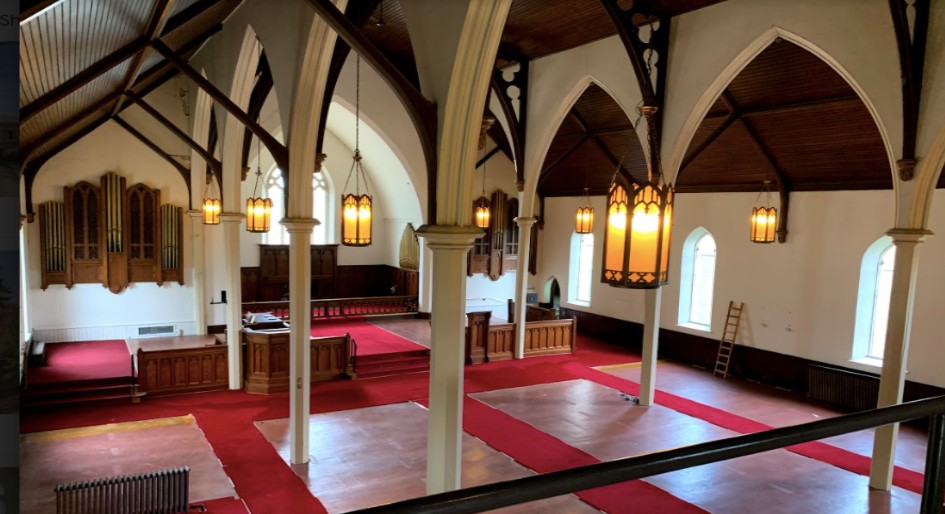
Mixed-use restoration set for 150-year-old church

An estimated 9,000 churches and other religious spaces will permanently close in the next decade, according to a Toronto developer who is converting the 150-year-old St. James Anglican Church in Ingersoll, Ontario, into a mixed-use hub of office, event and retail space—now christened The Oxford.

“I truly believe that with some ingenuity and financial skill set, historic churches can be saved by being converted into commercial spaces instead of tearing them down to build condos,” says Developer Apostolos Sigalas. “We believe St. James Church would be best used in a way that will economically and culturally benefit the community – as a microbrewery, restaurant, and multi-use event space.”

The Oxford, about 30 minutes east of London, Ont., has been successfully rezoned for commercial use, offering three distinct event rooms at more than 3,000 square feet each, a commercial kitchen, production and storage facilities, two wine cellars, two loading docks, a modern furnace and boiler system, office spaces, and 38 onsite parking spots.

Sigalas’ design plans started by removing all religious symbols and is now in the process of adding contemporary fixtures while protecting the integrity and character of the century-old structure.

church

“In an effort to attract potential tenants to lease The Oxford in this precarious COVID-19 climate, I’ve arranged for over $1.2 million in government loans and grants that can be utilized to cover moving and renovation costs,” he says

The substantial government loans and grant amounts that have been arranged for the potential tenant include:

  • Approved for $40,000 in municipal facade renovation grant and loan
  • Over $50,000 in municipal property tax grants available
  • Up to $350,000 government loans available for equipment and leaseholds
  • Up to $650,000 in federal government loans for business development costs

Enhancing hospitality cleaning and safety solutions

COVID-19 has seen the requirements for cleaning shift in all kinds of facilities, but one that should not be overlooked is foodservice. Naturally, restaurants and other facilities in this sector have always had to be particularly sanitary. But, in the time of increased focus on infection prevention and control, both operators and suppliers have had to up their game.

The scope of the cleaning and disinfecting measures put in place in foodservice is broad. Solutions throughout 2020 have ranged from more frequent and thorough disinfecting to contactless service to ensuring top-quality air ventilation.

The ventilation question

For example, the fact that coronavirus is a ubiquitous airborne threat is a major reason that closed indoor spaces have been touted as such a danger. In response, noted a recent assessment, restaurants and other tight-space facilities have been working to regain patrons’ confidence by bolstering the ventilation.

A key measure of this is known as the “air change rate” — in other words, how often the still indoor air is exchanged with non-contaminated, kinetic outside air. In the days before COVID-19, this wasn’t a key focus of facility design, notes David Krause, an industrial hygienist and founder of Healthcare Consulting and Contracting. Instead, ventilation was used mainly to limit smells, CO2 levels, and other pollutants. Increasingly, though, in this world of heightened awareness, many facilities are placing more emphasis on improving this. Methods may be as simple as keeping windows and doors open, when the weather allows for that, while others are implementing HVAC upgrades.

Sensible dispensing

Another commonly touted measure to help curb the spread of the virus in facilities like restaurants has been automatic soap and sanitizer dispensers. These were growing as a cleanliness trend before COVID-19 but they have quickly become ever-present.

They’re available in a variety of forms: tabletop dispensers, free-standing modules, wall-mounted options. But what is vitally important, explained foodservice cleaning expert John Goetz, is ensuring they are doing the job correctly and efficiently.

Goetz is a global product manager for kitchen and laundry for Hydro Systems, a leading chemical dispensing equipment provider. He notes that foodservice has been one of the most heavily impacted sectors during the pandemic. A core component of that has been loss of foot traffic and customer base, with indoor dining closed in many regions for long periods and patrons encouraged to seek takeout or pickup options instead.

However, sites are still open for limited dining and for these takeout options. Even what is arguably 2020’s most prominent foodservice operations trend, the rise of the ghost kitchen, requires strict sanitation. Fewer customers on-site does not equate to less necessity when it comes to hygiene and cleaning. What it does mean, notes Goetz, is that while the demand for dispensers – whether it be hand sanitizer or chemicals for industrial washing machines and dishwashers – remains, the usage volume has decreased. “It plays into the need for cost-effective and simple dispensers,” he says.

Hydro Systems is tackling that problem head-on. At the recent ISSA Show North America, held virtually due to the pandemic, the company showcased its latest dispenser products. Most of their offerings in this field are electronically powered and dispense a controlled amount of multiple chemicals into kitchen washing machines or dish machines. Goetz notes they’ve tried to focus on making sure that clients and end users know the roles that dispensers play in curbing the spread of COVID-19 and the importance of the right temperature and chemicals in getting virus kill rates up.

One of those products is the DM500, a two-product wear-wash dispenser with no programming. Another, to follow in 2021, is a connected wear-wash dispenser. Offering technology that ensures the optimized amount of chemical solution is dispensed avoids the untenable scenario of an end user needing to come into contact with the chemicals or, worse still, ending up free pouring or mixing. Instead, with the push of a button or the squeeze of a trigger, the job gets done right.

There’s a sustainability benefit as well as the safety perks, too. In automatically dispensing the right amount and concentration, these types of products help to cut down on the waste you would see with ready-to-use systems, says Goetz. “Getting the job done first time in terms of kitchen and laundry means less rewash, which of course uses more chemicals, more water, more utility.”

Hydro Systems, of course, is just one supplier in this crucial field. We’re living in a time when safety practices – and the communication of those practices – have hit a new peak of importance. As such, offering safety and security has become vital, and hospitality is no different. The instruments are out there to enhance safety and hygiene across all facilities, and hospitality and foodservice is a perfect microcosm of the issues at hand when viewed through a microscope.

NRC’s new advanced materials research facility opens in Mississauga

The National Research Council (NRC)’s new advanced materials research facility has opened in Mississauga.

The Diamond Schmitt-designed building will serve as a national clean energy hub, supporting and undertaking foundational research of new materials for clean energy and other applications and transitioning them to industrial use.

This facility will bring companies, government, and universities together to collaborate on breakthrough projects in clean technologies and advanced materials, as part of the Canadian Campus for Advanced Materials Manufacturing (CCAMM), a joint initiative between the NRC and the Xerox Research Centre of Canada (XRCC).

“Our vision is for this collaborative hub to become the home to new technologies that will enable industry to be more sustainable.” said Roger Scott-Douglas PhD, acting president, National Research Council of Canada. “We look forward to working with our partners in accelerating the development of advanced materials technologies and their commercialization into disruptive products for industry.”

The new 21,500 square-foot-facility is designed with flexible laboratory and office spaces that are divisible by movable and removable partition systems and with multiple layers secure access. The laboratory program includes characterization, dry, wet and a high bay pilot lab to accommodate the range of NRC’s research. The two-storey building is designed with the ability for future expandability vertically with minimal disruption to ongoing research activities.

The building exterior of precast concrete cladding and vertical fins provides solar shading and light dispersion into the interior. The façade provides a distinctive presence on the site while maintaining a complementary relationship with the surrounding campus architecture of the Sheridan Science and Technology Park.

“The NRC Mississauga research facility is a unique facility that will act as a focal point for the development of high-performance advanced materials manufacturing.“ said Eric Lucassen, project architect, Diamond Schmitt. “The interior laboratory spaces and casework systems have been designed to provide maximum flexibility for the user groups while the exterior building features of rigger, quality, and permanence speak to some of the core values of the NRC.”

Photo by Tom Arban

The bright idea behind fall-planted bulbs

Most GTA condominium grounds lack planted interest, texture and colour in the month of April and into early May. Most perennials don’t begin to show any interest until late May, with shrubs only sporadically prior to that.

Boards often become frustrated with this lack of early spring impact and, as a result, engage in a frenzy of pansy planting in the containers on either side of the main entrance. This approach leaves the balance of the landscape palette sorely in need of more—that extra touch that can enliven a condo property, while leaving its neighbours behind in the desolation of a post-winter state.

The ubiquitous pansy, like any other annual, can amount to a big-ticket item that bears little or no return on investment. They have to be planted every year and torn out by mid-July due to their lack of heat tolerance, leaving behind gaps in the landscape that have to be filled in a hurry.

The solution? Fall-planted bulbs. Usually what comes to mind for most when they hear these words are tulips—those keepers of the May time festivals such as the Canadian Tulip Festival held in Ottawa each year.

Despite their grand performance and eye-catching and massive colour displays, these varieties of tulips are usually trashed immediately after they are spent blooming in condo yards. New bulbs are planted again the following fall. The repeat cost is a sore point reality; if left in the ground, they would only partially re-bloom the following year and less so the next year, leaving only masses of floppy vegetable-looking foliage behind until early July—not an effective long-term, low-maintenance or cost-effective solution for the average condominium manager seeking to achieve both.

With a bit of research, however, and a great landscape design, a plethora of alternate fall-planted bulbs can be found. These bulbs should always abide by three crucial characteristics.

Perennialization

This is a term for fall bulbs that will not only return the following year, but will send out little off-springs known as bulblets. This not only increases the number of bulbs for future beauty, but also strengthens and enhances the performance of the original parent bulbs.

Tidy and Compact Habit

Nothing looks worse than a tall tulip, daffodil or narcissus that has flopped over once blooming starts. Tighter growing varieties are not only less likely to fall over; they are less prone to damage by pets or sports as their foliage and flowers can withstand some foot traffic.

Early Season Bloom Time

Nothing lifts winter doldrums like colour in the landscape when it is least expected in late March and early April. Such bulb varieties also provide a six-week jump ahead of the schedule of the common tulip and daffodil.

Favourites From Our Short List

Very Early Bloomers

Iris Reticulata ‘Harmony’- Dwarf Iris: Very early bloom time, as early as late March, depending on the site and will multiply over the years to produce more and more blooms.

Galanthus ‘Elwesii’ – Snowdrops: As the name implies, these very hardy and long-lasting white blooms often flower through the snow.

Snow Crocus ‘Ruby Giant’ – Snow Crocus: As the name implies, these are a well-known harbinger of spring and like their other March and April blooming siblings are effective in large drifts at the base of trees.

Early Bloomers

Tulipa ‘Dasystemon Tarda’: Tulipa ‘Puchella Eastern Star’ and Tulipa ‘Saxatilis’ – Botanical Tulips: While the typical May blooming tulips have the liabilities of flopping foliage and dwindling bloom-ability from year to year, botanical tulips multiply (naturalize) over time, have a low and tidy growth habit and an array of colours. The three noted here are great choices for the condominium landscape as they appear tough against the effects of dogs, rabbits and other sources of damage that can occur within the common elements.

Narcissi ‘Thalia’- Thalia Narcissus: We are all familiar with daffodils and narcissus, which come into their own in time for the Canadian Cancer Society’s spring fundraising drive. In the landscape, they pose one central challenge: they will multiply over time, but only if the foliage is left in place once the flowers have finished. For some, this provides a visual problem as that foliage must wither completely before being removed and, in most cases, that occurs no earlier than Canada Day. Thalia narcissus has narrow almost grass-like foliage that is short and more pleasing to have around after its pure white fragrant flowers have finished their show.

Later Bloomers

Allium ‘Globemaster’- Ornamental Allium: Beginning in May and into early June, there is no better show stopper on condo grounds than alliums. These are members of the onion family and sport perfect purple spheres 8 inches to 10 inches across and appear to float in the landscape. They are a must-have if you want your property to make an impression.

Plugging fall-planted bulbs into the right bed and the right design will illuminate them to their fullest and brightest potential in the spring landscape.

Kent Ford is founder of KFDG Inc., a Toronto-based Landscape Design and Project Management Firm www.kentforddesign.com. He can be reached at 416-368-7175 or [email protected]

Photo by KFDG Inc: Bulbs were incorporated into the planting design and installation at 801 King Street West (Citysphere Condominiums) in Toronto. There are benefits to planting the bulbs in large groups or drifts to maximize visual impact and create the illusion of a forest floor alive with spring colour and interest.

Floor scrubber market keeps growing during pandemic

The global industrial floor scrubbers market is estimated to surpass a valuation of C$3.7 billion (US$2.9 billion) by the end of 2020, boosted by the COVID-19 pandemic, according to a new report.

Global market research firm Fact.MR’s data suggests the industry is likely to continue to gain traction during the coronavirus outbreak. The market has benefited from the strict implementation of health and safety rules, as well as increased demand for industrial floor scrubbers in the healthcare and pharmaceutical industries. However, reduced demand from the foodservice and manufacturing sectors due to lockdown restrictions will limit growth in 2020.

The market is likely to reflect fast growth throughout the forecast period between 2020 and 2030, supported by the incorporation of automation/robotics technology in product offerings for applications, not only in healthcare, but also in manufacturing, food, and retail sectors.

Market players in the industrial floor scrubber market are focused on product launches, strategic collaborations in the industry, and long-term contracts with major end-user businesses. Also, manufacturers are also looking to leverage the short-term increase in demand during the COVID-19 pandemic to bolster sales and revenue. The competitive landscape of the industrial floor scrubber market has been defined by efforts by manufacturers towards strategic collaborations and product launches for sustainable revenue streams.

Key takeaways

  • The global industrial floor scrubbers market reached a valuation of US$3.1 billion in 2019 and is expected to grow at over 8% CAGR through 2030.
  • Walk-behind industrial floor scrubbers are anticipated to retain a higher market share through 2030.
  • On the basis of application, manufacturing and warehousing sector applications will reflect higher demand.
  • North America remains a leading regional market for industrial floor scrubbers
  • With higher demand from the healthcare and pharmaceutical sectors during the coronavirus pandemic, the industrial floor scrubbers market will experience steady growth.

Product launch and strategic collaborations gain traction

Major players in the industrial floor scrubbers market are Hako Gmbh, Polivac International Pvt. Ltd., Alfred Kärcher SE & Co. KG, Dulevo International S.p.A., Truvox International, Nilfisk A/S, Amano Corporation, Diversey Inc., Numatic International Ltd., and Hefei Gaomei Cleaning Equipment Co. Ltd. The market is moderately fragmented, characterized by regional and local players.

Building permits rebound on Vancouver Island

The total value of building permits issued on Vancouver Island during the third quarter of 2020 rebounded to $681.6 million, or 40 per cent above the second quarter of 2020.

This gain came mainly from non-residential permits which rose 252 per cent to $254.5 million with commercial permits jumping 416 per cent to $210.5 million. Institutional-government permits rose by 66 per cent to $28 million in the quarter, while industrial permits fell 31 per cent.

Residential building permits edged three per cent higher over the second quarter but decreased 13 per cent compared to the third quarter of 2019.

“Interest in communities across the Island has been strong during the last number of years, and despite the coronavirus pandemic, shows signs of continuing,” said Rory Kulmala, CEO of the Vancouver Island Construction Association.

The Island’s construction rebound was evident in all regional districts and was broadly based in most instances. The Comox Valley surged 123 per cent, Strathcona was 52 per cent higher and the Capital Regional District saw a 42 per cent jump.

Leading in residential building activity was the Powell River Regional District with a 363 per cent increase, followed Mount Waddington Regional District with a 216 per cent increase and the Comox Regional Valley with a 123 per cent increase.

“Smaller communities continue to experience a significant amount of residential building as demand for housing increases, said Kulmala. “We suspect retirees are continuing to come here in search of affordable housing options. As well, as more employees in urban areas shift to working from home, rural towns and villages are becoming more popular because of their lower home prices and increased livability.”

In Victoria, investment spending on non-residential building construction in the Victoria metropolitan area rose in the three months ending in September due to a rebound in commercial and public permits.

“Building permits are a leading indicator of activity in the construction industry,” said Kulmala. “Construction – both residential and non-residential continues to weather the pandemic despite continued uncertainty,”

Construction activities will continue to play a significant role in Vancouver Island’s economy recovery during and following the pandemic.

If the second wave doesn’t cause further movement restrictions, the 2021 outlook becomes brighter and construction would likely increase over this year. Overall, the pandemic will result in less construction activity on the island this year compared to last year.

Quadrangle changes name to BDP Quadrangle

Toronto architecture firm Quadrangle has changed its name and is now operating as BDP Quadrangle.

The name builds on the partnership Quadrangle formed in 2019 with United Kingdom-based global architecture, design, and engineering firm BDP, establishing Quadrangle as BDP’s North American headquarters.

“We joined BDP to expedite our expansion into new geographies and sectors and also to enhance our practice with access to new skills, design services, and thought leadership,” said Anna Madeira, BDP Quadrangle’s executive principal. “Recognizing that client needs are becoming increasingly multidimensional and international, our name now indicates how we are able to seamlessly address projects across greater industries and boundaries.”

The new name retains Quadrangle’s 35-year history and reputation, while also conveying their position as part of BDP’s network of 1300 professionals collaborating across studios in the United Kingdom, China, India, Ireland, the Middle East, the Netherlands, and Singapore.

“What brought us together was a desire to expand our reputation and strengthen our business with presence into the North American market” said John McManus, BDP’s chief executive. “Now, working together, we are globally diversifying our expertise, embracing a higher calibre of design and professional rigor. We look forward to furthering the impact that we will achieve together.”

According to Quadrangle co-founding principal, Les Klein, “Already we have found that this partnership has enhanced the ambition and diversity of our work. With this step we are underscoring the constant evolution and drive for improvement that has always characterized our studio. We believe that our growth with BDP will strengthen the way we think about and practice architecture, design and urbanism in the future.”

Founded in 1986, Quadrangle is an architecture and interior design firm renowned for its client service resulting in long-term relationships. The firm’s portfolio spans the commercial, mixed-use, multi-unit residential, content media and retail markets, and includes specializations in areas such as masterplanning, accessibility, sustainability and adaptive re-use.

Chargebacks and lessons learned in 2020

No owner wants to hear the word “chargeback” and no condominium corporation wants to find out after they start lien proceedings that their “chargeback“ is uncollectible. Amlani v. York Condo Corporation No. 473 (Amlani), a case from the Ontario Superior Court of Justice which was recently upheld on appeal, provides us with some important guidance on chargebacks and how a condominium should handle them.

It reaffirms that condominiums must take steps to ensure that they actually have the legal authority to charge back before they do so. It also reminds us that condominium corporations need to act reasonably and in a cooperative manner when dealing with owners, especially if the owners themselves are acting reasonably.

Amlani involves a condominium in the Greater Toronto Area. Mr. Amlani purchased a unit in this condominium in 2013, specifically as it did not ban smoking. He was a long-time smoker. In 2015, complaints about smoke coming from his unit were resolved, but in 2017, new complaints were received. Mr. Amlani attempted to resolve these new complaints, but the condominium insisted that he stop smoking. He decided to move out of the unit until the issue was resolved. These new complaints were the basis of the court action.

Under the Condominium Act, 1998 as amended (the Act), there are various provisions that allow a condominium corporation to charge back costs to a unit that are in addition to the monthly common expense fee. If not paid, the condominium corporation can collect those additional charges by registering a lien. Here are a few examples:

  • Insurance Deductible – s. 105
  • Costs incurred to obtain compliance order – under s. 134
  • Maintenance and repair costs when an owner fails to do it themselves – s. 92
  • Costs incurred for an owner’s failure to comply with a s. 98 agreement – s. 98

In addition to the Act, most condominium declarations have an indemnification provision which allows the condominium to charge back certain costs and collect them as they would unpaid monthly common expense fees. However, not all indemnification provisions are created equal. The Amlani case is a perfect example of how relying on an indemnification provision in your declaration is risky business.

In Amlani, the condominium relied on an indemnification provision in their declaration to charge back legal fees incurred to enforce the rules. The subject matter of the dispute centred around smoking in a unit. YCC No. 473’s indemnification provision is a typical one you see in many condominium declarations (especially older ones) unless the declaration was amended and the indemnification provision was strengthened. YCC No. 473’s indemnification provision states:

Each owner shall indemnify and save harmless the corporation from and against any loss, cost, damage, injury or liability whatsoever which the corporation may suffer or incur resulting from or caused by an act or omission of such owner. . . to or with respect to the common elements and/or all other units except for any loss, costs, damages, injury or liability caused by an insured (as defined in any policy or policies of insurance) and insured against by the corporation.

All payments pursuant to this clause are deemed to be additional contributions toward the common expenses and recoverable as such.

At the end of the day, the condominium was not able to enforce their lien for the chargeback of approximately $25,000. They had to pay the owner $9,679.75 in damages under the oppression remedy provisions in s. 135 of the Act, and they had to pay the owner’s legal costs of $113,340. These amounts are in addition to the condominium’s own legal costs incurred.

The condominium, in this case, took a huge risk and the cost consequences which will now be borne by all owners are significant. The Amlani decision is a good reminder of the importance of carefully reviewing your declaration’s indemnification provisions as well as the statutory provisions which allow chargebacks to make sure that you actually have the legal authority to charge back the type of costs you are looking to recover.

Although Amlani is a recent case on this issue, it is not the first case that has disallowed a condominium the ability to charge back legal fees based on similar wording in a declaration. A failure to carefully review your indemnification provisions can be costly, as seen in Amlani.

The Amlani decision also provides a good nudge to all condo directors and managers to have the corporation’s indemnification provisions reviewed in order to determine if an amendment is necessary. Most original indemnification provisions need to be amended as the authority to charge back is very limited. From my own experience, when I was drafting provisions to amend declarations a few years back to include smoking/cannabis restrictions, I advised my clients to take the opportunity and also revise the indemnification provisions in the declaration and strengthen it by expanding the situations in which a chargeback could occur.

A properly drafted indemnification provision may avoid the situation YCC No. 473 found itself in. The courts have upheld charge backs with properly drafted indemnification provisions in the past. See Italiano v. TSCC No. 1507 as an example. In that case, the condominium’s declaration stated:

In the event that the owner of such residential unit fails to abate the noise, the board shall take such steps as shall be necessary to abate the noise … and the owner shall be liable to the corporation for all expenses incurred by the corporation in abating the noise, which expenses are to include reasonable solicitor’s fees on a solicitor and his or her own client basis and shall be deemed to be additional contributions to common expenses and recoverable as such.

Referencing section 1(1) of the Act, which defines a “common expense” to include common expenses specified in the declaration and section 7 of the Act, the court upheld the condominium’s ability to charge back the costs of an arbitration to the unit owner. I do not think that Amlani has eliminated the ability of a condominium to rely on a properly drafted indemnification clause in a declaration to charge back costs that are covered by that clause as a common expense. All that Amlani does is reinforce the long-standing principle that the condominium’s ability to charge back pursuant to an indemnification provision is limited by the wording of that provision.

Unfortunately for YCC No. 473, the indemnification clause they were trying to rely on to justify the chargeback did not cover the type of costs they were trying to recover. In YCC No. 743’s declaration, in contrast to the provisions of the declaration in TSCC No. 1507, legal costs for enforcement steps were not defined as a common expense in the declaration.

Condominiums need to be careful when they decide to chargeback costs to an owner and must ensure they have the legal right to do so before they start lien proceedings. A failure to do so could lead to a significant loss of money for the condominium as illustrated in the Amlani case.

In addition, the court in Amlani, as well as other cases, has made it very clear that the courts will look to the conduct of the condominium corporation when deciding issues. In this case, YCC No. 473 may have received less of a financial hit had it dealt with the owner in a more conciliatory manner to begin with and followed their own bylaws, which required the condominium and owner to use best efforts to resolve any disputes through good faith negotiations.

A final lesson from Amlani is to check your own bylaws and declarations to see if such a provision and obligation exists in your own governing documents. Even if it doesn’t, it would still be in the condominium’s best interest to act in good faith to avoid a claim against them for oppression and the damages that may flow from such a successful claim. In Amlani, it may have saved the corporation at least $10,000, if not more.

Sonja Hodis is a litigation lawyer based in Barrie who practices condominium law in Ontario. She advises condominium boards and owners on their rights and responsibilities under the Condominium Act, 1998 and other legislation that affects condominiums. She represents her clients at all levels of court and Tribunals and offers mediation and arbitration services. Sonja can be reached at (705) 737-4403, [email protected] or via her website at www.hodislaw.com.

NOTE: This article is provided as an information service and is not intended to be a legal opinion. Readers are cautioned not to act on the information provided without seeking legal advice with respect to their specific unique circumstances. Sonja Hodis, 2020 All Rights Reserved

GRESB adjusts 2020 path to the stars

KingSett Capital earns accolades for achieving the top score among 28 prominent Canadian commercial real estate portfolios reporting to the 2020 GRESB global assessment of environmental, social and governance (ESG) performance. The real estate fund manager has additionally been recognized as the top performer for North and South America in the category of private diversified office/retail properties.

Despite the tumult of the COVID-19 pandemic, 1,229 real estate entities reported this year, representing a 22 per cent increase from 2019. Participating portfolios from every continent except Antarctica collectively hold 96,000 real estate assets valued at more than USD $4.8 trillion.

Five other Canadian participants also emerged as 2020 leaders, as results of the 11th annual benchmarking exercise were released earlier this week. QuadReal Property Group attained the highest score globally for diversified private portfolios. BentallGreenOak was tapped in two categories — as the manager of private industrial properties and the developer of office/residential projects in the Americas region.

GWL Realty Advisors and Brookfield Property REIT also led on the development front in North and South America, with GWLRA named as the top-performing private developer of office/residential projects and Brookfield getting the nod as a listed retail developer. Ivanhoé Cambridge was named a leader for private retail properties.

RioCan was also a standout performer in the GRESB public disclosure dataset for listed real estate companies, which is an additional reporting exercise tied to indicators for the disclosure of sustainability governance and implementation, operational performance data and stakeholder engagement practices. It earned the top Canadian score —97 — and placed in level A of the dataset’s five-level hierarchy.

“Canada is number one in GRESB in North America,” affirmed Dan Winters, GRESB head for the Americas, who sketched out this year’s big-picture results in an online presentation.

More than 50 per cent of participating Canadian portfolios were grouped in the top two brackets of results — indicating commitment, oversight, implementation and measurable outcomes related to seven different ESG aspects — with 11 earning 5-star status and six attaining a 4-star rating. Growing from an initial handful largely aligned with major pension funds, the field of reporting participants now encompasses a broader cross-section of private companies, investment and fund managers and REITs. In addition, Canadian institutional investors hold sway among GRESB’s investor members who subscribe to the data.

“Canada has some really strong leadership emanating from the very top, from their pension plans,” Winters noted. “We’re really an investor-led phenomenon, and it’s really institutional investors that are driving us along this journey. There’s tremendous pressure and push with the capital.”

Although the actual collective Canadian score was not revealed, a graphic plotting of national performances among this year’s 317 portfolios based in North and South America shows Canada well ahead of the United States, Mexico and Brazil. As a global region, those participants — collectively holding nearly 43,000 real estate assets valued at more than USD $2.1 trillion — posted the lowest the score this year, at 69.

However, parsed out of the Americas pack, Winters hinted the Canadian score is much closer to Australia/New Zealand’s leading tally of 77. While Canada has consistently outperformed the U.S. in previous assessments, he noted that it “extended” that lead this year.

Otherwise, global region scores are more closely bunched. The 187 Asian portfolios achieved an average score of 72 across 9,650 assets collectively valued at USD $1.15 trillion. In contrast, the European score is derived from a greater number of smaller portfolios. There, 610 GRESB respondents collectively holding 40,800 assets valued at USD $1.2 trillion nudged slightly ahead of the Americas, posting an average score of 69.5.

This year’s global average of 70 might appear to be a slip from the 2019 average of 72. However, it’s reflective of newly instigated reporting requirements and a readjustment of the weights attributed to the various components of the score to place more emphasis on asset-level performance measurements.

“We are working to transform and transition into a performance environment,” Winters said.

Looking back at GRESB’s 11-year trajectory, he suggested it has been a course somewhat in parallel with the rise of real-time reporting and data analytics. Many of the initial data collection challenges that reporting entities encountered have now eased considerably.

“It was a tricky business. No one had done that before. Maybe you could get ‘spend’, but getting consumption data and being able to manipulate it and report it outwards was very, very difficult,” Winters recalled. “As we look forward, we would like to achieve performance insights and move to what we call benchmarking 2.0, where we can define and score true performance and do it with global and local targets.”

Graffiti is more than just scrawl for facility owners

Graffiti is a fact of life for commercial building managers in major urban centres. This unauthorized ‘art’ is typically the first sign that undesirable people are loitering around a building after normal weekday operating hours and on weekends.

Graffiti vandals tend to prefer vacant buildings and, as more people work from home during the pandemic, these unoccupied spaces create more opportunity for tagging. 2020 has seen numerous high-profile incidents, from messages labelling COVID-19 as a hoax to hateful and discriminatory smears.

These have just been the most extreme examples of what is a prevalent problem, though. If ignored, graffiti will only grow and tarnish a facility’s overall image. It gives the impression that a building isn’t cared for or respected, resulting in a potential devaluation of the property.

Taking aim at unwanted tags

Immediate removal of unsolicited scrawls is necessary to prevent further tagging. Often, if a ‘tagger’ is aware a property was previously graffitied, it will mark the building before defacing a clean one as the tagger knows their ‘art’ won’t be washed away.

It is best to leave eradication to the professionals. Improper removal can embed graffiti or cause further damage to the property. For instance, power washing glass can break and crack it, and cleaning brick too aggressively may chip and damage the building material, seriously harming the finish and allowing water to seep through.

The first step in the removal process is for the abatement expert to assess the surface to be treated (brick, concrete, glass) and the product to be removed (ink, paint, stickers, posters). The abatement expert will then select the ideal product and process to eliminate the graffiti. Often, high heat, low-pressure water washing provides the best result for most building surfaces, with the least risk of wearing down the building material and compromising the property’s structural integrity. However, each surface is unique so treatment needs to be addressed on a case-by-case basis.

Once the scrawls have been successfully removed, the contractor may apply a graffiti-resistant coating to protect the building surface from wearing down and/or to make future cleaning easier.

Preventing property damage

While the most important step a facility manager can take to keep graffiti off their property is to remove it in a timely manner, there are several preventive measures that can reduce opportunities for tagging. These are based on CPTED (crime prevention through environmental design), a multidisciplinary approach to deterring criminal behaviour through proper design and effective use of the built environment. ‘Designing out crime’ includes (but is not limited to) clearing sightlines and creating natural surveillance through sufficient lighting, appropriate landscaping, and low-height walls or ‘see-through’ fencing.

Good lighting is one of the most effective crime deterrents. A near-constant level of exterior lighting should be maintained at night, if possible. At the very least, bright motion sensor security lights should be installed in secluded areas. Given the current vacancy of buildings by day, owners and managers should also have the building exteriors patrolled daily.

Landscaping should predominantly include low-growing plants and be properly maintained. Tall shrubs and/or overgrown vegetation are welcome hiding places for criminals. An exception to this is the planting of climbing vines or thick bushes along low-height walls, which can impede undesirables from passing through.

John Kalimeris is managing director of Graffiti Buffer. He has been in the graffiti removal business since 2001. John is also certified in CPTED, a proactive design philosophy that can help reduce the incidence of crime. He can be reached at 416-234-9222 or [email protected]

Wood and digital design tools

Construction employs about 7 per cent of the world’s population. Globally, $10 trillion is spent on construction-related goods and services every year accounting for 13 per cent of world output. But the industry has a productivity problem.

With a growing demand to build more affordable housing, accommodation, and infrastructure—and to deliver it better and faster—the construction sector in B.C. is taking the lead streamlining construction planning and technology. And they are doing it with a centuries-old material, abundantly available in our backyard—wood.

Today an increasing number of prefabricated and modular timber projects are being built in B.C. and beyond, taking advantage of modern manufacturing methods and technologies. Off-site construction continues to grow in popularity and B.C. companies are finding timber is an ideal material when it comes to this more accurate factory-made approach to assembling a building like a kit of parts.

But to do this companies need to take advantage of innovations in digital design tools, such as building information modelling (BIM), Design for Manufacturing and Assembly (DfMA), 3D rendering software and augmented virtual reality (AVR). More and more, the industry is seeing buildings designed in software like Revit, a 3D modeling application. The files can then be converted to a format for computer numerical control (CNC) machines in the factory.

In some cases, mass timber projects may be challenged by construction codes that can lead to the development of site-specific regulations and the proposal of alternative solutions. In these situations, BIM enables authorities and code consultants to clearly visualize the project and proposed solutions, quickening the approval process.

A novel approach of the precedent-setting 18-story tall timber Brock Commons Tallwood House at the University of British Columbia (UBC) was the intensive use of virtual design and construction (VDC) tools and methods. VDC is a subset of BIM primarily focused on the 3D geometric representation of a facility to support analysis for design and construction and can be particularly helpful for large scale mass timber projects. BIM allows the representation of the properties of the different building elements which are linked to a database – almost like a taxonomy of building parts. This allows the creation of a project prototype that can be tested and simulated against performance criteria.

BIM can also help the installer and manufacturer coordinate the delivery of the structural elements. For Brock Commons, BIM was used to plan out the delivery and unloading cycles for the timber elements. This exercise helps to avoid misplacement of elements and plan just-in-time delivery for construction sites where space is limited, and elements cannot be stored onsite, but are immediately erected and put in place.

A two-storey mockup and 3D modelling allowed the design team to discuss, test and streamline the process prior to site erection. The wood structure was completed in less than 70 days after the first prefabricated components arrived on site—four months faster than a typical project of this size, according to Fast + Epp, the structural engineering firm on the project.

BIM excels when combined with an Integrated Project Delivery (IPD) – a project delivery method that integrates people, systems, business structures and practices into a process that collaboratively harnesses the talents and insights of all participating experts. As part of this team CADMakers, the dedicated VDC consultant, was involved early and throughout the project to continuously incorporate design iterations and updates notifying the team of potential issues. The VDC model also functioned as a tool for communicating with the construction trades prior to tender to clearly define the scope of the project. The overall result is a more seamless, efficient and frequently faster design and construction process.

Improved collaboration and project visualization are especially useful when new building technologies such as mass timber are being implemented. BIM allows multidisciplinary teams to identify challenges sooner and help address them with detailed planning and precision.

Read about the potential impacts of BIM and mass timber construction in a report by the BIM TOPiCs Research Lab at UBC.


Photo: As the project owner, the University at the outset directly hired the VDC modelling firm to be a part of the project team, and the firm’s modellers functioned as facilitators throughout design development and construction. (renderings courtesy CadMakers, images naturally:wood, photographer KK Law)


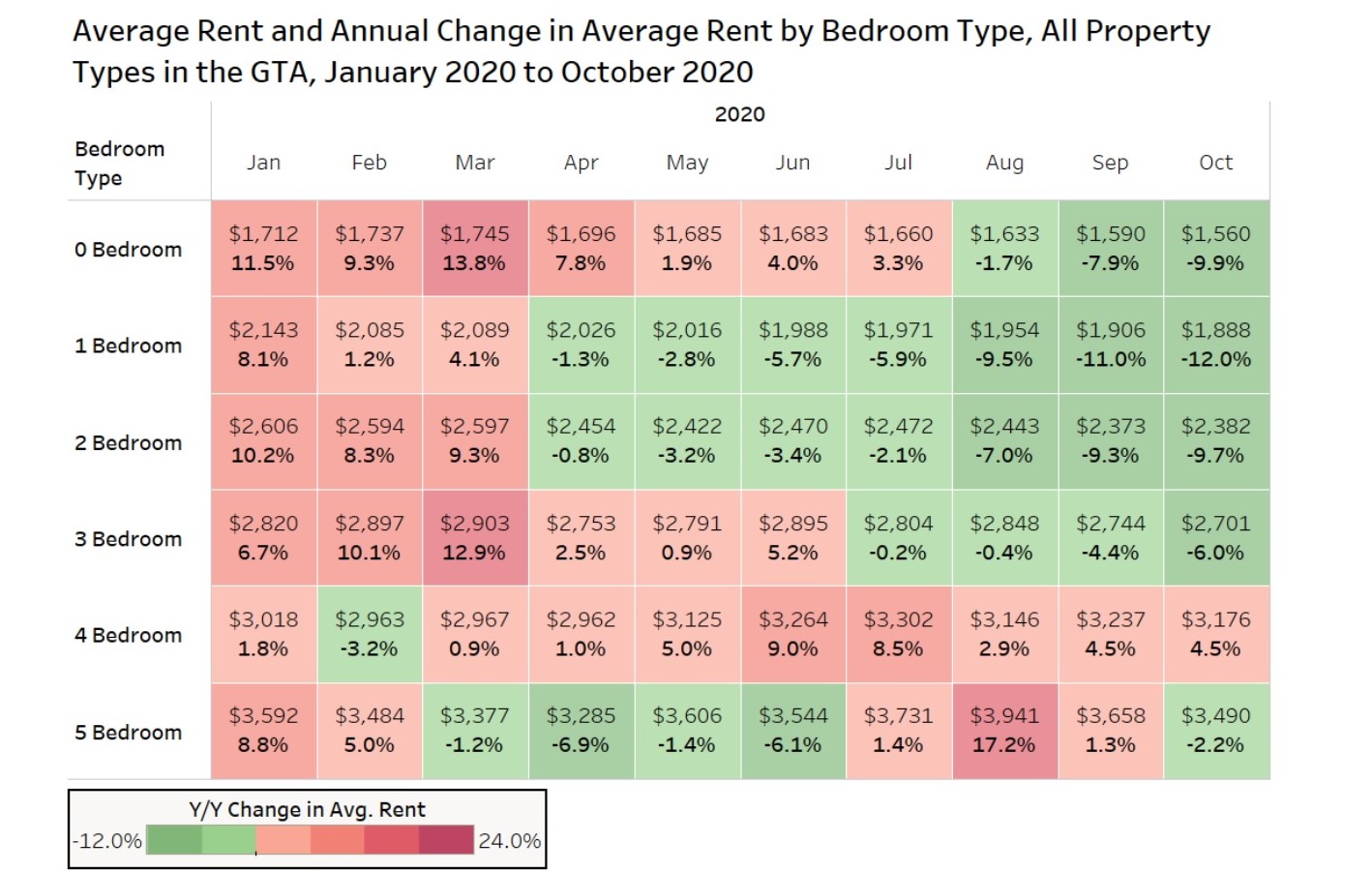
GTA rents continue to decline

GTA rents continue to decline for all property types, with condo rentals in downtown Toronto seeing the most significant drop in rates at 16 per cent compared to peak levels in 2019. According to new data from Rentals.ca, on average, a tenant looking to lease a condo in the downtown core paid $400 less in October 2020 versus a year ago.

The suburban communities surrounding Toronto—including Oshawa, Richmond Hill, Brampton, Burlington and Ajax—are continuing to fair better than most downtown neighbourhoods with average monthly rents for all property types declining less than 4 per cent since last October.

But in the harder-hit areas of East York, central Toronto, Etobicoke, Mississauga, Markham, Vaughan, and North York, we are seeing larger declines between 8 and 20 per cent. Scarborough has not been hit as hard, but rental rates were still down 6 per cent from October of last year.

“Average rent in the former City of Toronto continues to decline and will likely finish the year down 20 per cent annually, an unprecedented one year decline,” said Ben Myers, president of Bullpen Research & Consulting.

In January of 2020, studio, one-bedroom, and two-bedroom units were all flirting with double-digit rent growth, but the global pandemic quickly shifted the market, and GTA rents have slowly declined since then.

GTA rents

Reserve Fund Planning

When it comes to understanding and maintaining the physical assets of your condominium complex, nothing matters more than reserve fund planning. It is so important, in fact, that provincial and territorial governments have enacted legislation requiring all condo corporations to complete a reserve fund study every three to five years, depending on where you live.

Used to identify foreseeable repairs or asset replacements, and subsequently, to create a funding plan to manage those expenditures as they occur, reserve fund studies are essential tools that contribute enormously to a property’s long-term viability and sales potential.

 “The most common perception of a reserve fund is that it will ensure there is enough money to pay for major replacements and restoration,” observes Ryan Coles, Associate with RJC Engineers, Calgary. “This is true. However, condo owners often don’t think about the other purpose of their reserve fund contributions—to ensure they are paying for their fair and proportional share of common property usage.”

Anyone who has ever lived in a multi-residential building that was later converted to a condominium will understand the importance of reserve funds, especially if they have found themselves paying a special assessment for new elevators and boilers. As Coles points out:  “If you didn’t put in enough money to replace a roof by the time it reaches it’s end of useful life, then how is it fair for you to sell your unit and expect the next owner to foot the bill? Having a poorly prepared or out-of-date reserve fund study can negatively impact property sales potential when a resident goes on to sell their unit.”

reserve fund study RJC

Basic components of a reserve fund study

While each province has specific elements that must be included in reserve fund studies, at minimum Coles says the scope of it should include a site walk-through and a review of the following documentation:

  • original construction or major renovation drawings
  • correspondence with management/board/owners about past and planned capital projects
  • maintenance and inspection reports
  • bylaws to understand what is included as common property
  • and current fund balance and contributions.

“In preparation of the report and funding forecast, the reserve fund reviewer needs to understand the lifecycle data for each common property element, how many of the various elements are present, and the cost to replace or perform major repairs,” he explains. “An astute reserve fund planner will have an understanding about what elements could be replaced together to take advantage of efficiencies and cost savings.”

As an example, Coles cites flanged vinyl windows and door replacement as something that should happen concurrently with exterior cladding. “Removal and reinstallation of the windows and doors is required to properly detail the moisture barrier during a cladding replacement, and cladding removal is often required to facilitate window replacement,” he says. “Yet all-too we see scenarios in which one element was replaced within five years of the other.”

Meanwhile, in terms of sales implications, the reserve fund study is one of the main documents reviewed by potential purchasers, therefore the board of directors for the condo corporation should give serious consideration when choosing who will prepare the document.

“If selecting based on price alone, you will get what you pay for,” says Coles. “A poorly done reserve fund study, with unrealistic life expectancies or insufficient budget estimates could leave the condominium corporation with insufficient funds for needed repairs or replacement of common elements, necessitating a large increase in reserve fund contributions or even a special assessment.”

Province by province: what’s the difference?

According to Coles, each province has slightly different rules about who can conduct reserve fund studies and how often they are required. In B.C., for instance, they are referred to as ‘depreciation reports’ and they are required every three years. Reserve fund studies in Alberta are required every five years, and in Ontario, it’s every three. “One should be familiar with their own provincial Condo Act & Regulation in order to confirm the details of reserve fund requirements,” he says.

Risks and impacts of failing to comply

Having a poorly prepared or out-of-date reserve fund study can lead to several consequences for all condominium building stakeholders, including:

  • a negative impact on property sales when someone goes to sell their unit
  • unrealistic life expectancies or budget estimates
  • insufficient funds for repairs or replacement of common elements, necessitating a large increase in reserve fund contributions or even a special assessment.

In short, Coles’ recommendation is this: “If you are a condominium corporation, then you require a reserve fund study. All condominium boards across Canada should be engaging qualified consultants to assist them in the review of their common property and preparation of their capital plan. The importance cannot be understated.”

For more information, contact Ryan Coles at [email protected] directly, or visit: www.rjc.ca

Parcel deliveries create more woes for landlords

With many regions across Canada in the throes of a second lockdown and the holiday season now in full swing, multi-residential property managers are facing a surge in parcel deliveries driven by a huge increase in online purchasing. For the e-commerce sector, this is something to celebrate. But for resource-strapped landlords ill-equipped to manage the daily deluge of incoming groceries and Amazon shipments, it means more strife, additional administration, and potentially unsafe conditions for residents.

As Joe Hoffer of Cohen Highley LLP points out, online shopping isn’t anything new, but the pandemic has accelerated the trend by way of store closures and strict measures to keep people physically distanced. According to Statistics Canada, e-commerce revenues increased 110 per cent between May 2019 and May 2020—and that’s well before “Black Friday” sales and holiday gift guides augmented the consumer appetite.

“By now, most landlords have instituted a policy, making it clear that tenants are responsible to arrange for pick-up of their parcels, and that parcels should not be delivered to their units, but rather, left at the entranceway or in the lobby,” Hoffer says. “If a landlord has no policy, then that landlord is at risk of liability for theft, loss, and other damages.”

In other words, a parcel delivery policy is something no landlord should be without.

Randy Daiter, Vice President, Residential Properties, at M&R Holdings, says his company instituted an updated version of its original policy early in the pandemic, when safety and infection control became utmost priorities. “Given the importance of practicing physical distancing and reducing external traffic flow into our buildings, we asked that our residents continue to pick up their deliveries and packages outside the building whenever possible,” he says. “It’s the resident’s responsibility to make arrangements for the retrieval of their deliveries. However, for residents with medical or mobility issues, or for those who are self-isolating, alternative arrangements can be made.”

That, according to Hoffer, is an important Human Rights Code consideration. “If a tenant has serious mobility issues and is unable to comply with a policy requiring them to pick up packages at a drop-off area in the lobby, then the landlord is obliged to ensure there is a means to accommodate the tenant’s needs,” he explains.

A good policy should also address liability, making it clear—in bold letters, says Hoffer—that the landlord shall not be responsible for lost or stolen parcels and that the risk of such lies entirely with the tenant. Additionally, the policy should address that, “In cases of breaches of the FPPA, or bylaws, or the Fire Safety Plan, where violations of the policy are observed, steps to enforce compliance will be taken.”

Smart solutions for all seasons

While the holidays tend to bring in the most parcel deliveries of the seasons, it is unlikely we’ll see an end to the online shopping trend anytime soon. The December gift-buying rush will transition into January returns, and undoubtably e-commerce will continue to prove itself as a safe, reliable and efficient way of procuring goods, as the world awaits a vaccine. But even then, the trend will continue.

To keep up with the flow of deliveries, many multi-residential buildings have begun to invest in “smart locker systems” like Canadian-made Snaile. The automated locker system uses infrared light sensors to detect when a package has been inserted into a locker, at which point a notification is sent by text message or e-mail to alert the recipient of the delivery. Working in reverse, users can insert packages into their locker and let carriers know that they’re ready for pickup.

The process is clean, simple, touchless, and removes the involvement of building staff—not to mention the unsightly dumping of parcels at entranceways that could lead to trip and falls.

parcel deliveries“The Snaile locker system allow parcel recipients a contactless pick-up of their deliveries, at their own convenient time without involving any staff or requirement to leave the building,” says Patrick Armstrong, CEO. “Developers, landlords, and REITS have always been early adopters of our tech, but the pandemic has pushed condos way up. Now that parcels are everywhere, the problem is very evident and getting bigger.”


For older buildings with limited space, the solution may not be ideal, but most new builds are incorporating automated locker systems into their designs. Another plus for Snaile lockers is that they are accessible by a number of major carriers, including FedEx, Purolator, DHL and Intelcom, one of Amazon’s largest package delivery services in Canada.