





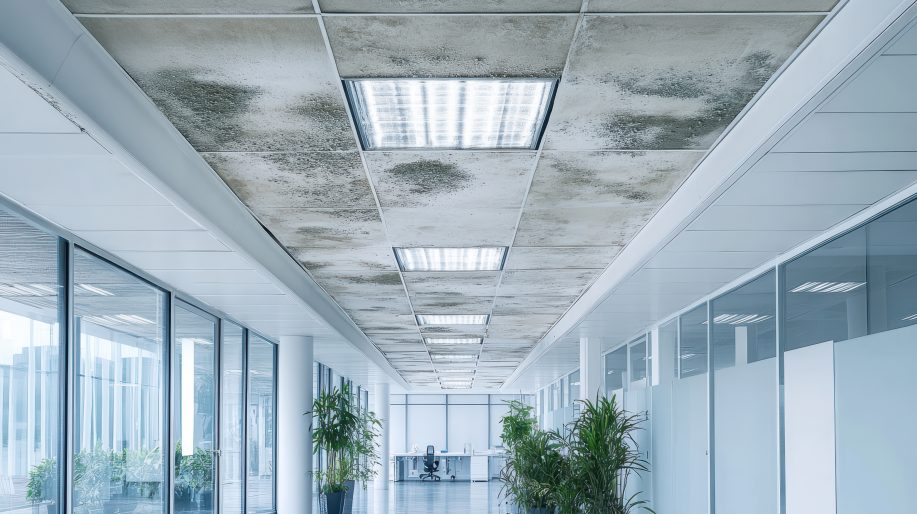
Moisture can wreak havoc on a building, from the roof to the walls to the air quality, so keeping your building dry is an important part of your maintenance practices. By creating a strategy that includes both interior and exterior maintenance, you can protect your building and its occupants through the winter and beyond.
Your roof
Regular roof maintenance should be conducted year-round to remove debris blocking the drains, clear the gutters, and address any leak concerns, but winter brings specific challenges that should be considered. Snow loads can become an issue in a season with heavy snowfall, and snow removal should be part of your roofing maintenance plan. With the freeze-thaw cycling of winter, ponding water can occur on the roof, and roofing membranes can expand and contract, causing them to split and become an entry point for water into your building. Conduct interior inspections to look for signs of moisture, such as stained ceiling tiles, puddles, or mould, to stay on top of potential issues with your roof.
If you think you have a leak, contact a professional to assess the condition of your roof, determine the leak’s origin, and apply a temporary repair until the weather warms up. Once spring comes, using infrared thermography can help to confirm the presence of water in your roof and provide some insight into possible next steps.
Your walls
The same visual inspections can be applied to your walls. Signs of staining, peeling paint, or a musty smell can be an indication that there is moisture behind the walls, which could lead to mould, lower IAQ, and health and wellness issues for building occupants.
Detection tools like a moisture meter can help confirm whether moisture exists that you can’t see. By using either a pin-type meter or a pinless meter, you can determine where moisture exists behind your walls and make informed decisions based on that data.
Your air quality
Indoor air quality can be affected if there is moisture in your building, and without proper humidity controls, the drier winter air can result in indoor humidity below 30 per cent, which creates conditions where viruses can survive longer. Taking proactive steps like regular HVAC maintenance, adding plants, and focusing on maintaining optimal humidity can help raise your IAQ, keep your building mould-free, and protect your staff and visitors.
To stay informed, consider using a hygrometer, which measures how much moisture is in the air. This can be a useful tool to gauge IAQ where there is existing water damage. Similarly, indoor air quality monitors can report airborne particulates, volatile organic compounds (VOCs), carbon dioxide levels, ozone, temperature, and humidity – all important factors for a healthy IAQ.
A successful winter maintenance plan means staying vigilant in detecting and addressing any moisture that enters your building.