



Commercial cleaning is a vast industry, encompassing everything from janitorial services to including window washing, furniture, carpets, air ducts, restoration, and more. The global cleaning services market is projected to reach over $111 million by 2030, which reflects a compound annual growth rate (CAGR) of 6.5 per cent from 2021 to 2030.
The perception of commercial cleaning used to mean checklists, shiny floors, and a “clean smell,” but that definition has evolved and today’s businesses are aligning cleaning decisions with fundamentals like employee wellness, indoor air quality, sustainability goals, and operational efficiency. Rather than treating janitorial services like a separate entity, many building managers are taking an integrated approach where all departments work together to maintain and improve the building.
What are the priorities and expectations for commercial cleaners to help maintain today’s buildings?
Healthier workplaces
Workplace conditions are becoming an important part of employee wellness and air quality is a top concern for many managers during allergy season. Upgrading HVAC systems to HEPA filters, focusing on limiting VOCs from cleaning products, and air duct cleaning all help offer better air quality for staff and visitors. Hygiene and sanitization also still a concern, of course, and improving those efforts with automation is allowing cleaners to offer better results.
Robotics
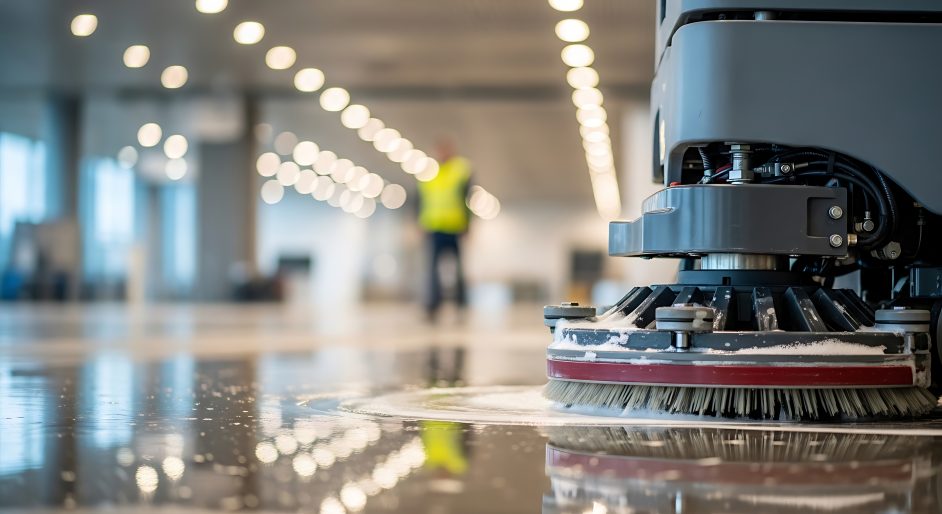
AI and automation are helping cleaning businesses better manage labour, improve efficiencies, and offer staff better work life balance. Tools like automated scrubbers can help simplify a large cleaning job like lobbies or hallways. Robotic lawnmowers can save time and money, predict weather conditions, and perform based on gathered data for best results. Automation also helps with fluctuating schedules and hybrid work, offering labour during off times when employees are not on call.
Data
More modern tools that use data to provide real-time insight are becoming the standard for today’s cleaners. Occupancy sensors, digital monitoring, and automated logs are all helping cleaners and maintenance managers to better allocate staff, cut costs on energy bills and inventory, and provide a more sustainable approach to cleaning and maintenance. Data is adding a layer of transparency that allows maintenance managers and janitorial staff to better plan and budget, assess practices, and execute their duties.
The maintenance and janitorial industries are ever-growing and ever-evolving, and knowing what clients expect can help business owners deliver on expectations, remain competitive, and build loyalty.