




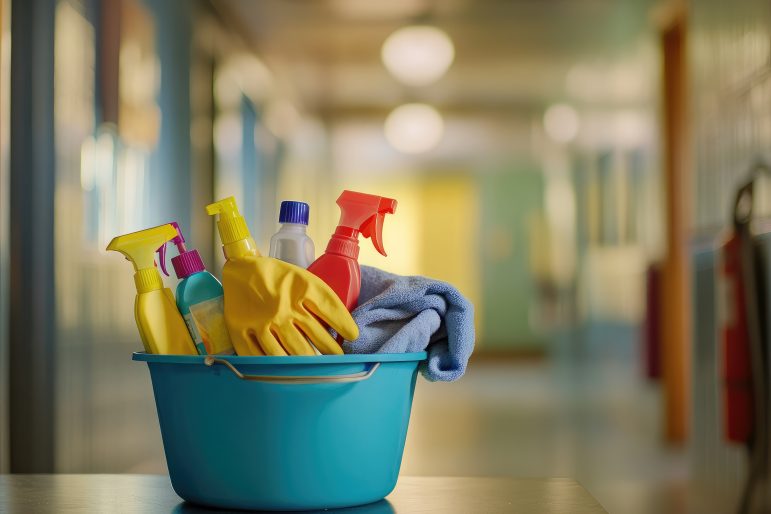
Commercial cleaning products can present a risk to janitorial staff and building inhabitants, so it’s important to know what’s in the products you’re using, the potentially harmful ingredients, and substitutions you can make for a safer environment. While greener choices can often be made, when harsh chemicals are being used, cleaning staff and managers need to be aware of the dangers and the factors involved to be able to make choices that lessen those risks, without compromising results.
According to the Canadian Centre for Occupational Health and Safety (ACCOHS), there are several factors that can affect the level of risk associated with a cleaning product, including:
- The individual ingredients of the product
- How the product is used or stored
- The ventilation in the area when it is being used
- If the product can be splashed or spilled
- If the product comes into contact with the skin or eyes
- If mists, vapours, or gases can be released
When working with strong chemicals, cleaners need to take steps to minimize risk factors and use products safely and effectively by:
- Knowing the hazards of that product before use
- Reading the label or safety data sheet
- Following the instructions or training for dilution, usage, and storage
- Asking for help if the label is unreadable
- Working in a well-ventilated space and taking fresh air breaks as needed
- Knowing what to do if there is a spill or emergency.
- Wearing PPE, such as gloves and goggle.
- Storing products in their original containers and following the manufacturer’s instructions.
- Checking containers for leaks or damage.
- Knowing how to call a poison centre or health care provider if someone has been harmed. Be sure to have the container or label available to tell the health care provider what products were used.
- Using cleaning scrubbers or mops that do not require hands to come into contact with the cleaning solution.
- Washing hands with water after working with a cleaner, and always wash before eating, drinking, or smoking.
- Disposing of unused products as per municipal guidelines for chemicals and hazardous waste. Ensure that staff does not reuse empty containers that could cause dangerous chemical combinations.
While some companies are switching out harsh chemical products for more sustainable options that contain natural, organic ingredients, many potentially dangerous chemical cleaners are still found in custodial closets. Managers and janitorial staff need to follow safe practices, read labels, and work towards minimizing exposure to these harmful products.