



Canada’s rental housing market is facing a severe shortfall, according to a recent report by National Bank of Canada Financial Markets. The study, which analyzed 2021 census data alongside population growth trends, reveals that despite increased construction efforts by developers, the country is still falling behind rising demand.
In 2021, the rental housing gap was relatively modest—just a few thousand units. However, as immigration surged over the next three years, the demand for rental units skyrocketed. By the end of 2024, the rental shortfall had ballooned to over 450,000 units, even though Canada was adding more than 450,000 new rental units annually. The problem? Demand had outpaced supply, with total rental needs exceeding 900,000 units.
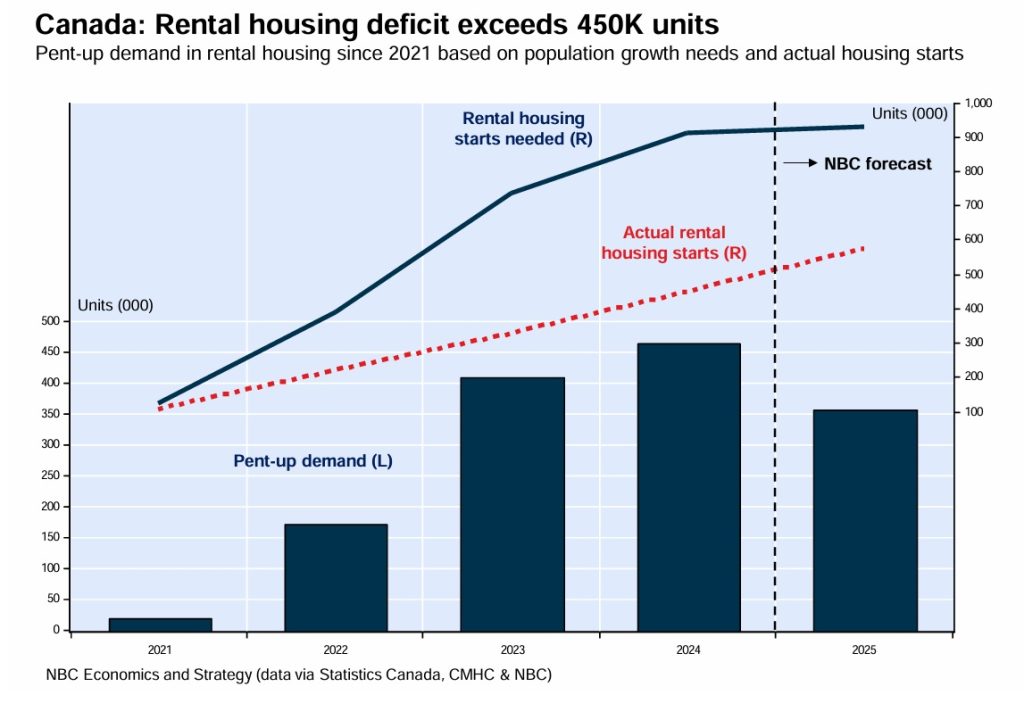 While construction of purpose-built rentals has accelerated, it hasn’t been enough to close the gap. The report emphasizes that even with this upward trajectory, the pace of building must remain high for years to come to catch up with demand, noting that zoning restrictions, labour shortages, and financing hurdles aren’t helping.
“Fortunately, faced with a supply problem that will certainly take years to resolve, the federal government has decided to tackle demand by drastically changing its immigration policy from 2025 to 2027,” analysts wrote. “Combined with a pace of construction that is expected to continue throughout the year, we estimate that the catch-up will begin as early as 2025.”
Looking ahead
National Bank forecasts that rental construction will continue to rise, driven by the persistent shortfall. However, even with scaled-back immigration and increased building, it warns that Canada’s rental market won’t reach equilibrium anytime soon. The mismatch between supply and demand has already pushed rents higher in major cities, and affordability remains a pressing concern.
In short, the report underscores the need for sustained investment, smarter urban planning, and innovative housing solutions to help push the rate of development.