


Housing has been a focal point in Canadian discourse for many years, with home prices, zoning reforms, and incentives for multi-unit housing development all part of the wider conversation. Lately, housing diversity has taken centre stage, as cities seek to adapt to demographic fluctuations and economic changes. While high-rise residential buildings offer the ability to house more residents within a compact area, not all urban settings are conducive to these developments—and living in high-rise communities isn’t for everyone.
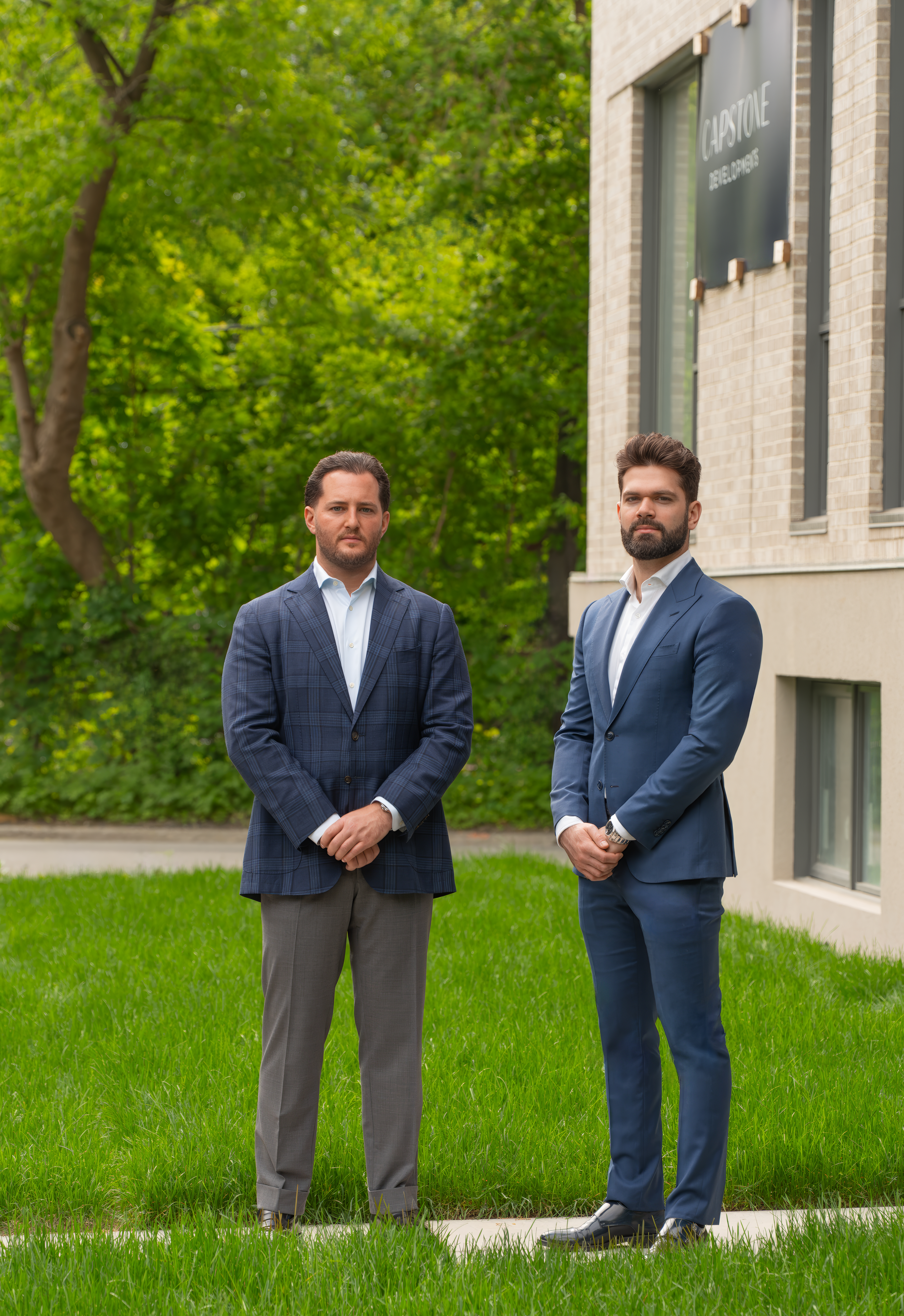
Furthermore, smaller-scale residential projects are a form of densification that people actually support because they don’t overwhelm infrastructure or erode the character of older neighbourhoods. In fact, more often than not, they enhance it, offering thoughtful housing options that align with local needs and municipal goals.
Ranging from five to fourteen storeys, the City of Toronto describes mid-rise properties as “bigger than houses but smaller than towers.” Typically, these buildings are tall enough to maintain the urban aesthetic but low enough to let the sun in and open the view to the sky from the street.
“Mid-rise projects are best suited for areas seeking to balance density and livability,” Pascal says. “They are large enough to be impactful, yet small enough to remain rooted in community values.”
Andrew Pascal and Robert Tortorici, Partners, Capstone Developments
Recently, Capstone obtained zoning approvals to move forward on several low- and mid-rise rental projects in Montreal. The firm is active in boroughs such as Rosemont, Lachine, Verdun, and Pointe-Saint-Charles. One notable project in Notre-Dame-de-Grâce (NDG) comprises three boutique-style, low-rise buildings—Grâce Hampton, Grâce Clifton, and Grâce Melrose—totalling 110 purpose-built rental units.
Calling it “a testament to our commitment to revitalizing urban spaces,” Pascal says the project reflects Capstone’s dedication to delivering contextually sensitive, community-focused developments that respond to Montreal’s evolving housing needs. For this initiative, the process involved assembling and rezoning four former industrial properties for residential purposes.
“Each was designed to harmonize with NDG’s architectural character and align with the neighbourhood’s vision for sustainable densification and urban renewal,” he explains, adding that units range from studio to four bedrooms, and amenities will include private balconies, rooftop terraces, indoor parking, and high-speed internet.
The project is nearing completion, and all three phases are almost fully leased.
Embracing new market dynamics
Since COVID-19 swept in and altered market conditions a few years ago, purpose-built rental development has weathered many challenges.
“Rapidly rising construction costs and interest rates made it difficult to underwrite new projects,” Pascal reflects. “Construction starts slowed to an almost full stop, and contractors began competing more aggressively for fewer jobs, leading to some softening in construction pricing.”
These conditions led to widespread delays at a time when demand for rental housing was stronger than ever; meanwhile, many would-be homebuyers found themselves priced out of ownership, putting more pressure onto an already undersupplied rental market. Now, with demand peaking and capacity opening up, Capstone has embarked on a new era of building.
“We saw an opportunity to re-evaluate project economics more favourably,” he says. “Today, with interest rates easing, we’re seeing renewed momentum and greater clarity around project viability. This shift is paving the way for a new wave of purpose-built rental developments to move forward. It’s an encouraging shift, and one that’s long overdue.”
That said, zoning remains a critical factor in shaping what developers can build, and many of the sites Capstone pursues are located in urban areas. While zoning regulations can pose slowdowns and challenges, the firm is dedicated to bringing these critical developments to life.
“Mid-rise projects add much-needed supply in a form that fits well within existing neighbourhoods—supporting walkable, transit-connected communities, and delivering the right urban scale of density to meet growing demand,” says Pascal. “At Capstone, we focus on unlocking density through project entitlements and zoning procedures while working closely with municipalities to ensure our projects align with both local planning goals and broader housing needs.”
A cost-effective alternative
From Capstone’s perspective, mid-size rental projects offer several advantages over high-rise buildings in terms of both cost and lifestyle. The firm frequently uses wood-frame construction, which is more cost-effective compared to concrete or steel structures. These projects typically require only a single level of underground parking, thereby reducing excavation and foundation expenses and promoting a more efficient and financially balanced development model.
Small and mid-sized projects are also favoured for their shorter construction timelines, allowing new homes to enter the market faster. Due to their smaller footprint, they are generally designed without high-cost amenities such as gyms, pools, conference rooms, and doormen, instead focusing on providing high-quality units within a more cost-effective operational model. This approach enhances the project’s financial sustainability and accessibility to a broader range of renters.
Sustainable and responsible development
Meanwhile, there’s growing demand in Canada for homes that reflect a commitment to sustainability and responsible development, and in many ways, mid-size projects are uniquely positioned to deliver on these values. While high-density towers will always serve an important purpose, it’s about “expanding the delivery toolkit” and building projects that make sense for both the neighbourhood and the environment.
“Mid-rise development enables well-integrated, human-scaled housing that complements denser urban nodes and provides cities like Montreal with a practical, proven way to meet today’s housing challenge,” Pascal says. “Meeting current demand requires construction methods that are efficient, cost-effective, and scalable. Wood-frame construction stands out as one of the most effective tools for delivering much-needed housing across both urban and suburban settings.”
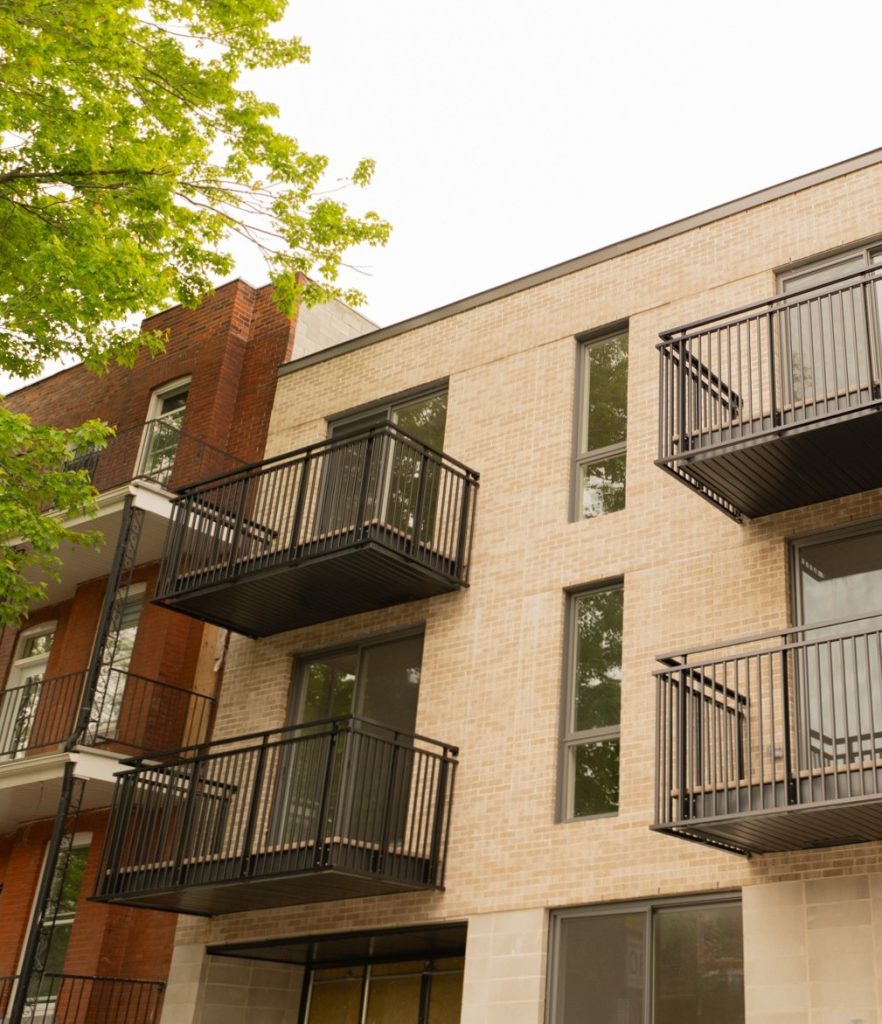 Why wood-frame construction supports today’s housing goals:
- Faster delivery – Accelerates timelines from approval to occupancy, helping bring units online when they’re most needed.
- Lower construction costs – Significantly reduces hard costs compared to concrete, improving project viability and enabling more attainable housing.
- Contextual density – Facilitates infill growth with a built form that fits comfortably within established neighbourhoods.
- Design flexibility – Allows for efficient layouts and high-quality finishes that align with modern livability standards.
- Sustainability edge – While not the core driver, wood construction offers the added benefit of reduced embodied carbon.
“Wood-frame housing is not a substitute for towers—but a critical complement,” Pascal concludes. “It enables faster, more affordable delivery of thoughtfully designed homes in locations that traditional high-rise can’t always reach.”
For more information, visit: Capstone Developments