




Most facility management teams still follow traditional approaches for their cleaning and maintenance protocols: a mess appears, a machine breaks, the phone rings, and everyone scrambles. But that’s reactive work – it’s stressful, expensive, and complicated to scale. Predictive work flips the script.
You watch for a few early warning signs, make minor adjustments at the right time, and the “emergency” never happens. Think of it like checking your fuel light before a road trip, rather than waiting on the side of the highway for a tow.
Reactive vs. predictive
Very simply, here’s a look at the difference between these two approaches:
- Reactive: You wait for a complaint or failure, then rush to get it fixed.
- Predictive: You track a few signals (use, wear, moisture, battery health, cleanliness) and agree on what your teams will do when those signals cross a line before customers or tenants feel it.
You don’t need advanced technology to switch your strategy. You simply need to pick what to watch, set simple rules, and train your team to act early. Notice that none of this requires complex technology or AI; it requires deciding on measurement parameters, setting thresholds, and training teams to act on early warning signs without waiting for a complaint.
Building blocks of a predictive program
Create cleaning routes that follow use, rather than the clock. Instead of “every hour on the hour,” schedule restrooms and lobbies for service after people use them. Simple counters and “bin-fill” signals (even manual tallies) help you flex without guesswork. Here are few additional ways you can stay proactive:
- Equipment gets tiny fixes before significant failures. Basic checks (including battery levels, unusual vibration, and blade wear) turn many “surprise” breakdowns into routine swaps you can do between tasks.
- Moisture and cleanliness are monitored, not assumed. Cheap moisture pucks under sinks and quick surface swabs in food areas keep you ahead of leaks and food-contact risks.
- Decision-making gets faster. A clear rule, such as “if the bin-fill crosses 80 per cent twice, we address it within 15 minutes,” removes any debate. The crew becomes familiar with the plan, and expectations are clear.
What owners and operators gain
Predictive programs pay off in all the ways clients care about: lower overtime, steadier labour plans, fewer outages, longer asset life, and cleaner audits. But there’s a softer gain that matters just as much: trust. When tenants stop encountering avoidable messes and managers stop fielding last-minute crisis calls, your brand becomes the one that “just runs.” In competitive bids, that reputation is worth a real margin.
A simple strategy
Building this system isn’t complicated: choose three signals that matter, like restroom traffic or bin-fill percentage, main machine battery/brush health, moisture in leak-prone zones, or the weekly surface-swab average. Picking three is enough to change your business.
Next, write the rule for each signal, like “if X happens twice, we do Y within Z time.” Make it short, clear, and actionable.
Following that, capture data consistently and accurately every time. Whether it’s in your CMMS, an inspection app, or a shared sheet, consistency beats sophistication.
Ensure that you show your team the wins. Put a simple line chart or scoreboard in the supply room, and when people see complaints drop after they change a routine, staff will take ownership of the improvement.
Don’t forget to promote your efforts. Share a one-page summary with clients including signals watched, actions taken, and incidents avoided. This ups your status from “vendor” to “risk manager.”
Get started today
How can you get started right away? Here are some simple steps to follow:
- Pick three signals to track for 60 to 90 days (e.g. restroom peak times, auto scrubber battery/brush health, under-sink moisture).
- Set a simple rule for each: “’if the threshold is hit twice, take this action within this time.”
- Use existing tools like counters, machine readouts, or a quick manual tally.
- Log consistently (numbers, not paragraphs) in your work-order or checklist system.
- Hold a 15-minute weekly huddle to review trends and adjust routes or thresholds as needed.
- Send a one-page monthly recap to your client on actions taken and problems prevented.
Reactive work rewards fast firefighting. Predictive work rewards quiet confidence – the kind tenants notice even when they don’t know why the building always feels cared for. Start small, and watch a few signals, and act early. In a few weeks, you’ll spend less time rescuing yesterday and more time delivering for tomorrow.
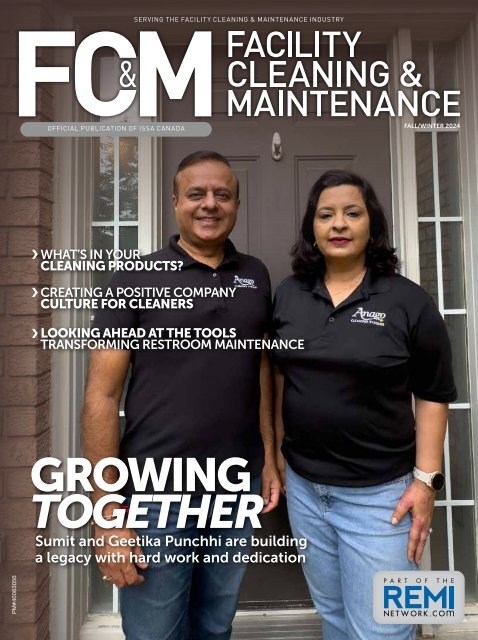
RELATED: Sumit and Geetika Punchhi are building a legacy with hard work and dedication
Sumit and Geetika Punchhi are the Master Franchise Owners for Anago of South Greater Toronto, part of the Anago Cleaning Systems brand, supporting over 1800 franchises across the U.S. and Canada. For more information about Anago of South Greater Toronto, visit www.AnagoCleaning.com/SouthGTA.