Articles Archive - Page 72 of 928 - REMINET
REMI

NYG hospital issues RFP for new patient tower

A request for proposals has been issued for the construction of a new patient care tower at North York General (NYG) that will be part of the hospital’s largest expansion in its 56-year history.

NYG and Infrastructure Ontario partnered with the provincial government to select the team that will deliver the redevelopment project, which will ultimately increase the hospital’s capacity for growing population that is projected to exceed 500,000 in 10 years.

Once complete, the new tower will include patient care spaces and connect to NYG’s existing building, ensuring seamless integration. It will include up to 317 private patient rooms, expanding acute care by up to approximately 100 net-new beds, in addition to larger spaces for other acute care programs and services.

Four teams prequalified through a request for qualification process that began in January 2025. They include PCL Constructors Canada Inc., North York Healthcare Alliance, EllisDon Corporation and Building Beyond Alliance. These teams will be now prepare proposals that detail how they would deliver the projects.

As part of the design, the Canada Green Building Council’s Leadership in Energy and Environmental Design (LEED) rating system and the Toronto Green Standard, will be used to guide planning and design.

New Major Projects Office to fast track infrastructure

The federal government has launched the new Major Projects Office (MPO), headquartered in Calgary, with offices planned in other major Canadian cities

The one-stop shop will serve as a single point of contact to get nation-building projects built faster. It will do so in two principal ways. First, by streamlining and accelerating regulatory approval processes. Second, by helping to structure and co-ordinate financing of these projects as needed.

Dawn Farrell, chair of the board of directors of the Trans Mountain Corporation, has been named the CEO.

“Canada has always been a nation of builders, from the St. Lawrence Seaway to Expo 67. At this hinge moment in our history, Canada must draw on this legacy and act decisively to transform our economy from reliance to resilience. We are moving at a speed not seen in generations to build ports, railways, energy grids – the major projects that will unlock Canada’s full economic potential and build Canada strong. I am thrilled that Dawn Farrell, one of Canada’s most experienced executives, is stepping up to help lead this vital priority,” said Prime Minister Mark Carney.

The MPO will help to identify projects that are in Canada’s national interest and will help fast-track their development. The MPO will accelerate projects by creating a single set of conditions, thereby reducing the approval timeline for projects of national interest to a maximum of two years. To that end, it will work with provinces and territories to achieve a “one project, one review” approach for environmental assessments. Leveraging its expertise, the MPO will also help streamline approvals for all major projects across government, not just those designated under the Building Canada Act.

The office will also help structure and co-ordinate financing, drawing on private investment, provincial and territorial partners, and existing federal tools such as the Canada Infrastructure Bank, the Canada Growth Fund and the Indigenous Loan Guarantee Program.

The government will announce the first set of nation-building projects in the coming weeks.


Showcasing tenant improvement expertise

Turner Construction has established its name as one of the top tenant improvement contractors in Vancouver, and their expertise was recognized again this year by the Vancouver Regional Construction Association (VRCA).

Tenant improvement work is challenging and Turner Construction showed that they are capable of delivering beautiful and complex spaces on on schedule and within budget.

Turner Construction won three Silver VRCA Awards of Excellence for their projects YVR26: Premise B2, Kabam HQ, and Serein.

YVR26: PREMISE B2

Premise B2 at The Post in downtown Vancouver consisted of 50,000 square foot fit out of the podium space between the North and South Tower for floors 7 and 8. This included two interconnecting stairs from level 7 to Level 9, full commercial kitchen/server and event space.

This was a complicated site logistics project as well as coordination of high end custom finishes including a full service commercial kitchen and event space. This required a lot of stakeholder engagement including the landlord, employees, facilities management team, events team, food service team, etc.

SEREIN

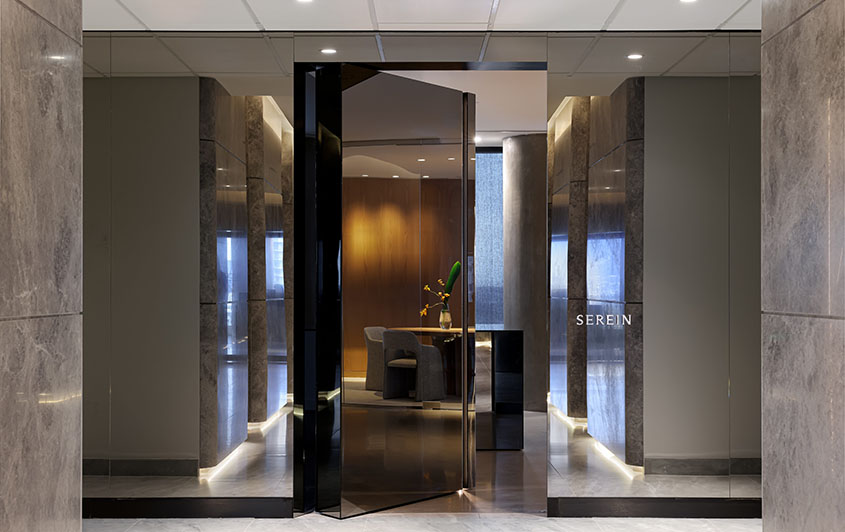
For the Serein project, Turner partnered with McKinley Studios to build a new, human-centric headquarters for the development company. Virtual design and construction (VDC) and 3D modeling were used to create a meticulously planned, high-end space focused on innovation and collaboration. The project showcases Turner’s ability to partner with other leading firms to create innovative and collaborative spaces for their clients.

KAMBAM

Turner completed the Kambam headquarters in 2023. Kabam’s new five-storey headquarters in the Vancouver Center II building features a custom design including a game room, dog run, and an integrated transit connection. The project consolidated the video game developer’s two previous Vancouver locations into a single, new space.


The VRCA Awards of Excellence will be held on Sept 19 to celebrate all the winners and reveal the Gold winners in each category.


Clark Builders selected for Kamloops art centre

Clark Builders, a division of Turner Construction company, has been selected to serve as the general contractor for the Kamloops Centre for the Arts, a transformative project being delivered through an Integrated Project Delivery (IPD) model. This new cultural hub is set to energize downtown Kamloops, driving economic development, supporting population growth, and enriching the city’s thriving arts community.

The four-storey, 120,000 square-foot Music Hall will be home to the Kamloops Symphony and will host a diverse range of arts and community events. The scope of the project includes integrating the adjacent Kelson Hall, enhancing offsite infrastructure, and constructing administration and office space for both the Kamloops Centre for the Arts Society and other resident organizations.

Key features of the Kamloops Centre for the Arts include: 1,100-seat main stage theatre, 450-seat secondary theatre, flexible studio, rehearsal, production, and education spaces, meeting and commercial spaces and underground parking.

This purpose-built facility will address the current and growing needs of Kamloops, hosting events ranging from graduations, to awards ceremonies, to performing arts events.

The project is being developed in close collaboration with the City of Kamloops and a skilled team of IPD partners. Designed by Station One Architects, the Kamloops Centre for the Arts will be the city’s largest integrated project delivery project to date.

“The Integrated Project Delivery model allows us to collaborate early, solve challenges together, and deliver better outcomes,” said Scott Benoit, director, project development, Clark Builders. “It’s exciting to work alongside such a dedicated team on a project that will have a lasting impact on the city’s cultural and economic future.”

Construction is targeted to begin in Fall 2025 with completion anticipated in 2029.


Targeting new cleaning customers

The cleaning industry is a crowded marketplace, and today’s economy calls for out-of-the-box thinking when trying to attract business and broaden your customer base. The industry is expected to grow globally at a rate of 6.9 per cent from 2025 to 2030, and more companies are interested in hiring external cleaning and janitorial services. In fact, premium retailers are investing in carpet cleaning and janitorial services at an 84 per cent rate. But this means that it will be even harder to attract attention as cleaning companies compete for business. Cleaners need to expand their services to offer something unique, attract new clients, or expand their existing customer base.

While commercial cleaning may be your specialty, there are other services you can provide to win more contracts when you get creative to capitalize on new opportunities as they arise.

Office relocation

As the return-to-work movement continues and workplaces adjust to shifting schedules, many companies are relocating to better address the office traffic. They may need extra cleaning because of more attendance, or they may be moving and need help with the relocation. For offices adding more people, work on a customizing a cleaning schedule that addresses the changing traffic and use of space. For relocation, there may be an opportunity to clean two spaces, as you prepare the new space for employee arrival, and clean out the old space for a new tenant.

Maintaining communication with your clients and building owners may help you learn and benefit from these changes in building occupancy with adjusted and expanded cleaning services.

Deep cleaning

Deep cleaning is a service you can sell in addition to your regular cleaning service to your current clients. This type of cleaning involves more intensive treatment, including services like cleaning windows, shampooing carpets, stripping floors, pressure washing, upholstery cleaning, and more.

These types of cleans may be appealing to your clients seasonally – to help remove salt stains from winter use, for example – or annually as a fresh way to start the year.

More sectors

If you typically focus on office cleaning, why not expand your offering by targeting different sectors? Could you approach local restaurants to see whether they could use your services? Or does expanding to residential cleaning make sense for your business, labour force, and your clients?

Start by researching the markets you may be interested in and what’s required to service those sectors. Next, begin marketing your services by canvassing neighbourhoods, approaching existing customers and setting up a referral program, or partnering with other businesses to make contacts and reach companies in other sectors.

Consulting

Commercial cleaning companies can also offer consulting services to offer guidance on maintaining a facility, provide custom cleaning plans, or offer staff training for improved cleanliness and a safer work environment.

This service requires a personalized approach, starting with assessing the customer’s needs. Next, a plan can be created with schedules, labour allotment, equipment lists, and more for an efficient and detailed plan. Staff training could also be provided to help companies be better prepared for the work ahead.

When selling this service to potential clients, the benefit of a commercial cleaning consultation may include increased sustainability, cost savings, reaching a higher standard of cleanliness, and increased operational efficiency.

Expanded marketing

If you want to stick with the services you already provide, but want to grow your existing customer base, there are a few steps you can take to up your marketing efforts:

  • Tell your story. Connect with potential customers with a transparent approach to your company so they know who you are and about your business.
  • Market your company on social media. Interact with your customers, follow hashtags, and post thoughtful, informative content to grow your audience.
  • Ask your current customers to post testimonials and Google reviews to help increase your online exposure.
  • If you have a budget, invest in social media advertising, local radio, Google AdWords, and anywhere else that can help spread the word about your business. This type of marketing can help you narrow down your target customer, appeal to potential customers in a certain geographic area, and raise your ranking in Google searches to increase your exposure.
  • Reach back out to those lost leaders who you may have worked for in the past or who have contacted you for a quote. The time may not have been right before, but they may be in the market for your services now or in the future.

And don’t forget about your existing clients – just because they have hired you for one type of cleaning, doesn’t mean they don’t need additional services. As you expand your brand and your business, don’t be afraid to approach your regulars and see whether they might be interested in a greater investment or referring you to someone who might be.

Building a growing a commercial cleaning business is not an easy feat, but as the market continues to evolve and grow, so too, should your strategy. With the increased demand for safe cleaning and the projected demand, now is the time to try and expand your services and broaden your customer base to thrive for years to come.

Proposed plan for Guelph Innovation District

Guelph City Council is considering a proposed plan for an innovation district — a major development that will shape how the city grows over the next 50 years.

This is the first time a block plan has been used in Guelph; it shows how new neighbourhoods could be organized, including roads, parks, housing, schools and employment lands. The current proposal features up to 4,654 new housing units for the growing city.

“This decision goes beyond land use,” says Krista Walkey, general manager of planning and building services.” It’s about shaping the kinds of lives possible for the people who come after us. Neighbourhoods become our homes; they’re the places we raise kids, build friendships and find joy and connection. We need to carefully consider how the Guelph Innovation District is planned to ensure it becomes a neighbourhood that supports that kind of life for decades to come.”

City staff have reviewed Fusion Home’s proposed block plan and identified areas where it differs from current council-approved policies. Staff are recommending some changes such as support space for play, sports and connection with a larger community park (at least 6.7 hectares). Currently, the block plan proposes a 3.64 hectare community park, which is smaller than the 10-to-20-hectare range outlined in the official plan.

Staff are suggesting more protection for employment space rather than 5.3 hectares being proposed, which is below the 16.48 hectares identified by the province.

There is also a call to redesignate land use around heritage buildings. In the proposed block plan, the Frost Building — listed as a built heritage resource and governed by the Ontario Heritage Act — is shown within a future park space. Staff recommend changing the land-use designation for that site to residential to align with council-approved policies and plans. This will also ensure designated park space better meets the community’s need for sports fields and other park amenities.

Replacing employment lands with a residential block for a proposed elementary school will  preserve space for future jobs and meet school board needs.

Preserving views and access to the Eramosa River is another priority.  City staff are recommending a complete single-loaded road along the river an keeping houses to the non-river side of the road to protect community access and views.

Council will review the staff report at a meeting on Wednesday, September 10

$29M co-housing project begins in Montreal

Construction of a 58-unit co-housing project is underway in Montreal. The building will be a mix of units, including 16 condos and 42 affordable non-market rentals.

The federal government and the Quebec government, together with the Fonds de solidarité FTQ, the City of Montréal and Village Urbain announced the $29 million residence will have at its core the Maison commune and will include nearly 10,000 square feet of shared spaces (indoor and outdoor) imagined during participatory design workshops.

Co-housing is a living environment designed and managed collectively in which private units are arranged around common spaces to foster social ties and the sharing of objects and services. Residents get involved in committees, learn how to manage their living environment and strengthen their ties by meeting people and organizing social activities. This model differs from a housing co-operative in that the focus is more on creating common spaces designed to encourage discussions and the development of a cohesive intergenerational community.

“In a changing urban context marked by social, economic and environmental challenges, rethinking how we live is becoming an emergency,” said Charleine Coulombe, Village Urbain CEO. “We are therefore proud to implement an innovative housing model that fosters a true social mix through the co-housing of renters and owners.

Twenty-six units will be designed as three- and four-bedrooms. Structured common spaces to foster meetings and exchanges between neighbours include a multi-purpose room, kitchen, laundry, playroom, quiet space, and roof decks. The doors officially open in fall 2026.

“It’s excellent news that this modern architectural project, which is mindful of both social and environmental aspects, is being established on Notre-Dame Street,” said Maja Vodanovic, Mayor of the borough of Lachine. “It adds to the other projects currently under construction and contributes to the revitalization of our main street, which is attracting more and more businesses and restaurants. Notre-Dame Street will also be completely redeveloped, from 18th to 6th Avenue.”

Photo: At the Village Urbain project site in Lachine (Montréal), from left to right: Henri Chevalier (Treasurer, Village Urbain), MP Anju Dhillon, Mayor Maja Vodanovic, Charleine Coulombe (CEO, Village Urbain), Benoit Dorais (Head of Housing, City of Montréal), Omar Lamrissi (Advisor, Fonds immobilier de solidarité FTQ), and Josée Lagacé (VP, Fonds immobilier de solidarité FTQ).

IFMA Fellows announced for 2025

The International Facility Management Association (IFMA) recently bestowed its highest annual honour on three industry professionals. This year’s 2025 IFMA Fellows are Laurie Gilmer, Benjamin Goudy and Frank Ngoh, who will serve as advisors and ambassadors for the FM industry.

The trio will be inducted at the opening session of IFMA’s World Workplace Conference and Expo, Sept. 17 in Minneapolis,

“Laurie, Ben and Frank are passionate, selfless and inspiring leaders within the built environment,” said IFMA’s Global Board of Directors Chair Christa Dodoo, “They have individually demonstrated a dedication to the FM profession that will shape the future of the industry for generations to come. These three outstanding professionals embody IFMA’s mission to advance our collective knowledge, value and growth for FM professionals to perform at the highest level.”

In addition to excelling in their professional careers, the honourees serve in several capacities to advance the FM industry and support and promote IFMA programs and initiatives.

As chair of IFMA’s 2022-2023 Global Board of Directors, Gilmer focused her energy on making and encouraging post-pandemic human connections and reigniting participation throughout the association, which resulted in record membership numbers. She has served as a member of the International Credentials Committee, chair of the Sustainability Facility Professional Credential Scheme Committee, a member of the Environmental Stewardship & Sustainability Advisory Group, chair of IFMA’s Education Committee, and chair of IFMA’s Knowledge Strategy Committee.

With almost 40 years of experience, Goudy has worked in diverse industries and cultures, with FM responsibilities for Fortune 50 technology and life sciences companies. He created a scalable ISO-based facility service program for Meta, Google, AWS data centres; co-wrote Microsoft’s initial Facilities Sustainability Program, setting the company’s 2030 carbon reduction goals; received the Intel Environmental Excellence Award for leadership of global recycling by eliminating 33,000 tons from landfill; and received the 2012 ISS CEO Award for saving US$7 million in one year for HP facilities via detailed benchmarking by space.

As a sustainability leader, Ngoh  helped transform of a brownfield site into Singapore’s first eco-town. He introduced Singapore’s first vertical farm and black soldier fly farm, and set up an ecosystem of government agencies, utilities companies and educational institutes to allow easy access by residents, all of which are a model for true sustainable urban development and community engagement. As chair of the Singapore International Facility Management Association Accreditation Board, he leads a team of industry leaders to assess the competency of companies in providing FM services. As president of IFMA’s Singapore Chapter, Ngoh has reached out to neighbouring countries to lay the groundwork for future chapters.

IFMA’s Fellows Program was established in 1992. Only 0.5 percent of the IFMA membership may hold the title. As of this year, only 140 individuals have been IFMA Fellows.

Each year, the nominating committee identifies qualified individuals and assists those who nominate members for consideration. Nominations are submitted to a jury of fellows.

Energy charges Indigenous economic development

A new round of funding is now available through Ontario’s Indigenous energy support program (IESP) aimed at kickstarting economic development and community development initiatives tied to renewable energy, conservation and sustainable self-sufficiency in remote regions of the province. This year, the Ontario government has added an extra $10 million to the pot to push the total available funding up to $25 million, and increased the maximum grant threshold for projects that replace diesel-fired power generation in nine specified remote First Nations.

“Indigenous communities are not just rights-holders; they are partners and leaders,” says Stephen Lecce, Ontario’s Minister of Energy and Mines. “From equity in transmission projects to cutting-edge technologies like battery storage, we are creating real opportunities and building prosperity that will last for generations.”

First Nations, Métis communities and Indigenous organizations, such as service and housing providers, can apply for funding under three program streams, related to:

  • development of, or attainment of an equity stake in renewable generation, battery energy storage, electricity transmission or emerging energy technology projects;
  • energy management expertise, training and tools; or
  • community energy plans.

To begin, recipients could qualify for up to $50,000 to undertake a feasibility study for an energy infrastructure project, and up to $85,000 for due diligence related to assessing and forming partnerships with co-stakeholders. From there, applicants outside one of the nine designated remote First Nations could qualify for up to 80 per cent of eligible costs, to a maximum of $250,000, to support various stages of project development.

Prospective proponents in one of the designated remote First Nations could qualify for up to $500,000 for projects that will reduce reliance on diesel-fired electricity generation. The nine specified First Nations include: Marten Falls; Webequie; Eabametoong; Nibinamik; Neskantaga; Fort Severn; Kiashke Zaaging Anishinaabek (Gull Bay); Weenusk (Peawanuck); and Whitesand.

Within the capacity-building stream of the program, successful proponents can secure up to $180,000 over three years to underwrite the salary of a dedicated energy manager, to be designated as the community energy champion (CEC). That additionally comes with up to $15,000 over three years to cover various related expenses.

Other capacity-building components offer up to $75,000 toward energy management training and programs to promote conservation behaviour; and up to $60,000 to undertake demonstration projects that test new tools and approaches for delivering energy management programming. A single applicant could be eligible for funding for two or more training or community engagement programs to a maximum of $150,000.

Finally, up to $135,000 is available to underwrite development of new community energy plans that contain specified elements, including: a baseline energy assessment; a future needs forecast; a community engagement strategy; a vision statement and explicit short-, medium- and long-term goals; and an implementation plan. Or, applicants could receive up to $75,000 to update an existing community energy plan.

A single Indigenous applicant may qualify for a maximum of $730,000 per calendar year across the entire menu of funding opportunities. Non-Indigenous organizations may apply as co-applicants with eligible Indigenous proponents under the capacity-building stream. Ontario’s Independent Electricity System Operator (IESO) administers the Indigenous energy support program and will be accepting applications until Oct. 3, 2025.

“The IESO looks forward to continuing to work with our Indigenous partners on energy projects that serve community needs and the needs of the broader electricity system,” affirms Lesley Gallinger, IESO president and chief executive officer.

Tips for new maintenance managers

Maintenance managers face new challenges every day, from addressing facility issues to building budgets to departmental operations, and beyond. Feeling the pressure of being pulled in every direction can cause stress and reduce operational efficiency, but staying proactive with a strategic approach will help new (and experienced) maintenance managers excel at their job.

RELATED: How facility needs are changing the cleaning and maintenance industry

Do your homework

Staying on top of industry trends and researching optimal tools and practices can help maintenance managers do a great job and be better prepared for what’s to come. Getting into the habit of staying informed will help you in the everyday completion of your tasks, prepare you for the unexpected, and offer insight into what might be helpful for the next generation of managers and staff.

Studying the data is also a vital part of prioritizing risk management. Knowing where to look for valuable insight, analyzing that information, and knowing how to use it to mitigate risks for the company will make you an invaluable asset to the team.

Build relationships

Maintenance managers interact with so many people, from suppliers to contractors to operations staff and more. Building relationships can be a vital contributor to your success. As you organize work to be done, present budgets, purchase equipment, and manage a team, the way you interact with every department can determine how well your department runs and how satisfied you feel in your position.

Collaborate wherever possible, delegate where you can, operate with the best intentions for the company, and seek out alliances that align with your company’s mission and values to build relationships that can help you get better at managing the maintenance in your building.

Strengthen your skills

Maintenance management means troubleshooting, problem-solving, and expecting the unexpected. Professional courses or certifications in your field can enhance your technical knowledge and improve your problem-solving skills. Courses covering the current maintenance software, conflict resolution, or even data management can all help hone your skills, build confidence, and improve your job performance.

Hands-on experience is crucial, too, as you learn and grow in your position. Take every opportunity to learn from each department, ask for help, and broaden your knowledge with real-time training.

Maintenance managers are often pulled in many directions, and as you gain experience in your position, it is important to take a proactive approach to learning for best practices and performance.

GRESB to pilot data centre benchmark

GRESB, the global assessment of ESG performance in commercial real estate portfolios, will begin testing a dedicated sustainability benchmark for data centres in the fall of 2025. The pilot was developed in collaboration with Infrastructure Masons (iMasons), an independent association of digital infrastructure professionals, and with input from a working group of 20+ firms bringing insight from the automation, energy management, computing technology and asset management sectors.

“Digital infrastructure is a critical part of real assets portfolios, yet data centres present distinct sustainability challenges — from outsized energy consumption to complex operational demands,” observes Chris Pyke, chief innovation officer at GRESB.

The pilot will fine-tune a benchmark that is expected to be offered to the full market in 2026. Participants will report on industry-specific performance metrics that are pertinent for both investors and data centre operators. This follows after GRESB released  guidance earlier this year for portfolio managers overseeing data centres, which discusses the relative merits of reporting via the real estate or infrastructure benchmarks.

As of 2024, 41 entities reported on 842 individual data centre assets and facilities within one of those two benchmarks, providing a foundation of data that underpins the new dedicated initiative. Notably, existing data from the GRESB real estate benchmark shows a steep climb in average energy use per asset thus far this decade — rising from about 60 million kilowatt-hours (kWh) or 60,000 megawatt-hours (Mh) in 2020 to 76 million kWh (76,000 Mh) last year.

“As an emerging asset class, data centres are an exciting yet complex investment opportunity,” says Santiago Suinaga, chief executive officer of iMasons. “By providing investors with actionable insights and metrics, this new benchmark will help investors and developers better understand and improve the performance of data centers while driving long-term value.”

In addition to energy, the pilot data centre benchmark will also drill down to water use and worker health and safety. Canadian representation in the GRESB working group includes Caisse de dépôt et placement du Québec (CDPQ), Mantle Developments and Quinn + Partners.

Paul Forgues joins CRCA as new executive director

The Canadian Roofing Contractors Association (CRCA) announced the appointment of Paul Forgues as its new executive director. He will assume the role on September 2.

Forgues, a seasoned association and business leader, brings more than 30 years of executive-level experience in advocacy, strategy, stakeholder relations, governance, and corporate branding. He has held senior roles at the Canadian Audit & Accountability Foundation, the Institute of Internal Auditors Canada, and the Conference Board of Canada.

“Paul brings the right blend of business acumen and association leadership experience to enhance CRCA’s ability to deliver results and strengthen our national voice,” said CRCA president Dan Nosaty, on behalf of the board of directors. “With a proven track record of building collaborative relationships and implementing strategies that drive growth, he is well-suited to lead CRCA into its next chapter. His appointment ushers in a
new era of collaboration with provincial roofing associations, and the board is confident that under Paul’s leadership, CRCA will continue to expand its role as a champion for roofing contractors across Canada.”

“I am honoured to join CRCA and build on its strong foundation of service to the roofing industry,” said Forgues. “I look forward to working closely with the board, staff, and provincial associations across the country to strengthen our collective impact, enhance the value we deliver to members, and support continued growth across the industry. Together, we will ensure that contractors remain connected, informed, and empowered to succeed both professionally and technically.”

This leadership transition comes as CRCA prepares to convene in Winnipeg, Manitoba, on September 8–9, 2025, to launch its strategic planning process – a milestone that will help shape the association’s priorities and the future direction of the roofing industry in the years ahead.


Architects reveal design for BCIT trades facility

Architecture49 and Patkau Architects have revealed the design for the new Concert Properties Centre for Trades & Technology at British Columbia Institute of Technology (BCIT). This cutting-edge educational facility is poised to redefine trades training while restoring natural systems and prioritizing sustainability.

The Centre will deliver approximately 8,400 square metres (91,000 square feet) of dynamic learning space, expanding BCIT’s capacity to train the next generation of skilled professionals. The building features expansive, daylit laboratories with generous interior and exterior glazing that breaks from the convention of closed, warehouse-style workshops.

“These labs showcase the intersection of craft and technology, giving students hands-on experience in spaces designed to inspire precision, creativity, and pride in their work,” said Sakshi Misra, regional science and technology Leader. “We’ve created an environment where the labs themselves are a teaching tool.”

The design includes natural ventilation systems that are thoughtfully integrated throughout the building to improve energy efficiency while enhancing indoor air quality and occupant comfort. Panoramic views connect students to the surrounding landscape, while the restoration of segments of Guichon Creek reinforces BCIT’s commitment to sustainability and ecological renewal. Together, these features create a learning environment that supports both wellbeing and environmental stewardship.

Architecture49 is serving as prime consultant and laboratory designer, working in collaboration with Patkau Architects as design architect. The two firms bring a proven partnership to the project, having previously worked together to deliver UBC’s groundbreaking Gordon B. Shrum Building, a purpose-built facility for the School of Biomedical Engineering.

“Our collaboration with Architecture49 builds on a shared vision of educational spaces,” said Greg Boothroyd, principal at Patkau Architects. “For the Concert Centre for Trades and Technology we’ve translated BCIT’s vision into a building that will inspire, perform, and renew its site.”


BC announces 2026 rent cap

The Province of British Columbia has announced that the maximum allowable rent increase for 2026 will be capped at 2.3 per cent, aligning with the rate of inflation. This marks a decrease from the 3 per cent cap set for 2025.

“B.C. is an extraordinary place, but with economic uncertainty and rising costs, people are struggling to find a place to live that fits in their budget,” said Christine Boyle, Minister of Housing and Municipal Affairs. “We’re continuing to cap rent increases, linking them to inflation, to reduce housing costs for seniors, families and individuals, protecting them from unfair hikes. At the same time, this rent increase allows landlords to invest in their properties to keep rental homes on the market.”

This is the second consecutive year the rent cap in B.C has been tied to the Consumer Price Index. In 2024, the Province limited rent increases to 3.5 per cent, significantly below the inflation rate of 5.6 per cent. Prior to 2018, landlords were permitted to raise rents by an additional 2 per cent above inflation.

Since 2017, B.C. has introduced a range of measures intended to support renters while maintaining landlords’ ability to manage problematic tenancies. These include protections against illegal renovictions and the introduction of a $400 annual renter’s tax credit for individuals and families with low to moderate incomes.

B.C. also became the first jurisdiction in Canada to offer provincewide rent bank services, providing interest-free loans to tenants facing urgent financial challenges. The Rental Protection Fund continues to preserve affordable rental housing across communities, and recent enhancements to the Rental Assistance Program and Shelter Aid for Elderly Renters have expanded support for low-income families and seniors.

According to the government, both renters and landlords are benefiting from improvements at the Residential Tenancy Branch, which have reduced dispute resolution times for unpaid rent and utilities from three months to just one. Updates to rules around abandoned property and clearer guidance for navigating tenancy hearings are helping reduce risks and accelerate resolutions when disputes arise.

This year’s ESG trends

While ESG goals continue to be important for many companies, they have evolved as technology, consumer demand, and business priorities have shifted. Many companies are working hard to improve operations, sustainability, and culture as they strive to evolve and grow, and implementing an ESG vision can help companies reach their operational goals.

What are some of the top ESG trends many companies are focusing on this year?

Greener practices

ESG often focuses on broad environmental impact and sustainable practices, but there has been an increased focus this year on energy consumption and lowering energy use to reduce operating costs. Managers can work towards energy consumption goals by installing energy reducing retrofits, like upgrading your HVAC system to a more efficient model, re-sealing windows and doors, or installing extra insulation to make your building more airtight. Replacing old faucets and toilets can also help reduce water consumption and lower costs.

Adding technology to sustainability efforts by implementing data systems that allow monitoring, optimizing, and predicting can make an impact on better managing that part of the business.

Technology

As technology evolves, so do the opportunities for businesses to better reach sustainability goals and optimize operations. AI is helping many companies to develop practices that align with their ESG goals by improving inventory management, streamlining operations, assessing and predicting equipment efficiency, and offering new ways to save money, and increase sustainability.

Using innovative tools like sensors and touchless technology can help reduce waste, track usage, and create greener practices. As well, managers can use the real-time data to predict trends, allocate labour, and reduce costs.

Transparency

Today’s consumers and companies are looking to align themselves with like-minded businesses, and that means that transparency is key. Companies need to be clear about their ESG goals and the ways in ways in which they are working towards accomplishing that mission.  While value is still important to customers, of course, many people are making buying decisions based on whether a company prioritizes sustainability. In fact, 84 per cent of consumers say that poor environmental practices will deter them from a brand or company. This means that companies need to connect with their customers, seek out like-minded suppliers, and remain transparent in their efforts.

ESG goals are an important part of today’s business practices, and evolving to meet the needs of your customers is an important step in moving forward.

BCIT opens mass timber student housing tower

The British Columbia Institute of Technology (BCIT) has officially opened its new Tall Timber student housing residence at the Burnaby campus.

The striking 12-storey mass timber tower is the school’s first purpose-built student residence and the city’s tallest timber building.

“The Tall Timber student housing project reflects BCIT’s commitment to fostering vibrant and inclusive communities that advance student success,” said Jeff Zabudsky, president, BCIT. “In collaboration with the Province of British Columbia and generous donors, BCIT is helping students thrive while preparing them for meaningful careers that drive prosperity in B.C.”

The building adds 469 student beds, more than doubling the number of on-campus housing spaces at BCIT. The building includes a mix of communal-style single and studio units, a ground-floor common area, an outdoor accessible plaza, and study and office spaces. The project was designed to foster an inclusive, collaborative and supportive student community.

“We’re excited to bring more affordable student housing to BCIT’s Burnaby campus for the first time in 40 years,” said Minister of Post-Secondary Education and Future Skills Jessie Sunner. “This new facility will offer students more housing options steps away from their classes, reduce commute times and ease pressure on the local rental market. With better access to housing, students can focus on developing the skills they need for their desired career and help drive our workforce forward.”

Designed with sustainability at its core, the building’s fully electric design and high-performing building envelope also helps it meet B.C.’s Energy Step Code 4, the highest level of energy efficiency for this type of structure. The building has also received a CAGBC Zero Carbon Building certification.