Articles Archive - Page 404 of 928 - REMINET
REMI

Providing cleanliness and confidence in the workplace

It’s more crucial than ever for organizations to provide clean, safe, and healthy environments for those returning to the workplace amid the COVID-19 pandemic.

While many facility managers have increased the frequency of cleaning and disinfecting, meeting heightened expectations of cleanliness and reducing the spread of illness requires a thorough infectious disease outbreak prevention program. Managers need to ensure workplace facilities are following best practices and policies for cleaning and disinfecting in the new normal.

Workplace risk management

To determine where a facility can improve and set specific goals, begin with a risk assessment. Document all hazards and risks for pathogen spread in the facility, including high-traffic areas and high-touch surfaces. Consider the probability and severity of each risk to prioritize which should be addressed first. Then implement procedures to address risks and regularly conduct follow-up assessments.

After this initial assessment, facilities must establish internal standard operating procedures (SOPs) for cleaning, disinfection, and infectious disease prevention. As a baseline, these SOPs should include cleaning program best practices like keeping regular schedules and cleaning visible soil on surfaces before applying disinfectants. Cleaning staff must follow label instructions to ensure products perform as intended against pathogens of concern.

When determining or updating cleaning procedures, review the efficacy of cleaning and disinfecting chemicals. Facilities can reference the U.S. Environmental Protection Agency’s List N of disinfectants that meet the agency’s criteria for eradicating SARS-CoV-2, the virus that causes COVID-19. If the solutions do not have data supporting their use against SARS-CoV-2, consider switching to a disinfectant with these efficacy claims.

Setting up employees for success

While cleaning and disinfecting more frequently, cleaning staff need appropriate personal protective equipment (PPE) to protect against pathogen spread and chemical exposure. Essential PPE includes gloves, face masks, eye protection, and gowns. Eye protection and masks are especially important when using tools like electrostatic sprayers that spray disinfectants onto surfaces in droplet form.

Cleaning and disinfecting are only effective with consistent training. Employees need training on effective chemical use and cleaning procedures, as well as hand hygiene. Staff should frequently wash their hands for 20 seconds with soap and water. Workplaces should also provide hand sanitizer and disinfectant wipes for employees and guests to keep hands and surfaces clean.

Another major concern for employers is the physical and mental well-being of workers. It’s crucial to establish an employee health program that incorporates temperature monitoring, vaccination options, wellness checks, and more that are consistent with guidelines from the U.S. Occupational Safety and Health Administration. Require workers to stay home if they are sick and develop clear policies for reporting exposure to or symptoms of COVID-19. 

Instill confidence in office cleanliness

After establishing an outbreak prevention program, how can facilities communicate their efforts to staff, occupants, and visitors? One method is using visible signage. Place signs reminding people of best practices and policies near entrances, elevators, and in bathrooms. In any areas where lines may form, note six-foot distances with floor markers. Communicate any social distancing requirements in office areas, including space between desks and seats in meeting rooms.

To ensure a facility is taking all of these measures and more to promote the health and safety of office occupants and visitors, organizations can consider pursuing formal accreditation through a reputable third party. Opportunities include GBAC STAR™ Facility Accreditation from the Global Biorisk Advisory Council, a division of ISSA, which can count toward points to achieve the WELL Building Standard from the International WELL Building Institute.

Third-party accreditation programs like these provide resources and training guidance to help promote employee safety and prevent the spread of infectious diseases. With this added level of assurance, building occupants can be confident their workplace meets the highest standards for clean facilities.

Patty Olinger is the Executive Director of the Global Biorisk Advisory Council (GBAC), a Division of ISSA. This article originally appeared on futureofbusinessandtech.com.

Rezoning sought for midtown Toronto landmark

A redevelopment scheme for a midtown Toronto landmark proposes an additional three million square feet of commercial, residential and rejuvenated community space in the city’s intensifying Yonge-Eglinton node. In late December, Oxford Properties Group and CT REIT submitted a rezoning application for the 9.2-acre site of the three-building, 814,000-square-foot Canada Square complex.

The development partners envision phased introduction of five mixed-use towers encompassing 650,000 square feet of new office space, street-related retail and 2,700 residential units. The plan capitalizes on direct access to the Toronto Transit Commission’s existing Yonge subway line and the pending Eglinton Crosstown LRT, which is currently scheduled for completion in 2022, and includes 10,000 square feet to accommodate community uses, along with green, accessible pedestrian routes traversing the site.

The rezoning application reflects Oxford’s three-year stakeholder engagement process, which gleaned insight from local neighbourhood groups, transit agencies and the City of Toronto. The master plan team includes: design architects, Pelli Clarke Pelli Architects and Hariri Pontarini Architects; executive architect, Adamson Associates Architects: and OJB Landscape Architecture.

“We will continue to work hand-in-hand with the community, the Councillor’s office and stakeholder groups to ensure the project meets the evolving needs of Yonge and Eglinton and the wider midtown community,” pledges Mark Cote, head of Canadian development with Oxford Properties.

Canada Square’s oldest tower, the 17-storey, 260,000-square-foot 2200 Yonge Street, was constructed in 1962. Its 18-storey, 403,000-square-foot sister tower at 2180 Yonge Street was completed 10 years later and counts Canadian Tire’s head office and Ontario’s educational broadcaster, TVO, among current prominent tenants.

New chapter for Edmonton Public Library

Imagine. That is the word, in bright mosaic colours, greeting patrons inside the north entrance of the newly renovated Stanley A. Milner Library—the Edmonton Public Library’s flagship branch. Located in the city’s downtown core, the building is a token of what a civic centre can become—a place for equity, inclusion and barrier-free access to knowledge, according to Edmonton Mayor Don Iveson who spoke at the opening last fall.

“Truly public spaces where everyone is welcome without barriers are getting rarer and rarer, but this city believes we need more of those spaces, not less,” he said.

One of the library’s most celebrated new features is Thunderbird Lodge, an intricately-crafted Indigenous gathering space designed in consultation with local communities and Cree elders Jo-Ann and Jerry Saddleback. As an act of reconciliation, it brings access to culture for indigenous cultural practices, while demystifying ceremony for all groups of city-dwellers.

Stephen Teeple, of Teeple Architects who designed the library alongside Stantec, notes it was also built with its own special mechanical system to enable a true smudging space. “I think it’s the only space in Edmonton where smudging is built right into the space; you can literally smudge there anytime,” he says, adding that it’s also “acoustically amazing.”

Edmonton Public Library

Thunderbird Lodge is the new Indigenous gathering space designed in consultation with local communities and Cree elders. Photo by Andrew Latreille.

Another hard-to-miss feature is the Shelly Milner Children’s Library, relocated from the north side of the building to the south side where it overlooks and opens onto Centennial Plaza so natural light can pour in. Now three times larger than its previous space, Teeple refers to it as a “mini version of the big library,” as it is more multi-functional; there are numerous programs for kids, including a maker space with 25,000 pieces of Lego. On one wall, 54 art pieces form into a collage of mountains and oceans and see-through aquariums. A daycare is currently under construction.

Other key features include a gaming room, a teaching kitchen, the addition of 70 public computers, large galleria spaces, a café, and an adult maker space for programs like music, carpentry and 3D-printing. Towering above is a two-story interactive simulation wall made up of 278 digital screens, serving as both a communications and learning tool to engage library-goers.

Edmonton Public Library

Adult maker space brings in programs like music, carpentry and 3D-printing. Photo by Andrew Latreille.

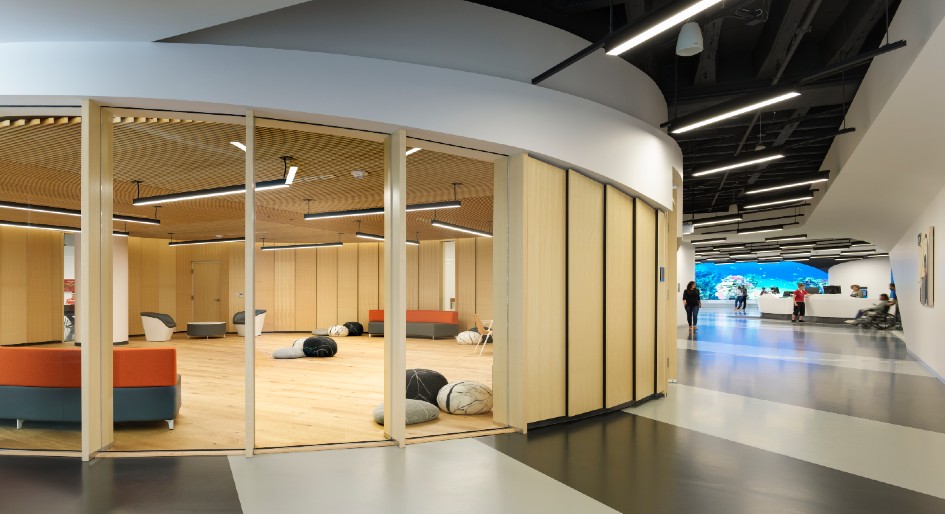
Near the stacks—currently housing a collection of 150,000 items—fuchsia, lime-green and blue chairs circle around low tables in lounging areas, brightening up an already light-filled space.

Outside, the exterior reflects much of what the library reboot set out to do.

“The vision of the building is to stretch the library out into the city—to draw people into this wide variety of services. When you enter the building, you see up through to a new atrium and it leads you where you want to go—to all these exciting dynamic community services,” says Teeple. “You can see in the building skin how the envelope stretches off the original static box of the original structure.”

He refers to the interior and exterior as “reciprocal equals.” The stretching of the building skin out into the city and the dynamic folding toward the corner create the interior atrium, drawing people inside. The exterior is also laden with 396 more windows than before.

To significantly improve energy performance, a high-tech re-cladding gives the building great insulating value, says Teeple. The designers used a light-coloured azengar—a high-quality, long-lasting zinc that is popular in Europe and more obscure in Canada.

Edmonton Public Library

High-tech re-cladding amplifies the building’s insulating value. Photo by Andrew Latreille.

“The fact that it’s a seismic upgrade of an existing concrete structure with all new mechanical and electrical systems is super challenging,” says Teeple. “You’re working within a lot of resisting constraints, and to really reimagine it is pretty challenging— to truly transform it into a new space appropriate for today.”

The library first opened in 1967 as Edmonton’s Centennial Library and was given its current name in 1996. Over the years, it housed everything from a petting zoo in a children’s library to a smoking room shut down in the 1970s, according to one Edmonton Public Library board member who knows its history well. When it opened, a library card cost more than it does today: adults paid a quarter and a child’s library card cost five cents.

In 2015, the city reached out to its citizens, asking them what they wanted in a renewed downtown library. People wanted a “destination, a place to hang out and spend time, a place to create, to borrow library materials, to collaborate, to learn and incubate new ideas—most of all, a place to connect and feel part of something bigger,” Edmonton Public Library CEO Pilar Martinez said during the opening ceremony.

Many of these ideas transpired within the $84.5-million renewal, replacing the small windows and dense floor plate, the dark and isolated spaces of the past. New connections come in many forms—through programming and through the library’s intuitive and accessible circulation paths.

“What it brings is a natural wayfinding, so the moment you enter through the door, your eye is led on a path leading to all the various services,” adds Teeple. “It’s a very intuitive building, even though spaciously it’s very diverse, very rich and seemingly quite complex.”

Currently, all Edmonton Public Library locations are closed for in-branch visits to help limit the spread of COVID-19. As restrictions are lifted, the new design will help support protocols for limited patronage until it is fully open.

“It was designed before the pandemic unfolded, but it works well as a much spacious facility with lots of room for people to maintain social distancing and have their own nook in which they can read,” says Teeple, adding, “the pandemic will come and go; the library will stay.”

Ontario reports record COVID-19 outbreaks in long-term care

As of Monday, January 4th, there are 233 long-term care homes in Ontario experiencing COVID-19 outbreaks, a record-high number for the pandemic. In total, 3,200 new cases and 29 more deaths have been recorded, as 1,160 residents and 1,140 staff members remain infected.

The hardest-hit facility in terms of active cases is Sienna Living’s St. George Care Community, located in the Annex neighbourhood of Toronto. In a statement, the company catering to senior residents said it has implemented comprehensive infection prevention and control protocols and isolation precautions for the residents.

Meanwhile, Tendercare Living Centre in Scarborough remains the hardest-hit facility in terms of resident deaths with 62. On January 2nd, scores of protesters rallied outside the Tendercare facility to draw attention to the deadly outbreak that led to North York Hospital taking over some of the home’s key administrative duties.

In response to the crisis, the Ontario Health Coalition, an association representing the province’s patients and health-care workers, is calling for the armed forces to once again intervene. The group commented that “while it isn’t their first choice, there aren’t many options while the outbreaks grow.”

Back in May 2020, after the first wave resulted in countless COVID-19 outbreaks and related deaths, the Canadian Armed Forces were called in and subsequently issued a scathing report on the state of Ontario’s long-term care homes, shedding light on the grim conditions service members observed in multiple residences.


Top 2021 interior design trends

1stDibs conducted its annual survey of interior designers to gauge what trends the new year will bring. Including a drastic shift toward remote consulting and online buying, skyrocketing demand for home offices and a return to nostalgic colours, below are the top four 2021 interior design trends.

1. 1970s Colours Are Back: The expected hottest colours for 2021 include emerald, cobalt blue, burnt orange and mustard.

Following the popularity of deep blue palettes in 2020, designers expect to see a similar interest in 2021 in robust jewel tones, with 24 per cent reporting emerald green as their top colour choice and 23 per cent choosing dark blue. Burnt orange and mustard yellow have made significant gains, with 22 per cent of designers selecting each of them as the top colour for 2021.

2. Flexible Living Spaces Are in Demand: Expect an increase in demand for kitchen, home office and home gym revamps.

As COVID-19 turned our lives upside-down, the need for flexible, innovative interior design became apparent. After all, most of us now work, exercise, eat and relax within the same four walls every day. And although the global situation will hopefully be improved in 2021, for many, the shift to full-time remote work is likely to be permanent.

For that reason, the biggest reported trend in 2020 was a renewed interest in home offices and flexible workspaces. Sixty-six per cent of designers also reported home offices as the dominant expected project in 2021, up 38 percentage points from last year’s report. In addition, there is  a 16 percentage point increase in projected interest in home gym design as people continue to prioritize at-home wellness.

3. Nature Comes Indoors: Floral, organic and large-scale patterns are expected to be increasingly popular, along with natural materials like wood and stone.

As we spend more of our time in one place, designers are reporting a desire to bring natural aesthetics into the home. Especially during the winter, these motifs remind us of the wider world outside our walls and create a peaceful, soothing atmosphere. Wood is the top predicted material for 2021, at 34 per cent, and natural, organic and floral patterns are expected to be the most popular motifs.

4. Designing for Health and Wellness: Prioritizing social distancing measures is a must, as is a focus on wellness and comfort.

Unsurprisingly, given the climate of this past year, 2021 interior design trends are expected to focus on creating a health- and wellness-conscious environment. For commercial spaces, an overwhelming 47 per cent of our designers reported the need for distance-friendly design in the new year.

Positive Outlook

With all the tumult of 2020, the majority of designers feel positive about the prospects of the design industry during COVID-19. The ability to design virtually and find quality items online means designers still have access to the resources they need. In fact, 73 per cent reported a shift to buying online instead of in stores or galleries in 2020, and 65 per cent expect to continue buying online in 2021.

Interior designers and architects certainly faced their fair share of challenges, with the top three issues reported being delayed procurement and delivery timelines (76 per cent), project delays or cancellations (62 per cent) and lack of product availability (57 per cent). However, many also noted that the pandemic has made people more aware of the need for good design and that designers have a role to play in solving some of the critical issues concerning the way we live and work — at home, in the office, in public spaces and outdoors.

Scholarship recipient pursues RPA designation

Devri Robertson has been named the Vyetta Sunderland Scholarship recipient for 2020. The annual award, jointly sponsored by BOMI Education Canada and BOMI International, is bestowed to a Canadian student pursuing career advancement in property or facilities management.

Robertson, an administration manager with Colliers Regina, is working toward a Real Property Administrator (RPA) designation. She joined Colliers Regina as an administrative assistant in 2017 and was promoted in 2018.

“As my role has changed over the past two years, my drive to be a high performing property manager has only increased,” she says. “By completing the RPA designation, I can ensure that I have the critical knowledge and skills needed for personal and organizational success.”

The scholarship is named in honour of Vyetta Sunderland, a longstanding supporter of and contributor to continuing education through her active participation in BOMI and the Building Owners and Managers Association (BOMA), in addition to her multi-decade career in real estate services.

“I’ve worked with Vyetta Sunderland throughout our careers on various BOMI Boards and committees, and I know she would agree that Devri embodies the characteristics the committee seeks for the scholarship recipient,” affirms Laurie Ell, chair of BOMI Education Canada and general manager, REMS, with Colliers International.

Saskatoon’s TCU Place achieves GBAC STAR facility accreditation

TCU Place in Saskatoon, Sask., has demonstrated its commitment to employee and customer health and safety by achieving GBAC STAR™ Facility Accreditation from the Global Biorisk Advisory Council™ (GBAC), a Division of ISSA, the worldwide cleaning industry association.

GBAC STAR is an industry accreditation focused on ensuring a clean, safe, and healthy environment in public and commercial facilities of all sizes. The program outlines best practices, protocols, and procedures to control risk factors associated with infectious disease, including SARS-CoV-2, the virus responsible for COVID-19. GBAC STAR accreditation means that venues’ cleaning, disinfection, and infectious disease prevention programs implement best practices to prepare for, respond to and recover from outbreaks and pandemics like COVID-19.

“When we bring people together for an event, there is nothing more important than safety,” said Tammy Sweeney, COO of TCU Place. “Our team has worked extremely hard to keep this top of mind behind the scenes and front of house, and the GBAC STAR Accreditation allows each member of our team to feel confident in how we deliver safety to our guests. TCU Place has a strong history of providing incredible events for our community – and we are so proud of this opportunity to strengthen this aspect of our offerings.”

To achieve GBAC STAR accreditation, facilities must follow specific performance and guidance criteria to show compliance with the program’s 20 elements, which range from standard operating procedures and risk assessment to personal protective equipment (PPE) and emergency preparedness and response measures. The program is ideal for facilities of all sizes including, but not limited to offices, restaurants, hotels, airports, stadiums, and other public venues.

“GBAC STAR is the gold standard of safe facilities, providing third-party validation that ensures facilities implement strict protocols for biorisk situations,” said GBAC Executive Director Patricia Olinger. “Accreditation empowers facility owners and managers to assure workers, customers, and key stakeholders that they have proven systems in place to deliver clean and healthy environments that are safe for business.”

Apply for GBAC STAR facility accreditation today at gbac.org/star. See which facilities are accredited or are working towards accreditation via the GBAC STAR Facility Directory.

About TCU Place

Located in downtown Saskatoon, Sask., TCU Place is a leading conference facility in Western Canada. With over 104,000 square feet of convention space, this facility is one of the most versatile properties in Saskatoon. The Convention Centre houses 21 different rooms with configurations that allow unlimited combinations, as well as Sid Buckwold Theatre – a 2,074 soft seat theatre that has hosted international and national performers, speakers, and theatrical productions. TCU Place is owned by the City of Saskatoon. The facility is operated by the Centennial Auditorium and Convention Centre Corporation, a not-for-profit organization with oversight from a volunteer Board of Directors appointed by the City of Saskatoon. For more information, visit https://tcuplace.com/.

About GBAC, a Division of ISSA

Composed of international leaders in the field of microbial-pathogenic threat analysis, mitigation, response, and recovery, the Global Biorisk Advisory Council (GBAC), a Division of ISSA, provides training, guidance, accreditation, certification, crisis management assistance, and leadership to government, commercial and private entities looking to mitigate, quickly address, and/or recover from biological threats and real-time crises. The organization’s services include biorisk management program assessment and training, Forensic Restoration® response and remediation, the GBAC STAR facility accreditation program, training and certification of individuals, and consulting for building owners and facility managers. For more information, visit www.gbac.org.

About ISSA

With more than 9,300 members – including distributors, manufacturers, manufacturer representatives, wholesalers, building service contractors, in-house service providers, residential cleaners, and associated service members – ISSA is the world’s leading trade association for the cleaning industry. The association is committed to changing the way the world views cleaning by providing its members with the business tools they need to promote cleaning as an investment in human health, the environment, and an improved bottom line. Headquartered in Northbrook, Ill., USA, the association has regional offices in Mainz, Germany; Whitby, Canada; Parramatta, Australia; Seoul, South Korea; and Shanghai, China. For more information about ISSA, visit www.issa.com or call (800) 225-4772 (North America) or (847) 982-0800. For information on ISSA’s Canadian division, ISSA Canada, visit http://www.issa-canada.com or call (866) 864-8273 or (905) 665-8001.

About MediaEdge Communications

For more than 25 years, MediaEdge has been at the forefront of communication solutions for organizations within a variety of business sectors. MediaEdge is a leading provider of non-dues revenues for associations offering exceptional no-cost member benefits through a number of innovative products and services. Find out more by visiting www.mediaedge.ca.

MediaEdge is a proud reseller of the GBAC STAR and GBAC fundamentals online course. Please see the program details and links below and remember to use the promo codes when registering as they provide discounts.

  1. Commercial facility owners looking for GBAC STAR accreditation can follow the link here and use the promo code “MediaEdgeGS”
  2. ISSA has also released a new GBAC fundamentals online course specifically designed for cleaning workers on the frontlines of the coronavirus fight. Please click here to register and receive a discount off normal prices.

For additional program details and information, please email [email protected] or contact him at (416) 803-4653.

Eminent building scientist joins Order of Canada

Eminent building scientist Gina Cody has been appointed to the Order of Canada. She is the namesake of Concordia University’s Gina Cody School of Engineering and Computer Science, a retired engineering executive, and an active technical and strategic advisor to the Canadian Standards Association, contributing to the development of building standards.

As one of 47 new members of the Order of Canada announced on December 30, Cody has been cited “for her long-standing career as an engineer and business leader, and for being a trailblazer for women in the field”. Among the latter achievements: in 1989 she was the first woman to earn a PhD in building engineering from Concordia University; in 2010 Profit magazine named her one of Canada’s top women entrepreneurs; and she was ranked as a top 25 Women of Influence in 2020.

After completing her engineering studies in Montreal, Cody moved to Toronto in the early 1990s and worked briefly in public sector before literally ascending a career ladder in the private sector. That began with performing crane inspections for the consulting engineering firm, Construction Control Group — the first woman to take on the role that entails climbing up construction cranes to ensure their safe and proper operation — and culminated as CCG Group’s president and principal shareholder. After her 2016 retirement, the firm merged with McIntosh Perry Consulting Engineers.

Cody has also received the Canadian Standards Association’s Award of Merit and the Order of Honour from the Professional Engineers of Ontario.

The Order of Canada is the highest honour bestowed to civilian citizens, and recognizes exemplary contributions that enrich the lives of others and make a difference to the country. It was established in 1967 with the motto DESIDERANTES MELIOREM PATRIAM, which translates to “they desire a better country”.

Alignvest Student Housing welcomes Trish MacPherson

Alignvest Student Housing (“ASH REIT”) announced that Trish MacPherson, previously of CAPREIT, will be joining the team effective immediately.

“Trish is an accomplished real estate leader,” said Sanjil Shah, Managing Partner of Alignvest. “She has substantial knowledge and experience across various functions. We are delighted to have her join our team as we continue to execute on our growth plan and expand across Canada.”

Prior to joining Alignvest, MacPherson ran an independent consulting business and spent 14 years with CAPREIT as Executive Vice President, Operations and Vice President, Sales and Marketing. Her responsibilities included revenue management, leasing and marketing, investor relations, customer experience, commercial and field operations, and new-build development for CAPREIT’s portfolio of residential rental suites and manufactured home sites across Canada, the Netherlands and Ireland.

MacPherson also worked in public relations and sales and marketing in various industries including pharmaceuticals, software, and accounting. She currently acts as a mentor for Toronto CREW and sits on the advisory board of a real estate software company. Ms. MacPherson received her BScH from Queens University and her MBA from the Richard Ivey School of Business at Western University.

“I am excited to join Alignvest Student Housing Inc,” she said. “Student housing has demonstrated its resiliency through the COVID-19 pandemic and ASH is uniquely positioned to grow and succeed as Canadian universities resume on-campus operations and students return to campus. I look forward to contributing to the success of ASH.”

Visit Alignvest Student Housing Real Estate Investment Trust at www.alignveststudenthousing.com.


Mental illness in condos amid a pandemic

After 20 years in the industry, one property manager says he’s seen a fair number of residents struggling with mental health conditions. “We face these things all the time,” says Vadim Koyen, president of CPO Management. “Unfortunately, the number of people who suffer from mental illness are increasing tremendously and those people are living in condominiums among us.”

In Canada, nearly half the population will experience some type of mental illness by age 40 and, in any given year, one in five people is living with mental health problems. Fears and anxieties that COVID-19 is generating may likely have a greater impact on people with pre-existing conditions. This is something high on the radar of mental health professionals right now. “We’re very concerned because the isolation and the economic effects and social limitations can worsen mood and exacerbate pre-existing depression and anxiety conditions,” says Dr. Thomas Ungar, psychiatrist-in-chief at St. Michael’s Hospital in Toronto.

Pandemic impacts are affecting people differently. For some, there is a real worry they may be “catastrophizing and magnifying the effects with their anxiety disorders,” Ungar finds. Others, with a paranoia or social anxiety, are managing a little better because they are isolating at home.

Post-traumatic stress disorder and substance use as a way of coping with stress are other worries. But it’s not just people with pre-existing conditions who face an increased risk of mental health difficulties due to COVID-19. As the Centre for Addiction and Mental Health reports, essential workers, COVID-19 survivors and vulnerable populations need special attention. This includes people in precarious jobs who cannot work virtually.

“I’m most worried about the economic effects for those who can’t cope or distance because of their physical space or who can’t maintain their incomes,” says Ungar. “Those are the vulnerable populations—the ones bearing the extra burden and the population we’re most worried about. They might be more at risk of both COVID and the downstream effects, including mental health, as they can’t distance or keep food on the table or pay rent.” If negative economic impacts kick in, some mental health issues could “start off as real-life stressors and maybe develop into a clinical disorder.”

The possible effects of economic damage seem to be of utmost concern. Also referred to as a fourth wave, the mental health community started bracing for a potential echo pandemic. Canada is currently in a second wave. If a bad economic wave hits as a result of job losses and dwindling government support, worsening mental health effects could follow. But this is a maybe. As Ungar notes, it’s important to have real scientific evidence backing up concerns, as this fourth wave might be more worried-based. “We will see if it is actual, or maybe it will be limited to vulnerable populations; we just don’t know yet.”

According to a study published last year in peer-reviewed medical journal, The BMJ, suicide rates are not going up in the developed world; reports suggest no rise or even a drop in the early months of the pandemic. But as the study cautions, it is too early to declare what the ultimate effect of the pandemic will be, and people should remain alert to emerging and known risk factors.

For those struggling with serious conditions, COVID-19 has also disrupted access to care. As CAMH states, many with more complex mental illnesses benefit best from in-person services. There is also concern that this marginalized group will continue to be neglected, as they have in the past, by mental health and social services systems.

Often, property managers and condo boards won’t know someone is suffering from a condition until there is an episode or behaviours escalate. “We can try to be very gentle with them—to help them without interfering with their privacy, without any sharp movements and make them comfortable,” says Koyen.

He thinks back to his own experiences with residents who were recovering in mental illness after an episode.

“Sometimes there are no family members around, so in these very traumatic times we need to be helpful,” he says. “When they are recovering, we sometimes buy their groceries, offer a listening ear, direct them to a safe place to get some fresh air and try to stay in contact. There is nothing in the Condo Act which directs us to do that; it is strictly a social call.”

The role of the corporation

The role a condo corporation plays in the life of a resident struggling with mental illness can often be a delicate matter, especially if the resident has no family support system to help de-escalate troubling behaviour.

Condos have a duty to accommodate residents they suspect may be struggling with mental illness—a recognized disability under the Ontario Human Rights Code. It is a duty that is both procedural and substantive, says condo lawyer Natalia Polis of Lash Condo Law. She explains that corporations must engage in “good faith discussions with the resident to determine their needs, obtain relevant information, and consider various options for accommodation,” but they must also “apply accommodation plans for the resident and adhere to the policies in a non-discriminatory fashion.”

She adds this duty to accommodate is only up to the point of undue hardship, and, in the process, documentation is key, including all correspondence, verbal discussions or meetings.

“In the event that either the resident is unwilling to engage in the accommodation process or, if an accommodation plan is set in place and the resident’s behaviour continues to the point of undue hardship, the corporation can take enforcement steps and the documentation would be necessary to show that the corporation took reasonable steps to try and accommodate the resident without success.”

Managers may be tasked with difficult conversations to inquire about one’s mental health state, while not encroaching on their privacy. As Polis says, such medical information can be obtained, but with certain limitations.

“The board has a duty to undertake proper due diligence in all matters concerning the corporation’s affairs, including with respect to exemptions from the restrictions in the declaration, bylaws and rules for accommodation purposes,” she says, adding, “Corporations can inquire what the resident’s medical needs are, but not the diagnosis. The corporation can request the information directly from the individual or, if the individual permits, the corporation can seek this information from a family member, friend or their physician.”

In the event an episode occurs, it is often a sensitive situation. If it appears a resident is having a severe episode, if there is concern for the individual’s safety and the safety of others in the condo, especially if no family or friends can be contacted and the resident has not provided any documentation or confirmation that they suffer from a mental illness, she advises the corporation might then want to consider obtaining a psychiatric assessment—to help determine whether a condition exists and how best to accommodate the resident. This can be obtained through a justice of the peace or by calling 911. “It really depends on the nature of the behaviour,” she says. “If the individual is threatening to inflict self-harm or threatening others, calling 911 would be the most appropriate in the circumstances.”

The corporation should advise police that the individual is without family members and request an assessment and, once they arrive on scene, should give them a one-page document outlining the individual’s conduct that prompted the call. “Under section 17 of the Mental Health Act, police have the authority to take the person to the hospital for assessment,” she adds. “The police must be satisfied that the individual has a mental health issue and there is a risk of harm to themselves or others in order for them to proceed with taking the individual to the hospital for an assessment.”

If a resident is checked into a hospital, corporations are advised to offer up any other information that can support the assessment. “This requires the physician complete a Form 1 pursuant to section 15 of the Mental Health Act,” says Polis. “If the individual has no one in their family to act as their substitute decision maker, the public guardian and trustee may be contacted.”

Better response to mental health emergencies

Provincial initiatives have highlighted the urgency for better response to such mental health emergencies, as police officers often lack specialized training and hospital visits are not always ideal.

“We know that more needs to be done to tackle the mental health crisis in our communities,” says Stephen Warner, press secretary and issues manager at the Office of the Solicitor General. “The nature of community safety and policing is changing: police officers are increasingly being called upon to respond to complex situations involving vulnerable individuals experiencing mental health crises.”

The Canadian Mental Health Association has long been advocating for 24-7 mobile crisis intervention teams to arrive first on the scene when a mental health or substance use emergency call is made. Police services in several jurisdictions, including Hamilton and Toronto, have already implemented these programs, which can assist condo management with such delicate situations.

Mental health professionals are paired with police officers to respond to such calls reported through 911. They are able to help de-escalate and stabilize persons in crisis, divert individuals from emergency departments whenever appropriate, and connect that person to community resources to address physical and mental well-being over the longer term.

More recently, Peel Regional Police and the CMHA Peel Dufferin Branch partnered to launch the program earlier last year. As COVID-19 has fueled the demand for services, in mid-November of 2020, the province announced critical new funding; the goal is to help 33 communities expand or launch mobile crisis programs.

There are a number of training programs that teach de-escalation techniques. Among them are safeTALK, Mental Health First Aid and Applied Suicide Intervention Skills Training. Most CMHA branches regularly offer these licensed training programs.


ICBA survey shows 2021 construction wages up

The Independent Contractors and Businesses Association (ICBA) has released its annual 2021 Wage and Benefits Survey with 38 per cent of B.C. construction companies expecting more work in 2021 than they had in 2020.

Construction in B.C. now employs more than 240,000 people and accounts for 9 per cent of the provincial GDP. This year, survey respondents said they expect to give their workers a 3.5 per cent raise; in 2022, they expect another 4.2 per cent increase.

“It seems counter-intuitive to expect wages to jump 7.7 per cent over the next two years at the same time employers are planning for less construction work, but that is how tight the B.C. labour market has become,” said ICBA president Chris Gardner.

The effects of COVID-19 were certainly felt by construction companies, which limited 2020 pay increases to just 0.5 per cent, roughly the rate of inflation. Companies also report fewer tenders for new projects.

“We are far off what used to be the norm of more than half of all construction contractors expecting more work in the coming year,” said Gardner. “The percentage of contractors who foresee a decline in business in 2021 is almost twice as large as last year. While the north and Vancouver Island remain relatively optimistic, the Lower Mainland and rest of B.C. are very nervous.”

Despite construction being deemed an essential service, ICBA estimates that COVID-19 still reduced construction volumes by 15 per cent in 2020 and is forecasting a further decline of 5 per cent in 2021.  “Keeping close to a quarter-million men and women working on construction sites through a global pandemic provided an important life-line to many families and communities across B.C. over the past year – but uncertainty about the future is the buzzword for 2021,” said Gardner.

The survey showed there is still strong demand for workers in all regions of the province. Every single glazing, insulation, and steel company surveyed noted they needed more glaziers, insulators and steel fabricators respectively while 94 per cent of mobile crane/equipment companies said they needed more skilled operators. Roofing companies (92 per cent) are looking for roofers, and 91 per cent of pipefitter employers are on the hunt for more labour.

“If you’re looking for work, construction remains a strong option,” said Gardner. “British Columbia is going over a demographic cliff, with a workforce that is rapidly aging out. There is incredible opportunity in construction for young people, entrepreneurs and skilled trades workers. That’s why ICBA continues to ramp up our public outreach, and we’re proud to be the single largest sponsor of trades apprentices in B.C.”


Dawn of a new era for development in Canada

Although the pandemic slowed construction activity considerably in 2020, forecasts suggest we’re at the dawn of a new era for development in Canada, as new opportunities, emerging technologies, and several planned mega projects gain momentum in the wake of a successful vaccine rollout.

According to a recent market report from Vancouver-based real estate advisory firm BTY Group, infrastructure, renewable energy, industrial and multi-residential housing are all expected to steer construction starts back on track in 2021, resulting in a rebound to Q4 2019 levels by the end of the year.

Toby Mallinder, managing director at BTY Group, underscores his firm’s cautiously optimistic outlook: “In the longer term, we are expecting changes driven by COVID-19, especially in technology, to accelerate improved productivity,” he said. “Achieving—and surpassing—pre-2020 construction activity levels still depends on a robust economic recovery supported by a speedy, successful and sustained vaccine rollout.”

While some sectors will continue to lag—namely, airports and airlines, hotels and hospitality, and bricks and mortar retail—the report refers to several planned mega projects in BC, Quebec and Ontario that should help counterbalance those declines. Here is a province-by-province breakdown of what to expect as 2021 unfolds:

Ontario
Ontario’s robust infrastructure program, bolstered by government stimulus spending  will help offset sharp declines in other sectors and a projected dip in housing starts. Ongoing and proposed projects in the province include numerous healthcare, utilities, and transit projects such as the Eglinton, Hurontario, and Finch LRT. In terms of residential development, reduction in immigration is expected to damper overall demand in 2021, with residential properties in the suburbs continuing to outperform those in urban areas as a result of remote working.

British Columbia
Mega energy projects, a long roster of major infrastructure projects, and government stimulus spending will keep B.C. construction buoyant despite a decline in residential building. Housing starts are projected to dip from 45,000 in 2019 to 35,300 in 2020 with a slight increase to 36,300 expected in 2021. Major ongoing projects in Vancouver, such as the ongoing Oakridge redevelopment, will help support healthy activity in the city. Like in Ontario, remote working has led to many residents choosing to live in suburban areas compared to previous years.

Alberta
A longer recovery is projected for Alberta due to continued pandemic restrictions and ongoing weakness in the energy sector. As such, BTY Group says a return to pre-pandemic construction levels is not projected until 2023. Capital spending is at an 11-year low primarily due to cutbacks in the energy sector exacerbated by the oil price meltdown earlier in 2020. Residential housing was down sharply in 2020 and will likely remain flat throughout the year. The bright spot will be rapidly growing private sector investment in renewables.

Saskatchewan
Like Alberta, continuing weakness in the energy and mineral mining sectors are slowing recovery in Saskatchewan, but booming agri-food production and exports will help the province weather the storm until recovery takes hold. Residential activity is projected to drop 10 per cent in 2020 as demand slows due to lower population growth and job losses, with a rebound anticipated in 2022. Overall, the province intends to invest $30 billion in infrastructure development over the next decade.

Manitoba
Of all the provinces, Manitoba is expected to experience the least economic impact from COVID-19, but will still see construction declines despite government infrastructure spending. In terms of housing, investment in residential building is projected to decline by an estimated 11.6 per cent in 2020, with a return to growth in 2021. While housing starts were strong in the first quarter of 2020, they slowed when demand weakened as the year progressed.

Quebec
With several major transportation projects underway, supported by added government investment in infrastructure, the non-residential sector in Quebec should soon return to pre-2020 levels. Investment in the residential sector, which still remains the hottest housing market in Canada, is facing a forecast decline of 8.4 per cent in 2020 before rising by 3.5 per cent in 2021. A complete return to pre-COVID levels is expected in about two years.

Atlantic Canada
Buoyed by major capital spending, Nova Scotia and New Brunswick will bounce back stronger and faster than Prince Edward Island and Newfoundland and Labrador. Slow – and even negative population growth – will be an added drag.

Key drivers for multi-res housing

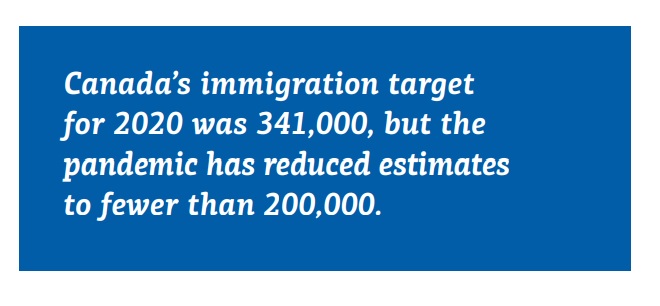
A sharp drop in immigration is expected to reduce housing demand in the short-to-medium term, but longer term, as the baby boomer contingent seek out accommodations that better fit their needs, and immigration picks up after COVID measures ease, innovative, affordable housing options including the continued expansion of modular housing, will be needed to help support future demand. Meanwhile, climate change challenges will continue to spur investment in renewables and energy efficient infrastructure across the country.


U.S. outlook: rental market trends south of the border

According to U.S. national rent resource, RentalGuide, rental market trends south of the border will continue to be impacted by COVID-19 and the resulting higher unemployment rate for an extended period of time.

As the economy seeks to rebound in 2021, recovery could be slow in the beginning of the year, causing more concern for consumers who are unsure about their jobs and finances. Renting an apartment will remain an attractive option for those who don’t want to be saddled with a mortgage with an uncertain future.

“Overall, multifamily markets have remained tight from an occupancy perspective, even as rent growth has been weak to negative as operators focus on renewals,” said Brad Dillman, chief economist at Cortland, and an Atlanta-based multifamily investment and management firm. “As a result of this resiliency, we expect rent pressures to rebound in the second half of next year.”

Meanwhile, multifamily construction could face delays due to the soaring costs of construction materials, which began in the summer of 2020 due to the unprecedented demand. The lumber supply chain was heavily impacted by the pandemic with so many homeowners conducting renovations, pushing lumber and home prices higher.

“We expect builders will feel this pinch over the quarters ahead, possibly causing a slowdown with new construction,” Dillman said.


How to manage service providers remotely

With the advent of SARS-CoV-2, the need to provide teleworking employees with the safest possible work environment has brought about massive changes in the structure of most companies in all kinds of industries.

Just a year ago, teleworking was mainly practiced during business trips or for exceptional reasons as a last-resort solution. Today, and likely for months to come, it is encouraged and even becoming the norm. Visits to offices are now sporadic for many people, sometimes following a schedule to control traffic within the building.

This poses an additional challenge for cleaning activities, which must necessarily be maintained if not improved in the current context, when the managers responsible for their supervision are likely not on site.

Many cleaning service companies have been forced to rethink their work methods, add tasks, modify work schedules, and purchase better equipment to meet higher standards and criteria.

A major survey conducted last July by Essity, the Tork manufacturer, involving 10,000 people in 15 countries revealed that people expect higher standards of public hygiene because of COVID-19. In total, 72 per cent of respondents have higher expectations for hygiene standards in hospitals, while 57 per cent said the same for restaurants and public restrooms.

The introduction of social distancing measures, mandatory use of additional personal protective equipment (PPE), and an increase in the frequency of certain tasks paradoxically with a decrease in the availability of labour are imponderables that can compromise the profitability of operations. For a manager who finds himself obliged to telework, effectively managing so many changes under additional pressure due to customer expectations requires a solid organization and good asset management.

Questions still remain. How to ensure the rigorous monitoring of work routes while working remotely? How to convey what tasks have actually been carried out? Is the service provided in accordance with the established standards? Did all employees show up as scheduled and respect their schedule? With all these changes and new requirements that have destabilized work routines, are the teams putting their efforts in the right places? While the company may be dealing with reduced revenues due to the health crisis, is there sufficient supervision of this important expense stream of cleaning and maintenance?

There are many solutions; the biggest challenge is to find the right one. Whether it is to supervise fieldwork or to improve the management of operating costs, multiple IT solutions and new technologies make it possible to maintain control over operations, even remotely.

If it is not documented, it is not done

An effective management system requires a good documentation system. If it is not documented, how do you know if it is done? This is a basic principle taught in all management schools, a precept widely used in scientific or medical research and the motto on which the Global Biorisk Advisory Council (GBAC), a division of ISSA, the reference in the housekeeping industry, is based.

It all starts with documentation. Experts agree that documentation must be factual, detailed, accurate, current and in no way dramatic, discriminatory, misleading, or subjective. The fastest way to gather relevant data without adding workload to an employee and without being tainted by human subjectivity is to rely on IT solutions.

Work route tracking software

Several models for work route tracking are available on the market. Some come with NFC (Near Field Communication) stickers that are installed in all rooms or spaces in a building that need to be maintained by the cleaning crew. Each sticker is associated with a room by a number and any other location details (floor, building, sector, etc.) to obtain exact coordinates. In addition, a detailed task list can be pre-configured for each space, allowing the employee to refer to it during its execution or self-assessment.

When an employee performs maintenance on a space, he simply scans the sticker of the room, which allows him to retrieve several data that can later be transposed into graphs to facilitate the analysis. That data, for example, can include:

  • The number of rooms or areas cleaned and disinfected
  • The person who performed the tasks
  • The time when the last maintenance was done
  • The time it took the employee to complete the task.

Further programming of this type of device also allows employees to communicate with one another and to generate “tickets” that require follow-up actions, such as reporting equipment malfunction or out-of-stock items.

IT applications for workplace management

As a result of the pandemic, the cleaning and disinfection of frequently touched surfaces is more important to customers than ever before. Now that most employees have adopted teleworking, some offices may remain undisturbed for several days. In other words, tasks that used to be called regular or routine are no longer necessarily required. A wise manager will try to reassign employees to other tasks. But how do you go about verifying the actual use of work areas, and how do you ensure that the instructions issued to cleaning crews are accurate and respected?

Some high-performance computerized management systems allow you to add a register to record sporadic visits to your building using self-service terminals located at the entrance of the building. The employee will simply enter his name and the workstation he used during his visit and instantly, a notification is sent to the supervisor or team leader to plan and carry out the disinfection in the evening.

This solution can be highly beneficial in companies that have implemented an organizational practice of desktop sharing (hot desking). An employee can consult remotely from his smartphone the status of the workstation before choosing it, reserving it, and heading to the office.

Not only does this system make it possible to manage the workstations that need to be cleaned and disinfected, but also to record statistics on the building’s traffic. For example, a floor that has not received any tenant visits will not require cleaning. This allows time for the team to recuperate so that they can perform other tasks as part of their regular working hours.

QR Code stickers

Customer satisfaction will always remain a key criterion in assessing the quality of cleaning operations. It is therefore important to provide a means for users to express their opinion and to express their appreciation, or not, of the environment they frequent. Even better, we must have the means to quickly collect their comments to react and correct complaints or problem situations as soon as possible and thus eliminate other complaints. By soliciting the direct collaboration of users, the company reflects its commitment to respect its standards and guarantee a healthy and safe environment for collective health. This is a small gesture that demonstrates vigilance and has many advantages, including direct feedback from the people for whom you are making efforts to maintain a clean environment.

Stickers with QR codes are affixed at the most strategic locations, and users’ comments are transmitted in real time. The system can generate complaint tickets, which can be traced if follow-up is required. Once the situation is resolved, the system records the correction and response time.

Technology will always be powered by man

Although technological innovations are increasingly being exploited to advance the cleaning industry, the quality of service will always depend on a team of people. Appliance connectivity is becoming more and more popular because it has several advantages. Take, for example, intelligent toilets that self-disinfect, or soap or hand sanitizer dispensers that indicate when to replenish them. Robotic devices that increase pace while making tasks easier are also here to stay. This allows you to work faster and have access to data at your fingertips, but the devices will never work on their own or replace the work of custodial staff.

Thus, to continue supervising and controlling service providers even remotely, a manager must integrate IT solutions into their working methods that allow the collection of relevant data that will give him a realistic picture of the situation, as if he were there.  The more data you are able to generate, the more control you will have over your operations.

Derek Oliveira is the Senior Director at ValkarTech │ Building Hygiene Management, a Canadian consulting firm that guides, supports, and advises their clients on ways to optimize the operational performance of their organizations in terms of building hygiene and sanitation. For more information, please email [email protected], visit https://www.buildinghm.com/, or call (647-812-0160).

Expanded Winter 2020 issue of FC&M now available

As we move into 2021 and deeper into winter, it’s a good time to reflect on what we have learned in the cleaning and maintenance industry during 2020, the year of the pandemic.

There’s not a corner of society that hasn’t been affected by COVID-19 over the last nine months or so and, in many ways, it’s changed the game of cleaning and maintenance. With every industry impacted, facilities of all kinds have had to reevaluate their procedures, their processes, and their tools and press on forward into a world of enhanced cleaning and communication.

With that comes REMI Network’s expanded digital winter 2020 issue of Facility Cleaning & Maintenance magazine.

There are lessons to be learned and stories to be told, and, as always, within this issue we have tried to help teach them and tell them. As always, we provide an update on what ISSA Canada has been up to since the summer, complete with an in-depth look at the thriving GBAC STAR facility accreditation program, which has seen huge uptake in North America and around the world.

We look at a number of BSC companies and how they have navigated the pandemic and are looking to move forward. As we brace for winter, we chatted with a number of experts on timely topics such as how COVID-19 is Bringing Common Sense Back to Cleaning, looking forwards in Protecting Workplaces From a “Twindemic”, and how to make sure cleaning processes and products are suitable for a new world where infection control is top of mind.

Our cover story is again one of positivity as we chat to Yamire McDowell and the housekeeping team of The Granite Club in Toronto about how to manage a leisure facility in these trying times, an issue further explored in Cleaning Within the NHL Bubble.

All in all, the cleaning and maintenance industry has arguably never been more important or more of a focus for everyone from specialists to facility owners and operators to the general public. Here, amid the backdrop of difficulty and tragedy, we look to celebrate that.

Positivity is a focus we must not lose as 2020 becomes 2021. COVID-19 will not just go away, but with progress being made on vaccines and so much already having been learned about how to appropriately control and battle the virus, we will find a way through this together.

The full FC&M winter 2020 issue can be found here.

ViveRE Communities acquires property in Saint John, NB

ViveRE Communities Inc. announced it has completed the acquisition of a multifamily rental property located at 51 Noel Avenue in Saint John, New Brunswick.

The property is a new 47-unit multifamily building that caters to the over-55, active-living demographic. Constructed in 2018, it is located in the growing Saint John sub-market of Millidgeville at the northern edge of the Saint John River and adjacent to two of the company’s existing properties on Noel Avenue. The property offers high-end living spaces with granite countertops, stainless appliances, dishwasher, microwave range hood, washer and dryer, walk-in closet, en-suite bathrooms and private balconies.

Common areas include gym facilities, media and community room, storage lockers as well as 34 underground parking spaces. The property is in close proximity to a prominent transit route, Horizon’s Saint John Regional Hospital, the University of New Brunswick and an abundance of nearby shopping, dining, and community centres.

ViveRE acquired the property for a purchase price of $11.25 million, subject to customary adjustments at closing.

“We are very pleased with the acquisition of this high quality, 55+ active living property,” said Mike Anaka, ViveRE CEO. “A core 2020 goal for the company was to grow our portfolio to over 500 units. With the acquisition of 51 Noel, we own 19 buildings and over 530 units. We are now focused on executing our strategy to double our portfolio to an excess of 1,000 units during 2021.”


Watch out for hygienic fraud

COVID-19 has certainly contributed to raising public awareness about the importance of good hygiene and sanitation, and we salute everyone’s efforts to address the global health crisis. But watch out for hygienic fraud.

The pandemic, unfortunately, exacerbates the behaviours of unscrupulous people who are trying to make a profit by relying on fear and ignorance. There are more and more advertisements for “anti-COVID-19” products and a sudden emergence of professional cleaning and disinfection services. Of course, it is important to always remain vigilant, even more so now that certain organizations, such as the INRS and the Anti-Fraud Centre in Canada or the CDC in the United States, are warning the population against new COVID-19 related frauds.

The growing trend towards hygienic fraud

What is hygienic fraud? It is a term coined for the sake of this column to describe the offering of tools, products, or services that do not meet the current situation or your requirements, whether voluntary or not by the provider of the products or services.  Either the chemical solution is too weak to kill the coronavirus and therefore absolutely ineffective, or the solution is far too violent for such an easily inactivated virus, or the proposed technique promotes cross-contamination. In any case, the result is an unnecessary waste of time and money, at your expense.

Faced with so much new information, so many different products and tools, taking decisions without the advice of an expert can cost you a lot of money but can also mislead you into believing that your environment is disinfected and safe when it is not. In short, calling upon the services of an independent consultant is not an unnecessary expense; on the contrary, it can allow you to save a lot of money and above all to make the right choice.

Typical examples of hygienic fraud

Most companies act professionally, in your best interest, and can only benefit from highlighting certain questionable practices for the sake of protecting the population.

Having said that, here are some examples of the most common frauds detected in the last 10 months. The intention here is not to discredit industry players but rather to raise customer awareness:

  • A new product “sharing” the same DIN as another product. This is an illegal practice. In Canada, every licensed product must have its own DIN (Drug Identification Number).
  • Promises not kept. This may include a promised DIN, a promise to be listed on Health Canada’s COVID-19 list of disinfectants, a virucidal claim in the process of being obtained, etc.
  • Exaggerating the actual benefits of the product.
  • Falsification of the safety data sheet by duplicating another safety data sheet.
  • Error in technical data sheets that distorts reality and exposes users to health risks.
  • Making unofficial claims about product attributes. Only Health Canada can issue product claims.
  • Selling unsuitable disinfection services and techniques by using the most time-consuming techniques to bill extra time.
  • Ignoring the safety data sheets of a product to the point of going against it by verbally suggesting to the customer that the product can be used without personal protective equipment when this is not what is stated on the safety data sheet.
  • The application of “green” logos on labels and advertisements when the product is not certified as being environmentally friendly.
  • Above all, deliberately ignoring the fact that coronavirus is not transmitted as much through objects and surfaces as previously thought, and not admitting that excessive disinfection is questioned by many specialists… All experts rather agree to advocate thoughtful and appropriate disinfection for each situation according to the inherent risks.

From the very first weeks of the pandemic, ValkarTech offered its services to help fight, protect, and prevent the effects of COVID-19. During this critical period, the company offers the opportunity to benefit from visits by hygiene and sanitation specialists to observe the characteristics of an environment on-site, to analyze calls for tenders, and to evaluate customers’ choices in terms of tools, products, and household maintenance service providers. The intervention allows either a validation or a restructuring of disinfection protocols with the goal of guaranteeing the safety of installations.

Through all the mandates entrusted to us over the last 10 months, I have personally analyzed countless disinfectant products, antibacterial coatings of all kinds, validated several protocols and even had the chance to handle various electrostatic spraying devices. The conclusion I have come to is a very worrying one: hygienic fraud is spreading. People may try to steal your time or money by betting on fear…and this manifests itself in many ways. Beware!

It is perfectly normal to ask for advice if you are not a specialist in chemical products and sanitary maintenance techniques. Do not hesitate to contact experts in the field if you need an impartial opinion or simply to validate your choices, your work techniques, the products used, your protocols or other aspects before applying them!

Choose a company whose primary mission is to maximize your level of productivity, improve your corporate image and contribute to the safety of your buildings.

Nathalie Thibault is a certified microbiologist and the Training Director at ValkarTech │ Building Hygiene Management, a Canadian consulting firm that guides, supports, and advises their clients on ways to optimize the operational performance of their organizations in terms of building hygiene and sanitation. For more information, please email [email protected], visit https://www.buildinghm.com/ ,or call (647-812-0160).

The coronavirus mutates & spreads: what does that mean?

We’ve entered a tough period of the COVID-19 pandemic.

On the one hand, the Pfizer vaccine has already been approved and started being rolled out in Canada and the Moderna vaccine could soon follow within the next few weeks.

On the other hand, we are deep into a second wave of the virus, with many experts suggesting things could get worse before they get better.

Perhaps most concerningly, the emergence of a 70 per cent more infectious, aggressive mutated form of the coronavirus is now crossing international borders.

But what does that mean?

In a new episode of Straight Talk!, the ISSA webcast hosted by ISSA editorial director Jeff Cross that spotlights cleaning industry issues, Dr. Gavin Macgregor-Skinner, director of the Global Biorisk Advisory Council (GBAC), explains below what we need to know right now.

Listen to Dr. Macgregor-Skinner’s thoughts below or here.

The Straight Talk! program features an open forum for providing a wide variety of topics to all ISSA members and the global cleaning industry.

Established in 2020, the webcast series boasts more than 100 episodes spotlighting the facility, contract cleaning, specialty cleaning and restoration, residential cleaning, distribution, and manufacturing segments of the global cleaning industry.