



Air purifiers have become more popular during the pandemic due to concerns about airborne viral transmission. But how safe are they?
Contrary to what some may think, a new study in the journal Environmental Science and Technology Letters has found that while some commercial electronic air cleaners can be effective in reducing primary pollutants and inactivating bioaerosol, many are actually also releasing aerosols and other pollutants into buildings.
Researchers with the School of Earth and Atmospheric Sciences at Georgia Tech University in Atlanta evaluated the effects of a hydroxyl radial generator in an office setting. This type of generator works as an air purifier by decomposing odours and pollutants and has been marketed to inactivate pathogens such as the SARS-CoV-2 virus.
Ng’s study found that in the process of cleaning the air, the hydroxyl radicals generated by the device reacted with volatile organic compounds present in the indoor space. This led to chemical reactions that quickly formed organic acids and secondary organic aerosols that can cause health problems. These aerosols have been associated with cardiopulmonary diseases and millions of deaths per year.
RELATED: Scientists find lack of focus on air quality
Ng cautioned that consumers are likely unaware of the secondary chemistry taking place in the air, with the pollutants generated not being directly emitted by the cleaning device itself.
“There are increasing concerns regarding the use of electronic air cleaners as these devices can potentially generate unintended byproducts via oxidation chemistry similar to that in the atmosphere,” said Nga Lee “Sally” Ng, lead researcher.
While previous research reported pollutant formation from various electronic air cleaners (ionizers, plasma systems, photocatalytic systems with ultraviolet lamps, etc.), Ng believes that her team’s study is the first to monitor the chemical composition of secondary pollutants in both gas and particle phases during the operation of an electronic device that dissipates oxidants in a real-world setting.
Ng stressed that future studies on air cleaning technology should not be limited to the inactivation of viruses or reduction of volatile organic compounds but also evaluate potential oxidation chemistry and the formation of unintended harmful gaseous and particulate chemicals.
RELATED: Employees willing to take pay cut for better air quality
“More studies need to be conducted on the effects of these devices in a variety of environments,” Ng said. “Electronic air cleaners greatly rose in prominence because of the pandemic, and now there are a lot of these devices out there. Millions of dollars are being spent on these devices by businesses and schools. The market is huge. Our results show that care must be taken when choosing an adequate and appropriate air cleaning technology for a particular environment and task.”
Ng stressed the importance of future studies concerning the unintended effects of electronic purifiers, as these devices are not currently well regulated and do not have testing standards.
“There needs to be more peer-reviewed scientific data on electronic air cleaners,” Ng said. “We hope that additional studies will lead to more government guidelines and regulation.”
 Maintenance & reviews

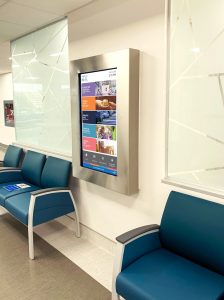 “Many hospitals have been built in stages. They have wings and additions that have been added over the years, which can make them confusing places to navigate for the majority of people who haven’t memorized their layout,” says Martin. “In that respect, interactive digital displays can provide clear and concise directions that cut through the confusion.”
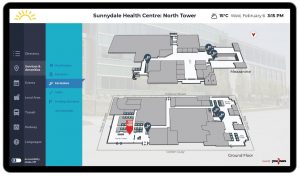 “We try and make those directions as easy to follow as possible by doing things like showing multiple levels on the same screen or enabling people to download step-by-step directions onto their mobile device,” adds Martin.
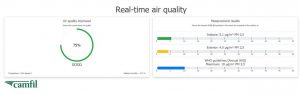 As expectations for hospital hygiene climb, it helps to use digital signage to showcase everything being done to keep hospital staff, patients, and visitors safe (e.g., new protocols, cleaning technologies, real-time indoor air quality (IAQ), hygiene initiatives, etc.).
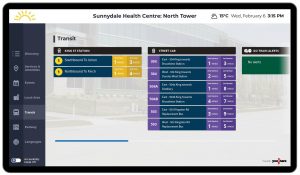 Few people plan for their initial trip to the hospital, let alone consider how they will get back. Moreover, family and friends who visit regularly may need support in finding the most effective travel option. Whatever the case, digital signage can display up-to-the-moment transit information or connect users to travel alternatives such as rideshares, taxis, nearby public transport, and other options.
 Signs of recovery
