Articles Archive - Page 183 of 927 - REMINET
REMI

The impact of wildfires on project insurance

The Canadian construction industry has long factored the snow and deep freeze of winter into project timelines. But contractors and builders are increasingly contending with wildfires, which can burn across Canada for seven months of the year (wildfire season can start as early as April, but typically peaks in July and August, and ends around October).

As the severity of wildfires continues to grow and encroach on populated areas, insurers are restricting when and where they’ll provide coverage; meaning prime construction months are increasingly being considered uninsurable in parts of the country at some point of the year.

In fact, insurers have been steadily expanding their wildfire threshold, for which the minimum buffer is currently 50 km — compared with between 10 km to 25 km just three years ago.

This means, insurers will not attach coverage to a project if there is a wildfire within a 50 km radius of the build.

In densely populated areas, the 50 km wildfire threshold can have a grave impact. To put this into perspective, the wildfires near Kelowna last summer likely hindered the insurability of new or just completed projects in municipalities such as: Big White, Summerland, Peachland, Penticton and Vernon.

As dryer conditions continue contributing to the escalating size, speed and severity of wildfires, a blaze that starts in a relatively remote area can quickly spread to within a 50 km radius of a town or city.

Also, it was generally assumed previously that a wildfire couldn’t jump a body of water the size of Okanagan Lake, which is five kilometers wide; however, it did just that — meaning it is possible that insurers could further expand their wildfire threshold beyond 50 km.

Impact on Construction Timelines

It’s important to note that the 50 km buffer not only affects the start of new builds but also completed projects; insurers are not transferring a construction policy to an operational policy if there is a wildfire within the defined threshold at the time of completion.

Relying on a course of construction policy to offer protection during this time of limbo is not an option as this coverage ceases once the structure can be ‘put to its intended use.’

All of this will force contractors and builders to navigate the scheduling implications of wildfire season; starting or completing a project in July or August — peak time for wildfires — may no longer be feasible from an insurance perspective. Not being able to secure necessary coverage has ripple effects, such as not meeting lender requirements and funding for a project not being advanced.

These circumstances are necessitating a greater emphasis on timeline management, which means not only shifting project starts and completions, but also factoring in delays and securing necessary trades services.

Growing Burden of Wildfires

To understand why insurers are moving in this direction, let’s examine the escalating threat of wildfires.

You may have heard 2023 was an unprecedented year for wildfires in Canada, with more than 6,500 blazes burning more than 18.5 million hectares across the country; by comparison, it took between 2015 and 2020 for a combined total of 17.4 million hectares to burn.

Furthermore, the number of disastrous wildfires in Canada has been steadily increasing since the 1950s. The Emergency Management Framework of Canada defines an event as disastrous if it meets one or more of the following criteria:

  • 10 or more people killed.
  • 100 or more people affected, injured, infected, evacuated or homeless.
  • An appeal for assistance (national or international).
  • Is considered historically significant.
  • Causes significant damage or interruption to a community.

There were more than 30 disastrous wildfires in Canada in the 10-year period between 2010 and 2019 as well as between 2000 and 2009. Comparatively, there were less than 20 disastrous wildfires in Canada between 1990 and 1999, and less than 10 between 1950 and 1959.

In 2023 alone, at least 10 notable wildfires resulted in the mass evacuation of more than 72,000 individuals across Alberta, British Columbia, the Northwest Territories, Nova Scotia and Quebec. The insured damage, evacuation efforts and amount of land scorched in British Columbia, the Northwest Territories and Quebec, respectively, were also record breaking this past year.

Moving Forward

While most provinces and territories experienced wildfires last year, the west has proven year-after-year to be particularly vulnerable to severe wildfire activity.

So, while all builders and contractors should reexamine their project timelines in response to the escalating threat of wildfires, those working in areas prone to blazes — such as Alberta and British Columbia — must avoid starting or completing their projects during peak wildfire season due to the inability to secure necessary insurance coverage. Simply put, contractors and builders should be looking to avoid a project start or completion of works in July and August.

Planning for building phases that purposefully avoid project starts and completions during the summer months will be of utmost importance for the Canadian construction industry going forward.


David Green is the director of Acera Insurance’s construction division. He has over 20 years’ experience as an insurance broker, with a specialty focus on construction clients of all types and sizes. As one of the largest independent, employee-controlled brokerages in Canada, Acera Insurance provides the utmost certainty in its specialized insurance and risk management solutions. Learn more at acera.ca.


B.C. college launches Trades Ambassador program

The College of the BC Building Trades has launched a Trade Ambassador program aimed at attracting more high school students to the construction industry.

Approximately 2,500 students have participated in workshops within the first three months of the program, which started in September and has received positive feedback from teachers and students.

The program was developed by B.C. Building Trades (BCBT) director of workforce development Layne Clark and uses young volunteers already working in the building trades to speak to students across British Columbia.

The ambassadors are from a cross-section of the trades and many are in the process of completing their apprenticeships with many women volunteers.

.The Trades Ambassador program was developed with the input of BCBT affiliates and trades teachers across the high school system. It’s tailored to reach Grade 10 students but is also meant to educate the public generally about the respect and prestige that comes along with skilled trades, said Clark.

There has been overwhelmingly positive feedback from teachers and students and Clark estimates the program will reach approximately 5,000 students by the end of the school year.

The program also provides valuable leadership experience for young BCBT members. The volunteers, who received training at four different College of the BC Building Trades schools, were also coached in public speaking. They will have ongoing support as they go into schools and present a workshop that broadly introduces students to construction, the apprenticeship process and the 22 trades.


Alberta delivers key transportation projects in 2023

The Government of Alberta announced that during the 2023 construction season, it invested $1.13 billion in 250 road and bridge projects.

“Alberta’s highways are so important to our quality of life. Whether it’s getting your kid to hockey practice or businesses getting their products to market, we all rely on a safe and efficient road network. The Alberta government will continue to invest in road and bridge projects to help ease congestion, enhance safety and promote economic growth” said Devin Dreeshen, minister of transportation and economic corridors.

The 2023 construction season included new and ongoing major road projects, such as repaving, bridge rehabilitation and replacement, slide repairs, road expansion and water management infrastructure projects. General maintenance work included repairing potholes, sealing cracks, painting lines, grading gravel roads and installing guardrails.

Project highlights include:

Calgary Ring Road
Almost $90 million was invested into the West Calgary Ring Road, the final leg of the Calgary Ring Road, which was fully opened to traffic on Dec. 19, 10 months earlier than expected.

  • Designed to accommodate up to 100,000 vehicles per day by 2025, the completed ring road includes 197 bridges and 48 interchanges.
  • The completed Calgary Ring Road provides 101 kilometres of free-flow travel, enhancing access to markets and supporting economic growth for the City of Calgary and surrounding area.

Deerfoot Trail improvements (Calgary)
Improvements to the Deerfoot Trail and 64 Avenue interchange were completed ($6 million).

Construction began for interchange improvements at:

  • 11 Street/Beddington Trail (estimated total investment $19 million)
    McKnight Boulevard (estimated total investment $44 million)
  • Bow Bottom Trail/Anderson Road/Southland Drive and Glenmore Trail (estimated total investment of about $595 million)

Southwest Anthony Henday Drive expansion (Edmonton)
Final work to expand the southwest portion of Anthony Henday Drive was completed and the road was fully opened to traffic on Nov. 24 (estimated total investment $100 million).

  • The expansion from four to six lanes will accommodate 120,000 vehicles per day, reducing travel time for commuters.


Restoring Heritage Roofs

From slate to clay, concrete to sheet metals, and cedar to asphalt, roofing materials today are selected for a variety of reasons, including durability, cost, embodied energy, ease of maintenance and constructability. Historically, however, architectural style and character bore more weight when determining materials and heavily influenced the design process.

“Roofs on historic buildings were intrinsic to the original architecture—including massing, texture and colour,” explains Glade Schoenfeld, Principal at RJC Engineers. “The form of the roof needed to be both functional and aesthetic, but often the aesthetic aspect of the design made the roofs difficult to access, which necessitated the use of highly durable materials.”

Popular, durable roofing materials included copper, zinc, and raw slate. Though costlier to source and install than other options, these materials were known to last 100 years in excellent condition while contributing significantly to the architectural expression of the building. Today they are found in the rooflines, domes, parapets, balustrades, gables, and other ornamentations of historic buildings, and much of Schoenfeld’s work involves conserving these treasures to be functional yet still enjoyed and appreciated for generations to come.

“Heritage roofs are like any other Character Defining Element (CDE) on a historic building,” he says. “When the roofing is identified as a CDE, the preferred approach is to conserve, preserve or restore depending on the material and the condition of the roof. While copper and zinc can be restored because the tools, materials and trade knowledge remain available, slate is a little different. It is such a durable material that it can be reused, so preservation is the preferred approach.”

Each material also responds differently to environmental influences, and as such, some heritage roofs age differently than others. For instance, as copper ages, it forms a patina that protects it and adds to the overall aesthetic. Depending on the environmental conditions the roof is exposed to, the patina can range in colour from copper-green to copper-bronze.

“Copper’s also an inhospitable environment for organic growth,” Schoenfeld says. “Moss and other organics will not grow on the surface of copper and zinc roofing materials. The durability, long service life and recyclability of copper and zinc make them environmentally sustainable materials.”

Another benefit of working with copper is the fact that it’s highly workable. According to Schoenfeld, it can be used as sheets to form panels and tiles, it can be hammered and rolled to create texture and curvature, and it can be soldered and folded to form watertight seams.

Slate tiles, on the other hand, are a different beast altogether. They are shingled to shed water—and while highly durable with a very low water absorption index, aesthetically slate does not change colour or form a noticeable patina. A slate roof can be built with modern waterproofing materials beneath it, without changing the original architectural appearance.

“Slate tiles remain virtually unchanged over time and won’t deteriorate due to weather exposure,” he says. “Slate tiles are also 100 per cent reusable, making the material a one-time investment for a building. Original slate tiles can be reused if removed and stored with care during a roof conservation project.”

Determining the right approach

For heritage building owners, knowing when and how to address an aging roof system begins with having knowledge of the original materials and the best practices used to restore them. Unlike modern commercial buildings, historic roofs require an approach that puts conservation, restoration, and preservation first.

“The use of hydrocarbons has taken over the roofing industry,” says Schoenfeld. “New roofs using modern materials generally have an expected service life of 25 to 35 years and are very difficult to reuse or recycle. Not the case with heritage roofs.”

Before embarking on a conservation project, Schoenfeld says there needs to be a Statement of Significance (SOS) prepared that identifies the character defining elements of the building. The SOS is then used to inform the Conservation Plan (CP), which provides direction on the conservation approach for each CDE. Once the conservation approach for each roof element is defined, the design will follow the typical design process.

 For more information, visit rjc.ca or contact Glade Schoenfeld directly at [email protected].

Finding great candidates for your commercial cleaning business

Most industries have experienced a labour shortage in the past few years and the commercial cleaning industry is no exception. Growing your business means growing your team, so finding great candidates needs to be part of your business plan for 2024 if you have a growth mindset.

Define your ideal candidate

It’s hard to find what you’re looking for if you haven’t decided what that looks like. Defining what your company needs will help you narrow down the best additions to your company. This will require some thought into the future – while it is important to fill the positions you need immediately, you also need to think long-term and recruit employees who will go the distance.

Advertise availability

There are several places you can advertise openings for your company, from recruitment sites to job fairs and more, but how you present your listings matters, too. Be sure to list the duties for the job, experience required, compensation range, describe your company culture, and give an overview of what the day-to-day entails. You want to provide as much information as you can (in a concise manner) so interviewees don’t get any surprises during the interview process.

Leverage your current employees by asking them to share postings on their social media accounts to help reach a broader audience.

Set up for success

Once you hire your talented team, it’s time to focus on retention. Set up practices and protocols so everyone is on the same page, establish training and growth opportunities to keep staff happy and motivated, and communicate with your team and customers to strive to improve the experience internally. It’s expensive to recruit, hire and train new team members, so it’s worth the time and effort to get it right and keep those hires over the long haul. Listening to your teams and prioritizing work-life are great ways to create a company culture that encourages staff to stay with you long-term.

RELATED: Creating balance for commercial cleaners

Not only are your staff the best ambassadors for your company, but they are the heart and soul of your business. Attracting the right candidates makes it easier to provide exceptional service to your clients, but it also simplifies your life by reducing training, improving company culture, and increasing retention.

PCL welcomes new director of sustainability

PCL Construction announced that Anton Pojasok has joined the company as director of sustainability.

Prior to joining PCL, Pojasok was vice president of environmental management at Ontario Realty Corporation – Infrastructure Ontario, overseeing environmental compliance, sustainability and energy management programs for one of the largest real estate portfolios in Canada.

With more than 27 years experience, Pojasok will drive PCL’s strategic sustainability plan and road map including goal tracking, value added expertise and a range of services provided to clients and project teams related to sustainable design and construction.

“Anton is a seasoned leader in the areas of climate resilience and environmental protection, leading sustainability programs for both the private and public sectors. He possesses a wealth of knowledge in sustainability measuring, tracking, reporting and climate risk mitigation,” said Dave Filipchuk, PCL’s president and CEO. “His deep experience will be essential as we extend our reputation as sustainability leaders and adapt and respond to climate change. We are proud to welcome him to the PCL team.”

As director of sustainability, Pojasok will collaborate with both internal and external clients, partners and stakeholders to develop cost-effective strategies that support the design, construction and operation of quality projects that achieve the highest level of sustainability, focused on reduced energy consumption and achieving low-carbon targets.

“Joining PCL is an amazing opportunity to drive a sustainability program at one of North America’s top construction companies and align with clients in their climate action planning,” said Pojasok. “‘Less is more’ is the essence of sustainability, from early planning through construction and building operations, there are cost-effective ways to reduce a structure’s impact on the environment with enhanced returns on investment.”


Many Canadians are serious about buying a home in 2024

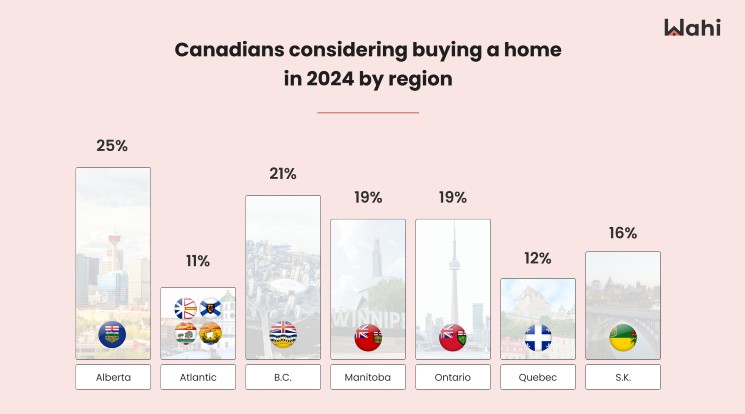
Nearly one in five Canadians have serious home-buying intentions for this year. A new Wahi survey of Angus Reid Forum members looked at ownership prospects for 2024 and found people under 35 are the most determined group.

The survey, conducted between December 14 and 18, 2023, also analyzes what Canadians are going to do to make their ownership dreams come true, suggesting that many  are planning to make sacrifices, including spending less, working longer hours, or taking on a side hustle.

“As the results of our survey suggest, many Canadians are planning to purchase a home this year — particularly in some of the country’s more affordable markets — and they’re also willing to make lifestyle and work changes to realize their dreams,” says Wahi CEO Benjy Katchen.

home

Here are some key findings from the survey:

1. Despite high house prices and the recent surge in interest rates, nearly one-quarter (24 per cent) of Canadians aged 18-34 say they might, or probably will, buy a home in 2024. This is higher than what was observed for those aged 35-54 (22 per cent) and 55 plus (11 per cent). The national average for all age groups was 18 per cent.

2. Alberta has the highest proportion (25 per cent) saying they may buy a home next year, possibly reflecting the affordability of Calgary and Edmonton compared to other major Canadian cities. In B.C. and Ontario, the provinces with the highest home prices, 21 per cent and 19 per cent of respondents, respectively, may buy a home next year. Atlantic Canada had the lowest share of potential homebuyers (11 per cent) but the highest share of existing homeowners who say they own a home and are not looking to buy now.

3. Among Canadians who say they might, or probably will, buy a home in 2024, the top potential barriers are that they want to see what happens with home prices and interest rates. More than a quarter of these respondents aren’t sure if they have enough savings, especially those residing in B.C. (36 per cent), Atlantic Canada (34 per cent), Ontario (29 per cent).

4. Forty-five per cent of potential homebuyers say they are cutting back on spending to set themselves up financially for purchasing a home in 2024, making it the most common sacrifice (respondents could choose multiple answers). Canadians aged 18 to 34 were most likely to cut back on spending (59 per cent).

Canadians also say they are planning to work more hours (21 per cent) or take on a gig-economy job, such as driving for Uber (8 per cent). About one in five potential homebuyers aged 18-34 plan to purchase property with a partner or family member to split the cost.

Mortgage experts predict declining rates

After a year of rate hikes, mortgage experts are predicting gradual cuts starting in mid-2024.

The major banks in Canada are predicting interest rates will come down this year, but not in time for spring lending season, as highlighted in nesto’s latest mortgage forecast report. How much this decrease amounts to by year’s end remains varied. The policy rate in Q4 could be anywhere between 3.25 and 4.00 per cent.

The BoC Policy Rate increased by 75 basis points (1 basis point is equal to 0.01 per cent) in 2023. The Big 6 Banks indicate that interest rates should start to decrease by 25-50 basis points mid-2024 and close out the year with a decrease between 100-175 basis points.

The forecast also underscores the unlikely reality of interest rates increasing in the near future. “The Bank of Canada Governing Council has said that they are prepared to raise rates further if necessary,” nesto reports. “Inflation continues to be a top concern and an increase in geopolitical conditions could add to inflationary pressures. This could keep inflation well above the 2 per cent target and prevent interest rates from coming down.”

The first BoC rate announcement will take place on January 24th. Most economists expect the rate to hold at 5.00 per cent.

The full effects of past interest hikes will impact consumer demand. “Mortgage rates are projected to come down, but rates may not come down in a perfectly linear manner as possible bond yield upticks can occur on longer-term declines,” the report maintains. “With $900 billion in mortgages coming up for renewal over the next few years, those needing to renew should plan for payment shock in Canada. Payment shock could further restrict household budgets and inadvertently cause a further decline in fixed rates.”

The full effects of higher interest rates will begin to affect more households in the next few years as mortgages with lower interest rates in 2020 and 2021 come up for renewal in 2024-25.

“If you are up for renewal, your mortgage rate should be selected based on your financial goals for your home,” the report states. “Your rate choice will also depend on stress testing of your mortgage if you choose to switch lenders. Make your decision based on your needs. If you don’t plan on selling or moving, go with a longer term.”

“Conversely, if you need to move, choose a term that works for your situation and shop for the best rate.”

The full report, Mortgage Rate Forecast For Canada in 2024, can be found here.


..


Industrial supply influx loosens Q4 market

Canada’s national industrial vacancy rate is loosening, but remains 100 basis points (bps) lower than the five-year average prior to the 2020 onset of the COVID-19 pandemic. Cushman & Wakefield’s newly released overview of the fourth quarter of 2023 pegs the overall vacancy rate at 2.7 per cent across 13 regional markets with the average net rent at $16.80 per square foot (psf).

Last year brought 9.5 million square feet of positive absorption alongside the delivery of 34.4 million square feet of newly constructed space. Even so, Q4 was the first quarter to serve up national negative absorption in more than 10 years. That 760,000-square-foot surfeit is mostly related to nearly 2 million square feet emptying out in Montreal, but smaller amounts also occurred in Toronto, Waterloo Region and Ottawa, while Vancouver, Calgary, Saskatoon and Atlantic Canada continued to see positive absorption.

As well, Toronto was the only market to realize a quarter-over-quarter increase in net asking rents, as the national average slipped compared to the previous quarter for the first time since Q1 2016. Vancouver continues to command Canada’s highest rents, with the average net at $20.65 psf, followed by Toronto at $18.43 psf. For Q4, average net rents are pegged at $15.16 psf in Montreal, $14.49 in Waterloo Region, $14.07 psf in Ottawa and $10.92 psf in Calgary.

The industrial supply influx underpins the steep drop-off in absorption, which surpassed 20 million square feet in each of the preceding four years — topping out at 28.5 million square feet in 2021 then slightly lower at 27.8 million square feet in 2022. As of year-end 2023, about 48 million square feet were vacant in an inventory of nearly 1.76 billion square feet of industrial space.

Cushman & Wakefield’s senior manager of research, Kristina Bowman, notes that Toronto has been the “epicentre of new industrial construction in Canada since 2020” — adding 49 million square feet, equivalent to nearly 6 per cent of its total inventory, in that period. More than 16.6 million square feet is still under construction, coming into a market where the vacancy rate currently stands at 2.6 per cent.

Although St. John’s is an outlier with a vacancy rate of 11.4 per cent as of Q4, elsewhere rates range from a low of 1.2 per cent in Waterloo Region to a high of 5.3 per cent in Halifax. Among larger markets, the vacancy rate is 3.4 per cent in Montreal, 2.2 per cent in Vancouver and 3.7 per cent in Calgary. Montreal was alone in registering negative absorption in 2023 — approximately 2.1 million square feet in a year when about 2.6 million square feet of new industrial space was delivered.

Across Canada, nearly 41 million square feet of new product is currently under construction, of which more than 14 million square feet is expected to come onto the market in the first quarter and a further 21 million square feet should arrive before the end of 2024. About 8 million square feet of new supply is set for Vancouver, 6.7 million square feet in Calgary, 3.6 million square feet in Waterloo Region and 2.9 million square feet in Montreal.

“Similar to this year the delivery of this new supply will in no doubt impact vacancy and absorption levels, particularly as the overwhelming majority of these projects are being built on a speculative basis,” Bowman observes. “A key influence on rates looking to 2024 will be the amount of vacant space that arrives in these new builds and the pricing attached to it.”

She also suggests sublet space bears watching as a percentage of total vacant space that has grown from 10.8 per cent to 15 per cent over the past four quarters. “The driving factors behind this sublet vacancy increase can be traced back to tenants who may be re-evaluating their space requirements in the current environment due to slowing demand for goods in combination with higher occupancy and/or financing costs,” Bowman hypothesizes.

Winter curb appeal for your building

As winter weather dominates and many of our properties stay covered in snow, how can maintenance managers still deliver winter curb appeal? Impressions are important and when employees and visitors see signs that signify a lack of attention, it can hurt your business and your reputation.

Keeping your building looking its best through the winter will impress your guests, remind employees that you care, and up the safety factor on your property. Here are some of the ways you can use landscaping to improve the curb appeal for your building through the winter and keep your landscaping healthy all year long.

Tidy up

Cleaning up your gardens and trimming branches will make the appearance look neater as well as enhance plant health in the spring. If you’ve already planted evergreens and plants with berries can add some much-needed colour to drab winter whites. If not, it’s something to consider planting in the spring for next winter. Maintain the look of your plants throughout the season for aesthetics and to lessen your maintenance needs when the snow melts.

Take care

Taking care of your landscaping is the secret to keeping it healthy all year long. While you may be using salt to keep the snow and ice off your walkways, ensure that it stays away from landscaping because it can burn or damage your plants. Keeping people off of frozen grass is another way to ensure that it stays healthy year-round. Traffic on your frozen lawn can result in bare spots that look unattractive and that you will need to repair in the spring.

RELATED: The facts about ice melter

Snow removal

Keeping your snow removal neat and tidy adds curb appeal, but it will also ensure that  your landscaping doesn’t drown during the spring thaw. Clearing our gutters and making sure that drainage is working properly as part of your winter maintenance plan will also keep your plants from becoming waterlogged and damaged.

Aesthetic additions

Along with your landscaping, consider factors like flattering, well-placed lighting, clean, clear signage, and decorative elements like bird feeders, additional moveable shrubbery or winter planters at entrances to add to your winter curb appeal and impress visitors and staff throughout the year.

Innovative tools for weather-related disasters

According to Catastrophe Indices and Quantification Inc. (CatIQ), Canada was insured losses exceeding $3 billion for weather-related events in 2023. Wildfires in British Columbia, the summer storms that swept across Alberta and Nova Scotia’s devastating flooding events were front and centre.

As the country contends with these catastrophic weather events, the need for resilience and mitigation becomes more pressing. Many technologies figure highly into disaster resilience and property restoration and can be of great interest to facility managers for buildings in affected regions.

Satellite communication 

The failure of power lines and telecoms in the aftermath of disasters like Hurricane Fiona make communication more difficult as crews work to ensure that critical community infrastructure is able to function again quickly. Teams can operate off a mix of satellite and cell-based internet to ensure timely communications. Satellite communication (Starlink) can be utilized when communications are down, especially in the event of a large, area-wide event. The proliferation and improvements of satellite phones and satellite adapters for cell phones has also made the world a lot easier and a lot safer for people when operating in disaster areas or very remote areas.

Drones

The ability to get a birds-eye or aerial view of roofs and building structures that are above eye level is crucial. Drones offer a safer working environment by keeping people off ladders and roofs while providing documentation through recorded images. They also give a previously unavailable perspective for photographs (true overhead rather than a person standing on the roof). Using them can dramatically speed up inspection time as it takes only seconds to get a drone in the air compared to setting up a ladder and safety equipment.

Property technology

Water-related events are among the biggest challenges for first responders in Canada. In fact, 70 per cent of restoration emergency responses are for property damage caused by these events.

IoT water monitoring works to alert facility managers about potential leaks, water flow abnormalities, and humidity levels. Using technology and receiving alerts when abnormalities are detected helps get a head start in responding to a potential problem and can potentially reduce the risk of experiencing a major loss.

3D imaging

Restoration teams use technologies to create high-definition 3D models and images of properties. This allows teams to document losses in previously impossible detail. This sort of record keeping eliminates disagreements and conflicts with respect to the extent of damage and what the property looked like at set points throughout the process. It also allows adjusters, brokers, or other materially interested parties an ability to walk through the loss, even though they may be physically located on the other side of the country or the other side of the world.

Enabling mobility

Mobile solutions also reduce the need to return to an office to file documentation and can be done right at the job site for better recording and accuracy of the site situation. Facility managers can get access to property restoration companies through mobile apps that connect them directly with emergency restoration services.

Facility managers have several ways to speed up recovery from weather-related issues, fires, mechanical flooding and incidents needing property restoration and mitigation.

While there is no way to guarantee complete protection from weather-related events, preparedness and awareness of the professional technology and services available will help facility managers get a leg up.

Jim Mandeville is SVP, Large Loss North America for First Onsite Property Restoration.


Dialog earns Salmon-Safe for mass timber office

A Vancouver mass timber office building, 2150 Keith Drive, designed by Dialog has been certified Salmon-Safe.

The Salmon-Safe BC certification recognizes the building’s implementation of sustainable land and water management practices within British Columbia and dedication to protecting the habitat of aquatic health and ecosystems— creating a more livable community for all. Salmon-Safe works with West Coast farmers, developers, and other environmentally innovative landowners to reduce watershed impacts through rigorous third-party verified certification.

Currently under construction, the 160,000-sq.ft., 10-storey office building is also targeting LEED Gold certification and has incorporated biophilic design principles throughout the interior and exterior of the building. The project will use mass timber construction, lowering the embodied carbon of the project.

Research on greenhouse gas (GHG) emissions was used to inform materials selection, and rainwater harvesting was investigated for all building run-off.

Progressive feature noted by the Salmon-Safe assessment team for the certification include:

• Water consumption in the building will be reduced by 30 per cent compared to the code baseline through use of low flow/low flush plumbing features.
• The landscape will heavily feature native and adapted trees, shrubs and ground cover plant species, many of which were selected with pollinators and the City of Vancouver’s list of bird- and bee-friendly plantings in mind.
• Run-off from the external honeycomb structure and balconies will be routed to bio-retention areas, and an under-drain will facilitate the flow of treated stormwater. This stormwater infrastructure is supplemented by rooftop and balcony planters, and at-grade landscaping covering roughly 50 per cent of the site, which will treat the rainwater that lands on them.
• The building envelope will primarily consist of a triple-glazed curtain wall that is finished with a coating that minimizes downstream impacts on water quality and aquatic life.

When completed, 2150 Keith Drive will be the first Salmon-Safe BC certified, tallest mass timber braced-frame project in North America. Anticipated completion is 2025.

National office vacancy rate continues to climb

Toronto was a major contributor to the rising national office vacancy rate in the fourth quarter of 2023, which ticked up to 18.3 per cent across the 10 large major urban markets CBRE Canada surveys. Although Calgary, Edmonton, Vancouver, Ottawa and Halifax all recorded positive absorption, 827,000 square feet of surfeit empty space in Toronto more than cancelled out those gains, resulting in 259,000 square feet of negative absorption Canada-wide.

CBRE Canada’s newly released Q4 data and analysis identifies the delivery of 625,000 square feet of “mostly vacant” new office space in Toronto this fall as a “headwind” the market faces, driving a 160 basis point (bps) jump in the downtown vacancy rate and pushing it to a record high of 17.4 per cent. Even so, Toronto is now the sole market among the 10 with tighter vacancies downtown than in the suburbs.

Elsewhere, the analysis notes “the pace of activity has continued to inch its way toward positive territory with progressively less negative absorption being posted nationally each quarter” with beleaguered Calgary notably enjoying its third consecutive quarter of positive absorption this fall. Meanwhile, the national average Class A net rent remained essentially on par with Q3, slipping by just $0.01 to $25.35 per square foot (psf).

The downtown-suburban gap widened to 250 basis points nationally. The downtown vacancy rate now sits at 19.4 per cent versus 16.9 per cent in the suburbs. Average Class A net increased $0.5 cents to $19.69 psf in the suburbs, while falling $0.08 cents to $29.17 psf downtown. However, the Class A vacancy rate still skews in favour of downtown, at 16.9 per cent compared to 17.7 per cent in the suburbs.

Vacancies in downtown Class B continued a prolonged upward trajectory, hitting 24 per cent in Q4, which was 660 bps higher than the suburban Class B rate. CBRE analysts attribute this to a bi-directional flight to quality as tenants look to prime downtown locations or migrate out to Class A suburban office that’s typically comparably priced to downtown Class B. That’s also seen as a factor in the generally decreasing amount of sublease space over the second half of the 2023.

“Demand for cheap commodity space has evaporated,” they submit. “Generally, tenants are focused on rightsizing and placing an emphasis on best-in-class turnkey solutions.”

Nearly 11 million square feet of office space remains under construction across Canada, predominantly in Toronto, Vancouver and Montreal. About 2.5 million square feet of new inventory was delivered in 2023, including 880,000 square feet in Vancouver and about 1.2 million square feet in Toronto.

Canada-wide, about 7.7 million square feet of new supply is expected to be completed in 2024, of which roughly two-thirds is pre-leased. About a quarter of the in-progress development began prior to 2020, while 2023 saw the launch of just a small number of primarily suburban projects.

“In total, only 784,000 square feet. of office product started work in 2023. This is just under half of the amount seen in 2022 and just over 10 per cent of the amount seen in 2018,” CBRE reports. “A lightening supply pipeline should aid in moving the market towards recovery. With increasingly fewer projects commencing, tenants will work their way through existing product.”

Among the markets, Vancouver boasts the lowest overall office vacancy rate, at 9.4 per cent, and the highest average Class A net rent at $39.99 psf. Despite an $0.08 dip from Q3, downtown Class A commanded the highest average net rent of any market segment surveyed — $47 psf — while the average suburban Class A rent rose $0.13 to $30.

Ottawa has the next lowest vacancy rate at 13.3 per cent, but its average Class A net rent of $18.97 psf trails Toronto, Montreal, Winnipeg and Edmonton. Toronto posted quarter-over-quarter gains in Class A net rent, which averaged $28.92 psf across the entire market and $35.72 psf downtown. Looking to the suburbs, Toronto’s Class A net rents are considerably lower at $18.76, while the Class A vacancy rate is 800 bps higher, at 23.4 per cent.

Vacancy levels in downtown Vancouver first surpassed the suburban rate in Q3 2021 with the gap stretching to 460 basis points by Q3 2023, but the differential narrowed again to 330 bps in Q4 with 212,500 square feet of positive absorption downtown versus 74,000 square feet of negative absorption in the suburbs. “Numerous full floor leases in Class A inventory” are credited with trimming 80 bps from the downtown vacancy rate, pushing it down to 11 per cent at year-end, while the suburban vacancy rate rose 50 bps to 7.7 per cent in the same three-month period.

Montreal offered up the reverse scenario as suburban vacancies dropped below downtown levels for the first time in Q4. The overall vacancy rate remained static at 17.8 per cent due to a 60 bps uptick (to 18 per cent) downtown and a compensatory 70 bps shift downwards (to 17.6 per cent) in the suburbs — fleshing out as 264,000 square feet of negative absorption downtown with 208,000 square feet of positive absorption in the suburbs.

Class A space commanded slightly lower net rents than in Q3 in both market segments, with the average falling $0.37 to $25.23 psf downtown and $0.08 to $17.30 psf in the suburbs. CBRE analysts also report “muted” leasing volume with tenants more likely to be seeking smaller spaces of less than 5,000 square feet.

Although long entrenched as Canada’s most dismal major office market, Calgary demonstrated continued progress in Q4, with 250,000 square feet of positive absorption and a 70 bps drop in the overall vacancy rate. Downtown enjoyed the largest share of that activity as 213,000 square feet of new leasing cut 40 bps from the Class A vacancy rate, pulling it down to 25 per cent, and Class A space commanded average net rents of $17.73 psf, up by $0.16 from Q3.

The suburban market also made gains to pad its continuing better position. The Class A vacancy rate dropped 90 bps, to 21.6 per cent, while the average net rent posted a $0.12 gain for the quarter, rising to $19.60 psf.

“The Calgary office market ended the year with a cumulative 677,000 square feet of positive net absorption, the market’s strongest performance since 2014,” CBRE reports. “Primary demand growth drivers included a slight resurgence of the energy sector, sublease spaces being reclaimed by tenants, as well as purchases by owner-users.”

New affordable housing project set to rise on Eglinton Ave. E

The City of Toronto and CreateTO have named Civic Developments, Windmill Developments, and Co-operative Housing Federation of Toronto as the development partners for a new housing project at 2444 Eglinton Ave. E. When complete, the project will deliver 918 homes, including 612 rent-geared-to-income (RGI), affordable and market rent-controlled co-operative homes, making it one of the largest affordable housing projects in Ontario in the past 25 years.

“I’m pleased to announce the development partners for this site, which is helping us reach our affordable housing targets,” said Mayor Olivia Chow. “This project is a good example of how the City, not-for-profit housing providers and private developers can work together to get affordable housing built. This will be the largest co-operative housing development in Ontario to date and will serve as a roadmap to help guide future developments, because we need more housing and everyone at the table to deliver it.”

Consisting of two co-op buildings and a market ownership building, the site also includes 3,580 square feet of community space and 12,770 square feet of retail space. Rents for the RGI and affordable co-op homes will be set between 40 and 100 per cent of Average Market Rent, as reported annually by the Canada Mortgage and Housing Corporation; additionally, 33 per cent of the affordable homes and 15 per cent of the market rental homes will be accessible.

“The site at 2444 Eglinton Ave. E. offers much-needed long-term, not-for-profit affordable housing,” said Councillor Gord Perks (Parkdale-High Park), Chair of the Planning and Housing Committee. “The development will contribute to significantly boosting Toronto’s housing supply while creating a diverse, transit-oriented community for our residents.”

Civic Developments, Windmill Developments and Co-operative Housing Federation of Toronto were selected as the development partners through a market offering process led by CreateTO on behalf of the City in 2021. As a pilot project by the CreateTO Board of Directors, the development team will undertake the process to obtain a zoning bylaw amendment and other planning approvals required to enable the final development concept.

This project was made possible by the Housing Now Initiative, a program launched in 2019 to activate City-owned lands and stimulate the development of affordable rental housing. Construction is anticipated to start in 2024.


A guide to understanding noise in condos

Noise is a common complaint among occupants of residential condominium buildings. Resolving these complaints requires an understanding of how sound moves through a building and the obligations of a condominium when addressing the complaints.

Here are some common questions that may arise when a condominium faces a noise issue:

How does the Ontario Condominium Act and its regulations address noise?

The Ontario Condominium Act, 1998, and its associated regulations do not provide a strict definition of “noise nuisance.” However, they set out the framework for condominium governance and dispute resolution, including addressing issues like noise complaints.

How do the condominium declaration and rules address noise?

The condominium declaration is a legal document that outlines the rights and responsibilities of unit owners and the condominium corporation. It may include provisions related to noise control or restrictions on certain activities. Condo corporations can establish specific rules and bylaws that address noise-related matters. These rules may set acceptable noise levels, quiet hours, and procedures for handling noise complaints. Particular details may also vary depending on the individual condominium corporations’ bylaws, rules and declarations.

When is noise considered a nuisance?

Noise is generally considered a nuisance when it interferes with a resident’s peaceful enjoyment of a unit. Common examples of noise nuisances include loud music, barking dogs, loud parties, and construction noise during restricted hours.

What are the primary considerations when a noise complaint is received?

Balancing the interests of residents is essential. Condo corporations must consider the rights of unit owners to use their property as they see fit while also ensuring that noise and other disturbances do not unduly disrupt the rights of other residents. The condominium corporation must also consider their declaration, rules and bylaws when dealing with a noise complaint.

What are the condominium’s roles and responsibilities in dealing with a noise complaint?

Condo corporations must enforce the corporation’s declaration, rules, and bylaws, which include addressing noise complaints and taking steps to resolve disputes. The condo corporation may issue warnings, fines, or penalties for repeated noise violations.

How can a condominium manage noise complaint claims effectively?

Clear communication between residents and the condominium corporation management is essential when addressing noise complaints. Residents should first try to resolve minor noise issues directly with their neighbours whenever possible. When noise complaints cannot be resolved, residents are encouraged to document and record the noise complaints and their dates and times and provide descriptions of the disturbances.

The condominium management should investigate noise complaints subjectively to determine their validity. The investigation of noise complaints may involve consulting experts, such as acoustics engineers. Alternative dispute resolution methods, such as mediation, should be used before resorting to legal action. Legal action through the Condominium Authority Tribunal (CAT) or the Courts may be necessary when all else fails.

Both residents and condominium corporations must be aware of the rights and responsibilities regarding noise nuisances, as outlined in the condominium’s governing documents and applicable bylaws. Legal advice and guidance from a lawyer experienced in condominium law may be necessary to navigate complex noise complaints effectively. It is, therefore, essential to consult legal counsel for advice tailored to specific situations that cannot be addressed by other means.

How Sound Moves Through A Building

Addressing a noise complaint requires identifying the source of the noise and how it moves through the building to reach the affected occupants. Sometimes, identifying the source of the noise can be difficult, especially if it originates from mechanical equipment. Sound moves through a building in two ways. It can transmit through the air and also through the building structure.

1. Air-borne sound

Air-borne sound transmission refers to the propagation of sound waves through the air from one source to another. This type of sound transmission occurs when sound waves travel through the air and are detected by the human ear or other sound receptors. Examples of air-borne sound include human conversations, music, television and radio, appliances, traffic, etc.

Air-borne sound can travel through building components such as walls, floors, windows, and doors and can also travel through openings, gaps, or penetrations in these components. The ability of building components to block or attenuate air-borne sound is an essential consideration in architectural and acoustic design.

Various soundproofing techniques and materials can reduce air-borne sound transmission between spaces. These techniques include adding insulation within walls or ceilings, using double or triple-glazed windows, sealing gaps in cracks, employing acoustic barriers and isolators, and using sound-absorbing materials like acoustic panels and ceiling tiles.

Sound transmission class

Sound Transmission Class (STC) is a rating system used to classify the resistance of building partitions, including walls and floors, to air-borne sound transmission. For example, at an STC rating of 25, soft speech can be understood through walls or floors. At an STC rating of 50, normal speech is not audible. An STC rating of 65 signifies superior soundproofing.

The STC rating is not specific to the type of building material (e.g., wood or steel). Instead, the STC rating evaluates the overall sound transmission resistance of the system as an assembly of materials. STC ratings typically apply to various types of building construction, including wood-framed buildings. The higher the STC rating, the better the assembly’s ability to reduce air-borne sound transmission.

Below are some general STC ratings for common wall and floor constructions found in wood-framed buildings. Wood-frame buildings are light, so they tend to transmit more low-frequency noise than most building assemblies made of heavier materials. For example, a wood frame wall will typically transmit more low-frequency noise than one constructed of concrete.

Wood-frame buildings have wall and floor assemblies constructed of multiple elements, which are susceptible to changes or errors in their installation in the field. They also have discontinuities that create flanking paths for sound to bypass or “short-circuit” the solid portion of the assemblies. As a result, the STC rating assigned to the assembly is a theoretical rating that may not be achieved in practice.

Wood-stud wall with drywall on both sides: A typical wood stud wall with drywall on both sides may have an assigned STC rating in the range of 30 to 45, depending on factors such as wall thickness, insulation and the quality of the construction.

Double-layer drywall: Adding a second layer of drywall on one or both sides of a wall can significantly improve sound insulation. This may achieve assigned STC ratings in the range of 45 to 60 or higher, depending on the specific configuration.

Insulation: The use of acoustic insulation within wall or floor cavities can further improve STC ratings by reducing sound transmission through the assembly. The effectiveness will depend on the type and thickness of insulation used.

Specialized wall assemblies: In some cases, specialized wall assemblies, such as staggered stud walls or resilient channels, may be employed to achieve higher assigned STC ratings. These assemblies are designed to minimize sound transmission.

Floor-ceiling assemblies: For floors in wood-frame buildings, similar principles apply. The combination of subflooring, joist spacing and sealing materials can be used to achieve specific assigned STC ratings.

2. Structure-borne sound

Structure-borne sound is distinct from air-borne sound. While air-borne sounds travel through the air, structure-borne sounds generated by impact or mechanical equipment can transmit vibrations through building structures.

Impact noises occur when an object contacts a structural element. The impact force causes vibrations that propagate through the building materials and are heard as noise in adjacent areas. Footsteps and furniture movement on the floor are examples of impact noises.

Often, structure-borne noises are generated by mechanical equipment and systems, and are often felt or heard in adjacent places. Typical mechanical equipment leading to structure-borne sound transmission includes HVAC systems, elevators, garbage chutes, generators, industrial machinery, pumps and motors, commercial kitchens, and fitness equipment.

Various measures can be taken to mitigate structure-borne sound transmission from mechanical equipment, such as isolation, acoustic barriers, decoupling, soundproofing, and regular maintenance. Mitigating structure-borne sounds may require different approaches than those used for mitigating air-borne sounds.

Impact evaluation class (IEC)

IEC is a classification system that assesses the potential for structure-borne sound transmission in building elements, like floors and walls. This classification is particularly relevant in the context of sound insulation and acoustic design in buildings and to evaluate how well the building component or construction assembly can mitigate the transmission of impact sounds.

IEC comprises several categories, often denoted by letters (e.g., IIC, ICC, IBC). The exact categories and naming conventions may vary depending on the specific standards or guidelines used in a particular region. For example, the impact insulation class (IIC) is commonly used to measure floor-ceiling assemblies’ impact sound insulation performance. The IIC rating represents the ability of a floor-ceiling system to reduce the transmission of impact sounds from one floor to another.

Finally, when dealing with structure-borne sound transmission through building structures from physical impacts, the IEC classification system can be used to assess the ability of building elements to reduce the transmission of these impact sounds. The IEC classification aims to inform architects, builders, and occupants about how effectively a particular construction assembly can minimize the transmission of structure-borne noise within a building.

Building Code Requirements

Wood-frame buildings are susceptible to flanking path sound transmission whereby sound travels through openings or discontinuities such as the intersections of floors and walls, service outlets in walls, ducts, or anywhere smoke can travel. These flanking paths allow sound to effectively short-circuit the opaque sections of walls and floors.

In 2020, the Ontario Building Code (OBC) introduced requirements for buildings to achieve certain minimum Apparent Sound Transmission Class ratings (ASTC). This rating is a measure of on-site sound transmission, which accounts for flanking paths.

Before the requirements for ASTC ratings came into effect in 2020, the OBC contained requirements for STC ratings only. Therefore, buildings built before 2020 are more susceptible to flanking transmission. Notwithstanding the addition of ASTC requirements in 2020, structure-borne sound transmission remains unaddressed in the OBC at the time this article was written.

The 2020 OBC requires that assemblies meet the specified ratings for both STC and ASTC. The requirements for meeting ASTC ratings include on-site testing or meeting prescriptive requirements to address flanking transmission.

The requirements for STC rating include a minimum rating of 50 or greater between occupied compartments and corridors and a minimum STC rating of 55 between occupied compartments and elevators and garbage chutes. These requirements aim to ensure a reasonable level of sound insulation to promote occupant comfort and privacy.

Measuring Sound Transmission

Air-borne and structure-borne sound transmissions are measured using specific techniques and metrics to assess the level of noise or vibration in different situations. The results are then used to assess the effectiveness of individual materials, building assemblies, or other measures for reducing sound transmission.

Achieving a specific STC and ASTC rating involves careful design, construction practices, and appropriate materials. The designed ratings for a given assembly can vary depending on workmanship and the quality of materials used.

In some situations, the minimum requirements set out in building codes may not achieve the level of performance desired. In these cases, builders and architects should consult with an acoustic specialist to design building assemblies with improved sound transmission performance.

Mina Tesseris P. Eng., LEED AP, LCCI is a Senior Forensic Engineer/General Manager at Arbitech Inc. ([email protected]). Denis Gagnon, P. Eng., is a Senior Forensic Engineer at Arbitech Inc. ([email protected]).

Four habits to help grow your commercial cleaning business

At the height of the pandemic, having a clean building was the most important thought in every property owner’s mind. Today, priorities have shifted, and commercial cleaning is not as prominently featured. We celebrate that a worldwide health concern is under control and manageable, but at the same time need to adjust to a new uncertainty: how our customers’ purchasing decisions may impact our commercial cleaning businesses.

To be a sustainable business in any industry the mindset must always be about driving the business forward. That might sound exhausting if you’re not in the habit of consistently setting and working towards your goals. However, once you’ve implemented these habits, you’ll become a company with a growth mindset.

There are four habits we work on with our teams, from leadership to management to our staff who provide cleaning services.

Set weekly goals

 A lot of goal setting is focused on long-term achievements, and there is a place for that. You need to be able to see the big picture and to make that happen, but you also need to set smaller, more timely goals for the steps that will help you get there.

Smaller goals make success more achievable and empower you to celebrate ‘wins’ with your team. They also help build consistency in your operations and act as a yardstick for your larger goals. If you’re not hitting the smaller goals, this gives you the chance to reassess and refocus, getting back on track to your longer-term goals.

To set small goals, work backwards from your larger monthly or yearly goals and set benchmarks you need to meet along the way. Pro tip: never miss a weekly goal review as a way to stay on top of your progress and stay on course.

Choose smart tools

 One of the most challenging aspects of running a company is choosing the technology and tools that will contribute to your success, rather than simply supplying statistics that don’t move you forward. This can require a balance of giving tools enough time to produce results, but also paying attention to whether those results are viable for your operations.

Take lead generation as an example. When you’re working to grow interest in your services, you want to be very specific about the audience you are trying to reach. The strategy must be very tailored to that kind of customer, so they see that you know their needs. You develop a strategy and then monitor every aspect of the plan while it is being implemented. (This is where weekly goal setting can be a great benefit.)

If your lead generation tools are not producing results, you need to know where you are losing the potential customer in the process, and then make changes to drive better results. Sometimes, the best tools are not the latest fads or trends, but rather a return to tried-and-true techniques that resonate with customers. Other times, you need to reach customers on a new level and smart technology can help you do that. Choose your tools carefully and evaluate them regularly for opportunities to improve the results.

Prioritize your relationships

 Client retention is key to running a successful cleaning company, and that happens through developing solid relationships. Everyone on the team needs to know how to communicate, and your role as the leader of the company is to teach them how to succeed.

For example, if a cleaner stains a carpet, they should know who to contact in your organization so the customer can be informed immediately. When you build a good relationship with your cleaners, communication will flow more easily which helps keep issues at a low level. When you build a good relationship with your customer, you can communicate issues and propose solutions that manage the problem for the customer, which builds trust in their relationship with you.

Relationships take time to build, and communicating effectively is the key to making that happen, allowing your teams to hold each other accountable and take pride in their work. Communication also creates a bond of trust and reliability with a customer, so prioritizing communication is a critical contribution to growing your business.

RELATED: Using customer feedback to build your commercial cleaning business

Be boringly consistent

Assuming you are already providing great service, being consistent is an equally important factor in retaining customers. When a customer knows they can rely on you to do a good job, it is one less thing they have to worry about, and that raises your value as a service provider.

Consistency means you are adhering to standards in your business, building good habits, and becoming a reliable company. Think of how often you have had an experience as a customer that is inconsistent with what you anticipate; it likely lessened the trust you had in the brand and perhaps impacted your decision to spend money there in the future.

It is important to remind your cleaners and managers how to celebrate consistency so that it continues to be a strong asset for a customer choosing your company. Keep the motivation high for continuously providing excellent levels of consistent service.

Spend the time

We live in a time of more uncertainty than we might have had a few years ago. When the business landscape changes, commercial cleaners feel an impact, and that is certainly happening today. However, we have been through impactful times before, and one of the things we can offer our clients is the certainty of good, reliable service.

As an industry, we are important in the daily achievements of other businesses. By holding ourselves to a high standard of operations, and being dedicated to those customer relationships, we can grow our own commercial cleaning businesses while remaining a much-appreciated constant in a changing landscape.

 Doug Flaig is the president of Stratus Building Solutions, a janitorial services franchise organization. Flaig has spent over 20 years in the world of multi-unit retail overseeing hundreds of franchise retail locations. Prior to joining Stratus Building Solutions, he served as Chief Operating Officer with Safe Facility Services, a janitorial services provider headquartered in Thousand Oaks, California.

Construction optimism high for 2024 in B.C.

Despite economic uncertainty both domestic and international, there is optimism in B.C.’s construction sector according to the annual survey by the Independent Contractors and Businesses Association (ICBA).

B.C. construction contractors (87 per cent) expect 2024 to be as busy – or even busier – than last year.

The nearly 250,000 men and women who work in construction in B.C. will benefit from this growth – with ICBA employers reporting that the average construction hourly wage will grow 5 per cent this year, and another 6 per cent in 2025. With these increases, in 2025, the industry’s average hourly wage – before any bonuses, benefits, profit-sharing or overtime – will reach $37.51, or about $78,000 annually.

“Construction is dynamic, fast-paced, and rewarding – people wake up every day and go to a job site to build everything around us, creating inspiring legacies that shape our communities and the way we will live for generations,” said ICBA president Chris Gardner. “It’s a message we have to convey to young people in a more convincing way than we have in the past.”

Despite the optimism and record levels of immigration, B.C. builders flag labour shortages of people (79 per cent of contractors say there aren’t enough skilled workers), as a major challenge.

“Four in five contractors still can’t find enough of the people they need. This dynamic has not changed for years given Canada’s dismal record of identifying the skills gaps in our economy and attracting the new immigrants we need to fill them,” said Gardner.

Other major issues include supply chain constraints, and government red tape was cited as major drags on their work – and this is driving up costs and impeding the efforts to tackle housing affordability.

“We have not moved the needle on housing supply for the past 50 years – we are building fewer homes today than we did in 1972. Reams of new regulations and convoluted approval processes have choked the supply we need to keep home prices affordable for first time homebuyers and young families,” said Gardner. “All three levels of government need to stop the finger-pointing and working at cross-purposes, and collaborate meaningfully to fast track housing, cut red tape, and put in place practical policies that will make a real difference for home buyers.”