




Articles Archive - Page 50 of 928 - REMINET
REMI

Looking to attract younger cleaning clients in 2026?

If your goal is to broaden your customer base in 2026, attracting younger clients may offer a path forward. Research shows that Millennials (aged 29 to 44) are responsible for 73 per cent of B2B buying decisions. In Canada, there are over 34,000 businesses that fall under the umbrella of commercial cleaning, with more than 190,000 employees, so competition is fierce in today’s market. Knowing your target customer and creating a targeted marketing strategy can help commercial cleaners grow their business in the coming year. 

Get on the same page

Many of today’s consumers are buying based on shared interests and common vision, so incorporating transparency, sustainability, and value into your practices can help you connect with the younger generation. Your value proposition needs to be relevant and helpful, solving a problem, and connecting with the values and mission that are important to your customers. Make your priorities known in your marketing so it’s easy for potential customers to spot your business as a like-minded company they may want to contact.

Be flexible

Younger generations may be looking for flexible communication, rather than traditional methods like email. Building relationships means meeting clients where they are comfortable, and that may mean texting, using WhatsApp, or connecting on whatever platforms make it easy for them to engage with you. Traditional methods of correspondence may be a deterrent, so be open to flexible communication that makes it easy for you to answer questions and address the needs of your customers.

Get online

The younger generations are social media savvy and spend much of their time researching companies. Whether it’s your social media platforms, LinkedIn profile, or your website, be sure that you are mastering your branding and the way you want your company to be perceived online.  Putting up information with a ‘set-it-and-forget-it’ mentality is not enough; your customers will be looking for updates, engagement, and information that helps them get to know your company and your services. That includes managing and responding to Google reviews, monitoring employee ratings on sites like Indeed, and following accounts that can help model what today’s customers are looking for from service providers.

Knowing your target customer and taking a slightly shifted approach this year to marketing and communication could be the secret to attracting a younger clientele for your cleaning company.
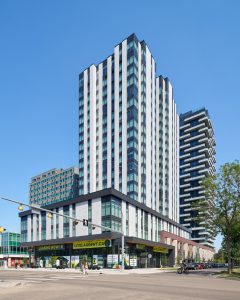

BGO acquires two-tower Edmonton housing complex

BGO has acquired a newly built two-tower residential complex in Edmonton’s Garneau neighbourhood, marking the firm’s first purpose-built student housing investment in North America. The portfolio includes Eleanor, a modern multifamily high-rise completed in 2024, and Laurent, a purpose-built student residence delivered in 2023. The towers are located steps from the University of Alberta’s North Campus, positioning the properties to benefit from strong and sustained demand from students, young professionals, and medical staff.

“This acquisition represents a strategic milestone for BGO as we expand into purpose-built student housing in Canada,” said Simon Holmes, Managing Partner and Canadian Chief Investment Officer, BGO. “Eleanor and Laurent combine best-in-class design with a desirable location adjacent to one of Canada’s leading universities. With Eleanor (pictured above) professionally managed by BGO Living and Laurent (pictured left) supported by UniLodge’s student-housing expertise, we believe the portfolio is positioned to deliver long-term value for our investors while contributing positively to the broader community.”

Together, the teams will oversee a combined offering of 272 residential units and 493 student beds. The towers are connected by a shared podium of more than 5,800 square feet that includes retail space and parking. Eleanor also features 68 affordable units—representing 25 percent of the building—through the CMHC MLI Select Program, reflecting BGO’s commitment to expanding access to affordable housing and supporting long-term community benefits.

Both buildings are fully leased as of October 2025, supported by their proximity to major institutional anchors including the University of Alberta Hospital, Whyte Avenue’s cultural corridor, and the University LRT Station, located less than 400 metres away. Residents have access to a suite of modern amenities such as fitness facilities, study and co-working lounges, social spaces, and secure keyless entry systems. Cushman & Wakefield served as the vendor’s advisor for the transaction, while McCarthy Tétrault LLP acted as legal counsel for BGO.

For more information, please visit www.bgo.com

Vancouver undertakes trenchless sewer upgrade

The City of Vancouver is piloting new ways to replace aging sewer infrastructure that runs underneath Memorial West Park. Instead of digging a large, open trench like most infrastructure projects, crews are using a trenchless method thanks to a micro-tunnel boring machine. This means most of the work happens underground, which helps keep the park open, preserves 24 mature trees, reduces the impact on residents and shortens the construction period.

“We know that construction can be frustrating and disruptive, so we are always looking for better ways to complete core infrastructure work,” said Mayor Ken Sim. “The successful tunnel installation shows that this innovative trenchless method has the potential to work well for future utility projects.”

In October, crews used a specialized remote controlled micro-tunnel boring machine to install a concrete storm sewer main between W 31st Avenue and W 33rd Avenue directly underneath the park’s main footpath. Once the machine completed the tunnel, which spanned the full length of the park from north to south, crews used a second trenchless method to insert a smaller pipe fixed in place with grout inside the existing combined sewer main. This second method — called sliplining — extends the life of the aging pipe without requiring extensive excavation.

The Memorial West Trenchless sewer upgrades project is a significant investment in renewing core infrastructure being delivered under the 2023-26 Capital Plan. Valued at $10.6 million, this project is part of ongoing work to replace aging combined sewer infrastructure in the Dunbar-Southlands neighbourhood with new separated pipes. Once complete, the new sewer system will support population growth, accommodate heavier rainfall expected with climate change, and advance the City’s regulatory requirements to eliminate combined sewer overflows (CSOs) by 2050.

In 2026, crews will complete sliplining work, connect the new pipes to water and sewer systems and install new maintenance holes. Construction is anticipated to be completed by spring 2026.


Renter survey reveals ongoing affordability pressures

According to a new renter feedback survey from Rentals.ca, affordability pressures continue to weigh heavily on Canadians, with 62 per cent of respondents reporting they spend more than 30 per cent of their income on rent. In Toronto, the strain is even more pronounced, with 70 per cent of respondents claiming they spend over 30 per cent of their income on rent, compared with 60 per cent in other markets.

Rising rents are partly to blame. Nearly two‑thirds of those surveyed (63%) said their rent has increased since the summer, adding further pressure on households already dedicating a significant share of their income to housing.

High rent prices overwhelmingly shaped the rental search experience. When asked about their biggest challenge, 69 per cent pointed to high prices—far outpacing concerns about supply, listing quality, or scams. This trend appears consistent across regions, underscoring that affordability issues are national in scope.

The survey also highlights notable differences by age group. Among renters aged 25 to 34, 43 per cent report spending more than half of their net income on rent. A similar level of strain is felt by 37 per cent of renters aged 35 to 54, showing that affordability pressures extend well beyond younger renters.

Budget expectations further reveal the disconnect between what renters can afford and what the market offers. Seven in ten renters say their budget for their next home is under $2,000, even as asking rents in many cities exceed that threshold. Renters searching in high‑cost markets such as Toronto and Vancouver report higher budgets, reflecting the limited availability of lower‑priced options.

For a complete breakdown of the Winter 2025 Renter Feedback Survey, click here.

Joanne Perdue joins RAIC advisors

The Royal Architectural Institute of Canada (RAIC) announced the addition of a distinguished professional, Joanne Perdue, FRAIC, to the RAIC Advisors to Professional Practice (RAPP). This update broadens the expertise guiding the RAIC’s ongoing initiatives to support architectural practice across Canada.

Since its inception in 2023, RAPP has engaged the knowledge and experience of subject matter experts, including architects, educators, and collaborating professionals, to develop and maintain resources that promote excellence in architectural practice. By providing insights into the evolution and challenges of architecture, the RAPP informs advocacy efforts and enhances practice advisory services offered by the RAIC.

Perdue is an architect, a Canada Clean50 Honouree, and the recipient of the Canada Green Building Council’s Lifetime Achievement Award (2022). She has more than 30 years of experience in catalyzing action on climate change and sustainability across both public and private sectors. A recognized pioneer in the Canadian green building movement and a practicing architect, she has extensive expertise in executive leadership, strategy, and organizational development for sustainability.

Perdue has led numerous initiatives to advance the UN Sustainable Development Goals, promote climate action, and build capacity for a sustainable future. In her role as the former associate vice president, sustainability at the University of Calgary, she was instrumental in elevating the university to a top five percent global ranking for progress in advancing the United Nations Sustainable Development Goals and enabling over a 40 per cent reduction in institutional greenhouse gas emissions.

She is an avid supporter of empowering youth to accelerate the transformation toward a regenerative future. Perdue currently co-chairs the RAIC Committee on Regenerative Environments.


Detecting and addressing moisture in your building

Moisture can wreak havoc on a building, from the roof to the walls to the air quality, so keeping your building dry is an important part of your maintenance practices. By creating a strategy that includes both interior and exterior maintenance, you can protect your building and its occupants through the winter and beyond.

Your roof

Regular roof maintenance should be conducted year-round to remove debris blocking the drains, clear the gutters, and address any leak concerns, but winter brings specific challenges that should be considered. Snow loads can become an issue in a season with heavy snowfall, and snow removal should be part of your roofing maintenance plan. With the freeze-thaw cycling of winter, ponding water can occur on the roof, and roofing membranes can expand and contract, causing them to split and become an entry point for water into your building. Conduct interior inspections to look for signs of moisture, such as stained ceiling tiles, puddles, or mould, to stay on top of potential issues with your roof.

If you think you have a leak, contact a professional to assess the condition of your roof, determine the leak’s origin, and apply a temporary repair until the weather warms up. Once spring comes, using infrared thermography can help to confirm the presence of water in your roof and provide some insight into possible next steps.

Your walls

The same visual inspections can be applied to your walls. Signs of staining, peeling paint, or a musty smell can be an indication that there is moisture behind the walls, which could lead to mould, lower IAQ, and health and wellness issues for building occupants.

Detection tools like a moisture meter can help confirm whether moisture exists that you can’t see. By using either a pin-type meter or a pinless meter, you can determine where moisture exists behind your walls and make informed decisions based on that data.

Your air quality

Indoor air quality can be affected if there is moisture in your building, and without proper humidity controls, the drier winter air can result in indoor humidity below 30 per cent, which creates conditions where viruses can survive longer. Taking proactive steps like regular HVAC maintenance, adding plants, and focusing on maintaining optimal humidity can help raise your IAQ, keep your building mould-free, and protect your staff and visitors.

To stay informed, consider using a hygrometer, which measures how much moisture is in the air. This can be a useful tool to gauge IAQ where there is existing water damage. Similarly, indoor air quality monitors can report airborne particulates, volatile organic compounds (VOCs), carbon dioxide levels, ozone, temperature, and humidity – all important factors for a healthy IAQ.

A successful winter maintenance plan means staying vigilant in detecting and addressing any moisture that enters your building.

Maritime Centre receives 2025 Carbon Hero Award

Maritime Centre has been honoured with the 2025 Carbon Hero Award, acknowledging its exemplary leadership in reducing greenhouse gas emissions and advancing operational innovation within Canada’s commercial real estate industry. The award was presented by EcoPilot Canada at BOMA Nova Scotia’s Annual Holiday Luncheon at The Westin Nova Scotian in Halifax.

Maritime Centre is the largest office property in Canada east of Montreal, totaling 529,269 square feet with a parking ratio of 0.2 per 1,000 square feet. Owned by Ravelin REIT and managed by Colliers Canada, the property has demonstrated how intelligent, autonomous HVAC optimization can reduce energy costs and emissions using existing building infrastructure.

Each year, the award is given to BOMA members that have made successful efforts to meaningfully reduce greenhouse gas emissions. After integrating EcoPilot’s AI for HVAC platform into the building’s existing Building Automation System (BAS), Maritime Centre achieved:

  • More than $110,000 in verified savings, with even higher savings projected next year
  • Over 600 tons of CO₂ avoided, equivalent to powering 125 Canadian homes for one year
  • Zero upfront capital, leveraging existing infrastructure

“These results didn’t happen by accident—they happened because leaders championed innovation and executed with focus,” said Jennie King, General Manager, EcoPilot Canada. “Maritime Centre proves what’s possible when building teams embrace modern optimization tools to improve performance, lower costs, and reduce emissions autonomously.”

Two key champions behind the project’s success were also recognized: Jeremy Kaupp, Managing Director at Ravelin REIT, whose vision for asset performance and sustainability helped set the direction, and Suzanne LeBlanc, Property Manager at Colliers Canada, whose operational leadership enabled a seamless integration in one of Atlantic Canada’s most complex buildings.

“Jeremy and Suzanne’s partnership show what’s possible when organizations step up, think differently, and lead boldly,” added King. “Congratulations to Maritime Centre and welcome to the Carbon Hero family.”


Construction underway on Penticton care facility

Seniors in the south Okanagan will soon have access to more long-term care as Kaigo Senior Living, in partnership with the province, broke ground on a new long-term care home in Penticton.

“This new long-term care home will be a place of comfort and connection for seniors from Penticton and the surrounding area,” said Minister of Infrastructure Bowinn Ma. “It means that people can stay close to their loved ones and community, while receiving the quality care they need and deserve.”

Skaha Seniors Community, the new long-term care home, is expected to open in 2028 and will include:

  • 200 new beds with single-occupancy rooms and home-like spaces for daily living and activities.
  • 12 households with shared quiet spaces, a chapel, a library, therapy and wellness rooms, activity and craft rooms, and a family dining area.
  • staff housing and classroom space to support college training and student practicums.

Located at 453 Green Ave., the new long-term care home will help meet the needs of the growing seniors’ population in the Interior Health region. It will be designed, built and operated by Kaigo Senior Living. The new design will offer a home-like environment where seniors can live with dignity and families can feel confident their loved ones are supported.

“Our priority is making sure that people in Penticton receive the care and support that fits their individual needs, close to home. By adding these long-term care beds, we can better support people through their care journey, reduce stress for families, and help residents receive the right supports in a safe, comfortable home. We appreciate our partnership with Kaigo Senior Living as we work together to enhance long-term care services for people across the region,” said Sylvia Weir, president and CEO, Interior Health.


Limberlost named Global Best Project

Limberlost Place, built by PCL Construction, has been named the Global Best Project of the Year by Engineering News-Record (ENR). In addition to PCL and partners taking home the top honour, PCL was also awarded ENR’s Global Best Projects Award for Limberlost Place in the Education/Research category.

The ENR Global Best Projects Awards celebrate innovative and influential construction projects worldwide, emphasizing innovations, teamwork, safety performance and how teams overcome design and construction challenges. A panel of industry leaders sorted through a robust slate of approximately 90 entries to select 32 projects in 24 different countries that demonstrated excellence in design and construction quality.

“This global recognition reflects the dedication of our people and partners to tackle complex challenges and deliver innovative, sustainable, and industry-leading solutions,” said Chris Gower, president and CEO. “We’re grateful to ENR for this honour and proud to share it with our client, partners, and workforce, whose collaboration and commitment to excellence bring our purpose of building a better future together to life.”

Ontario’s first institutional building of its kind, George Brown Polytechnic’s Limberlost Place has set a new precedent for mass timber construction as a model for sustainable, green building innovation. Located in Toronto, Ontario, the 10-storey mass timber, net-zero educational facility integrates first-of-its-kind solutions including:

· Groundbreaking slab band structural system that advances the use of mass timber in multi-storey buildings.

· North America’s largest mass timber columns soaring three stories tall.

· A striking mass timber feature stair, spanning levels three to five as a centerpiece of architectural design.

· Zero-carbon energy achievement leveraging Enwave’s Deep Lake Cooling and Heating System to harness green energy from Lake Ontario.

· Two solar chimneys that create natural convection, continuously drawing fresh air through operable windows.

· A steeply sloped roof optimized for solar panels, oriented south for maximum energy capture.

Recognizing the project’s uniqueness, PCL’s Toronto team collaborated with mass timber experts from its Denver office throughout preconstruction and construction. Embracing a growth mindset, PCL’s in-house workforce completed specialized training from the local carpenters’ union, building local expertise in mass timber construction.


CAPREIT expands national portfolio

Canadian Apartment Properties Real Estate Investment Trust (CAPREIT) has completed six property acquisitions across Canada, totaling $292.5 million. The transactions include newly built rental communities in Québec, Saskatchewan, and British Columbia, as well as strategically located vintage properties in Vancouver and Victoria.

“These transactions bring our 2025 acquisition volume to a total of $659 million in highly strategic, primely located assets, which come with low capital requirements and strong return profiles,” said Mark Kenney, President and CEO of CAPREIT. “We’re also continuing to purchase our recently constructed buildings at appealing pricing per square foot compared to replacement cost. This ongoing transformation is further strengthening the quality and cash flow performance of our irreplaceable rental apartment portfolio in Canada.”

The properties include a two-building rental complex in Laval, Québec (pictured above) for $178 million. The newly constructed development features 436 modern suites with spacious layouts, extensive amenities, and convenient access to Marché 440, CF Carrefour Laval, Highways 15 and 440. The same week, CAPREIT finalized the purchase of a 187-suite portfolio in Regina, Saskatchewan, in the Hawkstone and Skyview neighbourhoods for $41 million.

Earlier this month, CAPREIT added a 51-suite property in Vancouver, BC, constructed in 2024. Located within walking distance of two Skytrain stations and a short ride to Metropolis at Metrotown, the property was purchased for $35 million. It also acquired three vintage properties in British Columbia, including a 35-suite building in Mount Pleasant, East Vancouver, and two properties in Victoria’s James Bay neighbourhood for a combined total of $38.5 million.

“These latest acquisitions were purchased at a high-4% weighted average cap rate, with relatively attractive capex characteristics,” explained Julian Schonfeldt, Chief Investment Officer. “In addition, we’ve deployed capital into our NCIB program at a mid-5% cap rate, with $94 million invested since the end of Q3 2025.”

For more info, visit: Rental Apartments in Canada – Canadian Apartment Properties REIT

New rental development coming to Saint John

A new housing project is underway in Saint John, NB, supported by a combined investment of $46 million from the federal government, $2.1 million from the Province of New Brunswick, and $310,000 from the City of Saint John. Located at 99 King Street, the 152-unit development will include two levels of underground parking and a floor dedicated to retail and commercial space, with completion targeted for October 2026. Of the units, 32 will be reserved as affordable housing for seniors and people with disabilities.

“Through investments in rental housing, our government is providing assistance to those who need it most, here in New Brunswick and across the country,” said Gregor Robertson, Minister of Housing and Infrastructure and Minister responsible for Pacific Economic Development Canada. “We are committed to revitalizing communities through initiatives like this one. These investments are helping to create jobs and stimulate the local economy.”

The federal government emphasized that the investment is part of a larger plan—Build Canada Strong—which aims to strengthen Canada’s economic independence and ensure communities have access to affordable housing. Build Canada Homes will focus on increasing the pace of affordable homebuilding, constructing transitional and supportive housing, and partnering with provinces, municipalities, Indigenous communities, and private developers to expand housing supply for both low-income households and the middle class.

“Our government is committed to working with all partners to rise to address the housing crisis in Canada and New Brunswick,” said Wayne Long, Secretary of State (Canada Revenue Agency and Financial Institutions) and Member of Parliament for Saint John–Kennebecasis. “Today’s announcement confirms more than 150 new rental housing units for the population of Saint John. By using all the tools at our disposal, we will overcome this crisis. Through the Apartment Construction Loan Program, our government is increasing the supply of rental housing by investing more than $46 million. This housing supply will benefit middle-class individuals and families and will have a positive impact on our economy.”


REMI earns two 2025 COPA nominations

REMI Network is proud to announce that two of its senior editors have been nominated for this year’s Canadian Online Publishing Awards (COPA), underscoring the publication’s commitment to delivering insightful, industry-leading journalism.

Editor-in-Chief Barbara Carss has been recognized in the Best Industry Feature category for her article, “Property assessments no bargain in Ontario.” The piece examines the mounting challenges faced by Ontario retail landlords as outdated property assessments exacerbate tax burdens in the wake of anchor tenant vacancies, including the recent insolvency of Hudson’s Bay Company. This marks Carss’s nineth COPA nomination since the awards were launched in 2009, a testament to her enduring influence and excellence in Canadian business reporting.

Executive Editor Erin Ruddy is a finalist in the Best Multicultural Story category for her article “Tackling Affordability with Cultural Intelligence.” Ruddy’s feature highlights the Chief Leonard George Building project in Vancouver, showcasing how architecture can serve both functional needs and cultural identity, while addressing pressing issues of affordability and inclusivity in urban development.

Now in its 16th year, the COPAs have become a benchmark for digital publishing excellence in Canada, helping to elevate Canadian voices and digital media brands. The winners of the 2025 COPAs will be announced in February 2026.

“We are thrilled to see Barbara and Erin’s work recognized at the COPAs,” said Kevin Brown, President of MediaEdge Communications, which publishes REMI. “Their nominations reflect not only their individual talent and dedication, but also REMI’s mission to provide meaningful, thought-provoking journalism that resonates across the commercial real estate sector.”
