




Articles Archive - Page 51 of 928 - REMINET
REMI

Facility teams can protect air quality without driving up energy costs

As temperatures continue to drop, facility managers prepare for the challenge of maintaining comfortable buildings while minimizing energy consumption. Yet, some of the very strategies used to achieve these goals can compromise indoor air quality (IAQ), resulting in elevated rates of particulate matter (PM), rising CO2 levels, and a greater potential for airborne virus transmission.

Many maintenance and facility leaders already understand the connection between IAQ and occupant health, but research increasingly shows that air quality also affects how well people think. Peer-reviewed studies from February 2025 show that even short-term spikes in PM can measurably impair cognitive performance, and workers are increasingly aware of these risks. A recent survey found that among Canadian Millennial and Gen Z workers, 81 per cent report at least one workplace IAQ concern, and 30 per cent would consider leaving their employer because of it.

The challenge to maintenance and facility teams is clear: winter isn’t just a comfort problem, it’s a performance and retention risk that demands proactive IAQ management.

Why winter conditions degrade IAQ

Winter building operations can create a perfect storm for air quality problems. To prevent drafts and reduce energy waste, facility teams typically seal the building envelope and optimize systems for recirculation. They may also reduce outdoor air intake to maintain indoor temperatures and curb heating costs. While these practices are effective for energy conservation and cost savings, they slow the dilution of indoor pollutants and allow occupant-generated CO2 to accumulate faster.

Extended HVAC runtimes compound the problem. HVAC systems operate on large-scale circulation and can unintentionally pick up airborne contaminants from one space and carry them to another. Meanwhile, without proper humidity controls, naturally drier winter air can push indoor humidity below 30 per cent, creating conditions where viruses can survive longer.

Higher winter occupancy further complicates the situation, allowing respiratory droplets to be spread more easily during cold and flu season – and these factors combine to make IAQ more difficult to manage during the winter months.

Immediate, cost-effective solutions

Facility managers don’t have to choose between maintaining good IAQ and energy efficiency. Several practical interventions can improve indoor air without significantly increasing operational costs:

Maintain optimal humidity: Keeping relative humidity between 30 and 60 per cent reduces PM suspension time and creates less favourable conditions for virus survival, while creating more comfortable conditions for occupants. Many buildings already have centralized humidity controls that simply need seasonal adjustment. For buildings without it, portable humidifiers in high-occupancy areas can provide targeted improvement. Monitor levels closely, however, as excessive humidity can promote the growth of mould and mildew.

Upgrade HVAC filters: Moving to MERV 13 or higher filters can significantly improve PM capture. However, higher-rated filters create more resistance to the HVAC equipment. Before upgrading to MERV-13 or higher, confirm airflow capacity for each air handler to avoid unintended static pressure issues. If system capacity is limited, focus upgrades in building zones with the highest occupancy or where contaminant spikes are most frequent.

Add portable air purifiers: True HEPA air purifiers placed in conference rooms, break rooms, or other high-traffic areas provide localized contaminant removal and greater control during illness outbreak periods or seasonal virus surges. Select units that are properly sized for room volume and have been tested for virus capture. Additionally, look for models with activated carbon to address odours and VOCs.

Building long-term IAQ resilience

While immediate interventions can successfully address short-term winter IAQ challenges, the best results come from long-term strategies that provide lasting protection and operational efficiency. Today’s advanced Air Quality Management (AQM) systems combine real-time air monitoring with automated response, integrating seamlessly and working in concert with the building management system (BMS), HVAC, and ventilation systems.

Modern AQM solutions continuously monitor contaminants like PM, VOCs, and CO2 through the use of IAQ sensors. When levels exceed target ranges, the system automatically adjusts connected purification units, ventilation, and humidity levels to maintain optimal indoor air conditions. Unlike manual adjustments, these systems respond instantly, keeping IAQ consistently within target ranges while minimizing energy consumption. Over time, they can generate significant savings by improving energy efficiency and reducing wear and tear on HVAC equipment. And because AQM systems are scalable, facility managers can initially prioritize high-traffic or problem areas and expand coverage as building needs evolve.

Continuous monitoring also provides actionable data that facility teams can use to identify concerning trends, track seasonal patterns, and prioritize upgrades or maintenance based on evidence, rather than assumptions. An added bonus, the installation of AQM systems can contribute to building certifications such as WELL, LEED and Fitwel, helping facilities demonstrate a commitment to occupant health, wellness, and sustainable building operations.

Facility teams can take immediate, simple steps to improve winter IAQ — from adjusting humidity to upgrading filters and adding purifiers. Without monitoring, however, it’s difficult to know how effective these measures really are. Installing IAQ sensors provides a clear picture of conditions and allows teams to see how changes in ventilation, filtration, or occupancy affect air quality.

For those organizations seeking consistent, high-quality IAQ, advanced AQM systems are a worthwhile investment. With the option to share IAQ data on public dashboards, these systems reassure occupants that their health, wellness, and comfort are a priority while the long-term cost savings they generate are hard to ignore.

Tanner Wozniak is an HVAC Channel Sales Manager at Fellowes Air Quality Management, where he works with and trains HVAC manufacturer representatives throughout the United States.


CRE feeling climate action pressure from cities

Vancouver, Toronto and Montreal are among 75 world cities seen to be exerting some degree of climate action pressure on the commercial real estate sector in JLL’s newly released analysis of the interplay between local regulations, decarbonization and resilience. It finds that local governments in major global markets are evolving from initially setting largely voluntary targets for the reduction of greenhouse gas (GHG) emissions to now implementing reporting and building performance mandates with penalties for non-compliance.

Vancouver is notably grouped with 11 cities deemed to be “global accelerators” with established, enforceable policies and rules related to emissions reduction, transition away from fossil fuels and climate change adaptation. Others in the cohort include New York City, Seattle, Amsterdam, Copenhagen, Helsinki, London, Oslo, Paris, Stockholm and Sydney.

“Regulation is accelerating real estate’s transition toward a low-carbon, climate-resilient future — and city governments are leading the charge,” JLL analysts observe. “For the CRE sector, local policy is often the most significant regulatory force impacting operational costs and investment strategies. As regulation gains enforceability and scope, real estate leaders must anticipate these shifts to safeguard asset value and manage transition risk.”

That’s evident in the findings that 82 per cent of global investment in commercial real estate over the past decade — roughly USD $4.1 trillion worth of expenditures — has occurred in markets where there is a target to achieve net-zero emissions by 2050. More than 40 per cent of the surveyed cities now have some form of building performance standards that set allowable and increasingly tightening thresholds for energy intensity and/or GHG emissions, while “dozens more” are on track to introduce them by 2030.

A significant subset of 17 cities, mostly in Europe, already have requirements in place to effectively prohibit fossil-fuel-fired systems in new construction. As well, Vancouver is flagged as one of three cities, along with London and Amsterdam with policies to address embodied carbon, while all cities in California are captured by the statewide mandate for large, non-residential buildings.

About 60 per cent of the surveyed cities also have policies related to resilience and climate change adaptation, although mostly still confined to risk disclosure or voluntary planning mechanisms. Meanwhile, building owners/managers in more than two-thirds of the surveyed cities can tap into some form of local financial incentives for retrofits and energy efficiency upgrades, building electrification or on-site renewable energy generation.

“These local tools increasingly sit alongside state, national and supranational programs,” JLL analysts report. “As these instruments mature, they help to de-risk projects and attract private capital, and enable owners to undertake more ambitious upgrades at scale.”

Toronto is slotted into a larger group of 22 “market mobilizers” that lags the global accelerators’ pace, but is seen to have “clear regulatory traction” through programs such as mandatory benchmarking and reporting. The group also includes Boston, Chicago, Denver, Los Angeles, Portland, San Francisco, San Diego and Washington, D.C. in the United States, seven European cities and six in Asia Pacific.

Montreal has more company from the Americas in its group of 22 “policy builders” at earlier stages of policy and regulation implementation and what’s characterized as “still patchy” coverage and enforcement. This group includes Atlanta, Austin, Miami, Minneapolis, Pheonix and Salt Lake City in the U.S., along with Medellin, Mexico City and Rio de Janeiro, six European cities and five cities in Asia Pacific.

Another 20 cities are identified as “emerging implementers” at the early stage of policy development with few mandatory requirements in place. This cohort is largely located in South America, Africa and the Asia Pacific, but also includes Houston and Tampa in the United States.

What Evolving Elevator Codes Mean for Canadian Property Managers

For many Canadian property managers, the elevator phone remains a background item until an inspection comes due or an entrapment forces attention. It is often seen as a small, low-stakes device. While not always top of mind, code updates, telecom changes, and rising expectations have transformed elevator emergency communication into a critical life safety system.

Today’s requirements are more involved. The infrastructure behind elevator emergency equipment matters more than ever, and piecemeal setups can create gaps that expose buildings to avoidable risk. The good news is that the right partner can simplify all of it.

Modern Code Requirements Bring New Complexity

CSA B44 outlines clear expectations for how elevator emergency communication must function. The requirements help to ensure passengers can reliably reach help, even if they cannot hear or speak, and that authorized personnel receive essential information immediately.

At a high level, code dictates that elevators must provide:

  • Hands-free, two-way communication
  • Automatic location identification
  • Automatic answer when calling into the cab
  • Automatic redirect if onsite personnel do not respond
  • Continuous line monitoring with a local alert if service is lost
  • Communication that supports both onsite and offsite authorized personnel

For provinces that have adopted the CSA B44 2019 or later, accessibility updates require additional features such as:

  • Two-way message display for hearing or speech impaired passengers
  • Video capability allowing authorized personnel to view passengers in the cab
  • Updated cab messaging to indicate when help is onsite for rises over 60 feet

Updated code is triggered upon modernization or new construction.  As these requirements expand, the elevator phone is no longer just a button and a speaker. It is a monitored, supervised system that must perform consistently under all conditions. That level of reliability depends heavily on the communication pathway supporting it.

We are quickly moving away from the simple “1 phone + 1 analog phone line = connection” formula; the new messaging and video components introduce data requirements to the equation. In response, some properties are choosing to replace these lines with cellular or, alternatively, Voice over Internet Protocol (VoIP) systems, which comes with its own set of code-related issues and may require third-party access to your network. So the question becomes, whose data do you use and which connection is both viable as well as reliable?

Why Piecemeal Approaches Create Gaps

When emergency communication is handled by multiple vendors and internal teams, responsibility becomes fragmented. A common setup may include:

  • One vendor for the phone hardware
  • A telecom provider for the line
  • A contractor for repairs
  • Internal staff for testing
  • Separate monitoring handled elsewhere

This approach increases the chance that something may be overlooked. A line may be cut without detection. A network change may disable monitoring. A battery backup may fail without notice. And when something goes wrong, determining who owns the issue becomes its own operational burden.

Life safety devices work best when accountability is clear.

How Kings III Simplifies Compliance and Reduces Risk

Kings III provides an all-inclusive model that consolidates equipment, installation, maintenance, and 24/7 monitoring/response under one provider. This approach gives property managers predictable performance and fewer moving parts to manage.

With Kings III, you benefit from:

  • A cellular based system designed specifically for life safety communication
  • Proactive monitoring and testing to maintain code compliance
  • AEMD certified operators who can provide pre-arrival medical instructions
  • Maintenance and service included, eliminating surprise repair costs
  • A clear line of accountability for system performance and handling of emergencies

This unified model reduces liability, simplifies operations, and helps teams maintain the consistent standard of care required for modern emergency communication.

Turning Complexity Into Confidence

Elevator code requirements will continue to evolve, and telecom infrastructure will continue to shift. Rather than navigating these changes alone or managing a patchwork of vendors, property managers can partner with a provider designed to handle every element of emergency communication.

Kings III delivers the reliability, compliance support, and peace of mind that today’s environment demands. The result is a safer experience for passengers and greater confidence for the teams responsible for protecting them.

For more information on code compliant emergency monitoring and all-inclusive solutions, contact Kings III today.

ISSA announces the return of International Cleaning Week for 2026

ISSA, the association for cleaning and facility solutions, has announced the return of International Cleaning Week (ICW), taking place March 22–28, 2026. This week-long event honours the vital work of cleaning professionals, advances industry advocacy, and recognizes exemplary organizations and teams through a series of signature celebrations, including the second annual Spotless Spaces Competition and the first-ever ICW Awards Dinner in Washington, D.C.

“International Cleaning Week reflects our shared commitment to excellence and the remarkable impact of cleaning and facility professionals worldwide,” said ISSA Executive Director Kim Althoff. “I am honoured to lead this vibrant community, and excited to celebrate the teams and innovators who raise the bar for healthy, safe, and sustainable environments year-round.”

Spotless Spaces Competition

The second annual Spotless Spaces Competition, sponsored by Tork, an Essity Brand, is designed to spotlight the facility management teams and cleaning professionals who are committed to creating and maintaining safe, healthy, clean, and accessible spaces for everyone. This exclusive program honours the individuals and groups whose dedication ensures the environments we rely on, from offices and hospitals to schools and public spaces, support wellbeing, accessibility, and excellence every day. The program recognizes:

  • U.S. Spotless Space of the Year: Honours an outstanding U.S. team for exceptional facility care.
  • International Spotless Space of the Year: Salutes global facility teams outside the U.S. for exceeding the highest standards in clean environments.
  • Tork Think Ahead Facility Excellence Award: Recognizes a facility that embraces sustainable practices, fosters innovation, and demonstrates a commitment to inclusive hygiene for all users.

“Tork is proud to sponsor the Spotless Spaces Competition and champion a facility or cleaning team whose dedication to sustainability and inclusive hygiene serves as a best-in-class example for our industry,” said Essity Brand Activation Director Raquel Carbonari. “These professionals are the backbone of safer, healthier and more welcoming environments, and their work directly impacts the well-being of every person who enters their facilities. We’re honoured to help shine a spotlight on the innovative leaders who set the standard for excellence every day.”

Enter the competition by January 23, 2026, to spotlight your team by nominating your spotless space. Finalists for the Spotless Spaces of the Year awards will be entered into a public vote. The winner of the Tork Think Ahead Facility Excellence Award will be selected based on the specified criteria. 2026 winners will be announced as part of International Cleaning Week and honoured at the inaugural ICW Awards Dinner in Washington, D.C. For full contest rules and eligibility details, please review the official terms and conditions.

Clean Advocacy Summit & ICW Awards Dinner

ICW 2026 includes the ISSA Clean Advocacy Summit, March 23–24, in Washington, D.C. This premier event brings together leaders, advocates, and stakeholders for policy briefings, advocacy training, and direct engagement with Congress. The inaugural ICW Awards Dinner, on March 23, will honour winners of the spotless spaces competition, outstanding advocates, policymakers, and up-and-coming industry leaders, providing unparalleled networking and recognition opportunities.

Supported by sponsors and other organizations

International Cleaning Week 2026 is supported by:

  • American Cleaning Institute
  • BradyPlus
  • Building Service Contractors Association International (BSCAI)
  • The Germ Girl
  • Household & Commercial Products Association (HCPA)
  • Imperial Dade
  • International Well Building Institute (IWBI)
  • Institute of Inspection, Cleaning, and Restoration Certification (IICRC)
  • International Franchise Association
  • Kaivac, Inc.
  • New England Sanitary Supply Association (NESSA)
  • PortionPac Chemical Corporation
  • Professional Association of Building Service Contractors (PABSCO)
  • Products Chemical Company
  • Restoration Industry Association (RIA)
  • Spartan Chemical Company
  • Tork, an Essity Brand
  • Verde Clean

“We are grateful to all our sponsors and supporting organizations, including Tork, for their commitment and partnership. Their leadership helps elevate our industry and amplifies the value of clean,” said ISSA Director of Government Affairs John Nothdurft.

For more information about signature events and engagement opportunities during International Cleaning Week, visit issa.com/icw.

S2 Architecture principal Linus Murphy retiring

After more than four decades of shaping communities, mentoring future generations, and leaving a lasting imprint on S2 Architecture, principal Linus Murphy will retire at the end of 2025.

Murphy began his professional journey in an unconventional way—starting as a technologist after graduating from Algonquin College in 1981, then completing the RAIC Syllabus Program with distinction in 1999. This unique path gave him both the technical precision and the design sensibility that would define his career.

Known for his expertise in critical infrastructure, Murphy has led the design of many significant projects across Canada, including award-winning fire stations that reflect his deep respect for first responders and his belief in purposeful, community-driven design. His contextual design philosophy—always asking “why is it this way?”—ensured that every project was purposeful, rooted in place, and responsive to the people it served. One of his proudest achievements is mentoring others to carry this work forward, ensuring that the knowledge he shared continues to shape communities for years to come.

Throughout his career, Murphy has embodied honesty, trustworthiness, reliability, and fun. He has been a constant, welcoming presence in the Calgary studio—always taking the time to connect with people, encourage open conversations, and create an inclusive environment where every idea mattered. His leadership style has always been hands-on and genuine: setting up his own meetings, walking visitors through the studio, and leading by example.

His contributions extend beyond his design work. He helped expand S2’s presence by establishing the Edmonton and Vancouver studios, building strong relationships in new markets, and advocating for fair industry practices through his volunteer work with professional associations. His leadership was recognized nationally when he was awarded a Fellowship with RAIC for advancing architectural practice in Canada.


Infrastructure BC will host inaugural conference

Infrastructure BC will host the first-ever Canadian Collaborative Contracts Conference from April 28–29, 2026, at the Fairmont Chateau Whistler in Whistler, British Columbia.

The inaugural conference will convene leaders from across the public and private sectors, including procurement professionals, market experts, and project managers, to advance collaboration in the planning, procurement, and delivery of public infrastructure projects.

“We are proud to host this gathering of experts and practitioners who are committed to building better partnerships and better projects throughout British Columbia and across the country. As we continue to refine the conference agenda, we are grateful to have secured Dr. Pat Gallagher as our closing address speaker. Dr. Gallagher’s willingness to share his experience and leadership will bring the conference to a thoughtful and inspiring conclusion,” said Mark Liedemann, Infrastructure BC president and CEO.

The three-day conference will host a separate workshop on April 27, 2026, followed by two days of feature keynote addresses, panel discussions, and interactive sessions designed to share expertise, strengthen partnerships, and chart the future of collaborative contracting in Canada. Delegates will include procurement professionals, government representatives, industry leaders, and project managers from across the country.

“The level of interest we have seen leading up to registration opening has been extremely encouraging. It reflects the growing importance of collaborative contracting in Canada and reinforces the value of this conference as a national forum for knowledge sharing and leadership,” stated Jeff Good, Infrastructure BC vice president, Alliance and Stakeholder Relations.

Workshop and Conference-only registration will be released later in December 2025.


Renowned Toronto-born Frank Gehry dies at 96

Renowned Toronto-born architect Frank O. Gehry died on December 5, 2025, at his home in Santa Monica, California, at the age of 96, following a brief respiratory illness.

Born in 1929, Gehry began his life and education in Canada before moving to the United States and building one of the most influential careers in contemporary architecture. His projects—including the Guggenheim Museum Bilbao, the Walt Disney Concert Hall in Los Angeles, the Fondation Louis Vuitton in Paris, and the Art Gallery of Ontario transformation in Toronto—reshaped skylines, reframed public expectations of architecture, and demonstrated how bold form and material innovation can captivate communities and transform cities.

Gehry’s connection to the Royal Architectural Institute of Canada (RAIC) community is deep and enduring. In 1998, he was named an Honorary Fellow of the RAIC College of Fellows, recognizing his outstanding contribution to the advancement of architecture and his impact on the profession in Canada and around the world.

In the same year, the RAIC awarded Gehry the RAIC Gold Medal, the Institute’s highest honour, bringing him “home” to a Canadian audience of architects, students, educators, and allied professionals who had followed his trajectory from emerging practitioner to global cultural figure. That recognition reflected not only his iconic buildings, but also his willingness to experiment, to take risks, and to expand the language of architecture—qualities that continue to inspire generations of Canadian architects.

In 2002, he was appointed a Companion of the Order of Canada—the country’s highest civilian honour—further underlining the national significance of his work and his continuing ties to his country of birth.

For the Canadian design community, Gehry’s legacy is felt in several ways:

  • A Canadian pioneer on the world stage. As a Toronto-born architect who became a global figure, Gehry showed Canadian practitioners and students that it is possible to maintain deep roots in Canada while working at an international scale. His transformation of the Art Gallery of Ontario in collaboration with Toronto architect partners remains a touchstone for many Canadian architects and clients alike.
  • An advocate for experimentation and craft. Gehry was known for his willingness to test new tools and methods—from the use of CATIA and advanced digital modelling to unconventional materials and expressive structural systems—while remaining intensely committed to the craft of building. His approach opened doors for Canadian firms exploring digital design, fabrication, and new forms of collaboration with engineers, fabricators, and builders.
  • A teacher and mentor. Through decades of teaching at institutions such as Yale, USC, Harvard, and others, Gehry influenced generations of architects, including many Canadians who studied under him or encountered his work in studios and critiques. His example continues to inform RAIC members who teach, mentor interns, and support emerging practitioners across the country.
  • A reminder of architecture’s public role. Projects like Guggenheim Bilbao and Walt Disney Concert Hall demonstrated how architecture can catalyze urban renewal, anchor cultural life, and capture the public imagination. For the RAIC community, these projects reinforce the Institute’s long-standing message: that design excellence is not a luxury, but a critical public good that shapes civic identity, economic vitality, and social connection.

Gehry’s passing is a profound loss for the global architectural community, for Canada, and for the RAIC family of members, Fellows, students, and partners who have studied, debated, taught, and been inspired by his work, said RAIC.


Ontario floats electricity pricing refinements

Electricity pricing refinements could be in the offing for the predominant share of Ontario’s commercial ratepayers who don’t qualify for possible cost savings through the Industrial Conservation Initiative (ICI). A newly launched public consultation asks for input on a potential option for allocating the global adjustment (GA) to designated Class B consumers with average monthly peak demand of less than 1,000 kilowatts (kW).

Currently, Class B pays for this bucket of supplementary commodity costs — which include contracted generation, infrastructure expansion and refurbishment and conservation programs — on a volumetric, per kilowatt-hour (kWh) basis after Class A’s portion is subtracted from the tab. Aside from longstanding contentiousness about the formula’s fairness, it makes for a volatile budgetary outlook.

During the first 11 months of 2025, for example, the monthly GA rate for Class B consumers fluctuated from a low of $0.003 cents/kWh in February to a high of $0.1349/kWh in May. In contrast, the consultation proposal sketches out the broad outlines of a voluntary alternative time-of-use (TOU) scheme that would introduce three different fixed rates tied to defined peak, mid-peak and off-peak periods of the day.

“By aligning prices more closely with the costs that consumption imposes during different periods of the day, the proposed Class B TOU pricing structure is intended to encourage participating customers to shift electricity use away from peak demand periods,” states the explanatory summary on the Ontario government’s regulatory registry. “This approach may appeal to customers who value predictability and certainty while seeking additional tools to manage their electricity costs.”

This would be “conceptually aligned” with the TOU rates that residential and small business customers pay under the provincial regulated price plan (RPP). In that case, peak, mid-peak and off-peak prices are fixed for a 12-month period, but the designated hours for peak and mid-peak prices differ in the warmer months from May 1 to Oct. 31 and colder months from Nov. 1 to April 30. Off-peak hours are consistently pegged from 7 p.m. to 7 a.m. throughout the year.

Sharpening price signals

The provincial consultation follows a multi-year exploration of the issue, first hinted in a 2017 update to the former Liberal government’s long term energy plan. In 2019, an Ontario Energy Board (OEB) research paper discussed some possible approaches, but efforts to test them through a pilot project floundered when no candidates applied to participate. The OEB subsequently proceeded with research and stakeholder consultations before submitting a report to the Ministry of Energy and Mines in late 2024.

That report presented two options for consideration:

  • the TOU scheme with guaranteed GA rates for each period;
  • or a real-time price (RTP) in which the GA would change hourly in sync with actual province-wide demand.

Related background for stakeholders acknowledges that the RTP is the more precise conveyance for costs, but it is also more complex to administer and understand.

“Cost-reflectiveness and simplicity/acceptability are both important aspects of rate design. However, satisfying one typically involves a trade-off with the other,” the OEB observes.

A recent assessment of the effectiveness of current price signals, which the OEB and the Independent Electricity System Operator (IESO) jointly commissioned, concludes that more could be done to encourage Class B consumers to adopt various load-shifting technologies and practices that are collectively known as distributed energy resources (DERs). Researchers’ recommendations include both real-time pricing for the global adjustment and “cost-reflective” allocation of transmission costs, linked to peak demand.

“Current GA cost recovery for non-RPP Class B customers is not cost-reflective because costs are recovered through a flat volumetric charge that varies on a monthly basis. The OEB should explore additional energy supply rate structures for non-RPP Class B customers, where each cost component is recovered using its own appropriate billing determinant,” the August 2025 report from the Brattle Group states. “The two-part demand charge to recover transmission costs for transmission-connected customers sends an appropriate and efficient price signal, and similar cost-reflective designs should be available for distribution-connected Class A and non-RPP Class B customers.”

For now, the Ontario government appears to be pursuing the simpler path. The consultation poses questions for both prospective adopters of the optional pricing scheme and the local distribution companies (LDCs) that would be tasked with implementing it.

Consultation agenda

On the customer side, respondents are asked whether a TOU pricing approach would motivate them to shift energy-intensive consumption to off-peak hours, and to weigh in on the “ideal” price differentials for the three rate periods. The questioners also seek input on communication strategies and supports that could help customers “see the link between their behaviour (load shifting) and their bill savings”.

Knowledgeable onlookers suggest that a more discernible difference in the rates than the 2:1 ratio between peak and off-peak employed in the RPP’s time-of-use rate model will be needed — perhaps a differential more in line with the 10:1 ratio that comes with Ontario’s voluntary ultra-low overnight rate for RPP consumers.

“I am not confident that the rates structure causes a change in behaviour when it is optional,” says Andrew Pride, an energy management consultant specializing in sustainability and strategic conservation planning. “The way to make it valuable is to mandate it, or to set the peak rate very high and off-peak very low, which could motivate customers to shift consumption if it is in their control.”

Research conducted for the OEB identifies “likely adopters” as:

  • larger customers that could achieve at least a 5 per cent saving on annual electricity costs that typically exceed $150,000; or
  • smaller customers that could realize a minimum of $1,000 in savings on annual electricity costs that are typically lower than $150,000

simply due to their energy load profiles, and without having to actively respond to the new price signals. That hypothesis is “conditional on the assumption that they are adequately informed of the benefits these plans offer them”.

Another consultation question is aimed at gauging wider interest in the TOU rate structure from Class A consumers (with average monthly demand of at least 1,000 kW) that might choose to opt into Class B, or from bulk-metered multifamily buildings, small businesses and farms that are billed under the RPP. However, that’s likely to be difficult to foretell before actual rates are announced.

“The potential value for customers will depend heavily on the design details and how complex the implementation requirements become relative to the resources available to support them,” observes Scott Rouse, managing partner with the consulting firm, Energy@Work. “For Class B customers, the real thing they can do is get an energy management action plan together to reduce the kWh of consumption. Under the current scheme, that’s their best option. Time-of-use for GA — it’s not so clear what the benefits might be.”

The consultation also seeks feedback from LDCs about the potential costs and complications related to integrating a TOU rate model into their data management and billing systems. On that front, Rouse notes the already existing discrepancy in capabilities among Ontario’s 60+ LDCs, which leaves some customers still struggling to get access to their meter data.

“They’re supposed to have green button and they’re supposed to make the data available, but it’s not uniform,” he says. “In theory, the green button is there.In practice, it can still be very difficult to get your data.”

Nevertheless, he calls the consultation, which will be open for comments until January 23, 2026, a worthwhile exercise.

“The positive takeaway is that the Ministry clearly recognizes the importance of customer choice, the need to control electricity costs and the growing role of real-time data and analytics,” Rouse maintains. “This aligns with the broader evolution of the industry and the tools that many commercial buildings are slowly adopting.”

Grounds management for 2026

While winter is in full effect, it may seem too early to be thinking about outdoor spring maintenance, but looking ahead can improve operations, increase efficiency, and save you money. Planning your grounds management early can help you better manage your budgets and your labour, allowing you to optimize your maintenance efforts.

Often, due to growing budgetary constraints, maintenance managers are encouraged to hold onto old equipment, rather than upgrading to a more efficient or sustainable option, in the interest of cutting spending. However, while a capital expense can be difficult to justify at the initial outlay, considering the overall savings in maintaining and servicing equipment, as well as long-term, more efficient operations, can save money on energy expenses and labour.

Thinking about the bigger picture with a strategic look at purchasing can offer long-lasting solutions, as technology continues to improve outdoor maintenance and groundskeeping:

  • Research shows that integrating AI into irrigation systems has helped reduce water usage by up to 25 per cent. Smart irrigation can help better manage your water use with monitors that gauge the moisture in the soil, eliminating unnecessary irrigation that raises your water consumption and overwaters the grounds.
  • Adding robotics to your groundskeeping can help improve labour management as well as minimizing environmental impact with battery-operated or more efficient options. Robotic grass cutters, reducing labour hours by 60 to 80 per cent for routine lawn mowing, are often equipped with weather data integration and obstacle detection, allowing them to operate 24/7 without human supervision.
  • For companies with a fleet, management software can revolutionize your scheduling, lessening your emissions with added efficiency and tightening labour to save costs and better allocate your resources. By analyzing traffic patterns, job proximity, and crew availability, AI-powered scheduling software can create routing that increases daily job capacity by 20 to 30 per cent.
  • These tech tools also offer data that traditional equipment cannot provide, allowing managers to get ahead of maintenance, analyze performance, and adjust operations for maximum results. With AI’s predictive maintenance capabilities, managers could see up to 40 per cent less unplanned equipment downtime, a 25 per cent increase in equipment lifespan, and a savings of up to 60 per cent by identifying and acting on preventive maintenance, rather than reactive repairs.

Winter provides the perfect opportunity for maintenance managers to consider next year’s grounds management. Getting ahead of the season can help managers take advantage of today’s tools to improve outdoor maintenance for their buildings.

Annacis Island WWTP wins Project of the Year

Metro Vancouver’s Annacis Island Wastewater Treatment Plant Outfall Project has been named the 2025 Canadian Project of the Year by the Tunnelling Association of Canada, a prestigious recognition of engineering excellence in underground construction.

The award recognizes projects that demonstrate exceptional engineering skill, innovation, and a deep understanding of underground construction in Canada. Metro Vancouver shares this award with the project team: Hatch, CDM Smith Canada and Pomerleau Bessac General Partnership.

“This is an excellent example of Metro Vancouver’s commitment to building infrastructure that will serve our growing population and withstand challenges like natural disasters and climate change,” said Mike Hurley, chair of the Metro Vancouver boards of directors. “Congratulations to our outstanding team on another excellent engineering achievement delivered on budget.”

The Annacis Island plant treats wastewater from a million residents across 14 municipalities. Its original 1970s-era outfall pipe needed to be replaced as it was too small, in poor condition, and not up to modern seismic standards. The new tunnel, completed in August 2025, provides increased capacity, enhanced durability, and seismic resilience while improving effluent dilution in the Fraser River.

The project team took an innovative approach to outfall construction, using advanced tunnelling technology to install two 4.2-metre-diameter tunnels beneath areas most vulnerable to soil liquefaction. The outfall tunnel connects to a 2.5-meter-diameter diffuser manifold pipe system installed in the riverbed which is designed to optimally disperse treated wastewater to minimize environmental impact.

The new outfall system addresses future sea level rise and significantly improves the wastewater treatment plant’s resilience, ensuring reliable operation after a seismic event and adaptability to future environmental changes.

Earlier this year, the project also earned an Award of Merit from the Association of Consulting Engineering Companies of British Columbia, in the Municipal & Civil Infrastructure category. The overall budget for the new outfall system is approximately $356 million.


New resources simplify mediation and arbitration

The Condominium Authority of Ontario (CAO) added a section to the dispute resolution part of its website this fall. The new material provides guidance where the Condo Act requires mediation and arbitration. It was developed in response to feedback from condo communities asking for help to navigate the dispute resolution process.

Some condominiums have no guidance at all around how to engage in mediation or arbitration, even when it is required by law. Others have by-laws that are so detailed they are near impossible to follow. Examples include a requirement that the mediator be part of a roster that no longer exists or underlying assumptions that there are more potential service providers available than there are.

Another challenge is understanding which disputes must go through mandatory mediation and arbitration and which can proceed to the Condo Authority Tribunal or to court, when matters cannot be sorted out by those involved on their own. While the Condo Act provides general guidance, it doesn’t spell out the process practically. That leaves uncertainty for people initiating and replying to submissions to mandatory mediation and arbitration, particularly those who haven’t been through it before.

While each community has flexibility to customize these processes, some commonality was identified across the province in terms of support needs. This summer, the CAO engaged with people across the sector—including owners, directors, lawyers and managers—representing a range of experience. There was widespread agreement on the type of help needed, which guided the development of these new resources.

Lawyers confirmed that mediation, when done well, can save everyone significant time and money. Owners and directors explained that they often want to resolve issues early but don’t know how to start the conversation in a constructive way. What became clear is that the type of information that is helpful in setting mediation and arbitration up for success is practical and step by step. Resources can help those navigating condo conflicts “build up their skills as they play,” supporting ongoing relationships, collaborative problem-solving and attaining closure.

To assist in finding mediators and arbitrators, a collaboration has been developed with the ADR Institute of Ontario to help identify qualified professionals. While there is no endorsement of specific service providers, and no requirement to engage only these dispute resolution professionals, their designations indicate that they have met established national standards.

Yet, being qualified to mediate or arbitrate isn’t enough. Conflict within a condo setting is often complex. Consider the condo’s role in a spat between neighbours or the impact of a standard unit definition on the allocation of responsibilities. There is often more to these disputes than meets the eye. Feedback received reinforced how critical it is for mediators and arbitrators to understand how condos work, and the risks that can arise when they do not.

One example is the story of an experienced family mediator who decided to try their hand at condominium dispute resolution. In the course of exploring settlement options to resolve an issue between an owner and their condo corporation, the mediator suggested that the condo buy the owner’s unit. When asked by the parties how the condo could afford to do so, the mediator suggested the condo use its reserve fund, failing to appreciate that the Condo Act establishes that reserve fund monies can only be used for the major repair and replacement of the common elements and assets of the condominium.

A mediated settlement that calls for a condo to misuse its reserve fund doesn’t work, and can ultimately make the situation worse for everyone involved. While mediators do not offer legal advice, good mediators see themselves much like surgeons—they aim to ensure that no one leaves the process worse off than they arrived. That risk becomes very real without a base level of understanding.

To address these challenges, the list offered by the ADR Institute of Ontario identifies mediators and arbitrators who the Institute designates as qualified to mediate or arbitrate, and have confirmed that they have completed the CAO’s free, online training and have a base level of understanding of how condos operate. While this training does not make someone an expert, the foundational education is a good place to start. The training is mandatory for condo directors and has proven useful for people who aren’t. Lawyers, condo managers and other professionals often take it voluntarily to gain practical insights into how condos operate and common challenges.

To support proposing and replying to invitations to participate in mediation or arbitration, five optional one-page forms are part of the new materials:

  • Notice of Submission to Mediation;
  • Response to Notice of Submission to Mediation;
  • Mediation Report;
  • Notice of Submission to Arbitration; and
  • Response to Notice of Submission to Arbitration

The intention is to help overcome challenges, such as when someone wants to mediate but their approach is perceived as a demand rather than an invitation to collaborate, or when someone receives an offer to arbitrate but isn’t sure what arbitration involves or how to respond. The offering of clear, neutral templates and information is designed to help set the right tone from the start and make it easier to focus on working together.

The idea is to focus on broadening understanding of what mediation and arbitration are, supporting the process of agreeing on a mediator or arbitrator, and going from there. Once involved, the dispute resolution professional’s expertise can help sort out process details like if you will be in-person or online, the volume of materials and other specifics that can complicate and derail things. These new support materials are designed to help folks who would benefit from the opportunities mediation and arbitration offer, especially in situations when they are required to.

Marc Bhalla is Vice President of Policy, Programs and Dispute Resolution at the Condominium Authority of Ontario.

Situational awareness enhances condo safety

Situational awareness—the ability to perceive, interpret and respond effectively to changing conditions—has been particularly important in construction work and emergency response. Now, this essential skill is making its way into the boardroom as executives recognize its power to sharpen decision-making, reduce risk and promote employee collaboration.

Companies across industries are extending this training beyond front-line roles. Executives who can identify early signs of disruption, anticipate obstacles, and adjust strategy in real time are better positioned to safeguard performance and maintain organizational resilience.

In condominium communities, situational awareness is especially important. Condo managers, security personnel, and other staff need to be prepared for different levels of awareness. Moving up and down the scale of alertness—from calm to severe—may occur multiple times every day. Whether responding to a security concern or an escalating dispute, the ability to anticipate the next move often determines whether an incident is resolved smoothly or spirals out of control.

Yet the challenge goes deeper. Do employees at all levels perceive the same situation in the same way? In most organizations, finding clarity in roles can be very difficult and frankly frustrating for managers and employees alike. When employees are faced with unexpected and high-pressure challenges, especially when split-second decisions are required, most fill the lack of clarity and experiential gaps with their own personal view of the world.

Situational awareness training helps bridge these gaps and is a key ingredient in driving better outcomes and a more unified approach.

Key Pillars of Situational Awareness

Situational awareness is built upon three critical pillars: perception, comprehension, and projection. Each pillar has a distinct purpose in helping to determine challenges and opportunities.

Perception

This stage is about gathering information from as wide a source as possible and triaging what is important and what is not. It is more about taking a stalk of surroundings and less about things that may distract attention. A failure to perceive incidents clearly and accurately—an unfamiliar face, a broken door sensor— will always lead to bad outcomes.

Comprehension

Once information is gathered, context is everything. Comprehension involves understanding, recognition, interpretation, and evaluation. It’s about connecting the dots to form conclusions based on information gathered, helping to provide a clear understanding of what is actually happening. It differentiates perception versus reality. It is about comprehending what is normal versus what may be troublesome. Organizations will be better prepared when all employees know what to look for and be able to react properly.

Projection

Projection is about analyzing information to anticipate what comes next. It turns information into foresight, helping employees make smarter decisions and prepare for likely outcomes. Projection relies heavily on accurate information, understanding, and comprehension. Training staff to recognize and respond to these scenarios reduces organizational and personal risk.

A Readiness Framework

One of the most widely used tools for situational awareness is the Cooper Color Code, developed by Colonel Jeff Cooper of the U.S. Marine Corps. It defines five levels of alertness:

  • White: Individuals are completely unaware or not paying attention to their surroundings. This is a state where people are self-absorbed in thoughts, distracted. and oblivious to potential threats.
  • Yellow: Individuals maintain awareness of their environment. There is no apparent threat, but they remain alert and would notice if a threat appeared.
  • Orange: Individuals in this state sense potential threats and consider their response(s). A state of increased alertness allows them to assess situations and prepare to act.
  • Red: Individuals actively respond to threats. There may be imminent danger, and immediate action is required to react to the situation.
  • Black: This level relates to a state of panic where individuals may be overwhelmed by fear or stress. This can render them unable to respond safely and effectively.

Better Understanding Situational Awareness

To unlock the full potential of situational awareness, organizations must move beyond training checklists and build strategies that align employees around perception, comprehension, and action. When everyone shares a common understanding, the organization reacts more effectively—and the corporate culture thrives.

Defining Success

Clarity starts with knowing what matters. Organizations that can answer, “What does success look like, and how will we know when we get there?” create a shared benchmark for performance.

Measure to Improve

Being able to measure success leads to better outcomes. Establishing indicators allows organizations to track progress, refine strategies, and continuously improve.

Clearly defining core responsibilities and expected actions empowers employees to respond with confidence in any situation. Staff should understand when they have the authority to act, but also when they must defer to supervisors for guidance. This clarity reduces hesitation and prevents mistakes.

Staying in Your Lane

Clear roles and responsibilities lead to better outcomes. Non-judgmental feedback and supportive, non-punitive counseling help employees learn from incidents, creating a culture of growth and understanding.

Understanding that Stress is Okay

High-pressure situations are inevitable. Preparing employees for stress through support networks like Employee and Family Assistance Programs (EFAP), training, and realistic exercises helps them respond calmly and effectively.

The Organizational Learning Curve

Experiential learning is reactive and costly. Effective situational awareness training goes beyond teaching—it’s about collaborative, supportive education with knowledge testing to reinforce learning.

Top-Down vs. Inclusive Management Styles

Top-down management can hinder situational awareness. Inclusive, participatory leadership is more effective. Leaders must model situational awareness, setting an example that cultivates a culture of preparedness throughout the organization.

Minimize Distractions

In fields requiring constant vigilance, distractions can be costly. Allowing distractions—like personal cell phones or studying on duty—undermines effectiveness. In security, for example, guards must remain focused on CCTV to identify threats. Clear governance and quality assurance protocols make for a better prepared workforce.

Keep It Simple

Organizational governance is key to learning and understanding, setting the tone for employees. Training on governance that is too complicated never leads to good outcomes.

Perception Becomes Reality

Without clear direction and training, employees’ own interpretations often lead to poor outcomes. While organizations can’t predict every scenario, a process-driven approach to training and support prepares them for the unexpected. Defining key steps for employees helps maintain standards, safeguards, and best practices.

Building a Culture of Situational Awareness: Practical Applications

People often resist when change disrupts their familiar routines. To build situational awareness into a company’s culture, start with personal safety training. Employees often don’t see themselves as vulnerable or believe that incidents could impact them.

Communities and organizations can set the tone with a few core practices:

  1. Establish Occupational Health and Safety Committees as mandated by the Employment Standards Act. They are simple to create and execute and should be the cornerstone of organizational efforts to minimize employee risk.
  2. Conduct annual “diagonal slice” surveys across all departments to gauge situational awareness levels and identify communication gaps between management and front-line employees.
  3. Run tabletop exercises during management or board meetings. These discussions strengthen decision-making skills and give managers greater confidence as they balance the expectations of their teams.
  4. Integrate situational awareness messaging into routine communication—newsletters, staff briefings, and digital bulletins—to effectively change the culture of a community and organization.

In today’s complex business environment, being attentive is simply not enough. Teams succeed when they eliminate distractions and act on clear, role-specific strategies.

Quintin Johnstone is the CEO of Samsonshield and Riskboss.

Condo Act amendments partly extended under Bill 72

The provincial government has an additional year to proclaim Condo Act amendments into law, following royal assent of the Buy Ontario Act last week.

This extension will give the government time to draft regulations that will clarify the changes and outline their full impact on condo communities, according to the Condominium Authority of Ontario. Meanwhile, other proposed updates not included in Bill 72 will expire by the end of 2025.

Here are some key amendment extensions:

Shared facilities: While these are becoming more common, the Condo Act currently does not provide much guidance on them. Proposed amendments would make having an agreement mandatory and open the door for regulations to later offer guidelines for defining boundaries, structuring cost sharing and enacting joint by-laws and rules for how they are used.

Voting: Some condo boards must reserve one position for a director that must be voted in by owners that have not rented out their unit – usually to ensure the board has some representation of owners living in the building. Proposed amendments would require that this position only be created if an owner of one of these non-leased units requests it, and only in corporations where at least one and less than half of units are not leased. Additionally, owners of these units would need to submit a statement declaring that their residential unit has not been leased before they can cast a vote in elections for these positions.

Owners’ requisitioned meetings: Currently, owners can compel their condo to hold a meeting to discuss and vote on important issues, including removing directors. Owners can call these meetings on their own if their corporation does not. Proposed amendments would add a new form that owners must use to request the meeting and make it so that condo corporations must respond and hold the meeting. Disputes about the requests could be taken to the Condominium Authority Tribunal, provided that the CAT’s jurisdiction expands to include owners’ meetings.

Developer legal protections and duties: Sometimes developers add clauses in condo governing documents and other contracts when they first establish the corporation that may not be in the best interest of the condo later. Proposed amendments make it more difficult for developers to do this and would provide better opportunities for condo boards to challenge issues. This may impact how corporations are able to challenge construction defects in the courts.

Board terms: Condo board director terms generally expire after three years. Sometimes a director’s term may expire before the corporation is able to hold an election, potentially disrupting the board’s ability to govern if they are not extended. Proposed amendments would allow directors in positions that can be voted in only by owners who have not rented out their units to keep acting on the board until either an AGM or election is held, whichever comes first.

Status Certificates: Proposed amendments would require that status certificates include additional information – notably financial impacts of legal actions or judgements, annual budget changes and shared facilities agreements.

Here are some key proposed amendments that were not extended:

Reserve funds: Amendments would have provided more guidance on what adequate funding means when it comes to condo reserve funds, as well as what qualifies as a major repair. Corporations that don’t keep an adequate fund would have been forced to get an expert’s written opinion on whether an early reserve fund study was needed.

Procurement: Amendments would have opened the door for regulations to define a set process for how all condos in Ontario need to conduct their procurement processes.

Annual budgets: Amendments would have established explicit requirements for owners to get copies of their condo’s budget separately and more quickly once changes were made to it. Currently owners get updates at least bi-annually, through Periodic Information Certificates.

Condo fees: Amendments would have increased transparency around chargebacks, including allowing for new regulations to define more scenarios where condos could issue chargebacks to owners. They would have also established a mandatory notice and timelines for corporations notifying owners about chargebacks and how owners can respond.

How to keep residents safe during refurbishments

Smart renovations plan around the natural flow of building occupants with clear pathways, well-placed signage and proactive communication to keep projects running smoothly.

Map how people move

Renovating an occupied building is all about thoughtful timing and routing. Before work begins, observe how residents, staff, deliveries, pets, and mobility devices move through the building— morning, midday, and evening. Then, layer the work plan onto that map. Where paths collide, draw a protected route with clear sightlines and good light. Place signs at decision points, not after them, and include a contact number on every notice.

Keep dust out of living areas

Always seal the work area properly. Use fans that pull air out of the work zone so dust does not drift into common areas. Clean continuously using damp methods and vacuums designed to capture fine particles. Place walk-off mats at exits and replace them as they become dirty. Check thresholds daily. A clean line on the floor outside the barrier sends a message to residents that the site is under control.

Make noise predictable

Noise is easier to manage when it follows a pattern. Publish working hours and stick to them. Group loud tasks within designated time windows, avoiding peak hours for families and shift workers. If the plan needs to change, communicate early and explain why. Avoid side deals between trades and the concierge that disrupt the agreed schedule and break predictability.

Say what will happen and repeat it

Clarity comes from simple, repeated messages. Start with a kick-off note that explains what will change, when it begins, and where to find updates. Follow with a one-week reminder for each affected area, a 48-hour reminder for access changes or noisy work, and a short day-of confirmation. Use elevator cards, lobby posters, email, the resident portal, and a QR code that links to a live schedule. Give the concierge a one-page brief so answers stay consistent.

Close the loop on questions

Keep a visible log of questions and fixes, recording what was raised, who is responsible, and what changed. Post a weekly summary. The point isn’t to argue, but to show that raising concerns leads to action. This reduces repeat complaints and helps the team spot patterns that may require process improvements.

Work in small, finished zones

Only open areas that you can complete and return to service in a clean condition. Finish a zone, clean it, and review it with management before moving on. Consider “approved on the first inspection” as a key milestone for the schedule. Opening multiple areas simultaneously might seem quicker, but it increases the number of vulnerable edges to manage and the risk of errors.

Handle surprises calmly

Older buildings often hide unexpected issues. Keep a small set-aside so the team can deal with surprises after selective demolition. When something is found, share a short, factual update explaining what was discovered, what options exist, and any changes to the schedule and scope. Post this update alongside the schedule notices. Clear communication always beats hallway rumors.

Check if residents understand

Complete quick pulse checks. Ask residents on different floors about the next week’s schedule, the location of any detours, and the appropriate contact person. If residents can answer these questions, the system is working. If they cannot, adjust the timing or placement of notices and refresh the concierge brief.

Result: Map movement, control dust, make noise predictable, repeat clear notices, log and fix issues, finish zones cleanly, and explain surprises in plain language. Projects move with less friction, residents stay informed, and punch lists shrink at the end.

David Petrozza is owner and principal at PAC Building Group, a full-service general contracting firm that delivers comprehensive building solutions for condominium, commercial, and residential projects across Ontario and Montréal.

Vacancy rates rise in 2025 amid record supply

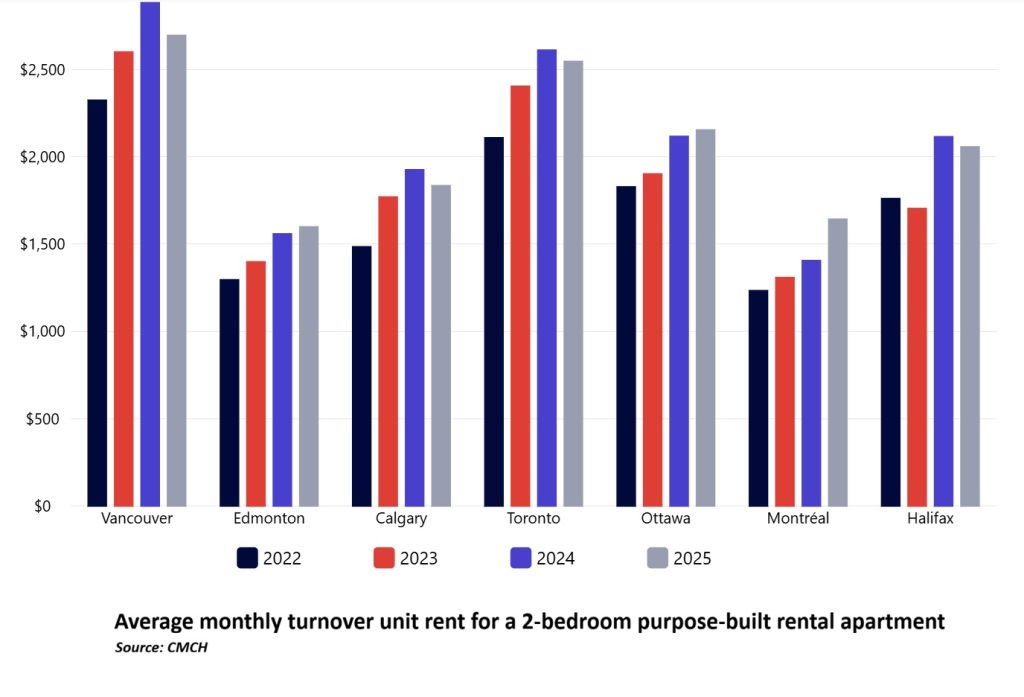
Vacancy rates for purpose-built rentals climbed across major Canadian cities throughout 2025, with the national rate reaching 3.1 per cent. This marks an increase from 2.2 per cent in 2024 and sits above the national 10-year average, according to Canada Mortgage and Housing Corporation’s (CMHC) 2025 Rental Market Report.

The rise was largely driven by historically high rental unit completions and slower population and economic growth. Rental condominium apartment vacancies also increased but remained well below purpose-built levels.

Despite landlords competing more aggressively to attract tenants—sometimes lowering asking rents or offering incentives—affordability remains a pressing issue. The average rent paid for two-bedroom units rose 5.1 per cent, fueled in part by higher repricing at turnover when units are newly leased.


“The tight conditions that defined rental markets in the past few years in Canada’s largest cities loosened in 2025,” said Tania Bourassa-Ochoa, CMHC’s Deputy Chief Economist. “Historically high rental supply completions combined with weaker demand caused by slower population and economic growth led to a rise in vacancy rates in many large cities,” “Purpose-built rental operators responded to these market conditions by offering incentives to new tenants, such as a month of free rent, moving allowances and signing bonuses. However, affordability is still a challenge in most markets, as the supply of units affordable to lower income households remains low.”

Regional highlights

  • Toronto: Purpose-built apartment vacancy rates hit 3% for the first time since the pandemic, driven by declining immigration, reduced demand from international students, and economic uncertainty. Rental condo vacancies stayed low at 1%. Turnover rents declined, boosting renter mobility and pushing turnover rates to 8.7%, up from record lows.
  • Vancouver: Vacancy rates in purpose-built rentals reached 3.7%, the highest since 1988. Rent growth slowed to a two-decade low as record supply entered the market and population growth eased. Affordability challenges persist, particularly for lower-income households.
  • Montreal: Both purpose-built and condo rental vacancies rose due to fewer non-permanent residents, including temporary workers and international students. Average rents grew 7.2%, outpacing income growth and worsening affordability, largely due to higher lease renewal increases.
  • Calgary: Vacancy rates held steady at 5% as strong demand matched rapid supply growth. Purpose-built rental supply expanded by 11%, the fastest pace in decades, though concentrated in higher-end units.
  • Edmonton: Purpose-built vacancies rose to 3.8% amid strong completions and slower household formation. Over 2,000 rental condos were added, raising their share of the rental market to 37%. Condo vacancies remained low at 1.7%, reflecting strong demand for modern units.
  • Ottawa: Vacancy rates edged up to 3%. Newly built units had the highest vacancy rates at 6.7%, more than double the city average. Lower-rent units remained tight, with vacancies under 1%, keeping turnover historically low.
  • Halifax: Vacancy rates increased slightly as migration slowed and supply grew from record completions. Rents still rose 6.7%, straining affordability. A 29% rent gap between turnover and non-turnover units kept turnover rates low.

Click here for more: Inside Canada’s 2025 rental market: Key trends and insights | CMHC

Keeping your windows clean through the winter

Winter’s sunny days often draw attention to neglected parts of the building, and dirty windows can be highlighted if they’re not part of your winter maintenance strategy. Not only do clean windows improve the aesthetic of your building and help leave a positive impression, but they can also help increase productivity by letting in more natural light.

Here are some of the steps you can take to keep your windows clean through the winter months:

  • Plan to clean them regularly through the season to avoid the accumulation of dirt, which can cause damage to your windows and make it harder to clean them in the spring.
  • Check the weather to pick a day when cleaning makes sense. Below-freezing temperatures, windy conditions, or impending snow will not make the job easy or enjoyable.
  • Ensure that you are dressed appropriately for the outside portion of the task, using PPE, warm clothing, and waterproof gloves to stay protected from the cold.
  • Avoid using hot water on cold windows, as a dramatic temperature differential can cause the windows to crack. Use warm water to get the job done.
  • Also, avoid using water-based cleaners, like Windex, which can freeze when the temperatures get low. Vinegar is less likely to freeze and can offer an alternative through the winter.
  • Use high-quality squeegees and microfibre cloths to remove the cleaning solution before it has a chance to freeze. Keep extra dry cloths available to wipe away any stray drips and avoid streaking.
  • Take a proactive approach to winter mould by wiping windows daily, keeping blinds and curtains open, controlling airflow, temperature and humidity, and routinely checking for signs like black staining or accumulated condensation.
  • When using a ladder, check for damage, wear non-slip soles, and have a spotter available on the ground. Ladder safety is vital when completing any job at heights.
  • If you are looking to invest, today’s tools like smart glass, robotic cleaners, drones, and even tinting can help you go greener and keep your windows clean all year long.

Adding window cleaning to your winter maintenance schedule can help your business leave a positive impression, maintain a focus on cleanliness, and increase employee productivity.

Standby generators tapped for relaxed oversight

Standby generators would no longer have to meet minimum performance criteria to qualify for an exemption from Ontario’s environmental review and registration processes if proposed regulatory amendments are adopted. More leniency could come with a package of new rules for activities that currently oblige accountable parties to obtain an environmental compliance approval (ECA) or register on the provincial environmental activity and sector registry (EASR).

Although the EASR is already the streamlined alternative to the lengthier and costlier ECA process, most proponents will still likely need to hire a consultant if they do not have in-house specialists to navigate the steps for obtaining permission. The Ontario government is now proposing exemptions to those requirements for a range of deemed low-risk activities that involve air and noise emissions, discharge to sewers, waste generation or uptake of water. An explanatory summary on the provincial regulatory registry maintains that environmental concerns are already addressed through standard practices and/or municipal oversight, making provincial permissions redundant and an inefficient expenditure of its staff time and expertise.

“The ministry’s review of these activities does not result in changes that have an impact on protecting human health and the environment. Exempting these activities would allow the ministry to focus its resources on more complex activities,” the summary states. “The proposed changes would reduce regulatory burden for proponents such as municipalities, businesses, developers, transit authorities and crown corporations, and would help speed up important projects such as housing and infrastructure.”

Some building/facilities managers and warehouse operators could be beneficiaries of two of the proposed measures. Along with more leniency for emergency generators, it’s also proposed that equipment used in goods warehousing and distribution be exempted from ECA or EASR requirements related to air and noise emissions.

Currently, standby generators used solely for emergency power must be capable of complying with a maximum threshold for nitrogen oxide (NOx) emissions to qualify for ECA or EASR exemptions. That’s set at 9.2 grams per kilowatt-hour (g/kW-h) for natural gas- and propane-powered generators, and at a roughly equivalent level for diesel- and biodiesel-powered generators based on widely accepted standards the United States Environmental Protection Agency (EPA) has established.

Backup generators must employ one of those four fuel types to qualify for an exemption. As well, the generator’s exhaust stacks must be vertically oriented so that discharge is emitted upward.

The proposed amendment would remove those criteria. Instead, owners/operators who have emergency generators in their buildings or facilities would simply have to adhere to rules set out in another Ontario regulation governing local air quality.

Those dictate that emergency generators must be tested and maintained in accordance with “any applicable manufacturer’s recommendations and generally accepted practices.” Discharges are allowable only during:

  • testing and maintenance of the equipment for a maximum of 60 hours over a 12-month period; or
  • a power failure or reduction when the generator fulfills its intended purpose.

“This proposed exemption would allow proponents to have a standby power system for emergency situations and testing without requiring an ECA or REA (renewable energy approval), registering on EASR or assessing air and noise emissions. Standby power systems used for non-emergency use would continue to require an ECA or REA or register on EASR,” the regulatory summary states.

General warehousing, refrigerated warehousing and storage facilities are likewise under consideration for exemptions from provincial review and registration for activities that cause air and noise emissions, provided they are located on a site that does not co-house manufacturing activities. Grocery distribution centres, merchandise warehousing and order fulfillment centres are cited as prominent examples of candidates for the exemptions since they handle, store and convey products that typically do not produce volatile emissions or fugitive dust.

“Activities with air and noise emissions at these facilities could include forklifts, battery chargers, truck traffic, equipment designed to keep goods frozen or refrigerated, maintenance welding and room ventilation,” the regulatory summary advises. “This proposed exemption does not exempt proponents operating facilities such as bulk receiving of grains, grain transfer and storage, oil and gasoline storage or natural gas storage.”

Two other proposed exemptions could also have implications for commercial and institutional buildings. It’s proposed that ECAs would no longer be required for temporary storm water diversion or holding on construction sites, such as runoff channels or sediment control basins, provided that erosion and sediment control measures are implemented and construction is not occurring at a mine, pit or quarry.

As well, it’s proposed that a current exemption for residential foundation drainage systems be extended to all building types. This would allow for up to 379,000 litres of water per day — storm water or groundwater — to be collected and removed via foundation drainage systems without need for a permit to take water (PTTW).

The public can submit comments on the proposed amendments until Feb. 3, 2026. “We are working to develop a regulatory impact assessment to determine potential costs or estimated savings related to this proposal and are asking for feedback from proponents related to cost impacts of this proposal,” the regulatory summary notes.