Articles Archive - Page 430 of 928 - REMINET
REMI

Deduction rules broadened for 2020 income taxes

Revenu Québec has confirmed that taxpayers can claim employment-related expenses of working from home during the COVID-19 pandemic when they file their 2020 income taxes. For renters, that will include a deduction for a “reasonable” portion of rent, while renters and homeowners alike can be credited for eligible amounts of office supplies, and for cleaning supplies, internet service, utility fees and minor repairs attributed to the home workspace.

The Canada Revenue Agency (CRA) is expected to make a similar announcement, tax law specialists with Borden Ladner Gervais LLP report. Earlier this spring, they petitioned the CRA’s Income Tax Rulings Directorate for a broader interpretation of the current rules, which require claimants to work from home for at least six months in a calendar year, and have received verbal commitment that a COVID-19-related relaxation is coming.

To qualify, taxpayers would still have to show they have worked “principally” at home — meaning at least 50 per cent of employment-related duties — but that could be scoped to the shorter period of the COVID-19 lockdown.

“We expect the CRA to issue an interpretation consistent with Revenu Québec and broaden its historical interpretation of the “principally” requirement,” a recent bulletin from the tax team at Borden Ladner Gervais states. “The CRA has already begun to provide advice on ways to reduce the administrative burden for the employer requirement to issue a T2200 (form) to facilitate the claiming of this benefit by employees for the 2020 taxation year.”

Instructions now posted on the Revenu Québec website note that employers will have access to digital forms, which can be signed electronically and emailed to employees “as a relief measure during the health crises”. Employees will also be required to submit details of their expenses.

“Whether you own or rent the dwelling where your home office space is, you must use a reasonable basis for calculating office space expenses. For example, you could use the proportion of the office space’s surface area versus your home’s total surface area,” Revenu Québec’s instructions advise.

Eight Alberta water projects receive funding

The governments of Canada and Alberta have announced funding for eight water infrastructure and recreation projects in Central Alberta.

“Building vital infrastructure is a key part of Alberta’s recovery plan. Ensuring communities and organizations can get started on the planning and construction of these ICIP projects figures prominently in our plan to create needed jobs and boost local economies where it matters most,” said Prasad Panda, Minister of Infrastructure for Alberta.

Projects that will receive funding include:

  • Greenshields Lagoon Rehabilitation: In the Municipal District of Wainwright, the funding will be used to improve the Greenshields wastewater treatment lagoon and capacity, as well as reduce the risk of leaking, odour, and contamination
  • Alberta Central East Regional Water Transmission System: Funding will be provided to construct approximately 96.3-kilometres of line to provide a safe, reliable water supply to 18 communities in the counties of Minburn, Two Hills, and Vermillion River.
  • Lagoon Upgrade: This project in Banshaw will include the reconnection of two existing force mains to the proposed inlet control at the anaerobic cells and berm upgrades to provide erosion protection to the east lagoon berm.
  • Water Transmission Lines: A 12.2-kilometre water transmission line will be constructed for the Village of Edberg in Camrose County and a 23.6-kilometre water transmission line will be constructed for the Village of Clive in Lacombe County.
  • Water Treatment Plant Upgrades: The upgrades for the water treatment plant in Provost include the installation of new energy efficient Variable Frequency Drive pumps, a new electric high flow fire pump, and a new generator that will power the entire building’s systems.
  • Lift Station Upgrades: Among other upgrades, Ryley will receive funding to upgrade the control panel with a Programmable Logic Controller (PLC) and a Human Machine Interface (HMI), add a level transmitter for wet well level, and add flood protection in the dry well.
  • Wastewater Lagoon Upgrades: Upgrades to the Town of Wainwright’s wastewater lagoon include the construction of a new aerated cell and a new polishing cell. They also include the conversion of a portion of an existing aerated cell, earthworks for the construction of additional lagoon cells, and underground piping upgrades to accommodate the new flow requirements.
  • Aquatic Facility Upgrades: For residents of Consort, the funding is going towards a new aquatic facility to help people stay active and support community development.

The Government of Canada is investing more than $19.2 million in these projects through the Green Infrastructure Streams (GIS) and the Rural and Northern Communities Infrastructure Stream (RNIS) of the Investing in Canada plan. The Government of Alberta is providing over $23.3 million, while municipalities and communities are contributing more than $6.2 million.

Ontario firm unveils hospital-grade disinfectant to fight COVID

A Hamilton-based company is introducing a no-rinse, hospital-grade disinfectant to help cleaning professionals protect the health of building users – and keep businesses open and operating during the COVID-19 pandemic.

Kaivac says its KaiSan II disinfectant is effective against a broad spectrum of pathogens including coronavirus, HIV-1, hepatitis B and C, and the avian influenza.

Tom Morrison, vice president of marketing at Kaivac, explains that a hospital-grade disinfectant is a separate category of disinfectants. It has been proven effective at eliminating many types of nosocomial (healthcare-acquired) bacterial pathogens.

As the name implies, they are generally used in hospitals, clinics, dental offices, or other healthcare-related facilities.

“This new disinfectant is designed specifically for use in restrooms and kitchens, not just in medical settings, but also in schools, universities, and most all commercial locations,” adds Morrison. “It can also be applied using low-pressure sprayers as well as wet misting systems.”

Ground breaks on 55C Bloor Yorkville Residences

MOD Developments launched 55C Bloor Yorkville Residences exactly one year ago and is now starting construction on the 48-storey condo—one of the last buildings to rise on Charles Street in Bloor Yorkville.

“The pandemic was difficult for all Canadians and businesses in every industry and it was no different for us at MOD,” said Noorez Lalani, president of MOD Developments. However, I’m extremely proud of how our team came together and juggled both their family life, along with such a time-sensitive project to ensure we started building on schedule for our customers,”

“We are fortunate that the province declared construction an essential service and that the City was committed to processing applications and permits as best as they could. We’ve reached this milestone with help from a lot of sources, including a terrific consultant team.”

The modern point tower, designed by architectural firm architectsAlliance, will feature 551 units of studios, one-, two-, and three-bedroom suites. Cecconi Simone will design the interior finishes. Two floors are dedicated to amenity spaces, spanning 20,000 square feet between the eighth floor and rooftop. The indoor-outdoor entertaining space, known as the CLounge, is one of the highest amenity spaces in Toronto, with a sweeping 180-degree view of the skyline.

Developers put shovels to the ground on Wednesday, August 19.

“In early discussions, we spoke in sartorial terms of how a building could be like bespoke tailoring,” said Gary Switzer, CEO of MOD Developments. “Peter Clewes certainly rose to the occasion with his sophisticated massing of the podium and tower, his use of upgraded materials like porcelain panelling, curtain wall and stainless steel, and his integration of a dark colour palette for the façade and balconies. While most of the surrounding newer buildings are primarily glass with white balconies, 55C will be unique in its dark tones and solid materiality.”

55C Bloor Yorkville Residences is projecting completion by fall 2023.

Commercial office watchwords attuned to COVID

Sublets and suburbs are commercial office watchwords for real estate analysts striving to gauge COVID-19’s impact on future demand, income and value. For now, many typify a second quarter uptick in downtown sublet activity as a spurt, not a glut. However, they project the trend is likely to continue, and they’re watching for signs of downtowners migrating farther afield.

Speaking in a webinar last week, Raymond Wong, vice president, data operations with Altus Group, noted that sublet now represents a sizable portion of all available downtown space in Vancouver and Toronto — at 39 per cent and 27 per cent, respectively — but it’s a large share of a small amount of inventory. The past three months have brought piecemeal additions rather than the emptying out of buildings, and have triggered no discernable discounts.

“When the vacancy rate exceeds between 6 and 7 per cent and sublets represent more than 40 per cent of the availability rate, that’s when we see some softening of the rents,” he submitted.

Based on those parameters, CBRE’s second quarter statistics suggest landlords in the two cities have plenty of room to manoeuvre. Downtown vacancy rates of 2.7 per cent in Toronto and 3.3 per cent in Vancouver are among the lowest in North America, making an influx of sublet space less than foreboding.

In Vancouver, JLL analysts speculate there will be plenty of interest in a couple of multi-floor blocks of downtown Class A space, “which are usually few and far between”. Together, they account for approximately 81,000 square feet of the 406,000 square feet of downtown sublet space added to the market in the second quarter, but Avison Young reports the “vast majority” is in chunks of no more than 10,000 square feet. Otherwise, its 2020 midyear Vancouver office market report draws few conclusions.

“It remains to be seen if landlords are inclined to take control of sublease offerings through contractual rights or if they will consent to transactions at discounts to prevailing market rates,” it states. “Whether the impact of work-from-home protocols results in a material increase in sublease or head lease offerings as companies reconsider their medium- and long-term office space needs remains to be seen.”

Avison Young’s second quarter office market report for the Greater Toronto Area points to the potential upside. “The uptick in available sublease space could help the market by providing room to transact,” it theorizes — attributing the second quarter slip in leasing volume more to the lockdown’s logistical impediments than to a dip in demand.

In total, it tallies 177 sublease listings amounting to 1.2 million square feet available in downtown Toronto at midyear. More than 80 per cent of these were for spaces no greater than 10,000 square feet, while nearly 77 per cent still had more than two years remaining on the lease term, including 37 sites with more than four years before lease expiry.

Still, that pool seems likely to deepen. “I think we are going to see a lot of sublet space come on over the next three to six months,” Wong speculated.

Vectors for loosening downtown markets

Momentum for previously uncontemplated moves outside the core and the advancing completion of new office space present other vectors for downtown markets to loosen. With new construction heavily pre-leased — more than 7 million square feet in Toronto, for example — Wong suggests developers are well positioned to fill the remainder.

“This is the type of space that companies are really looking for,” he asserted. “There is a lot of demand for new office space. Our concern is the backfill.”

Economic and public health uncertainty could destabilize the demand for that space, which was commonly assumed to be strong just six months ago. More recently, that’s been replaced with now stale conjecture about what retrenchment to home workspaces and requirements for larger footprints per worker will mean for commercial office demand, and whether the two trends will balance out each other.

The latter hopeful prospect is inextricably linked to sustained or growing employment levels — a reality that has landlords monitoring economic rebound from COVID-19 against the ticking clock of lease expiry and the pending arrival of more than 9 million square feet of new office space now under construction in downtown Toronto and 3.8 million square feet in progress in downtown Vancouver.

“As completions take place and backfill hits the downtown, that will the push vacancy numbers (up), with employment numbers coming back a little later.” Wong projected.

Other market observers underscore the robust economic diversification that should serve Toronto and Vancouver well.

“The tech sector growth story that has driven demand in recent years is far from over,” contends BentallGreenOak’s midyear 2020 Canada Perspective. “Big tech is only getting bigger, and the foundation has been laid with robust start-up ecosystems in Canada’s largest cities. The tech sector benefits more than any other sector from agglomeration economies and Canada will continue to remain a source of low-cost engineering talent.”

Envisioned scenarios of a significant portion of the workforce permanently ensconced at home and/or networks of suburban office hubs serving those who no longer want to be in a dense downtown environment are still just envisioned scenarios. With the exception of a handful of high-profile tech corporate announcements, analysts surmise many decision-makers are in a holding pattern.

“Deal activity was very muted in the first half of 2020 with tenants generally opting for short-term extensions or deferring commitments wherever possible,” Avison Young affirms.

However, Wong reports tenants with expiring leases are now looking outside their conventional comfort zones. “A lot of discussions are happening right now. They’re looking at all the options,” he said.

“Across North America, demand for suburban office space could benefit in the current climate, as select tenants look for affordable space in a safely distanced environment,” concurs Jean Laurin, president and chief executive officer of Devencore.

Building better density key to future development

Multi-residential buildings have been the subject of considerable discord since coronavirus restrictions forced millions to stay at home. How tenants would survive months of arduous lock-down in dense congregate living settings seemed unimaginable—especially for those confined to units without access to the outdoors. Now, as restrictions lift and the country resumes to a comparative state of normalcy, designers and developers are looking at the future through a new, albeit, slightly blurry lens.

“As city builders, we have a tremendous opportunity to learn from this experience and make positive changes to the way we design our residential buildings that extend beyond limiting the spread of infectious disease,” says Dev Mehta, Senior Associate at Quadrangle. “It has taught us that there are several aspects to the way we have been designing and constructing residential buildings that can be optimized to create healthier spaces.”

Like many, Mehta believes the pandemic has accelerated several trends that will continue to disrupt the way we consider uses in our built environment—namely, our enhanced appetite for online consumption and our newly distributed work force. These, among other trends, have further emphasized the need for buildings that better support a “live, work and play at home” existence. But that doesn’t necessarily mean the appeal of the downtown core will diminish.

“Though some are predicting there will be a reaction for many to consider moving away from denser urban centres and adopt a suburban lifestyle, it is unlikely that this will happen to a significant extent,” Mehta says. “The desire to live in dense, diverse and transit-oriented cities will very likely continue to increase in momentum in the long term, given the many benefits that these kinds of spaces offer.”

Pointing to current data, Mehta conjectures that density is not the major culprit for the spread of COVID-19, rather it is human behaviour and clarity around government messaging and policy decisions. “Because demand in many of our sought-after urban centres will likely continue to rise and surpass the available supply, affordability will continue to be an issue,” he says. “So, simply lowering the density of new developments and increasing the size of units will not be an option for the majority of private-sector funded developments. What we will instead need to consider is “better density.”

What is better density?
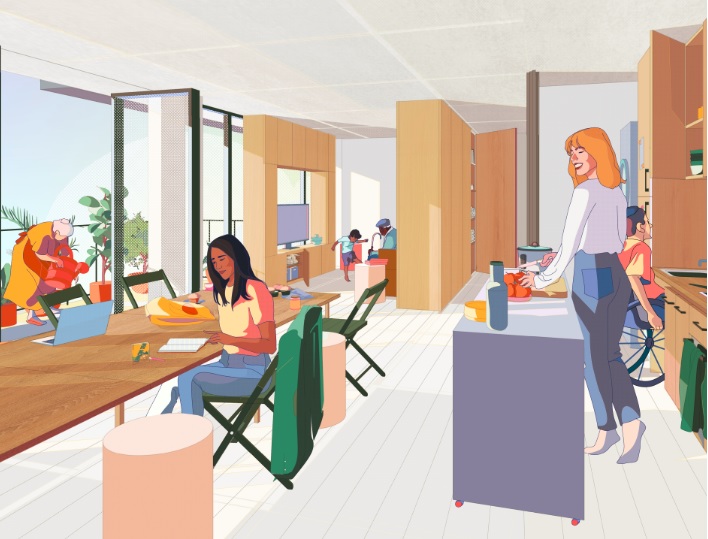
building better densityBetter density, according to Mehta, means optimizing the spaces we build to promote certain outcomes. Those are: mental and physical health and well-being; flexibility and adaptability; sustainability and resilience; and affordability and inclusivity.

“We will need to think more creatively and less prescriptively about how we define spaces in our residential buildings and units,” he says. “Unit layouts will have to consider adjustable partition elements that allow users to define and change their space in a way that is more fluid throughout the day. A bedroom is not always a bedroom and a dining space is not always a dining space. We have already overcome this psychological barrier of delineating and rigidly programming our spaces, and architecture will have to catch up to and embrace this.”

Looking at the structural systems, a return to using columns instead of shear walls will allow for easier conversions, as shear walls limits the potential for future interior alterations and adaptive re-use solutions. Also, access to sunlight will emerge as a priority, with sun rooms, balconies and terraces becoming valuable extensions of units. Adding operable facades will provide more meaningful connections to outdoor spaces, blurring inside and outside, while also building in opportunities for urban agriculture and gardening. And should a new deadly virus come along in the not-so-distant future, Mehta’s answer to closing amenities is to introduce a concierge whose duties will include overseeing bookings (and subsequent cleanings) of these essential spaces.

“Access to the outdoors is absolutely crucial to both mental and physical health and well-being,” he says. “Similarly, interior amenity and common gathering spaces will need to remain flexible so that programming can vary over time and respond to whatever the current situation is. Distributed amenity spaces will allow this to happen more fluidly.”

While smaller “pocket” amenity spaces distributed across all floors could allow smaller groups and families to gather, Mehta envisions flexible, grade-related amenities to support building residents and engage the local community.

“Equipped with robust communication and hard infrastructure, these spaces could serve a dual purpose,” he says. “They could be used for everyday social programming and for support programming during climate-related emergencies and pandemics. Services could include a continuous clean water supply, refrigeration for grocery deliveries and other essential supplies, a heating, air conditioning and filtration system to enhance air quality, all backed up on an emergency power supply.”

Even some of the more functional common spaces, such as corridors, exit stairs and lobbies, could benefit from access to daylight and fresh air—making them more suitable for social interaction and exercise, beyond their main circulation function.

Retrofitting older buildings

With so many existing multi-unit buildings in dire need of upgrades, it’s not just new builds that are being re-imagined. In fact, Mehta sees the retrofitting of older properties as the most pressing need impacting the sector in the near future. “Upgrading the plumbing and HVAC systems, as well as the building envelopes in older apartment buildings would deliver significant benefits,” he says. “This would provide opportunities to improve air circulation, natural ventilation and access to daylight, which all lead to the improved wellness of occupants and lower chances of airborne infection transmission.”

He also recommends touchless devices and automatic door operators activated by card or fob readers for hands-free roaming within common areas and service spaces, like garbage chutes, as well as improvements to elevator technology for smarter vertical travel.

But more than anything, flexibility is of key importance.

“Technological upgrades will help us flow through our spaces with more ease,” he says, “ but building better density will rely on some fundamental decisions in how we design and lay-out our future buildings.”

With more importance being placed on private outdoor space to allow access to fresh air and sunlight, we may see solutions to provide larger structural cantilevers for more significant private outdoor spaces. With home comfort increasing in importance we may start to see a wider adoption of thermally broken details for balconies to improve thermal comfort and the performance of our buildings. We may also see increased investment in quality insulated building envelopes and glazing systems.

Will striving for better density impact affordability?

Potentially yes—but in a good way.

“There will likely be more interest in modular and prefabricated construction to reduce costs and construction timelines,” says Mehta. “We are already seeing the City of Toronto fast-track modular housing solutions for our homeless population. It is only a matter of time before the private sector embraces this more meaningfully.”

Renderings provided by Quadrangle 

The COVID-19 return to work guide for Canadians

The Canadian Centre for Occupational Health and Safety has released an online course to help organizations safely return to work during the COVID-19 pandemic.

As businesses and workplaces across Canada reopen their doors for workers and customers, it’s important to understand that the coronavirus will still be circulating so new infections are possible. Your return to work will not be the same as before the COVID-19 pandemic began.

Pandemic Planning: Reopening for Business will guide employers, supervisors, managers and workers on how to prepare for a safe return to work, and what controls are needed to be put in place to protect everyone and minimize the impact of the pandemic.

“We know that as we start our return to the workplace and resuming activities outside of the home, things will not be as they were before the COVID-19 pandemic,” says Anne Tennier, president and chief executive officer. “Businesses and organizations are looking for information and guidance. We are providing that with this course to help minimize the spread of infection, and help employers and workers return to work as safely as possible.”

Topics covered in the course include how coronavirus spreads and its symptoms, employer and worker duties and responsibilities in a COVID-19 return to business plan, methods of control (including cleaning and disinfecting), how to manage the workplace and prepare workers for a safe return, and understanding the impacts of a pandemic on mental health.

Canadian landscape professionalism honoured

The winners of the 17th Annual National Awards of Landscape Excellence (NALE) were announced virtually this year. The NALE recognizes Canadian companies that have actively participated in significantly raising the level of professionalism in the landscape industry.

Each province nominates members from the provincial awards of excellence competitions that are then entered into the national awards, entries are then judged by a panel of industry experts, with company names and locations redacted from each submission.

The 2020 Awards presentation took on a virtual format this year, with winners being announced in an online video release. Winners were sent their awards ahead of time.

Five landscape category awards were presented professionalism, along with the Caterpillar Green for Life Community Award. The 2020 winners showcasing landscape expertise and professionalism are:

Aménagement Côté Jardin Inc. of Montreal, Quebec for the Caterpillar National Award of Landscape Excellence in Commercial Construction;

Fossil Landscape Construction Ltd. of Vancouver, British Columbia for the Caterpillar National Award of Landscape Excellence for Residential Construction;

Wilco Contractors Southwest Inc. of Calgary, Alberta for the HortProtect National Award of Landscape Excellence in Commercial Maintenance;

Yorkshire GardenServices Inc. of Concord, Ontario for the HortProtect National Award of Landscape Excellence for Residential Maintenance;

Airo Landscapes Inc. of St. John’s, Newfoundland & Labrador for the National Award of Excellence for Landscape Design;

The Goodman Labyrinth (Sask), and Chestermere Community Park (Alberta) for the Caterpillar Green for Life Community Award.

The Canadian Nursery Landscape Association is a national not-for-profit federation of nine provincial landscape and horticulture associations representing over 3,800 members.

Can anything stop the GTA’s new condo market?

Depending on your source of data, the average asking price per-square-foot for new condominiums in the Greater Toronto Area has increased for about 25 consecutive years. When the COVID-19 pandemic hit in March, and new condo sales in the GTA plummeted in April and May, it seemed the streak would finally be over.

With the borders shut down and immigration grinding to a halt, population growth will be considerably lower than in previous years. Job loss has been unprecedented, and the lockdown has bankrupted many small businesses and left their former employees looking for work. Data from Rentals.ca shows that average rent per-square-foot for condominium apartments for lease in the City of Toronto has trended down since the middle of last year, and the $3.65 per-square-foot figure in June is lower than 2018 rent levels. This multitude of negative factors should prevent investors from jumping back into the market, right? Let’s review the data and anecdotal evidence.

The resale housing market was not hit that hard in terms of a price correction during the early months of the pandemic. Demand clearly plummeted, but so did supply, as sellers held off listing their properties due to health concerns. Pricing is always sticky in the short term, as it often takes sellers several months to realize the market is not as hot as it once was, and the previous comparables for their properties are no longer valid. It is not always easy to evaluate the strength of a market over a two- to three-month period, as homeowners who merely want to sell (as opposed to being forced to sell for financial reasons) can pull back their listings and wait for the market to return. Soft market conditions often result in a higher share of distressed sales and lower share of luxury home sale during poor markets, making the results look worse than they actually are. The opposite is often the case in a strong market as well, as few $15 million-dollar homes sales pulled the average up.

When lockdown restrictions were lifted, demand flooded back into the market, and supply has yet to catch up. However, it appears that the single-family market is stronger than the condo market, as many prospective buyers are tired of being cooped up in small apartments and are seeking larger homes with more outdoor space.

Doctors have strongly advised people to stay six feet apart from each other and avoid large get-togethers, and some major employers have announced that they will continue the work-from-home setup, potentially permanently. The reduced need to be downtown, the desire for personal and private outdoor space, and a fear of being in crowded dense places may significantly reduce high-rise condo demand.

All of these factors, coupled with the onslaught of supply coming to the resale market over the next 18 months in the GTA, should be a deterrent for pre-construction condo investors, but it hasn’t. The first few new condo projects to launch during the pandemic were successful, and that has resulted in a number of developers planning to launch this fall.

As Baker Real Estate’s Barbara Lawlor mentioned on a Toronto Under Construction podcast, buyers see monthly cash flow as secondary to capital appreciation. Investors have had success buying a new condo prior to the start of the build, waiting anywhere from three to six years to take possession. Past experience has shown that prices have been higher when they’ve closed in comparison to when they’ve purchased. The last time it wasn’t the case was the early 1990s.

Investors continue to bet on Toronto. They see Toronto and the GTA as a highly desirable region, and with the instability south of the border, politically and socially, there is no doubt that Toronto will continue to attract top talent looking for opportunities and a high quality of life.

Some volatility is expected along the way, maybe even the end of the new condo price streak in 2021, but if a global pandemic can’t kill the Toronto new condo market, what will?

Ben Myers is the president of Bullpen Research & Consulting Inc. He produces market demand reports and residential pricing recommendation studies for builders, lenders and landowners in Toronto and Ottawa. He assists in the underwriting and due diligence of real estate development opportunities from a revenue and land value perspective. Find him on Twitter at @BullpenConsult

Flood preparedness in Canada graded C

Canada’s provinces and territories received a grade of C on flood preparedness, following a two-year national study completed in 2019.

The Intact Centre on Climate Adaptation at the University of Waterloo interviewed 139 provincial and territorial government representatives responsible for managing floods, climate-related risks and emergency services from across all regions of Canada to calculate the grade.

A comparable study completed in 2016 resulted in a national score of C-, suggesting that Canada’s preparedness to limit flood risk has showed progress over the past four years.

“Canada is heading in the right direction on flood risk protection. In light of effectively irreversible climate change, both the challenge and opportunity going forward will be to continue to deploy measures to limit future risk of flooding”, said Blair Feltmate, head of the Intact Centre and author on the report.

The flood preparedness of provinces and territories was evaluated relative to nine and seven criteria, respectively, that addressed such topics as efforts to retain natural infrastructure, flood safety and preparedness of critical infrastructure and public health and emergency management capacity to limit flood risk. For each interview and area examined, provinces and territories were assessed on a quantitative five-point scale, which ranged from ‘A’ for the highest state of flood preparedness, to ‘E’ for the least prepared.

Of the primary sources of flooding across Canada (i.e., riverine, urban, coastal, ice jams, groundwater), only riverine mapping has been developed by all provinces for some portion of their jurisdiction. For all other flood sources—that prove increasingly challenging against the backdrop of climate change—the report identified that mapping efforts remain either underdeveloped, incomplete or non-existent.

Other key highlights of the study include:

  • Alberta, New Brunswick, Newfoundland and Labrador, Prince Edward Island and Yukon declared that they have incorporated the impacts of climate change into their floodplain mapping initiatives, while British Columbia, Manitoba, Nova Scotia, Ontario, Quebec and Saskatchewan only collaborate with local governments and agencies regarding the incorporation of climate change into floodplain maps.
  • Provinces and territories reported significant strengths in emergency management, particularly related to maintaining flood forecasting and alert warning systems during flood events.
  • Provinces and territories showed diligence in sustainable flood management regarding effort to retain natural infrastructure, such as wetlands, within new community developments.
  • Provinces and territories indicated limited involvement to mitigate flood risk applied to the integrity of critical infrastructure, including electrical systems, telecommunication systems, highway infrastructure, integrity of pipelines and water supply/wastewater treatment.
  • Provinces and territories received relatively low scores in land use planning, reflecting the need to limit new development within floodplains, and/or to deploy existing adaptation standards to limit flood risk in vulnerable locations.
  • For all provinces and territories, particularly in light of a changing climate, there is both a need and opportunity to review system interdependencies (e.g., electricity generation, fuel supply, telecommunications services, etc.) to avoid cascading system failures.

Canadians oppose emerging surveillance technologies

Up-and-coming surveillance technologies designed to help employers monitor the productivity of staff are largely viewed by the public as unreasonable and intrusive, according to new UBC research, which focused explicitly on public sector use.

Resistance was high for those technologies that are difficult to connect directly to performance measurement. Devices and software that conduct physical surveillance by recording images, tracking movements and analyzing voices scored the worst, while those focused on digital surveillance such as computer and internet activity scored slightly better, even if they were seen negatively.

“If public sector employers propose these types of technologies, they have to be aware of the resistance they are likely to encounter,” said Carey Doberstein, an assistant professor of political science at UBC who co-authored the study with Étienne Charbonneau of Quebec’s National School of Public Administration. “There is space for these tools, provided that there’s a clear link to a legitimate objective of an employer, and respect for the privacy of employees who as professionals are entitled to a certain amount of trust in the workplace.”

Much of the public sector has moved to remote work, and public sector managers may now be considering the same kind of surveillance measures that have caught on in parts of the private sector. Examples include software applications that photograph employees from their computers at random intervals, artificial intelligence that analyzes keywords in email messages to gauge staff morale, and tools to track a user’s internet and computer navigation activity.

The researchers surveyed a representative sample of more than 3,000 Canadians online and by phone, in addition to a separate sample of 346 people who work in the federal and provincial governments. Participants were asked to rate the 12 different technologies with either a social worker or tax collector in mind as the target of monitoring. The researchers wanted to know whether surveillance would seem more acceptable for one of these public sector roles than the other, but the differences proved insignificant.

The most objectionable technologies are

  • hidden cameras to measure timing of breaks and movement around the office
  • a badge that analyzes volume and tone of voice, and tracks movement through the office
  • random photo capture from one’s computer

The least objectionable are

  • wellness apps that monitor physical activity or handwashing practices
  • internet usage reports on websites visited and time spent

Generally, participants’ views on a technology’s intrusiveness were closely related to their views on its reasonableness.

The study found that younger participants from age 18 to 30—despite growing up in an era of digital surveillance via social media—were less accepting than their elders. This suggests that a growing portion of the workforce may be willing to challenge invasions of privacy on the part of their employers.

“Ultimately we hope employers—particularly in the public sector—take a proactive approach to engaging with employees in advance of introducing these technologies, and work with public sector unions or professional associations to make the argument for why a technology should be used,” said Doberstein. “If they can come to a joint understanding of what is appropriate and what is not, workplace complaints and legal proceedings over privacy invasions will be less frequent and less likely to disrupt morale. We think some of this data can start that conversation.”

The study, “An Empirical Assessment of the Intrusiveness and Reasonableness of Emerging Work Surveillance Technologies in the Public Sector,” was published by Public Administration Review.

Slumping confidence in office sector dynamics

Canadian brokers and market analysts are less gloomy about office sector dynamics than their peers in the United States, recently released results of the Transwestern-Devencore midyear 2020 commercial real estate sentiment survey reveal. Nevertheless, real estate advisory teams across 43 urban centres in the two countries consistently anticipate a decline in leasing activity, more demand for concession packages, a slowdown in new development and lower investment prices. On the flipside, they are generally more upbeat about industrial market prospects.

Survey respondents in eight major Canadian cities — including Toronto, Montreal, Vancouver and Calgary — registered slumping confidence via a 30-point slide in the office sentiment index. The office sector fell decisively into the weak end of the scale, in which 100 represents a perceived neutral market, as the rating fell from 104 at year-end 2019 to 73.8 by June 2020. The downward trajectory was even steeper in U.S., where the office index dropped from 106.9 in December to 61.8 at midyear 2020.

“Across both countries, traditional office space is expected to lag as occupiers pause leasing decisions until the pandemic is under control,” observes Elizabeth Norton, senior managing director of research services at Transwestern. Tied to accelerating uptake of remote work options and economic uncertainty, Canadian survey respondents foresee short-term renewals will become more of the norm as tenants reassess how much space they will need.

“Market concerns revolve around the unpredictable nature of COVID-19 and the true impact to the market given several tenants are likely to downsize as a result,” the accompanying report concludes. “Half of respondents expect development levels to decline during the second half of 2020. Roughly 79 per cent of respondents expect investment pricing to remain flat or to decline slightly, while 50 per cent believe interest will remain flat.”

Confidence in industrial markets has also slipped since 2020 began, but still hovers on the up side of neutral on both sides of the border. The Canadian industrial index fell slightly more than 28 points, from 129 to 100.9. The U.S. slide was more moderate — from 116.2 in December 2019 to 104.4 at midyear 2020.

“The industrial property sector will continue to flourish as much of its tenant base is essential businesses,” projects Matt Dolly, director of research with Transwestern. Notably, Canadian analysts attribute sluggish development activity to a lack of available land rather than diminished demand.

“Respondents expect pent-up demand stemming from the shutdown. This will likely be driven by distributors and third-party logistics. However, demand is also expected from manufacturers, as they look to overstock inventory levels to avoid further supply-chain disruption. A continued concern is lack of options and limited new construction, particularly in Quebec and Ontario,” the market sentiment report states.

8188 Yonge a first for Uplands neighbourhood

Custom balconies are one of many features in the new 8188 Yonge condominium project, set to rise on the corner of Yonge and Uplands in the Thornhill neighbourhood of Toronto.

The joint venture between Trulife Developments and Constantine Enterprises Inc. will rise 10 storeys and be a six-minute walk from the future Yonge-extension subway stops. About 282 units will average 480 to 1,750 square feet and range from one- to three-bedroom suites, with prices starting in the high $400,000s. Sales will begin in October.

A few unit items include, well-sized private balconies and terraces with the option to choose from one of three custom balcony design packages (forest, ocean, garden), smart thermostats and smart cameras, floor-to-ceiling windows and spa-inspired washrooms.

8188 Yonge

A tiered balcony structure is planned with custom design options.

“Since this will be the first condominium project coming to the Uplands neighbourhood, we wanted to take the opportunity to make something unique that gave residents a curated indoor and outdoor experience,” says Freddy Mak, vice-president of business development, Trulife Developments. “8188 Yonge will have exclusive offerings such as a state-of-the-art fitness centre, a 30,000 square foot outdoor oasis with a swimming pool, lounges, yoga access, and a sun deck.”

8188 Yonge

An entertainment lounge with a built-in catering kitchen will be one shared space in 8188 Yonge.

Plans for the 30,000 square feet of amenity space include an infinity walkway for the public to enjoy walks within the neighbourhood, an outdoor yoga space, a swimming pool with cabanas, a fitness and wellness centre, an outdoor children’s play area, a dog park and a roof deck entertainment space with wrap-around terrace and BBQs. Residents will also find a  wine tasting bar, co-working office and library.

“Hallmarks of the property include thoughtful amenity programming and a welcoming sense of home the moment you enter the main lobby,” says Dominic De Freitas, principal at Figure3, which is providing interior design for the project. “There is a quiet confidence to the overall project and an understated sophistication which has timeless appeal.”

Interiors will showcase natural wood tones, warm bronze metals and soft jade accents that compliment rather than compete with the surrounding natural setting.

“The development will beautifully integrate with this spectacular neighbourhood that has plenty of local cafes, restaurants and boutiques, renowned parks, golf clubs and schools: all within walking distance for future residents,” adds Robert Hiscox, Founder and CEO, Constantine Enterprise Inc.

Aiding condo managers on the front lines

For property managers who work on the front lines of condo corporations, day-to-day business may include interacting with owners who might be unfriendly or keeping up with a busy and sometimes demanding board of directors. It takes a special person.

Fewer and fewer people seem willing to take on this high-stress job, it seems, as the industry faces a declining number of certified managers. Meanwhile, the number of condo corporations continues to increase. Condo boards may soon face a crisis in finding good condo managers to handle their operations.

Creating less tension in the condo is one way to support managers who may be exposed to various levels of stress within their work environments. Here are ten measures boards can take to help managers thrive, increasing their likelihood to stay on the job.

Organization

Low-stress boards are well organized. These boards have job descriptions for directors, hold meetings regularly, come to meetings prepared, understand the meaning of “fiduciary responsibility,” and a host of other items that improve the overall organization of the condo board. Being well organized makes life less stressful for property managers and helps them provide the kind of service that owners and boards demand.

Code of conduct policy

A code of conduct spells out expected behaviours. One aspect is how owners and directors communicate with property managers. The policy clearly identifies that interactions must be courteous and professional at all times; in other words, owners are expected to be nice.

Being nice doesn’t mean an owner can’t raise an issue of concern to the manager. But it does mean that the owner presents the problem courteously and professionally. Boards may need to educate unit owners on how to interact with managers and should always step in if any owner transgresses the policy. Property managers should never need to be worried about nasty emails or confrontations.

Accountability

Yes, directors are unpaid, but they shouldn’t make excuses for not accomplishing a task because they are volunteers. Property managers are far too busy to be kept waiting when directors fail to meet deadlines. Knowing directors are reliable helps mitigate stress arising from the uncertainty of unfulfilled duties.

Expectations

These are the types of informal agreements or policies that go beyond the contract that the board has already signed with the management company. For example, directors know that their role is to govern, and they never expect their managers to take on this role. Directors, most definitely, should ask their managers for advice and recommendations, but should never expect the manager to make decisions for the board. Having such expectations are stress inducing. Managers manage and boards govern.

Managing disagreements

Directors and managers will disagree. Hopefully, serious differences occur only occasionally. The best directors know that the relationship with their managers is professional at all times and always open to resolution. Never let personal feelings attend board meetings, and when conflicts do arise, resolve them as quickly as possible.

All for one and one for all

Debate and discussion are expected during board meetings, but once a decision is made, all directors need to be supportive of the outcome. When appropriate, decisions can be shared with owners, without commentary that differs from the board decision.

This translates to managers receiving clear instructions and guidance from the board—always knowing exactly what to do. If more than one director offers instructions or is unclear, managers may get stressed while trying to figure out what to do next.

Keeping up to date on current condo affairs

Being a director means keeping up-to-date on condo affairs by following relevant blogs, surfing the Internet and attending educational sessions. Rather than educate directors on every intricacy of condo life, managers need to save time for other tasks

Meeting protocols

Given that the majority of interactions between boards and managers take place during meetings, this time must be well spent. Every director must promise to come to meetings fully prepared and ready to contribute productively. Directors who are unprepared waste everyone’s time, especially managers who are looking to the board to make decisions. When the lack of preparation delays the board from making a decision or results in a bad decision there are consequences. It could delay the manager from implementing a task or it could lead to problems because the decision was not clearly thought out in the first place.

Timely minutes

Meeting minutes are essential documents. Draft minutes need to be provided as soon as possible after meetings since directors and managers rely on that information. As the minutes serve as a record of the board’s decisions, they are essential communication tools for the manager who works from these decisions. Obtaining this information promptly reduces the possibility of any confusion arising as to the board’s decisions.

Openness to technology

New technology has already changed the way most people work. Boards need to be willing to learn about new technology that could help streamline a property manager’s work.

An added bonus

Implementing these strategies will significantly reduce property managers’ stress loads. They also create a welcome but unintended consequence of lowering stress among directors who benefit from increased efficiencies and organization. A win-win result benefits all.

Postscript

Since this article was originally published in the March issue of CondoBusiness, the COVID-19 pandemic arrived and upended the work of property managers and added to their workload and stress levels. It means that directors need to be even more mindful of the work expected from their property manager. Failure to implement at least some of the suggestions in this article could push managers over their limits and accelerate their exit from the industry.

Pat Crosscombe is the founder and CEO of BoardSpace, a company dedicated to bringing the best software to condo boards. She is also the past president of her condo corporation and has been actively blogging and writing about issues facing condo board directors and managers. This is her sixth article for CondoBusiness Magazine. She can be reached at [email protected]

Microfibre mops: A laundry list of questions

Effective cleaning of high-touch surfaces and floors in healthcare facilities and other institutional settings requires a dedicated workforce and proper cleaning tools like microfibre mops. While several studies have shown the adoption of those textiles has improved cleaning and disinfection outcomes, questions remain regarding the quality and durability of different products such as microfibre mops, particularly after repeated laundering. This issue has helped foster a heated debate about the switch to single-use, disposable mop pads and wipers from reused, re-laundered cleaning textiles.

PEOPLE EQUAL GERMS

Properly cleaning and disinfecting environmental surfaces in healthcare facilities is paramount to reduce the risk of healthcare-associated infections (HAIs). Unlike most other institutions where large numbers of people gather, hospitals and other healthcare facilities treat people whose health is already compromised. Patients are more susceptible to infection than the general public. However, even healthy people carry billions of microbes on their skin and inside their bodies.  Through poor manners, inadequate hygiene or even completely normal behaviour, these microbes are shed from people and contaminate the surrounding environment.

Microbes prefer to attach to surfaces and form communities called biofilms to protect themselves from drying out and starvation. This is how these bacteria, viruses and fungi can ‘uber’ from person to person, resulting in the transmission of diseases. The chain of transmission can only be stopped by good hygiene practices (for example, hand-washing/sanitization) and proper cleaning/disinfection of environmental surfaces.

THE FANTASTIC FOUR

There are many ways to describe cleaning but most involve four components: tools, agitation, chemicals, time/labour. When considering cleaning tools, both the hardware (poles and mop frames) and software (mop pads and wipers) should be lightweight and easy to use. The cleaning textile, paired with the environmental services technician’s efforts, provide the critical agitation needed to remove dirt, stains and even biofilm from surfaces. The chemicals used to clean, sanitize and disinfect must be compatible with the mops, wipers and other hardware. All these factors influence how much time and labour is needed for a consistent and effective process.

TOOLS OF THE TRADE

Traditionally, cleaning, sanitization and disinfection utilized cotton-based string mops and towels. These products are often laundered under high temperatures and using bleach to effectively decontaminate them before being employed again.

In the early 2000s, several institutions began transitioning from cotton-based products to tools such as microfibre mops. These floor mopping pads and cloths were either laundered or disposable products. The results of several studies have shown the migration to microfibre mops and wipers has improved cleaning and disinfection techniques and effectiveness.

However, the laundries are faced with a challenge every time they wash and dry microfibre mops. If they launder according to typical care-label instructions, the mops and wipes may still have viable microbes, dirt, hair and other debris when returned as ‘clean’ for use. These contaminants can compromise cleaning, increase the risk of microbial cross-contamination and neutralize some disinfectants like quaternary ammonium compounds (quats). If synthetic textiles are laundered according to U.S. Centres for Disease Control and Prevention guidelines, the microfibres themselves can become melted, twisted and deformed. There are several industry associations, such as the Healthcare Laundry Accreditation Council and Textile Rental Services Association, dedicated to improving the laundry process. Achieving consistent compliance to a relatively complicated process, however, will remain difficult.

Single-use, disposable textiles are a significantly different option for cleaning surfaces and applying disinfectants. They are lighter in weight, more effective at releasing cleaners or disinfectants onto surfaces and avoid the re-laundering challenges. Although the quality can vary among manufacturers, reputable single-use products can clean as well as brand new laundered mop pads and towels. Since they are only used once, there is no risk of cross-contamination from prior use or laundering and the fibres are in pristine condition for each application.

ECONOMIC TRADEOFFS

One of the first considerations is whether one single-use cleaning product equates to one use and processing of a laundered cleaning product. Because of its lighter weight, single-use products might treat less area with a disinfectant than re-laundered textiles. However, the area that can be cleaned is not affected and mop pad coverage can be extended by applying more disinfectant directly to the floor instead of using more mop pads.

While the economics for single-use textiles are straightforward, the total costs associated with laundered products can be complicated and variable. It often depends on how many cycles of clean-disinfect-launder-repeat a textile can go through before it is not capable of cleaning anymore. Re-laundered mop pads and towels tend to ‘disappear’ over time as they are discarded due to wear or extreme contamination. Some savvier housekeepers and environmental services technicians have been known to hoard cleaning tools in the best condition, leaving the less effective textiles for others to use.

Manufacturers of single-use, disposable cleaning textiles strive to create effective products at cost-effective price points by developing more efficient products. The relatively expensive microfibre mops are deliberately distributed into the areas of the pads or wipers that make direct contact with the surfaces being cleaned. This can offer excellent cleaning results while providing great value.

CLEAN GREEN

The issues of environmental impact and sustainability now compete with quality and cost as factors that influence buying decisions for single-use versus re-laundered products. Both types of textiles available in the market today are composed primarily of non-recycled synthetic polymers. Generally, they are disposed in landfills or by incineration at the end of their useful life. However, the overall impact on the environment can be complicated when considering life cycle categories, ranging from eutrophication of waters (phosphate equivalents) to climate change (carbon dioxide equivalents).

Single-use textiles are disposed after every use but weigh much less than textiles that are re-laundered, especially when considering the cleaners or disinfectants left in the textiles after use. Even if mop pads and towels can be reused effectively through dozens or hundreds of cycles, the environmental impacts of energy, water and wastewater from the laundering process are considerable. Also, the uncontrolled release of microfibres into waterways has been recognized as a substantial environmental and toxicological hazard associated with laundering of synthetic textiles.  Manufacturers of both types of products are developing more sustainable options for raw materials and disposal, including biodegradable or compostable textiles, but must balance these features with potential negative impacts on quality and cost.

WEIGHING THE OPTIONS

Industry professionals understand that cleaning outcomes are often more than just aesthetics – the results can also impact human health. While it is possible for laundries to strike the balance needed to effectively process synthetic mop pads and wipes according to industry standards, it is an ongoing challenge that requires keen oversight to ensure consistent compliance. If there’s a lack of trust in the laundry process, single-use, disposable cleaning textiles should be considered as a viable alternative for any facility.

Mark Wiencek, PhD, is the lead microbiologist at Contec Inc. Ron Sample is Contec Professional’s senior technical support specialist. They can be reached at [email protected] and [email protected], respectively.

IBI Group designs Vancouver Broadway subway

Toronto-based engineering firm IBI Group will serve as project architect for the expansion of Vancouver’s Broadway subway line. The firm is working with the Acciona-Ghella Joint Venture (AGJV), the preferred proponent team for the transit infrastructure project.

British Columbia’s government announced the selection of the AGJV on July 17 for the $2.8-billion, 5.7-km long SkyTrain light-rail transit (LRT) design-build-finance (DBF) project.

In addition to its role as project architect, IBI will serve as architect and engineer of record for four of six underground stations. The company will also provide design services for road alignments, traffic diversions and street furniture modifications as required to support the new stations.

The extension of the existing Millennium Line is intended to reduce traffic congestion and travel times along Vancouver’s Broadway Corridor, currently considered North America’s busiest bus route with more than 100,000 trips each day.

The track will continue from the existing VCC-Clark Station on an elevated guideway for 700 m, then beneath Broadway for 5 km to a new terminus at Arbutus Street. The entire 5.7-km trip will take about 11 minutes, saving the average commuter nearly 30 minutes a day and taking buses out of street traffic.

Construction is scheduled to start later this year, with the line going into service in 2025.

Inspired interiors for seniors

Soon to complete in October of 2020 is Concert’s Tapestry Victoria Harbour in Victoria, B.C. Strategically situated close to the inner harbor and city centre, this 15-storey tower with a five-story podium designed by DYS Architecture has 42 market suites and 133 rental apartments, and is BBA Design’ s first seniors independent living residence.

In keeping with Tapestry’s focus on a welcoming home environment, BBA created a decor that is both tailored and contemporary through its use of comfortable, stylish furniture, warm wood paneling, marble accents and contemporary artwork throughout.

With years of experience in hospitality design, BBA selected fabrics with a residential look and feel that are both stain resistant and heavy duty without compromising a luxurious feel.

Extensive research by BBA’s team members Jennifer Brown, Brigido Libut and Sharon Bortolotto was undertaken in the interior design of the common areas and suites.

Two years ago, BBA’s principal Bortolotto tested some of these theories while recuperating from a hip operation for a week in a Vancouver senior’s residence. She gained a lot of insight into how seniors engage in the various spaces and welcomed their comments on decor shared through many lengthy meals in the dining room.

Thoughtfully designed spaces and flooring surfaces providing ease of mobility were very important to them as well as comfortable, attractive furnishings.

Dedicated to social connection, dining and wellness, the project’s amenities include a main floor fireside lobby lounge, 96 seat restaurant, pub, card room, media room, and a rooftop wellness centre, fitness room, activity room, lounge and adjoining kitchen, and rooftop terrace with an outdoor fireplace.

Materials such as warm wood paneling and walnut inspired vinyl plank flooring were chosen for their durability as well as creating a commonality of finishes and flow throughout the main floor amenities: ie lobby lounge, pub and restaurant. In addition to these finishes the lobby lounge has a long linear fireplace with a feature marble surround and inset wool area carpet in a floral motif to showcase the furnishings.

The pub is intimate with 22 seats and a blue tiled back bar and decorated with west coast art. The entrance to the restaurant is featured with a wood portal in an open grid and a wine display.

To lessen the noise from the open kitchen, BBA incorporated an acoustic wood ceiling and a paneled wall with wood and felt wallcovering behind upholstered curved banquettes.

Provision is made to store the walkers during the dining experience in an alcove off the restaurant.

The media and card rooms offer flexibility with the use of a folding partition to enlarge or enclose the space to suit the various functions. An acoustic wallcovering is applied to the rear wall of the media room for movie watching.

With panoramic views overlooking the city and harbor, the 5th floor lounge opens onto a large terrace featuring an outdoor fireplace with comfortable furnishing and lush planting.

The suites are also thoughtfully designed with vinyl plank flooring, stainless steel appliances, quartz slab kitchen countertops, flat grained wood laminate cabinetry with display shelving for those special pieces and spa-inspired bathrooms creating a tasteful and sophisticated home environment.

seniors

Entrance to each suite is identified with a wood laminate surround and granite ledge in which to add a vase of flowers or decor piece to personalize each resident’s home.

Attention to detail, seamless integration of materials and curated artwork help to create an inspired environment for gathering and sharing for active seniors.


Architects: DYS Architects
Interior Design: BBA Design Consultants
Contractor: Campbell Construction
Owner/Developer: Concert Properties