Articles Archive - Page 420 of 928 - REMINET
REMI

Brushing up on floor pads

Budget planning time comes annually and along with it, the question: where can costs be reduced?

‘Padding’ the budget usually isn’t recommended but investing in the right floor pads can deliver long-term cost savings. It can also reduce wear and tear on flooring and the labour required to keep a facility looking its best.

An educated selection

A floor pad affixes to a floor scrubber or polisher and through mechanical action breaks up soil. Used with a neutral floor detergent, the pad agitates soil and keeps it in suspension so that it is not redeposited on the floor.

Floor pads are made from synthetic fibre impregnated with resin and abrasive minerals that work with the agitation of the machine to loosen and remove dirt and debris. They are also used to remove floor finishes when required.

The pads come in different thicknesses and colours, including white, red, blue and brown. The colours, in that order, indicate the degree of softness. White is best for light cleaning and spray buffing, while the others are used for progressively tougher jobs.

White and red floor pads should be used on an auto scrubber for day-to-day cleaning. Because white pads are the softest, they will not burnish the high points on the floor if the finish has become uneven. As a result, soil may be left in the lower areas of the finish, leaving a dingy overall appearance even after the floor has been cleaned. In this instance, a more abrasive red pad should be selected.

Blue pads are more aggressive. They can be utilized for heavy-duty cleaning but are generally used for scrub and recoat rather than complete stripping and refinishing. They should be employed with a deep-scrub chemical (a high-alkaline cleaning solution) diluted to manufacturers’ specifications for that explicit task.

Burnishing pads are soft pads designed to make floors shiny. They are used on either a propane or electric burnisher and spin at between 375 and 2,000 revolutions per minute. These pads micro abrade high points off the floor finish through a combination of mechanical action and heat, making the floor gleam. It is critical that they be perfectly round or they can cause vibration that affects machine and pad performance. This can cause undue wear on the machine and is also uncomfortable for the operator.

The cost of quality

Floor pads are available at a variety of price points providing consumers with great choice.  But are they created equal?

The less expensive products typically have a topical resin and mineral application that wears off more quickly than the resin and mineral that has been impregnated into higher-priced pads. As a result, they don’t last as long as the more expensive alternative.

This doesn’t mean a less expensive floor pad is never an option. Rather, it depends on the application. Smaller floor areas that are cleaned less frequently can offer the perfect opportunity to use a less expensive floor pad. Larger floor areas cleaned with greater frequency require a more durable pad, so in these applications, a less expensive pad can be a false economy in that considerably more will need to be used.

Choice and consequence

To reduce floor pad costs, be sure to select the proper type and quality of pad for the cleaning application. This will ensure only the appropriate number of pads are used to get great quality results. Operators should be encouraged to remove the pad holder and place it on top of the machine after each use. This allows the next operator to see the thickness of the pad to determine if it needs to be changed and to inspect the pad to ensure no debris has been caught in it that could damage the floor. Floor finish damaged by a worn-out floor pad is expensive, both in facility downtime and lost productivity. The right-quality pad matched to the task is the best way to avoid this costly (and all-too-frequent) situation.

David L. Smith is the director of cleaning, hygiene and sanitation at Bunzl Canada. With
more than 30 years’ experience in the cleaning and hygiene industry, David is a
recognized expert in facility maintenance for both aesthetics and health. He can
be reached at [email protected]

A bold and dynamic workplace renovation

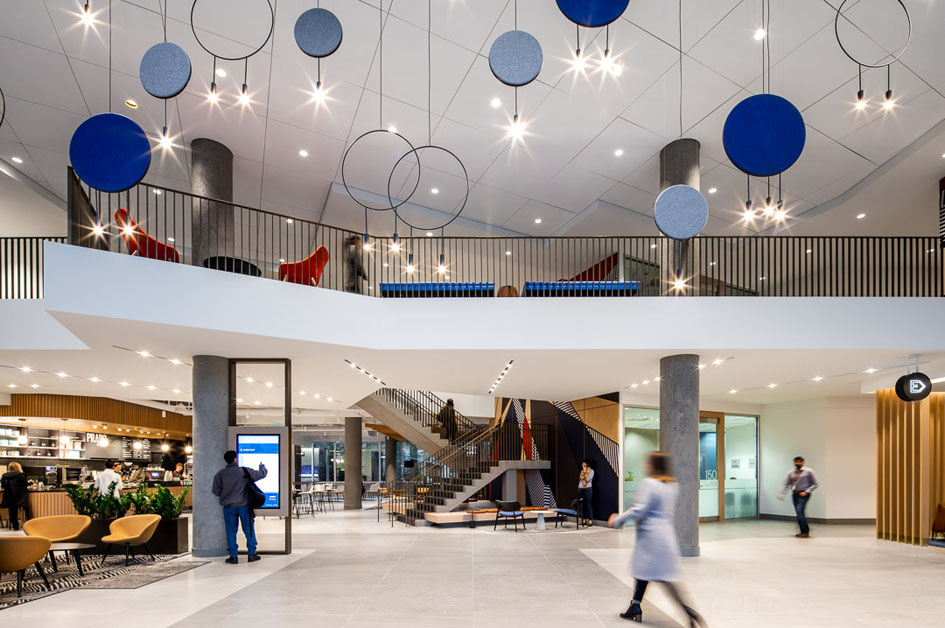
Spear Street Capital in Burnaby had a dated and uninspired lobby. The three primary goals of this project for SSDG Interiors were to activate the large main lobby of this suburban property, provide new tenant amenity space, and increase leasing interest in the building. The existing lobby was a large, open space with limited seating that was only used occasionally.

To establish the project’s design direction, the design team developed a visual response to the owner’s three design guidelines: create an “energetic and dynamic” space, capture a sense of “ideas in motion”, and define “the new suburban”.

These ideas were distilled into a goal of creating the illusion of movement shaped by user experience, which was brought to life through the concept of bike spokes.  Repetition of closely spaced linear and radial lines create a sense of movement as tenants navigate the space, like the blur of a bike wheel in motion.  When the users are static, the space becomes static, like a stopped wheel.

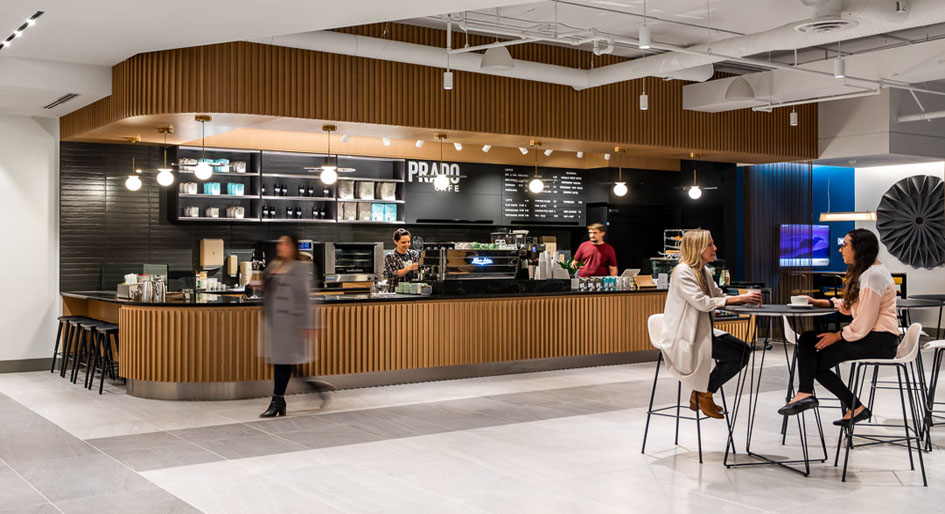
The next challenge was to develop a layout that would activate the space. Three categories of seating were developed based on the length of stay: short, medium and long.  Short stay groupings were identified as touch-down points close to the main entry and the new café kiosk, featuring high-top tables and stools, keeping users at eye level with passing tenants while perched near main circulation paths.

Medium stay seating groups were created to provide lounge spaces and comfortable seating for coffee breaks or quick meetings, and were dispersed through the central area of the lobby and lounge. Lastly, the long stay seating groups were envisioned as spaces to enjoy lunch or to provide an alternative workspace.  These zones were located deeper into the lounge, and feature comfortable seating with accessible power.

Overall, the completed workplace renovation has been a huge success, both for the building owner and the tenants.

The project earned SSDG Interiors a 2020 IDC Value of Design Award of Merit in the category of Innovation in Workplace Design.


Photos by Upper Left Photography

The power of paper products

Travellers around the world check into hotels every day, hoping for a pleasant experience that meets or exceeds their expectations and makes them feel at home. Cleanliness goes a long way in making guests feel welcome and encouraging them to revisit a property or recommend it to others. Specifically, it’s key to maintain cleanliness in hotel restrooms, both those within guest rooms and in common areas such as the lobby or in-house restaurant. Identifying common washroom-related complaints, understanding their potential consequences, and implementing effective remedies can help hotels impress guests and reduce the frequency of negative reviews.

Common hotel washroom complaints

Criticisms of hotel washrooms often fall into two categories: appearance and quality. Appearance doesn’t just apply to current guests – it can impact prospective guests when they are deciding where to stay. A 2017 Statista survey found that 84 per cent of respondents view cleanliness as “very important” when selecting a hotel for a leisure trip. Once patrons check-in, they will immediately notice when washrooms are not thoroughly cleaned. From dirty floors to lingering odours, there are visual and even olfactory cues that can signal a lack of attention around maintenance.

When housekeeping staff prioritize and achieve sparkling cleanliness in washrooms, guest rooms, and beyond, this demonstrates that the hotel cares about the guest experience.

The quality of washroom products stocked in a hotel’s restrooms can make a real impact on guests’ perception of the business as a whole. When it comes to toilet paper, Americans are generally in agreement on what attributes they find most desirable. According to a Harris Poll, 90 per cent of Americans say strength and absorbency are important in public washroom toilet paper and more than 80 per cent reported softness is important. Hotels should seek out products that have each of these qualities – there are even products on the market uniquely designed to limit the separation of plies and tissue tears for a more pleasant experience. It is also crucial, especially in upscale hotels, for toilet tissue to achieve a softer, even luxurious, “at-home” look and feel. When hotels ignore guests’ preferences, especially those as unanimous as the importance of strong, absorbent, soft toilet paper, they set themselves up for customer complaints.

Potential consequences

Hotels understand the importance of online reviews and the power they have on their business, for better or for worse. Take the example of Adele Gutman, whose work with the Library Hotel Collection has helped the properties consistently rank at the top of TripAdvisor lists, with nearly 90 per cent five-star reviews. As reported by Business Insider, Gutman’s strategy revolves around being ultra-attentive to activity on online platforms and directly responding to all complaints in a timely manner. Her approach also focuses on “making a good first impression,” a task that arguably only a clean hotel with clean washrooms can accomplish.

Just as glowing reviews can lead to positive outcomes for a hotel, negative reviews can impact future profitability. Consider that more than half (56 per cent) of respondents in a Sofidel-Harris Poll survey said they would have a negative perception of a hotel with a clogged toilet. Toilet clogs, empty paper towel dispensers in public washrooms, and dirty surfaces may not always be avoidable. However, managers and their housekeeping teams can take steps to both reduce their frequency and address them swiftly.

There is a possibility that negative reviews can accumulate to the point of receiving publicity. Hotels that prioritize cleanliness, especially in guest rooms and public washrooms, have a better chance of preventing this worst-case scenario than those that don’t.

Reliable remedies

Hotels should consider the following strategies for reducing the number of customer complaints:

  • Impress guests with cleanliness. If hotels can provide complete and consistent restroom cleanliness, there is no telling how many complaints they may avoid as a result. However, even with a well-trained and competent housekeeping staff, sometimes issues arise quickly and unexpectedly, such as toilet clogs. This is where product selection is key – there are paper products designed to actually prevent clogs from occurring. Once the paper makes contact with the toilet water, it produces safe microorganisms that eat away at the dirt and grime that builds up in pipes. Regular use of this toilet paper helps to reduce the risk of toilet clogs.
  • Limiting the occurrence of toilet clogs also helps hotels avoid the unsightly messes, repair and labour costs, and foul odours that come along with these incidents. According to another Harris Poll, foul odours in a hotel would negatively influence three in four Americans’ opinions of that business. In addition, 56 per cent of Americans say after experiencing a foul odour in an organization’s facility, they would assume the facility is not clean.
  • Select quality products that align with your brand. If you aim to offer high-quality service and a memorable experience for guests, select products that align with these goals. High-quality towels in guest rooms, along with strong, absorbent toilet paper and luxurious toiletries, will help create a welcoming environment. To further preempt complaints about dirty restrooms, consider paper products that provide maximum absorption for maximum cleanliness. Increased absorbency in both paper towels and toilet paper can lead to an overall reduction of waste. For public washrooms in lobbies or common areas, consider paper towel dispensers that automatically trim each towel to a reasonable length for drying hands. This feature limits the potential mess in the washroom by constraining the ability of restroom users to take excessive paper towels, which nearly a quarter (24 per cent) of Americans admit to doing, according to another recent Sofidel survey.

Washrooms to remember

First and foremost, hotels must keep in mind the most common washroom complaints and the negative effects these can have on brand image. Managers should implement a housekeeping program that prioritizes proper washroom product selection and thorough and regular cleaning. High-quality products that support hygiene and cleanliness can both impress guests and minimize the occurrence of negative online reviews about washrooms. When hotels provide high-quality paper products that deliver strength, absorbency, softness and cleanliness – and employ a committed staff to carry out an effective and thorough cleaning program – it makes guests feel like they have arrived at their home away from home. That feeling, above all, is what guests truly want.

Fabio Vitali is vice-president of marketing for the away from home business at Sofidel, a world leader in the manufacture of paper for hygienic and domestic use, including its Papernet brand.

Ontario Healthcare Housekeepers Association merges with ISSA Canada

The healthcare housekeeping industry in Ontario is applauding the merger of the Ontario Healthcare Housekeepers Association (OHHA) with ISSA, the worldwide cleaning industry association. As OHHA joins ISSA’s Canadian division, ISSA Canada, the association will now be known as OHHA, a Division of ISSA.

Formed in 1957, OHHA is an association dedicated to the advancement of the healthcare housekeeping industry as an integral partner of any team caring for patients and residents in both hospitals and long-term care facilities in Ontario. OHHA has delivered on its mission by providing housekeeping management staff, lead hands and frontline staff with the tools, educational resources, and training to upgrade their qualifications as true professionals.

“We are so pleased to have OHHA and its members join our growing ISSA family,” said ISSA Executive Director John Barrett. “It is without question a union of immense strategic importance not only to the healthcare industry in Canada, but in North America as well. This merger further demonstrates our commitment to all sectors of the cleaning industry worldwide.”

According to Wendy Boone, Executive Director of OHHA, “It has always been the goal of our forefathers to become a national organization, and we can now see this goal coming to fruition.”

“This is such an exciting opportunity to ensure the OHHA remains strong and continues to be the leader in the health care housekeeping and environmental services profession,” Boone said. “Not only will we be able to elevate our members in Ontario with the highest-quality educational resources to succeed, but we will be capable of servicing health care housekeepers across Canada.”

All OHHA members who are current with their dues will be automatically transferred to ISSA’s OHHA membership category. Active OHHA members gain access to all the benefits of both ISSA and ISSA Canada, including expanded educational opportunities, market exposure, networking events, business tools and resources, certifications and much more.

IEHA, a Division of ISSA, which serves executive housekeepers at commercial, industrial, institutional and health care facilities, is delighted to welcome Wendy Boone and OHHA into the family.

“This new collaboration will allow OHHA to have a broader reach in Canada, and allow members to have expanded resources and educational opportunities,” said IEHA Executive Director Michael Patterson. “We look forward to assisting Wendy and her team in accomplishing OHHA’s goals, and providing them with a platform to be part of a global initiative to bring awareness and growth to the health care housekeeping industry.”

The merger further demonstrates ISSA Canada’s initiative to unite all facets of the Canadian cleaning and sanitary maintenance industry and help change the way the world views cleaning.

“With OHHA standing alongside ISSA and ISSA Canada, we can ensure the long-term success and stability of the health care housekeeping and environmental services industry in Canada,” said ISSA Canada Executive Director Mike Nosko. “OHHA has a great leader in Wendy Boone, who has the vision and drive to take this industry to the next level. Additional services and added marketing support will provide further value to the successful OHHA educational platform, which will help grow membership across Canada. This is truly an opportunity to have a great voice and we look forward to supporting the OHHA.”

OHHA officially signed an agreement of dissolution and assumption with ISSA on October 1, 2020. The association has now begun the process of dissolving the corporation and transferring its assets and liabilities to ISSA in accordance with Canadian law.

SOURCE: ISSA Canada

Kamloops new patient care tower tops off

Royal Inland Hospital’s (RIH) new Patient Care Tower in Kamloops hit a milestone as crews have completed the concrete phase of the project, reaching its full nine-storey height.

While following COVID-19 protocols, RIH staff members, stakeholders, funding partners and EllisDon team members attended a ‘topping off’ ceremony celebrating the installation of one of the final beams of the new tower.

A smudging ceremony was performed by Tk’emlups te Secwépemc on the beam, and attendees were invited to sign it before it was lifted by crane to be installed into its permanent location.

The new state-of-the-art tower is a $417 million project that will feature single patient rooms, child and adolescent mental health services, maternal and child health services, respiratory therapy services, surgical suites, a mental-mental and substance use inpatient unit, and rooftop helipad.

The Patient Care Tower project will take place in two phases. Phase 1 will bring Royal Inland Hospital up to current standards of care, improving working conditions, as well as infection control and prevention measures.

Phase 2 will include significant renovation and expansion to the emergency department, pediatrics, post-anaesthetic recovery and the morgue. New parking stalls will be added to the site.

Designed by Parkin Architects Ltd. and Kasian Architects, the tower is targeting Leadership in Energy and Environmental Design (LEED) Gold certification.

Construction began in September 2018.The building is expected to be completed by the summer of 2022. The RIH PCT is a P3 project, which will see EllisDon Infrastructure maintain the Kamloops Patient Care Tower once construction is complete for a term of 30 years.

Once the Patient Care Tower is complete, Phase 2 renovations will begin with a planned completion date in the fall of 2024.

The Wedge tower starts construction in Victoria

The Wedge, a sustainable new residential tower, in Victoria, B.C. has started construction and is anticipated to complete early 2023.

The 15-storey tower was designed by San Diego and Vancouver-based AVRP Skyport and is being built by Blackrete Builders Inc.

Located at 952 Johnson St. and 1400 Vancouver St. in downtown Victoria, the project by Cox Developments features 93 residences. It is designed to achieve LEED Platinum certification, with numerous eco-friendly elements like water conservation, active on-site power generation, sustainable materials, natural ventilation, daylighting, and strategic sun control.

The Wedge was designed to capture views to The Strait of Juan De Fuca while preserving a historic chapel on the same city block. It also features a unique angled eastern façade that will allow the historic mid-century modern chapel to remain surrounded by a garden.

“Many times, the best architecture emerges when there are unique design challenges.  These obstacles force designers to think creatively and find solutions for that specific development. Certainly, that was the case with The Wedge.  Finding a way to preserve the historic chapel and maximize views of Victoria’s natural beauty sparked the idea for the distinctive wedge-shaped design,” says AVRP Skyport founder and CEO Douglas Austin.

The development recently won a Gold Nugget Grand Award as the Best On-The-Boards Multifamily Community.  The Gold Nugget Awards is considered one of the most competitive and prestigious design competitions, which recognizes outstanding architectural design and planning achievements in more than 50 building categories.

“We approach every new project with the goal of creating the best building that can be built on that site.  Design is of paramount importance to us.  The Gold Nugget Award win is truly an honor because it recognizes our bold vision and validates that we have accomplished what we set out to achieve.  The Wedge really is the best project for this site, and among the best designs in North America,” says Dan Cox, president with Cox Developments.

Amazon turns to Winnipeg’s last mile

Amazon Logistics is targeting Winnipeg’s last mile with a new delivery station near the city’s James Richardson International Airport. The 113,000-square-foot facility, slated for 2021 completion, will be the company’s first distribution hub in Manitoba.

“Manitoba is a great place to do business and we thank Amazon for its investment and for showing confidence in our economy,” says Ralph Eichler, Manitoba’s Minister of Economic Development and Training.

Provincial officials are welcoming the development, which is projected to create direct and indirect employment in parcel sorting and delivery services. With the new facility well-located in the Inkster Industrial Park to receive inbound shipments from other distribution centres, Amazon will rely on third-party agents to deliver packages to Winnipeg homes and businesses.

“We are excited to continue our growth in Canada,” notes Tushar Kumar, regional director, last mile logistics operations for Amazon Canada. “This new delivery station will allow us to provide fast and efficient delivery for customers, and provide hundreds of job opportunities for the talented local workforce.”

Claiming research and development tax credits

The construction industry is bracing itself for the next stage of COVID and for what that could mean for workers, client project start dates and supply chain continuity.

But even if projects suffer delays, construction companies can protect their finances by applying for government incentives which are the reward for innovative industry-improving behaviours.

Many construction and engineering firms will have been innovating over the past few years and there is a good chance they will have neglected to claim a valuable government tax incentive that often goes unnoticed.

Tax incentives, administered by the Canada Revenue Agency (CRA) for Scientific Research and Experimental Development tax credits — or ‘SR&ED’ for short — are often worth hundreds of thousands of dollars.

They can be claimed for up to two years after the tax year in which the work took place. This means you can go back and claim money from the period before COVID when you were probably too busy to be aware. Crucially, the definition for R&D is also relatively wide. Plenty of firms will be doing qualifying work without suspecting that it would count. So let’s look at the criteria.

To qualify we are looking for any work that involves “systematic investigation or research that is carried out in a field of science or technology by means of experiment or analysis.” It must involve experimental development, but the work itself doesn’t necessarily need to create materials, devices, products or processes. It could just be an improvement to the existing approach to the way work is performed.

Anything that satisfies these three tests is eligible. The work must:

  1. Further technical knowledge or create advancement in the sector.
  2. Overcome scientific or technological uncertainties.
  3. Do something, by design, that other people would find hard or not obvious.

It’s wrong to assume that it is only large firms that will do this kind of work, but you will only know if you ask a competent person to assess your activities.

Examples of work that would qualify in the construction industry include:

  • improving the environmental credentials of building materials;
  • formulating advanced engineering that solves specific design challenges;
  • creating technological solutions involving imaging, VR and mapping.

So what are these innovation incentives worth?

Depending on your province and your business structure, you can claim up to 41.5 per cent of the expenses directly attributed to innovative behaviour. This is made up of a combination of federal and provincial innovation credits and varies by province.

Regardless, these incentives are time bound, and changes in the Alberta program require immediate action, or there is a risk of missing out on significant opportunities.

What are eligible costs?

Most expenses linked to the R&D itself will attract tax incentives. This extends to payments to contractors, materials, salaries, and other staff costs.

However, it is not usually the issue of eligible costs that raises the most problems for businesses, accountants and tax consultants. It is the innovation in context, and whether work meets the definition of R&D, that creates the most uncertainty and normally leads to under claiming — or worse, not claiming at all.

There is no financial risk to companies that want to find out whether their work qualifies for these incentives as most leading R&D consultancies charge contingent fees — where businesses pay a percentage of the value of tax incentives received — and they do this for two main reasons.

Firstly, the devil is in the detail, and the claims themselves can change right up until an investigation of business activity is complete. Secondly, agreeing to fixed charges at the outset doesn’t reflect the level of difficulty involved in this process and doesn’t incentivize the consultant to unearth all qualifying costs.

This approach is the best way of placing the fewest barriers between a company and the maximum benefit available. Those who don’t qualify lose nothing while, for some firms in a time of economic turmoil, it will mean the difference between success and failure.

Richard Hoy is president of specialist tax consultancy Catax Canada, based in Vancouver. You can reach him at [email protected].

AAA offers Experienced Interior Designer Pathway

The Alberta Association of Architects (AAA) has created the Experienced Interior Designer Pathway (EIDP) to allow interior designers with extensive experience to become Licensed Interior Designers with the AAA under the Alberta Architects Act.

This alternative to the Intern Interior Designer Program is meant to serve the needs of many of Alberta’s interior designers who meet the current requirements and who can illustrate their competency, but who have not previously logged their hours with AAA. The EIDP is a temporary pathway expected to close in 2024.

“The development of this pathway represents many months of work by our dedicated committees and council in arriving at a rigorous and fair method to establish competency. We are so delighted to announce the launch of the EIDP and look forward to welcoming new members to the AAA,” says council member and chair of the interior design advisory committee Donna Assaly.

Benefits of becoming a Licensed Interior Designer include the right to practice the regulated scope of interior design in Alberta and the ability to engage in the activities of the association, including the opportunity to sit on AAA Council and help shape the future of the professions.

This is a significant occurrence, following years of advocacy and discussions between the AAA and Interior Designers of Alberta.

Alberta has a rigorous licensing structure for Licensed Interior Designers in accordance with the Architects Act. Under the Act, Licensed Interior Designers may provide the same services as an architect, except on all matters that affect the exterior shell of a building, environmental separations and exits.

They are qualified by relevant post-secondary education, completion of the international NCIDQ examination, years of supervised work experience, ongoing mandatory professional development and adherence to high professional standards and codes of conduct.

For more information about the EIDP, prerequisites and the application process, please visit the EIDP.

MCA, CIPH welcome federal CIB Growth Plan

The Mechanical Contractors Association of Canada (MCA Canada) and the Canadian Institute of Plumbing and Heating (CIPH) welcome the federal government’s new $10-billion Canada Infrastructure Bank (CIB) Growth Plan to support Canada’s economic recovery, including $2 Billion for retrofits of buildings to make them more energy efficient.

“We are delighted to see that the government acknowledges retrofits are a key part of Canada’s low-carbon transition. Retrofitting is not just good for business, it will help to reduce the proportion of greenhouse gas emissions from the built environment, conserve water, and make places healthier and more comfortable to live and work in,” stated Ralph Suppa, president and general manager of CIPH.

CIPH and MCA Canada are encouraging the government to also invest in skilled trades training, support efficiency by addressing trade barriers, and partnering with provinces and municipalities on public projects. Both organizations believe that the recovery depends on our ability to work together and address issues that could be holding businesses back.

Businesses in the plumbing, heating and mechanical sectors already face challenges recruiting and retaining skilled labour with an aging workforce. Coupled with added costs due to pandemic precautions these businesses will greatly benefit from complementary investments that will deploy more energy efficient products while the economy rebounds and Canada moves toward its goal of Net-zero by 2050.

“Our members want us both to ensure the government keeps its word and gets money flowing to qualified projects quickly,” said Tania Johnston, CEO of MCA Canada.

What Altus Group’s Q3 investment trends survey tells us

The latest results from Altus Group’s Q3 Investment Trends Survey (ITS) for the four benchmark asset classes show that the Overall Capitalization Rate (OCR) was little changed at 5.14 per cent, but grew from 5.01 per cent in the same quarter in 2019.

While multi-res assets still appeal to investors, demand continues to be influenced by pandemic effects, such as enduring international travel restrictions, continued threats of rent arrears, and the projected end of CERB and mortgage deferrals as we move into the final quarter of 2020. Suburban apartment cap rates fell to 4.39 per cent this quarter, down from 4.43 per cent in the previous quarter, but remaining stable compared to the same quarter last year.

Vancouver and Montreal were the lone markets with an increase in cap rates, while Edmonton experienced the largest drop from the previous quarter. The greatest increase year-over-year was recorded in the Vancouver market.

Market conditions

While the impact of COVID-19 on market conditions persists, investors are cautiously optimistic as the end of the year approaches. Strong industrial demand due to the pandemic has allowed that sector to remain resilient, while the office sector continues to face unprecedented challenges.

Despite businesses slowly re-opening over recent summer months, the retail and entertainment sector anticipates additional challenges moving forward as the weather gets colder, leaving less room for outdoor physical distancing. Although there has been a decrease in total transaction volume—down by 20 per cent for the first half of 2020 compared to 2019—overall commercial real estate remains stable as deals continue to close.

With a second wave now declared in some areas, as well as the end of some government assistance programs, the delay in real estate decisions may continue.

Employment trends

As predicted by the Bank of Canada earlier this year, economic growth has resumed, but at a slow rate. Unemployment levels have steadied after reaching a record high in May, but the Conference Board of Canada forecasts that some jobs will not return, requiring the creation of additional jobs in new segments.

The board reports notable employment gains within the accommodation and food services sector as businesses made adjustments to meet new avenues of demand—such as take-out and outdoor dining, as well as in the manufacturing sector which is well in alignment with increasing demand for industrial space across the country. Still, the Canadian unemployment rate sits at 10.2 per cent at the end of August, according to Statistics Canada.

Interest rates

Interest rates continue to remain low and are forecasted by the Conference Board of Canada to stay that way long-term as the Canadian economy is unlikely to fully recover until 2022 or 2023. Food anchored Retail Strip and Single-Tenant Industrial are the top preferred products this quarter.

The location barometer for all available products indicates positive momentum within the Calgary, Montreal and Halifax markets, while momentum has slowed in Vancouver, Toronto, Ottawa and Quebec City, and remains stable in Edmonton. Toronto and Vancouver remained among the top preferred markets, now accompanied by Montreal. With the ongoing struggles in the Alberta economy, Edmonton is the least preferred market by investors.

For the full report on Q3 investment trends, visit: https://www.altusgroup.com/data/insights

Closing the FM skills gap during COVID-19

Heading into COVID-19 lockdown in March ignited an unprecedented time for facility managers—changing them both professionally and personally.

Businesses had to react quickly—setting guidelines to ensure ongoing activities as well as the safety of their employees and customers. Facility managers’ core competencies, knowledge, strategic and tactical skills acquired during FM education and training have instinctively come into play for those working on-site or remotely. Facility staff had to up their game—ensuring enhanced safety measures were in place to handle physical distancing and that security and sanitization aligned with different employee work hours and business hours of operation.

Potential weaknesses also surfaced along the way, some requiring attention as we move into workplace re-entry. As such, now is an opportune time to validate and/or assess a FM’s expected skill set.

Hard FM Skills. Soft FM Skills

Skill, the ability to do something well and to perform an activity in a competent manner, includes both hard (technical) and soft (habits or personality traits) expertise. Facility managers should first ask what skills need to be enhanced or improved, looking at situations that could have been handled differently or better.

FM hard skills were evident during the pandemic, ensuring that the continuous maintenance, safety and security measures were in place and/or implemented and in compliance with the Ontario Health and Safety Act (OHSA), and also crucial renovation and/or construction projects were proceeding that followed strict COVID-19 protocols.

FMs took the opportunity to rise up as leaders, overseeing the physical plant and employee and customer experience. Intuitively, these skills ramped up very quickly.

Lagging behind during the pandemic were soft skills, such as communication (oral or written), team work (group settings in the workplace to accomplish tasks quickly and effectively), adaptability and flexibility (related to embracing and rolling with change), and interpersonal skills (to interact and communicate with co-workers, management and customers).

Lessons Learned Along the Way

Ongoing communication with management and staff is crucial during the pandemic. Changes in work routines—working from home and varying work hours—posed challenges for companies trying to stay abreast of the latest news and government directives. Staying connected with current messages and directions about service expectations was an obstacle as the workforce moved homebound. The lack of technology, equipment and systems and family life hindered regular contact.

Teamwork and collaboration required some new innovative ways to seek team input and ideas online (e.g. video conferencing) versus the traditional round table discussion at the workplace.

Survival mode was a quick adjustment for many—remembering that not everyone is able to adapt to change quickly. Many were seeking out a process and guidance to make it through the pandemic.

Interaction with co-workers was based on priority and regular communication was minimal. Social distancing placed restrictions for groups to gather face-to-face. The interaction proved to be a stimulus for productivity and generating ideas.

Looking back, FMs should review what worked during the pandemic, what skills were missing or weaker than anticipated and any lessons learned to improve business operations. It is critical that FMs be part of a back-to-work strategy to voice their ideas, suggestions and areas for improvement that can all be applied going forward.

As we reopen, FMs are in high demand to ensure that buildings are safe for internal and external stakeholders. FMs need to take charge and remain strong— showing the key skills and knowledge FMs bring to various businesses.

Now is the time to shine—lifting companies up and into an unpredictable future in need of strategic leadership from FM professionals.

Marcia O’Connor is president of AM FM Consulting Group. She is also lead consultant and instructor for the University of Toronto’s facilities management certification program.

Cortellucci Vaughan Hospital celebrates ‘substantial completion’

Mackenzie Health celebrated the substantial completion of the new Cortellucci Vaughan Hospital, the first new hospital to be built in Ontario’s York Region in the last 30 years.

The milestone signals the completion of the bulk of construction on the project and the start of months of work ahead to ensure the hospital is ready to provide patient care.

When it opens in early 2021, Cortellucci Vaughan Hospital will double access to care for the communities of Vaughan, King and Richmond Hill, and add necessary capacity to the health care system.

With the addition of Cortellucci Vaughan Hospital, Mackenzie Health will offer full-service emergency departments and medicine and surgery programs at two hospitals to help alleviate the ever-growing pressure on resources in the health system. Some specialized care programs and services will be based at only one of the two hospitals — such as the Woman and Child program at Cortellucci Vaughan Hospital and the inpatient Rehabilitation and Complex Continuing Care programs at Mackenzie Richmond Hill Hospital.

Construction on Cortellucci Vaughan Hospital broke ground in October 2016. The project was delivered by Plenary Health, along with partners PCL Constructors Canada Inc., Stantec and Johnson Controls. The project reached substantial completion on August 26.

“On behalf of the Plenary Health team we are thrilled to hand the site over to Mackenzie Health so they can transform this smart building into a hospital,” said Kelly Wallace, vice-president and district manager, PCL Constructors Canada Inc. “The passionate pursuit of a shared vision motivated us to overcome any challenge, and I’d like to commend over 1,000 women and men whose commitment to safety enabled us to complete this hospital for the community during a global pandemic, with over three million hours worked without a lost time injury.”

Now begins the task of turning the building into a fully functional hospital so that it can safely open its doors to patients. This includes installing and testing thousands of pieces of equipment, training more than 3,000 staff across both sites, and developing and simulating a number of mock patient scenarios.

“In just a few short months’ time, the City of Vaughan will have its first hospital, and what a hospital it will be,” said Maurizio Bevilacqua, Mayor of Vaughan and Chair of the Mackenzie Health Foundation’s Ultimate fundraising campaign. “Our residents will have access to Canada’s first smart hospital with a team of expert nurses and physicians providing the ultimate in care.”

To date, the provincial government has invested $1.3 billion for construction of the project. An additional $178 million has been raised from the community to date as part of Mackenzie Health Foundation’s $250 million Ultimate campaign.

The science behind contaminant vapour barrier systems

Since the recognition that the intrusion of contaminant vapours into buildings was a potential health issue, the science of contaminant vapour intrusion mitigation (VIM) has steadily improved, public awareness has increased, regulatory guidelines have become more restrictive, and an increasingly competitive market has demanded increasingly more cost-effective and innovative solutions.

Vapour intrusion is the movement of chemical vapours from contaminated soil and groundwater into nearby buildings. Now included as part of most environmental assessments, vapour intrusion pathways include cracks in concrete slabs, gaps around utility lines and sumps. Vapours can even pass through concrete, as it is naturally porous. Once inside a building, these vapours can be inhaled and cause immediate short-term and/or long-term health risks ranging from respiratory issues to cancer.

What can be done?

There are a variety of methods used to mitigate vapours which are generally classified as either passive or active. Passive methods prevent the entry of vapours into the building by sealing potential entryways, installing barriers or creating a passive venting layer. Active methods work by creating an active pressure differential between the inside of the building and outside. These include sub-slab depressurization systems in which blowers are connected to a suction pit underneath the slab that vents vapours outdoors or conversely, in-building over-pressurization in which a building HVAC system is adjusted to increase the pressure indoors relative to the sub-slab area.

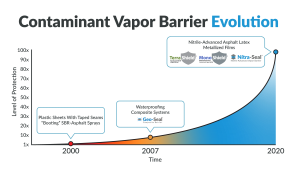
Amongst all these approaches to vapour mitigation, contaminant barriers have seen the most technological advancement. Starting in the 1990s, contaminant vapour barriers began in the form of adaptations of simple waterproofing membranes. However, advancements in material science over the past several years has resulted in significant improvements in vapour barrier design and performance — offering much safer and healthier built environments.

Vapour barriers

Today, there are three basic qualities to a good contaminant vapour barrier:

  • The barrier can maintain a low contaminant vapour diffusion or permeation rate (it blocks contaminant transport).
  • The barrier material will not degrade.
  • The barrier can withstand physical stress both in its permanent state and during installation.

The barrier can maintain a low contaminant vapour diffusion or permeation rate

Modern vapour mitigation systems employ a base layer comprised of an innovative metallized film sandwiched between polyethylene layers and the use of a spray-applied nitrile-advanced asphalt latex that seals penetrations and seams far more effectively and easily than comparable tape-based or heat-welded systems, and with much lower contaminant diffusion rates than generic waterproofing asphalt sprays.

To achieve the lowest contaminant diffusion rates available in a barrier system, scientists incorporated aluminium foil which is widely known to stop the diffusion of almost any common organic pollutant. Laboratory results indicate that the base layer for these systems offers 100 times more protection against trichloroethylene (TCE) vapours, a solvent commonly found on former industrial sites, compared to a high-density polyethylene (HDPE) base layer.

In addition, scientists incorporated nitrile into the latex asphalt core they use to seal the base layers. Used in other products such as chemically resistant medical gloves, the addition of nitrile resulted in a further reduction in permeation rates. Studies showed that the spray-applied nitrile-advanced asphalt latex offer 10 times improved performance in TCE vapour resistance versus a comparable styrene butadiene-based (SBR) asphalt core, which is typical in materials employed over the past 30 years.

The barrier material will not degrade over time

In order to meet this criterion, the materials selected for these new vapour mitigation systems are resistant to degradation. While there are some species of microbes that are capable of consuming latex or polyethylene, the rate of biodegradation is exceedingly slow and the environment in which these systems are installed would not be conducive to their growth. The threat of ultraviolet light degrading the material is a non-issue as the barriers are shielded from sunlight.

Modern vapour barrier systems employing aluminium foil protect the metal from corrosion by encapsulating the metal in polyethylene or polypropylene (polyolefin), covering the sheet with a geotextile, and then sealing all edges and seams in layers of nitrile-advanced asphalt latex. However, even if the aluminium itself were to be left exposed to air and water, due to a puncture for instance, a thin layer of protective aluminium oxide would form in a process referred to as atmospheric corrosion or passivation at pH levels generally encountered in soil waters.

Research has been conducted to determine the potential for corrosion failure of aluminized films coated with fresh concrete and subjected to moisture. Results show that even when an aluminized sheet was damaged exposing the metal layer, the geotextile layer placed between the aluminized sheet and the concrete protected the aluminium from corrosion.  Thus, modern aluminium containing films, when correctly installed with geotextile and proper seaming are very robust and not subject to degradation by atmospheric or alkaline-induced corrosion.

The other type of corrosion that can impact aluminium is galvanic corrosion, induced by the oxidation-reduction reactions between dissimilar or incompatible metals. This is exacerbated by the presence of electrolytes such as dissolved salts. However, with modern vapour barriers the aluminium layer is completely insulated from any galvanic corrosion by the polyolefin encapsulation, and any exposed edges are completely sealed in nitrile-advanced asphalt latex — eliminating any potential for dissimilar metal or electrolyte contact, thus ruling out the potential for galvanic corrosion.
Vapour barrier

The barrier can withstand physical stress both in its permanent state and during installation

The novel barrier systems’ nitrile-advanced asphalt latex layer, which creates highly effective seals around slab penetrations, was designed to be puncture-resistant and reduce the chance of damage occurring after installation and prior to concrete placement.

The scientists and engineers who developed these new vapour barrier systems focused on multiple features to create a highly robust barrier able to withstand the traffic of a construction site and to improve the strength of the aluminium foil. These features include the incorporation of a reinforcing polyester grid laminated within the membrane, the sandwiching of the aluminium between high tensile strength polyolefin layers, and finally a geotextile laminated into the underside of the barrier and placed above the barrier system. These additional protective features work together to create a base layer that is quite durable and able to handle a wide variety of stresses during installation as well as post-installation stresses such as ground-settling.

In a 2014 study, it was found that a minimum of 0.03 kN/meter of tensile strength was required to withstand 100 mm of settling. The tensile strength of these new barrier systems is at least 200 times this minimum. In any case, if significant settling is expected, it is generally a good practice to install supports for a barrier as opposed to relying solely on its tensile strength. In the absence of such supports, these new barriers can already handle loads that are orders of magnitude higher than what is generally required.

Between the nitrile-advanced asphalt latex and the aluminium foil-membrane, these vapour barriers are also less likely to incur damage during construction, thus avoiding time-consuming repair work and maintaining the overall integrity of the system.

As urban development pushes forward and the need for safe living and work spaces continues to rise, so too will the need for contaminant vapour intrusion mitigation. This new state-of-the-art suite of vapour barrier systems is designed for easy installation and cost efficiency, and the science behind them represents the next step in the evolution of vapour intrusion mitigation.

The environmental industry is continually seeking novel and innovative ways to protect human health, the only question is where the science will take us next.

Scott Wilson is the chief executive officer and president of REGENESIS®, Inc.— the global leader in advanced technologies for contaminated site remediation. Since 1994, REGENESIS has developed and commercialized a range of proven soil, groundwater and vapour intrusion products to treat a wide variety of contaminants. It’s Land Science® division was established in 2008 to address the increasing occurrence and regulation of vapour intrusion. It provides scientifically proven solutions that offer environmental engineering firms and developers cost-effective and innovative vapour mitigation technologies for environmentally compromised properties. For more information, visit: www.landsciencetech.com.


Toronto tightens restrictions on long-term care homes

Effective October 5, the City of Toronto’s Long-Term Care Homes (LTC) will be restricting entrance to staff members, essential visitors and essential caregivers. This is the result of recent measures announced by the provincial government to ensure that all long-term care homes in areas of highest community spread continue to keep residents safe from the rising threat of COVID-19.

“The health, safety and well-being of residents, clients, families and staff members in the City’s long-term care homes remains at the highest level of our pandemic priority list,” said Mayor John Tory. “The City’s long-term care homes continue to be at the forefront of advanced COVID-19 mitigation and prevention measures, often implementing these protocols before they become the industry standard.”

An essential visitor includes a person visiting a very ill or palliative resident. An essential caregiver provides direct support to the resident, such as feeding, personal hygiene or assistance in decision-making. This person could be a family member, from the resident’s chosen family or a privately-hired caregiver. Essential visitors and essential caregivers may visit even if the home is experiencing an outbreak.

Essential caregivers must verbally attest to home staff that they have tested negative for COVID-19 within the previous two weeks and have not subsequently tested positive; they must pass active screening, including taking their temperature before entering the home; and must receive training on COVID-19, infection prevention and control (IPAC) and personal protective equipment (PPE) practices. All essential caregivers, up to two per resident, must be registered with the LTC home.

Indoor and outdoor visits are cancelled. Virtual visits will continue and their frequency will be increased to meet the demand for residents without essential caregivers.

As the COVID-19 pandemic continues to evolve and impact people around the world, the health, safety and well-being of the residents at City of Toronto’s long-term care (LTC) homes, their families and the staff members who look after them continue to be a priority.

The City’s 10 long-term care homes are focused on following Ministry of Health, Ministry of Long-Term Care and Toronto Public Health (TPH) guidelines and sector best practices to keep residents and staff members safe.

The City’s long-term care preventative measures include:

  • Enforcing enhanced active screening early, including taking temperatures twice daily for anyone entering the LTC homes
  • Enforcing masking protocols at all times
  • Enhancing infection, prevention and control (IPAC) practices and procedures including staff education, high-touch cleaning and disinfection

Mitigation:

  • Active surveillance and precautions, including isolation of residents if appropriate and necessary
  • Maintenance of physical distancing at all times
  • Use of personal protective equipment – mask, isolation gown, gloves and eye protection
  • Staff members are tested every two weeks and do not come to work or return to work until they are symptom-free
  • Staff have declared a single employer and are only working in one LTC home for the duration of the pandemic
  • Working with TPH and hospital partners to perform independent IPAC audits in the City’s LTC homes.

Staffing is also a major focus. As such, in City of Toronto LTC homes, resources have been added by reassigning divisional and management staff, maximizing front-line staff availability, hiring and redeploying staff from other City divisions and using overtime, if required.

Regular communication with all stakeholders ensures any suspected or confirmed cases of COVID-19 are communicated to residents, their families and staff members at the home.

The City’s website is updated daily with the latest health advice and information about City services, social supports and economic recovery measures. Check toronto.ca/covid-19 for answers to common questions before contacting the Toronto Public Health COVID-19 Hotline or 311.


Productivity cannot be forced

The above is a famous quote from Steve Jobs to remind managers that they have an important role to play in enabling their staff to achieve optimal productivity but putting the right resources at their disposal.

As the second wave of the COVID-19 pandemic is starting to hit, the responsibility of providing a safe environment for clients and tenants in office buildings becomes more onerous for property managers who already have to manage their operations with very limited budgets. Even more a challenging balancing act when it is necessary to mobilize more staff, modify work routes, raise standards, and increase daily cleaning and disinfection frequencies.

To enable large-scale disinfection operations, several manufacturers are proposing innovative, high-performance, and effective technological solutions against COVID-19.   The market is literally flooded with all kinds of devices that are supposedly easy to use! With so many models and considering the additional investment it represents, the purchase of a new tool must be well thought out.

To satisfy your needs, the tool must first meet your conditions of use

In order to make the right choice of equipment, it is absolutely necessary to make a thorough evaluation of your specific needs, taking into account your environment, your clientele, the risks associated with your building and the skills of your employees.

Ask yourself certain questions:

  • What is the size of the unit?
  • If it is portable, what is its weight?
  • How much does it weigh when the tank is full?
  • Does it need to be powered, and if not, how long is its battery life?
  • Is the unit compatible with all disinfectants?
  • How should it be maintained or stored?

It is not enough to provide the most efficient tool; you must provide the appropriate tool that will allow your sanitation teams to be more efficient. Remember that the machine itself is not doing the disinfecting, but rather the person handling the machine! If your purchase is not followed by training your employees on proper operation, you will have made an expense rather than an investment.

Good communication remains an affordable yet valuable tool

Any change requires sustained support. Sound and steady communication is invaluable and is part of your toolbox if you are concerned with ensuring the changes are properly implemented.

Start by communicating the changes you intend to make. Communicate the reasons and motivations behind these decisions. Communicate the new standards and means that you will put at their disposal. Good communication is a bidirectional process. Be attentive to the comments and observations of your teams.

Finally communicate your gratitude to them! A well felt “thank you” is often the tool that will generate the most productivity from your team.

Gestion HB, a Canadian consulting firm who guides, supports, and advises their clients on ways to optimize the operational performance of their organizations in terms of building hygiene and sanitation. For more information, please email [email protected], visit https://www.gestionhb.com/ or call Derek Oliveira (514.316.6723).

Main Street Design Challenge Playbook released

The Canadian Urban Institute (CUI) and the Royal Architectural Institute of Canada (RAIC) have released the Main Street Design Challenge Playbook, a collection of design solutions that can be implemented during and after the COVID-19 pandemic.

The Main Street Design Challenge invited all Canadian residents interested in place-making and design to develop solutions that can help build the resiliency of Canada’s main streets.  Over the past four months, 47 designs were submitted from a wide range of sources, ranging from well-known architects and urban designers to students, planners, community animators, and artists.

The Playbook showcases a range of creative and practical interventions, from masterplans to art installations to modular street furniture. Some examples include:

  • Socially | Equitable | Landscape, by student Joy Olagoke and Subrahmanya Sai Anudeep Mummareddy (photo above) – a design that transforms outdoor spaces, the undersides and sides of buildings into canvases for art and culture that can be explored safely (Calgary, AB)
  • Fresh Start: Back To Basics by community animator DeeDee Nelson, who gives 10 actions to build trust in community (Vancouver, BC)

The Main Street Design Challenge reflects the importance of design in revitalizing our streets, including kickstarting the economy, fostering vibrant, liveable, and healthy communities, increasing public safety, reducing social isolation, and restoring the public’s confidence to return to streets and public spaces.

“We are thrilled with the uptake from the design community to engage in such an important activity to support vital Canadian main streets,” said RAIC president John Brown, FRAIC.

The Playbook can be downloaded here. All designs are free to use, though contacting the creators is encouraged. The Playbook contains links to implementation details and other information on the CUI website.

“We are delighted to see the range and variety of these design submissions from across Canada, which we hope will be picked up and used to help main streets recover,” said Mary W. Rowe, CEO of CUI. 

The Main Street Design Challenge is an initiative of Bring Back Main Street, a nationally coordinated research and action campaign by the CUI to ensure the people, businesses, and organizations that call Canada’s Main Streets home can recover and emerge from the crisis more resilient than ever.