Articles Archive - Page 375 of 928 - REMINET
REMI

HOK announces two leadership promotions

Ben Fehrmann has been promoted to HOK design principal in Canada. He will oversee the architecture and design teams in Ottawa and Calgary.

Fehrmann’s tenure at HOK is split into two parts. He joined the St. Louis studio in 1999. His projects included the Indianapolis International Airport Col. H. Weir Cook Terminal, Chelsea Arts Tower in New York, Dulles International Airport APM Stations and the St. Louis Lambert International Airport Experience Program.

After leaving HOK in 2006, Fehrmann spent 11 years plotting a comeback. During this time he led his own architectural practice and taught at the University of Kansas (his alma mater) and Washington University in St. Louis.

Fehrmann rejoined HOK as a consultant in 2017 and as an employee in in 2018. Soon after that, he moved from St. Louis to Ottawa to accept a position as the lead design architect on the Centre Block Rehabilitation Project and Parliamentary Welcome Centre. Fehrmann now will be moving again this time to Toronto which, with 110 people, is HOK’s largest office in Canada.

“It’s an absolute privilege to work with our incredible team in Canada,” said Fehrmann. “It’s an honour to be entrusted with this responsibility, and I’m excited for the opportunities ahead.”

Caitlin Turner has been promoted to director of interiors for Canada. She joined HOK’s Toronto studio in 2011 and most recently had been director of design, interiors. Her recent clients have included Cooperators Insurance, Boston Consulting Group, Stryker and Bentall Kennedy.

Turner began her HOK career as an intern student and is especially passionate about mentoring and investing in employee development.

“I’m proud of our interiors practice in Canada and I feel inspired by my colleagues every day,” she said. “I’m excited to try to shake up our established ways of thinking. If we can build on our efforts to create inspiring spaces and solutions that place our clients and their people at the center of everything, we will create a long-term competitive advantage for HOK.”


New rent report looks at GTA neighbourhoods

A new report from liv.rent explores the pandemic’s impact on the cost of rent in specific GTA neighbourhoods, providing a breakdown of the changes observed in Downtown Toronto, North York, Etobicoke, Scarborough, Markham, Mississauga, Brampton, and Vaughan/Richmond Hill since a year ago.

According to the new data, rent for furnished units in Downtown Toronto dropped 25 per cent, and 18 per cent for unfurnished units. The biggest percentage drop in rental prices in Toronto was for three-bedroom apartments, declining on average 14.9 per cent for furnished and 13.9 per cent for unfurnished units.

Of the GTA neighbourhoods listed, Etobicoke was the only one that saw any kind of rent increase for Q1 2021 — up 0.3 per cent for furnished one-bedrooms — but down 8.8 per cent overall. North York, meanwhile, averaged an 11.8 per cent decline across all units types.

Even GTA neighbourhoods historically considered “affordable” were not immune to a drastic drop in rental prices: in Brampton, where the average rent is $555 less than in Downtown Toronto, rent declined by 15 per cent from Q1 2020. The largest drop seen in Brampton was for two-bedroom units, with unfurnished apartments garnering 19.4 per cent less than a year ago.

Vancouver: most expensive city for rent

Additional data shows that Toronto is no longer Canada’s most expensive city when it comes to rental housing: Vancouver has eclipsed Toronto for Q1 2021 with rent averaging $1,783. Across Canada, Vancouver rental prices appeared to be the least affected by COVID-19 and had the lowest percentage drop in overall rental prices from Q1 2020 versus Q1 2021.

Liv.rent methodology

The liv.rent methodology combines outside data from popular listing sites with its own extensive proprietary data. Through the process of excluding duplicate postings, luxury rentals, and rooms and by ascertaining up-to-date asking rents, liv.rent strives to create “the most accurate monthly rent report” in Canada.

The next quarterly report from liv.rent will provide more insights into the changes COVID-19 had on Toronto neighbourhoods by comparing Q2 2020 data to what we’re seeing now in Q2 2021.

Visit https://landing.liv.rent/to-rentreport/ for the full report. 

Pandemic intensifies evolving role of FM

Facility managers are no longer viewed as a back-office function, but rather “a strategic instrument to attract and retain talent and create a great experience,” said Lorri Rowlandson, senior vice-president of strategy and innovation at BGIS. Rowlandson moderated the “Reimagining FM Symposium” at IFMA’s Facility Fusion in April. A panel of multifaceted FM professionals were on hand to share their perspectives on how the pandemic has intensified  industry shifts and how FMs figure prominently into a hybrid revolution.

FM at the ‘centre of execution’

A key point reverberating though the discussion was that building occupants are now driving every decision facility management is making. “FM is becoming critical at providing stewardship across many functions, such as coordinating IT, security, helping develop strategy, managing capital plans,” said Michael Gould, vice-president of project and facilities management at TD Bank, North America.

When scouting potential job candidates, he actively looks at welcoming a number of professions to the FM role. This boosts diversity, which leads to a better performing team.

Experience working in the FM industry isn’t a requirement. The main attributes are: a strategic mindset, relationship management, customer focus, coordination skills, project management, financial acumen, vendor management, and understanding basic construction. “Historically, if you didn’t notice FM, that was success,” he said. “Now, we’re at the centre of execution, strategy and planning, and I think it’s greatly elevated.”

Maximize human relationships for office-goers

Business leaders are imagining how to create a physical environment that allows for collaboration, creativity, innovation, and flexibility for hybrid work, said Enrique Rubio, founder of Hacker HR. He says it’s no longer about asking employees to come to the office as a way to measure productivity; rather, companies are understanding that nothing replaces opportunities for collaboration like “socially close, human relationships.”

The biggest challenge, he said, is bringing to life an effective hybrid workplace that makes people feel safe and maximizes their human relationships with colleagues when at the office, such as high-level meetings or creative collaboration. “If you are going to bring somebody into the office, don’t just bring them in to have a meeting that could have been done via Zoom or email or phone call,” he said. “If you are doing that, you basically lost your opportunity to change your approach to work after the pandemic.”

A place where everyone feels like they belong

At one point in her career, Melissa Fisher, cultural anthropologist and visiting scholar at New York University’s Institute for Public Knowledge, studied the workplace culture of Wall Street. Most recently, she has spent her time chatting with FMs around the globe to understand the organizational and cultural shifts within this “expanded ecosystem of physical and virtual work.”

“After a year spent at home, how can we ensure we have a sustained sense that we belong together, that work is meaningful and our identity is part of it— even if we are seated at our workspace at home,” she said, adding that FMs are perfectly positioned to create cohesiveness across hybrid environments, where everyone from janitorial staff to executives feel part of the corporate culture.

To inform hybrid work models, she notes other cultural shifts that have occurred over the past year. A blurring of boundaries, where people have become caretakers, calls for “a care infrastructure,” which might mean rethinking the built environment—for instance, making space for children. The pandemic also revealed inequalities in the workplace. “How do we recognize the changes at work that have happened to different people?” she said. “People of different jobs, different races, ethnicities and gender? How is that affecting how they work and where? How can we collectively create a culture that creates equity for everyone?”

Amenities like gyms and napping pods are no longer revolutionary. In the shift from personal to social wellness, now it’s about helping people feel safe together. “We know, in the wake of the pandemic, that by wearing a mask, each person is responsible for the other; it’s a collective sense,” she said. “How does that translate into the workplace? We need to think about how the interior of the physical environment sparks and enables and supports social connection, deep connection, respect for one another.”

Preparing people for innovation

In the move towards a hybrid workplace, Cheryl Duvall, regional consulting leader and senior associate at Gensler, said employees have to be really prepared for what it means to be hybrid. She had three recommendations. Take a grassroots approach and survey employees to find out what has been working for them during the pandemic. “Has work-from-home been productive? Do they want to return to the workplace, and more importantly, why?”

Second, kick-start a change management process. “We really have to prepare people for changes that are coming and then determine what technologies will be needed,” she said. Based on Gensler’s research, she predicts people who will be working from the office four to five days per week will receive an assigned seat. Those working from home three days or less will be sharing a seat. Planning for this might include writing workplace etiquette guidelines, for example. Finally, try piloting policy changes before rolling them out at large scale.

Turning change into something positive for the brand

Diversity equity and inclusion are high on the list of must-have FM skills, said Lakisha Woods, president and CEO of the National Institute of Building Sciences. “I have spent almost my entire career in the industry and everytime I walk into a room, I’m the only person who looks like me,” she said. “All the data shows, the more women, more diversity you have in your employee base, in your leadership, the better financial projection of your company and firm.”

More people are desiring to work in settings that invest in well-being and sustainability. Telling the story of your organization is not unlike selling a car, where a salesperson will discuss at great length how safe and valuable a brand is. “Why don’t we tell our own stories about the built environment,” said Woods. “I’ve not seen us, as an industry, look at changes, especially regulation changes and turn it into something positive, and look at how it will benefit society and keep us safe and healthy.”

Taking ownership of cybersecurity

“Our buildings were already becoming more and more digital, and instrumented this idea of the Internet of Things and the Fourth Industrial Revolution,” said Rick Huijbregts, vice-president of strategy and innovation at George Brown College. “The pandemic is perhaps a “wake-up call” to take advantage of all the “digital goodness” running though buildings.

The mis-mash of technologies on the market are staggering. He suggested focusing on measuring performance, having real-time insight and using tools to operate buildings and save money. “The real opportunity is when we start to connect it with the future of work, with human interaction, and think beyond the boundaries of physical space,” he said.

Of utmost priority is the need for FMs to become digitally literate and, most importantly, to take ownership of cybersecurity-related conversations, especially as connected devices help hackers to access enterprise networks or shut down building systems.




ISSA Show Canada 2021 sponsor: CloroxPro

The annual ISSA Show Canada is going virtual on June 17, 2021, with the theme of Facing the Future TOGETHER, recognizing the cleaning industry’s position today, and where we may go from here.

The virtual show will feature keynote presentations, education sessions, supplier technology sessions, and virtual networking receptions.

One of the speakers at the show will be Barley Chironda, Sales Director and Infection Control Specialist at CloroxPro Canada, a Platinum sponsor of the 2021 show.

Barley will host a session called Electrostatic Technology: A New Method for Surface Disinfection which will focus on educating attendees on how to protect their facility with a revolutionary system that helps reduce pathogens like never before.

About Barley Chironda

Barley Chironda

Barley Chironda

Barley a Registered Practical Nurse, as well as the Sales Director and International Infection Control Specialist with Clorox Canada. Barley is typically found engaged in motivating hospital staff, patients and the public on proper infection prevention practices. He also volunteers as the Infection Control Specialist with the Cdiff Foundation and is former IPAC-GTA President as well as IPAC-Canada Social Media Manager. He has also held roles in frontline IPAC, IPAC Management as well Medical Device Reprocessing Management.

Contact Barley at +14164767961, find him on Twitter @barleychironda, or connect on LinkedIn.

About CloroxPro

When The Clorox Company was founded over a century ago, its first customers were professionals who trusted bleach and other commercial cleaning and disinfecting solutions to help stop the spread of disease and infection. Built on this century-long legacy, CloroxPro® was created, dedicated to providing proven commercial cleaning and disinfecting solutions to protect people and their environments.

CloroxPro encompasses professional healthcare, cleaning, and specialty product offerings. From the revolutionary T360® Electrostatic Sprayer System to hospital-grade disinfecting wipes, when it comes to CloroxPro’s portfolio of products, the wide range of solutions reflect a tradition of research and experience in cleaning, sanitizing, and infection prevention. The company prioritizes the development and evolution of products to meet the ever-changing needs of cleaning professionals.

CloroxPro is committed to providing the best possible safeguards for all facilities. These safeguards are not just the right products, but also the right training, education, and disinfection protocols. Its professional customers care deeply about their patrons, students, or patients, but creating safe and healthy environments is becoming harder and harder to do. They must be prepared to deal with outbreaks and emerging pathogens, while at the same time they have unprecedented pressure to do more with less, but still do the job right. Clean matters in commercial settings because staff and patrons trust and expect those facilities to provide a safe and healthy environment. These safeguards help empower cleaning professionals to clean and disinfect more effectively, efficiently, and compliantly.

At CloroxPro, integrity is one of the most deeply-held values. The company knows it must earn trust every day. So, it makes sure its products and services are always up to the high standards people expect and deserve. It helps create clean and healthy environments so people can thrive wherever they are learning, playing, dining, travelling, working, or focusing on their health. From hospitals to schools to retail and business environments, CloroxPro focuses where clean matters most.

About the ISSA Show Canada 2021

The Show is Canada’s leading trade show and conference for property, facility, and operations managers and facility service providers. The unique trade show and conference creates a platform for informed insight on best practices, industry certifications and training, educational programming that touches upon relevant and emerging topics within the Canadian facility and cleaning markets, and peer-to-peer networking.

For more information and to register, visit canadashow.issa.com. View the show schedule here.

More hotel deal activity projected beyond Q2

Canadian hotel occupancy nudged slightly above 27 per cent in the first quarter of 2021. Colliers Hotels pegs the average daily rate at $113.42 per occupied room, with the national average revenue per occupied room (RevPAR) down nearly 55 per cent from Q1 2020. However, industry analysts project better times will spur more hotel deal activity in the coming months.

“We expect travel demand will increase through the summer months as full and partially vaccinated Canadians make their way back to traveling safely, led by leisure travellers excited to venture outside of their homes,” Colliers’ newly released INNvestment Canada report submits. “There will likely be some semblance of normalcy with demand patterns in time for the peak 2022 summer travel season in Canada.”

On the investment front, 21 deals totalling approximately $197 million in sales value were conducted in the first three months of the year. Of these, seven properties were sold for redevelopment or conversion to other uses, and three were distressed transactions. All sales occurred in Alberta, British Columbia or Ontario.

The quarter’s top two trades involved Vancouver locations. The downtown Ramada sold for $36 million or $450,000 per room, with the Days Inn Metro Vancouver going for $25.5 million or $392,300 per room. Three separate transactions in Banff all yielded upwards of $250,000 per room, while six other Alberta deals garnered more modest prices, including the quarter’s best bargain at $31,400 per room for Travelodge Edmonton West.

Meanwhile, Ontario transactions were scattered in outlying markets. Three were on the north, east and west suburban edges of the Greater Toronto Area — in Aurora, Whitby and Burlington — with another three in smaller centres still: Windsor, Lindsay and Orangeville.

Colliers analysts anticipate more deal activity in the second quarter based on the continued return of traditional capital and investors, and a potential injection from the Canadian government’s Rapid Housing Initiative, which has made funds available to convert commercial properties to residential uses. The recently released 2021 federal budget promises a further $1.5-billion allocation to the initiative, following the disbursement of its initial $1-billion pot for the creation of affordable rental housing.

“Activity in the lodging capital markets had been largely muted since first wave lockdowns that came in effect at the end of Q1 2020. However, based on current pipeline activity there is strong evidence that hotel transactions will pick up materially in the second half of 2021,” Colliers analysts conclude.

IICRC seeking nominations for board of directors

The Institute of Inspection, Cleaning, and Restoration Certification (IICRC) has opened nominations for its 2021 board of directors.

IICRC is seeking submissions for five individuals to serve a three-year term on the institute’s 15-member board of directors.

Desired personnel are those who are actively involved in the cleaning, restoration, inspection, and allied or related industries.

The Institute notes that nominees should be dedicated to achieving IICRC
objectives, including but not limited to:

  • Being the leading independent, non-profit, certification and standard-setting
    body in the inspection, cleaning and restoration services industries.
  • Setting and promoting high ethical standards.
  • Advancing communication, collaboration and technical proficiency within the
    industry.

In general, it adds, nominees should be individuals with knowledge, experience, time and the willingness to contribute to the mission and ideals of the IICRC.

Nominees must additionally confirm:

  • Willingness and ability to travel and agreement to attend all Board committee
    meetings and functions, including special events and retreats.
  • Knowledge of the IICRC Policy Manual, governance, organizational chart and
    knowledge of committee structure.
  • Agreement to serve on a least one Institute committee, and to travel to and attend
    committee meetings, and participate actively in committee activities;
  • Agreement to prepare adequately for all Board and committee meetings, and to
    contribute and participate actively and constructively;
  • Agreement to take responsibility for, and follow through on all assignments;
  • Willingness to consider the assumption of organization leadership roles if
    requested;
  • Agreement to learn and stay informed about the mission, services, policies and
    programs of the IICRC;
  • Agreement to cultivate and assist in recruiting or recommending candidates for
    other Board, officer or volunteer positions;
  • Agreement to undertake and fulfill all responsibilities of Board membership,
    including compliance with the IICRC organizational documents; ethics, conflict of
    interest and confidentiality policies; other regulations and policies of the IICRC,
    and the IICRC Commitment Pledge;
  • Agreement to sign the IICRC Commitment Pledge, and Oath of Office, and
    agreement to assist the Board in carrying out its fiduciary responsibilities, such
    as reviewing the organization’s financial reports, audits and financial statements.

Nominations are open now and due no later than May 30. The final vote will take place September 27 at the Institute’s annual shareholders meeting.

The five elected members will replace the following directors whose terms end in 2021:

  • David Hodge
  • Scott Mitseff
  • Mark Drozdov
  • Tony Macaluso
  • Ryan Tasovac

For more information and to submit a nomination, click here.

IICRC previously elected its 2021 Board of Directors Executive Committee back in the fall of 2020.

Vancouver appoints new director of planning

Theresa O’Donnell has been appointed the City of Vancouver’s new director of planning and general manager of planning and general manager of planning, urban design, and sustainability.

O’Donnell has an extensive background with more than 30 years in policy development, program administration, and economic development, including as director of planning and development for the cities of Las Vegas, Nevada and Arlington, Texas.

She also served as director of sustainable development and construction, interim assistant city manager, and chief resilience officer for the City of Dallas, and has managed multimillion dollar operating and capital budgets. O’Donnell joined the City of Vancouver in March 2019 as deputy director of planning.

“Theresa has a well-earned reputation as a problem-solver, and I know we can rely on her professionalism and experience to help build a Vancouver that works for everyone,” said Mayor Kennedy Stewart.

O’Donnell will lead the City’s work on planning, policy, urban design, and major development negotiations. She is also a voting member of the Development Permit Board. O’Donnell has been acting in this position since the departure of Gil Kelley in March 2021. The director of planning is appointed by City Council under Section 560 of the Vancouver Charter and reports to the city manager.

O’Donnell holds a bachelor of landscape architecture degree from Texas Tech University and a master of public administration degree from the University of Texas.

“It is an honour to serve the City of Vancouver as the general manager of planning, urban design and sustainability, and I am grateful for the trust and confidence the mayor, city council and city manager have placed in me,” said O’Donnell. “I have the distinct privilege of working alongside a highly skilled team of talented professionals who are eager to learn, innovate, and bring fresh solutions to the challenges facing our city.”

VICA Awards showcase outstanding achievements

The VICA Awards were held virtually on April 30th. The awards recognize the work of members across Vancouver Island, the Gulf Islands, and coastal British Columbia. The awards received more than 40 submissions for 13 categories.

“While we could have postponed our awards for the second year in a row, we could not have done it in good conscious.” says Rory Kulmala, CEO of the Vancouver Island Construction Association (VICA). “Having witnessed the resilience of the construction industry on Vancouver Island, the adoption of new health and safety regulations, and being one of the lone driving forces of the Island’s economy, we could not be more pleased to celebrate the great work our members are doing throughout our Vancouver Island communities”

The awards are open to all VICA members in good standing at time of submission and are judged by a panel of esteemed industry professionals from across the industrial, commercial, institutional, civil and multi-family residential construction sectors.

The 2021 VICA Awards winners are:

GENERAL CONTRACTOR AWARD OVER $10 MILLION
Knappett Projects Inc.
Alex & Jo Campbell Centre for Health and Wellness

GENERAL CONTRACTOR AWARD $5 TO $10 MILLION
Kinetic Construction
Cowichan Hospice House

GENERAL CONTRACTOR AWARD $2 TO $5 MILLION
On Point Project Engineers
Lakepoint Sharespace

GENERAL CONTRACTOR AWARD UNDER $2 MILLION
Saywell Contracting Ltd.
Ricky’s Restaurant

SUBCONTRACTOR AWARD OVER $5 MILLION
United Engineering
Neptune Stacker Reclaimer

SUBCONTRACTOR AWARD OVER $2 TO $5 MILLION
Thomis Electric
The James at Harbour Towers

SUBCONTRACTOR AWARD UNDER $2 MILLION
MGM Mechanical
Inn at Laurel Point Lobby Renovations

Individual winners are:

VICA MEMBER OF THE YEAR
Durwest Construction Management

EMPLOYER OF THE YEAR
Knappett Projects

SUPPLIER OF THE YEAR
Longhouse Forest Products

WOMAN IN CONSTRUCTION OF THE YEAR
Kathy Price, Knappett Projects

EDUCATION LEADERSHIP AWARD
Cori Coutts, Knappett Projects

U40 PERSON OF THE YEAR
Barclay Ellis, Trades Labour Corp.

All the winners will be featured in the Construction Business May issue. 

Ciccozzi Architects chosen for Kelowna towers

Ciccozzi Architects have been announced as the architect for Water Street by the Park, a three-tower, multi-phase development in the heart of downtown Kelowna.

Developer Orchard Park Properties co-founder Anthony Beyrouti envisioned Water Street by the Park and engaged HDR Architecture Associates and architect Robert Cesnik to lead the project’s concept and design phase. With the development permit for the project secured earlier this year, Beyrouti has now turned to Ciccozzi Architecture, who will take the project drawings through further design development and begin consultant co-ordination to prepare drawings for the building permit application later this year.

“Ciccozzi Architecture’s history in Kelowna goes back 30 years. They recognize how much lakeside living improves one’s mental health and quality of life, and like us, they know that securing a lakeside property of this scale and quality is becoming an increasingly rare opportunity,” said Beyrouti.

Founded by Robert Ciccozzi, Vancouver-based Ciccozzi Architecture is an award-winning, full-service architecture firm specializing in residential and commercial design. In addition to working on projects throughout the Lower Mainland, Sunshine Coast and the Okanagan, the firm has also completed international work in the United States, Mexico, Japan, Singapore and China. In the Okanagan, the firm was the architect for Kelowna’s Manteo Resort Waterfront Hotel & Villas and the recently completed Mount Boucherie Winery. They are also currently undertaking master planning work in Peachland.

“We look forward to working with Orchard Park Properties on such an important development for Kelowna,” said Ciccozzi. “Water Street by the Park’s lakefront location, landmark height at 42 storeys, incredible views and use of mass timber are all very exciting elements for us as architects. We also welcome the opportunity to further define an incredible project in a city whose idyllic lifestyle has captured the imagination of home buyers across Canada.”


New Zibi community raises bar on sustainability

Rising out of its industrial past, Zibi is a community unlike any other in Canada. Framed by Portage Bridge and Waterfront Quarter to the east and Chaudière Crossing and Albert Island to the west, the new waterfront city straddling Ottawa and Gatineau features a connected system of walking trails, extensive cycling paths, retail space, and multiple transit options. Progress has been underway on the 34-acre development since 2013, bringing to life an ambitious masterplan of standalone buildings, public squares and retail plazas that will soon serve more than 5,000 residents and countless visitors to the nation’s capital region.

“The Zibi project presents a perfect opportunity to bring housing to urban professionals looking to live more affordably and lighten their environmental footprint,” says Justin Robitaille, VP, Development at Dream Asset Management. “With 7.7 acres dedicated to four parks, as well as a mix of housing to accommodate various levels of income, the draws of this exceptional new community go on and on.”

Among the attractions, brave souls will be able to launch themselves across the river on the world’s first interprovincial zipline. Meanwhile, residents looking to set roots in the area can choose from two-storey townhomes or single-dwelling urban flats. For renters, a new high-rise component, featuring a mix of co-living spaces and market rentals, is set to open within the next two years.

Kohn Partnership Architects along with Teeple Architects in association for Dream Unlimited and Theia Partners, led the design on Block 206 and the adjacent Block 207, which together form the northern boundary of Zibi’s Head Street Square. As Sean Lawrence, partner at Kohn Architects puts it, everything about these residential buildings and the Zibi community at large was designed to push the limits of sustainability.

“To achieve LEED and meet today’s bar, you can expect all new builds to include certain green features — like the ability to retain rainwater for irrigation, a green roof system, and increased thermal values in the walls,” he says. “By adhering to the One Planet Living framework, we have all that at Zibi and more.”

Developed by Bioregional and the World Wildlife Fund, One Planet Living includes 10 principles that Lawrence and his team were strict to follow. Driven by the overarching goals of eliminating GHG-emitting energy sources and encouraging social equity, Lawrence says Zibi is on track to become Canada’s most sustainable community.

“We wanted to take a holistic approach that focuses on the wellness of residents, while providing a sustainable, energy-saving solution,” he explains. “This means fewer cars will be accommodated with the emphasis being on bicycle and pedestrian traffic. Also, great efforts were taken to preserve the history and heritage elements of the site. One of our top priorities since the start has been to consult and engage with the local Algonquin Anishinabe people.”

In fact, the name Zibi is derived from the Algonquin Anishinabe word for “river”. It was given to the development in honour of the surrounding waterways that have long held importance to the area’s First Nations people — long before European settlers arrived and turned the region into an industrial zone. Until recently, Chaudière Falls (“Akikodjiwan”) and the Ottawa River (“Kichissipi”) falls have been blocked off from public access. But now, thanks to an accessible public park, everyone can appreciate the natural beauty that has been restored.

The presence of the Anishinaabe Peoples will be felt throughout Zibi’s street and park names, wayfinding, landscaping and art installations. Lawrence says this collaboration was thread into every aspect of the community’s design and hopes it will set a precedent for how Indigenous Peoples and non-Indigenous private sector companies work together in the future.

Zero Carbon Energy

Of critical importance to the One Planet Living framework, Zibi will bring zero carbon heating and cooling to every tenant and resident of the 34-acre city. The region’s first zero-carbon District Energy System (ZCU) will rely on post-industrial waste energy for heating, and the Ottawa River for cooling. Although many district thermal systems do exist in Canada, this will be the first of its kind in North America to use post-industrial effluent energy recovery in a master-planned community.

“District energy has countless advantages including increased reliability, reduced greenhouse gas emissions, and overall lower costs,” he says. “Moving toward zero carbon is the way of the future and Zibi is leading the way here in Canada.”

All buildings in the community will be interconnected through a hydronic loop that will deliver heating and cooling energy generated at the ZCU central plant currently under construction. The heat will be injected into the plant through low-grade heat from effluents recovered from the neighbouring Kruger Products plant. Heat will be rejected through chillers into the Ottawa River to efficiently produce chilled water to cool the buildings. In the interim, temporary plants in Ontario and Quebec are heating and cooling the current buildings by gas. The permanent plant will be completed in 2021 and the DES is expected to go online at the same time.

Encouraging Social Equity

Zibi residentialWith the pandemic putting a spotlight on socio-economic inequities over the past year, the need for more adequate, affordable housing has emerged as a priority in Canada’s major hubs. In the Ottawa area, Zibi intends to help fill some of that need with Zibi Block 206. Once intended as a condominium, Lawrence explains that plans were later revised to address the need for affordable rental. When complete, the elegant tower rising out of the commercial podium will consist of the equivalent of two floors (45 units) of social housing, owned and managed by Ottawa Community Housing, and 140 market-value rental units. Among those will be a mix of co-living units ranging in size from 5 to 15 bedrooms with shared kitchens and common areas. Additionally, there will be fully adaptable and accessible units designed to CMHC standards.
“COVID-19 has reinforced the need for outdoor access and co-working spaces that allow residents to cocoon themselves in a corner,” says Lawrence. “Block 206 will provide that, as well as indoor and outdoor amenities at the 25th floor and the 3rd floor podium roof. Residents will also be able to use a community garden at the building site fed by rainwater.”

At neighbouring Block 207, an existing post-industrial building was adapted for residential use, drawing on the rich industrial heritage of the site with a salvaged pulper integrated as an artefact. The 6-storey building will also provide new commercial retail and office spaces for the area at ground level.

Of course, to help encourage a car-less existence, the eco-minded community will include an oversupply of bike parking — and for those needing access to a vehicle, electric vehicle charging stations have been incorporated into the site plan. “The community is designed to be highly walkable with beautiful waterfront routes and an LRT system only steps away,” Lawrence says.

Aiming for Zero Waste

To earn the title of “Most Sustainable Community in Canada” reducing waste is an important goal. Zibi will increase the rate of waste diversion from landfills to more than 70 per cent by prioritizing waste prevention, reuse, recycling and composting. In the meantime, construction waste follows a reuse, deconstruct and demolish hierarchy requiring that material from existing buildings be reused wherever possible.

In the end, Lawrence concludes: “Being mindful of everything, finding ways to reuse materials found on the site and incorporating them into the design, has made this project far more challenging but well-worth the efforts we’ve taken. Zibi is a massive project many years in the making. It will be great to see it all come together.”

Visit Zibi.ca for more details. 

Construction starts on AbCellera headquarters

Construction has started on the global headquarters for AbCellera, a Vancouver-based biotech company.

“We’re building state-of-the-art facilities in Vancouver to accelerate the development of new antibody therapies with biotech and pharma partners from around the world,” said Carl Hansen, Ph.D., CEO and president of AbCellera. “We intend for this technology campus to serve as a place where talented people can contribute to dramatically improving and accelerating antibody discovery for the benefit of patients everywhere.”

Located on 4th Avenue between Columbia and Manitoba Streets in Mount Pleasant, the purpose-built office and laboratory spaces are part of the company’s planned tech campus which will include two facilities totaling 380,000 square feet. The project is being developed in partnership with the Dayhu Group and Beedie. Francl Architecture is the design firm.

Gauthier+Associates Landscape Architects is designing a small plaza on Manitoba and West 4th Avenue with seating. The facilities are expected to be completed in 2023 and 2024.

“As a Vancouver-based company, AbCellera’s success in leading the fight against COVID-19 underscores how our city has emerged as an innovation hub where tech companies can grow and thrive,” said Vancouver Mayor Kennedy Stewart. “The tech sector is a key economic driver for our city, and this announcement ensures that one of our most successful anchor companies will play a pivotal role in creating new jobs, diversifying our economy, and commercializing made-in-BC innovations – all while protecting us from current and emerging health challenges.”

AbCellera’s long-term vision in Vancouver includes building Canada’s first clinical-grade Good Manufacturing Practice (GMP) antibody manufacturing facility, which will provide technology and infrastructure to help Canada respond to future pandemics.

AbCellera gained significant international attention after it co-developed the first authorized COVID-19 antibody therapy for emergency use in high-risk patients in Canada and the United States.

Off-reserve dwellings to get energy attention

Ontario Aboriginal Housing Services (OAHS) is launching an energy consulting team to work with First Nations, Inuit and Métis property managers and tenants in off-reserve dwellings. Financial support for the initiative comes from a newly announced round of funding from Ontario’s Independent Electricity System Operator (IESO) for Indigenous communities and organizations engaged in education and capacity building, developing community energy plans and/or implementing energy projects.

OAHS, a non-profit housing provider overseeing a widely dispersed portfolio in rural and urban settings throughout Ontario, aims to implement a broad based strategy to improve energy performance in existing rental stock, build awareness, offer energy-related job training and ensure green energy and energy efficiency will be a consideration in future acquisitions and development. Funding has been attained from two IESO programs to enable hiring of three community energy champions for three-year terms along with a five-member energy team supported through the education and capacity building program.

“Through education and improvements, we believe our energy plan will take major strides towards reducing energy costs both short and long term for the thousands of people we serve. Not only will these programs have an immediate impact to our tenants but they will also create employment, educate staff, reduce emissions and extend the life cycle of our units,” says Dan Gartshore, technical services manager for OAHS. “OAHS is extremely excited to be a part of two amazing programs offered through the IESO.”

The OAHS portfolio comprises single-family housing and apartments in cities and towns such as Hamilton, Peterborough, Sudbury, Sault Ste. Marie, Sioux Lookout, Blind River, Cochrane, Red Lake and Dryden.

In total, the IESO has awarded more than $7 million for 61 Indigenous-led initiatives, including funding to hire and train 15 community energy champions, develop or update four community energy plans, and support feasibility studies or installation of renewable applications in remote areas where electricity costs are high and/or communities rely on diesel generation sources.

“We continue to listen carefully to our Indigenous partners with a view to ensuring our funding delivers tangible results and enables positive economic, environmental and social outcomes,” says Terry Young, the IESO’s interim president and chief executive officer.

Preparing offices for the post-pandemic future

It’s only a matter of time before many work-from-home employees fully return to the office. Yet before employers can welcome them back safely, workplace well-being and hygiene must be addressed.

It’s a challenge that employers aren’t taking lightly—and for those who are intent on bringing workers back, it’s one that’s being addressed with enhanced hygiene, resources, and protocols.

Tork®, the global professional hygiene brand of Essity, recently launched the Tork Office Hygiene Package™, a tailored selection of products, services, tools and support to help facility managers get ready for a return to the office.

“As the CDC loosens restrictions and employers feel more comfortable re-opening their offices, we expect to see adapted floor plans, rigorous cleaning programs, an emphasis on ‘touchless’ interactions, and other risk-mitigation measures,” said Rachel Olsavicky, Regional Marketing Manager, Commercial & Public Interest, Essity Professional Hygiene.

“Actions like these are critical for not only protecting building occupants and visitors, but also for helping employees feel confident that their concerns and wellbeing are being taken seriously by company leaders.

In addition to the Tork Office Hygiene Package, Tork also developed an informative trend report, focused on office hygiene, which includes guidance for facility managers to understand how the pandemic changed hygiene standards in office buildings and how best to address these new challenges.

“Companies need to show employees that they’re investing in the right strategies, resources, and solutions to address the hygiene standards that have become part of everyday life,” notes Olsavicky.

There are a number of critical strategies facilities managers should employ to keep their facilities hygienic and workers feeling safer. These include:

  • Supporting hand hygiene behaviors: Frequent and thorough handwashing is the easiest way to reduce the risk of contagion. While hand sanitizers are also effective at killing and preventing the spread of germs, handwashing is the preferred option for staying healthy and keeping hands clean. Ensuring handwashing posters are in easily visible locations in restrooms and breakrooms can help promote optimal hand hygiene.
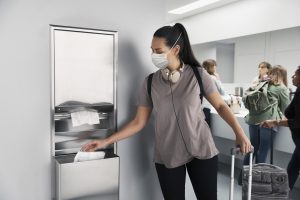
  • Using preferred hand solutions: Having heightened cleaning or handwashing protocols is only the first step. The second is ensuring effective hygiene solutions are used. Hand soaps and sanitizers, paper towels, and other surface cleaning products should be high-quality, eco-friendly, and readily available to anyone who needs them. “For an employee, being able to walk into a restroom or area and see fully-stocked paper towels, soap dispensers, and other resources adds a real sense of comfort and confidence,” adds Olsavicky.
  • Enhancing cleaning and sanitizing protocols: Next, a thorough and consistent cleaning and sanitizing regimen must become the norm once offices return to pre-pandemic operations. Offices are full of shared spaces (e.g., meeting rooms, bathrooms, break rooms) and occupant touchpoints (e.g., doors, desks, elevator buttons, computers). These all need to be cleaned, disinfected, and stocked with cleaning supplies regularly to mitigate risks of infection.
  • Developing a hygiene-forward culture: Everyone has a role to play in keeping a hygienic office environment. For employers, that means promoting enhanced hygiene behaviors among employees and visitors through signage, awareness campaigns, and training, as well as drawing on external resources to learn and embed best practices. And for employees, contributing to a hygienic workspace means following the protocols laid out by the leaders and buying into a “culture of hygiene.”
  • Levering data-driven cleaning: Consider using digital tools to improve hygiene and boost efficiency. For example, Tork EasyCube, a revolutionary facility management software system, utilizes sensors to monitor visitor traffic and refill levels. This data can then be compiled, analyzed, and reviewed through an online dashboard that property teams can use to see where cleaning and hygiene solutions are needed. This tool also provides easy-to-use reports for use with tenants to reassure them of the protocols being implemented to keep the office safe. “More than ever, facility managers are limited for time and resources, and by relying on data to help them keep track of all aspects of their operation is a big benefit,” says Olsavicky. “Solutions like Tork EasyCube are a tech-savvy way to boost efficiencies and gain greater visibility into the entire hygiene process.”

Knowledge and support when navigating a post-COVID world

Property managers and office leaders are typically stretched thin. As such, there is value in partnering with third-party specialists who can help support the development and implementation of best-in-class hygiene protocols.

“As the global leader in professional hygiene and with over 50 years of experience, our goal is to offer property managers all-in-one resources for maintaining office hygiene and cleanliness,” says Olsavicky.

What’s more, she adds, Tork team members are helping facility managers adapt to the changing environment by conducting hygiene site surveys, offering installation support, and providing worry-free implementation. “We know property managers and cleaning professionals are overwhelmed and that their job has never been more complex and demanding. We are here to help.”

Heading back to the office? Explore the Tork Office Hygiene Package and trend report. Visit www.tork.ca/en/office-hygiene.

The importance of health-based cleaning & disinfection

Efforts to better understand how infectious and viral disease spreads on surfaces are continuing. The Cleaning Industry Research Institute (CIRI) has published a new white paper, “Contact Transmission of Infectious Disease Agents: The Science and Implications for Cleaning and Disinfection of Surfaces”, which aims to educate on how microbials behave on hard surfaces.

Authored by academic researchers on the Science Advisory Council of CIRI, the free resource provides a comprehensive, evidence-based overview of microbials’ ability to infect people after coming into contact with hard surfaces.

With data related to microbe survivability, common modes of transmission, the impact of cleaning and disinfection interventions, paired prevention strategies and cleaning and disinfection frequency recommendations, the paper offers key research supporting the role of cleaning and disinfection in mitigating the spread of viral transmission.

“From the beginning of the pandemic, CIRI’s Science Advisory Council has called for a layered approach to combat the spread of SARS-COV-2, the virus that causes COVID-19,” said John Downey, Executive Director of CIRI. “This white paper presents an overwhelming amount of research supporting the continued use of cleaning and disinfection interventions to mitigate the spread of infectious diseases, including SARS-COV-2. That said, it’s important to distinguish between health-based cleaning strategies and some of the broadcast disinfection efforts we’ve seen in response to the pandemic.”

Citing more than 30 published research works, the white paper offers the following key insights:

  • Contaminated surfaces serve as reservoirs of a vast microbial community that builds over time as infectious aerosols settle onto surfaces, and the numbers of contaminated hand and finger touches continue to increase.
  • Multiple studies have been published on pathogen transfer between hands and surfaces, and on microbial pathogen survival on the skin and on surfaces.
  • Direct hand-to-hand transmission of cold viruses, with subsequent self-inoculation and resultant disease, has been demonstrated in human volunteers (e.g. Rhinovirus).
  • Three key factors provide a summary understanding of the potential for infective agents to infect humans and cause disease: 1) infective dose, 2) virulence, and 3) the immune status of the individual.
  • The cleaning process, through friction, physically removes microbes and their associated matrices in which they may be embedded, such as saliva and/or nasal secretions from the nose or mouth, as generated by coughing or sneezing.
  • Research has demonstrated that a combination of hand hygiene practices (handwashing, use of hand sanitizer) and fomite cleaning/disinfection, maximizes the reduction of risk for pathogen contact transmission.
  • The cleaning process is crucial, as it removes substances that may block or interfere with the antimicrobial action of a disinfectant used to kill or otherwise inactivate any remaining microbial residues.

“Recently, the CDC and others have deemphasized the importance of surface cleaning as it relates to COVID. To some extent this is a welcome correction, as it is based on the facts as we understand them: the primary route of infection is through inhalation,” added Downey. “That said, it should be kept in mind that environments are literally fluid, with air being the fluid. And research has shown that what is in the air will go to surfaces and what is on surfaces — especially viruses, which are incredibly small and light — will go to the air. The solution isn’t to clean the air and forget about surfaces, any more than it is to clean surfaces and forget about the air. The solution is a combination of both.”

Preparing offices for the post-pandemic future

It’s only a matter of time before many work-from-home employees fully return to the office. Yet before employers can welcome them back safely, workplace well-being and hygiene must be addressed.

It’s a challenge that employers aren’t taking lightly—and for those who are intent on bringing workers back, it’s one that’s being addressed with enhanced hygiene, resources, and protocols.

Tork®, the global professional hygiene brand of Essity, recently launched the Tork Office Hygiene Package™, a tailored selection of products, services, tools and support to help facility managers get ready for a return to the office.

“As the CDC loosens restrictions and employers feel more comfortable re-opening their offices, we expect to see adapted floor plans, rigorous cleaning programs, an emphasis on ‘touchless’ interactions, and other risk-mitigation measures,” said Rachel Olsavicky, Regional Marketing Manager, Commercial & Public Interest, Essity Professional Hygiene.

Actions like these are critical for not only protecting building occupants and visitors, but also for helping employees feel confident that their concerns and wellbeing are being taken seriously by company leaders.

In addition to the Tork Office Hygiene Package, Tork also developed an informative trend report, focused on office hygiene, which includes guidance for facility managers to understand how the pandemic changed hygiene standards in office buildings and how best to address these new challenges.

“Companies need to show employees that they’re investing in the right strategies, resources, and solutions to address the hygiene standards that have become part of everyday life,” notes Olsavicky.

There are a number of critical strategies facilities managers should employ to keep their facilities hygienic and workers feeling safer. These include:

  • Supporting hand hygiene behaviors: Frequent and thorough handwashing is the easiest way to reduce the risk of contagion. While hand sanitizers are also effective at killing and preventing the spread of germs, handwashing is the preferred option for staying healthy and keeping hands clean. Ensuring handwashing posters are in easily visible locations in restrooms and breakrooms can help promote optimal hand hygiene.
  • Using preferred hand solutions: Having heightened cleaning or handwashing protocols is only the first step. The second is ensuring effective hygiene solutions are used. Hand soaps and sanitizers, paper towels, and other surface cleaning products should be high-quality, eco-friendly, and readily available to anyone who needs them. “For an employee, being able to walk into a restroom or area and see fully-stocked paper towels, soap dispensers, and other resources adds a real sense of comfort and confidence,” adds Olsavicky.
  • Enhancing cleaning and sanitizing protocols: Next, a thorough and consistent cleaning and sanitizing regimen must become the norm once offices return to pre-pandemic operations. Offices are full of shared spaces (e.g., meeting rooms, bathrooms, break rooms) and occupant touchpoints (e.g., doors, desks, elevator buttons, computers). These all need to be cleaned, disinfected, and stocked with cleaning supplies regularly to mitigate risks of infection.
  • Developing a hygiene-forward culture: Everyone has a role to play in keeping a hygienic office environment. For employers, that means promoting enhanced hygiene behaviors among employees and visitors through signage, awareness campaigns, and training, as well as drawing on external resources to learn and embed best practices. And for employees, contributing to a hygienic workspace means following the protocols laid out by the leaders and buying into a “culture of hygiene.”
  • Levering data-driven cleaning: Consider using digital tools to improve hygiene and boost efficiency. For example, Tork EasyCube, a revolutionary facility management software system, utilizes sensors to monitor visitor traffic and refill levels. This data can then be compiled, analyzed, and reviewed through an online dashboard that property teams can use to see where cleaning and hygiene solutions are needed.  This tool also provides easy-to-use reports for use with tenants to reassure them of the protocols being implemented to keep the office safe. “More than ever, facility managers are limited for time and resources, and by relying on data to help them keep track of all aspects of their operation is a big benefit,” says Olsavicky. “Solutions like Tork EasyCube are a tech-savvy way to boost efficiencies and gain greater visibility into the entire hygiene process.”

Knowledge and support when navigating a post-COVID world

Property managers and office leaders are typically stretched thin. As such, there is value in partnering with third-party specialists who can help support the development and implementation of best-in-class hygiene protocols.

“As the global leader in professional hygiene and with over 50 years of experience, our goal is to offer property managers all-in-one resources for maintaining office hygiene and cleanliness,” says Olsavicky.

What’s more, she adds, Tork team members are helping facility managers adapt to the changing environment by conducting hygiene site surveys, offering installation support, and providing worry-free implementation. “We know property managers and cleaning professionals are overwhelmed and that their job has never been more complex and demanding. We are here to help.”

Heading back to the office? Explore the Tork Office Hygiene Package and trend report. Visit www.tork.ca/en/office-hygiene.

BCCA announces 2021 leadership awards

B.C.’s construction industry honoured four individuals with leadership awards as part of the annual Construction and Skilled Trades Month. The month of April celebrates the many contributions the industry makes across the province, in every community, every day.

“Congratulations to these deserving winners for their achievements in protecting the construction workforce,” said Chris Atchison, president of the BC Construction Association (BCCA), which sponsored the awards with LNG Canada. “These awards showcase just a few of the thousands of individuals that kept our industry going through the pandemic, workers who understand the importance of both mental and physical safety and have acted under extreme pressure with integrity and professionalism.”

The winners are:

Cori Coutts and field staff — Knappett Projects (Victoria)

Coutts is the safety manager at Knappett Projects Inc., overseeing the field team’s creation, implementation, and maintenance of safe jobsites during the pandemic. To date, Knappett has had no COVID-19 cases on its sites.

Coutts and the Knappett team bought into new procedures immediately, streamlining and documenting as they went, and diligently maintaining and promoting the practices to all trades onsite, even building hot water wash stations that will remain in place well after COVID.

Matthew Goffinet — Kinetic Construction (Surrey)

Goffinet was nominated by Mark Liudzius, executive vice-president and director of operations at Kinetic Construction, who stated Goffinet has shown exemplary leadership during the pandemic. Goffinet’s attention to global pandemic information, provincial guidelines, local outbreaks, and community concerns made it possible to swiftly roll out clear instructions and ensure workforce safety without creating further anxiety.

Shayna Helal — Mott Electric (Burnaby)

As chief safety officer at Mott Electric, Helal was tasked with managing the challenges of COVID-19. Her nominator, Mott vice-president Ellisha Mott, praised Helal for her work in overseeing the implementation of protocols that were changing almost daily, keeping Mott’s large high residential and industrial projects open during the entire lockdown and pandemic experience.

Mathew Kinney — Turner Construction Company (Vancouver)

Kinney was in charge of constructing a new power plant within the existing Lions Gate Hospital when the pandemic hit. According to his nominator Alistair McIntyre, health and safety manager at Turner Construction Company, Kinney co-ordinated with the hospital’s infection control experts to keep his workers, hospital staff and patients safe.


Calgarys’ Rockyview Hospital gets $59M investment

Calgary’s Rockyview Hospital is expanding its ICU and coronary care unit with a $59-million investment from Alberta Budget 2021.

“This important project at the Rockyview hospital is part of Budget 2021’s historic investment in health care. This and other new health-care projects will mean world-class care, when and where Albertans need it,” said Premier Jason Kenney.

The current intensive care unit at Rockyview admits about 275 patients each year, and the coronary care unit admits close to 540 patients, providing care to those with acute heart issues, including those recovering from coronary bypass surgeries or severe heart attacks. The current combined units experience overcapacity challenges roughly one-quarter of the year, ranging as high as 130 per cent at peak periods.

The new project will move the units to a joint space with 25 beds in single-patient rooms, up from the current 17 beds. The new space will include support services and a consolidated respiratory therapy service.

The project will also double the size of the hospital’s gastrointestinal clinic and increase the number of endoscopy suites to six from the current four. This will mean about 4,000 more endoscopies can be performed each year, improving access to diagnostic and treatment procedures for gastrointestinal concerns in the colon, stomach, esophagus or anywhere along the gastrointestinal tract.

“This is great news for patients and families in the Calgary area who will be able to rely on high-quality care at Rockyview hospital through expanded access to intensive and coronary care, as well as the gastrointestinal clinic. Capital investments from Budget 2021 will support a modern space that will serve Calgary and southern Alberta well into the future,” said Tyler Shandro, Minister of Health.

Project planning is well underway, with construction dates still to be determined. The entire project is expected to take up to six years to complete, since all the work is being done while the hospital remains open to Albertans.