Articles Archive - Page 343 of 928 - REMINET
REMI

Condo manager faces fraud charges

A condominium manager in the Kitchener-Waterloo area is facing fraud charges in connection with alleged financial losses over $500,000, of which several condo corporations suffered from. The case emphasizes how seriously the Condominium Management Regulatory Authority of Ontario (CMRAO) deals with complaints against its licensees and the action that follows.

The CMRAO reported in a recent news release that it became aware of these charges earlier this year. The individual has since been identified as Gavin Kendrick, a former licensed condo manager with Millcreek Management Inc. He was arrested by the Waterloo Regional Police Service and now faces fifive counts of fraud over $5,000 and five counts of theft over $5,000.

An investigation began In March 2020 when the registrar of the CMRAO received many complaints about Millcreek Management Inc. and subsequently rolled out interim measures: to suspend the manager’s transitional general licence and apply certain conditions to the Millcreek Management Inc.’s condominium provider licence. The accused cancelled his license while the inspection was ongoing and is no longer licensed to provide condominium management services.

After receiving new complaints about the manager and management company, the CMRAO proposed other conditions on Millcreek Management’s licence, on April 22, 2021, specifically:

  • Millcreek shall not allow Kendrick to be an interested person or an associated person (as defined in sections 1(2) and 37(2) of the CMSA) in respect of Millcreek’s business as a condominium management provider. In particular, Millcreek shall not allow Kendrick to be an officer or director of Millcreek, have a beneficial interest in Millcreek’s activities, exercise control either directly or indirectly over Millcreek, and provide financing either directly or indirectly to Millcreek’s activities.
  • Within one year of the date that this condition takes effect, Millcreek is required to comply with an inspection with an inspector appointed by the registrar. In particular, the inspector shall inspect: a random sample of monthly financial statements prepared by Millcreek and provided to Millcreek’s clients; the signing authority arrangements for a random sample of Millcreek’s clients; and Millcreek’s written procedures for handling the transfer of client documents upon termination.

Millcreek Management has appealed the registrar’s proposal to apply these conditions, an ongoing matter that is currently being adjudicated before the Licence Appeal Tribunal.

Cases spotlight the CAT’s wait-and-see approach 

Condominium corporations who are defending against an application brought by a unit owner at the Condominium Authority Tribunal of Ontario (CAT) often wonder whether they should bring an early motion to dismiss the unit owner’s case before the CAT undergoes a full hearing of the dispute, due to what the condo perceives as a misuse of the CAT process by the unit owner.

In certain situations, such a motion to dismiss can be useful—and even successful—to toss out a CAT case before the condo has expended more time, energy, and resources going to an all-out Stage 3 hearing.

However, generally speaking, the CAT appears to have now adopted a wait-and-see approach, not only with respect to motions to dismiss, but also with respect to the disclosure of records to a unit owner whom the condominium might perceive as problematic.

In a recent case, Aquilina v. MSCC 823, 2021 ONCAT 71, a London condominium brought a motion to dismiss a unit owner’s CAT application for being frivolous and vexatious, pursuant to Rule 4.5 of the CAT’s rules of practice.

However, the CAT dismissed the motion, and instead proceeded with the full Stage 3 hearing of the records dispute, stating that “the level of animosity and ill will reached new heights” at this condominium community, and the messages posted in the CAT portal became “very personal and at times very inappropriate”.

The CAT tried to sift through the personal animosity, and ultimately ruled that the unit owner was indeed entitled to the condo’s list of owners that she sought—despite the condo’s assertions that if the list of owners was provided, she would misuse it to harass other owners.

This recent case follows a long line of cases (“long” in the context of the CAT’s overall lifespan since being created on November 1, 2017) where the CAT has repeatedly held that a unit owner’s past conduct, even if somewhat problematic, does not automatically disentitle them to access the condominium’s records under Section 55 of the Condominium Act. Instead, the CAT has generally held that the condo should give the requested record to the owner, and then subsequently enforce against that owner if the record is misused.

The CAT’s wait-and-see approach may be an iteration of its default presumption that unit owners are generally entitled to see their condo’s records and its hope that the unit owner will, once she receives the record, exercise greater care in how she uses it.

In another recent case, Calderon v. YCC 274, 2021 ONCAT 70, a Toronto condominium brought a motion to dismiss a unit owner’s five ongoing CAT applications and sought to have the CAT declare that the unit owner was “vexatious” and, therefore, unable to file any new CAT applications without first obtaining the CAT’s permission to do so. The CAT dismissed the condo’s motion and found that the unit owner had not behaved in a vexatious manner even though he filed eight cases with the CAT against the condominium.

Instead, the CAT found that the unit owner merely had a “deep mistrust of the condominium”, and that all eight of his CAT cases were permissibly questioning “the fairness and consistency of the corporation’s enforcement of rules”. The CAT wanted to have the ongoing cases proceed as-is, so that each could be decided on their merits instead of being dismissed via motion.

This wait-and-see approach by the CAT is perhaps best evidenced in Yeung v. MTCC 1136, where the Toronto condominium repeatedly asked the CAT to find that the unit owner was a “vexatious” litigant. On May 5, 2020, CAT Vice-Chair Keegan Ferreira declined to grant the condo’s motion to dismiss for being vexatious. On September 18, 2020, CAT Vice-Chair Michael Clifton also declined to label the unit owner as a vexatious litigant.

It was not until December 17, 2020 when CAT Chair Ian Darling stepped in, that the CAT finally—after the unit owner had filed eight applications to the CAT— declared the unit owner to be a vexatious litigant and required him to obtain the CAT’s permission before filing any new CAT applications.

Although the unit owner continued to try and file at least one new CAT application thereafter on January 22, 2021, Darling denied him permission to pursue the new application.

So, what changed? According to Darling, what tipped the scales was that the unit owner’s more recent applications were trying to re-litigate old grounds, and the frequency of the new applications had increased in 2020 (one submitted in 2018, two submitted in 2019, and six submitted in 2020). The CAT was fearful that “without limiting new applications, it is likely that this pattern will continue”.

Even then, however, Darling was careful to note that “the number of applications alone is not sufficient to consider them vexatious”. The CAT has not provided a clear, bright-line threshold where a unit owner’s repeated applications bring him into “vexatious litigant” territory—and the CAT is unlikely to provide such clarity in the future.

Ultimately, the CAT allows a generous degree of “flex” room for individuals with grievances against their condominium, unless the application is clearly vexatious; then the CAT will generally allow for the case to be heard at least, even if the CAT does not award a penalty or costs to the individual unit owner at the end of the day.

Instead of cutting the unit owner’s case short, the CAT appears to prefer waiting and seeing how the case unfolds. Instead of denying the unit owner’s access to their condo’s records, the CAT appears to prefer to trust that the unit owner will not abuse the record once disclosed to them.

Victor Yee is a condominium lawyer and litigator at Elia Associates, a law firm that specializes in condominium law. Victor has successfully represented clients at all levels of court in Ontario, in various tribunals throughout the province (including the CAT), and in condominium-related mediations and arbitrations. He can be reached via email at [email protected].

 

WorldGBC expands commitment to embodied carbon

WorldGBC has announced an update to the Net Zero Carbon Buildings Commitment (the commitment), expanding its scope to recognize enhanced leadership action in tackling embodied carbon emissions from the building and construction sector.

To accompany the commitment update and its reduction-first approach to decarbonization, WorldGBC has also published Advancing Net Zero Whole Life Carbon: Offsetting Residual Emissions from the Building and Construction Sector, providing guidance for how the sector should compensate for its total carbon impacts.

“The update to the WorldGBC’s Net Zero Carbon Buildings Commitment elevates the ambition for the building and construction sector to go further and faster to decarbonize. It sets a target for compensating for emissions associated with buildings and construction, and the tangible social and environmental co-benefits of this approach creates a powerful catalyst towards achieving the Paris Agreement goals and the Sustainable Development Goals. Achieving our vision of sustainable buildings for everyone, everywhere means acting now to tackle upfront carbon, whilst planning with whole life carbon in mind,” says Cristina Gamboa, CEO of the World Green Building Council.

To limit warming to no more than 1.5°C as set out in the Paris Agreement, the #BuildingToCOP26 Coalition has called for emissions from buildings globally to be halved by 2030, and to reach net zero life-cycle emissions for all buildings by no later than 2050.

In addition to the commitment requiring the signatories’ directly controlled building assets to account for all operational carbon emissions (released from the energy used to heat, light, cool and power them) by 2030, from 1st January 2023, signatory businesses and organizations will also be required to:

  • Account for whole lifecycle impact of all new buildings and major renovations by mandating they are built to be highly efficient, powered by renewables, with maximum reductions in embodied carbon and compensation of all residual upfront emissions.
  • Track and report business activities that influence the indirect reduction of whole life carbon emissions.

This ambitious step is expected to drive similar levels of action from the sector as reported in the recently released Advancing Net Zero Status Report 2021, which highlights how signatories are embedding the commitment requirements into their business operations, and help the sector advance its decarbonization goals

According to the World GBC, the commitment now has a total of 143 signatories, with 109 businesses and organizations; 28 cities; and 6 states and regions.


Awards for Nanaimo’s engineering design standards

The City of Nanaimo is winning awards for its transportation engineering design standards and raised-local intersections. The Metral Drive Project showcases seven raised local intersections that improve safety and multi-modal transportation options.

The complete street engineering standards, adoption of the raised-local intersection, and the Metral Drive project have now been recognized with three significant awards:

  • Union of BC Municipalities (UBCM) Community Excellence Award for Excellence in Sustainability.
  • Institute of Transportation Engineer’s (ITE) 2021 North American Complete Street Technical Achievement Award.
  • Transportation Association of Canada (TAC) 2020 Sustainable Transportation Award.

“Road design standards have been largely unchanged for decades, and now is the time to shift towards a friendlier and more sustainable transportation system. We aren’t asking anyone to ditch their car, but we are presenting more options for your commute, safer roads and a better connected community. Indeed, Metral is now a concrete example of the future of Nanaimo’s roads,” said Nanaimo Mayor Leonard Krog.

The new Complete Streets Engineering Standards, adopted by Nanaimo city council in 2020, prioritize safety and accessibility for all commuters by embracing traffic-calming and multi-modal transportation.

The city’s new standards include continuous sidewalks and bicycle lanes that remain raised as they cross over local road intersections. This Dutch-inspired approach is a shift in thinking, moving from creating crosswalks and bike paths that cross roads, to creating roads that cross over pedestrian and bicycle spaces.

The emphasis to slow down and safely make a turn shifts to the motorist, which reduces the likelihood and severity of a collision with a pedestrian, cyclist or any other motor vehicle. As per the Province’s BC Community Road Safety Toolkit, “raised crossings can reduce vehicle-pedestrian crashes resulting in injury by as much as 46% and reduce vehicle-bicycle crashes resulting in injury by as much as 51%.”

The raised and continuous sidewalks are also safer for mobility-impaired pedestrians and visually-impaired pedestrians, creating a continuous walk without the need to navigate curb ramps.

Nanaimo (and its Metral Drive Project) is one of only a few North American cities to implement true Dutch-style raised intersections, and the first to adopt it into municipal engineering standards.

Berlin votes to socialize 240,000 rental properties

In a referendum held in Berlin, Germany, residents have voted in favour of socializing over 240,000 rental properties that are currently owned and managed by private real estate firms. This is the latest attempt to combat rising rental prices in a city where residents earning the average salary must spend up to 62 per cent of his or her net income on rent.

Despite being over 30 years since German reunification, the country continues to suffer from an east/west divide. The average salary in Berlin is lower than other major cities yet rental prices have increased markedly in recent years. According to the findings of the ‘Deutsche Wohnen & Co enteignen’ Referendum study, 17 out of 19 Berlin’s neighbourhoods are considered unaffordable to the average earner.

Meanwhile, the city of about 3.7 million is comprised of a huge contingent (80%) of renters vs. homeowners, which has made Berlin an attractive market to property investors. Berlin’s property market is dominated by large real estate firms, some of which own tens of thousands of the city’s rental units.

Contributing to the affordability  challenge, Berlin is in the grips of a housing shortage with estimates suggesting the city needs about 100,000 new dwellings per year, a number it is currently nowhere near producing.

If approved, Berliners’ vote to take public ownership of private rental properties could have worldwide ramifications and set a precedent for similar initiatives in other cities struggling with affordability issues.

For more information on the Berlin referendum results, click here: https://sweetspotpr.com/


5 ways technology is uplifting condo communities

Digital transformation of the property management industry has led to vast improvements in efficiency in just a short amount of time. It seems like only yesterday that condo managers were spending days trying to notify residents of an important issue, or weeks struggling to get to the bottom of a security problem that can now be resolved in an instant or completely avoided.

In fact, technology is revolutionizing the way condo buildings operate and supporting a stronger sense of community, ultimately building better relations among residents, condo managers and extended teams.

Condo managers are benefiting within their job, as well. Those who embrace technology are streamlining duties that just a few years ago may have upended their day. Technology has the power to eliminate problems, like flooding and extensive water damage altogether. This allows for more time to attend to more pressing matters, or even kick off exciting new projects while supporting a better work environment and more rewarding role.

Here are some ways emerging and evolving technology can create a sense of community, while bringing property management into the future.

Chatbots: Chatbots and virtual robot assistants can provide almost immediate answers to residents’ questions or complaints. This rapid response can also make for a better rapport between condo property managers and residents in general. Chatbots can be programmed to respond to common maintenance queries, thus reducing the number of requests the condo property manager has to field on any given day. Furthermore, as all requests are not created equal, the chatbot can prioritize complaints and segregate them from high, medium or low emergency situations.

Depending on the issue, the chatbot can even be trained to help the resident resolve minor issues that don’t require expert intervention on their own. The chatbot can also share helpful explanatory videos and links.

While chatbots promote efficiency, they shouldn’t, nor can they, replace a human touch. There’s also no need for them to sound robotic and boring. Artificial Intelligence allows them to be programmed to have a lively, fun and friendly persona.

Community forums: Transitioning from paper postings to digitized communications is being adopted at a rapid rate. However, to truly be effective in creating a sense of community within a condo building, a portal that allows property management to communicate with residents, as well as residents to communicate with each other, supports an enriched sense of community. For example, residents can seek out community suggestions, share information about a local event or post items for sale like furniture, workout gear or bicycles.

Parcel management: The spike in e-commerce has familiarized condo managers with how a deluge of parcels in a lobby can cause chaos within the condo community. To avoid headaches associated with missing and misplaced packages, a parcel management plan can mitigate issues and disputes among residents that can quickly take up much of a property manager’s day.

Many condos have chosen to designate a room for parcels. Some condos don’t have this luxury, so they have opted to build a cubby behind the concierge desk to keep parcels organized and from piling up.

A keypad system that allows couriers to insert packages into a locker that requires a code can also provide a solution. However, getting all couriers to adopt this system can be challenging. Posting signage at the front door and within the main entrance in the courier’s anticipated line of site can help ensure more couriers follow the process.

Keeping a parcel management system running smoothly is a two-way effort. Residents should also be reminded through the condo’s portal communication that they need to keep an eye out for email and text notifications advising of a delivery so they can pick up their packages as soon as possible. This reduces chances of packages going missing.

Smart security: Robotic security patrol is being used at some malls, developments and corporate facilities south of the border. These robots can scan licence plates, handle facial recognition and even apprehend criminals. Hiring one can range from $60,000 to $70,000 US per yearly lease.

Property management in Canada hasn’t yet gone as far. Smart security can’t match the value of a human security guard. However, technologies can provide greatly improved and enhanced monitoring and immediate communication in a way humans can’t because they just can’t be everywhere all at once.

Motion sensors paired with technology send condo property managers push notifications regarding suspicious movement in pool areas or on the grounds. Soon, smart security will be able to process this information through artificial intelligence and take next steps. Currently, smart security can do things like differentiate between a pet or person.

Resident controlled smart locks for main entry points are also being widely implemented to increase security and safety. Meanwhile, e-keys for maintenance and skilled tradespeople enable temporary entry and exit access and monitoring.

Smart sensors: Smart sensors are a way to save time while supporting sustainability. A smart sensor in an underground parking garage can trigger exhaust fans to turn on versus keeping them running continuously and unnecessarily wasting energy. Additionally, sensors play an important role in keeping costs down because they can monitor temperature swings and water usage to give managers and residents more control over their bills, while providing increased comfort.

Smart sensors can also prevent significant water damage that can cause major and costly inconveniences to residents. They can detect a leaky or broken pipe before it leads to tens of thousands of dollars in repairs and months to fix, which means residents could lose the use of common areas they once enjoyed.

Mo Killu is the vice president of communities and client services at GPM Property Management Inc. He is a revered expert within the condominium property management industry with over a decade of experience overseeing a portfolio of top condo buildings across Toronto. Killu currently oversees a diverse portfolio that includes special projects, process improvement initiatives and legislative updates. He is an active member of ACMO, CCI and CAI and currently involved in CCI Toronto Chapter Committees: The Volunteer Committee and the Condo Strength Committee. He also has hands-on experience as a condo board member as well as has successfully completed Tarion. www.gpmmanagement.com

Real estate could reap climate action dividends

The global urgency for climate action has an upside companion in global opportunities for strategic investment that could improve people’s lives and yield sustainable returns. Delivering the keynote address during the recent online commercial real estate sustainability trailblazers (CREST) awards, Dr. Richard Munang, the United Nations Environment Program (UNEP) climate change coordinator for Africa, underscored how the pursuit of net-zero emissions could open up new markets, create jobs and richly reward investors who move in advance of regulatory mandates.

“Not everybody who chased the zebra caught it, but he who caught it, chased it. This African proverb describes a critical asset that precedes success and it is summed up in two words: Taking chances,” Munang submitted. “Environmental sector players regularly need to take chances and seize opportunities.”

While the landlord-tenant teams participating in the race2reduce — a climate action initiative of the Building Owners and Managers Association (BOMA) of Greater Toronto aimed at finding energy and water savings and curbing solid waste output within commercial buildings — might not define themselves as direct environmental sector players, they fit into Munang’s broader philosophy of moving key economic sectors onto what he terms the net-zero emissions pathway.

Real estate, he maintains, is particularly well positioned to realize the “economic, social and environmental dividends” of operational savings, enhanced asset value, market influence and emerging new investment asset classes such as energy retrofit and affordable housing. Citing the findings of the recently released Intergovernmental Panel on Climate Change (IPCC) report on the physical factors of climate change, he reiterated that real estate’s current quotient of 40 per cent of total global emissions also gives it the weight to lead the transition to net-zero status. Projections for a required USD $4.7 trillion global investment in green buildings over the next eight years represent critical leverage.

“The real question that all of us need to ask today, and also need to answer, is how the process of reducing these emissions can actually unlock more investment opportunities for the real estate industry as we drive inclusive economic growth,” Munang asserted. “Real estate can enhance the chances of realizing and attracting capital in green developments. This comes with a reorientation where focus shifts from ordinary markets and investments to niche markets and investments that place a premium on green sustainability.”

Along with the tangible reduction achievements gained through low-emission technologies, passive design principles and renewable energy options, he credits “soft” attributes such as passion, inspiration and boldness for generating interest, drawing participation, bolstering commitment and helping to overcome obstacles. That’s also central to the race2reduce and CREST strategy, which harnesses friendly rivalry while creating a context for collaborative efforts toward a larger shared goal.

As Munang affirmed, that shared goal is a momentous one:

“In the cycles of life, it happens that big challenges befall one generation which must be solved to guarantee the existence of future generations,” he said. “Climate change is the challenge of our generation. And we have all of 10 to 30 years with which to change the cause and narrative for present and future generations.”

The 2021 CREST winners are:

Performance Leadership, Electricity

  • ≤ 100,000 square feet: 15 Toronto Street, Toronto; owned by 15 Toronto Holdings Limited; managed by Madison Properties Inc.
  • 100,000 to 500,000 square feet: 40 St. Clair Avenue West, Toronto; owned and managed by Colliers International
  • ≥ 500,000 square feet: 100 Wellington Street West, Toronto; owned and managed by The Cadillac Fairview Corporation

Performance Leadership, Gas

  • ≤ 100,000 square feet: 480 Progress Avenue, Toronto; owned by CIBC; managed by BGIS
  • 100,000 to 500,000 square feet: 95 Moatfield Drive Toronto; owned and managed by Colliers International
  • ≥ 500,000 square feet: 3381/3389 Steeles Avenue, Toronto; owned and managed by CentreCorp

Performance Leadership, Water

  • ≤ 100,000 square feet: 154 University Avenue, Toronto; owned and managed by Colliers International
  • 100,000 to 500,000 square feet: 1, 3 & 4 Robert Speck Parkway, Mississauga; owned and managed by Colliers International
  • ≥ 500,000 square feet: 100 Wellington Street West, Toronto; owned and managed by The Cadillac Fairview Corporation

Performance Leadership, Waste

  • ≤ 100,000 square feet: 154 University Avenue, Toronto; owned and managed by Colliers International
  • 100,000 to 500,000 square feet: 390 Bay Street, Toronto; owned by Munich Reinsurance Company of Canada; managed by Avison Young Real Estate Management Services
  • ≥ 500,000 square feet: RioCan portfolio; owned and managed by RioCan Real Estate Investment Trust

Performance Leadership, Landmark Buildings

  • Greater Toronto Airports Authority portfolio; owned and managed by Greater Toronto Airports Authority

Climate Champion

  • 100,000 to 500,000 square feet: 90 Sheppard Avenue East, Toronto; owned and managed by Crown Property Management Inc.
  • ≥ 500,000 square feet: 25 York Street; owned by Menkes Developments; managed by Menkes Property Management Services

Collaborative Excellence, Landlord

  • ≤ 500,000 square feet: 390 Bay Street, Toronto; owned by Munich Reinsurance Company of Canada; managed by Avison Young Real Estate Management Services
  • ≥ 500,000 square feet: 1800 Sheppard Avenue East, Toronto; owned and managed by The Cadillac Fairview Corporation

Collaborative Excellence, Tenant

  • ≤ 500,000 square feet: 250 The Esplanade, Toronto; Tenant, Energy@Work; Owner, Berkeley Castle Investments

Innovative Excellence

  • ≤ 100,000 square feet: 15 Toronto Street, Toronto; owned by 15 Toronto Holdings Limited; managed by Madison Properties Inc.
  • 100,000 to 500,000 square feet: 4711 Yonge Street, Toronto: owned by Menkes Developments & Healthcare of Ontario Pension Plan (HOOPP); managed by Menkes Property Management Services
  • ≥ 500,000 square feet: 999 Upper Wentworth Street, Hamilton; owned and managed by The Cadillac Fairview Corporation

Tips to prevent COVID-19 transmission in sport and recreation facilities

Since COVID-19 lockdowns began last year, the sport and recreation industry has been one of the hardest hit. And as we move towards a slow reopening, concern of COVID-19 transmission (including the Delta variant) threaten the industry’s safe resumption. Despite vaccination efforts, some say herd immunity is unlikely, and we may have to learn to live with the virus.

In Canada, lockdowns have had negative impacts on levels of physical activity, sedentary behaviour, and mental health. And unhealthy lifestyle trends are associated with severe complications from COVID-19 and hospital admissions.


Sport and recreation facilities help support healthy lifestyles. Throughout the pandemic, however, they’ve become difficult to safely operate because of the elevated respiratory activity and the potential for airborne COVID-19 transmission. As a result, many have been forced to close or operate under strict guidelines.

Learning to live with the virus must involve considering how to support health and well-being. And strategies need to be developed to mitigate the risk of COVID-19 transmission in sport and recreation facilities.

Mitigating the spread of COVID-19

We looked at peer-reviewed articles to identify recommendations for those involved in designing, managing and working in sport and recreation facilities to help mitigate the risk of COVID-19 transmission — our article is a preprint and currently yet to be peer-reviewed. We categorized recommendations in accordance with the National Institute for Occupational Safety and Health’s (NIOSH) guidelines for addressing occupational hazards, in this case COVID-19.

According to the guidelines, the most protection is offered by eliminating or substituting the hazard from the workplace, implementing engineering controls, adjusting how people work through administrative controls and using personal protective equipment as the last line of defence.

Our analysis resulted in recommendations that will help the sport and recreation industry mitigate the spread of COVID-19. Here is a summary of the recommendations.

Eliminating/substituting the hazard: Mandatory vaccination policy

A mandatory immunization or vaccination passport policy is the safest option.

Given the close proximity people often find themselves in at sport and recreation facilities, this policy should be considered as important as the sports equipment that keeps people safe.

Engineering controls: Altering the built environment

Architects, engineers and facility directors should consider altering the built environment. These facilities often have complex rooms of varying sizes that require improved ventilation and air handling systems.

Rooms and corridors will need to be redesigned so that they allow for physical distancing, and the number of high-touch surfaces within facilities will likely need to be reduced through automation. To improve user hygiene, handwashing stations should be installed throughout, allowing users to use them before, after and during an activity.

Administrative controls: Standard operating procedures

Facilities operators should develop COVID-19 management plans and integrate them into their standard operating procedures, and health screening will need to be conducted daily for anyone entering the facility.

Rooms, surfaces and equipment will need to be cleaned more frequently, and communication plans will need to be developed that educate and encourage safe user behaviour. The operation of food and beverage services will need to be altered, and items should be individually wrapped in disposable containers. Clinical waste bins will need to be available for potentially contaminated material like used masks, and facilities will need to co-ordinate delivery schedules with their suppliers to minimize contact with facility staff.

A man inside a recreation facility wears a mask and holds a basketball, he's on a basketball court and people are playing in the background

Administrative controls: Facility capacity and spacing

General facility capacity will need to be reduced to allow for physical distancing, and travelling throughout a facility will need to be reconsidered to reduce travel distances and contacts.

Because of the moist environment and airborne particles in sport and recreation facilities, lockers should primarily be used as storage and placed where physical distancing can be maintained. Spectator areas will need to implement physical distancing and consider installing partitions between seats.

Administrative controls: Activities and equipment

Return to activity guidelines should be created for each activity and space with public health consultation. Staggering facility scheduling will help minimize unnecessary usage of facilities and personal contacts, and will assist with cleaning. Accommodations will need to be made for populations that are more vulnerable to COVID-19. The sharing of personal items like water bottles or towels must not be permitted.

Administrative controls: Staffing requirements

The staff requirements of facilities and organizations that operate within them will need to change. A COVID-19 supervisor should be appointed to conduct regular health and safety evaluations, and all staff will need to be trained on the new COVID-19 standard operating procedures.

Staff who can complete their tasks at home should be encouraged to do so to reduce the number of occupants within a facility at any time. Facilities should work with community sport organizations and their personnel (like coaches) to develop a return to activity guidelines.

Personal protective equipment: The last line of defence

Extra personal protective equipment should be available, and all occupants should be required to wear masks when not engaged in physical activity. Facility staff, coaches, trainers and other personnel should be provided with and wear additional personal protective equipment appropriate for their role.


As we return to some degree of normalcy from the height of the pandemic, the sport and recreation industry will be essential for supporting our health and well-being. Therefore it is crucial that we evaluate the environment of sport and recreation facilities and implement measures that mitigate the risk of COVID-19 transmission so we can all enjoy them again.The Conversation

Kevin Wilson is a PhD Student in Recreation and Leisure Studies at the University of Waterloo, Denver Brown is an Assistant Professor of Psychology at the University of Texas at San Antonio, Joseph Miller is a Research Assistant in Human Kinetics at the University of Windsor, and Zachary Evans is a PhD Candidate in Sport Management at the University of Windsor

This article is republished from The Conversation under a Creative Commons license. Read the original article.

Passive House retrofit transforms aging Hamilton residential tower

An 18-storey affordable seniors’ residence in Hamilton, Ontario, is set to become one of the largest Passive House retrofit projects in North America, serving as a model for how cities can meaningfully tackle climate change goals while maintaining much-needed affordability.

The oldest high-rise, multi-residential building in CityHousing Hamilton’s portfolio, Ken Soble Tower has been a fixture in Hamilton’s skyline since 1967. It was fully occupied until 2014 when a mix of aging infrastructure and increasing capital costs led to it falling into disrepair.

The decision to move forward with the Passive House retrofits came about in 2016, after numerous studies and consultations involving residents and community members led to its support. Since then, Ken Soble Tower has achieved a 94 per cent reduction in greenhouse gas emissions and an 89 per cent reduction in thermal energy demand intensity (TEDI). Today, the building serves as an example of a large scale, net-zero-ready retrofit, showcasing a set of strategies which can be scaled up nationwide in support of Canada’s climate and housing renewal goals.

ERA, a Toronto-based architecture firm known for its expertise in restoration and adaptive reuse of existing buildings, including low-carbon retrofits and tower renewal, was brought in to lead the transformation of this property.

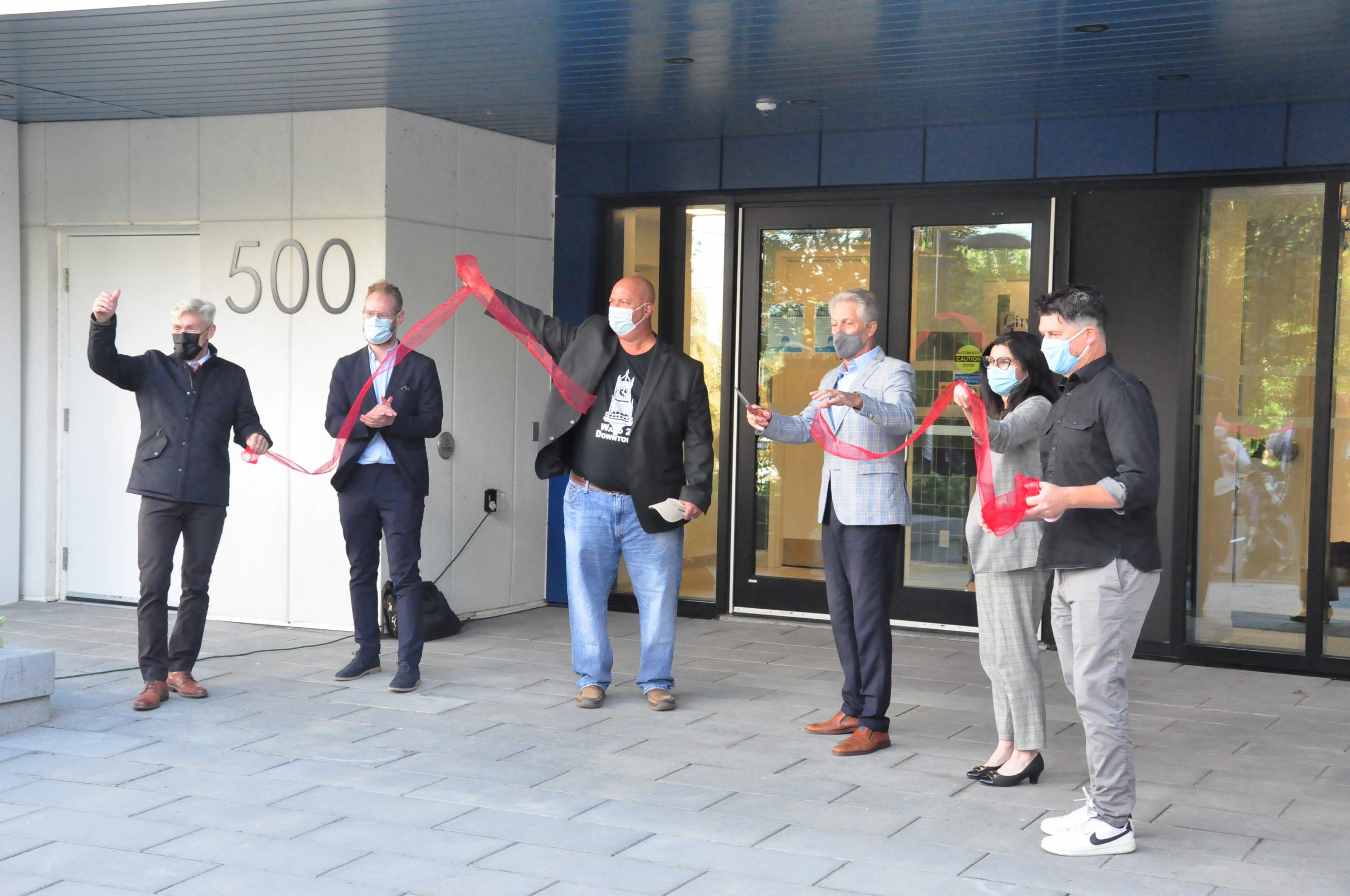
Members of ERA Architects and the City of Hamilton at the unveiling event, Friday, September 24, 2021

“Ken Soble Tower is a true beacon on an international stage, showcasing how low carbon and low energy retrofits are not only sustainable, but also realize the best outcomes for residents’ health, safety and comfort within their homes,” said Graeme Stewart, Principal, ERA Architects. “Many aging, postwar apartment towers provide critical affordable housing for millions of Canadians, but increasingly face complex challenges that require repair. Our hope is that the Ken Soble Tower marks the beginning of a wave of deep retrofits across the country. As we look towards a post-pandemic recovery amid a climate-challenged world, there’s an urgency to apply this type of holistic thinking on a broader scale.”

Through a two-year monitoring process, the Ken Soble Tower will become a teaching tool, offering real-time lessons in Passive House retrofits and design. CityHousing Hamilton, in partnership with the University of Toronto and ERA, will study and measure the impacts of the building on its residents and surrounding environment, including health, safety, and economics, among other targets.

“Comfort-first metrics are at the core of the Passive House certification, achieving the same goals as an energy-first model, but with a human centric approach,” said Ya’el Santopinto, Principal, ERA Architects. “This retrofit has enabled us to enhance the building’s intrinsic value, maintain its original thoughtfulness, and also build an ecosystem of best practices.”

For more on this project, click here.


CAPREIT acquires luxury apartment in Toronto’s Forest Hill

CAPREIT announced it has acquired Tower Hill East, a “superior-quality, luxury apartment building” on St. Clair Avenue West. The sister property to CAPREIT’s flagship “The Thomas”, this purchase positions CAPREIT with a second iconic property in Toronto’s prestigious Forest Hill neighbourhood.

“We are very proud to bring this downtown Toronto property into the  CAPREIT family,” said Mark Kenney, President and CEO. “Pairing these two iconic and well-known properties together under our experienced management team solidifies our presence as a leader in the GTA luxury rental market. We are also pleased that the property, and the planned value-add investments we will be making in it, will contribute to enhanced resident safety, reduced operating costs, and help us meet our ESG goals.”

The 141-unit luxury apartment offers a mix of bachelor, one-bedroom, two-bedroom and three-bedroom suites, all described as being larger than average. Historically at near 100% occupancy,  there were 15 vacant units at the time of closing. Management estimates current rents are approximately 30 per cent below market.

The property was acquired for $110 million, with CAPREIT assuming a $34 million mortgage bearing a 1.93 per cent interest rate maturing on December 1, 2021. The vendors elected to take 100 per cent of the residual purchase price in CAPREIT Exchangeable LP Units at a price of $56.00 per Exchangeable LP Unit, saving CAPREIT the general underwriting commissions and market discounts associated with raising equity in the public markets resulting in approximately 8 per cent savings.

According to CAPREIT, the acquisition provides extensive management synergies and operational efficiencies between the two St. Clair Avenue properties. Future capital investment plans include: LED lighting retrofits, new low-flow bathroom fixture installations, in-suite smart thermostats and a chiller replacement, upgrades that will significantly reduce energy consumption and contribute to CAPREIT’s goal of enhancing its environmental performance.

Find out more information on this transaction, click here.

ISSA and IFMA expand relationship to support industry

ISSA, the worldwide cleaning industry association, and the International Facility Management Association (IFMA), along with Informa Markets, have announced a partnership to best serve the global cleaning and facility management industries.

The partnership will provide increased value to each association’s membership and encourage key connections through discounted rates to attend both association’s leading tradeshows: IFMA World Workplace and ISSA Show North America.

“IFMA is the world’s most widely recognized association for facility management professionals, so we are thrilled to combine their reach and capabilities with those of ISSA,” said ISSA Executive Director John Barrett. “Due to the current state of our industries, it was a no-brainer to team up and provide our diverse membership base with new opportunities and change the way the world views cleaning.”

The ISSA-IFMA partnership supports the following events:

  • IFMA’s World Workplace, October 26-28, 2021 in Kissimmee, FL – Hosted by IFMA, this event has been the gold standard in facility management education, knowledge exchange, career development, and professional network building for over 40 years. Taking place in at the Gaylord Palms Resort, the event is for professionals who support the built environment and features 200 exhibitors in 120,000 square feet of exhibit space. More than 4,000 people attend each year to experience keynote speakers, education sessions, facility tours, deeper dive sessions, and IFMA courses.
  • ISSA Show North America, November 15-18, 2021 in Las Vegas – As the commercial cleaning industry’s largest event for top-tier education, networking, and product discovery, ISSA Show North America connects the full supply chain of manufacturers, distributors, and end users and attracts 16,000 attendees annually. Produced by Informa Markets and ISSA, this year’s event is hosted at the Las Vegas Convention Center, a GBAC STAR™ Accredited Facility, which features more than 550 exhibitors in 250,000 square feet of exhibit space, 60 education sessions, an innovation showcase, spotlight power panel and workshops, and more.

The partnership will include a cross-marketing communications and promotions plan along with association-hosted education, representation through booth space, and discounts for each association’s members at both events. IFMA and ISSA will also partner to deliver content to the facility management market during ISSA Show North America’s Preview Week, a series of 10 webinars taking place October 4–8, 2021.

“Over the past year and a half, facility managers have relied on the cleaning industry to guide and support their buildings and team members through this challenging time. We felt partnering with ISSA was the best way to connect our membership to the latest cleaning innovations and solutions,” said Don Gilpin, IFMA president and CEO. “Both ISSA and IFMA members benefit greatly from this partnership, and we look forward to the many opportunities ahead.”

The partnership also has global benefits through Informa Market’s Global Portfolio of events:

  • Both ISSA and IFMA will be participating in Informa Market’s Abastur (hospitality) and Expo Med (healthcare) co-located events from September 29 to October 1, 2021 in Mexico City. The presence includes an ISSA Pavilion, shared partner booth space, industry talks hosted in the booth space, a happy hour on the show floor, and three full days of ISSA-hosted educational workshops.
  • Planning is also underway for IFMA to join existing partnerships in India through the ISSA Conference taking place October 21-22, 2021 in Mumbai, India and in an ISSA Pavilion within Informa Market’s China Clean Expo, taking place March 29-April 1, 2022, in Shanghai.

“We’re excited to expand our partnership domestically and internationally to span four countries and two continents,” said Lindsay Roberts, Group Director, Informa Markets US. “By leveraging the strength of both associations and Informa Markets, we are well-positioned to scale events, experiences, and member benefits internationally.”

The power of antimicrobial coatings

A new study in the American Journal of Infection Control has indicated just how effective certain antimicrobial coatings can be against infections including COVID-19.

The study by researchers with the University of Arizona found that applying a reformulated quaternary ammonium coating to stainless steel led to almost complete elimination of coronavirus contamination.

The polymer coating reduced levels of both test viruses by greater than 99.9 per cent relative to non-coated stainless steel coupons during a two-hour contact time. It added that a wash method for harvesting the carriers, wherein the carriers were rinsed four or five times using 1 mL of the coating solution and supplemented by a cell scraper, yielded greater viral recovery compared to a swab method.

“The COVID-19 pandemic has accelerated the demand for alternatives to standard cleaning and disinfection practices,” says the study. “Continuously-acting coatings may provide an alternative to common surface treatments.”
The study authors recommend the facilities should use certified technicians to apply the coating to high-touch surfaces using electrostatic sprayers.

“With the recent detection of infectious SARS-CoV-2 from the bedside table, remote control, bed rails, and flooring in the hospital room of an infected patient, the importance of effective hygiene protocols for environmental surfaces remains imperative,” the study added.

Researchers say surface-active antimicrobial coatings are not meant to be substitutes for regular cleaning and disinfection practices. However, they can serve as an additional barrier for reducing human exposure to infectious viruses.

U.S. government aims to protect workers from extreme heat

Following the heatwaves that swept parts of North America this summer, the U.S. Department of Labor’s Occupational Safety and Health Administration (OSHA) has announced it is taking steps to better protect workers in environments that are at risk of causing exposure to extreme heat.

As part of the initiative, OSHA will implement enforcement on heat-related hazards and also develop a National Emphasis Program on heat inspections.

The administration is also launching a process to develop a workplace heat standard as well as forming a Heat Injury and Illness Prevention Work Group to identify and share best practices to protect workers.

RELATED: Protecting maintenance workers in extreme heat

Such workplaces in the cleaning and maintenance industry are likely to include construction workers, restoration technicians, reconstruction contractors, and professional cleaners in non-climate-controlled facilities, as well as workers in the supply chain who could be exposed to instances of extreme heat.

Under the new enforcement initiative, measures taken will include:

  • Prioritizing inspections of heat-related complaints, referrals, and employer-reported illnesses and initiate an onsite investigation where possible
  • Directing compliance safety and health officers to conduct interventions or open inspections when they observe employees performing strenuous work in hot conditions
  • Expanding the scope of other inspections to address heat-related hazards where worksite conditions or other evidence indicates these hazards may be present

Although heat illness is largely preventable, thousands of workers are exposed to extreme heat while working either indoors or outdoor, with some falling seriously ill.

Despite widespread under-reporting, 43 workers died from heat illness in 2019 and at least 2,410 others suffered serious injuries and illnesses.

This summer, record-breaking heat claimed hundreds of lives in the Pacific Northwest and caused thousands of emergency room visits. At least 12 people in Louisiana died of heat-related illness after Hurricane Ida knocked out power during a heatwave, according to Newsweek.

“Throughout the nation, millions of workers face serious hazards from high temperatures both outdoors and indoors,” said U.S. Department of Labor Secretary Marty Walsh. “Amid changing climate, the growing frequency and intensity of extreme heat events is increasing the dangers workers face, especially for workers of colour who disproportionately work in essential jobs in tough conditions.”

Office market turnaround delayed at least to Q4

A fourth wave of COVID-19 stalled hopes for an office market turnaround in the third quarter of 2021, while demand for industrial space continued unabated. CBRE’s newly released Canada quarterly statistics shows varying degrees of recovery or slippage across the 10 office markets the firm surveys, as the national average vacancy rate rose to 15.7 per cent. In contrast, there was a uniform tightening of industrial markets in the same group, as the national average availability rate dropped to 2 per cent.

“We’re running out of ways to describe just how tight Canada’s industrial markets are,” says Paul Morassutti, CBRE Canada’s vice chair. “Development remains the only real solution to increasing rents and a lack of industrial space, but longer construction timelines, rising costs and a lack of developable land make the situation extremely challenging for those looking to locate near our largest cities.”

Challenges in the office market are of a different nature. The national vacancy rate is at a 27-year high, having climbed 40 basis points (bps) since the end of June. More than 2.6 million square feet of direct space came back onto the market, but the total quotient of sublet space shrank by 375,000 square feet. The latter now accounts for 20.5 per cent of all vacant space versus 21.6 per cent at the end of Q2.

The average Class A net asking rent increased by $0.23 to $21.04 per square foot. Improvement was attributable to downtown markets, where the average Class A net rent jumped $0.37 to $23.62 per square foot, while the Q3 suburban average slipped by $0.09 to $18.18 per square foot.

Vancouver posted Canada’s lowest office vacancy rate at 7.4 per cent, but that was up 50 bps from Q2. Downtown office vacancies increased a full percentage point, from 6.6 to 7.6 per cent, as an additional 308,000 square feet of direct space became available and 363,000 square feet of newly constructed space came onto the market. The average Class A net rent rose $0.53 to $43.86.

At the other end of the national scale, Calgary’s office vacancy rate now sits at 30.1 per cent. Downtown experienced a 20 bps increase, pushing vacancies up to 32.9 per cent during Q3, while the suburban rate held steady at 25.5 per cent. Suburban rents similarly outperform downtown space, although average Class A net rates slipped in both areas during the quarter. Downtown now posts a Class A average of $15.69 per square foot versus the $19.05 average in the suburbs.

Montreal’s suburban office market likewise enjoyed a better quarter on several fronts than did its downtown competition, although the average downtown Class A net rent remains well above the suburban benchmark — at $26.05 per square foot versus $16.75. From a vacancy perspective, the suburbs posted a 70 bps decline in vacancies, while the downtown market saw a 210 bps increase, taking the rate to a record high 13.2 per cent. Downtown Montreal was also a rare market where sublet space expanded, in contrast to contraction in the downtowns of Vancouver, Calgary, Edmonton, Toronto, Ottawa and Halifax.

“The downtown core saw several major users vacating large blocks of space this quarter as well as tenants looking to reduce their footprint. With vacancy of 13.2 per cent, the average term for renewals, new deals and extensions are down from 2020,” CBRE analysts recount.

Yet, they note that Montreal often lags other Canadian markets, and point to brighter signs in Toronto and Ottawa. Both those cities saw a slight easing of downtown vacancy rates in the third quarter. Toronto’s dropped 10 bps, to 9.9 per cent, mostly attributable to 564,000 square of sublet shrinkage, while downtown Class A net rents remained static at $34.16 per square foot. Ottawa also saw a 10-bps point decline in downtown vacancies, nudging the rate down to 10.5 per cent, but Class A net rents slipped as well — down $0.15 to $23.28 per square foot.

“Despite the uncertainties, office tenants have largely stopped returning space to the market and we anticipate positive growth to resume as early as next quarter,” Morassutti projects.

Vancouver’s average industrial net rent of $15.37 per square foot — a $0.36 gain from Q2 — is now approaching the average Class A net rent for downtown Calgary office space. Canada’s priciest industrial market also helped push the national average above the $10 threshold. It now stands at $10.03 per square foot — up from $9.82 in Q2 2021 and $9.17 in Q3 2020.

Ottawa and Toronto post the next highest average net rents, at $11.94 and $11.65 per square foot respectively, and Edmonton also surpasses the national average at $10.16 per square foot. That’s a $0.04 gain from Q2 in the market with the highest availability rate — 8.4 per cent — among those CBRE Canada surveys.

Elsewhere, Winnipeg enjoyed its highest ever quarterly rent gain, at $0.80, to push average net rents up to $8.89 per square foot. That’s the largest jump among the ten industrial markets this quarter. Montreal was next, recording a $0.57 upward climb to take average net rents to $8.81 per square foot. Meanwhile, Toronto saw a $0.49 increase.

“The 34.1 million square feet of industrial space under construction (across the 10 markets) will only increase the existing inventory by 1.8 per cent and most of that space is already substantially pre-leased,” Morassutti notes. “It’s an unprecedented situation.”

Vancouver office renamed after architect Erickson

The historic MacMillan Bloedel office tower in downtown Vancouver is being renamed to Arthur Erickson Place after its renowned architect, Arthur Erickson.

Erickson with Geoffrey Massey created the unique Modernist design of 1075 West Georgia for forestry giant MacMillan Bloedel during a corporate building boom in the 1960s.

“It is rare for an architect to be honoured in this way, and I know that Arthur would be very proud to have the building carry his name, as it encapsulates all he strove to achieve architecturally,” said Erickson’s nephew Christopher Erickson. “The building’s classic beauty and clarity of structure expresses the ruggedness of our land and majesty of our forests with a powerful cadence that tapers into infinity as it rises from its roots.”

The tower was the tallest in Vancouver at 27 storeys when it was completed in 1968. It became a multi-award-winning national heritage landmark due to its construction technique of cast-in-place concrete, striking esthetics of tapered walls and deeply recessed windows, and association with Erickson and MacBlo, which at the time was Canada’s largest forestry company. The structure, made of reinforced bare concrete, rises above a large public plaza with reflecting pools that span the building’s length.

“Arthur was very proud of this building – it was one of his favourites,” said Geoffrey Erickson about his uncle. “This building is bold and daring and broke new ground in engineering, office planning and the use of concrete.”

Erickson and his bold design were featured in Time magazine in the 1960s and the building won the esteemed 1970 Massey Medal for Architecture, among many other awards.

The concrete structure has continued to be called MacBlo even though the company stopped existing more than two decades ago. Two years ago, KingSett Capital, Crestpoint Real Estate Investments, and Reliance Properties partnered to buy the building with a plan to re-establish it as the premier corporate office location in downtown Vancouver.

“It is time to give this powerful, monolithic office building its due place on Vancouver’s skyline by branding it after Arthur Erickson in honour of his excellence,” said Jon Stovell, president and CEO of Reliance Properties. “With its heritage distinction, central downtown location, and strong visual identity, Arthur Erickson Place will continue to be the address with cachet.”

Erickson designed only nine office buildings in his portfolio of 700 designs. Two of those office buildings are in downtown Vancouver, Evergreen Building and Arthur Erickson Place, both of which are listed on Canada’s heritage registry.

Erickson died in 2009 at age 84.

Dialog awards 2021 Michael Evamy Scholarship

Conrad Speckert, an architecture student at McGill University currently pursuing his master’s degree, is the recipient of Dialog’s 2021 Michael Evamy Scholarship.

Speckert was selected for the scholarship to support his ongoing thesis research in the study of Canada’s egress requirements at various scales of housing, and how these requirements might play a role in the affordability of the nation’s housing supply. He has been awarded $5,000 to investigate the possibility of a potential change to the current egress code requirement.

“Our housing affordability crisis is exacerbated by the regulatory code requirement for two means of egress, which requires apartment buildings of three stories to have essentially the same two exit stairs as buildings of thirteen stories,” said Speckert. “I am grateful to have the support of Dialog as I pursue this research in hopes of catalyzing valuable changes that can lead to more affordable housing in Canadian communities.”

The development of his research paper, titled The Second Egress: Development of a Building Code Change Request, has already begun, and will continue through the Spring of 2022. Upon conclusion, the thesis will be submitted for a code change request to the Canadian Commission on Building and Fire Codes, potentially resulting in transformational change for Canada’s built environment.

“Regulations, such as those in Canada’s National Building Code (NBC), impact the design of our spaces and communities before a designer even reaches the drawing board. Conrad Speckert’s proposal to challenge the validity of the two-egress requirement of the NBC initiates a novel and critical debate on the relevancy of the codes that govern our communities at a time when dominant paradigms need to be questioned,” said Ransey Leung, a Dialog staff member and participant in this year’s scholarship selection committee.

Dialog established the Michael Evamy Scholarship Foundation to honour the memory of Michael Evamy, a partner instrumental in building its integrated practice from 1966 to 1993. The award provides financial assistance to the selected Canadian student attending a Canadian school of architecture in the year prior to their final year of study, to undertake a specific research project in a field of interest to them and relevant to the practice of architecture.

The next call for submissions for the Michael Evamy Scholarship will be issued in January 2022.

U.S. low-income housing developer honoured by ULI

U.S. developer Jonathan F.P. Rose, known for raising the bar for low-income housing, was recently awarded the Urban Land Institute’s “Prize for Visionaries in Urban Development”.

Rose is renowned for creating affordable housing that is socially, environmentally, and economically responsible, while improving the well-being of residents. His New York-based company, founded more than 30 years ago, is one of the largest acquirers of affordable housing in the United States.

All tolled, Jonathan Rose Companies has developed more than 100 low-income housing “communities of opportunities”, each one offering on-site social, health, and educational services. Notable projects to date include Via Verde in the South Bronx, which consists of 222 low- and middle-income households, an in-house medical clinic, fitness centre, and community garden with fresh produce.

His forthcoming Sendero Verde in East Harlem will house more than 700 families, including those formerly homeless. The property will provide on-site social services, occupational therapy, computer access, and a 20,000 square-foot courtyard.

About the Prize for Visionaries in Urban Development

The ULI Prize for Visionaries in Urban Development is the most prestigious and respected award in the land use planning and development community. The $100,000 prize, which ULI awards annually, spotlights individuals and organizations that have been on the cutting edge, employing innovative processes, techniques, strategies, and insights to encourage and achieve the highest quality in development practices and policies at the global, national, or local levels.

Rose will be hosting a conversation on October 12, 2021, at ULI’s annual Fall Meeting. Attendees can participate either virtually or in-person in Chicago.