Articles Archive - Page 322 of 928 - REMINET
REMI

Heatherwick Studio unveils new Vancouver design

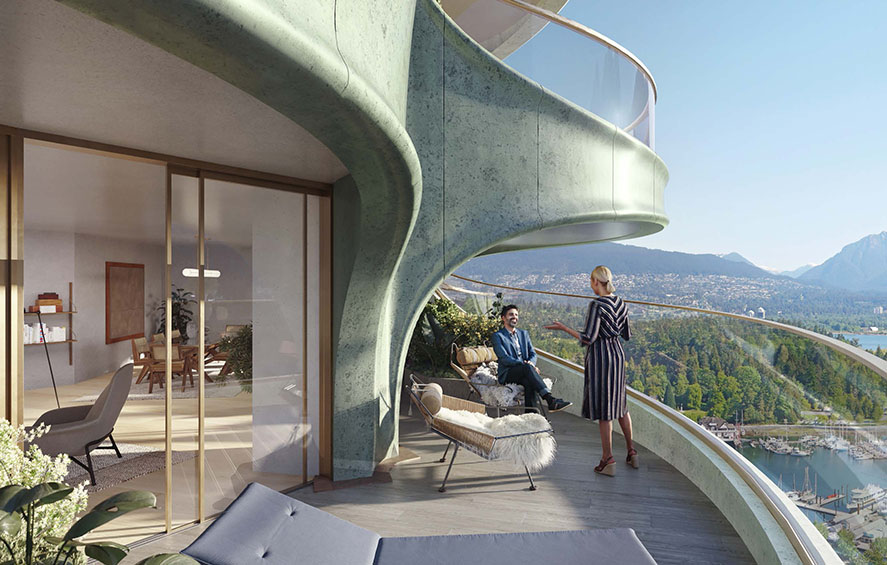
Heatherwick Studio has unveiled a new updated design for its 1700 Alberni residential project in Vancouver.

The new design includes extended outdoor living areas built on a strong connection with the wilderness of British Columbia and the use of sustainable, long-lasting materials. The result is a stand-out building for Vancouver with soaring views that will surprise with its softer, sympathetic lines and practical living spaces, according to the studio.

As part of the new design, the project’s two towers have been repositioned to be adjacent to each other to provide non-restrictive views of the neighbourhood. The towers’ soft lines and intricate latticework, provide a beautifully elegant silhouette. Through a thoughtfully curated ground plane the pedestrian experience is enhanced with continuous podium terraces and recessive balconies allowing for more natural sunlight, and strategically placed plantings offering a rich expression of biophilia.

“We’ve thought long and hard about how the new design should adapt to what we’re hearing not just in Vancouver, but all over the world about what people increasingly expect of their towns and cities. This is reflected in what they want from new homes. People want bigger and more useable outdoor spaces that create extended living areas, allowing them to take their work or recreational time outside. They want buildings with solidity, personality and depth that feel permanent,” said Thomas Heatherwick.

Residences will be spread across 30 (East Tower) and 39 (West Tower) floors with a shared podium. The development includes recreational amenities such as a pool, gym, spa, wellness facilities, and an outdoor terrace.

The project is developed in collaboration with Kingswood Properties and Bosa Properties.

Windsor utility to rebate EV charger installations

Multifamily landlords, businesses, academic institutions and community organizations in the city of Windsor and the surrounding county could qualify for rebates of up to 50 per cent of expenditures for electric vehicle chargers. Essex Powerlines Corporation, the electrical utility serving the region, has received a $2 million injection from Natural Resources Canada’s zero-emission vehicle infrastructure program (ZEVIP) to launch the Charge Up initiative.

The newly announced funding is expected to flow through to up to 300 new EV charger installations, which would have to be in service no later than March 31, 2023. It will be allocated on the basis of:

  • up to $5,000 for the installation of a Level 2 connector with an output of 3.3 to 19.2 kilowatts (kW)
  • up to $15,000 for the installation of a fast charger with 20 to 49 kW output, and
  • up to $50,000 for the installation of a fast charge with 50+ kW output.

Qualified proponents can submit more than one application and could receive up to $100,000 to cover 50 per cent of eligible costs for multiple approved projects.

Under program rules, the EV chargers must be located in: public places or on-street; workplaces; multifamily buildings with at least three dwelling units; or on the premises of a business or organization that operates a fleet of light-duty vehicles. The online application portal is now open.

“This investment empowers Windsor-Essex residents and businesses to lead the transition to electric vehicles, helping our community take a giant step toward a future that is clean, green and prosperous,” observes Irek Kusmierczyk, Member of Parliament for Windsor-Tecumseh and parliamentary secretary to Canada’s Minister of Employment, Workforce Development and Disability Inclusion.

Klohn Crippen Berger appoints new president

Ryan Douglas, P.Eng., has been appointed president of Klohn Crippen Berger (KCB) in Vancouver.

He succeeds Len Murray, P.Eng., who stepped down from the role at the end of 2021. As part of KCB’s succession plan, Murray will remain KCB’s CEO in 2022.

Douglas began his consulting engineering career in South Africa 28 years ago. His technical experience focuses on civil, hydrotechnical and geotechnical engineering.

He joined KCB in 2000, became a principal in 2013 and was promoted to vice-president of its power and transportation business unit in 2018. He also holds executive positions within the company governing subsidiaries, risk assessment and international corporate compliance. As president, he will manage day-to-day operations and facilitate further growth

His technical experience is worldwide and focused in civil, hydrotechnical, and geotechnical engineering and project management in hydroelectric and other heavy civil infrastructure projects. As president, Douglas will facilitate KCB’s growth as a company, as well as manage the day-to-day operations.

“Since joining KCB I have first and foremost been proud to represent this company, which has such a rich history and culture. I have approached all the opportunities I have been offered with my full commitment and energy, and this appointment will be no different,” he says.

“I am looking forward to working closely with the principals, associates and senior management to continue the strong growth KCB has experienced under Len’s leadership.”

Murray welcomed the appointment by the KCB board of directors.

“Ryan is a seasoned leader and has all the skills and enthusiasm to guide KCB as it looks to more growth in the coming years. I look forward to working with Ryan.”

Commercial cleaning products market to reach $45B by 2028

The global market for commercial cleaning products is expected to grow to around C$45 billion by 2028 with a compounded annual growth rate (CAGR) of 9.7 per cent, according to a new report from market research firm Research and Markets.

The study found the growth is mainly attributed to rising urbanization in developing economies. Growing investments by countries in constructing office buildings, hotels, retail stores, and other commercial infrastructure are predicted to result in the subsequent increased demand for various types of cleaning products.

The surface cleaning products segment, in particular, accounted for the largest share of 44 per cent in 2020 and is expected to expand at a CAGR of over 10 per cent during the forecast period, according to the report. That is due to a large variety of surface tops being introduced in modern construction projects and the consequential need for different cleaning solutions.

Another recent report from Fact.MR suggested that the North American surface cleaning products market is expected to lead the way, and accounted for approximately 30 per cent of global sales in 2021. That analysis’ conclusions reflected the fact that the cleaning products market has gained massive importance due to the onset of the COVID-19 pandemic.

Meanwhile, yet another report, this one from MarketsandMarkets, predicted that the industrial cleaning chemicals market will reach C$77 billion by 2026, at a CAGR of 5.1 per cent. This spans not only commercial facilities but other sectors including hospitals and hotels. That report predicted that surfactants will be the fastest-growing ingredient type in the industrial cleaning chemicals market, while the general cleaning and medical device cleaning segment will be the fastest-growing product type.

Additionally, the Research and Markets report found that during the forecast years, cleaning products that act as disinfectants and sanitizers are likely to see a significant increase in demand from well-publicized epidemics, such as the Ebola virus, swine flu, the Zika virus, and coronavirus.

RELATED: Assessing likely cleaning industry trends for 2022

The report additionally notes there has been a shift in terms of economic growth from the West to potential emerging markets in the past decade, substantially increasing the growth of new businesses across the globe.

Office markets recover lost ground

After six consecutive quarters of declining occupancy, some of Canada’s office markets began to recover lost ground in the fourth quarter of 2021. CBRE’s newly released statistics for 10 major metropolitan areas report collective positive absorption of 1.7 million square feet last fall.

Yet, as 2022 begins, the overall quotient of empty space has grown by 17.7 million square feet since the winter of 2020. The arrival of 2.4 million square feet of newly constructed supply actually pushed the Canada-wide vacancy rate up 10 basis points in Q4, to 15.8 per cent.

The largest share of resurgent leasing occurred in Toronto, Vancouver and Ottawa, with Halifax and Winnipeg also recording small gains. Calgary, Edmonton, Montreal and the southwest Ontario markets of London and Waterloo continued to post declines. Q4 2021 results are also now weighed against trepidation about COVID-19’s virulent omicron variant, which has derailed many companies’ plans to resume working in formal offices early in 2022.

“It’s becoming increasingly clear that our downtown leasing activity is highly correlated with the extent of our lockdowns,” acknowledges Jon Ramscar, CBRE’s managing director in downtown Toronto. “However, unlike the previous waves of COVID, more businesses are now looking forward and appear to be viewing the current situation as temporary.”

More than 22 months of pandemic dynamics have narrowed the gap between downtown and suburban markets. Vancouver, Toronto, Ottawa and Montreal report Canada’s lowest vacancy rates for downtown Class A office space, but suburban space is fuller than downtown in seven of the 10 markets, including Vancouver and Ottawa. Across all ten, the suburban vacancy rate is now just 10 bps higher than that for downtown, compared to the 220-bps spread as of Q1 2020.

Vancouver continues to enjoy the tightest office market in the country, recording a 7 per cent overall vacancy rate and a 7.2 vacancy per cent for downtown Class A space. Q4 saw nearly 689,000 square feet of positive absorption with more than 400,000 of that occurring downtown. Average net rent for downtown Class A space rose to $46.79 per square foot (psf) — contributing to Vancouver’s 12 per cent year-over-year gain in Class A rental rates — or nearly 120 per cent higher than the national average for net Class A rents at $21.28 psf.

Toronto commands the next highest downtown Class A rents, at $34.18 psf, in tandem with an 8 per cent vacancy rate. There is still more than 7.5 million square feet of new supply under construction downtown with nearly 600,000 square also in progress in the suburbs. However, more than 1.3 million square feet of downtown office space was absorbed during Q4, modestly surpassing — by about 40,500 square feet — the amount of newly completed supply added to the market in the same period.

While average Class A net rents crept up from Q3, Toronto is one of five surveyed markets where year-over-year Class A asking rates declined. That slippage ranges from 0.2 per cent in Halifax in to 8 per cent Calgary. Meanwhile, with double-digit surges in Vancouver and Waterloo along with increases ranging from 2.8 per cent to 0.7 per cent in Montreal, London and Winnipeg, the national average balanced out to a 2.6 per cent increase.

Ramscar hints Toronto’s 2.1 per cent decrease is tied to the marked diminishment of a record-high tally of downtown sublet space, which shrank from more than 41 per cent of available supply at the beginning of 2021 to just above 25 per cent by Q4. Analysts also speculate many tenants have capitalized on the earlier glut to move to better quality quarters and/or looked to avoid build-out complications related to current supply chain woes by moving into ready-to-go space.

“The resurgence in leasing activity over the last quarter tells us there is a much deeper level of pent-up demand for flexibility and quality at an attractive price point than many perceive,” Ramscar asserts.

Ottawa’s market is deemed to have been relatively stable over the course of the pandemic, and it has emerged from Q4 as one the top performers. An overall vacancy rate of 8.6 per cent splits at 9.9 per cent downtown and 7.5 per cent in the suburbs. Drilling down further, downtown Class A space enjoys vacancies of just 6.4 per and commands average asking net rents of $22.64 psf. The quarter saw 567,000 square feet of absorption, with 260,000 square feet occurring downtown.

Montreal’s downtown Class A vacancy rate stands at 10.1 per cent in tandem with average net asking rents of $24.82 psf. That compares to a 13.7 per cent total downtown vacancy rate and a 14.8 per cent citywide vacancy rate. Suburban leasing picked up during the quarter, garnering 191,000 square feet of absorption, but that wasn’t enough to outweigh the additional 227,000 square feet returned to the market downtown. Just 133,000 square feet of new supply came onto the market during Q4, all in the suburbs. About 2.5 million square feet is still under construction, with nearly 1.9 million of that in suburban markets.

Vancouver and Toronto are the two remaining markets where significant new construction is underway. Vancouver’s seeming smaller pending additions — nearly 3 million square feet downtown and another 787,000 square feet in the suburbs — is equivalent to more than 7 per cent of its existing office inventory. Meanwhile, 8.1 million square feet of Toronto development, with approximately 7.5 million square feet slated for downtown, amounts to about 5 per cent of existing office space.

For Calgary, 2021 was another rough year. The overall vacancy rate rose to 30.4 per cent in Q4 with another 255,000 square feet of negative absorption. The downtown Class A vacancy rate stands at 27.7 per cent and average Class A net rents are pegged at $15.48 psf. Still, analysts point to three consecutive quarters of declining sublet vacancies as one positive sign. New investors are also predicted to enter the market in 2022.

“An uptick in asset sales by major oil and gas firms is expected as foreign companies looking to exit Canada capitalize on improved pricing,” CBRE analysts suggest.

Architect Eberhard Zeidler has passed away

Zeidler Architecture founder Eberhard Zeidler has passed away at 95. Born in 1926, Zeidler designed such landmarks as Ontario Place and the Eaton Centre in Toronto and Canada Place in Vancouver.

Zeidler approached his work with a strong technical ability combined with humanist sensibilities. His designs have left a distinguished impression on the Canadian architectural landscape, with enormously successful landmarks such as the Eaton Centre and Ontario Place in Toronto, the McMaster Health Sciences Centre in Hamilton, and Canada Place in Vancouver.

Zeidler’s prolific career, philosophical views on city building, and pioneering designs have inspired architects all over the world.

He transformed the notion of the machine hospital into a healing environment, believing the hospital itself serves the emotional needs of its patients, staff, and visitors. He took labyrinth corridors and transformed them into an open system with natural light, green spaces, and settings for communal gathering. His Eaton Centre design was conceived not as a mall but an interior street, integrating it as part of the city fabric.

His legacy lives on in the 1000-plus buildings he designed; his essays and personal diaries found within his book, Buildings Cities Life; and the strong inspiration he gave to a myriad of city builders, architects, artists, and thinkers alike.

“I first met Eb in my final year at architecture school at the University of Toronto. My father, an architect who had previously worked with Eb, recommended that I join his design studio. That year, Eb taught me to not only focus on the strong conceptual design, emphasized in the Faculty of Architecture, but also to highlight technical solutions. He showed me how to ensure the survival of a strong concept through the development and construction process. Eb offered me a position after graduation. Since that time, over 30 years ago, I have enjoyed his tremendous support and encouragement, and am proud to represent the great design firm he founded,” said Vaidila Banelis, senior partner at Zeidler.

Two BC companies achieve GBAC STAR accreditation

Two facility service providers in British Columbia have achieved industry-leading GBAC STAR Service Accreditation, denoting the validation of their cleaning, disinfection, and infection prevention programs.

Alpine Building Maintenance in Delta and Best Service Pros Ltd. in Coquitlam have secured the certification, which aims to help facility customers prepare for, respond to, and recover from biorisks such as the COVID-19 pandemic.

Facilities of all types and sizes can also pursue GBAC STAR accreditation. By partnering with an accredited outsourced service provider, these facilities further enhance their commitment to public health and safety.

GBAC STAR accreditations are renewed annually to ensure that organizations are focused on continual improvement. To date, 42 BSCs servicing thousands of facilities around the world have achieved accreditation.

“There truly is a science to cleaning, and GBAC STAR Service Accreditation helps commercial cleaning companies follow the science to properly clean for health,” said GBAC Executive Director Patricia Olinger. “This makes all types of facilities safer, from offices to schools to airports to convention centres.”

“When facility service providers are GBAC STAR accredited, they give building owners, managers, and occupants the confidence that the right cleaning, disinfection, and infection prevention protocols are being followed,” said ISSA Executive Director John Barrett. “Plus, their accreditation makes them well-positioned to help the facilities they manage pursue and maintain Facility Accreditation.”

GBAC STAR accreditation is bestowed by the Global Biorisk Advisory Council (GBAC), a Division of ISSA, which provides training, guidance, accreditation, certification, crisis management assistance and leadership to government, commercial, and private entities looking to mitigate, quickly address, and/or recover from biological threats and real-time crises.

GBAC also offers Facility Accreditation for facility owners, operators, and managers.

Learn more and apply for accreditation here.

MediaEdge is a proud reseller of the GBAC STAR and GBAC fundamentals online course. Commercial facility owners looking for accreditation can follow the link here.

ISSA has also released a new GBAC fundamentals online course specifically designed for cleaning workers on the frontlines of the coronavirus fight. Click here to register and receive a discount off normal prices.

For additional program details and information, please email [email protected] or contact him at (416) 803-4653.

B.C. invites feedback on asbestos licences

The B.C. government is inviting feedback on proposed health and safety requirements that include licences for contractors, employers and workers who undertake asbestos abatement work.

Asbestos-related diseases are the leading cause of workplace deaths in B.C. and workers and others continue to be exposed to this extremely hazardous substance. To improve workplace health and safety, the provincial government is proposing new standards under the Workers Compensation Act that would require:

  • asbestos abatement contractors to be licensed by WorkSafeBC to operate in B.C.; and
  • employers, workers and contractors who perform asbestos abatement work be certified through a mandatory safety training process that would be authorized by WorkSafeBC.

The proposed amendments would help strengthen the existing regulatory requirements for asbestos abatement work. All abatement contractors would need to be licensed to operate in B.C. and their workers would have to complete training in the safe handling of asbestos. All contractors in good standing would be listed on a publicly accessible registry so that building owners can ensure they are hiring a qualified company with trained workers.

The proposed amendments would also strengthen WorkSafeBC’s enforcement tools and grant the authority to deny, cancel or suspend licences of non-compliant contractors.

Government would like to hear from a broad range of British Columbians, including workers, employers, contractors, building and homeowners, and the general public.

The consultation will be open from Tuesday, Jan. 11, to Friday, Feb. 11, 2022. To participate, visit https://engage.gov.bc.ca/govtogetherbc/consultation/asbestos-abatement-licensing-and-training

Crews complete Max Bell Centre renovations

Major renovations at Max Bell Centre (1001 Barlow Trail S.E) in Calgary have completed on time and on budget. Construction by CANA Construction began in May of last year. S2 Architecture was the architect on the project.

The $14 million upgrade to the arena facility included lobby and change room renovations, replacement of the electrical and mechanical systems, energy-efficient lighting, new safety netting, and a new ice slab, dasher boards and board glass for Ken Bracko Arena.

“Investments like these go a long way to ensuring Calgarians have access to quality recreation amenities,” said Gian-Carlo Carra, Ward 9 Councillor. “Max Bell Centre is much more than arenas — it’s a place for the community to gather, host events and stay active.”

More than half a million people walk through the doors of Max Bell Centre each year. This community hub now enjoys enhanced accessibility with the addition of barrier-free washrooms and a new elevator. The main entrance, lobby and concession areas have also been redesigned and modernized, and families can enjoy a new interactive play area and activity wall.

The Max Bell Centre site is an important venue for outdoor festivals, including Chasing Summer, the Calgary Japanese Festival “Omatsuri” and the Canada Day Block Party.

Lighting upgrades, improved access to potable water, electrical service for food trucks, structural aprons to support entertainment staging, and resurfacing of the parking lot elevate the facility’s appeal as a festival and event location.

“Max Bell Centre is an important community asset serving diverse groups,” said James McLaughlin, acting director of Calgary Recreation. “These improvements will mean a better and more accessible experience for sport participants, cultural groups, families and community partners.”

The Max Bell Centre has been part of the community since 1974, providing thousands of hours of ice time for amateur sport and hosting more than 15 major festivals and events annually.

Industrial rental rates continue upward climb

Industrial rental rates trended upward in 11 of the 12 metropolitan areas that Colliers Canada tracks during the fourth quarter of 2021. A newly released snapshot of Canadian markets finds vacancy rates below 1 per cent in five markets, and between 1 and 5.4 per cent in the seven other urban centres.

Topping the chart, industrial space in Victoria and Vancouver commanded average asking net rates of $16.47 and $16.31 per square foot (psf) respectively in markets where the vacancy rate has fallen below 0.5 per cent. That surpasses average asking rents for office space in five of the surveyed markets: Calgary; Regina; Winnipeg; Waterloo; and Halifax.

Across the 12 markets, Colliers pegs the vacancy rate at 1.3 per cent, with the availability rate at a somewhat roomier 2.2 per cent. That follows a year when nearly 39.5 million square feet of industrial space was absorbed and 21.7 million square feet of new supply came onto the market. Another 34.3 million square feet is under construction, but Colliers analysts foresee it will be leased quickly.

“Supply chain constraints have impacted the holiday season, with retailers unable to sell goods they don’t have. A shift from a just-in-time to a just-in-case inventory strategy is expected to drive demand for industrial over the foreseeable future,” they note.

Canada-wide, average asking net rents rose steadily over the course of 2021 to hit $9.65 psf by the fourth quarter. In addition to Vancouver and Victoria, asking rates in Saskatoon, Regina, Toronto, Ottawa and Halifax exceeded the national average. Elsewhere, lower rental rates still represent all-time market highs, such as in Waterloo, where industrial space commands an average net rent of $8.54 psf in a market where the vacancy rate has dipped to 0.9 per cent.

Toronto and Ottawa also posted record-high industrial rental rates of $12.66 and $12.22 psf respectively. Toronto’s vacancy rate has fallen to 0.3 per cent, while Ottawa’s sits at 1 per cent.

Toronto saw 13.6 million square feet of net absorption over the course of 2021 as about 11.5 million square feet of new supply was added to the market. About 10.2 million square feet is currently under construction, spurring competition among potential users.

“Actively marketed spaces are seeing multiple offers, highlighting the increasing importance of tenant covenants during the negotiation process,” Colliers analysts report. “Landlords now prefer deal terms between three to five years compared to the traditional 10-year term because of how fast rents are increasing. Annual rent escalations are starting at the 5 per cent range versus the 2 to 4 per cent range seen previously.”

Montreal’s average asking rents hovered just below the national average, at $9.23 psf, during Q4 2021, but they are projected to crack the $10 mark in the near future, as strong demand continues and industrial land constraints hinder delivery of new supply. As in Toronto, Colliers reports landlords are now favouring three-year deals.

Montreal’s industrial vacancy rate sits at 0.8 per cent. Last year saw 3.7 million square feet of net absorption with less than 770,000 square feet of new supply added to the market. About 3.9 million square feet is currently under construction, but Colliers analysts advise developers have been slow to deliver spec space.

“Land transactions remain highly competitive, resulting in developers pushing investment mainly to the South Shore (of the St. Lawrence River) for industrial development. Nine out of 16 land transactions since September 2021 have been in the South Shore,” they add.

With little open territory available, developers are looking to other options in Vancouver. About 6.3 million square feet of new space is currently under construction in a market with a 0.4 per cent vacancy rate — translating into less than 800,000 square feet of available space. There have been no vacancies in bulk or logistics space since mid-2020 and no spaces larger than 50,000 square feet have opened up for leasing since last March, even though about 3.2 million square feet of new supply was completed during 2021.

“Innovation from developers is occurring to meet these market conditions with various new forms of industrial development emerging, such as stacked industrial (both small and large bay), mixed-use with industrial on the ground floor and strata becoming increasingly common,” Colliers analysts state.

Calgary is viewed as something of a beneficiary of surging demand and tight supply in Toronto, Montreal and Vancouver. It offers the second highest vacancy rate — at 4.1 per cent — and the second lowest average net asking rent — at $8.31 psf — among the 12 surveyed markets, but both those tallies are indicators of marked improvement over the course of 2021. The vacancy rate dropped by more than 200 basis points from Q4 2020 in a year that registered more than 5.1 million square feet of positive absorption.

Nearly 1.6 million square feet of new supply came onto the market in 2021, and 7.3 million square feet is under construction, with 2.4 million square feet scheduled for completion before July this year. “The demand for mid-bay space is likely to result in more expansion in this segment compared to previous construction cycles,” Colliers analysts surmise.

Elsewhere on the prairies, Edmonton registers the highest vacancy rate among the 12 markets, at 5.4 per cent, while Winnipeg posts the lowest average asking rents at $7.95 per square foot. Winnipeg is the lone market of the 12 where rental rates slipped during Q4, but that follows the all-time high posted in third quarter. The vacancy rate also decreased over the last three months of the year, dropping to 2.8 per cent.

Outside of British Columbia and Ontario, Saskatchewan’s two cities boast some of the most robust trends in Canada. With a vacancy rate of 2.7 per cent, Saskatoon’s industrial space garnered average asking net rents of $12.31 psf in Q4. Regina recorded a 2.5 per cent vacancy rate and average asking net rents of $11.43 psf.

The sluggish pace of construction is believed to be contributing to the dynamic, as the arrival of new supply lags demand and developers also look to pass through their rising costs for construction materials and skilled labour. However, the markets appear well positioned for expected continue industrial demand. “With plenty of land inventory at the market’s disposal, Regina remains a prime location for growth,” Colliers analysts predict.

Looking east, Halifax is also enjoying buoyant industrial prospects, as average asking rents reached $9.89 psf in Q4 and the vacancy rate fell to 2.7 per cent. The market saw about 338,000 square feet of positive absorption in a year when no new supply was added. About 175,000 square feet is currently under construction.

“With limited new supply expected to be added to the market in 2022, the scarcity of options are leading tenants to reconsider their leasing strategy,” Colliers analysts report. “As developers are unable to keep up with demand for the foreseeable future, industrial vacancy is expected to remain low with rents set to continue to increase.”


Radio Arts to rise at old Hamilton radio station site

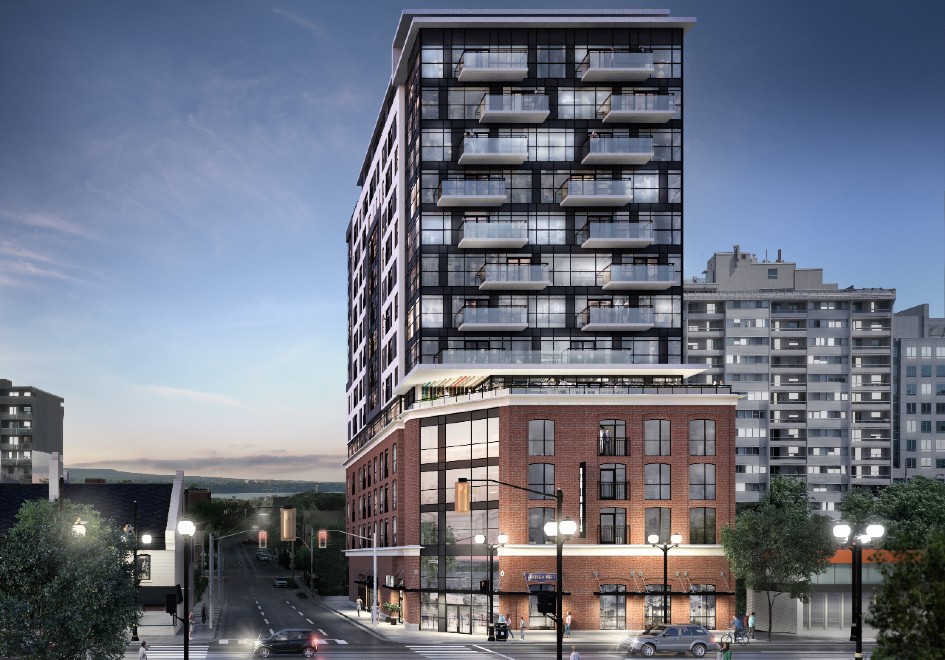
A new condo in Hamilton Ont. will rise 14 storeys high on the former CHIQ radio station site at 206 King Street West. The four-storey podium of Radio Arts will embrace the city’s brick and beam aesthetic with masonry details and arched windows familiar to the original 1908 building design.

A glass beveled corner highlights the ground-floor retail and the condo’s active amenity spaces such as a fitness studio, a co-working lounge and a WiFi lounge that overlooks King Street. Rising above the podium, will sit the black and white cladded residential tower.

Radio Arts will also be the first development in Hamilton to feature stacked vehicle parking with ample bike storage.

Hamilton

Renderings by Drawn in Depth.

“I’ve always loved the eclectic architectural charm of downtown Hamilton, so when it came to Radio Arts, I wanted to make sure it reflected the unique fabric of downtown, while also recognizing Hamilton’s renaissance of youthful, creative energy,” says Vernon Shaw, founder and president of Canlight Realty Corporation and developer behind the the Pigott Building.

For the redevelopment of this site, Shaw enlisted Hunter Milborne, CEO of Milborne Group, who was born and raised in Hamilton. His family once owned a local business on the same street as Radio Arts.

The designers behind the revitalization of the Royal Connaught building, KNYMH Inc. and Hamiltonian, Erika McCarthy and her team at Baudit Interior Design are helping to bring the vision of Radio Arts to life.

As the development and design team started to peel back layers, they discovered an original tile floor of the former broadcasting station, with mosaic details that spell out ‘Radio Arts.’ Other architectural details like original beams and metal barn-style doors will be salvaged and reincorporated into the building.

“There’s a distinct vibe in the city that plays on the sophistication of brick and beams while inspiring creativity,” says McCarthy. “I’ve seen how Hamilton has grown with the arts, music, and food scenes. Still, Hamilton’s approachability has been consistent, and it’s important that the design of Radio Arts reflected this in the interior design.”

Radio Arts will be a four-minute walk to both the Queen and James LRT stops. Geared towards the working professional, suites range from studios to three-bedroom units.

A social lounge on the 14th floor feeds out onto the rooftop terrace that offers views from across the city.

Hamilton

Rendering of social lounge by Drawn in Depth.

Digital concierge services are also available and allow residents to manage guest access, home deliveries, and more from their smartphones.

“Hamilton is on the precipice of growth and change,” says Milborne. “The high standards that Vernon sets as a community builder combined with this new wave of energy, makes Radio Arts special. It was the right time for me to come back to Hamilton and I am proud to be part of its vibrant urban renewal story.”


Ontario invests in new disinfectant wipes facility

Amid the increased awareness of using disinfectant wipes sufficiently and properly in all facilities, the Ontario government is supporting a nearly $10 million investment by Empack Spraytech Inc. in a new disinfectant wipe production facility in Barrie, Ont.

The government is pledging more than $1.2 million in support through the Ontario Together Fund.

Empack is expanding its capacity through this newly built facility by producing disinfectant wipes under the Zytec Germ Buster brand. This investment will support their new 100,000-square-foot facility, of which 25,000 square feet will have the capacity to produce more than four million wipes per day in order to meet the continued and growing demand for disinfectant wipes since the onset of the COVID-19 pandemic.

Empack will manufacture a range of Health Canada-approved disinfectant wipes using various active ingredients including citric acid, benzalkonium chloride, and combinations of quaternary ammonium compounds, all of which have been tested to prove efficacy against COVID-19. It is also developing new products using hydrogen peroxide at the new facility to further expand the markets served.

Empack Spraytech is a privately-owned, family-operated Canadian manufacturer of personal care, OTC drug, automotive, industrial, and other household products and a proud manufacturer of well-known brands such as Zytec and Emzone. Founded in 1999, the Brampton-based company employs more than 170 people in Brampton and Barrie.

Calgary Winter City Design winners revealed

The City of Calgary has announced the two winners of its inaugural Winter City Design Competition, who will receive funding to build and install their designs along Stephen Avenue.

The city, in partnership with the University of Calgary’s School of Architecture, Planning and Landscape, invited designers, artists and students to imagine the possibilities for eye-catching and interactive displays along Stephen Avenue. The theme was “Out of Bounds.”

The two winning submissions are:

“Infinito” – a lit tunnel that focuses on intimacy, connection and social interactions.

Project team – Bosco Chik, Charlie Jiang, Christian Icuspit, William Zhuang, Karim Kandil

“Wowie” – an interactive, accessible experience to make winter feel warmer, designed with kids in mind. (main photo)

Project team – Seeton Naested, Julian Warring, Kelsi Hurlbut, Adam Ford, John Lawlor, Matt Labrie, Audrina Lim, Alison MacLachlan, John Rivera.

“Infinito” will be placed at Stephen Avenue and 2 Street S.W. “Wowie” will be constructed at Stephen Avenue and Centre Street S. Each winning project will receive $10,000 to construct and install their design in February 2022.

“The two winning designs will each bring something new and exciting to liven up Stephen Avenue during our coldest months,” said Kate Zago, who is leading the Winter City Design Competition. “We’re extremely delighted to bring these designs to life in February and create two new great public spaces for Calgarians to experience.”

The goal of the competition is to explore and push beyond the boundaries of what public spaces look like in midst of a Calgary winter.

The competition is part of the city’s Future of Stephen Avenue Activate + Experiment project, to re-imagine Stephen Avenue from City Hall to Mewata Armoury. This project is testing out ideas and experiments and measuring impacts, to help inform the future of downtown’s iconic main street.

Eaton Centre’s galleria roof to get $60-mil makeover

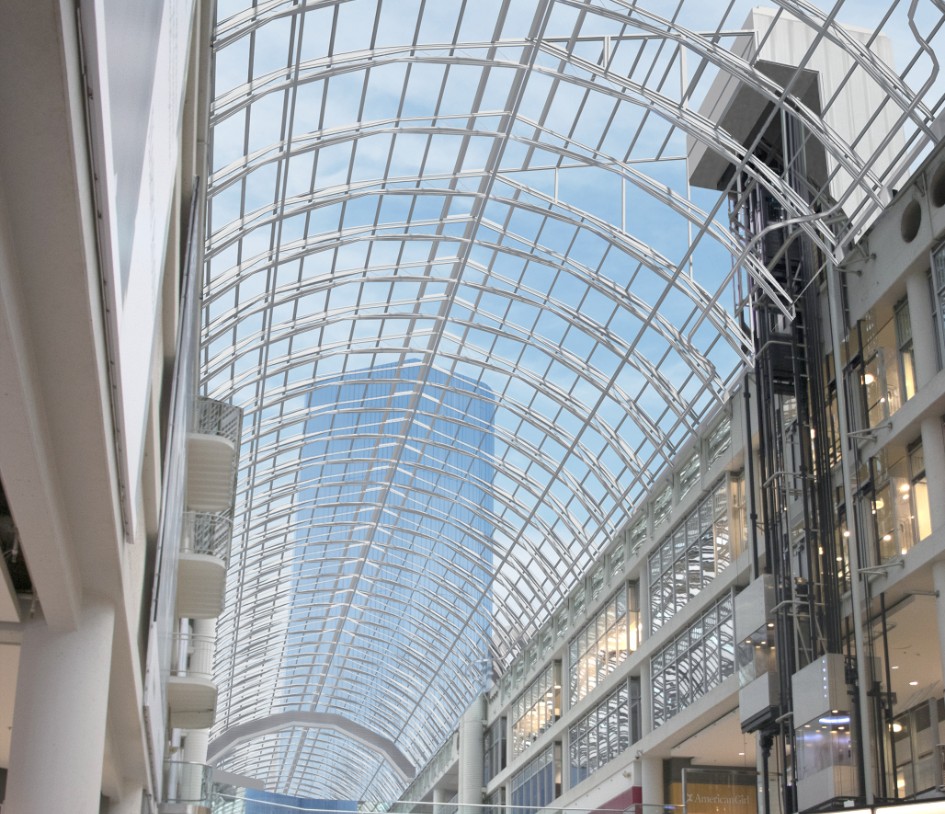
CF Toronto Eaton Centre will begin revitalizing its skylight galleria roof this month with a $60-million upgrade to boost energy efficiency and long-term sustainability.

New materials and technologies will replace the existing glass yet retain the classic design aesthetic the roof is known for.

“The galleria’s original design was inspired by the Galleria Vittorio Emanuele II in Italy and has served as a distinguishing feature of the mall since the centre’s opening in 1977,” said Wayne Barwise, executive vice president, development, Cadillac Fairview. “As custodians of this unique architectural element, our priority is to ensure the integrity of its design as we significantly enhance its functional performance.”

The shopping centre’s “Flight Stop” art installation, which depicts sixty Canada geese mid-flight and has come to serve as a visual identity for the centre, will be temporarily and carefully removed by an art restoration company for professional maintenance and placed in safe storage until re-installation.

The refurbishment will involve original galleria architects Zeidler Architecture Inc., with Read Jones Christoffersen as consulting engineers and construction overseen by EllisDon Corporation.

The project will be carried out in two phases, starting with the south end of the mall (Queen Street to Centre Court) in mid-January 2022 and work on the north end commencing in March 2023.

CF will also be investing $17 million to improve shoppers’ movement and accessibility with the addition of three new staircases in the South Court and Urban Eatery, improvements to elevators, and the installation of a larger cab in an existing elevator to better accommodate strollers and mobility scooters. The enhancements will facilitate convenient connections, while creating a more welcoming environment throughout the property.


 Eaton Centre

CF Toronto Eaton Centre galleria roof. Image courtesy of Zeidler Architecture Inc.


Since 2010, Cadillac Fairview has invested more than $1.6 billion in its flagship retail centre, including the redevelopment of the Queen Street pedestrian bridge, the purchase of the Hudson Bay Centre block and 401 Bay Street; the buyback of the Sears space and its redevelopment to accommodate Nordstrom, as well as the creation of the BMO Urban Campus opening in 2022.


Garbage chute decommissioning stalls in Toronto

Efforts to facilitate garbage chute decommissioning in multi-residential buildings have had modest results in Toronto. A new report to City Council reveals that just 24 permits allowing landlords to seal chutes have been issued over the past 12 years, representing about 57 per cent of the 42 applications that have been submitted to the chute closure program since it was launched in 2010.

“Closing the garbage chute in a multi-residential building has the potential to eliminate the convenience of garbage on every floor and also has the potential to encourage residents to sort and bring their divertible waste for management in Blue Bin and/or Green Bin organics thereby reducing waste sent to landfill,” the report notes. “A chute closure also provides the opportunity for property owners to have greater control over the waste stream by encouraging residents to sort their waste and reduce contamination of the waste streams, and as a result, help to reduce their volume-based solid waste fees.”

Under current rules, a building must receive municipal solid waste collection services and landlords must have appropriate waste diversion receptacles and a tenant communications strategy in place to qualify for the program. City staff conclude the first requirement has been a major obstacle to uptake. Many multi-residential buildings do not meet the specifications for municipal solid waste collection, which prescribe loading facilities, minimum radii for truck turning and emergency route access that often can’t be accommodated in the existing building design and site configuration.

The report outlines possible options for expanding the garbage chute decommissioning program to buildings with contracted solid waste collection services, but also observes there is no funding in the 2022 budget to do so. It’s speculated that more landlords would apply for chute closure permits if buildings with contracted waste collection were allowed to participate.

“In some cases, where a non-permitted chute closure was identified by Municipal Licencing and Standards or where Solid Waste Management Services staff have received chute closure permit requests, waste diversion outcomes were not found to be the main driver. Rather, the closure was in place or being sought due to other operational concerns in the building, such as, but not limited to, pest management and other maintenance reasons,” the report observes.

Vaccine guidance updated for home-building industry

The Residential Construction Council of Ontario (RESCON) has updated a guidance sheet on its website that provides builders and workers with information on where they can register and get vaccinated against COVID-19.

“The Omicron variant of the virus is highly transmissible and the risk of contracting it is much higher,” says RESCON VP Andrew Pariser, who is on the organization’s health and safety committee. “However, studies have found that with a booster dose, workers are better protected and less likely to be hospitalized.”

The vaccine guidance sheet is updated regularly by Ahd AlAshry, policy and programs analyst at RESCON. It provides members, the construction industry, workers and the public with critical information, so that they are able to quickly register and get vaccinated as soon as possible.

The sheet includes links to all the different registration systems by region across the Greater Toronto Area, as each area has different vaccine requirements and systems. The document makes the information available in one place, and highlights the various schedules, locations and registration links for hospital clinics, school clinics, pharmacies, pop-ups, and GO VAXX buses.

The guidance sheet is one item in a COVID-19 information section on the RESCON website that has details on rapid testing resources and documents, news and updates, a vaccine policy template, information on health and safety best practices and downloadable flyers and posters.

Updated income thresholds peg stressed renters

Ontario has updated income thresholds used to guide provincial social service agencies and subsidized housing providers, as of January 1, 2022. Based on data from Canada Mortgage and Housing Corporation (CHMC), the new benchmarks establish parameters for defining financially stressed renters and estimate the earnings needed in order to spend no more than 30 per cent of income on housing.

Generally, four brackets of presumed housing costs and cut-offs for assistance are applied throughout the province, with some minor variations in northern Ontario. The most populous areas of the Greater Toronto Area, with the exception of Durham Region, are presumed to have the steepest housing costs, while smaller cities and rural areas are deemed to have the lowest.

In Toronto, Peel, York and Halton Regions, it’s suggested renters with one-bedroom apartments would need an annual income of at least $56,500 to ensure housing costs ate up no more than 30 per cent of their budget, while renters with three bedroom-units would need a yearly income of $72,000 to keep housing costs at the same quotient. Renters in those jurisdictions are to be designated as “high-need” households — meaning that they earn less than 60 per cent of those stipulated amounts and are spending at least 50 per cent of their income on housing — if they require a one-bedroom apartment and have an annual income of less than $33,900 or require a three-bedroom unit and have an annual income of less than $43,200.

More moderate cost assumptions are used for urban centres in Durham Region, including Oshawa, Pickering, Ajax and Whitby, as well as for Hamilton, Niagara Region, Kitchener-Waterloo, Guelph, London, Windsor, Peterborough and Greater Sudbury. In those jurisdictions, it’s assumed that renters earning $41,400 annually would not need to pay more than 30 per cent of their earnings for a one-bedroom apartment. Similarly, three-bedroom units would presumably cost no more than 30 per cent of earnings for renters with annual incomes of a least $58,000. The demarcation mark for “high need” is set at earnings of less than $24,900 for a one-bedroom apartment or $34,800 for a three-bedroom apartment.

If expending no more of than 30 per cent of their income on housing, renters in Ottawa would need to earn $48,000 annually to secure a one-bedroom unit or $56,000 for a three-bedroom unit. To be considered high-need households, renters of one-bedroom units would earn less than $28,200, while renters of three-bedroom units earn less than $41,400.

Kingston, Belleville, Cornwall and Chatham-Kent represent a minority of cities where income thresholds are grouped with a larger number of rural and more sparsely populated areas. In this cohort, it’s assumed tenants with annual earnings of $34,000 would not need to pay more than 30 per cent of that amount to rent a one-bedroom unit, and tenants seeking one-bedroom units would not be designated high-need households unless their annual income fell below $20,400.