Articles Archive - Page 323 of 928 - REMINET
REMI

GP PRO joins International WELL Building Institute

Georgia-Pacific division GP PRO has joined the International WELL Building Institute (IWBI) membership program as a keystone member.

A statement notes that by joining, GP PRO is intending to advance its “long-standing commitment to the overall health and wellbeing of building occupants and align with like-minded companies seeking to enhance buildings and communities to help people thrive.”

IWBI’s membership program convenes, celebrates, and fosters collaboration with companies and organizations that are leading the movement to advance human health in buildings and communities around the world.

The Institute also administers the WELL Building Standard (WELL) and the WELL Health-Safety Rating credentials as well as conducting applicable research and providing educational resources and advocacy for policies that promote health and well-being for everyone, everywhere.

As such, members like GP PRO are able to tap into IWBI’s expansive resources and knowledge and demonstrate their alignment with IWBI’s mission. In addition, IWBI and its members will now benefit from GP PRO’s industry insights and relevant research findings, which the company will share to further support a mutual commitment to hygiene and wellness.

“The IWBI membership community’s steady growth complements a growing global commitment to people-first places,” said Rachel Hodgdon, president & CEO of IWBI. “Health and well-being are investments that we know pay dividends in times of struggle and of success. We’re excited and humbled to work alongside these global leaders to advance this movement toward a better and healthier future for everyone, everywhere.”

“GP PRO has long been a leader in advancing health and hygiene in facilities across the country. Joining IWBI allows us to further drive these efforts by working alongside similarly focused industry thought leaders to create meaningful, positive and transformative change for the betterment of all,” said Kimber Shray, vice president of marketing with GP PRO.

Shray also noted that GP Center, a 52-story Class A office building boasting 1.3 million square feet and home to Georgia-Pacific and its GP PRO subsidiary, is WELL Health-Safety Rated.


Design team named for Edmonton’s Warehouse Park

The City of Edmonton has awarded the contract for the Warehouse Park project to a team of internationally recognized Canadian companies.

The lead firm and architect will be gh3*, the landscape architect lead will be Claude Cormier + Associés, the engineering team and local landscape site architect will be AECOM and the lighting designer will be Ombrages.

Located in the Downtown Warehouse District, the Warehouse Park will cover 1.47 hectares, between 106 Street and 108 Street and Jasper Avenue to 102 Avenue. This park will be an inclusive, multi-use green space featuring large, open areas that invite citizens and visitors to reflect and explore. It will provide a place to recharge, socialize and celebrate in the heart of the city when it opens in 2025.

The Warehouse Park project is currently in the concept design phase, and will include opportunities for all Edmontonians to provide feedback on the design through public engagement.

The vision for the park is that it will be an urban oasis and an inclusive, multi-use green space featuring large, open areas that invite citizens and visitors to reflect and explore.

Earlier this year, the city the site of the former Doan’s restaurant on 107 Street, north of Jasper Avenue, and will incorporate this land into the Warehouse Park.

The Warehouse Park project supports the city’s Downtown Vibrancy Strategy, and will be a significant public amenity for downtown residents, workers and visitors. The design of 106 Street from Jasper Avenue to 102 Avenue will be integrated into the scope of work for Warehouse Park.

River District taps into waste-to-energy facility

Vancouver’s River District community will soon have their space and water heating needs met with energy generated by Metro Vancouver’s waste-to-energy facility.

A new agreement with Metro Vancouver will see River District Energy purchase up to 10 megawatts of heat from the waste-to-energy facility starting in 2025, reducing greenhouse gas emissions by allowing the community to use less natural gas.

“Metro Vancouver is committed to being part of the solution in the fight against climate change, and we are thrilled to partner with River District Energy providing cost effective energy in the pursuit of lower emissions and energy efficient communities,” said Sav Dhaliwal, chair of Metro Vancouver’s board of directors.

River District will be the first development to benefit from waste-to-energy heat recovery at Metro Vancouver’s facility, allowing it to meet the City of Vancouver’s Zero Emission Building policies. When fully built out, the district energy system will provide heat and hot water for 18,000 residents and more than 500,000 square feet of office and commercial space, reducing greenhouse gas emissions by up to 90 per cent.

“The City of Burnaby is excited to see this project advance and we look forward to capitalizing on this new infrastructure to expand district energy into Burnaby neighbourhoods in the near future,” said Metro Vancouver director and Burnaby Mayor Mike Hurley. “These are the kinds of innovative solutions we need as we forge a path to a carbon-neutral future.”

In addition to producing electricity, steam from the facility can also be used to heat water for district energy applications, with the potential to save up to 45,000 tonnes of greenhouse gas emissions per year. A district energy system works by using underground pipes to deliver hot water to nearby homes and businesses. Supplying heat through district energy in addition to generating electricity triples the amount of energy that can be recovered from the waste-to-energy process.

Detailed project design will begin in early 2022. The first phase of Metro Vancouver construction will involve building an energy centre next to the waste-to-energy facility located in Burnaby and a pipe system that will deliver hot water to River District. Construction of a Community Energy Centre in River District to receive heat from Metro Vancouver and distribute it to the community will begin in 2023.

The estimated cost of Metro Vancouver’s first phase of the district energy system is $55 million.

Electricity rate relief unaligned with lockdown

Pending short-term electricity rate relief for Ontario’s residential and small business customers is somewhat out of sync with expected power consumption patterns due to recently imposed COVID-19-related public health controls. As announced today, time-of-use and tiered rates for electricity consumers on the regulated price plan (RPP) will switch to the off-peak rate of 8.2 cents per kilowatt-hour (kWh) for 21 days beginning at midnight on January 18. That’s a day after the provincial government has suggested it could allow students to return to classrooms.

“We know that spending more time at home means using more electricity during the day when prices are higher,” observes Todd Smith, Minister of Energy. “That’s why we are moving to off-peak electricity rates 24 hours per day, seven days a week. The off-peak rate will provide immediate savings for families, small businesses and farms as all Ontarians work together to slow the spread of the Omicron variant.”

In the interim, customers who have opted for time-of-use rates will continue to pay on-peak rates of 17 cents/kWh from 7 to 11 a.m. and 5 to 7 p.m., and mid-peak rates of 11.3 cents/kWh from 11 a.m. to 5 p.m.. Or under the tiered rate option, residential customers will pay 9.8 cents/kWh for their first 1,000 kWh of consumption and 11.5 cents/kWh for additional usage.

Timing of the relief measure could prove beneficial for a range of small businesses that may again be able to welcome clientele to their premises as of January 26 since they would enjoy the off-peak rate for the first 12 days of resumed operations. Alternatively, if restrictions on in-school attendance and public gatherings stretch beyond the initial two- and three-week targets, residential electricity customers — particularly those housing online learners — will likely realize the greater benefit.

However, Ontario businesses subject to prohibitions on indoor occupancy or restrictions on capacity will be eligible for rebates on utility costs and property tax for the affected period. In addition, the provincial government has announced a $10,000 grant for designated categories of businesses suffering pandemic-related operational interruptions including: restaurants and bars; fitness and recreational facilities; cinemas, performing arts and cultural venues; events spaces and conference centres; driver’s training instructors; and before- and after-school programs. Qualifying businesses are promised funds in February.

“Small businesses, job creators and the entrepreneurial spirit are the backbone of Ontario’s economy. Unfortunately, these businesses have been some of the most impacted by COVID-19, and many continue to struggle,” acknowledges Vic Fedeli, Minister of Economic Development, Job Creation and Trade.

Ontario seeks feedback on proposed Condo Act changes

The Ministry of Government and Consumer Services is seeking public and stakeholder feedback on its draft proposed permanent changes to allow virtual processes under the Condo Act.

The deadline for comments is January 21, 2022, at 11:59 p.m. Comments can be emailed here. Respondents may provide feedback with regard to any of the affected statutes and provide responses to the questions attached.

The government passed the COVID-19 Response and Reforms to Modernize Ontario Act, 2020, on May 12, 2020, which included temporary legislative changes to the Condo Act to allow for virtual meetings and the deferral of annual meetings in some circumstances.

Since that time, regulations were made to extend the expiry date of temporary legislative amendments related to virtual meetings. The temporary relief framework is currently set to expire on September 30, 2022.

The ministry previously held public consultations on the matter. These changes would help businesses adapt to new ways of doing business that are more virtual and allow for broader participation.

The draft proposed amendments are intended to help remove statutory barriers to certain corporations holding virtual and hybrid meetings etc., while continuing to support the self-governance of corporations and help align Ontario with other provinces in this regard.

A first look at the Queensway Health Centre expansion

The Queensway Health Centre in Toronto, Ontario, part of Trillium Health Partners (THP), will add a nine-storey, 600,000-square-foot patient tower to address the needs of the growing community and aging infrastructure. Stantec was selected as the prime consultant to provide architectural, interior design, and building and civil engineering services.

Once complete, the expansion will offer more than 350 beds in a modern, dedicated centre for complex care and rehabilitation services.

The building design creates a healing environment with access to daylight and views supporting patients and their families throughout the patient journey, while offering intuitive wayfinding that minimizes patient travel within the facility.

Queensway Health Centre

Landscaped outdoor spaces will serve as natural extensions of indoor patient and public spaces providing amenity space for patients, families, and staff. The building design brings a strong sense of connection to the community and reinforces the urban fabric.

The new hospital building will connect to the existing hospital complex via a pedestrian corridor.

New tower welcomes patients and visitors

The patient tower will define the northern edge of the Queensway Health Centre campus, with the primary hospital building clearly visible from the north and northwest entrances. With H-shaped floor plates that reflect the use and clinical functionality of the building, the new tower rises up nine stories and provides a landmark for the community.

On the ground floor, public entrances will greet patients, families, and their visitors with check-in services, waiting areas, administration support, and retail amenities. Visitors travelling up the tower experience magnificent views of the city and Etobicoke Creek as they step off the elevator, they are quickly oriented and have a clear visual connection to the nursing units.

Queensway Health Centre

Abundant outdoor space for respite

Two courtyards, one open to the east and one to the west, offer a place for respite and connection to nature. The east courtyard will be shared between the public and patients, with the north half providing a landscaped amenity that respects the privacy of patient bedrooms with a mix of low stone walls and planting. The south half is an open landscaped public space with a pedestrian entrance in the southeast public lobby area.

“In designing Queensway Health Centre, our team is embracing THP’s values of compassion, excellence, and courage to create a dynamic, welcoming, and sustainable facility for the community,” said George Bitsakakis, project principal for Stantec. “We believe that facility design plays a vital role in optimizing patient care and clinical services while creating positive spaces for patients, staff, and the neighboring community. We’re excited to continue our work with THP to support the health and well-being of the community.”

Stantec is also designing minor renovations to the existing hospital. A new central utility plant provides services to the new tower.

The global design firm is also providing planning, design, and conformance (PDC) services for THP’s new Mississauga Hospital project, and last year the firm unveiled Cortellucci Vaughan Hospital’s new 1.2 million-square-foot facility.

Terminus mass timber building completed

Construction of the new Terminus at District 56 commercial building has been completed in Langford, B.C. Structurlam Mass Timber Corporation worked on the five-storey mass timber post-and-beam building in partnership with Design Build Services and Aspect Structural Engineers.

Located on Vancouver Island, the building site of Terminus is one of the highest seismic regions of North America. The five-storey mass timber post-and-beam Terminus building features the first buckling-restrained braces housed within a timber frame. This state-of-the-art design enables its lateral system to be highly ductile while allowing the wood to be exposed. The first-of-its-kind construction is the first of two projects from Structurlam, Design Build Services and Aspect Structural Engineers.

“The Terminus project sets a high precedent for mass timber construction and meets a variety of structural considerations, including fire ratings, seismic benchmarks and structural performance, all while providing the desired aesthetic,” said Hardy Wentzel, CEO of Structurlam. “The completion of the building is a big win for all involved and we’re looking forward to continuing to work with Design Building Services and Aspect Structural Engineers on Tallwood 1 in the coming months.”

Tallwood 1 at District 56, located adjacent to Terminus, is slated to open in 2022 as the first 12-storey mass timber tower built under the revised 2018 BC Building Code, allowing for provisions for mass timber structures up to 12 stories for interested communities.

“This building is a perfect example of structure that is driven by both function and design,” said Ilana Danzig, associate principal at Aspect Structural Engineers. “The buckling-restrained braces combined with the modern mass timber create a building that is high-performing without sacrificing on architecture and appearance; in fact, the BRBs and the wood are visually complementary, particularly with the clean and modern detailing used for the mass timber connections.”

Ontario to review accessibility in public spaces

Julie Sawchuk will chair a new Ontario committee tasked with reviewing accessibility in public spaces. The committee, which is yet to be fully named, will assess current design standards for both indoor and outdoor venues and consider options for further improving accessibility for all potential users.

Sawchuk is an accessibility strategist, educator, professional speaker and one of the first Ontarians to be accredited as a Rick Hansen Foundation Accessibility Certification (RHFAC) designated professional. She will bring that insight and her own experiences of living with a spinal cord injury and mobility impairment to her new role.

“This is an opportunity to bring people together to share what is working and what needs to be done differently in design and construction and to listen to all the voices who are looking for change,” she says. “Creating accessible public spaces in Ontario is not the job of one person, it is the responsibility of all.”

The new committee is expected to begin meeting early this year and to continue to work into 2023. It is to be composed of various stakeholder groups including people with disabilities, municipal and business representatives from throughout the province.

“I am honoured that Julie Sawchuk has accepted the role of chair of this standards development committee,” says Raymond Cho, Ontario Minister for Seniors and Accessibility. “Her expertise and insights will be incredibly valuable in guiding the review of standards for accessibility in outdoor and indoor public spaces.”

Snow and ice contractors brave insurance blizzard

A hard global insurance market has been affecting all types of service providers across Canada, but one in particular is feeling the chill and facing a crisis point, the effects of which will trickle down to private property owners and condo corporations.

Two years ago, Tony DiGiovanni, executive director of Landscape Ontario, began receiving weekly phone calls from snow and ice contractors. Their insurance premiums were escalating, and some, who spent years building their business, couldn’t obtain any insurance at all.

“It started off at 25 per cent, then you’d hear stories about 40 per cent, then 600 per cent,” he says. “It’s a crisis not just for members, but eventually, if this doesn’t get solved, who is going to keep Ontario safe? It will affect everybody.”

There is a confluence of factors. At the heart, is a heightened amount of slip-and-fall claims. Fewer insurance companies are willing to insure risky businesses now, but with snow contractors, it’s largely due to this particular liability that property owners and managers pass on to the contractor through the Occupiers’ Liability Act (OLA). Because snow and ice contractors assume control over a property during a contract, they are deemed at fault if someone is injured from a slip-and-fall.

Terry Nicholson, vice-president of Clintar Landscape Management and chair of Landscape Ontario’s Snow and Ice Sector Group, says the costs to fight these claims are so expensive that insurance companies are settling them before they reach the court.

“Because there have been so many claims coming in year after year, the rates are getting out of control; they’re not sustainable,” he says. “In some cases, contractors are paying 15 per cent of their revenue for just liability insurance.”

David Amadori, senior vice-president of commercial practice at Marsh Canada, provides insurance to the industry. He says snow and ice contractors have always faced insurance challenges, even in the best of times. But with commercial insurance premiums rising in general, this class is “firmly on the outside looking in when finding favour with insurers.”

He also says condos are among the riskiest types of snow removal to engage with when it comes to frequency of claims. “In over 10 years, I’ve seen more slip-and-falls at condo corporations than I do at some large retail locations,” he says.

As snow contractors face insurance woes, condo corporations are equally challenged,” says Amadori. Owners who slip-and-fall on their condo property are consequently suing themselves through any claims. “The condo corporation policy will pay for that, but ultimately, when that happens, condo insurance grows more expensive, and the maintenance fees rise,” he says. “It’s a self-defeating cycle.”

But while condo corporations have those fees at their disposal, contractors can’t blend those costs into their operations, he adds. To raise their own fees could mean losing a client who might look for business elsewhere.

Behind such incessant claims, at condos or other properties, is a heightened environment of contingency lawyers who offer free representation to claimants, with no recourse if a claim goes away, says Amadori. On the other hand, legal costs must still be incurred by contractors who are forced to defend themselves—costs that are paid for by the contractor’s chosen insurance company. “Even a victory for a contractor in the current environment costs them money, and a loss for the claimant costs them zero,” he says.

As DiGiovanni notes, many claims, in general, tend to be settled for $20,000 to $30,000, in place of lengthy and costly legal battles. “The bigger companies are growing bigger and the little companies are being squeezed out because they can’t afford it.”

Costs must then be passed down to condo corporations, with some property managers facing a smaller pool of snow contractors as the winter season arrives.

Val Khomenko, principal condominium manager for Regional Group in Ottawa, says the crisis of insurance premiums in the snow removal industry is directly affecting the finances of condominiums and properties, as buildings also face their own insurance crises.

“Smaller contractors are folding and closing shop, left and right. Fees are certainly being raised,” he says. “One of the main complaints we are also getting is the lack of labour force, which naturally affects the deliverables and the service level. Colleagues are reporting similar instances.”

He says fewer smaller snow removal companies combined with higher premiums for all companies creates “a disastrous recipe of significant disadvantage to properties,” which not only use the services of these small contractors, but also can’t afford large increases in contracted maintenance.

Ploughing Away Frivolous Claims

Landscape Ontario’s Snow and Ice Management Sector Group has been working on a number of fronts to help keep contractors in business.

In January 2021, Bill 118—The Occupiers’ Liability Amendment Act, 2020— came into effect in Ontario. The private member’s bill, introduced by Parry Sound-Muskoka MPP Norm Miller, reduced the statute of limitations for claims arising from snow or ice-related injuries from two years to 60 days.

The idea is that it will keep frivolous claims at bay. “Our members were seeing the pattern just before the two years were up—that’s when they’d get the claim,” says DiGiovanni. “Someone was banking on the fact the data would be lost.”

With incidents fresh in mind, contractors can now account for details that could otherwise go missing over time, such as the weather, how much salt was used, and the type of footwear one was wearing during a fall.

Results of this amended legislation will likely surface this summer—after the 2021-2022 snow removal season, which typically lasts until mid-April when contracts end. Amadori says by mid-June, that 60-day window will have expired, and insurers who had snow removal liability on their books should have an understanding of the exposure that took place.

“My expectation is that the data set that exists after this winter could be quite compelling,” he says. “It could materially reduce the amount of slip-and-falls that have been brought forth towards snow removal contractors, ultimately reduce the frequency of claims and, in turn, reduce the total costs associated with insuring this sector.

“In addition, the erosion of risk associated with the industry from an insurer perspective could attract more insurance capital to the sector creating downward pressure on rates with more options for contractors.”

A First-Of-Its-Kind Standard and New Models

As a shield from liability, the snow and ice management industry developed a standard form contract to clearly delineate the scope of work. It also continues to educate its members about the value of documentation. Amadori points out there is also more technology now that allows for time-stamped, concrete data to help support the defence of a contractor in the case of a frivolous claim.

A self-insurance retention model, inspired by the elevator industry’s own experience with frequent claims, is another option. About 12 large snow contractors who couldn’t obtain insurance are pooling their insurance premium to cover their initial number of claims, and are more able to get catastrophe insurance. What isn’t spent from the investment over a period of five years is paid back.

“With that model, they’re actually working to be better companies, as well,” says DiGiovanni. “Now, the claims come under their premium, so naturally, they have to be more inclined to look at all the details: doing the best job they can from a risk management perspective.”

More recently, the group of contractors who started the self—insured retention model has approached the Canadian Standards Association (CSA) to develop a nationally recognized standard of care for snow and ice operations. “Often what members have told me over the years is that judges don’t know what is a good standard to compare things to; they don’t have data so they don’t understand,” says DiGiovanni. “How do you solve a claim when there is no standard to judge that claim on?”

The multi-stakeholder collaboration, supported by Landscape Ontario and the Canadian Nursery Landscape Association, could take over a year to publish, but it would serve as proof, showing a contractor fulfilled a job under certain criteria and met the industry standard.

Through a model in New Hampshire, businesses that are part of the Green SnowPro accreditation program are protected from liability unless they are negligent.

The idea is that by using less salt, a known groundwater contaminant, there is leeway for contractors who prove they have properly completed their job. Landscape Ontario is pursuing this model, having joined the Freshwater Roundtable.

The alliance, with members from conservation authorities, environmental protection groups, property owners and managers, multiple levels of government, legal representatives, insurers and contractors, is proposing legislation that will make it mandatory for snow operators to become Smart about Salt (SAS) accredited and, thus, protected from liability unless negligent. “We will know in the next six months if that will go anywhere,” says DiGiovanni.

Salt has a questionable history as it stands. Not only does it harm freshwater systems, but it can be tracked through condo buildings, causing damage and higher maintenance costs.

Nicholson says it’s used far too liberally. “But it’s our only defence,” he says. “Most of us are landscapers and we take care of green things first. We know that salt is damaging and we want to reduce the impact we’re having on the environment, but because of the fear of ending up in litigation, we tend to over apply.”

Without giving salt the sufficient time it requires to work properly, he says it becomes more of a traction aid than a de-icer. If change doesn’t come through the OLA, then the exorbitant amounts of salt may likely never cease.

What is raising financial alarms is also cause for environmental advocacy, and at the crux of these concerns is human welfare.

“We’re at hospitals, schools, government buildings, recreational centres, nursing homes, condos, retail centres and other workplaces—private contractors do most of the snow removal in the province,” says Nicholson. “If they are leaving the industry, and insurance companies aren’t insuring new companies, then ultimately, it affects the safety of everyone in the province.”

This story originally appeared on the cover of CondoBusiness’ November/December 2021 issue. 

Cheam Leisure Centre achieves accessibility gold

Cheam Leisure Centre in Chilliwack has achieved a Rick Hansen Foundation Accessibility Certified Gold rating under the Rick Hansen Foundation Accessibility Certification (RHFAC) program.

RHFAC helps improve accessibility in the places people live, work, learn, and play. The rating and Gold certification covers the entire 45,000 square-foot building, including the gymnasium, weight room, squash courts, change rooms, washrooms, meeting room, child minding room, swimming pools, and reception area. The outside area, including the entrances, parking lots, pathways, transit stops, and outdoor play area are also covered.

“Congratulations to the City of Chilliwack for achieving our Foundation’s Accessibility Certified Gold rating for the Cheam Leisure Centre. By committing to ensuring all municipal spaces are accessible, the 1 in 5 Canadians living with a disability will feel included in all aspects of their communities. I know Chilliwack’s leadership will inspire others to better understand how inclusive their buildings are and I look forward to the day when all municipalities make this a standard policy for all buildings,” said Rick Hansen, founder, Rick Hansen Foundation.

In order to receive Gold level rating, several accessibility improvements were needed to the Cheam Leisure Centre, including:

  • The addition of four new automatic door openers.
  • Added proximity sensors on existing door openers.
  • Exterior large facility signage on side entrances.
  • New concrete wheelchair letdown.
  • The creation of two new fully accessible washrooms in the basement, with emergency assistance systems.
  • Braille wayfinding signage.
  • Creation of area of refuge, complete with communications in the gym area.

The Mayor’s Task Force on Inclusiveness, Diversity, and Accessibility (MTFIDA) was established in the spring of 2020 to provide advice to council on strategies to reduce social, physical and psychological barriers that prevent people from fully participating in all aspects of community life. In February 2021, the MTFIDA Action Plan was released with goals and action items to move towards those goals.

“One of the goals of the MTFIDA Action Plan is to improve the city’s facilities, services, parks, and public spaces for persons with disabilities,” said Mayor Popove. “This certification is a small step in the direction we want to go to make our facilities more accessible.”

B.C. construction challenged by supply chain issues

More than three-quarters of B.C. construction businesses are experiencing supply chain challenges, according to the results of a survey of Independent Contractors and Businesses Association (ICBA) member companies.

The survey showed that 76 per cent of businesses are taking more time to source construction materials for projects, including:

  • 74 per cent in the Lower Mainland and Fraser Valley
  • 88 per cent on Vancouver Island
  • 88 per cent in the Interior and Okanagan
  • 68 per cent in northern B.C.

“Supply chain disruption is a significant industry issue that is impacting construction and other markets across B.C., Canada and indeed globally. Contractors in virtually every trade and in every corner of the province are experiencing delays and challenges in getting the supplies they need to complete projects and meet deadlines,” said Chris Gardner, ICBA president. “Manufacturers worldwide are struggling with labour shortages and logistics breakdowns – in the short term, there is no relief in sight. The result in B.C. is rising costs for construction and project delays.”

ICBA notes even dump trucks are in short supply in British Columbia. It is now a common occurrence for contractors to be facing daily shortages of up to half of the trucks they need on projects – and supply chain bottlenecks mean major manufacturers won’t take orders for new trucks until late 2022.

While unappreciated and rarely discussed, the reality is that trucks are the critical movers of excavated soil and aggregates that are necessary in the construction of our houses, roads, bridges, schools, hospitals, and all major infrastructure projects.

“Contractors are experiencing delays and challenges on a scale not seen in decades, as they try to get the supplies they need to complete the work they have on the books,” said Gardner. “In an era where housing and construction costs continue to rise seemingly unchecked, supply chain constraints are another key factor putting pressure on affordability in the B.C. market.”


Office cleaning costs and upgrades on the rise

While the cost of office cleaning and maintenance dropped significantly earlier in the pandemic when workers went remote en masse, 2022 is likely to see that cost increase again as more and more employees head back to the office.

Until now, office cleaning has been catering to empty or, at best, half-full facilities, but the challenge is likely to get more intense this year as capacity swells again.

The New York Times notes that numerous measures are already being taken by facility managers, such as installing more robust air filtration and expanding outdoor spaces. While the cost of running an office remains lower than pre-pandemic levels, these latest upgrades are closing that gap. Meanwhile, new cleaning practices may make those services more expensive, and landlords are offering new amenities to lure tenants back.

RELATED: Why wait? The new office normal is up to you

“Operating expenses were down a bit in 2020,” Kristin Mueller, chief operating officer for property management at real estate services company JLL, told the NYT. “For 2022 properties budgets, we are anticipating modest overall increases.”

While having fewer employees on site equates to less daily cleaning, the required level of cleaning has increased, resulting often in higher labour costs and more targeted work. The increased focus on indoor air quality has been a major change, with many companies scrutinizing their ventilation and funnelling more money and resources into improvements. Mueller estimates that new HVAC equipment for a typical 100,000-square-foot office building in Chicago, for example, might cost up to $100,000 to install and can add five to 10 per cent to monthly bills.

RELATED: Many workers may quit if office cleaning lacks

But it’s a necessary expense, not just for baseline health and safety and infection control, but to ensure that buildings have the confidence and trust of their residents, tenants, and visitors. While one could argue that few people cared about “healthy buildings” in 2019, there has been a sea change that will likely prove to be permanent. Now, employees might be asking how often the air filters are cleaned in an office, and buildings are responding.

Meanwhile, other steps being taken include the continuation of the focus on the adoption of touch-free technology to operate doors, faucets, bins, and lighting, as well as ensuring employee welfare takes priority through offering value-added services such as workout facilities, showers, health clinics, and green spaces.

B.C. condo owners see jump in assessed value

The average assessed value of condominiums jumped by anywhere from 7 to 29 per cent across 19 jurisdictions of British Columbia’s lower mainland in the 12 months between July 1, 2020 and 2021. Notices are now in the mail to property owners province-wide as a new year of the annually updated assessment cycle is set to unfold.

BC Assessment, the agency which re-evaluates properties every year based on market values as of July 1, reports a nearly 22 per cent increase in value across all inventory compared to the 2020 assessment. That comprises more than 2.14 million properties, collectively valued at about $2.44 trillion in 2021.

“It is important to understand that changes in property assessments do not automatically translate into a corresponding change in property taxes,” emphasizes Bryan Murao, deputy assessor with BC Assessment. “How your assessment changes relative to the average change in your community is what may affect your property taxes.”

Nearly 82 per cent of the provincial assessment base is located in the lower mainland, which encompasses Greater Vancouver, the Fraser Valley, the Sea-to-Sky area and the Sunshine Coast. That’s now pegged at approximately $1.75 trillion, representing a $29 billion increase from the previous assessment. About $23.7 billion of that gain is attributed to new construction, subdivisions and property rezoning. The remainder is due to market change.

Province-wide, commercial and industrial properties account for slightly less than 12 per cent of the assessment base. In the lower mainland, surging values for single-family homes are far outstripping gains in the condo market. For strata residential, including condominium apartments and townhomes, average year-over-year gains were most modest in the city of Vancouver (at 7 per cent) and adjacent suburban cities of New Westminster (9 per cent) and Burnaby (10 per cent).

The average assessed value of strata residential properties in Vancouver is $759,000 versus an average assessed value of nearly $2 million for single-family homes, representing a 16 per cent increase from the previous year. Generally, the sharpest upward spike in average values occurred in the jurisdictions with the lowest valued strata residential properties in 2020.

Notably, average values climbed 21 per cent in Abbotsford, from $342,000 to $412,000; 20 per cent in Langley, from $382,000 to $459,000; and 23 per cent in Maple Ridge, from $456,000 to $563,000. Nevertheless, at the other end of the scale, already pricey condos in Whistler continued to gain significant value, translating to a 24 per cent increase that pushed the average up from $931,000 to $1,154,000.

West Vancouver is again home to the highest assessments, with the average condo value pegged at $1,327,000 — up 15 per cent from the previous year. The lowest assessed values are still found in Abbotsford, Langley and White Rock, but there’s been a reordering among some other municipalities.

For example, the new assessment widens the gap between Surrey and New Westminster. In 2020, the average value of New Westminster condos slightly surpassed those in Surrey — at $512,000 versus $510,000. Twelve months later, Surrey’s condo values surged 18 per cent to hit an average of $604,000, while condo values in New Westminster averaged $558,000. Average values now remain below $600,000 in just six of the 19 jurisdictions: Abbotsford; Langley; White Rock; New Westminster; Maple Ridge; and Port Coquitlam.

Squamish experienced the highest gain in average condo values, up by 29 per cent, from $560,000 to $724,000. That’s now the sixth highest average value among the 19 jurisdictions, following after West Vancouver, Whistler, North Vancouver, Vancouver and Port Moody. Squamish also posted one the largest value gains for single-family homes, with average values climbing 35 per cent, from $1,026,000 to $1,386,000.

Looking to Vancouver Island, the average value of Victoria’s strata residential properties rose 13 per cent, from $458,000 to $517,000. That’s less than half the value of the average single-family home, which is now pegged at $1,073,000 — up 24 per cent from the previous assessment.

“Increases of 15 to 35 per cent are generally evident for single-family dwellings, strata homes, industrial and commercial properties throughout the island with notably larger percent increases in both central and northern Vancouver Island communities,” reports Jodi MacLennan, BC Assessment’s deputy assessor for Vancouver Island.

XO2 Condos underscores health-conscious living

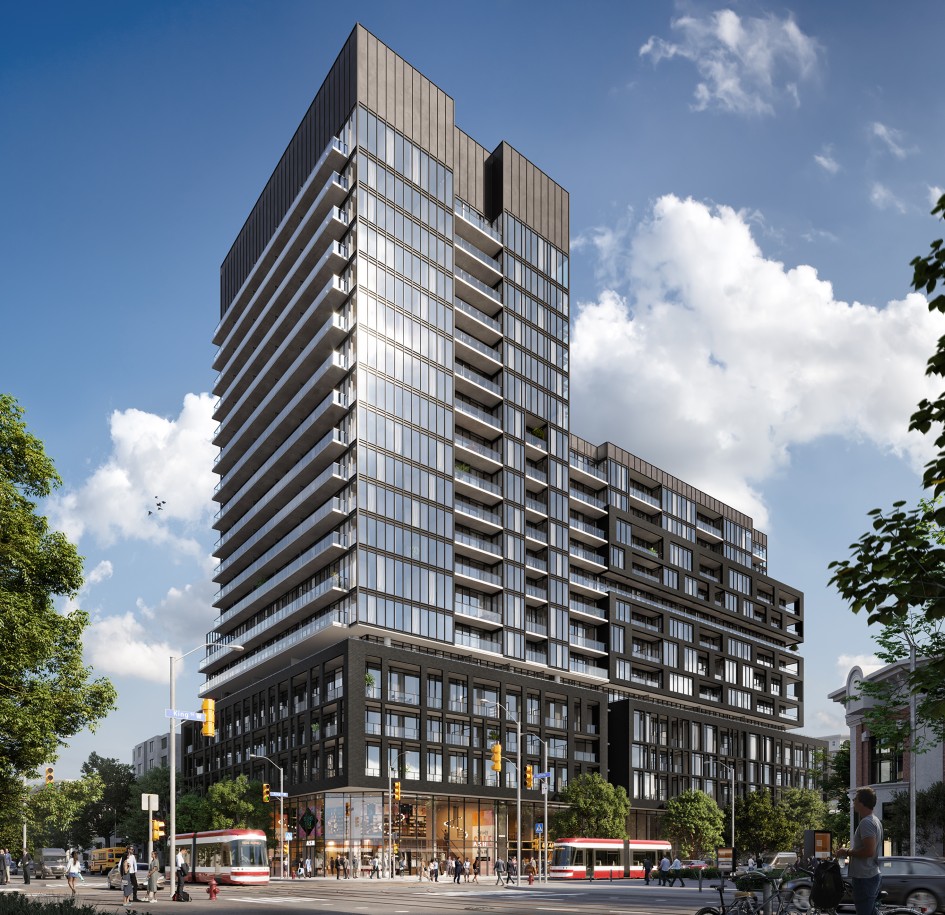
Lifetime Developments and Pinedale Properties recently launched XO2 Condos, with plans for 410 units spread across 19 storeys in the King and Dufferin neighbourhood of Toronto.

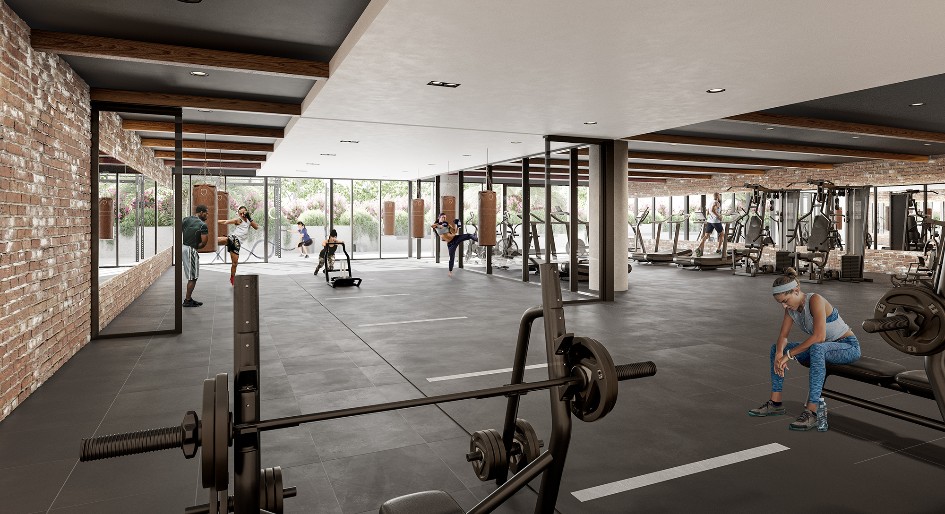
A theme throughout the building and its 18,000 square feet of indoor and outdoor amenity space is health and wellness. The developer partnered with Freemotion Fitness Lab to bring in higher-level cardio and strength-training equipment that offers a content-driven experience that is interactive and immersive.

XO2 Condos

The 3,500-square-foot Freemotion Fitness Lab outfitted in partnership with connected fitness experts.

The developer also partnered with Clear Inc., a Toronto-based air and water filtration technology company that recently received approval from The Israeli Ministry of Health, passing initial testing at its facilities in California and achieving 99.99 per cent effectiveness in eliminating viruses, such as SARS COV-2.

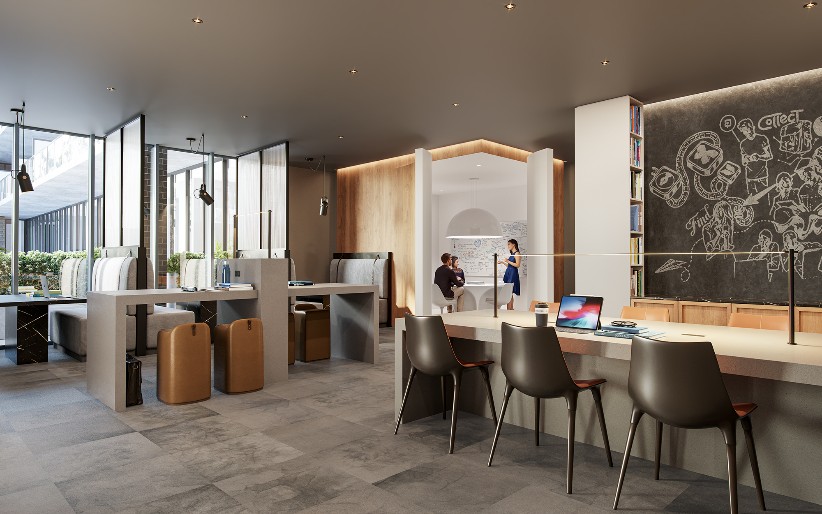
XO2 will also feature a rooftop bocce court and urban parkette, a children’s den and outdoor playground, a games zone, a dedicated golf simulation room, and a co-working facility.

XO2 Condos

The Think Tank co-working facility will feature high-speed WIFI, private workstations, a private meeting room and communal-style seating.

XO2 follows its sister building XO Condos, which launched in 2019. Turner Fleischer Architects designed the space with interior designer Tomas Pearce and landscape architect Strybos Barron King.

“XO2 has been designed with two key elements in mind — the next generation of home buyers seeking ownership in a highly accessible area and addressing the evolving needs of prospective residents in order to lead a health-conscious way of life,” says Brian Brown, principal, Lifetime Developments.

Toronto artist and designer Matthew Del Degan will act as an artist collaborator on the XO2 project. He launched the Toronto-based grassroots initiative Lovebot to disrupt robotic routines through art and illuminate compassion in urban locales.

“Our love for this neighbourhood runs deep given our history at this location, and in Liberty Village, going back to 2004,” says Brown. “Matthew will be bringing indoor and outdoor sculptures, as well as murals which will be integrated within the communal living environments, designed to inspire residents and complement the creative spirit of the community and most importantly to show our love and passion for this incredible neighbourhood.”

Inside, units consist of one, two and three bedrooms, in addition to a small collection of two-storey live/work townhomes. XO2 will also feature over 15,000 square feet of new retail and commercial space and commercial parking.

XO2 Condos


New parking standard eases condo construction costs

Toronto city council ditched most requirements for new residential developments to provide a minimum number of parking spaces. Representatives within the home building industry are applauding the decision as a means to reduce costs and damage to the local environment.

“Building underground parking spaces in Toronto is expensive and drives up the price of new housing developments because the cost is eventually passed on to buyers,” explained RESCON president Richard Lyall. “Forcing developers to provide parking that might not be used just didn’t make any sense.”

Limits on the maximum number of spaces that can be built will also be added. This will permit developers to build spaces based on market demand.

Data shows that in new condo projects an average of 33 per cent of parking stalls were left unsold. One builder had 90 per cent of parking still available for sale as a building neared construction. The market price for stalls has also risen as high as $165,000 in certain new residential building projects—up significantly from $80,000 to $100,000 just three years ago.

“The deeper in the ground you go, the more expensive it gets to build parking spaces,” said Lyall. “The city’s parking requirements dated back to 2013 and needed to be updated. Many younger people don’t own a car, so this policy change was long overdue.

“Mandating developers to build parking spaces that are not needed only prolongs construction, burdens city sewers and infrastructure with groundwater, and results in vast quantities of soil having to be excavated and disposed of at another location.”

The new standard reflects the changing habits of urban dwellers who are increasingly turning to driving alternatives like ride-sharing and public transit.

Minimum requirements lead to the overbuilding of parking and support the continued growth of GHG emissions. Introducing maximum parking permissions will slow that growth in automobile use and resultant emissions, says RESCON.

Washrooms can win or lose the perception battle

As one of the most used and potentially unhygienic areas in a building, how clean and well-maintained your washrooms are goes a long way to communicating the cleanliness and safety of your facility.

A survey by Cintas conducted late in 2021 found that 74 per cent of respondents say dirty washrooms would cause them to have a negative perception of a business.

In addition, among 2,036 U.S. adults surveyed, 68 per cent said they would have a low opinion of a business if its restroom contained empty hand soap, toilet paper, and paper towel dispensers.

“Facility cleanliness has been in the spotlight since the onset of the pandemic and is more important than ever in protecting a business’s reputation,” said John Engel, director of marketing for Cintas. “This survey confirms that a clean and well-stocked restroom is important to any business’s image.”

Older Americans were more likely to form poor perceptions of a business due to the condition of its washroom. The survey revealed:

  • 56 per cent of 18- to 34-year-old respondents say dirty washrooms would cause them to have a negative perception of a business compared to 92 per cent of respondents 65 and older.
  • 58 per cent of 18- to 34-year-old respondents say foul-smelling washrooms would diminish their perception of a business, compared to 86 per cent of respondents 65 years of age and older.
  • 56 per cent of 18- to 34-year-olds say washrooms with empty hand soap, toilet paper, and paper towel dispensers would negatively affect their perception of a business compared to 85 per cent of those 65 years of age and older.

RELATED: Promoting health and safety in the washroom

As for the basic steps that can be taken to ensure your washrooms are projecting cleanliness and inspiring confidence, Jani-King Canada offers a checklist that it says can be applied universally whether the facility in question is an office building, retail store, medical clinic, or restaurant.

That consistent conducting numerous daily checks including checking toilet paper, soap, and paper towel dispensers; wiping down countertops and emptying trash cans; and cleaning toilets and urinals, sweeping floors, and spot cleaning floors. In addition, at least once or twice a week, Jani-King recommends wiping down all flat surfaces with disinfectant, cleaning mirrors, scrubbing sinks and countertops, wiping and polishing faucets, cleaning water marks and other spots from walls, and vacuuming any carpeted areas. Finally, undertake deep cleaning at least quarterly, including removing stains, cleaning grout, washing all walls and partitions, removing calcium build-up on fixtures, and unclogging and cleaning drains.

Meanwhile, the Cintas study finds that it’s not just unclean washrooms that affect perception.

In addition, the survey found that more than two-thirds (68 per cent) of survey respondents say dirty floors would sour their perception of a business, while more than half of respondents say dirty building entryways (57 per cent), obvious use of dirty mops (56 per cent), dirty windows/exterior glass (51 per cent) and poorly maintained parking lots (51 per cent) would negatively influence their opinion of a business.

Heritage buildings evoke Canadian excellence

Rejuvenation and repurposing of heritage buildings stand out as a clear example of Canadian excellence, with three newly named members of the Order of Canada receiving recognition for their contributions in that field. Governor General Mary Simon announced a slate of 135 new honourees in late December, chosen for their exemplary accomplishments and commitment reflective of the Order’s motto, DESIDERANTES MELIOREM PATRIAM — translating to: They desire a better country. The Order of Canada is one of the highest civilian honours bestowed to citizens.

Robert Eisenberg, co-founder, Toronto-based York Heritage Properties

Eisenberg’s citation states: “For his commitment to the revitalization of Toronto’s architectural heritage and for his community service benefiting the environment and youth.”

His firm is synonymous with the restoration of several iconic heritage commercial properties, including the Toronto Carpet Factory and the former Canada Bread Factory, and as an early catalyst for the rejuvenation of Toronto’s now dynamic Liberty Village district. York Heritage Properties currently owns and manages a portfolio of 10 buildings comprising about 1.1 million square feet of office space, in keeping with what the company’s website describes as a focus on the “architecturally interesting”.

“York Heritage Properties is demonstrating by example that it is not only socially responsible but also economically profitable to restore historically significant buildings,” it asserts. “Indeed, it has made a philosophy of the practice, much to the benefit of the neighbourhoods in which the company operates.”

Eisenberg and fellow co-founder Michael Cruickshank were joint recipients of NAIOP Toronto’s Real Estate Icon Award in 2019, as well as the Eric Arthur Lifetime Achievement Award from Architectural Conservancy Ontario in the same year. Beyond business, Eisenberg’s community service contributions include a founding role in Sistema Toronto, a musical education program for youth from vulnerable communities, and the Rescue Lake Simcoe Coalition.

Eric (Rick) Haldenby, professor, School of Architecture, University of Waterloo

Haldenby’s citation states: “For his contributions to the advancement of architectural education in Canada, and for his efforts to preserve industrial and mid-century buildings.”

He served as director of Waterloo’s School of Architecture for 25 years, from 1988 to 2013, and has research interests in: Mediterranean archaeology; design and management of historic landscapes and sites; design in mid-size cities; and community/university partnerships. Reflective of the latter specialties, he uses Kitchener’s building stock and streetscapes as teaching tools — for example, recently tasking his students to envision new uses for the city’s soon-to-be-vacated circa-1958 police headquarters — and shares his insight about local development trends and opportunities with residents through platforms such as a recent online lecture sponsored by the Kitchener public library.

He is a graduate of Waterloo’s School of Architecture and a recipient of the university’s Distinguished Teacher Award.

Pamela Minns, locally known as a heritage hero, Thorold, Niagara Region

Minns’ citation states: “For her contributions as a passionate volunteer and advocate of heritage preservation and revitalization in the Niagara region.”

Now 92, she served on Thorold’s architectural conservation advisory committee for 30 years, during which time the city’s inventory of designated heritage properties grew from fewer than a dozen to more than 50. She has been a champion of rejuvenating properties in St. Catharines’ Port Dalhousie and the Welland Canal districts and in identifying and promoting the role vibrant heritage buildings play in local economic development and tourism throughout the Niagara Region.

She is a recipient of Niagara Region’s annual International Women’s Day Award, recognizing outstanding women.