


AI is not just a marketing or customer service tool; it can become a useful resource for business owners. Recently, Robert Kravitz, an industry communications expert and a former building service contractor, tested this theory by consulting three different AI tools – Gemini, ChatGPT, and Perplexity – on best commercial cleaning practices. He asked all three platforms the same question: How can we make cleaning work easier and safer?
The answers he got were similar, and while differing in long-form or bulleted responses, all platforms focused on three main areas of concern: equipment, PPE, and staff. Here are the suggested solutions provided by the AI search:
Equipment needs to be ergonomically designed
Equipment was a focus in the AI answers as a way to simplify tasks for the cleaners. Some of the recommended tools included:
- Adjustable handles: Vacuums need adjustable handles that reduce bending and reaching.
- Lightweight materials: Equipment made from lighter materials will lessen strain during prolonged use.
- Comfortable grips: Padded or ergonomically designed grips will help reduce hand fatigue.
- Automatic scrubbers/sweepers: These are necessary for large floor areas to significantly reduce manual effort and time.
- Long-handled dusting tools: These help workers reach high places without stretching, straining, or needing to use a ladder.
- Cordless equipment: To reduce tripping hazards, increase efficiency, and boost mobility, cordless equipment is a must.
- Concentrated green cleaning solutions: These solutions reduce the amount of product needed, save money, and, because they are environmentally friendly, help protect worker health.
Personal protective equipment must be worn
When safety is involved, PPE is a non-negotiable, and the AI platforms provided a suggested list of equipment for janitorial staff and cleaners, including:
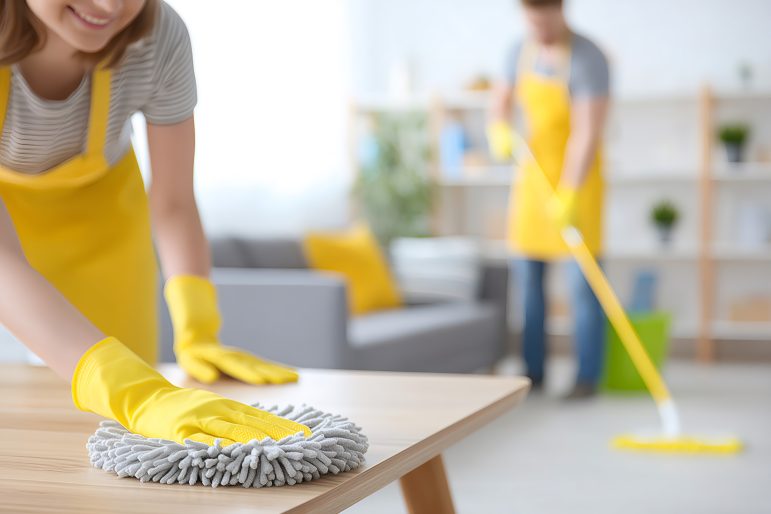
- Gloves: An essential for protecting hands from chemicals, sharp objects, and bodily fluids.
- Eye protection: Safety glasses or goggles are crucial when handling chemicals or dealing with airborne particulates.
- Respiratory protection: Wearing masks or respirators when working protects workers from inhaling strong fumes, mould, and dust.
- Non-slip footwear: Is critical to help prevent slips and falls on wet floors.
- Knee pads: Are recommended for cleaning tasks requiring kneeling, such as manually cleaning floors or fixtures.
- Comfortable clothing: Allows for freedom of movement, improves employee satisfaction, and can withstand the demands of the job.
“All three systems also emphasized the importance of worker training,” adds Kravitz. Specifically, they pointed out the following:
- Understanding SDS (safety data sheets)
- Proper dilution and mixing methods
- Using appropriate lifting techniques to prevent back injuries
One platform added that open communication between managers and custodial workers to discuss concerns, suggest improvements, and report issues also helps improve safety and makes cleaning work easier. Better communication also improves employee satisfaction and performance. Studies show that 74 per cent of employees are more effective in their work when they feel heard.
“Recognition and appreciation were also recommended,” Kravitz confirmed. “It was suggested that when workers feel valued and appreciated, it improves morale and motivation, which also helps improve [worker] performance and safety.”
AI can become a valuable tool for more than marketing and customer service, helping cleaning companies and janitorial staff develop streamlined operations, improve efficiency, and increase worker safety.