Articles Archive - Page 81 of 928 - REMINET
REMI

Short-term rentals: what to know in 2025

Several Ontario cities, including Toronto, Ottawa, and Mississauga, have implemented licensing regimes for short-term rentals. These typically require: registration of short-term rental units, proof that the unit is the owner’s principal residence, collection and remittance of Municipal Accommodation Tax (MAT), and compliance with zoning bylaws.

For condo corporations, the implications are clear: failing to regulate short-term rentals within the building may lead to increased conflict with local bylaws, heightened insurance risk, and strain on community resources.

Common Concerns for Condo Corporations

Short-term rentals introduce a range of issues, including:

Security: A steady flow of unfamiliar guests can compromise building safety and increase the risk of theft or unauthorized access.

Wear and tear: Common elements such as lobbies, elevators, and pools may see accelerated deterioration from heavy guest usage.

Noise and nuisance: Weekend parties or late-night disturbances can frustrate full-time residents and erode a sense of community.

Insurance and liability: Some insurance providers may deny coverage or increase premiums if short-term rentals are prevalent or not properly disclosed.

Governance tensions: Investor-owners may oppose restrictions, leading to political divisions within the board and ownership.

Legal Tools and Enforcement Options

Condominium corporations in Ontario have several options to control or prohibit short-term rentals:

Rules: Under the Condominium Act, 1998, corporations can pass rules to promote the safety, security, and welfare of owners and property.

Declaration amendments: Stronger and more permanent restrictions can be embedded in the declaration, but these require 80 per cent owner approval—a higher but more binding threshold.

Enforcement: Boards can issue compliance letters and, if necessary, seek court orders under Section 134 of the Act. Courts have generally upheld well-drafted and properly implemented rules restricting short-term rentals.

Case Law Note

In Ottawa-Carleton Standard Condominium Corporation No. 961 v. Menzies (2016), the Ontario Superior Court of Justice concluded that operating a unit as a hotel-like business through repeated short-term rentals breached the “single family use” provision in the condominium’s declaration and violated a rule prohibiting leases shorter than four months.

Drafting Effective Rules

Effective rules should be:

Clear and enforceable: For example, setting a minimum duration for leases.

Aligned with municipal bylaws: Ensure rules don’t contradict local licensing requirements.

Reasonably justified: Boards should document the rationale for the rule (e.g., increased complaints or insurance issues).

Well-communicated: Inform owners ahead of implementation, and be prepared to address investor concerns.

Communication and Community Engagement

The key to successful implementation is buy-in. Boards should hold virtual or in-person townhall meetings to explain the risks and proposed solutions, share examples of how other buildings have handled the issue, and consider owner surveys to gather input before formalizing rules.

Transparency builds trust—and trust makes enforcement more effective when the time comes. Boards should also be prepared for pushback from owners who rely on short-term rentals for income. In these situations, clear and empathetic communication is essential. Boards can explain that the long-term risks—such as rising insurance premiums, legal liabilities, and community dissatisfaction—ultimately affect everyone. Engaging legal counsel early on can help ensure that rule changes are both effective and legally sound.

Some corporations are also turning to technology to support enforcement. Digital guest registration systems, access control logs, and security camera data can help identify patterns of short-term rental activity. These tools provide boards with objective evidence and can strengthen their ability to take timely, justified action when rules are breached.

Short-term rentals are here to stay, but that doesn’t mean condo corporations must accept instability in their communities. By staying informed, updating governing documents, and engaging owners early, boards can strike a healthy balance between protecting community integrity and respecting owner rights.

Now is the time to review your documents, consult with legal counsel, and ensure your corporation is equipped to meet the challenges of 2025 head-on.

Denise Lash is a principal of the condo law firm of Lash Condo Law and founder of CondoVoter (www.condovoter.com), a virtual meeting and electronic voting provider. Denise writes a weekly blog on condo issues facing our condo communities. For info visit www.lashcondolaw.com

Toronto boosts property tax relief threshold

The City of Toronto has expanded the Property Tax & Utility Relief programs, increasing the deferral and cancellation household income threshold for seniors and persons with disabilities by five per cent to $60,000, broadening access to support.

The programs are designed to alleviate financial strain and ensure eligible property owners can comfortably maintain their residences.

Qualified property owners are encouraged to apply online so the Canada Revenue Agency can verify household income without the need for additional income-related documentation. Alternatively, property owners or their representatives can submit a paper application form and any required documents by mail.

“This year, we changed the thresholds so more people can qualify for this program,” said Mayor Olivia Chow. “The City will continue to ensure Torontonians have access to affordable housing and essential services. Don’t hesitate to take advantage of these programs if you are eligible.”

The deadline to apply is Friday, October 31. To learn more about the programs and how to submit required documents, visit: Property Tax, Water & Solid Waste Relief – City of Toronto.


Rental condo complex targets adults over 55

A rental condo project is in the works for people aged 55 and over, young retirees and semi-retirees who want to sell their home but are not ready to move into a seniors’ residence. The new Lib Vaudreuil-Dorion complex by EMD-Batimo is the seventh building to break ground under the Lib banner, which is rapidly expanding across Québec and Ontario.

The 14-storey building located at 1435 Émile-Bouchard Street will feature 187 all-inclusive units ranging from one to three bedrooms. Each apartment will be spacious and bright, and the rental price will include five appliances, as well as electricity, hot water, air conditioning, cable and high-speed Internet.

A wide range of common spaces will encourage an active social life: a lounge with views, a culinary space, a gym, a swimming pool, an outdoor courtyard with barbecues, a billiards room and much more. The complex is scheduled to open in fall 2026.

“This project fully mirrors our vision of creating stimulating and sustainable living environments for people aged 55 and over,” says Francis Charron, president of EMD-Batimo Group. “With our vertically integrated structure combining the roles of developer, builder and operator, we are able to deliver a product of high quality, while controlling every step of the project. The involvement of partners like Chartwell and La Caisse reflects our commitment to building living environments that measure up to our customers’ expectations.”

Adjacent to the new Lib Vaudreuil-Dorion, Phase 2 of the Chartwell Le Prescott retirement residence will be completed in 2026. Developed in collaboration with EMD-Batimo, which oversaw its design and construction, this 12-storey building will add 248 apartments, including 24 care studios for residents with loss of autonomy, a lounge with panoramic views, and landscaped outdoor areas. When completed, the residence will have more than 600 units, including the existing condominium building.

Photo, from left to right: Alexandre Galarneau-Micone, Vice President, Investments and Development, Chartwell, Marie-France Lemay, Vice President, Operations and Sales, Chartwell, Marc Dubuc, President, EMD Construction, Guy Pilon, Mayor of the City of Vaudreuil-Dorion, Francis Charron, President, EMD-Batimo Group, Jocelyn Dufort, Senior Director, Real Estate Finance, La Caisse, Ginette Pépin, Senior Director, Real Estate Finance, La Caisse.

Photo by Louis-Étienne Doré 

Air conditioner assistance rolls out in TO

More than 380 portable air conditioner units have been delivered to low-income seniors across Toronto since early July. The air conditioner pilot program, a $200,000 dollar initiative outlined in the 2025 budget priorities, will soon result in 500 units being provided to those in need across the city.

“This is a great pilot program and an example of the supports we must continue developing in response to the increase in extreme hot weather Toronto is expected to experience in the coming years,” said Councillor Paula Fletcher (Toronto-Danforth).

The program, launched this spring, is coordinating the delivery and in-suite installation at no cost. Successful applicants who reside in a multi-unit residential building in Toronto, three-storeys or higher, have already been notified. However, those who are still in need of cooling assistance can apply for cooling device assistance through the City’s Hardship Fund. People receiving Ontario Works Assistance or Ontario Disability Support Program can apply.

Keeping cool in Canadian apartments

As summer temperatures heat up across Canada, the debate over indoor cooling in rental housing has moved beyond comfort—it’s now a question of public safety, legal responsibility, and equitable access to livable conditions. Unlike heating, which is legally required in all provinces and territories, cooling remains absent from provincial tenancy laws. This legislative gap has come under scrutiny by tenant advocacy groups and several municipalities calling for reform.

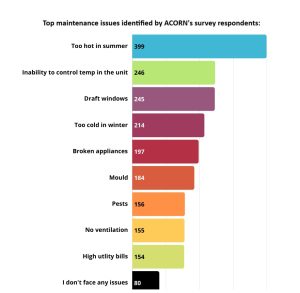
A 2025 ACORN report entitled “Crumbling Apartments in a Warming World”warns that outdated rental buildings without modern cooling infrastructure put tenants’ health and safety at risk, especially as climate change worsens heatwaves. In an online survey of more than 700 moderate- to low-income tenants, 54 per cent identified extreme summer heat as their primary maintenance issue. Vulnerable groups such as seniors, low-income renters, and those with chronic illnesses, face the greatest danger.

This was sadly evidenced in Montreal where record-breaking heat waves earlier this summer led to multiple fatalities, triggering a provincial review of housing regulations. Advocacy organizations are now pushing for the integration of mandatory cooling systems into federally funded retrofits and new construction.

In Ontario, similar concerns exist; however, the City of Toronto recently introduced a bylaw mandating that building-wide air conditioning systems operate from June 1 to September 30, ensuring indoor temperatures do not exceed 26°C. In buildings that lack centralized cooling systems, landlords are encouraged to implement strategic retrofits, introduce comprehensive emergency cooling protocols, and find ways to maintain safe and habitable conditions to lower the risk of heat-related illnesses among residents.

According to Joe Hoffer of Cohen Highley LLP, landlords and multi-residential property managers should stay up to date with evolving regulations and understand their responsibilities. Even though air conditioning isn’t a requirement, housing providers may face legal and reputational consequences if tenants suffer due to excessive heat. In other words, awareness of these liabilities—and proactive planning—has become an essential part of risk management.

“Retrofitting older buildings may be unfeasible, and window units can pose safety risks,” Hoffer noted, adding that there is an alternative. “In these cases, landlords and tenants can mutually agree to a rent increase under Section 123 of the Residential Tenancies Act. This arrangement allows the landlord to properly install an AC unit, transfer ownership to the tenant, and shift responsibility for its ongoing use and maintenance. If electricity costs are included in the rent, a monthly increase may also be negotiated to reimburse the landlord for the tenant’s additional energy consumption.”

For older buildings where in-suite installation is not possible, Hoffer says landlords may want to consider offering on-site cooling centres for vulnerable residents; otherwise, public buildings and community facilities may be the only practical fallback.

Western provinces

Though cooling is not mandated under BC’s Residential Tenancy Act, the 2024 update to the BC Building Code requires that new residential units include at least one living area that stays below 26°C. Municipalities like New Westminster are actively considering bylaws that enforce indoor temperature caps across existing housing stock.

Alberta currently requires landlords to meet minimum heating standards, but cooling remains unaddressed. Climate Justice Edmonton is pushing for more protections for renters who can’t afford AC units, especially as the province faces increasingly frequent heatwaves and wildfires. The group’s ongoing campaign, Right to be Cool, is advocating for a city bylaw that would set a maximum temperature of 26°C in apartment units and subsidized housing.

Current best practices

Even in provinces without mandated cooling, landlords still bear considerable responsibility. To mitigate risk and support tenant well-being, the following steps are recommended to safeguard against litigation:

  1. Review lease agreements: If air conditioning is included, ensure it’s operational, regularly maintained, and clearly defined in rental terms.
  2. Explore retrofit options: Passive upgrades—such as reflective roofs, solar-control window glazing, or strategic landscaping—can offer cost-effective cooling benefits.
  3. Monitor regulatory changes: Stay abreast of municipal bylaws and provincial codes. As the climate crisis deepens, regulations are evolving rapidly.
  4. Prioritize vulnerable tenants: Seniors, those with disabilities, and low-income renters face the greatest risks. BC Hydro’s free AC program for vulnerable groups sets a strong precedent worth emulating nationwide.

Many argue that air conditioning is no longer just a sought-after amenity in Canadian rental housing—it’s a public health imperative. By investing in thoughtful retrofits, crafting responsive lease policies, and preparing for emergencies, rental property owners can ensure safe, livable environments for all tenants while staying ahead of growing regulatory pressure.

Economic reconciliation comes with CRE upside

Call to Action 92 presents an opportunity for the commercial real estate and land development industry to realize many social, economic and project-specific paybacks linked to respectful relationships and economic reconciliation with Indigenous peoples. Newly released guidance, sponsored by the Urban Land Institute (ULI) Toronto chapter, arises from a three-year initiative exploring the industry’s role in Canada’s truth and reconciliation efforts.

Participants from 33 real estate and affiliated organizations worked with Indigenous advisors and other facilitators to consider what is involved in “meaningful consultation” and “equitable access” to benefits in the context of project development and broader business operations. Those are key concepts in Action 92 — one of 94 recommendations the Truth and Reconciliation Commission released in 2015 following the national inquiry into the residential schools system — which are also grounded in the United Nations Declaration on the Rights of Indigenous Peoples (UNDRIP), to which Canada is a signatory.

“This guide is more than a resource — it’s a call to leadership,” asserts Richard Joy, ULI Toronto’s executive director. “It challenges our industry to go beyond land acknowledgements and make reconciliation a living, measurable part of how we build and operate.”

Shared Path Consultation Initiative, a not-for-profit advisory focused on the intersection of land use changes and Indigenous treaty rights, led a series of workshops that informs the new guidance. Bob Goulais, president and senior principal with Nbisiing Consulting, a firm that facilitates Indigenous relations, was among other key advisors and contributors to the document.

It is organized around four action areas to advance reconciliation:

  • governance and co-development;
  • education;
  • equity and economic opportunity; and
  • relationship building.

The guide also provides illustrative insight on Northcrest Developments’ memorandum of understanding (MOU) with the Mississaugas of the Credit First Nation and the process the two parties have undertaken around the redevelopment of the former Downsview Airport lands within Toronto.

“Our hope is that this guide is used as a tool to foster more collaboration and inclusion of Indigenous voices across the land development industry,” observes Carolyn King, president and board chair of Shared Path. “We see it as a tool to inspire corporate Canada to embrace true collaboration, co-development and Indigenous leadership.”

Users of the guide are advised to look inward, to educate themselves and their employees, find ways to incorporate Indigenous perspectives into decision-making and make efforts to learn about the specific First Nations and/or Metis or Inuit group or groups with whom they’re seeking to engage. There are a range of resources that can help companies on this learning journey, and many of the suggested elements to help the commercial real estate and development industry fulfill Call to Action 92 are relevant to more than one of the four proposed action areas.

An understanding of UNDRIP and its concept of “free, prior and informed consent” and Section 35 of Canada’s Constitution Act, which affirms the rights of Indigenous peoples, are essential to engagement and reconciliation. Companies are also advised to consult documents like the National Indigenous Economic Strategy (NIES) and various Band Councils’ websites and publications, and to examine the commitments and action steps that government bodies, other industry associations and public interest organizations have made.

Relationship building and fostering equity and economic opportunity are largely parallel steps that require inclusivity within real estate organizations and a willingness to provide technical supports and financial arrangements that could enable Indigenous partners to attain an equity stake in projects. That also means employing Indigenous workers, suppliers and service providers. Given that Indigenous peoples make up roughly 5 per cent of Canada’s population, it’s suggested this could be a starting target for company-wide procurement and hiring, regardless of any project-specific considerations.

In associated advice, Goulais reiterates that relationships differ from deals, and the best ones involve interaction that is respectful, meaningful and collaborative.

“Far too often, the only time Indigenous people hear from the Crown, municipalities, agencies or proponents is when they need something from us. We need to begin the practice of developing relationships first, long before we need them,” he maintains. “Relationships serve us well when undertaking challenging projects or situations.”

Notably, the MOU between Northcrest Developments and Mississaugas of the Credit First Nation (MCFN) evolved from two formative years of relationship building and two subsequent years of joint work on the tenets of the agreement. The resulting MOU outlines the two parties’ shared agreement on their commitments and responsibilities, which are tied to strategic objectives, work plans and accountability measures.

This establishes expectations and sets the course for MCFN to participate in and gain economic development benefits from the massive redevelopment project. That also includes the integration of MCFN history and culture into the project design, landscape and on-site features and events programming. The MOU is not legally binding, but is defined as a “clear point of reference” for a mutually beneficial working relationship.

“Proactive and collaborative problem-solving through early engagement allows Indigenous Peoples and companies alike to avoid disagreements and potential conflicts later in a project’s lifecycle,” the guidance document states. “It is a risk mitigation strategy with many additional upsides like equity partnership and procurement.”

RFQ issued for Roberts Bank Terminal 2

The Vancouver Fraser Port Authority has issued an RFQ to find a qualified team to progress construction planning and build the landmass and wharf components of the Roberts Bank Terminal 2 Project.

As part of a competitive selection process for the landmass and wharf component of the project, the port authority has selected a progressive design-build procurement with target price model. An independent fairness monitor has been appointed to oversee the fairness of the process.

“To meet Canada’s needs in today’s quickly evolving trade landscape, we have accelerated our efforts to deliver Roberts Bank Terminal 2—a project that will strengthen Canada’s economic security and deliver trade resilience,” said Victor Pang, CFO at the port authority. “The terminal will be a catalyst for economic transformation nationally—from supporting Prairie grain exports and B.C.’s forestry sector, to communities who depend on reliable and affordable access to essential goods on store shelves.”

The contract includes the delivery of an approximately 100-hectare marine landmass, 35-hectare widened causeway, 1,300-metre wharf structure and berth pocket, and expanded tug basin.

To support the port authority’s award-winning environmental plan, the contract also includes the construction of a marine terminal fish passage to support juvenile salmon migration, and the civil works for onsite habitat enhancement and the South Arm Jetty Tidal Marsh Project—a priority project for First Nations to benefit fish and wildlife.

The request for qualifications marks the first step in the procurement process. Interested construction teams must provide an interim submission confirming their interest by September 18, 2025, and submit details of their qualifications by September 25, 2025. The port authority will shortlist three teams this fall, who will then be invited to submit a proposal.

The selected team will have extensive experience in collaboratively delivering major marine infrastructure projects with comparable technical, logistical, environmental and regulatory requirements, as well as a proven ability to deliver on First Nations’ commitments.

Additional procurement opportunities will be made available in the coming years, including specialist sub-contracting and material supply for the landmass and wharf sub-contracts, and a terminal concession procurement in the late-2020s to select the operator that will build, equip, and operate the new terminal.

Construction is planned to begin in 2028, and the terminal is expected to be in operation by the mid-2030s.


Canadian debt market lures U.S. CRE issuers

Morningstar DBRS is predicting an uptick in American real estate companies entering the Canadian debt market. The credit rating agency’s newly released midyear assessment of North American commercial real estate trends highlights diverging interest rate trajectories on either side of the Canada-United States border and a strong appetite for unsecured notes among Canadian investors.

“With the level of interest by existing and potential new issuers, we believe there is the potential for 2025 to be an all-time high for Morningstar DBRS-rated issuance,” the analysis states. “Canada is an attractive market for both Canadian and U.S. issuers to borrow.”

Morningstar DBRS rated roughly USD $6.8 billion in senior unsecured debt for real estate in the North American market during the first six months of 2025, which was the highest level of borrowing for a first half thus far this decade. However, it notes “very modest” activity in its U.S. rated universe.

SmartStop OP, the operating partnership of SmartStop Self Storage REIT, is flagged as the leading edge of the potential influx of U.S. issuers of notes in Canadian-denominated currency, known as maple bonds. The NYSE-listed company closed an inaugural CAD $500 million bond offering in mid-June, also representing the first self storage company to issue a maple bond. The offering was 4.5 times oversubscribed for the four-year notes bearing a 3.85 per cent effective interest rate.

“Executing this transaction speaks to SmartStop’s ability to be opportunistic in its capital stack at favorable interest rates while expanding our reach across different capital sources,” observes James Barry, the company’s chief financial officer.

“We are expecting there will be other maple bond issuers for the remainder of 2025 given the favourable economics,” Morningstar DBRS analysts assert.

Uniti welcomes first residents in Brampton

The Daniels Corporation and Choice Properties Real Estate Investment Trust have partnered with Mary Centre and Kerry’s Place Autism Services to officially welcome residents to their new homes at the Uniti rental community in Brampton, Ontario. The 26-storey residential tower situated near Mount Pleasant GO Station, features six fully accessible rental homes for adults with developmental disabilities and autism. Made possible with support from the Region of Peel, the partnership offers “a model for safe and empowering housing that enables residents to live independently while fostering a stable foundation for personal growth.”

Uniti, Daniels Corporation“Mary Centre helps people in building a good life by creating new opportunities for adults who have a developmental disability—helping them work towards personal independence so they can lead fulfilling and meaningful lives, said Kevin Finnerty, Board President, Mary Centre. “This is a great example of partnership which is improving the lives of some of the most vulnerable people in our society,”

With over 52,000 individuals in Ontario currently on waiting lists for critical disability support, access to safe and affordable housing remains one of the province’s most urgent needs. According to the partners, this initiative highlights how meaningful, cross-sector collaboration can increase housing equity and create vibrant communities where individuals of all abilities are supported and celebrated.

“Peel is proud to celebrate this cross-sector collaboration to bring safe, inclusive homes to our residents,” said Nando Iannicca, Chair and Chief Executive Officer of Peel Region. “Our goal is to create a community for life where everyone enjoys a sense of belonging and has access to the services and opportunities needed to thrive in each stage of their lives.”

The homes were developed under the Daniels Accessibility Designed Program (ADP), which “goes beyond regulatory requirements” to offer innovative features that promote independence. For residents supported by Mary Centre and Kerry’s Place, these homes are “not just places to live—they represent a new chapter of dignity, empowerment, and community inclusion.”

For more info, visit: Uniti- The Daniels Corporation

Carousel Towns launches in Vaughan

The developer behind a new community of 58 back-to-back townhomes in Vaughan, Ontario, says its project, Carousel Towns at Thornhill Walk, is helping to meet the growing demand for missing middle housing in York Region.

The townhomes were designed by Kohn Partnership Architects for Liberty Developments.

Carousel TownsEach three- and four-storey unit is accessed individually from a shared underground garage — a deliberate design choice that removes cars from the street and allows for a more human-scaled, walkable environment.

The three-bedroom homes feature private rooftop terraces, open-concept layouts, and spacious primary suites for comfortable family living.

The project uses durable brick combined with wood-grain metal siding, creating a clean, warm, and contemporary aesthetic that complements its surroundings. Outside, a landscaped amenity space runs throughout the site to weave nature into a higher-density residential fabric.

Construction is scheduled to start in late 2025.


Federal procurement practices ripe for reform

A new report on the Canadian government’s procurement practices urges wider rollout of the vendor performance management (VPM) system that Public Services and Procurement Canada (PSPC) is now phasing in for select contractors, and more openness to innovative tendering formats, such as negotiated requests for proposals (NRFPs). To achieve this, and enhance the efficiency and transparency of what amounts to about $37 billion of annual spending, Canada’s Procurement Ombud, Alexander Jeglic, calls for: creation of a dedicated Chief Procurement Officer role; codified government-wide rules; and better data that could also support artificial intelligence (AI) tools.

“For far too long, federal procurement has been plagued by the same recurring issues — overly complex processes, unclear accountability and fragmented rules,” he maintains. “Now is the time for bold, foundational reforms that will strengthen the system, deliver better results for Canadians, and build trust in how public funds are spent.”

Jeglic’s newly released report recommends measures that could reduce costs, save time, ease complications and bolster accountability in federal procurement. This draws on his perspective heading up an independent office within government that is tasked with investigating complaints and dealing with disputes, and also incorporates insight from procurement officers and experts within government, industry, the legal sector and academia.

For suppliers, he paints a potential picture of an integrated system where they would be scored based on contract delivery metrics and that status would be made known across all government departments. This work has now begun for PSPC procurement, but performance ratings are thus far tied to a fairly scoped range of indicators and remain internal.

Approximately 90 other government departments do not have a consistent approach for benchmarking how well or poorly suppliers/contractors meet their obligations, arguably leaving all departments more vulnerable to serial underperformance. A formal government-wide rating system would allow past performance to be considered in bid evaluation whereas, under the federal government’s Directive on the Management of Procurement (DMP), Jeglic advises that any anecdotal sharing of that information could be construed as unfair treatment related to an undisclosed criterion.

“The lack of such a system severely limits the federal government in its ability to use performance indicators to inform their continued relationship with individual suppliers,” the report states. “Most importantly and problematically, it leaves the federal government unable to avoid awarding new contracts to known bad performers.”

Jeglic argues that the absence of a VPM system currently inspires “excessively restrictive” criteria in tenders in an effort to weed out subpar bidders. That’s happening in a process already cluttered with requirements.

“Every day, procurement specialists face multiple layers of rules, including trade agreements, legislation, regulations, policies (both government-wide and at the departmental level), directives, guidance documents and procedures that must be followed, with new layers continually being added. There continues to be more and more important considerations that have to be taken into account when conducting a procurement, including Gender Based Analysis Plus (GBA+), green procurement, Indigenous procurement, agile procurement, accessibility and social procurement initiatives, among others,” the report tallies. “Without clear guidance on how to navigate these complex rulesets, or how to prioritize an ever-increasing number of government initiatives, Canada’s federal procurement system remains difficult to navigate.”

With concurrence from his consulted legal experts, Jeglic advocates for a new set of harmonized procurement rules, established in legislation, to provide consistent guidance and replace the current policy-based framework. That could also be a modernization exercise, allowing for practices that are now accepted in other jurisdictions, including several Canadian provinces.

Notably, he links the federal government’s rigid approach to tendering to a 1981 Supreme Court of Canada decision, which decreed that a tender invitation and corresponding bid is a unilateral contract (commonly known as Contract A), separate from the subsequent awarding of the project (known as Contract B). Under that legal interpretation, bids are irrevocable and any later alterations to a tender’s terms could leave procurers open to legal challenge.

Jeglic hypothesizes that has “often led to a reliance on overly restrictive criteria, prescriptive technical requirements and onerous bidder submission requirements” to guard against that possibility. Correspondingly, it has created “unnecessarily complex and burdensome” processes and shrunk the pool of potential bidders.

In contrast, negotiated RFPs (NRFPs) offer a non-binding approach, which begins with an evaluation of supplier candidates that have expressed interest. Procurement officials rank these potential bidders and enter into discussions about various elements of the proposed future contract’s terms.

“The flexibility of the NRFP format is widely considered to have contributed to improved competition, better solutions, better value and mitigated many of the legal risks associated with traditional tendering formats,” Jeglic observes in another report released earlier this year. “The Canadian federal government is an outlier in its continued use of Contract A/B when compared both to Canadian provinces and municipalities, and to other countries.”

Among other suggestions for procurement reform, Jeglic highlights a need for more transparency and efficiency. He calls for an accessible compendium of procurement information that would report everything the government is purchasing and the sources of those contracts and supplies. As well, AI is identified as a means to reduce staff time spent on redundant and straightforward tasks.

As proposed, the new Chief Procurement Officer would wield the authority to implement and oversee accountability for government-wide measures. Jeglic also acknowledges that a “robust” dispute resolution mechanism must accompany a vendor performance management system.

“Given the impact that a poor performance evaluation could potentially have for suppliers, it is critical that sufficient safeguards are in place to ensure procedural fairness,” the report states. “Canada should take inspiration from best practices worldwide and adopt a multiple-tiered system of appeals for vendor performance scores that includes an independent, final decision-maker.”

VRCA reveals 2025 Silver Award winners

The Vancouver Regional Construction Association (VRCA) has announced the 2025 Silver Awards of Excellence Awards winners.

A total of 96 projects were submitted for consideration this year, with 75 projects pre-qualified across 18 categories. The total combined value of the submitted projects topped $4.9 billion, underscoring the scale and impact of the work being done by VRCA member companies across the province.

“Behind every great building, there’s a team of great community builders,” said Jeannine Martin, president of VRCA. “Our Silver Award winners aren’t just putting up walls and beams — they’re creating legacies. Whether it’s through bold design, smart problem-solving, or meaningful community engagement, these teams are pushing the boundaries of what construction can achieve — including making clear and commendable strides toward successful equity, accessibility, and inclusion across the industry.”

The general contractor category winners are:

General Contractors – Over $200 Million

  • PCL Constructors Westcoast Inc. – Lions Gate Hospital Redevelopment Phase 3 – Acute Care Facility

General Contractors – Over $40 Million

  • ETRO Construction Ltd. – Brightside Community Homes – Timbre + Harmony
  • Kinetic Construction Ltd. – Burnaby Fire Hall No. 4 and Fire Hall No. 8 Project
  • Axiom Builders – Bob & Michael’s Place

General Contractors – $15 to $40 Million

  • Smith Bros. & Wilson – Capilano University – Centre for Childhood Studies
  • Whelan Construction Westcoast Inc. – YVR Pier C CATSA+ Conversion
  • PCL Constructors Westcoast Inc. – BC Hydro Mica Studio Dorms

General Contractors – Up to $15 Million

  • Novacom Building Partners – Otter Trail Winery
  • Naikoon Contracting Ltd. – Oceanfront Squamish Presentation Centre
  • Maple Reinders Constructors Ltd. – Man 6 Light Indust. Commercial

General Contractors, Tenant Improvement – Over $12 Million

  • Canadian Turner Construction Company Ltd. – YVR26: Premise B2
  • Canadian Turner Construction Company Ltd. – KABAM HQ
  • Lark Projects Ltd. – AbCellera Biologics Tenant Improvement

General Contractors, Tenant Improvement – $5 to $12Million

  • ETRO Construction Ltd. – Speeders Richmond
  • EllisDon Corporation – Vancouver City Centre Urgent Primary Care Centre – 188 Nelson
  • Novacom Building Partners – Colliers Vancouver Office Relocation Project

General Contractors, Tenant Improvement – Up to $5 Million

  • Canadian Turner Construction Company Ltd. – Serein
  • EllisDon Corporation – Decathlon Fit-Out – Metropolis at Metrotown
  • Govan Brown & Associates – Cushman & Wakefield New Vancouver Office

General Contractors – Civil/Industrial Construction – Over $30 Million

  • Kiewit Infrastructure BC ULC – BC Highway Reinstatement Program – Highway 1 – Nicomen River Bridge Replacement
  • NAC Constructors Ltd. – Tofino WWTP, Sanitary Conveyance System Modifications and Marine Outfall

General Contractors – Civil/Industrial Construction – Up to $30 Million

  • Conwest Contracting Ltd. – Phibbs Transit Exchange Improvements
  • Graham Infrastructure LP – Mainwaring Substation Upgrade
  • Graham Infrastructure LP – City of Vancouver Biogas Project Facility

All Silver Award winners will be recognized at the Awards of Excellence Gala September 19th at JW Parq Vancouver. Gold Award winners in their respective category will be selected from Silver Award winners and will be announced at the Gala.

Read the full list of Silver winners here.


Smart solutions for sound problems

Noise complaints are a common issue in apartment buildings, requiring landlords and property managers to allocate time and resources to address them. Whether it’s loud music, social gatherings, pets, or construction activities, unresolved, recurring noise issues can hurt tenant satisfaction, increase turnover, or trigger formal disputes.

“Multi-residential buildings, especially those located in densely populated areas, tend to experience higher levels of ambient and activity-related noise,” observes Michael Almeyda, Business Development Manager at Axis Canada. “These buildings are ringed by urban life—traffic, public transit, nightlife, and local businesses. From within, residents are also subject to noise from elevators, pipes, creaking floors, and even exterior factors like wind. While a number of these noises are simply a part of the city life, noisier disturbances like booming music, yelling, or barking dogs can generate complaints.”

Sometimes these grievances can be a symptom of a bigger problem like underlying neighbour tensions, design limitations, or policy gaps—all of which can be difficult to assess without objective data.

“In today’s more complicated vertical communities, noise management isn’t just about quiet hours,” says Almeyda. “It’s about better design, smarter policy, and the right technology working together.”

Innovative ways to combat noise complaints

Advancements in technology are bringing more innovative solutions to the table, helping building owners manage noise complaints more equitably and effectively than past systems and protocols could.

“The integration of intelligent audio analytics and event-triggered video surveillance is particularly successful,” Almeyda says. “Intelligent audio analytics can identify disruptive sound patterns, such as shouting, loud music, or other sounds like car alarms or breaking glass. These analytics are designed to detect specific frequency changes—not voices or conversations. This represents a significant advancement in balancing privacy with proactive response.”

When paired with event-triggered video monitoring, property managers and security officers can get a much clearer picture of what’s going on.

“Let’s say a loud argument breaks out near the lobby,” he suggests. “The system would capture it visually and provide the context needed to decide whether action is necessary. It decreases dependence on subjective tenant reports and enables quicker, evidence-based decisions.”

Furthermore, these systems can facilitate trend analysis over time, allowing users to document repeated noise incidents on a dashboard, and in turn enabling various planners to visualize patterns that inform decisions, such as soundproofing targeted areas, updating quiet-hour regulations, or even redesigning spaces to mitigate in-unit noise. Crucially, this enhances operational efficiency through the use of business intelligence.

“In terms of privacy, we understand that tenants are cautious when it comes to surveillance,” he points out. “That’s why it has to be a built-in priority, and not an afterthought. The technologies being used today are designed specifically to avoid intrusion. Audio analytics systems, for instance, do not capture or store conversations – they identify sound patterns without recording speech. Similarly, video surveillance in shared spaces often includes privacy masking, which can blur areas or individuals not relevant to a triggered event.”

But ultimately, the use of technology alone doesn’t earn trust; communication must be central from the get-go.

“It’s important that residents understand what’s being used, where it’s being used, and why,” says Almeyda. “We always recommend clear signage, updates during onboarding, and open channels to explain how the systems work and how data is protected. This level of transparency helps reduce resistance and ensures tenants understand that the goal is to create a safer, more livable space – not to monitor their day-to-day activity.”

And in the end, responsible data management is what ties it all together.

“Footage and metadata are kept only for a short period unless there’s a specific need for investigation, and access is restricted to a few authorized people,” he notes. “When you combine that with transparency, privacy isn’t just a checkbox – it becomes a reassurance.”

Michael Almeyda is Business Development Manager at Axis Canada. Visit www.axis.com for more information.

Smart irrigation can improve grounds keeping

As the heat of summer continues, dry spells can result in the need for irrigation as part of your maintenance to keep your grounds healthy and your property looking its best. As well, water consumption is a big part of many companies’ ESG initiatives, as they work to lower water use and turn to alternative, data-driven practices to boost efficiency, lower environmental impact, and improve overall groundskeeping. Smart irrigation offers companies the tools they can use to improve their practices, make strides to get greener, and lower their water bills. In fact, research shows that integrating AI into irrigation systems has helped reduce water usage by up to 25 per cent.

Here are some of the ways that maintenance managers can integrate smart irrigation on their properties:

Sensors: There are a variety of sensors that can help boost irrigation efficiency, from measuring the current moisture in the soil to reporting on soil temperature. These can help your system know when your soil actually needs water for its health, rather than watering based on a set schedule or guesswork. Weather sensors can also be helpful, gathering data on rainfall patterns and weather conditions like temperature, humidity, wind speed, hours of sunlight, and evaporation. These sensors, along with AI, can help with accurate planning, budgeting, and creating effective irrigation strategy.

AI: Integrating AI into irrigation allows algorithms to compile historical data and use it to predict weather patterns and irrigation requirements precisely. By analyzing weather data, the system can forecast future climate trends, which can help managers make data-driven decisions about the future of their system. These AI models can also predict water availability, so for managers in drier regions, this can help them stay prepared and plan ahead for extreme heat or lack of rainfall.

Remote access: Many of today’s smart irrigation systems allow remote control through an app on your phone, so you can access data, monitor real-time conditions, and make schedule adjustments any time, anywhere. This allows maintenance managers the flexibility to refine their practices, saving time, and improving operations.

Smart irrigation gives maintenance managers the tools to keep their properties looking professional while improving ESG results and saving money.

GWLRA unveils ambitious College Park revitalization plan

GWL Realty Advisors (GWLRA) has announced a bold, “once-in-a-generation” plan to revitalize College Park in Toronto. Developed in collaboration with leading firms Hariri Pontarini Architects (HPA), ERA Architects, and PUBLIC WORK, the project aims to turn the intersection of Yonge and College into a vibrant retail and cultural hub, marking the building’s centennial in 2030.

 “Toronto has waited nearly 100 years to see a completed vision for College Park come to life,” said Daniel Fama, Vice President of Development at GWLRA. “Our intention is to preserve College Park’s historic legacy while introducing 2,334 new housing units, a hotel, retail and entertainment spaces, and public areas that reflect the needs of modern-day Toronto. College Park will become a major cultural destination.”


Originally envisioned nearly a century ago as a 37-storey retail tower—a “City Within a Block” to rival Rockefeller Center—College Park was designed by acclaimed architects Ross & Macdonald. However, the Great Depression forced the plan to be scaled down.

GWLRA’s plan breaks from traditional “facadism” by preserving the full building structure and completing the long-imagined Yonge Street podium. The historic interior arcade will be restored to evoke a Parisian-style vitrine shopping experience, while The Carlu event venue will be expanded with new outdoor terraces and enhanced indoor space for conferences.

“College Park is one of the most significant architectural landmarks in Toronto,” said Scott Weir, Principal at ERA Architects. “For nearly a century, its full potential hasn’t been realized. This project is our chance to finally get it right as we enter its second century.”

Respecting its Art Decko heritage, three residential towers will bridge “the old and the new” with sculptural forms inspired by1920s skyscrapers. One of the proposal’s most innovative elements is a raised, ribbon-like pathway that winds through College Park’s core. This feature will intuitively connect the street-level entrances and subway with a new glass-encased atrium and expansive outdoor public space, blending indoor and outdoor environments.

“Our starting point for the new College Park architecture was to embrace ERA’s heritage work and ideas from the early 1920s,” said Founding Partner David Pontarini. “We intend to respect the building’s architectural DNA and bringing that up vertically into modern towers that contribute back to the skyline. If you squint, College Park would look like one development, built at one time.”

The neighbourhood surrounding College Park is one of the busiest and most densely populated areas in the city. To minimize disruptions to residents, businesses and the 250,000 commuters that pass through the TTC’s College Station each week, GWLRA’s development application includes improvements to streetscapes and transit access. The company has also launched College Park 100, a website and event series that explores the site’s history and promotes discussions intended to inform the design process, with additional programming planned for the upcoming construction phase.

For more on this project, visit: collegepark100.com

The importance of cleaning over costs

Investing in top-tier cleaning protocols while managing a business and maximizing margins can be a difficult endeavour these days, but cleanliness cannot be compromised. As more time passes, some companies may have become more relaxed with their cleaning and sanitization protocols, but as we continue to adapt to a post-pandemic world, staying vigilant is key.

In a recent episode of Straight Talk! with Jeff Cross, ISSA President, Laurie Sewell, explains how cleaning remains an integral part of providing public health. Laurie emphasizes the need for education within the industry, as well as cleaning clients to embrace the notion that cleaning is about health, especially when addressing concerns about costs. When customers view cleaning simply as a budget line, they are not making the connection between cleaners and the work that they do to help maintain the health and welfare of the people who occupy the building. According to Laurie, in order to become advocates, cleaners need to understand the intention of their role. “We need to give them the why of their work, not just the how,” she confirms.

Using data is key in measuring value, and documenting work can help cleaners educate customers on cleaning beyond just providing a “clean-looking” space. Providing data on factors like how indoor air quality is impacted after cleaning can help customers see the value and the importance of cleaning for health.

RELATED: Staying ahead of restroom hygiene

Beyond safety, cleaner, healthier environments offer employers higher productivity and lower absenteeism. Laurie gives the example of better air quality and fewer pathogens impacting people with asthma and how that affects their quality of work and overall wellness.

Laurie examines institutions like hospitals with strict health and cleaning standards, citing third-party regulatory bodies as the reason that these standards exist and are upheld. She suggests that policymakers may be in a position to better define what a “healthy environment” looks like for students, in public facilities or at workplaces.

As we look to the future, Laurie gives some insight into the tools that cleaners can use to provide the necessary data for their customers to increase operational efficiency and lower some of the costs. For example, sensor technology can provide building managers with all kinds of insight into the health and wellness of their building. Further, indoor air quality testing is an important partner to the cleaning industry to help find the best ways to measure cleanliness.

Validating what ‘clean’ really means for customers and the importance of cleaning for health means focusing on education, data, and technology to create systems that are efficient and effective.

Repurposing Canada’s religious buildings

As church congregations dwindle across Canada and the cost to maintain their faith-built spaces increases, ideas abound for how to repurpose these buildings into potential sites for community amenities and affordable housing.

Nearly one-third of the country’s 27,000 religious buildings could close within the next decade, according to a 2019 study by National Trust for Canada. A new report documents the consequences of this loss and showcases the civic and community value these buildings hold.

In the Canadian Urban Institute’s (CUI), “Sacred Spaces, Civic Value: Making the Case for the Future of Faith-Built Assets,” the scope of data primarily extends to Christian-affiliated properties that are experiencing the highest decline in attendance.

Many of these aging assets, which are situated along main streets and in downtown areas, are key targets for redevelopment. Although they have long provided a range of programs and activities with a non-religious nature, they face ongoing financial struggles.

“The barriers to adaptation of faith-based assets are many, but the alternative – a loss of thousands of buildings, tens of thousands of square feet of community space, and hundreds of thousands of hours of community-focused programming – makes it an urgent problem worth solving,” the report states.

CUI reframes these assets as a form of “resilience infrastructure.” As cultural organizations and service providers search for affordable spaces to work from, there exists an opportunity for new partnerships, financial models, and civic purpose.

“Ownership of any problem is shared across sectors and jurisdictions, and finding courageous first-movers to try new approaches and inform useful models is difficult,” Mary W Rowe, CUI president and CEO, explained. “As federal, provincial, and local governments establish investment priorities for community strengthening, there is a prime opportunity to demonstrate the critical role that these civic assets play.”

Obstacles and Financial Constraints 

Higher utility costs and insurance premiums, years of funding shortfalls, and fewer skilled trades in historic craftsmanship are just a few financial constraints. Add to that more interest in online worship post pandemic and a declining pool of donors to heighten the case for adaptive reuse.

Many of these properties are, therefore, at risk of being redeveloped solely for private uses, leading to a lost network of social purpose space. According to CUI, “decades of tax abatements confirm these assets are in fact jointly owned by the public, who should have a stake in their futures.”

“Nonprofits and charities depend on churches for affordable space,” said Reverend Graham Singh, CEO, Relèven, Montréal, Quebec. “If we do nothing, the real estate market will turn them into condos. The real question is: how can we better understand community needs, and use their social impact to build new structures for change?”

Challenges are embedded into current policies and regulations. For instance, in zoning bylaws, “places of worship” are identified as institutional use. This limits creative and flexible uses, co-location, and development opportunities without lengthy, costly, or risky policy changes. As well, CUI reports that faith communities are rarely involved in creating municipal plans and strategies, so they lack knowledge of the process or informing the outcomes.

The report lays out a set of actions to adapt these spaces for the wider community while continuing to serve its congregations.

Actions for Reinvigorating Churches For Civic Use

1. The social impact

One priority is to quantify the social impact of properties and closure trends, and track potential for adaptive reuse. Actions involve creating a publicly accessible national inventory dataset of faith properties, including their location, type, and ownership status, as well as measuring the social impact of faith-built assets through socioeconomic and demographic analysis.

2. Co-design transformation

To reimagine the role of faith-built assets as multi-purpose community hubs and shift how the public perceives their role in evolving neighbourhoods, the potential to accommodate various uses must be considered, from climate resilience centres and supportive housing to commercial kitchens and pop-up markets.

For instance, in Sherbrooke, Quebec, the Église Christ-Roi, a Gothic Revival style church with vaulted ceilings, has been transformed into a climbing gym by Vertige Escalade.

Partnering with trade schools and professional trades associations is also key. Heritage faith buildings can be used as laboratories and apprenticeship opportunities to teach historic restoration and upgrades.

Another action is to co-design with impacted Indigenous communities, such as creating dedicated space for Indigenous-led cultural, spiritual, and economic uses. Compliance with the Truth and Reconciliation Commission’s Calls to Action and duty to consult Indigenous communities will identify tangible initiatives to incorporate reparation, to advance reconciliation.

CUI also suggests people identify strategic opportunity sites to direct investment for maximum civic benefit, such as faith properties located near a major transit station. There also needs to be better collaboration between municipalities and faith-based organizations who can work together on co-design planning policies, land use plans, zoning by-laws, strategies, community service programming, and to leverage available assets for municipal strategic objectives.

3. Build enabling frameworks

There needs to be a strong network of partners and resources that support faith-built asset adaptation across Canada.

Some actions to achieve this feat include: building a national network to support knowledge mobilization, multi-sectoral partnerships, and coalition building; publishing a guidebook that lays out a roadmap for identifying and securing funding sources and navigating faith property adaptation; amending municipal land use policies and zoning by-laws to permit such things as site intensification and additional residential, commercial, institutional uses, as well as co-location of non-institutional uses

Other actions propose exploring land title transfers and leases for public goods activation and implementing municipal policy area or zoning overlays to allow for density bonusing, and transfer of development rights.

4. Securing resources

The final priority extends to the challenges of funding building maintenance and the solution to attain alternative revenue sources through redevelopment.

“Building the capacity to pursue adaptation requires significant up-front funding, which presents the greatest hurdle to transforming faith-built assets,” the report lays out. “Adaptation requires major feasibility studies involving assessment of properties, buildings, and space; multi-sectoral consultation and engagement;
and servicing and impact studies. This all requires funding to recruit expertise and build capacity to navigate pre-development, planning and approvals, construction, and property management.”

Actions within this priority see adaptation as financially sustainable and include identifying funding opportunities, adopting portfolio management approaches for conducting faith-built asset inventory analyses, introducing new uses to generate alternative revenue for upgrades, leveraging joint venture partnerships to consolidate expertise and share risk, and using social purpose governance and financing options such as community land trusts and community bonds.

Emerging climate tools such as greenhouse gas emissions calculators and public energy efficiency programs can help keep faith buildings out of landfills.

Projects Target Successful Adaptation

There are many successful adaptations across North America that can inspire future projects.

West Broadway Commons in Winnipeg, Manitoba, is a 12-storey, mixed-market housing development that took the place of the All Saints Anglican Church’s parish hall, which was in dire shape and too expensive to rehabilitate. It now features common areas and 110 residential units: 56 affordable and the rest a mix of market-rate and premium units, 23 of which are barrier-free. Commercial spaces are integrated at ground level, with the majority leased by the Canadian Mental Health Association for their youth hub. A second space is intended for a local café, restaurant, or shop.

Initial funding came from an architect who helped the church secure $10,000 in CMHC Seed Funding for organizations involved in the initial phases of creating an affordable housing project. All Saints was able to access expertise and launch a request for proposal process to attract a social impact-focused development partner who could enter the joint-venture.

The generated revenue from commercial and residential rents has allowed the congregation to continue operating. Ownership of the building is split 51-49 with the majority stake under All Saints.

A project currently in development in Victoria, B.C., is a master-planning initiative to redevelop the site of Christ Church Cathedral, which involves three historic structures: the Cathedral itself, the Memorial Hall housing the Christ Church Cathedral School, and Yarrow Chapel.

Cathedral Commons, as the site is being called, will introduce new residential and commercial uses and amenities. Recent structural assessments estimated that necessary repairs and seismic upgrades to heritage buildings on the property may cost up to $50 million. The proposed development intends to generate revenue to fund a phased heritage revitalization and other amenities.

Brendon Neilson, executive director of the Diocese, described a shift in his diocese’s thinking. “Departing from the past when property decisions were considered strictly case-by-case and independent of each other, the Diocese recently conducted a feasibility analysis of every property within its portfolio,” CUI explained. “Strategic sites were identified for the Diocese to develop, partner on, or use differently. Cathedral Commons is one site in a potential 15-year project pipeline.”

These are just two promising examples of faith adaptation. To support a future where more developments are possible, CUI urges governments to scrap outdated rules, stating, “the necessary regulatory changes to land use and lending will enable the transformation of faith-based assets in line with socioeconomic objectives. As well, quantifying the social impact of these properties will reveal opportunities to reinvent them for a greater social good.

Communities and their municipal governments are being urged to “get ahead of the transitions faith-built assets are experiencing.”

“They need to support (and not impede) new forms of stewardship and development, and ensure that crucial civic uses, such as affordable housing, small business incubators, and creative and collaborative spaces, are central to the future use of properties that have served and benefited from communities for generations,” CUI concludes. “Such initiatives can be supported by all orders of government: municipal, regional, provincial, and federal.”