Articles Archive - Page 628 of 929 - REMINET
REMI

Strong projections for CRE investment in Canada

Investment in Canadian commercial real estate is expected to generate strong demand and performance despite the strengthening economy driving a rise in interest rates and less accommodative monetary policy, according to a new report by Morguard Corporation.

“After a second consecutive quarter of stronger than expected economic output, projected growth for 2017 has now surpassed 2016 levels, with signs pointing to an early winding down of global monetary stimulus,” said Keith Reading, director of research at Morguard. “Despite a perceived eagerness to raise interest rates, particularly in the United States, low inflation pressure should continue to act as a buffer against rapid monetary policy change in the near term.”

In Canada, early estimates indicate that commercial real estate investment remained brisk during Q2 despite the spectre of rising interest rates. The office sector is expected to lead the way with $2.0 billion in closing volume, with the retail and industrial asset classes registering more than $1.0 billion each.

“Demand for Canadian commercial real estate continues to outpace supply as Canada remains an attractive, stable option for investment,” said Reading. “While we anticipate that interest rates will continue to rise, the change will occur gradually and at levels that remain palatable for investors. There will be little variation in the strength of the Canadian property market in the near term.”

The leasing sector also showed progress in Q2. Nationwide office vacancy rates remained low, powered by record-low vacancy in the Toronto downtown submarket and declining rates in Vancouver and Montreal. Robust office occupancy rates were tempered slightly by Calgary and Edmonton, who are still battling extended oil sector weakness. Similar trends were identified in the industrial sector, with low national vacancy rates despite higher vacancies in the two Alberta population centres.

In the Canadian housing market, recent policy changes began to produce the desired cooling effect. Total sales and average pricing both dipped during the quarter but there are indications that the respite might not last long.

“Historically hot markets like British Columbia, Toronto and Montreal are already showing signs of reheating despite recent cooldown efforts,” said Reading. “Long-term, however, the cumulative effect of increasing interest rates should act as a buffer against future housing market imbalance.”

CF Shops at Don Mills completes $21-mil redevelopment

A major revitalization of CF Shops at Don Mills in Toronto is now complete. Cadillac Fairview began the $21-million transformation last year, with upgrades in pedestrian walkways, outdoor gathering spots and entertainment zones.

“CF Shops at Don Mills is more than a shopping centre, it’s a 40-acre, integrated community, featuring a range of independent and international retail brands, office space, elevated dining options, as well as a community park, three residential towers, with four to follow, and a future community centre,” said Niall Collins, senior vice-president, development, Cadillac Fairview. “When we began transforming the centre last year, our intent was to provide further integration with the growing condo community and amplify what was already a vibrant, mixed-use destination where people come together.”

New spaces like patio zones and expanded entertainment areas complement attractions, such as Town Square. A property-wide music speaker system has also been implemented for greater, overall ambiance. Upgraded landscaping, furniture, seating options and new art installations have revitalized the look of the property, and the existing water fountain has been refreshed to include artistic features for guests of all ages.

Group cycling and outdoor yoga classes, a weekly farmers market and art events enhance offerings for community members.

For more convenient navigation, there is new wayfinding, signage and connections. Guests visiting the property by car will see new, illuminated digital signage and large entry identifier pylons. The free, four-level parkade has been updated with digital signage displaying real time parking counts for the 1,000 stalls. A new pedestrian connection off Karl Fraser Road has also been installed for better access to and from the retail area.

Pedestrians will notice improved walkways, which include widened sidewalks, new pedestrian connections, and improved site wide signage. Subway station and track construction at nearby Science Centre Station (formerly Don Mills Station) continues for future access to the Crosstown LRT.

“As Ontario’s first open air lifestyle shopping centre, we see the heaviest traffic in the summer months with guests looking to take advantage of the warmer temperatures to spend time dining, shopping the latest trends or taking in our entertainment offering,” said Ilene Klein, general manager, CF Shops at Don Mills. “We’re thrilled to unveil these new improvements, as well as our extended summer programming to give guests even more to experience with their families and friends and other community members.”

Sheila Botting named CREW Network Distinguished Leader

Sheila Botting, Canadian real estate and construction leader and partner with Deloitte, has been named a 2017 CREW Network Distinguished Leader.

Distinguished Leaders are top executives in commercial real estate. The CREW (Commercial Real Estate Women) Network board of directors invites them to serve as advisors to the organization and to women in the industry.

Botting, a member of Toronto CREW, is responsible for Deloitte’s full service offering to the real estate industry and real estate services for other clients which includes more than 600 employees operating across 56 Canadian markets. She was previously responsible for Deloitte’s corporate real estate program and led the transformation of the firm’s office portfolio of almost two million square feet across Canada.

Crystal Maggelet (FJ Management Inc.), Angela Mago (KeyCorp), Sherri Schugart (Hines) and Karen Whitt (Colliers International) have also been named 2017 CREW Network Distinguished Leaders. All the women will lead a roundtable discussion at the CREW Network Convention and Marketplace in Houston, Texas, on October 25, 2017. The talk will identify current issues in today’s market and the skills women need to advance in the industry.

CREW Network is the industry’s premier business networking organization dedicated to advancing the achievements of women in commercial real estate. CREW Network members comprise more than 10,000 professionals globally and represent nearly all disciplines of commercial real estate.


Toronto tech market outpaces U.S. frontrunners

Toronto is North America’s fastest growing tech market, outpacing New York and San Francisco combined, according to CBRE’s fifth annual Scoring Tech Talent Report.

The report, which ranks 50 U.S. and Canadian markets according to their ability to attract and grow tech talent, also shows Toronto is the second-cheapest place to operate a tech firm. Even Oklahoma City, the cheapest U.S. market at US$33.9 million, is more expensive than Toronto where a 500-person tech firm costs US$25.9 million.

“Not only are we a cheaper market to operate in, Toronto also provides international firms access to both the city’s high-quality talent pool and Canada’s immigration policies that allow them to recruit and bring over the best talent from around the world,” says Werner Dietl, executive vice-president and GTA regional managing director of CBRE Canada, who adds the city is a great melting pot for workers coming from abroad.

Where is tech talent coming from?

As the fourth largest tech talent market on the continent, the more than 212,000 tech workers in Toronto are a mix of domestic and international talent. This number has increased 32 per cent over the past five years and is mainly coming from regional universities like the University of Waterloo and the University of Toronto.

Both universities have recently accelerated their computer and information science programs, which have boosted the tech labour force in the past year.

“When you consider we’ve added more tech jobs from 2015 to 2016 than New York and the San Francisco Bay area combined, it shows just how vibrant Toronto’s tech industry has become,” says Dietl. “Tech companies now comprise over 20 per cent of all current office space demand in the city.”

Artificial Intelligence (AI) is helping to drive this job increase. The industry is quickly establishing Toronto as a global leader in technology and pulling in students from local schools. The University of Toronto, for example, recently helped launch the Vector Institute, which aims to be the world-leading centre for AI research and is currently collaborating with Ontario’s academic institutions and companies to drive national commercialization of AI technologies.

This academia-industry-government initiative is located in the MaRS Discovery District, which takes up a whole city block near the university.

Top regional universities are also producing alumni who are vastly contributing to the start-up pipeline and starting competitive companies like Markham-based Real Matters, a global provider of financial services for the mortgage and insurance industries and Pivotal Software in the financial district, which draws on local leadership in mobile application development.

The Toronto-Waterloo Region Corridor in general, a hub of high-growth tech companies, has close to 5,200 startups, with a strong support network of universities, incubators and accelerators, and is actively finding ways to become a top global supercluster.

How is the tech market impacting commercial real estate?

Downtown Toronto experienced the lowest vacancy rates ever during Q2 2017, dropping from 4.6 per cent in Q1 to 3.8 per cent.

“Vacancies are going down and rental rates are rising,” notes Deitl. “We’re also seeing an effect in suburban markets as tenants there are looking at either setting up a satellite operation downtown or growing where they are in Markham, Richmond Hill or Mississauga—other markets high-tech folks tend to migrate into.”

Being on the frontlines of commercial real estate every day, Deitl finds more high tech companies calling him up, looking for space, a demand that has doubled over the past five years. Tech companies are absorbing this space, but other complementary companies—consulting firms, private equity firms—are growing as well.

“Tech growth has a multiplier effect on economic growth, which in turn impacts commercial real estate,” he says. “When you think of a traditional sector like banking, when banks grow, complementary companies servicing them don’t automatically grow as well. But tech tends to have that multiplier effect, and that’s why it’s so interesting to look at.”

As for the type of space these firms are looking for, he says the live-work concept and renovated-converted space like that seen in King West is still “near-and-dear to their hearts.”

“That type of space will continue to attract tech companies; however, we’ve seen some bigger companies shift into the core, like Google and Amazon. Tenants will look at both, but what is really important to them is attracting and retaining the best talent.”

What are tech firms looking for as they grow? According to Dietl, space needs be an attractor, but wellness and green initiatives are on the mind of many companies.

Based on what he is seeing, he imagines that Toronto may move up the tech talent scorecard in the coming years admist a flourishing incubator community. Just this past year, the city moved up six spots from 12th to 6th place.

“Toronto has great access to labour, we’re affordable on a North American scale, we also have this almost magnetic attraction for a number of high tech firms because we really are starting to develop some very high caliber talent, we have amazing immigration policies compared to other countries and we have government funding.”

Winnipeg office and industrial markets chug on

Winnipeg office and industrial markets offer a snapshot of steadiness thus far in 2017. Vacancy rates in both sectors are below the national average, while rents neither outshine nor dramatically trail those commanded in other major Canadian centres.

Office vacancy rates nudged upwards from December 2016 levels, but so have rents. Colliers International reports an overall vacancy rate of 9.2 per cent, up from 8.3 per cent last December. Meanwhile, the overall vacancy rate dropped below 4 per cent in the industrial market and average asking net rents increased.

The Class B office market is a healthy performer both downtown and in the suburbs. The vacancy rate crept up from 7.7 to 8.3 per cent, but that’s taking into account two new buildings — adding nearly 80,000 square feet of space — that came onto the market earlier this year. Average asking rents rose a healthy $0.64 per square foot downtown to hit $15.03, while average suburban rents surged past that level, to $15.44, after an even more impressive jump of $1.22 per square foot.

Downtown, the Class A vacancy rate rose 220 basis points to just shy of 5.8 per cent, but it’s still a fairly landlord-friendly environment. Colliers analysts qualify the average net rent of $19.53 per square foot, noting that it’s derived from a rent range of $16 to $24 per square foot and “leans toward the lower end of the scale as there is considerably more square footage available at the lower end of the range.” The spectre of 365,000 square feet of new Class A space with the approaching completion of True North Square also looms over the downtown market.

“True North Square is marketing hard for new tenants and, with only an average of 100,000 square feet of positive absorption in the entire office market per year, many of the tenants they will secure will come from other existing Class A and Class B buildings,” Colliers analysts project. “The benefactor will be the tenant, who will have many options to choose from in downtown Winnipeg at competitive economics.”

More than 340,000 square feet of industrial space was absorbed in the first half of the year, with much of that activity occurring in the city’s east sector. The vacancy rate in this submarket fell 124 basis points since the end of 2016 to drop below 4.5 per cent.

Only about 60,500 square feet of space was newly leased in the southwest sector, but that happens in the context of the submarket’s minimal vacancy rate, which was already less than 1 per cent as 2017 began. Activity thus far this year has pushed the vacancy closer to 0.5 per cent, while average asking rents have increased to $11.86 per square foot from $10.52 per square foot at year-end 2016.

Yet, at slightly more than 46 million square feet, the northwest sector boasts more industrial space than the combined southwest and east submarkets. A modest 56,000 square feet of new space has arrived on the market since last year. However, this has contributed to a slight bump up in the northwest sector’s vacancy rate. It rose 29 basis points to hit 4.69 per cent, reflecting about 82,000 square feet of negative absorption. The average asking net rent increased, from $6.26 at the end of 2016 to $6.51 per square foot by June 2017.

“Though quality inventory has been limited, the Winnipeg markets continues to steadily decrease its vacancy,” Colliers analysts observe. “It will still be some time before tenants have more available options for space. For now, they will have to contend with a market that favours landlords.”

Starlight acquires Nashville apartment community

Starlight U.S. Multi-Family (No. 5) Core Fund announced that it has acquired Copperfield Apartments, a-288 suite, Class “A” Nashville apartment community constructed in 2015. The property was acquired on an accelerated basis in order to ensure that the capital received from the Fund’s recent refinancing of certain properties was accretively deployed for the benefit of unit-holders.

Copperfield is the Fund’s first acquisition in the fast growing Nashville, Tennessee market and immediately enhances the geographical diversification of the Fund’s portfolio while improving the average vintage of its apartment communities.
Pursuant to a purchase and sale agreement made and entered into on July 24, 2017, as amended from time to time, the Fund indirectly purchased Copperfield unencumbered for the purchase price of approximately US$48.0 million.

In connection with the acquisition of Copperfield, financing in the amount of approximately US$32.3 million has been secured for a three year term with two, one year extensions available. Subject to certain conditions, the financing is interest only and will be payable at an annual rate of LIBOR + 2.00%.

Copperfield is situated just north-east of the intersection of Highway 24 and Highway 840 in the Smyrna submarket of Nashville, approximately 30 minutes south-east of downtown Nashville, and consists of 12, three storey buildings. Interiors finishes feature gourmet kitchens with granite countertops, stainless steel appliances, pendant lighting, kitchen islands or breakfast bars and spacious 42″ espresso cabinetry. Suites also feature wood plank flooring, in-suite washers and dryers, garden tubs with tile surround, wood blinds, private balconies and additional storage.

Outdoor amenities include a resort-style saltwater swimming pool, an entertainment area with a fire pit and outdoor kitchen, a dog park, a playground and an electric vehicle charging station.  Indoor amenities include a 24/7 fitness gym, a children’s play room, a luxurious modern clubhouse with a high vaulted ceiling, free Wi-Fi, a kitchen, billiards table, flat screen television and a business centre.  The property also has 80 detached garage units. As of July 20, 2017, Copperfield’s occupancy was 93.1%.

“The acquisition of Copperfield represents the Fund’s first purchase in the high growth Nashville market and highlights the continued execution of the Fund’s business plan to enhance its geographical diversification and improve its average portfolio vintage,” commented Evan Kirsh, the Fund’s President.

Following completion of the acquisition, the Fund retained Greystar Real Estate Partners (“Greystar”), the largest third-party multi-residential property management company in the United States, to property manage Copperfield. Greystar currently manages 11 communities for Starlight U.S. Multi-Family in Atlanta, Georgia, Charlotte and Raleigh, North Carolina, Denver, Colorado, Houston, Texas, and Nashville, Tennessee.


Montreal and Toronto court data centre demand

Montreal’s data centres experienced 17.3 megawatts (MW) of new absorption in the first six months of 2017, ranking the city as the fifth most active among 18 North American markets JLL monitors. Toronto sits midway on the list with 14.3 MW of absorption, while the conglomeration of Vancouver and Calgary, categorized as western Canada, was well off the pace with 3.5 MW of new absorption.

JLL analysts attribute Montreal’s healthy status to low electricity rates — an average of 4 cents per kilowatt-hour (kWh) in the first half of the year — and the arrival of “big-name cloud providers”. There is still 44 MW of untapped potential in an existing inventory of 131 MW, while an additional 30 MW is under construction. Rental rates fall in the range of USD $250 to $460 per kW (CAD $315 to $580) for users with a demand load greater than 250 kW.

Cloud providers account for about 50 per cent of the new data centre demand in Montreal, whereas Toronto exhibits a much more even split with cloud, technology, banking/financial services and entertainment/media each representing a 20 per cent share of absorption. “Toronto’s place as the centre of business in Canada continues to provide a safe haven for mission-critical infrastructure; however, the demand and supply economics certainly favour end-users,” JLL’s Data Center Outlook reports.

Current vacant inventory could accommodate 70 MW of additional load. Another 62 MW is under construction, which will augment Toronto’s current total inventory of 193 MW. Rental rates are pegged in the range of USD $200 to $700 (CAD $250 to $880) per kW, in part reflecting an average electricity rate of 11.2 cents per/kWh thus far in 2017.

Looking west, the data centre story is much the same as commercial real estate in general.

“Calgary is facing a struggling local economy as well as minimal incentives being offered to users. No new projects are expected as operators work to fill vacancies within existing portfolios,” JLL reports. “Conversely, supply is low in Vancouver with every operator at or near capacity. Yet, in a market performing extremely well, only one expansion is anticipated due to the high cost of building.”

Together, the two cities offer a total inventory of 84 MW, with 10.65 MW of that currently unexploited. Vancouver’s in-progress expansion will add another 3 MW of capacity. Rental rates for users with a 250+ kW load are pegged at USD $400 to $500 (CAD $500 to $630) per kW.

Broader industry trends hold sway in all markets. “Data centre users are investing in systems that will allow them to use their servers more efficiently and effectively. Essential technological advancements like artificial intelligence to anticipate failures and automation to reduce response time are what the industry needs to keep up with today’s digital consumer,” says Mark Bauer, JLL’s data centre solutions market director.

High-GWP refrigerants losing market share

The U.S. Environmental Protection Agency (EPA) has granted new regulatory flexibility to retrofit stationary air conditioners with a refrigerant that is slated to be phased out for other cooling, refrigeration and foam blowing purposes. HFC-134a, a hydrofluorocarbon with global warming potential (GWP) 1,300 times greater than carbon dioxide, is rarely used in existing residential and commercial rooftop units, but a recent EPA ruling deems it a comparable environmental and human health risk to other refrigerants currently allowed for retrofits.

HVAC industry insiders affirm the EPA’s latest decision addresses a tiny fraction of the market so it isn’t as incongruous with concurrent initiatives to restrict high-GWP refrigerants as it may appear. Notably, HFC-134a is among refrigerants that will be disallowed in newly manufactured centrifugal and displacement chillers as of January 2024 and will be prohibited in the manufacture of household refrigerators/freezers or as a blowing agent even earlier next decade.

“R-134a is not the refrigerant of choice for residential/light commercial air conditioning applications, even for retrofits,” says Karim Amrane, senior vice president, regulatory and international policy, with the U.S. Air-Conditioning, Heating and Refrigeration Institute (AHRI). “The predominant refrigerant in this end use is R-410A.”

R-410A has a GWP of 2,088, but HFC-134a is not an interchangeable replacement. Rather, it owes its market share to its compatibility with the hydrochlorofluorocarbon (HCFC) refrigerant, R-22, which has a GWP of 1,760 and was used in a wide range of applications until the HCFC phase-out under the Montreal Protocol pushed it toward obsolescence.

Under the Montreal Protocol, the consumption of HCFCs in developed countries has been cut by more than 90 per cent since 1996, heading to a complete stoppage of production and/or imports in January 2020. After that, a marginal supply — 0.5 per cent of the 1996 volume of consumption — will be available until 2030 to service existing refrigeration and air conditioning equipment that’s still operational. Currently, the newest equipment that relies on HCFC-based refrigerants would have been manufactured in 2010, which is still an early stage in the lifecycle of a chiller, but much more advanced for split and packaged air conditioning systems that typically last 15 to 20 years.

“There are plenty of them out there, but they are rapidly starting to disappear,” observes Warren Heeley, president of the Heating, Refrigeration and Air Conditioning Institute (HRAI) of Canada.

Regulatory approach differs in Canada and the U.S.

Although the EPA’s new allowance for HFC-134a in retrofits of residential/light commercial air conditioning would theoretically open the way for U.S.-based equipment owners to convert systems that are now using R-22, the business case for a switchover from HCFCs to a high-GWP HFC is dubious. Canadian equipment owners already had leeway to do the same thing, but after seeing what’s happening with price trends for the shrinking supply of HCFCs, Heeley suggests they may be hesitant to switch to a substitute with a phase-down destiny.

Similarly, the impact analysis accompanying Canada’s December 2016 amendment to its Ozone-depleting Substances and Halocarbon Alternatives Regulations indicates that the government intends to leverage to market forces to deploy its strategy. “The domestic air-conditioning industry would not be subject to product-specific controls under the proposed amendments. However, it is expected the end-use would be affected by the proposed bulk phase-down, as the decrease in the availability of refrigerants using HFCs is expected to cause manufacturers to transition to alternatives,” it states.

Canada and the U.S. were both key sponsors of last year’s Kigali amendment to the Montreal Protocol, which sets targets for a phase-down in production and use of HFCs, but they are taking somewhat differing regulatory routes to deliver on their promises. Canada has established GWP thresholds for various categories of uses, which will be lowered on a phased scheduled. To begin, there is a prohibition on manufacture and import of chillers using HFC refrigerants with a GWP greater than 700.

In contrast, the U.S. identifies and allows or disallows specific products through the EPA’s Significant New Alternatives Policy (SNAP) program. Industry insiders hypothesize the EPA’s latest decision arises from an equipment manufacturer’s request.

“Generally, it would be a manufacturer of a niche product for which none of the other substitutes (acceptable refrigerants) make sense,” explains Mark Menzer, director of public affairs with the HVAC/refrigeration supplier and engineering firm, Danfoss. “EPA then evaluates the request and we can assume that they determined, on balance, that the use of higher GWP refrigerants was the better choice from the standpoint of the environment and human health.”

The July 21 ruling also lists R-458A, an HFC blend with a GWP of 1,650, as acceptable for retrofit of residential and light commercial air conditioners. In both cases, the EPA decision states “it does not pose greater overall environmental and human health risk than other available substitutes in the same end-use.”

Barbara Carss is editor-in-chief of Canadian Property Management.

Top ten Canadian cities for bedbugs

Toronto tops a list of begbug hot spots, according to Orkin Canada’s inaugural list of bedbug cities in Canada. Scarborough, in the region of Toronto, was also on the list.

Twenty five cities were ranked by the number of commercial and residential bedbug treatments the company performed between July 1, 2016 and June 30, 2017.

Bedbug encounters are more likely during busy travel seasons like summer vacation. Entomologists say having a clean room does not prevent bedbugs. Two bedbugs can lay up to ten eggs in one day and are extremely efficient hitch hikers. They can move easily across a room and climb onto luggage or anything left on a bed in just one night.

Top Ten Cities:
1. Toronto
2. Winnipeg
3. Vancouver
4. Ottawa
5. St. John’s
6. Edmonton
7. Halifax
8. Sudbury
9. Scarborough
10. Calgary

Other bedbug cities can be viewed here

Tips for Facilities and Vacationers:

  • Inspect beds thoroughly, such as soft furnishings and framed pictures. Look for insects, blood stains, dead bugs and eggs.
  • Do not put clothing or luggage directly on a bed. If bedbugs are present in the bed, they can climb into bags, suitcases or any laundry left on the bed.Keep all luggage elevated and away from soft furnishings.
  • Use metal luggage racks at all times. Bedbugs cannot easily climb metal surfaces, so they make an ideal overnight spot for your suitcase. Keep the rack away from the walls and any wooden furniture.
  • Hotels aren’t the only bedbug travel threats. Bedbugs thrive in dark, cool places with long-term access to humans. They can also be found on airplane and train seats, buses or in rental cars. It’s rare but it is possible to pick up bed bugs in places like these.
  • Bedbugs can also hide in books, cloth toiletry kits and other non-metal personal items. Use small plastic bags to pack clothing, shoes and other personal items. This will help prevent any bedbugs that climb into your suitcase from getting into your house with your clothing.
  • Leave luggage in the garage when returning from vacation and put all clothing in the dryer at the highest appropriate temperature for at least 15 minutes.

Getting Paid on Time: Steps for Building Service Contractors

A building service contractor with a large staff may have to pay as much as 90 per cent of the company’s gross income just for payroll. So, if a large client is late with payments, it can disturb the balance of a whole cash flow system.

With this issue in mind, Ron Segura, consultant for large cleaning contractors throughout North and South America, offers the following steps building service contractors can take to get paid on time.

Use Odd Numbers: Odd numbers tend to get noticed more. Stating that a payment is due in 17 or 21 days may increase the chance of a payment deploying on time.

Inquire: Make friends with the accounts payable department. If a check is late, they will likely know if it is being processed and when it will go out.

CC on Emails: Invoice are often sent to the building owner and manager, so it can be signed off. CC your friends in accounting as well. If the invoice is not signed off within a few days, the accounting contact will likely follow up on the invoice for you.

Call: If a payment is past due, send out just one reminder notice, then wait one week. If you have not heard back and no check has arrived, you have no choice but to call the customer. You might try calling accounting first to see what’s happening. But if they do not have the invoice, call the building owner or manager. Never be shy about doing this. You are providing a service and must be paid. In most cases, there is a simple explanation like the invoice simply got sidetracked.

Two Canadian developments selected as ULI finalists

Two Canadian developments have been selected as finalists for the Urban Land Institute’s (ULI) 2017 Global Awards for Excellence. 

A total of 25 extraordinary developments from around the world were selected for the awards, which are widely recognized as one of the land use industry’s most prestigious award programmes. This year’s finalists include three located in Asia, two in Europe, and 20 in North America.

Marine Gateway, Vancouver, British Columbia, Canada (Developer: PCI Developments Corp.; Designer: Perkins+Will), This LEED® Gold mixed-use development is situated directly adjacent to Vancouver’s rapid transit line and combines 820,000 square feet of residential condominiums, rental housing, an office building, retail and public space, creating a new neighbourhood centre. Perkins+Will was also recently awarded the CaGBC’s 2017 Canadian Green Building Award for Marine Gateway.

West Don Lands, Toronto, Ontario, Canada (Master Developer: Waterfront Toronto; Developers: Urban Capital [River City], DREAM Unlimited, Kilmer Group [Canary District], Toronto Community Housing; Public Realm Designers: Michael Van Valkenburgh Associates Inc., PFS Studio with The Planning Partnership and &Co., Claude Cormier & Associates, NAK Design Strategies; Architectural Design – River City: Saucier & Perrotte, ZAS Architects; Architectural Design – Canary District: architectsAlliance, KPMB Architects, Page + Steele/IBI Group Architects, Daoust Lestage, MacLennan Jaunkalns Miller Architects, Design/Builder – Canary District: EllisDon Inc., Ledcor Group). The 32 hectare (80 acre) site was transformed from former industrial lands into a sustainable, mixed-use, pedestrian-friendly, riverside community.

“We are honoured to have worked for clients who envisioned these exemplary projects,” said Peter Hrdlitschka, president, Ledcor Construction. “Marine Gateway and West Don Lands are world-class developments that were built to enrich local communities. The collaboration and teamwork between developers, designers, and other members of the project team were remarkable on both of these multifaceted projects.”

The finalists were selected by an international jury made up of ULI members representing a multidisciplinary collection of real estate development expertise, including finance, land planning, development, public affairs, design, and other professional services.

Winners will be announced in October at the 2017 ULI fall meeting in Los Angeles.

U of Manitoba begins largest accessibility audit

The University of Manitoba is currently undertaking the largest accessibility audit ever conducted in the province, looking at both interior and exterior spaces across more than 100 buildings.

Jeff Wilson, founder and chief executive officer of Adaptability Canada, a national supplier of accessible equipment, construction and consulting services, is on site now, leading an in-depth and photo-intensive study of the buildings’ barriers, looking at safety, compliance to codes and standards, and lack of services that may cause future liability or human rights issues.

The project aligns with the fourth accessibility standard of the Accessibility for Manitobans Act (AMA), which is to be implemented by 2023 and targets the built environment beyond the Manitoba Building Code. The University of Manitoba, like other post-secondary institutions, is trying to “stay ahead of the curve” and go beyond what the AMA specifies to make the campus more inclusive.

“They’ve done a pretty good job of removing as many barriers as they can,” Wilson adds. “What we’re doing is showing them the next level of change to look at, which goes beyond code. We’re focusing on the full spectrum of disabilities, not just physical. That means looking at barriers to invisible disabilities, such as confusing environments that may promote anxiety or depression.”

Common Campus Barriers

Signage is one big barrier often encountered on campuses. There is often a lack of standard design among building portfolios; departments sometimes make their own signs, or signs are made by different firms at different times. The result is what Wilson calls an unreliable “sign stew.” From life safety and directional to identification and wayfinding signs, placement is also central for an inclusive campus.

Common exterior barriers also include the maintenance and connectedness of physical paths.

“This isn’t just the physical, but how they logically connect to get you from place to place,” Wilson says. “How they connect from transit, from parking, from underground tunnel systems, from building to building.”

Crosswalks, another common barrier, should use proper colours (yellow not white, because yellow is the last colour people see before they go completely blind) and flashing lights. People often take diverse amounts of time to cross a road for reasons like mobility issues or anxiety; incorporating speed bumps at crosswalks stops helps manage this process.

Interior spaces like washrooms are often not truly inclusive because they are designed to code, which is a minimum standard.

Two years ago, Adaptability Canada conducted a six-month research study on building codes across the country, as well as standards like CSA B651-12.

“What we found was an iterative approach to continue to push minimal acceptable standards in building code,” Wilson says. “Our big finding in relation to that was that the construction and development industry were using building code as an end point, not a beginning point. A myopic approach considering how code evolves over time.”

These findings were integrated into their inclusive design methodology,

“We like to future-proof buildings against changes in code and against changes in the human condition,” says Wilson. “As people age and develop disabilities, regardless of the disability, a building needs to adapt to them, rather than people adapting to the building.”

Historic Buildings

Future-proofing also means approaching about 15 historical buildings at the University of Manitoba as though they are already designated heritage spaces. The team is considering how to preserve historical characteristics, while making the buildings as accessible as possible.

Older buildings harbour barriers like bad lighting, basic access for mobility devices and multiple floors with inaccessible essential services, such as cafeterias and washrooms. Proper lighting, a cornerstone in accessibility, as well as health and wellbeing, is often assumed to be part of an energy audit, but is an important factor for people with low vision or cognitive and mental disabilities.

“Every university campus is comprised of a mix of buildings including historic buildings and modern builds,” Wilson says. “In the end, many times, the modern buildings have as many issues with accessibility as the historic ones.
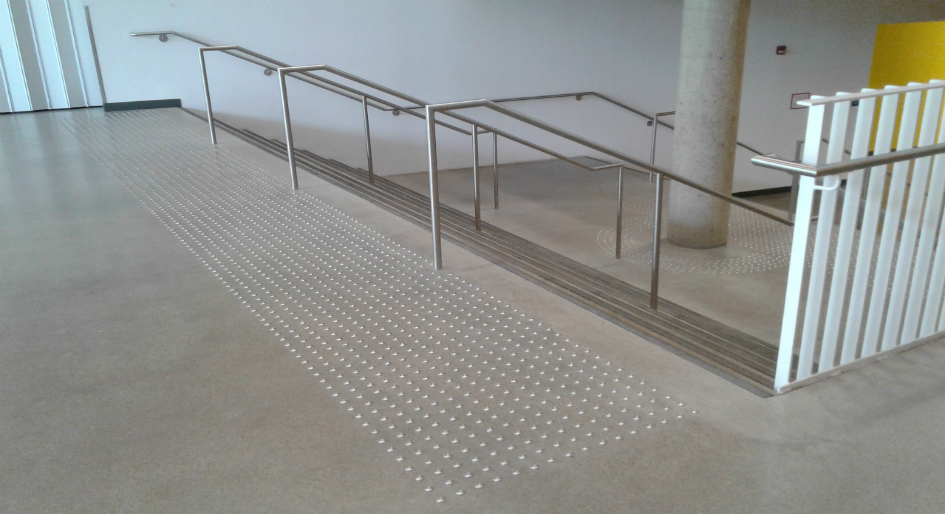
accessibility audit

Stairwell in the Active Living Centre is a “great example of inclusive design and safety coming together.” Photo by Jeff Wilson

Auditing and Maintenance

Before the fall semester, the auditing team will capture physical evidence through measurements and photos. A senior team will then analyze it to against code and internal standards and refine missing information. From this comes a lengthy detailed report prioritizing properties according to the highest levels of risk in safety, compliance and services, along with universal design recommendations, both short and long term. A construction project report summarizes planned renovation projects to ensure they keep accessibility at the forefront.

There will be a maintenance audit this winter, since weather conditions can dramatically alter accessibility—paths and parking gets blocked, access is narrowed, and water and dirt gather near entrances and exits.

“You can have the best designed building in the world, but if maintenance is poor, there are a lot of temporary obstacles and obstructions. There can be garbage cans obstructing fire pull stations, or salt and sand, leftover from winter, on ramps and stairs, which become a slip-fall hazard.

Included in maintenance will be nighttime auditing, looking at how the grounds change inside and outside, after the sun goes down.

“A path that is beautiful and clear during the day may not be so at night, depending on how lighting or other things are oriented along the path,” Wilson notes.

A concluding report will offer recommendations on how to revise maintenance practices and processes.

“The maintenance staff has been really great in stewarding us around; you can tell there is a lot of pride among the staff and for buildings they are taking care of,” Wilson says, adding that the university, too, is committed to delivering high levels of accessibility to students and staff.

“Universities and colleges are small cities and towns and often have the ability to be more nimble in decision-making than traditional municipalities,” he adds.

A number of stakeholders at the University of Manitoba have a vested interest in what the reports will deliver, with the audit being not just an accessibility project, but an engineering and architectural planning initiative.

“Inclusive design is about human-centric design, making things easy to find, understand, use and share with others; that’s the goal here, all to promote a consistently positive experience.”

Rebecca Melnyk is online editor of Facility Cleaning & Maintenance and Canadian Property Management

Photos by Jeff Wilson

Environmental management leaders to gather this September

The Canadian Association of Environmental Management (CAEM) is hosting its Annual Conference and Trade Show, bringing together infection control leaders and experts in environmental cleaning and disinfection.

CAEM was established in 1971 as the Canadian Administrative Housekeepers Association (CAHA) and changed its name in 2003 to better reflect the growing changes to the healthcare industry as it relates to environmental services.

More than 300 professionals in environmental services management, infection prevention and public health, and industry suppliers are expected to attend the event that will celebrate the theme of “Collaboration.”

Leading technologies will be featured alongside InfectionControl.tips’ Top Innovations of the Year, with conference-goers voting on the industry’s best.

The event takes place at Blue Mountain Resort in Collingwood, Ontario, from September 27 to 29. Interested parties can register here.

Condominium Authority of Ontario adopts fees as proposed

Condo owners will pay a monthly fee of $1 per voting unit to fund dispute resolution, education and information services to be provided by the newly formed Condominium Authority of Ontario (CAO) starting this fall, the CAO said in a note on its website.

The CAO confirmed that it will be adopting fees as proposed after receiving what it said was largely positive feedback during a two-week consultation at the beginning of July.

Condo owners and corporations will have to pay additional fees to have their disputes mediated or adjudicated at the Condominium Authority Tribunal (CAT), which will begin offering its services in November for conflicts relating to corporation records.

Condo corporations, which will be required to collect and remit the monthly per-unit fee, can anticipate information on registering and paying their assessments before the end of the month, when the CAO said it will be sending out packages. The first assessment, due Dec. 31 of this year, will capture seven months starting from when the CAO begins delivering services: Sept. 1, 2017, through March 31, 2018.

The CAO is a non-profit corporation that was established to administer recent condo law reforms aimed at improving consumer protection.

A condo rule against complaining?

Recently, a condominium corporation in Toronto was reported to have enacted a rule which, among other things, sought to limit the ability of residents to complain to the condominium. Various parties including residents of the building in question have expressed outrage at such a rule.

In particular, the rule was reported to contain wording prohibiting “unreasonable and/or repetitive expression of concerns with respect to the administration of the affairs of the Condominium Corporation.” This appears to be a small portion of a rule generally relating to a harassment policy.

The subject rule drew a lot of attention. In addition to television news coverage, a Reddit discussion board, for example, contained extensive discussion of the rule, with a thread entitled “my condo is making it against the rules to complain.”

In the writer’s view, while the rule perhaps was worded in a way which invited such reaction, the intent of this rule clearly seems to be aimed at preventing harassment of the condominium’s representatives, which is an extremely important issue.

What has been lost in the coverage to some degree are the extremely serious problems that many condominium boards and managers face relating to resident interactions and complaints. Resident complaints are natural and it is natural for residents at times to become passionate about their home and the issues affecting their living situation and finances. Sometimes residents go too far, however, resulting in harassment of board members and managers.

In fact, in recognition of the problem of harassment in the workplace (which includes condominiums) the Ontario government has enacted legislation to guard against harassment. The Occupational Health and Safety Act, commonly referred to as “Bill 168,” includes provisions that specifically address workplace harassment.

While the rule against “repetitive” expressions of concerns might have used different language, the underlying approach is understandable. There is some concern raised that such a rule may not be valid. That would be an issue of perhaps at one point for the courts or an arbitrator to decide. Keep in mind in any event that boards of directors have to act prudently under the current Condominium Act and such a rule would have to be enforced in a reasonable manner.

The subject rule should also be viewed in the context of recent court decisions concerning harassment in condominiums.

Harassment of condominium management was addressed in the recent case of York Condominium Corp No 163 v Robinson, a decision of the Ontario Superior Court released in April 2017. In that court decision, various court orders were made against a condominium unit owner for having communicated in a harassing manner to condominium management. The communications were frequent, and often included insulting and degrading language towards management and other condominium staff.

The court even invoked section 117 of the current Condominium Act, which prohibits residents from conducting themselves in a dangerous manner. In this case it was noted that the psychological harm to employees was of concern. This case was a more extreme situation of communications to the corporation, but illustrates that there are limits on how residents may communicate.

The subject rule involves the inevitable conflict between allowing owners to freely communicate with the condominium on one hand, and harassment or unreasonable demands on the condominium representatives’ time on the other.

One option for boards and managers to consider may be to reply and set ground rules if a manager is feeling harassed or a resident is ‘monopolizing’ the manager’s time. This would offer an alternative to escalating a dispute with a resident by enforcing a rule or even commencing court proceedings.

For example, the condominium may clearly outline to the resident in question that given the number of his or her complaints the board and management may not be able to respond in a timely manner. In more serious cases an owner could be advised that the corporation may simply ignore or delete email messages, for example. If these steps are taken, the board or management should clearly advise the resident that he or she can use the usual contacts (emergency numbers) in the case of genuine emergency the usual contacts. At this stage, it’s advisable that condominiums seek some legal guidance.

As was of concern in the Robinson decision, condominiums are sometimes reluctant to completely ignore an abusive or harassing resident in case a valid issue is raised. That is, it’s not always possible or practical to simply ignore a resident by, for example, deleting or blocking email messages. Blocking communications can be a tool in some situations; however, this does not always work.

In this regard, the writer’s office was involved in a recent unreported court decision where a resident continued to harass board members and management. When communications were ignored and/or blocked after providing notice to the resident to that effect, the harassment ultimately expanded to other parties including many other lawyers in the writer’s firm. In the end, the resident was found to have harassed the condominium and the writer’s office and was ordered by the court to stop, with a significant costs order to be paid by the owner of the subject unit.

The bottom line is that any restriction on ‘repetitive’ complaints needs to be interpreted in light of the purpose of such a rule, being the protection of condominium representatives from harassment. It would seem that repeating a complaint in itself would not violate the rule and that the matter escalates to a violation of the rule when the communications rise to the level of harassment.

David Thiel is a partner in the condominium law group at Fogler, Rubinoff LLP. He can be contacted at [email protected] or 416-864-9700.

Keeping the urban forest green

Trees are an underrated natural wonder. Besides providing shelter and shade, they offer environmental, economic and social benefits so it’s important to take care of them.

Maintaining trees as part of any landscape adds value to a property and its community throughout the life of the woody plants. Properly scheduled maintenance helps to ensure trees mature gracefully, retaining both their beauty and functionality from year to year. Maintenance performed by qualified and experienced professionals can help to extend the life of trees in the harsh urban environment.

Trees in cities and suburbs are subject to challenges that rural trees do not experience, including improper planting, soil compaction, exposure to high levels of pollutants and mechanical injury. Having a certified arborist regularly assess and care for a property’s trees can assist with early identification and mitigation of these common stress factors for urban trees. In fact, most modern city bylaws require a report by a certified arborist for any site proposal involving tree removal or potential injury to nearby trees.

A Cut Above

Pruning is the most common tree maintenance procedure. It involves a strategic approach to improving the health, structural integrity and overall appearance of a tree. There are a variety of pruning techniques that can be performed, based on tree species, location and limb health.

The most common reason for pruning is to address practical issues, such as allowing for structural clearance, reducing shade case on lawns and gardens, and improving flower and fruit production. Pruning can also be used as an early intervention to prevent future tree failures and improve landscape sightlines (known as vista pruning, whereby the crown is reduced or tree thinned).

A certified arborist can identify the tolerance level of individual tree species for utility pruning. As a general rule, pruning should not exceed more than a 15 to 25 per cent reduction of the overall canopy of any tree. More aggressive pruning may be required when factors such as sightlines or shade levels are a consideration. In these cases, gradual pruning can help to limit the overall stress experienced by the tree and reduce the risk of tree failure. Not only is aggressive pruning stressful for a tree but it can actually result in an increase in the occurrence of unwanted growth, rather than limiting it.

Over pruning, including practices such as tree topping (where whole tops of trees or large upper main branches are removed, leaving stubs), can create hazardous trees and increase the likelihood of future failures. In the rare instances where heavy reductions or topping is required, there needs to be a commitment to increased maintenance in the future.

Pruning for the improved health and structure of a tree can be best achieved through regular scheduled maintenance. Frequent, gradual pruning is easier on the tree than pruning a large volume at sporadic intervals. A certified arborist can determine the best time of year to perform pruning, based on the tree species and extent of crown cleaning required. Healthy branch structures have optimal spacing to allow for the most advantageous future growth and strong resilience to wind and snow loads.

Removing dead wood is an essential part of pruning and may be required annually, depending on the species and condition of the tree. Removing dead wood improves airflow and light penetration, as well as reduces the risk of pest and fungal infections. Once the dead wood has been expunged, additional branches are then removed in order to optimize the future structure of the tree. This selective pruning takes the most experience since it is based on growth rates and patterns of individual species, as well as the unique site conditions affecting tree growth.

For juvenile trees, pruning is focused on improving health and removing growth that will eventually become undesirable in the given landscape. Mature trees are pruned to remove structural elements, such as diseased branches, rubbing branches and non-advantageous new growth

A certified arborist can also use pruning techniques to train trees to grow away from surrounding structures, as well as lift the tree canopy to allow for the use of riding lawn mowers. While the greatest benefit is seen with regularly scheduled maintenance, even a small amount of pruning, especially in young trees, will promote healthy branch structure. Structural deficiencies such as co-dominant growth (when two or more branches emerge from the same junction or tree fork) can be avoided by pruning a juvenile tree before the problem becomes defining for it.

From the Roots Up

If a tree has a good structure and has been pruned regularly but still has an ill appearance, it could indicate there is a problem below the surface. Improper planting practices can lead to girdled roots or ineffective buttress (structural) roots. It is important for the long-term health and stability of any new tree to involve a qualified professional in the tree planting process.

For new plantings and established trees alike, soil compaction (hardening) can be overlooked or an unavoidable challenge. Soil compaction occurs when soil is continually traversed by pedestrians, bicycles or mechanical traffic, such as lawn mowers or other landscaping vehicles. It’s problematic because water is unable to easily penetrate the soil surface, it limits oxygen supply and hampers the ability of tree roots to grow into surrounding areas. Soil compaction is one of the main reasons modern city bylaws require ‘tree protection zones’ or ‘tree buffer areas’ on construction sites. In more extreme cases, an arborist can use methods to aerate the soil and bring some growth potential back to an area of high traffic.

It is beneficial to apply a five to 10-centimetre area of mulch to the critical root zone of a tree; however, mulch or soil should never be piled up around a tree’s trunk. Doing so can lead to decay around the base of a tree, which can make it susceptible to pests and diseases, and increase the overall stress a tree endures in an urban environment. Mulch is not used to introduce nutrients into the soil; instead, it’s applied to enhance the aesthetics of a landscape, moderate soil temperatures and maintain soil moisture.

If necessary, a controlled-release fertilizer can be applied to improve the mineral or nutrient content of the soil. However, it is always preferable to identify and address issues in the landscape that limit the growth potential of a tree, rather than using fertilizers as an artificial prop.

Having a certified arborist regularly assess trees and landscape conditions can help to promote the health of the roots as well as the trees. An arborist can identify factors that have the potential to cause significant root damage, such as proposed construction or landscaping projects, or even continued root injury from flower planting or lawn cutting.

Robert Lis is an ISA certified arborist that co-owns and operates The Urban Arborist Inc. with Jason Chhangur. Together, they have more than 20 years’ experience. Established in 2014, the company provides arborist services in the Greater Toronto Area, ranging from planning and development, tree removal, pruning, planting and a variety of plant health care treatments and plans.

GTA condo sales fall eight per cent y-o-y in Q2

According to the Toronto Real Estate Board (TREB), there were a total of 8,223 condominium apartment sales reported between April and the end of June in the Greater Toronto Area, which is eight per cent lower than the 8,942 sales reported in Q2-2016.

New listings of condominium apartments increased by 0.7 per cent year-over-year to 13,682.

“Despite the recent dip in overall GTA home sales, the condominium apartment market was quite resilient, especially when compared to low-rise market segments,” said TREB president Tim Syrianos, in a press release. “Condo apartment sales accounted for a greater share of overall transactions during the spring compared to the same period last year. Market conditions also remained tight, which resulted in the continuation of strong annual rates of price growth.”

The average selling price for condominium apartments climbed 28.1 per cent compared to the same period last year. The average selling price in the GTA was $532,032, with the average price in the City of Toronto slightly higher at $566,513.

“Recent consumer survey results from Ipsos suggest that condominium apartments will continue to gain in popularity with home buyers over the next year,” added Jason Mercer, TREB’s director of market analysis. “This makes sense given that many households, especially first-time buyers looking to live in the City of Toronto, have turned their attention in increasing numbers to less expensive forms of ownership housing.”