





Articles Archive - Page 506 of 929 - REMINET
REMI

Avison Young scoops Edmonton-based multifamily veterans

Cory Wosnack, Avison Young Principal and Managing Director of the company’s Edmonton region, announced the strategic hiring of highly regarded industry veterans Amit Grover and Jandip Deol.

Effective immediately, both Grover and Deol are Principals of Avison Young. Based in Edmonton, they will continue to work as a team, focusing on launching and growing the company’s multifamily real estate practice in the Alberta Capital District and beyond. They bring to Avison Young a combined 25-plus years of commercial real estate experience with Colliers International in Edmonton, where Grover was a Senior Vice-President and Deol was a Vice-President.

“We are thrilled to announce that we have recruited an outstanding team to launch our Edmonton-area multifamily practice,” said Wosnack. “This team holds a top-two market-share position, and we expect that with our collaborative approach and their entrepreneurial spirit and professionalism, we will be able to serve our clients in an expanded way to meet their multifamily property needs.”

During his career, Grover has been directly involved in the sale of more than 5,000 apartment units and 25 acres of infill and suburban land across Alberta. His total asset sales to date exceed $600 million. Over the course of his career, Deol has been involved in the analysis and sale of more than 3,900 apartment units and $510 million of multi-family real estate in the province. Together, Grover and Deol experienced a career high in 2018, transacting on more than $165 million worth of multifamily real estate while continuing to increase their market share.

“We couldn’t be more excited to join Avison Young,” says Grover. “The firm provides a worldwide platform with tremendous expertise and support, enabling us to enhance our multi-family investment property services. Avison Young’s culture, best-in-class services and distinguished professionals offer an ideal opportunity to launch and grow the multi-family practice in the dynamic Alberta marketplace. Jandip and I were drawn to Avison Young because of its Principal-led and client-centric business model, along with the company’s desire to enhance offerings in an underserved niche. By joining Avison Young, we can make decisions at the local level and provide nimble, custom-made solutions for clients based here and elsewhere.”

“Under the Avison Young brand, our team will continue to provide creative solutions for diverse multi-family property buyers and sellers, assisting them with acquisitions, dispositions, insights on taxation and other comprehensive analysis,” says Deol. “Amit and I look forward to working with our new network of apartment-building transaction experts across the company.”

According to Wosnack, the new recruits have seen number of trends occur in the Edmonton multifamily market, from the condo conversion boom of 2006 and the plethora of new suburban development in 2014 to the vertical downtown core developments being announced today. “Having worked with private investors of every size, medium-sized and large-scale REITs and pension funds, they truly understand every facet of the Alberta multi-family market, regardless of the economic climate,” he said. “Jandip’s unique skill set combines extensive tax knowledge and analytical skills with a real estate background to provide his clients with an optimal sales experience.”

Grover holds a Bachelor of Commerce degree in management science from the University of Alberta. Upon graduating, he started the multifamily division for Colliers in 2005 from the ground up.

Prior to entering the commercial real estate industry, Deol was a chartered accountant with Deloitte, providing assurance and advisory services. He holds a Bachelor of Commerce degree in financial accounting from the University of Alberta and a chartered accountant designation from the Chartered Professional Accountants of Canada. In the community, he has been active with the Children’s Wish Foundation of Canada, serving as the sponsorship chair this past year for the non-profit group’s Edmonton Gala, which tripled its sponsorship numbers while Deol was chair.

Also joining Avison Young in Edmonton from Colliers International is Brandon Imada as a Senior Associate. He will continue to work as part of Grover and Deol’s team.

CRRA awards Boardwalk “Best Renovation” of 2019

Calgary’s Residential Rental Association (CRRA) has recognized Boardwalk for the second year in a row for “Best Renovation” of a rental property. This year the winning building is the Broadway Centre community. In 2018 Boardwalk received the same award for its transformation of Centre Pointe West community.

“We are so proud to receive this recognition for Broadway Centre, one of five communities in Calgary our team has re-positioned to our affordable luxury brand,” said Sam Kolias, Chairman and Chief Executive Officer of Boardwalk REIT. “The transformation positions Broadway Centre as one of Calgary’s premier multifamily communities and a place our Resident Members are proud to call home. Our renovation and re-positioning program allows Boardwalk to provide the best product quality, service and experience for our Resident Members while also enhancing value and returns for our stakeholders.”

On behalf of Boardwalk, Kolias offered his thanks to his design team and to Paul Lavoie Interior Design for helping deliver the an award-winning “Best Renovation” vision. He also acknowledged PNG Construction and Boardwalk’s operational teams for their commitment to the project.

Located minutes from Calgary’s thriving Mission area and trendy Stephen Avenue, Broadway Centre is at the heart of the city’s entertainment district in close proximity to restaurants, retail shopping, parks, and the downtown core. The amenity-rich community offers various options for its residents with bachelor, one, two and three-bedroom suites with premium suites featuring contemporary interior finishes such as quartz countertops, stainless steel appliances, modern cabinetry, enhanced fixtures, and luxury flooring.

As a Boardwalk Lifestyle building, Broadway Centre offers “affordable luxury with sleek modern design, a lively and energetic atmosphere, superior customer service and a generous selection of first-class amenities including a state-of-the-art fitness facility, Resident lounge, wi-fi bar, community room, and a private outdoor terrace.”

To learn more about Boardwalk’s award-winning Broadway Centre community, click here: https://www.bwalk.com/en-ca/rent/details/alberta/calgary/broadway-centre/

B.C.’s largest soccer training facility coming to Langford

Langford, B.C. is slated to host to the province’s largest indoor soccer training facility. The $5 million project is being funded by Pacific FC, Vancouver Island’s newest Canadian professional soccer club, who will own and operate the facility once it opens in December 2019.

“We’re very excited about the new indoor training facility Pacific FC is building in Langford,” said Langford Mayor Stew Young. “Not only does this year-round venue add another artificial turf to our community, but it provides opportunities for youth, community groups and high-performance teams to practice and compete at the next level no matter how bad the weather is.”

The 55,000 sq. ft. training complex will be built by West Shore Parkway next to Langford Lake in the region’s Kettle Creek Crescent area. It will feature multiple artificial turf fields and operate year-round as both a practice venue for Pacific FC and a home for numerous community sports programs.

“This is something that is screaming to be built here,” said Pacific FC president Josh Simpson. “We want to build the culture of soccer and how do you do that? You get facilities like this one. It’s going to make soccer fun.”

Simpson added Pacific FC is leasing the land from Langford but the facility will be the club’s own investment, adding, “We’re really excited about this.”

Tourism benefits also linked to its drawbacks

A sizable minority of Canadian survey respondents believe tourism drives up housing costs and exacerbates crowding in public spaces. However, a definite majority credits tourism for generating income, creating jobs and spurring social, cultural and recreational opportunities that benefit everyone.

While half these respondents perceive they live in a city with a high number of tourists, more than half agree tourism has positive attributes and fewer than half complain of negative fallout. The 1,000 Canadians participating in a recent 15-country survey sponsored by the United Nations World Tourism Organization (UNWTO) hold a more favourable view of tourism and are less likely to fault its drawbacks than the average across the entire 12,000-response database.

More than 58 per cent of those surveyed live in nine European countries — Belgium, France, Germany, Hungary, Italy, Poland, Spain, Sweden or the United Kingdom — while 2,000 respondents from Canada and the United States provided North American insight. Residents of Argentina, Australia, Japan and South Korea also participated, contributing another 3,000 responses.

Across the entire database, 48 per cent of respondents agree tourism stimulates job creation, while 53 per cent of Canadians see a tourism-to-jobs connection. Fifty-two per cent of the total database says tourism generates wealth and income, compared to 56 per of Canadians respondents. Forty-five per cent of all respondents agree tourism increases housing costs, versus 41 per cent of Canadians. Forty-six per cent of total respondents link tourism to overcrowding in public venues like streets, shops and transportation networks, versus 43 per cent of Canadians.

Canadian respondents also endorse investments that benefit tourism and the wider community. Sixty-eight per cent support improvements to public facilities and infrastructure, while 82 per cent favour creation of attractions and events that can draw both tourists and local residents.

Tourism’s perceived impact on housing costs varies from country to country, but in most cases a sizable minority — 41 to 47 per cent — suggests it pushes prices upward. That surges to the majority viewpoint among Korean, Spanish and Argentine respondents.

In some cases, the perceived negative aspects of tourism seem to be a consequence of its benefits. Higher than average numbers of Argentine, Australian, Korean and Spanish respondents see tourism as positive for economic development, including job creation and prompting new leisure and cultural pursuits within the city, and for enabling intercultural exchanges. However, they also report a higher degree of cost and crowding impacts. Elsewhere, nearly three quarters of Swedish respondents believe tourism stimulates investment in new amenities and activities, but 55 per cent also think it increases crowding on the streets, public transportation and retail outlets.

Across the entire database, 46 per cent of respondents suggest tourism contributes to overcrowding, 45 per cent say it boosts the cost of housing, goods and services, and 36 per cent say it increases the cost of transport. Forty seven per cent think their city draws a high number tourists, ranging from a high of 68 per cent among Australian respondents to just 33 per cent of French and Japanese respondents.

Japanese respondents are the least enthusiastic about tourism benefits — with only 25 per cent linking it to the generation of wealth and income, and only 28 per cent seeing a connection to job creation — yet, they also voice the lowest level of complaints. Fewer than 30 per cent tie tourism to rising housing costs, significantly diverging from the sentiment in other countries.

Respondents in the United States also consistently express below-average faith that tourism benefits culture or the economy, with 48 per cent agreeing it generates income, 44 per cent agreeing it stimulates job growth and 42 per cent suggesting it creates intercultural exchange and inspires new leisure activities and events.

Pomerleau new partnership streamlines efficiencies

Quebec-based Pomerleau has selected Procore as one of its valued partners to help future-proof its business. Pomerleau is eager to drive further innovation through technology to increase efficiencies and improve processes across the organization.

“We really wanted to eliminate data silos and at the same time, make sure the agility for which Pomerleau is known is upheld. We are looking forward to a lasting and rewarding partnership with Procore,” said Eric Lessard, chief digital officer, Pomerleau Inc.

Procore’s open platform and its ability to connect and integrate with various technologies were primary drivers behind Pomerleau’s decision, especially as the organization is planning to streamline its technology solutions. Procore connects crucial business applications and information in one place so construction professionals can view important data and standardize operations both in the office and in the field.

“Choosing Procore as a partner speaks to the amount of trust in not only our current offering, but in our capacity to innovate and support the Canadian business in the long term, allowing Pomerleau to continue adapting to the ever-evolving face of construction in Canada,” said Jas Saraw, vice-president, Procore Canada.

The new partnership is one of Procore’s largest in Canada.

Ontario 2020 rent increase guideline set at 2.2%

The Ontario government released its rent increase guideline for 2020, setting it at 2.2 per cent – the highest it’s been since 2013. The annual guideline identifies the maximum percentage a landlord can increase rent over the course of one year without approval from the Landlord and Tenant Board. The increase of 0.4 per cent will go into effect across Ontario on January 1, 2020.

According to the government’s official website, the guideline was calculated using the Ontario Consumer Price Index, a Statistics Canada tool that measures inflation and economic conditions over a year. Data from June to May is used to determine the guideline for the following year.

Beginning January 1, the allowable increase will apply to most private residential rental units, excluding social housing, nursing homes and commercial properties; however it won’t apply to new buildings and additions (including new basement units) that were occupied for the first time after Nov. 15, 2018, following the Ford government’s reinstatement of the post ’91 exemption.

In most cases, the rent for a unit can be increased by the set amount 12 months after the last rent increase was issued, or upon tenant move-in. Furthermore, a tenant must be given written notice of a rent increase at least 90 days before it takes effect.

The Ontario Landlords Association’s member consensus is that the guideline is inadequate. “This is far, far too low. The guideline needs to be fixed to show true landlord expenses. Or get rid of it and let the market prevail,” the group commented on Twitter June 19th, following the government announcement.

Meanwhile, several tenant advocacy groups, including the Federation of Metro Tenants’ Association, are of the mind that the new guideline is set too high, telling the Toronto Star it could be enough to push low-income earners and seniors out onto the street. “There’s a lot of people in the city of Toronto on Canada pension, veterans pensions, social assistance,” executive director Geordie Dent said, adding that the increase could mean “the difference between a week’s worth of food and paying their rent.”

Notably, Ontario’s highest allowable rent increase was set at 6 per cent in 1992, back when NDP leader Bob Rae first introduced rent control and the post-1991 exemption that was later maintained by Mike Harris’ PC government. The lowest rent increase was set at 0.8 per cent in 2014 by former Premier Kathleen Wynn, who subsequently removed the new-build exemption before the Ford government took office last year and reversed it.

Ministers shift around expanded Ontario cabinet

Five new Associate Ministers will join an expanded Ontario cabinet, which is now 33 per cent larger than the executive council introduced a year ago. The 28-member reconfigured roster announced earlier today brings some fresh faces to portfolios of key interest to the commercial real estate industry, but also leaves one of the most prominent players in place.

Steve Clark, who most recently steered the omnibus More Homes, More Choice Act through the legislature — amending 13 distinct provincial statutes in some way related to the oversight of land use planning, development and housing supply — remains as Minister of Municipal Affairs and Housing. He is the Member of Provincial Parliament (MPP) for Leeds-Grenville-Thousand Islands.

“This is a difficult file no question, with polarized views, but the process that the Ministry conducted was second to none in my 20+ years in this job. Everyone had a seat at the table and had the opportunity to debate those opposite in interest, and come up with conclusions,” says Michael Brooks, chief executive officer of REALPAC, representing many of Canada’s largest real estate companies, funds and institutional investors. “The Bill 108 platform now gives us all an opportunity to improve housing affordability over time. I think Steve Clark has done a fantastic job as Minister of Municipal Affairs and Housing.”

Associate Minister of Energy Bill Walker is among those taking on a new task. He’s assigned to the leading piece of the Energy, Northern Development and Mines portfolio, while Greg Rickford remains at the helm and also assumes the role of Minister of Indigenous Affairs. Walker is the MPP for Bruce-Grey-Owen Sound and previously served as the Minister of Government and Consumer Services.

In turn, Lisa Thompson will step into Walker’s former portfolio, which includes responsibility for the Condominium Authority of Ontario and the Technical Standards and Safety Authority. Thompson is the MPP for Huron-Bruce and was previously the Minister of Education.

Jeff Yurek, formerly the Minister of Transportation, is the new Minister of Environment, Conservation and Parks. He steps into the role that Rod Phillips vacated as he moved to become the Minister of Finance. Yurek represents the constituency of Elgin-Middlesex-London, while Phillips represents Ajax.

Laurie Scott, MPP for Haliburton-Kawartha Lakes-Brock, switches posts with Monte McNaughton, MPP for Lambton-Kent-Middlesex, as she becomes Minister of Infrastructure and he becomes Minister of Labour. Raymond Cho, MPP for Scarborough North, remains as Minister of Seniors and Accessibility and John Yakabuski, MPP for Renfrew-Nipissing-Pembroke, continues as Minster of Natural Resources and Forestry.

Humber College’s NX building achieves design certification

Humber College’s NX building has been awarded the Zero Carbon Building – Design Certification by the Canada Green Building Council, making it the first retrofit in Canada to achieve design certification. According to CaGBC the North Campus building will use 70 per cent less energy than before, making it the college’s most energy efficient building, and one of the most energy efficient in North America.

“Globally, buildings are responsible for 40 per cent of annual energy consumption and up to 30 per cent of all energy-related greenhouse gas emissions,” said Spencer Wood, Humber’s director of facilities management in the institution’s press release.

“One of the biggest challenges to reducing greenhouse gas emissions in Canada is finding ways to heat buildings at a reasonable cost without burning fossil fuels. Humber wanted to be an example to the Canadian design and construction industries on how a deep energy retrofit can contribute positively to our country’s climate.”

Work on the NX building includes a complete envelope retrofit that is highly insulated and airtight, including new triple-pane windows. Energy efficient upgrades to the lighting, heating and cooling systems and a new 25kW Solar PV system were also completed.

“As the first retrofit to achieve zero carbon design certification, Humber College is showing real leadership and innovation in green building and carbon reduction,” said Thomas Mueller, President and CEO of CaGBC in the press release.

“The NX building demonstrates that Canada has the expertise and technology now for buildings to reach zero carbon and contribute to global climate change efforts in a meaningful way.”

Renovations to the NX building, which were designed by B+H architects and Morrison Hershfield and constructed by BIRD Construction, began in May 2018 and are scheduled for completion this summer.

Image courtesy of CaGBC.

B.C. industry supports approval of TMX pipeline

The B.C. construction industry welcomed the news that the federal government has approved the Trans Mountain pipeline expansion project (TMX) again. ICBA called the announcement excellent news for the thousands of construction workers waiting to get to work on it.

“TMX has seen many twists and turns along the way, but we are happy and relieved that construction has been given the green light,” said Chris Gardner, ICBA president. “This much-needed expansion should have started years ago. It is impossible to overestimate how important responsible resource development is to our economy and to Canada’s ability to attract investment and create opportunities for hundreds of thousands of families across our country.”

The construction industry has supported the project moving forward for many years. ICBA has been a vocal leader in the fight, using its #Get2Yes platform to generate thousands of messages from British Columbians supporting the expansion.

The Vancouver Regional Construction Association (VRCA) also joined in with other associations in welcoming the federal approval.

“The federal government’s decision is a win-win-win for our industry, B.C. and Canada,” said Fiona Famulak, VRCA president. “We look forward to all levels of government working together and with our industry to get the approved project built in a timely manner so that the economic opportunities and benefits manifest in communities throughout our region, province and country.”

Despite the welcome news, there remain dark clouds on the horizon for Canada’s energy industry and threats to Canada’s ability to compete globally.

“Bill C-48, the Trudeau government’s north coast tanker ban, combined with Bill C-69, which will make it virtually impossible to get another major energy infrastructure project approved in Canada, are a one-two punch that will put Canada’s energy sector on its knees,” said Gardner.  “Through regulation and red tape, the Trudeau government’s aggressive attacks on the oil and gas sector are doing significant damage to Canada’s reputation as a place to invest and do business with confidence and certainty.”

The Progressive shared similar concerns, saying Bill C-69 will bog down major projects and drive up costs and uncertainty. Bill C-48 limits Canada’s export capacity by banning oil tankers carrying more than 12,500 metric tonnes of crude oil from stopping at ports along B.C.’s north coast. Both bills are likely to be passed into legislation this week.

“We’ll believe this project is moving forward when the shovels are finally in the ground,” said Paul de Jong, president of the Progressive Contractors Association of Canada (PCA). “While [the] decision is the right one, it’s far from a ringing endorsement when the government is working so hard to kill major resource projects through legislation and regulations designed to make energy development less likely in the future.”

King Living opens first showroom in Vancouver

Australian furniture retailer, King Living, is making its first entry into North America with the opening of their Canadian showroom in Vancouver on July 13th.

“We are proud and very excited to announce the opening of our first North American showroom in Vancouver, B.C. The relaxed lifestyle and consideration for the environment where people are more inclined to appreciate quality and long lasting products makes Vancouver a perfect location for the launch of the King Living brand in Canada,” said David King, founder of King Living.

Located in South Granville, the showroom spans two floors and displays a number of design solutions for a range of spaces. Occupying more than 10,000 square feet, the new space showcases a wide range of furniture designs from the King Living collection including a range of luxurious beds with hidden storage, mattresses, storage furniture, dining as well as outdoor furniture collections.

Founded in 1977 in Sydney Australia, King Living is a family-owned business with more than 42 years of experience designing and manufacturing luxurious award-winning furniture.

The Vancouver location is the fifth international showroom for the Australian brand, with other locations in Malaysia, Shanghai, Singapore and New Zealand.

“We offer a quality product that is designed around innovation, comfort and customizable to every lifestyle or space. We are excited to share our love of design and furniture with those in Vancouver,” said Anna Carrabs, CEO of King Living.

How to handle summer carpet stains

With the arrival of summer, businesses can expect heavier foot traffic, increasing the risk of carpet stains, wear and tear and even permanent discolouring and damage.

“From airports to hotels to retail stores, summer is a busy time for businesses and introduces numerous types of carpet challenges,” said Joe Bshero, product manager, Whittaker. “Flooring is often the first thing customers see, so it’s important to properly care for carpet by both preventing spills and addressing soils immediately with the right equipment and chemistry.”

To maintain spotless carpet during the summer season, Whittaker offers tips to address some of the most challenging summer carpet stains:

  • Beverages: A cold glass of sangria or an iced coffee is the perfect way to cool off on a warm summer day, but if it spills on carpet, a stain is unavoidable. Blot beverage stains with a towel immediately after a spill and use a spotting agent specifically designed to remove wine, coffee and juice stains in a simple one-step application. Add heat to address particularly stubborn beverage stains.
  • Food: With condiments like ketchup and mustard and treats like ice cream, there’s an array of food stains to watch out for during the summer. To remove food stains, blot the area and use a spotter designed to remove things like oil, grease and dyes. If there’s a carpeted area particularly prone to food stains, treat the carpet with a stain resistant additive.
  • Grass: Due to chlorophyll, the pigment that gives grass its green colour, grass stains soak into carpet fibres and stick around. The key to removing grass stains is to address them right away. Blot the area and use a spotting agent that targets tough-to-remove pigments and dyes.
  • Mud: Customers’ shoes can bring in mud from outdoor activities and summer storms. If mud is dry, thoroughly vacuum the area and spot clean any leftover stains. If the mud is still wet, absorb the dirt and moisture by blotting the area with towels and apply a spotting agent. Agitate the stain until it is fully removed. To prevent debris from being tracked in, implement a matting program to catch dirt and mud at the door.
  • Organic: In the summer, there’s an increased number of foodborne illness cases, pet visits, and trips and falls, resulting in organic stains like blood, vomit and urine. Always wear gloves when dealing with these stains and use an effective organic stain and odour remover for carpet to address soiling caused by bodily fluids.
  • Paint: Some facilities re-paint interiors during the summer, but these projects can result in drips and spills. Avoid this by covering carpet with plastic tarp and tape. If a paint stain occurs, use a water-based ready-to-use formula that is non-flammable. Finish with a spotter that encapsulates residue and vacuum to remove.
  • Tar: Construction season and hot parking lots can result in tar, grease and oil being tracked into a building and onto carpet. When tar and grease dries, it becomes difficult to remove, so blot the area while still wet if possible. Use a non-flammable solvent-based formula that targets tough oil and grease stains and follow up with a carpet spotting agent.

Joe Bshero is the product manager at Whittaker, the leader in low-moisture carpet cleaning. 

Where there’s Smoke: Wildfire prevention tips for property owners

Warmer weather and dry lands are prime kindling for wildfires. And if current blazes across B.C., and northern Alberta are any indication, Canada is bracing for one of its most severe wildfire seasons yet.

“There may be debate over why why we’re seeing more severe and frequent wildfires, but the fact is they are a growing threat,” says Erik Hecht, Director of Operations, B.C, for FirstOnSite Restoration, adding, “What we’re already seeing in the west, and even south of the border in California, serves as a reminder for just how important it is to be prepared for weather-related emergencies.”

Emergency preparedness is no doubt key. With wildfire seasons heating up, here are some preventative steps property owners/managers can take to protect their tenants and assets:

  • Fire-proof your perimetre. Sparks can enter a building through openings of any size. Prevent fire from getting in by repairing loose shingles, applying wire mesh to screening vents, and using soffits made with fire-resistant materials to protect eaves. If your building allows pets, consider closing the pet doors during wildfire seasons.
  • Make space: Fire needs fuel to burn. Clear highly-combustible materials (e.g., branches, twigs, garbage, debris, etc.) within 10 metres of your property to remove materials that can help the flames spread.
  • Check the roof: Keep your roofing free from debris and consider applying a metal mesh screen to prevent additional debris from piling up. Wood shingles are very flammable, so also consider replacing your cover with non-flammable roofing materials such as asphalt, metal, slate, or tile.
  • Maintain your landscape: Coniferous trees are extremely flammable (as opposed to deciduous trees, which are naturally fire-resistant). Remove any coniferous tree within 10 metres of your property and, beyond that, space them within at least three metres of each other. Additionally, prune the lower branches from all your trees regularly and ensure the lawn is regularly mowed and watered (water restrictions notwithstanding).
  • Assign a “fire-resistant zone”: This could be a cleared part of the property (far away from the fire), an adjacent property, or a large paved area that is free of vegetation. This spot should be well known to property staff and tenants as a place to meet when disaster strikes and regular routes are not viable.
  • Secure your support network: If a nearby property ignites, your property is under threat (and vice-versa). Therefore, it is important to consider all neighbouring properties in your disaster planning and include them, emergency responders, and restoration partners in your disaster response planning.

Clearing the air

Smoke damage is an underestimated consequence of wildfires. Smoke contamination can travel to areas of property and/or belongings that may not be visible to the untrained eye, posing risks to a property and the health of its occupants.

Herein, there are several things to keep in mind during clean-up:

Partner with professionals: Smoke contamination can travel to areas of property and/or belongings that may not be visible to the untrained eye. Hire a firm with specialized expertise in smoke cleaning to complete a proper assessment.

  • Take precautions: If you decide to clean, remember that the environment may not be safe. Protect yourself by using a disposable dust mask or respirator and wear gloves, and use an air purifier will also help remove particulates from the space. Also, dispose of open or exposed food to avoid possible ingestion of toxic carcinogens.
  • Swipe first: Swipe windows with a clean white tissue to determine potential contamination. Light brown / brown dust indicates typical household dust, while grey/black dust indicates contamination is present and the area should be handled professionally to ensure safety.
  • Power down: Avoid turning on any electronics since soot on surfaces and in the air will contaminate the inside of the unit.
  • Seal the environment: Keep doors and windows closed as much as possible to prevent smoke from entering the property. Consider sealing windows and door frames with tape to prevent smoke from entering your home or business if the building is near an active fire.
  • Change your filters: Use one every few days or weekly depending on the severity of smoke and air quality.
  • Verify your coverage: Call your insurance company to understand what is specifically covered under your policy.

When disaster strikes

Preparing for an emergency is not a “one-and-done” exercise. It is an ongoing consideration that requires training, constant communication, and informed response strategies (e.g. evacuation and business continuity plans).

“The last time you want to be planning your emergency response is during an actual event,” adds Hecht. “There are health issues at play, and businesses can lose a tremendous amount of money every day they are offline. The sooner you work with a team like FirstOnSite to assess your organization and create a response and continuity plan, the better your odds will be of making an effective recovery.”

The risks are mounting, but there is much that property owners/managers can do to help mitigate damage, protect their tenants, and recover quickly (and effectively) from extreme weather events.

FirstOnSite Restoration is a leading Canadian-based disaster restoration company providing remediation, restoration, and reconstruction services nationwide, as well as for the US large loss and commercial market. For more information, visit www.firstonsite.ca.

-END-

LNG Canada initiative aims to recruit women

LNG Canada has launched a province wide workforce development program aimed at attracting, recruiting, training, supporting and employing women to work in the construction trades on the LNG Canada Project.

“Women in British Columbia currently represent just under 5 per cent of a typical construction workforce, despite comprising 50 per cent of the working population,” said Andy Calitz, CEO of LNG Canada. “This lack of diversity is not a women’s issue, it is a workplace issue.”

The four week Your Place program is open to B.C. women 18 years or older, at all stages in their working life, whether entering the workforce for the first time, looking for a career change, or returning to the workforce after taking time off.

Your Place graduates will have a direct line to employment opportunities in an entry level position with prime contractor JGC Fluor or one of its subcontractors on the LNG Canada Project site in Kitimat, B.C.

To remove barriers for women considering a career in the trades, the LNG Canada Project will cover the costs of tuition, safety gear and learning materials for all participants, as well as airfare to and from the training in Kitimat and accommodation for participants from outside the local area.

Women with existing trades training or experience are also welcome to apply directly to JGC Fluor for employment as construction ramps up.

Women Building Futures (WBF), a non-profit organization that has championed women’s economic prosperity and success in the construction and maintenance industries for over 20 years, will develop and deliver the customized training.

Hospital faucets home to germs: study

According to new research presented at the 46th Annual Conference of the Association for Professionals in Infection Control and Epidemiology (APIC), hospital faucets are a source of pathogens.

Researchers at the University of Michigan Health System assessed eight different designs across four intensive care units to determine how dirty sinks and faucets really are. They found that a shallow depth of the sink bowl enabled potentially contaminated water to splash onto patient care items, healthcare worker hands, and into patient care spaces – at times at a distance of more than four feet from the sink itself.

“Potentially hazardous germs in and around sinks present a quandary for infection [prevention] since having accessible sinks for hand washing is so integral to everything we promote,” said study author Kristen VanderElzen.

To identify the grime level of the sinks, the researchers used adenosine triphosphate (ATP) monitoring to measure the cleanliness. Visible biofilm was associated with higher ATP readings, and cultures tested over the course of the study grew Pseudomonas aeruginosa, mould, and other environmental organisms.

The research team also found aerators on sinks where they had previously been removed, pointing to an overall inconsistency of equipment protocols across the facility. Included in the design improvement program were sink guards, which were shown to limit splash significantly.

“Acting on the information we found, we have undertaken a comprehensive faucet replacement program across our hospital,” VanderElzen added.

“As we learn more about the often stealthy ways in which germs can spread inside healthcare facilities, infection prevention play an increasingly important role in healthcare facility design – including in the selection of sink and faucet fixtures – as this study illustrates,” said 2019 APIC President Karen Hoffmann in the press release.

“Because the healthcare environment can serve as a source of resistant organisms capable of causing dangerous infections, an organization’s infection prevention and control program must ensure that measures are in place to reduce the risk of transmission from environmental sources and monitor compliance with those measures.”

New book explores the story of B.C. wood

British Columbia’s cutting‐edge wood architecture and design are featured in the newly released book, Naturally Wood.

B.C.’s leadership in the wood building sector is progressive and inspiring. Naturally Wood  is packed with stories and insights from industry leaders, innovators and thinkers, captured in first-person and by a variety of B.C. writers.

This collection of perspectives and projects in the book underscores B.C. wood innovation and history in a tribute to one of our most important industries in B.C. It makes a cohesive and convincing argument that wood is a natural choice and a building material that can help provide solutions to our biggest challenges in the decades to come, including affordable housing and sustainable building systems.

“Wood is a limitless material in so many ways — renewable and with extraordinary expressive potential,” says Darryl Condon, founder of HCMA Architecture + Design. “As British Columbians, it makes sense that we are drawn to building with wood and we’ve really embraced pushing the envelope with what you can do with wood.”

Britco_BellaBella_CornerView_3

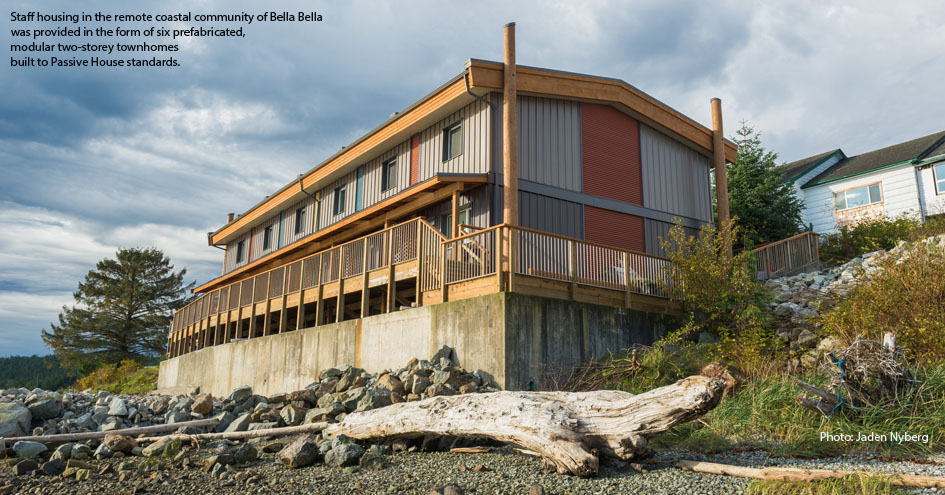
Along with its beauty, the sturdy and sustainable material is helping to address a range of housing needs through modular prefabricated wood and mass-timber construction, saving money and time, while boosting overall quality and performance. Vancouver Coastal Health chose modular prefabrication to overcome construction obstacles in building staff housing for the hospital in isolated Bella Bella. Even with access only by barge and plane, construction of Canada’s first ever multi-unit Passive House was completed within seven months.

Wood is an important part of life for many British Columbians. The province is home to North America’s largest producers of softwood forest products with more than 7,000 firms and 57,000 people working in the forest sector. A diverse population uses wood buildings on a daily basis at work, home and for leisure. B.C. is home to nearly 25 percent of the world’s temperate rainforest, protected by some of the world’s most stringent forest laws. The rugged, natural beauty contributes to a sense of place unique to British Columbians and has given rise to innovative wood products and architecture. In Prince George, the six-storey Wood Innovation and Design Centre features an open atrium, theatre and lab space. The building showcases the diversity of locally sourced products and species, as well as their aesthetics and functionality.

The enterprising B.C. wood industry has carved a reputation as a world leader in wood design and construction, employing advances in engineered wood and 3-D modelling to build taller and more efficiently. Changes to the national building code that allow the safe construction of taller wood buildings — doubling the allowable height from six to 12 storeys — are being proactively adopted by the province.

Products like mass timber are allowing for new, unprecedented possibilities in what wood can achieve, including impressively long spanning structures and strong, safe skyscrapers. One of those groundbreaking buildings is Brock Commons Tallwood House, a dormitory on Vancouver’s University of British Columbia (UBC) campus. Standing 54 metres tall, it is one of the tallest hybrid mass timber buildings in the world. The 17-storey mass timber structure went up in just over nine weeks. The estimated environmental impact of its wood use is equivalent to taking 511 cars off the road for a year.

Brock Commons

“Using wood is one of the early discussions we have with our clients, for every single project. The environment is being seriously damaged by us emitting carbon into it, and if we can build in wood then we reverse that process. We sequester carbon and build up a positive balance. So we are always looking at wood first — always,” says Peter Busby, principal, Perkins + Will.

The book profiles some of the many innovative wood buildings found throughout the province. It is a useful resource for building and design professionals, real estate developers, contractors, government and civic decision makers, as well as just about anyone interested in architecture and design. It’s a call to action for those who are curious about wood innovation, design and manufacturing to reach out to the province’s growing community of forest and timber experts to learn how they can use wood in both structural and finishing applications.

Download the digital copy at naturallywood.com/NWBC. Naturally Wood is also available in print.

Federal Government details First-Time Home Buyer Incentive

The Federal Government joined the Canada Mortgage Housing Corporation (CMHC) to reveal a launch date and details for its First-Time Home Buyer Incentive, an “innovative tool” designed to help middle-class Canadians purchase their first residence.

This June, Jean-Yves Duclos, Minister of Families, Children and Social Development, announced the program will launch September 2, 2019. It will provide interest-loans of up to 5% per cent of the cost of an existing home and 10% of the price of a new home. In so doing, the program aims to reduce first-time home buyers’ monthly mortgage payments without raising the amount they would typically need for a down payment.

“Through the National Housing Strategy, more middle-class Canadians – and people working hard to join it – will find safe, accessible and affordable homes,” said Duclos in the June 17 announcement. “Our proposed measures will reduce the monthly mortgage for your first home by up to $286. This will mean more money in the pockets of Canadians and will help up to an estimated 100,000 families across Canada.”

The incentive will be available for home buyers with qualified annual household incomes of up to $120,000. The total of the insured mortgage and the incentive, however, will be capped at four times the amount of that annual household income, up to a limit of $480,000.

Those who take the incentive will be required to repay the loan after 25 years or when the property is sold. Participants can pay CMHC back at any time beforehand with no penalties.

Duclos confirmed that the government will provide $1.25B in funding for the program over the next three years. According to a report by Global News, the government will receive a percentage of the increase in the event that the house price goes up, and absorb a percentage of the hit if it should go down.

Edmonton Composting Facility shuts down

Edmonton Composting Facility (ECF) has shut down due to a rotten roof.

In 2017, structural issues were identified at the building and the City of Edmonton Waste Services implemented mitigation and risk management activities to continue the use of the facility in a safe manner. Operations at the ECF have since been conditional, based on regular assessments of the safety of the facility.

However, in spring of this year, an additional investigation of the facility indicated that conditions in the facility have deteriorated, and concluded that it is no longer safe to continue to operate the facility.

“The safety of all employees and everyone on-site at the Edmonton Waste Management Centre is the number one priority, so, given this conclusion, Waste Services will begin the process of shutting down and decommissioning the facility,” said Michael Labrecque, branch manager, Waste Services in a press release.

Proposed Anaerobic Digestion Facility (ADF)
In the near term, organics processing capacity will be partially directed to the Anaerobic Digestion Facility, which is undergoing commissioning processes that will continue into the third quarter of this year. Without access to the ECF, the City’s overall organics processing capacity will be reduced immediately.

Edmonton Waste Services is planning an additional Organics Processing Facility aimed at providing a long-term substitute for the ECF. The need to replace the ECF is factored into forthcoming reports on the 2020 – 2023 Business Plan and 25 Year Waste Strategy Update being presented to City Council in late June.

The ADF will enable the City to:

  • Process up to 48,000 tonnes of organic waste per year and divert it from landfill
  • Create renewable energy in the form of electricity and heat
  • Produce high-quality compost for use in agriculture and horticulture
  • Reduce greenhouse gas emissions
  • Remove odours created during the process by using bio-filters

Photo courtesy of City of Edmonton Waste Services.

