




Articles Archive - Page 505 of 929 - REMINET
REMI

The Importance of Resident Operations and Professional Quality Service

Membership in the Certified Rental Building Program (CRBP) is an effective means of maintaining a high standard of quality when managing your building and working with residents (tenants). When prospective or existing tenants see the familiar green CRBP logo and check mark on your property, they will immediately know that they can Rent With Confidence.

The CRB Program is North America’s only multi-residential certification program. It was founded under six disciplines which all affiliated property managers must comply with in order to receive official certification for their buildings. In this six-part series, we will examine each of the disciplines in detail and explain their importance to the program.

Discipline 3: Resident Operations

In Part 2, we discussed effective human resources management and how the importance of having educated and professional frontline employees is critical to maintaining your company’s reputation and image. Knowledgeable employees not only ensure that resident’s immediate needs are being addressed promptly, but also accurately, thus eliminating the chance for misunderstanding and/or miscommunication.

One of the primary drivers of resident satisfaction is how residents view the quality of service provided by building management staff and their employees. It probably goes without saying, but highly satisfied residents make for easier-to-manage apartment communities and can be an excellent source of referral business. As a result, a critical aspect of any professional property manager’s job is to ensure that caring and effective customer service is being provided to residents on an ongoing and consistent basis.

CRBP Resident Operations discipline was designed to promote providing good quality of service to residents, and to ensure respectful communications with them at all times. As with all CRBP disciplines, Resident Operations contain a number of best practice benchmark requirements that were designed to ensure front-line building staff can apply professional and caring service in meeting the service needs of their residents. They include the following standards and much more:

  • Ensuring renter leasing practices are being carried out in a manner consistent with the Human Rights Code, and as established within the confines of Ontario Residential Tenancies Act (RTA). Additionally, that a standard lease is in use that it is consistent with the requirements set out in the RTA.
  • Ensuring residents have 24/7 access to a company representative for emergency contact purposes.
  • Ensuring that list of all residents who may require assistance in case of an emergency is being maintained and updated for first-responder personnel.
  • Resident information is maintained in accordance with principles, rules and guidelines set out in The Personal Information Protection and Electronic Documents Act (PIPEDA).
  • Ensuring that all new residents are provided with a satisfactory “move-in” inspection prior to taking possession of their new rental home.
  • Ensuring resident maintenance requests and resident inquiries/complains are properly documented and acknowledged with two business days or less.
  • Ensuring there is a “one-up” process for residents to use if they not satisfied with any maintenance work that has been carried out on their behalf, or if an inquiry or complaint is not being dealt with in professional and courteous manner.
  • All staff have successfully undertaken the Accessibility for Ontarians with Disabilities (AODA) training and the Integrated Accessibility Standards & Requirements (IASR) training.
  • All staff have taken CRBP’s Technical and/or Ambassador’s Educational programs.

Managing Your Company’s Public Image

Providing professional quality service and caring for residents is a vital component in how a property management company is publicly viewed in the marketplace. Too often than not, we hear stories in the media about landlords who own multifamily buildings and fail to deliver an acceptable level of service or product to their residents. Their properties and units are often in dire need of repair, and tenant`s complaints or inquiries are left unresolved for long periods of time. This results in an atmosphere of negativity and uncertainty. Left unchecked, government regulators soon jump in and impose costly regulatory administrative requirements that the whole industry must adapt to.

This is why FRPO’s CRBP uses a designation of professional property management, and seldom ever refers to its members as simply landlords. It seeks to differentiate those professionals in the industry that care about their residents (customers) from those landlords who simply cannot nor ever will ever, meet the quality benchmark set-out in CRBP.

The multi-res industry is in the business of providing apartment homes for rental-housing consumers. For many apartment renters, paying their monthly rent represents their single biggest monthly expense. They have a right to expect courteous, caring and professional service. CRBP seeks to assure that living in a CRB-approved apartment community provides them with a quality-assurance, peace-of-mind mindset. Consistently residents, living in CRB-approved buildings, rate the quality of service provided by staff with an eight out of 10 average score. This speaks highly to the commitment of CRBP members and their staff to provide their customers with positive level of quality of service

Maintaining a high rating of resident satisfaction with their rental home, and with the quality service provided by front-line staff, is paramount to ensuring any property management company is judicially carrying out effective corporate governance measures. FRPO’s CRBP is an excellent cost-effective manner to benchmark your service quality standards while offering a strong comfort level for investors and shareholders alike. Equally important, it helps to build strong and positive relationship with your residents. Existing resident referrals are still one of the main sources of new business across our industry. Your residents will always recommend a CRB-approved building because they know you can always rely on Renting with Confidence.

For further information about the CRBP and how to apply for the certification, please contact the Federation of Rental-housing Providers of Ontario (FRPO) or visit our website today at www.frpo.org.


Preventing deaths in road construction

Road construction is a hazardous occupation and ranked as one of the most dangerous places to work. While roads are now safer than ever before, incidents involving road workers have risen.

According to WorkSafeBC, injuries to roadside workers have spiked over the last decade with the majority of deaths caused by workers being struck by a vehicle.

Blind spots on vehicles are a major contributing factor to collisions and are often the main reason ground workers are killed or injured. As roads get busier, more construction work is being scheduled to take place at night, which further increases safety issues for workers and limits drivers’ visibility. Alongside this, ground workers are required to wear ear protection meaning they cannot always hear vehicles approaching. Preventing deaths and keeping workers safe is clearly a challenging yet essential task.

Technology is now playing a crucial role in solving many of the safety issues facing the road construction industry. These include eliminating blind spots on vehicles and assisting drivers working in difficult conditions when visibility can be compromised, such as bad weather or overnight.

While large mirrors have traditionally been used, they cannot completely eliminate blind spots, but commercial vehicle camera systems can. Safety technology can give drivers better visibility as they maneuver their vehicles by providing the driver with a complete surround view of the vehicle in real time in a single image.

The system combines images from ultra wide-angle cameras, resulting in a ‘bird’s-eye view’ of the vehicle and surrounding area. Research has shown that in the time it takes to scan four mirrors, assess and then react to hazards, a vehicle could travel as far as 33 feet. Vehicle camera safety systems protect the driver and ground workers in the vicinity of the vehicle.

Simple reversing [back-up] alarms have long been a solution to alerting those on the ground, but research has shown that old-fashioned tonal alarms may be adding to the problem as pedestrians and workers cannot always locate the direction from which the alarm originates. Multi-frequency alarms are solving this problem. Rather than the traditional ‘beep beep’ of tonal alarms, they create a ‘ssh-ssh’ sound which is gentle on the ear and dissipates quickly, meaning the alarm can be instantly located and heard only in the danger zone.

Radar obstacle detection technology is further enhancing safety in the construction industry. It can detect stationary and moving objects even in the harshest of environments giving the driver an audible and visible warning when objects are within a certain distance.

Heavy duty radar systems are able to operate even in high or low temperatures, radar obstacle detection is also waterproof and smoke resistant, and can be easily heard in noisy environments.

While technology is key to helping prevent injuries and deaths, it is also essential for companies to be fully committed to implementing robust safety strategies and plans so that demonstrable progress can be made.

Warren Di Marco is a vehicle safety expert at Brigade Electronics Canada. Brigade Electronics is a worldwide market-leading provider of safety devices and solutions for commercial vehicles and machinery.

Innovative Technologies Disrupting Today’s Cleaning Industry

After nearly a decade of little to no major product advancements in the commercial cleaning industry, the last few years have been pivotal in the industry’s evolution.

Today more than ever, there is a need for both owners and operators to have a firm grasp on the technologies that can bring success—understanding what technologies are available, recognizing which technologies will best serve their customers, and knowing how to use those technologies to their fullest potential.

Here are just a few of the technologies that are positively disrupting the cleaning industry today:

Water and solution systems
While neither disc nor orbital floor scrubbers are new to the cleaning industry, the systems that control and regulate water and solution usage, as well as the technologies that power the scrub deck itself, continue to evolve to improve cleanliness, safety, sustainability and operator productivity.

Using excess water when scrubbing is simply wasteful and presents a safety hazard. And using too much chemical is environmentally unsound. Having to make multiple passes and repeatedly stop to dump and fill a solution or recovery tank is time-consuming. But today’s more advanced scrubbing technologies allow the operator to automatically switch between chemical-free, water-only, or varying degrees of detergent use; change down pressure; change flow rates based on machine speed; and rotate an entire orbital scrub deck.

As a result, operators can effortlessly transition between different floor types and address varying degrees of traffic and dirt patterns; improve productivity by reducing dump and fill cycles as well as multiple cleaning passes, and deliver more consistently clean floors.

Using excess water when scrubbing is simply wasteful and presents a safety hazard. And using too much chemical is environmentally unsound. Having to make multiple passes and repeatedly stop to dump and fill a solution or recovery tank is time-consuming. But today’s more advanced scrubbing technologies allow the operator to automatically switch between chemical-free, water-only, or varying degrees of detergent use; change down pressure; change flow rates based on machine speed; and rotate an entire orbital scrub deck.

As a result, operators can effortlessly transition between different floor types and address varying degrees of traffic and dirt patterns; improve productivity by reducing dump and fill cycles as well as multiple cleaning passes, and deliver more consistently clean floors.

Autonomous Equipment
By combining state-of-the-art optics with cutting edge navigation and operation software, an autonomous machine provides the operator with the freedom to address higher level cleaning tasks, such as break rooms, windows and stairways that might otherwise be overlooked.

LibertySC50office945x514

While a robotic machine will automatically do what it is programmed to do, an autonomous machine will go a step further and respond intuitively to its environment with components and systems that can be readily applied across industries.

Franziska Kirstein from the robotics firm, Blue Ocean Robotics, is an expert on the interaction between man and machine. She predicts that service robots (such as autonomous cleaning machines) will most likely work alongside humans rather than replacing people completely.

“I believe, service robots and people will work alongside each other rather than separate from each other – with the machines completing the repetitive tasks and people carrying out the qualitative tasks. Furthermore, we also see a progression of people throughout the value chain into positions that are more value creating”, Franziska Kirstein explains.

People       Autonomous machines
 

  • Qualitative tasks
  • Evaluating a complex context
  • Assessing the need for cleaning
  • Spotting extra dust/dirt
  • Reaching higher areas
 

  • Repetitive and time-consuming tasks
  • Reliable, predictable performance
  • Ensuring cleaning consistency
  • Tasks that are un-ergonomically
  • Tasks that are hazardous
  • Tasks with a lot of walking/lifting
  • Collecting data

Hans Hendrik Lund, new President and CEO of Nilfisk states: “From Nilfisk we will see an entire range of autonomous machines. This would cover all the different aspects of floor care, including vacuuming for example,” he explains. In his opinion “up to 40 per cent of the total professional cleaning market can be addressed by autonomous  solutions.”

LibertySC50leftlaser945X514

What about the other machines in the company’s portfolio? “We will continue to make small innovations to our other products,” says Lund. “We are also asking ourselves, do we really need so many products? Could we simplify the ranges?

Lund is convinced the professional cleaning sector is going through fundamental change and his focus is on placing Nilfisk at the forefront of that change. “Do we do this at full speed, or do we allow other companies to lead the way?” he says. Hence the ambitious plans and targets. “It will happen. Having that vision will drive commitment.

Lund’s objective is now to “inspire and set a vision” for one of the industry’s leading developers of cleaning systems and solutions. There’s a real purpose in what we do as an industry,” he explains. “We make the world a cleaner place, which is very inspiring. And we work with customers who understand the value of clean – we are doing something really important. What we do impacts on business and it impacts on wellbeing, I very much appreciate that. “And we have well-qualified experts and competition in the field.”

He continues: “Innovation runs in the DNA of Nilfisk and I come from a tech industry where that is the top priority. One obvious area for us to focus on is robotics because we feel the value proposition is so clear.” The company committed to the development of autonomous cleaning solutions in 2016 when it launched The Horizon Program, a schedule of multiple product launches in partnership with Carnegie Robotics. ItsLiberty A50 autonomous scrubber dryer made its debut last year, with further developments to come.

Just as technology has revolutionized how consumers communicate, shop and wash their dishes, it has revolutionized how cleaning operators and owners deliver the cleanest and safest floors in the most productive and cost-effective way possible. And as with consumer technology, the best is likely yet to come.

Nilfisk is one of the world’s leading manufacturers of professional cleaning equipment.

Industry panel: Human-centric lighting

Good lighting design is inherently human-centric. Lighting affects our sleep cycles, circadian rhythms, alertness, and other non-visual responses. With innovative technology developments, coupled with new research, the lighting industry has the opportunity to improve people’s health. The question is, do we wait for more research and more discussion or do we begin implementing what we know today?

These issues, as well as biophilic design, were discussed during a panel at the National Lighting Bureau’s Annual Lighting Forum. Moderated by EdisonReport Editor and Publisher Randy Reid, the panel included Mark Lien, Industry Relations Manager, IES; Michael Barber, Principal, The Lighting Practice; Craig Casey, Senior Building Science Engineer, Lutron Electronics.

Watch a video of the panel discussion here.

The panel defined and discussed Equivalent Melanopic Lux (EML) and the Circadian Stimulus (CS), as well as the ethics of using lighting to influence the sleep-wake cycle. Additionally, the panel discussed that once the science establishes the impacts of light on human health, employers that don’t implement solutions may face litigation.

“…We are not united in funding research to make some of the benefits tangible. As long as we are not unified to do this for the betterment of the industry, we risk the survival of our industry,” said Lien.

Canadians on BOMA International centre stage

Canadian real estate had a winning presence again this year at the annual Building Owners and Managers Association (BOMA) International conference and expo. Three owner-management teams and one industry executive are now carrying accolades home from Salt Lake City, Utah, after the three-day event wrapped up last night.

Bentall Kennedy (Canada), Menkes Property Management Services and Primaris Management Inc. attained top honours in the multi-stage 2019 International TOBY competition, which recognized building excellence in 17 categories this year. Winners were chosen from a slate of contenders that have already won regional and national TOBY awards — embodying the full meaning of the TOBY acronym, which is: The Outstanding Building of the Year.

Randal Froebelius, president and general manager of Equity ICI Real Estate Services, based in Toronto, was one of just three eminent BOMA members to be named a Fellow in 2019. This is the second consecutive year a Canadian has earned the honour.

“The three individuals honoured as BOMA Fellows this year have proven many times over they are exceptional leaders deeply committed to BOMA and to the commercial real estate industry,” BOMA International Chair Brian Cappelli remarked when the 2019 Fellows were announced earlier this year.

It’s also the second consecutive year Froebelius has been called to the BOMA International centre stage. In 2018, he received the BOMA International Chair’s Award in recognition of his contribution to the betterment of the commercial real estate industry. He now joins the exclusive ranks of just 50 Fellows named since 2011 and the even more exclusive group of three Canadians among them — along with Don Fairgrieve-Park, an executive vice president with QuadReal Property Group, based in Vancouver, and Kim Saunders, a property manager with East Port Properties in St. John’s.

The three Canadian 2019 International TOBY winners include:

  • Park Place Shopping Centre, Lethbridge, Alberta, in the retail category. H&R REIT owns the property and it is managed by H&R’s property management division, Primaris
  • AeroCentre, Mississauga, Ontario, in the mid-rise suburban office category. Menkes Property Management Services manages the property on behalf of its owner, Healthcare of Ontario Pension Plan (HOOPP) Realty Inc.
  • Cochrane Community Health Centre, Cochrane, Alberta, in the medical office building category. Bentall Kennedy manages the property on behalf of its owner, Grand Central Health Inc.

Buildings were assessed on their community impact, tenant and employee relations programs, energy management systems, accessibility, emergency evacuation procedures, building personnel training programs and overarching key performance indicators. An industry experts panel also visited all the finalists.

“BOMA Canada could not be more proud in offering our congratulations to these Canadian properties recognized at the BOMA International TOBY Awards in Salt Lake City. Well done!” says Benjamin Shinewald, president and chief executive officer of BOMA Canada. “Randal Froebelius’ honour was hard earned and well deserved. Congratulations!”

Canadian finalists for the 2020 International TOBY Awards will be identified later this summer when the BOMA Canada National Awards take place in conjunction with BOMEX, the Building Excellence Summit. The 29th annual BOMA Canada national event is set for September 9-11 in St. John’s, Newfoundland and Labrador.

Oxford unveils plans for Union Park

Oxford Properties Group (Oxford), the global real estate arm of OMERS, is planning a $3.5 billion development called Union Park in downtown Toronto that would be the city’s biggest mixed-use project to date.

The project features 3.3 million square feet (sq. ft.) of offices, 800 rental apartments, 200,000 sq. ft. of retail. In addition, Oxford plans to build a two-acre urban park over the Union Station rail corridor, spanning between Blue Jays Way and the John Street Bridge. Designed by OJB Architects, it “aims to deliver much-needed public green space in the heart of Toronto’s downtown core next to some of the city’s most popular tourist destinations.”

“This is a transformational project in one of the most exciting development nodes in Toronto,” commented Eric Plesman, executive vice-president of North America, Oxford Properties in the press release. “Befitting its status as one of the largest redevelopment projects in North America, and the largest in Toronto’s history, Union Park will feature world-class design from a globally-renowned architecture team. Our goal at Oxford is to connect people to exceptional places, so we are creating an ambitious project that adds to Toronto’s ongoing evolution as a world-class city to live and work in.”

Union Park has been designed by Pelli Clarke Pelli Architects, best known in Canada for  The Stack in Vancouver.

Green school cleaning 101

A growing number of schools are opting to participate in “greener” practices that benefit the students, budget, and environment. One key area of opportunity for schools that want to elevate their sustainability lies in the cleaning program. Between the dusting, daily cleaning, and chemical management, there are several products available to ensure educational facilities look their best while minimizing the overall ecological impact.

To build an effective cleaning program that leaves less of a carbon footprint, it’s helpful to identify the challenges, understand the sustainability attributes, and select optimized solutions to put into practice.

Cleaning challenges in schools
The rigid schedule and constant foot traffic in schools makes daily floor care difficult, but all the more necessary. Completing the routine cleaning in an effective, efficient manner each day is a challenge amid the chaos of situations like passing periods and cafeteria clean-up. Dusters that don’t trap debris well, for instance, can eat up time and slow down the process.

While daily floor maintenance is unavoidable, there are proactive measures that facility managers can take to extend the maintenance cycle. Utilizing floor finishes and protectors can help reduce the frequency of ongoing maintenance in addition to reducing chemicals usage and decreasing energy consumption.

Another challenge facing schools is safety. Schools have strict indoor air quality requirements, and disinfectants and other formulations can be harsh. Ensuring that the chemicals are safe for indoor use in educational facilities is critical.

Fortunately, finding products that overcome these challenges while reducing environmental impact is achievable.

Sustainability attributes
There are key sustainability attributes to look for when building a “greener” cleaning program, including durability, composition, accurate dilution, and third-party certifications.

Durability benefits both the earth and the cleaning staff, as products that last longer reduce waste and get the job done with fewer change-outs. Products that can’t hold up to the daily wear and tear of school cleaning are discarded frequently, generating higher amounts of waste than necessary and impacting return on investment.

The composition of cleaning products is another attribute to building a sustainable program. Dusting sheets or floor pads that are manufactured with recycled material, for example, are a smart choice when sustainability is concerned.

Accurate dilution of chemical concentrates is critical for cleaning efficiency, effectiveness, and safety as over-dilution can lead to unnecessary water usage and waste. In addition, inaccurate chemical usage can cause under-performing cleaning solutions and could result in needing to repeat a task. Conversely, under-dilution can create harsh solutions that may adversely affect surfaces and expose workers to unnecessary risks.

Third-party certification helps to ensure the safety of students and staff and being familiar with leading industry accreditations can help guide product selection. The NSF International, Green Seal®, USDA Certified Biobased, and The National Floor Safety Institute are a few reputable programs that can provide valuable insights into product selection.

Optimized solutions
In any supply closet, there are likely a few products in the current cleaning rotation that can be optimized in terms of shelf life and composition. A school can simply audit its product roster and re-evaluate each item to see if it measures up or should be swapped out for a more sustainable option.

There’s an abundance of cleaning products that are engineered with conservation in mind and selecting solutions with sustainable materials and formulations will elevate your school’s environmental strengths.

Furthermore, optimized solutions can help contribute to LEED certification and many products are packaged in bottles made with 25 to 35 per cent post-consumer recycled content. In addition, several products can be Green Seal certified under the GS-37 standard. To minimize waste and ineffective cleaning solutions, manufacturers offer chemical management systems that are more accurate than previous generations when tested under laboratory conditions.

Floor pads are another critical component of a school’s daily cleaning program. Several manufacturers offer products certified under Green Seal’s Environmental Innovation Program (GS-20).

From dusting to chemical management to floors pads, innovative product options are available to help any school increase sustainability.

Make a change
Raising a generation of young people that care about their impact on the planet can be influenced by the physical environment in which they learn – the schools themselves.

Finding more sustainable ways to operate educational facilities is not a passing trend and will continue to become more important to many stakeholders including parents, staff, and school boards. Ultimately, a school’s daily cleaning program presents the opportunity for increased environmental efforts. By turning to products that are longer lasting, reduce waste, have sustainable attributes and are certified, it is possible to decrease the environmental impact while still maximizing efficacy and efficiency.

Tom Neu is Marketing & Business Development Manager at 3M Commercial Solutions Division. This article has been reprinted with permission from FacilityManagement.com.

Dream secures first large tenant at Zibi development

The Federal Government of Canada has entered into a 15-year lease agreement for approximately 158,000 square feet of office space within the Zibi development in Ottawa. Zibi is a partnership between Dream Unlimited, Dream Hard Asset Alternatives Trust and Theia Partners, owned on a 40/40/20 per cent basis, respectively.

The feds will be the lead tenant within Zibi’s first Class A building located in the heart of the development, along the Ottawa River fronting on both sides of Gatineau, Quebec and Ottawa, Ontario.

According to the press release, the 34-acre community will be Canada’s only endorsed One Planet Community, which focuses on sustainability, a zero-carbon footprint and community and culture. Upon completion, Zibi is expected to be Canada’s most sustainable neighbourhood and will comprise over 4 million square feet of residential and mixed-use space. In addition to this building, there is over 450,000 square feet of retail and commercial space in various planning/development stage.

“Our team is very pleased to welcome the Federal Government to Zibi,” said Michael Cooper President & Chief Responsible Officer in the press release. This is a tremendous opportunity to build and deliver a best in class office building in the very heart of the National Capital Region. We are committed to providing an exceptional workplace that values environmental stewardship, outstanding design and community.”

The eight-storey building is expected to be completed in late 2020.

Timber for Two

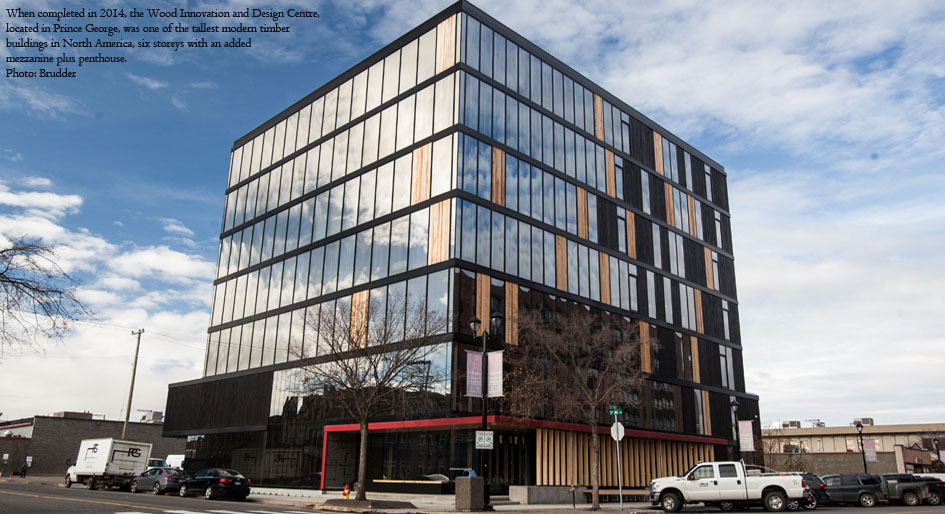
Equilibrium Consulting principal Robert Malczyk may be the Engineer of Record on Shigeru Ban’s tall downtown Vancouver timber project, but he’s more interested in the humble mid-rise. The mid-rise, not the attention seeking wood skyscraper, he argues, will ultimately transform the way we see wood-frame and mass-timber construction.

Top Photo: Located on a floodplain in the heart of Whistler’s village, Audain Art Museum is elevated a full storey above the ground and crowned with a steeply sloped and panelized prefabricated wood roof, which uses laminated strand lumber for sheathing and parallel strand lumber for rafters.

“Combining energy efficiency and mass timber is my personal passion,” says Malczyk. “Of course, it’s nice to be involved in these [tall] buildings, but I think the biggest change we can influence is in mid-rises.”

Shigeru Ban’s Terrace House in Coal Harbour is one of a number of wood skyscrapers underway in the global race to the top. The first twelve stories will be constructed with traditional concrete and steel, while the remaining seven will feature exterior wood elements and floor plates cut from timber. The plan is for all of the wood to be sourced locally.

According to Malczyk, mid-rise buildings— anywhere between five and twelve storeys—built from readily available B.C. wood products are incredibly energy efficient, and will put taller wood construction firmly within the mainstream. North American developers are realizing this, and in many cases, the combined use of light-woodframe and mass-timber construction can offer economic advantages over traditional steel and concrete.

It’s not only cheaper, but prefabricated mass timber means less debris and noise, which makes it less likely to disturb nearby residents. In North America, we already have the technology to build a mid-rise in the space of a week, says Malczyk. “Developers are doing it now for very economical buildings, not the high end,” he says. “It’s more of a base market with mass timber, which is huge progress.”

His founding partner at Equilibrium, Eric Karsh, concurs. For the last couple of years, the push for residential and office mid-rises has gained momentum, with dozens of B.C. buildings in the design, permitting, and building stages—largely because the development industry is on board, says Karsh.

“A few years ago, we were only doing demonstration projects. Now we are doing developer-driven projects. They didn’t want to be the first to do it, because issues needed to be resolved. I think we’ve crossed that barrier.”

Beyond mid-rise and tall timber towers, the award-winning firm takes on projects around the world—everything from creative small-budget renovations to public institutions and internationally recognized landmarks. This includes B.C.-based projects such as the Wood Innovation and Design Centre in Prince George, the University of British Columbia’s (UBC) Earth Sciences Building, and Whistler’s Audain Art Museum, as well as international projects such as the University of Massachusetts Design Building and the WoodTek headquarters in Taiwan, which is that country’s first cross-laminated timber building.

Malczyk and Karsh head up their own distinct projects, but regularly collaborate and consult with each other. Malczyk is working on several developments with Boston-based architect Tom Chung, principal at Leers Weinzapfel Associates. And Karsh often works with Vancouver-based architect Michael Green, who shares his ardour for timber construction and design. Karsh and Green collaborated on a book, The Case for Tall Wood Buildings, in which they present a new way of designing and building timber panel and glue-laminated timber towers up to thirty storeys high.

Karsh says that when writing the book, they had planned the case for twelve storeys, but after Green saw an ancient temple in Japan at that height he came back and said they should aim for twenty storeys. They came up with a model, and found it worked so well that Karsh suggested they go even higher. Green mentioned the potential for a thirty-storey wood building at a public talk, which, to their surprise, got covered by the press. Suddenly, they were committed to a thirty-storey case study.

“That was a challenge technically and psychologically. It was not something I could wrap my head around easily. Once we got into it, it became evident that it could work, and now, twelve storeys doesn’t seem so high anymore,” says Karsh. “There is a psychological barrier” when talking about building height, he says. “When they first built concrete high-rise buildings in Chicago, people were crossing the street to get away—they thought those buildings would collapse.”

The busting of psychological barriers is one reason for the race to build higher with wood, as well as the publicity and marketing value that it gives the designer and developer, says Karsh. But those barriers are vanishing, with the groundswell of other design and engineer firms working in wood.

Timber for two WIDC

It can take decades to change the standard way that the construction industry works, but it is slowly changing, says Malczyk. He cites his own Kitsilano home as an example: when it was built several years ago it was a challenge, because its Passive House construction didn’t fit with the conventional building standards at the time.

Malczyk is passionate about Passive House, which is well suited to mass-timber and wood-frame construction. Many consider the Passive House standard to be the most rigorous voluntary energy-based certification in the design and construction industry. His firm collaborated with Hemsworth Architecture on the BC Passive House Factory in Pemberton, just north of Whistler. Another Passive House project nearby, and one of more personal pride, is his own Rainbow Prefab Duplex constructed in Whistler in 2011. It is the first home in B.C. to be certified by the Passivhaus Institut in Darmstadt, Germany. It took four days to build and it’s so energy efficient, Malczyk says he doesn’t have to turn on the heat until mid-December. That’s a way of living that any homeowner would get behind.

For both Malczyk and Karsh, mass timber is no longer perceived as the exception but is on its way to becoming the rule. There is already a growing awareness among developers of multi-family residential buildings who see the economic advantage. Karsh says although it may look like slow going, in the grand scheme of engineering history, the transformation has been faster than we think. Considering the formidable task of training and spreading awareness among industry professionals, fulfilling peer-reviewed site-specific safety requirements, and sourcing supplies, it’s coming together relatively quickly.

“I do think it is happening quite fast, when you consider what is involved in a transition of this kind,” he says. “People get impatient and ask, ‘Why is this not becoming popular faster?’ I think it is already there.”

This article is an excerpt from Naturally Wood, a collection showcasing more than 65 unique wood projects and tells British Columbia’s impressive story of cutting-edge wood products, technology, architecture, and design. Download Naturally Wood digital copy here. Naturally Wood is also available in print.

BCWWA presents 2019 annual awards

The B.C. Water and Waste Association (BCWWA) honoured three individuals for their innovation and excellence at its annual conference and trade show on May 28 in Victoria.

Excellence in the Water and Waste Industry: Victor M. Terry Operator Award Recognizing ingenuity and proficiency in facility operations and/or maintenance

Todd Etherington Cowichan Valley Regional District

Todd Etherington started his career in the water sector in 1999 with the District of West Vancouver Water Utilities Division. In 2007, he and his family moved to Vancouver Island where he is currently the utility operations superintendent with the Cowichan Valley Regional District.

The Water Management Division at the CVRD is responsible for the operation and maintenance of 19 water systems that comprise of surface water, iron, manganese and arsenic treatment facilities as well as 16 wastewater systems which include seven Toray Membrane plants (two with reclaimed effluent registrations), two USBF plants, a few RBC units and one lagoon.

Excellence and Innovation in the Water and Waste Industry Award Recognizing innovation and excellence that advances the water and waste industry

Dr. Pierre Bérubé University of British Columbia

Dr. Pierre Bérubé is a professor in the Department of Civil Engineering at the University of British Columbia. He has over 25 years of research and consulting experience in water quality assessment and treatment, with particular emphasis on membrane and other filtration related technologies.

His work has generated new research tools, and in partnership with industry, new processes and products that have become industry standards. Some of his recent research focuses on integrating microbial communities directly into filtration processes. This has led to the development of new water treatment technologies that require no/minimal electrical power and/or process chemicals.

AWWA George Warren Fuller Award Recognizing sound engineering and leadership skills, and distinguished service to the water industry

Steve Brubacher Urban Systems

Steve Brubacher holds a Bachelor of Engineering degree from the University of Victoria and has been an engineering consultant for over 20 years. In addition to his successful consulting career, Steve has held numerous volunteer roles, including director and president of the BCWWA board, director of CWWA, chair of the BCWWA Leadership Council, chair of the Climate Change Committee and member of the Water Sustainability Committee.

IFMA launches new chapter, details 2019 conference

The International Facility Management Association (IFMA) shared plans to launch a new international chapter and invite several high-profile speakers to its 2019 World Workplace Conference and Expo.

This June, the global facility management organization’s board approved a petition to form a new branch In Barbados and secure a partnership with the islands’ Royal Institution of Chartered Surveyors (RICS).

“The launch of the IFMA Barbados Chapter speaks to the great value and interest that the facility management professionals in the region have for the advancement of the profession and the built environment,” said Aykean Matthews, MBA, FMP, CFM, Facilities Operations Director, The International School Port of Spain, Trinidad, and a member of IFMA’s Americas Advisory Board. “IFMA will open doors to a world of opportunities, possibilities, and potential for the improvement of the standards and practices of facility management in Barbados and the region, particularly through education.”

More recently, IFMA revealed four keynote speakers for its upcoming 2019 show. The international event will open with a keynote address by Robyn Benincasa, World Champion Eco-Challenge Adventure Racer and best-selling author, and feature Peter Hinssen, nexxworks co-founder and partner, following the IFMA’s Awards of Excellence presentation. Audiences will also have a chance to hear talks from Mim Senft, president and CEO of Motivity Partners and co-founder and CEO of Global Women 4 Wellbeing, and Rex Miller, author, futurist, and principal for MindShift.

“IFMA has invited four renowned speakers to light up the general session stage with insights on building world-class teams, improving workplace well-being, and preparing for (and surviving) radical change,” the organization noted.

The 2019 World Workplace Conference and Expo runs Oct 16-18 at the Phoenix Convention Center, Phoenix, Arizona, USA.

Darryl Boyce launches term as ASHRAE president

Darryl Boyce has been inducted as ASHRAE president for 2019-20. A mechanical engineer with an extensive background in the planning, management, operations and energy performance of post-secondary education facilities, he is one of approximately 6,000 Canadians among the Society’s worldwide membership of more than 56,000 building professionals.

In keeping with ASHRAE tradition, Boyce has a chosen a theme for his leadership tenure: Building for people and performance. Achieving operational excellence.

“Let’s talk about what we can do to ensure that people succeed within the buildings we create,” he urged the gathering at yesterday’s president’s luncheon address, held in conjunction with the 2019 ASHRAE annual conference in Kansas City, Missouri. “The design should reflect the capabilities of the people who will be operating the building. It is crucial to work with building owner-operator organizations to develop strategies that will prepare the operators to effectively operate the building through training, the effective use of the building automation system, as well as analytical and other operational tools.”

Boyce is a special advisor to the vice president of finance and administration at Carleton University, and was previously assistant vice president of facilities management and planning at the Ottawa-based campus. He has also been a consultant on a range of projects, including the unique SNOLAB scientific research facility in Sudbury, Ontario, which is largely located two kilometres below the earth’s surface in a section of the Creighton mine.

He began his career as an engineering technologist after graduating from the British Columbia Institute of Technology in 1973 then, at age 27, enrolled at the University of Alberta where he earned a Bachelor of Science in Engineering. He has filled numerous roles on ASHRAE’s board and committees and is a Fellow and life member. As president-elect, Boyce joined 2018-19 president Sheila Hayter to address the Canadian government’s standing committee on natural resources last November.

“Darryl Boyce knows buildings well. Very well. He knows how to operate them, how to fix them, and how to ensure optimal performance,” Hayter told the assembled Members of Parliament. “As head of facilities at Carleton University, Darryl was responsible for over 50 buildings, encompassing 450,000 square metres of building space, including labs, residential space, and administrative operations.”

Charles Gulledge, senior mechanical engineer with Environmental Air Systems LLC in High Point, North Carolina, now steps into the ASHRAE president-elect position. William (Bill) Dean, a P.Eng and regional site operations manager with the National Research Council based in Saskatoon, has also been elected as a vice president for 2019-20.

IREM names Student of the Year

Olivia Garber has been chosen as the Institute of Real Estate Management (IREM) 2019 Student of the Year.

Garber recently graduated from Virginia Polytechnic Institute and State University with a bachelor of science degree in property management. In addition to her degree, Garber has held internship positions with major real estate firms Kettler in McLean, Va., and with Camden Property Trust in Silver Spring, Md.

The IREM Student of the Year program recognizes an outstanding college/university student who has demonstrated a record of academic achievement and interest in pursuing a career in real estate management. According to the press release, Garber has been named to the Dean’s List every semester at Virginia Tech, and she’s completed research projects on:
• Affordable housing in the U.S. and the U.K.
• The impact of sustainability practices on building operating expenses
• The effect of ageing architectural control guidelines on home values within a homeowners association.

“Olivia’s exceptional academic performance, along with her demonstrated leadership skills distinguishes her among her peers. She takes a big-picture view of our industry and has a natural curiosity that will be invaluable as she continues to establish her career in real estate management,” says Denise LeDuc-Froemming, IREM chief executive officer and executive vice president, and executive director of the IREM Foundation.

The award includes an all-expenses-paid trip to IREM’s 2019 Global Summit in San Francisco, Calif. Garber will be recognized at the Inaugural Gala Dinner and REME Awards ceremony Thursday, Sept. 26.

ISSA merges with Global Biorisk Advisory Council

ISSA, the worldwide cleaning industry association, and the Global Biorisk Advisory Council (GBAC) have agreed to merge. Effective immediately, GBAC will be known officially as “GBAC, a Division of ISSA.”

GBAC is a recognized leader in training, education, and certification in Forensic Restoration biorisk management, decontamination, and infection control disciplines. As a division of ISSA, GBAC will not only expand its formal training and certification offerings but will continue to serve as a trusted resource to government, commercial, and private entities to help them prepare for, respond to, and recover from public health outbreaks and crisis situations.

“ISSA and GBAC have come together to make the world a safer, healthier, and better place. The merger clearly complements ISSA’s mission to change the way the world views cleaning and advance the professionalism of the cleaning industry,” said ISSA executive director, John Barrett in the press release.

“We are incredibly excited about the positive impact GBAC will have on our members and our industry overall.”

Dialog welcomes four new principals

Dialog has named four new principals at three of its studios: Magda Warshawski, Brady Dunlop, Chris Lenzin, and Steven Oosterhof. Warshawski and Oosterhof are principals in the Edmonton office. Dunlop is principal based in Vancouver and Lenzin in Calgary.

Warshawski is an architect focused in the healthcare design group. She has 12 years of progressive design experience in a range of healthcare project types, and more than 15 years of combined healthcare experience in Alberta and Ontario. She has worked as a project manager and architect on projects ranging from small renovations to large hospital redevelopment in both urban and rural settings, working closely with Alberta Infrastructure and AHS.

Oosterhof earned both a bachelor of science degree in civil engineering in 2008 and a doctorate in structural engineering in 2013 from the University of Alberta. He has already made his mark on Edmonton, involved with some of the city’s highest-profile and most iconic projects of recent years, including the Edmonton Arena District, the Kelly Ramsey Tower, the Edmonton Clinic Health Academy and an expansion of the Telus World of Science.

Dunlop’s responsibilities as a project leader see him engaging clients and applying his craft. A pragmatist and a designer, he values both in discovering innovative and sustainable solutions to operate within the constraints of each project. Value and quality being the underpinnings of any proposed solution, each project offers distinct opportunities to creatively reflect the individuality of its context when viewed through questioning lenses.

With more than 13 years of experience in structural design and on-site construction review, Lenzin brings an understanding of how to work with a variety of teams to make each project successful. His focus throughout his career on the design and analysis of efficient concrete and steel structures has included a wide variety of both new construction and renovation projects. He has extensive project experience on a variety of retail, commercial, institutional, transportation and health services projects, ranging from small to large scale and including multi-phase projects.

250 Lawrence announced for Toronto’s Bedford Park

A ’boutique’ mid-rise condo has been announced for Toronto’s Bedford Park community. Led by Graywood Developments, 250 Lawrence is a 9-storey residential development with views overlooking the Douglas Greenbelt and the Avenue and Lawrence area.

Opening this fall, the condo will offer one, two, and three-bedroom suites from 500 sq. ft. to over 1500 sq. ft. in size. It will also feature 200 bicycle spaces, a dog-friendly spa, and nearly 9,200 sq. ft. of outdoor space.

“250 Lawrence is really about breaking barriers, physically, and encouraging a flow of interconnectedness at the intersection of Lawrence and Avenue,” says Neil Pattison, Vice-President Development at Graywood Developments. “In consultation with the City of Toronto, we are naturalizing a portion of the Douglas Greenbelt and re-establishing a southern and eastern access to the ravine park. Residents at 250 Lawrence and fellow community members will soon be able to utilize this considerable natural public green space, increasing the appeal and vibrancy of this upscale corridor of midtown Toronto.”

The development is designed by Toronto’s Quadrangle Architects and promises a “contemporary spin on mid-century modern architecture and design” that will pay homage to the community’s history. The Patton Design Studio will oversee 250 Lawrence’s interior look, which it says will be inspired by the concept of “living beautifully.”

“There is a certain ‘tradition and grace’ to Bedford Park, yet also it’s a friendly, modern neighbourhood,” says The Patton Design Studio Principal and Interior Designer Bryon Patton. “The overall look of 250 Lawrence is clean with a reference to the past, which is great for the more mature purchaser and while still maintaining a minimalist, in-trend appeal for a younger market.”

Smart energy conservation and reporting

The last decade has given rise to a flood of ‘smart’ electronics and devices designed to make everyone’s lives easier. Whether or not they have been successful in this mission, the reality is that smart technology is here and it is having a clear impact on all business sectors, including condo management.

No doubt, new innovations and technologies in property management are enabling players to automate mundane tasks and connect their organization in unprecedented ways – but the possibilities do not end there. By adopting green technology, more and more condominiums are discovering new ways to reduce energy consumption and, in the process, lower their operating costs.

What it means to be green
Green technology is technology intended to mitigate or reverse the effects of human activity on the environment. LED lighting, for example, is becoming a widely accepted way of control and reducing lighting costs, while many condos are also investing in Electric Vehicle Charging (EVCs) stations. This will support residents’ green driving preferences and increase the building’s value at the same time.
That said, how does one measure the success of implementing technologies like LEDs and the amount of electricity used in EVCs? This is where energy management and tracking technology becomes useful.

Enter: Suite metering
Not only is the data gathered through green technologies advantageous, but it is also now required by law. Under the Reporting of Energy Consumption and Water Use regulation, Electricity Act, 1998, S.O. 1998, c. 15 Schedule A, property stakeholders now have to collect information about their building’s gas, electricity and water every year from January to December.

Herein, the most effective way to track actual utility usage and reduce electricity and water consumption is by installing a suite metering program. With this program in place, each condo suite is billed individually, meaning each resident becomes responsible for taking the steps necessary to reduce their utility usage and, thereby, keeping their bills low. Residents who consume more will pay more, making suite metering not only an energy saving incentive but a money-saving opportunity as well.

Suite metering also provides property staff with a breakdown of energy and water consumption per unit and common area. Not to mention, it can enable stakeholders to measure the amount of electricity being used in underground garages and EVCs.
It’s worth noting that in order to invoice each resident appropriately, a reliable utility billing company serving the suite metering market is required. Often, metering equipment is installed at no capital cost and the installation of a suite meter system is done by licensed electrical contractors.

Test it for yourself
Suite metering can be new territory for condo managers. That’s why it’s always a good idea to work with a trusted provider to test a metering program first. During a typical pilot program, a portable test meter is installed on the suite risers for a defined period to coincide with the building’s bulk electricity billing. This allows for an accurate comparison of electricity costs between suites and common areas.

“More control for your residents and the property managers results in a well-balanced condo community, and increased building value,” says Andrew Beacom, President of Priority Submetering Solutions. “Test Metering provides an overview of how much the maintenance fees could be reduced and a review of monthly electricity consumption, while also showing the benefits of investing in energy efficiency. It can serve as a backdrop for your buildings initial assessment and system design required for an effective suite metering initiative.”

Becoming future ready
New regulations mean building performance and energy performance statistics are now publicly available. As such, expect players in the property and financial markets to compare and analyze each building result against one another. Buildings will also be given an Energy Star score which is disclosed and reported nationwide, and if your building scores below 50, questions and concerns will be raised.

Suite metering is a smart way to stay on top of these new obligations and stay ahead of the pack.

To learn more about suite metering, and the value of investing in smart energy conservation technologies, visit Priority Submetering Solutions.