

Articles Archive - Page 42 of 928 - REMINET
REMI

Federal workplace in Quebec honours Atikamekw culture

In Shawinigan, Quebec, a new federal workplace has opened its doors to approximately 2000 employees from the Canada Revenue Agency, Employment and Social Development Canada and Shared Services Canada. The three-storey building offers an activity-based office environment that integrates sustainability with Indigenous design principles.

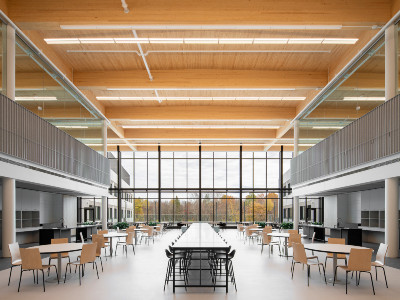
Occupants will find an abundance of natural light. Windows overlook the outdoors in both the work and common areas. Bright spaces fill the building, including an atrium with a ceiling made of local wood, a modern entrance hall, flexible workstations, meeting rooms of varying capacities, collaborative areas, and training rooms.

To meet Canada’s evolving sustainable development requirements, the structure aims for LEED Gold certification and climate resilience. It features carbon-neutral technologies, will operate entirely on clean electricity, and is expected to generate 99 per cent fewer greenhouse gases compared to the outdated facility it replaces.
workplace

View of the atrium and its ceiling made of locally sourced wood.

The project’s final cost totalled about $223 million, roughly $61 million below the originally estimated maximum. Before breaking ground in 2022, Public Services and Procurement Canada awarded the contract to Pomerleau Inc., along with designers GLCRM Architects and S.E.N.C., Coarchitecture Inc., working in partnership.

The team carefully selected materials with transparency targets in mind. More than 90 per cent of the waste from the new building’s construction was diverted from landfills, and it is expected that just as much waste from the deconstruction of the old building will also be recycled or reused.

The design team treated the natural environment as equally important as the building itself.

Existing green spaces were protected and maintained through construction. Landscaping will ultimately allow rainwater to seep into the ground so that less water is discharged into municipal sewers. LED interior lighting with motion detectors will reduce energy consumption, while outdoor lighting fixtures will minimize light pollution.

Beyond its environmental features, the building significantly integrates Atikamekw culture. Each wing of the building pays tribute to the six Atikamekw seasons, Sikon, Miroskimin, Nipin, Takwakin, Pitcipipon and Pipon, with trilingual signage (Atikamekw, French and English) and nature-inspired designs found in wallpaper, monochrome vinyl cut-outs, and colour palettes.

Outside, in the centre of the main walkway, the Conseil de la Nation Atikamekw has painted a river that winds its way organically, gradually narrowing toward the entrance and inviting visitors to follow its flow. A canoe is partially submerged at the edge of the symbolic river to create the illusion of being docked.
Quebec

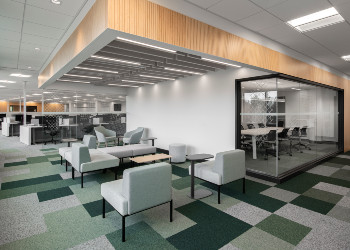
Individual workstations, collaborative spaces and a meeting room.

The rooms are named after symbols of nature associated with each season. These include blueberries, birds, snowflakes, trees and animal footprints.

Stars, orbs and sparkles create light reflections on the water’s surface. Three types of fish symbolize the Atikamekw communities swimming together: Manawan, Opitciwan and Wemotaci, while flowers represent medicine, life, women and the four directions. To complete the immersive experience, eight wooden oars are hung in the lobby.

The artists, Eruoma Awashish, Jacques Newashish, Raymond Weizineau and Meky Ottawa, wanted to evoke the cultural richness, connection to nature and ancestral knowledge of the Atikamekw Nehirowisiwok.

“This work of art, created by Atikamekw Nehirowisiwok artists and integrated into this new, modern and sustainable building, proudly reflects our long-standing presence on the land we call Nitaskinan, and the many dimensions of our culture and history,” said Constant Awashish, Grand Chief of the Nation Atikamekw. “As we look to the future, we renew our commitment to honour this land’s history for future generations, with openness, reconciliation and unity.”

Three-storey amenities space coming to 1 Adelaide East

Plans are unfolding for an amenities space at 1 Adelaide East in Toronto’s financial district. The wellness facility is designed to promote a healthier work-life balance for tenants of the existing 30-storey office tower.

As Toronto’s downtown office market shows signs of recovery, with vacancy rates falling and demand rising for Class A buildings, landlords are focused on making workplaces more attractive.

GWL Realty Advisors (GWLRA) said the three-storey space will include a yoga room, fitness centre, conference area, secure bike storage, and shower facilities and changing rooms.

amenities

A new fitness centre in the amenities space.

“Over the past several years, employees have reshaped their expectations of the modern workplace, seeking more elevated office environments,” said Steven Marino, executive vice-president of portfolio management at GWL Realty Advisors. “Our goal is to create welcoming and innovative spaces that provide enduring value and engagement to our employer partners and their employees.”

The facility is set to welcome tenants in 2027.

Resilience by design

The past year tested the fundamentals of Canadian multi‑residential real estate. Slower population growth, federal immigration reductions, and a surge of newly completed rental supply softened demand and pushed many markets closer to equilibrium. Yet even in this more challenging environment, Skyline Apartment REIT continued to show resilience, supported by what it calls “a disciplined approach to property acquisition and management.”

The REIT’s long‑standing strategy, refined over nearly two decades, remains anchored in a sustained commitment to portfolio modernization. According to its leadership team, the approach centres on several core principles: maintaining a carefully curated portfolio, investing in retrofits and property‑level improvements, and continually enhancing the tenant experience.

“Despite the trade-related uncertainty and broader economic challenges of 2025, we saw that purpose-built properties in many smaller markets maintained solid performance, posting strong annual rent growth,” said Matthew Organ, President, Skyline Apartment REIT. “For us, it reinforces the importance of focused asset selection over time.”

That focus—combined with the REIT’s broader modernization efforts—not only helped its maintain stability through 2025 but outperform many of its peers. Occupancy remained strong at 95 per cent, and in‑place rents across the Skyline portfolio rose 5.89 per cent by the end of Q3 2025, outpacing the national multifamily average of 4.8 per cent recorded the previous quarter. Today, with more than $5.2 billion in assets under management and plans for further growth in 2026, the REIT emphasizes modernization as a key part of its success.

At the portfolio level, acquisitions focus on new-build assets, value-add opportunities, and selective development or intensification projects, allowing it to modernize as needed, while preserving strong performance for its investors: “We’re constantly looking at how each decision contributes to the REIT’s long-term resilience and adds value for our investors,” explained Organ. “That includes expanding in markets that demonstrate sustainable growth.”

The REIT’s acquisition strategy is rooted in:

  • Buying in markets with favourable demographics and supply-demand balance
  • Overall geographic diversification to strengthen economic resilience
  • Geographic centralization in select areas where it enhances operational efficiency
  • Attracting and retaining high-quality tenants through portfolio modernization

Reflecting this approach, in 2025, Skyline added properties in Nanaimo, British Columbia; Guelph and Windsor, Ontario; and Mascouche, Quebec—all communities with strong demographic trends and rising rental demand. In some cases, new assets expanded existing properties, such as North Point Apartments in Nanaimo (now five buildings and 300 suites) and Quartier 7 in Mascouche (now eight buildings and 657 suites), reinforcing the REIT’s confidence in those markets.

Strategic dispositions also remain an important tool for the REIT, allowing it to free up capital and redeploy it toward stronger, long-term prospects. In 2025, Skyline sold properties in Edmonton and Sherwood Park, exiting Alberta in October. Its most recent sale in January was Carlsie Tower, a 34-suite property in Windsor, where it remains a prominent rental housing provider with 31 properties and 2,254 suites.

“Although we plan to maintain a large footprint in key growth markets like Windsor, our sale of Carlsie Tower exemplifies how we evaluate each property individually and will sell when doing so optimizes the portfolio,” Organ said. “By concentrating on markets with proven resilience and growth potential, we are better positioned to weather uncertainty and capitalize on opportunities as they arise.”

In 2025, Skyline Apartment REIT generated 1.3 million kWh of renewable electricity from its apartment rooftop solar arrays.

 Retrofits and enhancements

Beyond strategic acquisitions and dispositions, property retrofits and enhancements play a critical role extending the REIT’s asset lifespans, reducing operating costs, and improving tenant comfort. Last year, Skyline completed a series of retrofits focused on technology integration, energy efficiency, and sustainability, including:

  • Installing Building Automation Systems (BAS) at four properties with high natural gas consumption. These systems intelligently adjust heating and domestic hot water in real time, factoring in building demand, outdoor weather conditions, and equipment performance.
  • Acquiring a rooftop solar system as part of a Nanaimo property purchase.
  • Installing more than 75 EV chargers across properties in British Columbia, Ontario, and Nova Scotia.

Looking ahead to 2026, the REIT plans to:

  • Install BAS at four additional properties in Ontario and Nova Scotia.
  • Add rooftop solar systems at five properties across British Columbia and Ontario.
  • Install over 100 additional EV chargers across Ontario and Quebec (which would bring the REIT’s total EV chargers portfolio-wide to 1,170).
  • Introduce smart heating systems at five buildings in Windsor.
  • Implement demand-controlled ventilation systems at four Sarnia properties.

“We view these initiatives as important investments in our assets,” said Organ. “Upgrading building systems, improving energy efficiency, and integrating sustainable technologies supports our operating performance and ultimately contributes to the REIT’s long-term portfolio value.”

Enhancing the tenant experience

The REIT also modernizes its portfolio by enhancing how tenants experience their apartment communities. Skyline Living, the REIT’s property management company, invests in technology and partnerships that support tenant convenience and financial wellness. A key example is its partnership with Zenbase, a Canadian financial wellness platform. Tenants have the option to split their rent into two payments per month and can strengthen their credit by reporting on-time rent payments to major credit bureaus. These programs reduce financial stress for tenants while supporting timely rent collection for the REIT.

Skyline Living also partners with APOLLO Insurance to make tenant coverage more affordable and hassle-free. Tenants can get online quotes in minutes, receive instant proof of coverage, and benefit from a Best Price Guarantee and exclusive discounts.

“When tenants feel financially secure and genuinely supported, they’re far more likely to stay longer, engage positively with their community, and take pride in their homes,” said BJ Santavy, Vice President, Skyline Living. “That kind of engagement directly supports stronger property performance through improved retention, more stable operations, and ultimately a healthier, more resilient portfolio.”

Skyline Living is continuing to explore tenant service enhancements in 2026, including potentially integrating AI into its tenant experience practices.

“Tenant expectations don’t stand still, and neither can we,” said Santavy. “We’re continuously evaluating how new tools and service enhancements can elevate our resident experience while also supporting operational efficiency and long-term value creation.”

Skyline Apartment REIT plans to have a total of 1,170 EV chargers at its properties across Canada by year-end 2026.

Modernization as a long-term discipline 

As Skyline Apartment REIT approaches its 20th year in business, the team says modernization will remain a core component of its portfolio strategy, guiding everything from asset acquisitions to day-to-day property management. By focusing on “meticulous portfolio design, property-level retrofits and upgrades, and tenant experience,” it hopes to keep delivering stable performance for investors and the long-term resilience is was designed for.

2026 and beyond

Notable market conditions Skyline expects for the coming months and years:

  • Near-equilibrium supply-demand dynamics driven by immigration cuts and new supply—likely to persist until the projected population growth rebound in 2027–2028.
  • Regional divergence as affordable markets with strong economies tighten, while higher-cost areas with exposure to student housing could weaken further.
  • Segment risk in markets heavily reliant on temporary resident and international students amid expected admission declines in 2026.
  • Overall strong fundamentals supporting stable performance now, with rents and asset values expected to rise as population growth turns positive.

Visit Skyline Apartment REIT – Focused on apartment real estate investments to learn more.

B.C. Budget 2026 maintains infrastructure spending

The B.C. Budget 2026 commits to critical infrastructure with $52.9 billion in total capital spending over the next three years. B.C. is continuing to build bridges, roads, rapid transit and transmission lines with the goal of fast-tracking major projects.

The budget was welcomed by the British Columbia Construction Association (BCCA) as British Columbia navigates a challenging fiscal environment.

“Stable, predictable funding for construction and infrastructure contributes directly to economic resilience and job creation, keeping British Columbians housed, healthy, and connected to their communities,” said Chris Atchison, president of the BCCA. “The emphasis on construction and infrastructure development in this Budget validates the critical economic and social importance of our industry.”

British Columbia, alongside the rest of Canada, is facing unprecedented uncertainty driven by ongoing trade disputes and geopolitical pressures. In this volatile environment, project delays pose a growing risk to economic stability, workforce continuity, and the timely delivery of critical infrastructure. To safeguard the province’s economy and maintain momentum, the B.C. government must continue to recognize and support the construction industry’s central role in keeping projects on track and communities growing.

“Doubling investment in trades training through SkilledTradesBC, streamlining permitting, and establishing the Strategic Investments Special Account are the kind of measures our industry needs to achieve critical goals,” emphasized Atchison, “While Budget 2026 features meaningful commitments to construction, we urge the provincial government to avoid unnecessary delays on key projects such as hospitals and healthcare facilities and continue to push for progress on infrastructure development.”


Complex challenges, confusion and uncertainty

The top three challenges in B.C. construction are securing new projects, declining margins, project approval and permitting times.

“Securing new projects has become the number one issue,” said Chris Gardner, president and CEO of the Independent Contractors and Businesses Association (ICBA). “The price of everything is going up – it is squeezing contractors…and red tape, regulations and building codes are constantly changing.”

During his annual outlook breakfast at Buildex Vancouver 2026, he painted a bleak picture for the year ahead, saying members see “no light at the end of the tunnel in 2026” and 2027 looks to be challenging as well.

“The real story of construction in the last 18-24 months has been the collapse of housing construction in B.C. and certainly in the Lower Mainland,” he said. “We have not moved the needle on getting more supply into the market. We are in a crisis.”

Many opportunities in B.C. exist such as the mining, oil and gas and energy sectors but government is not taking advantage and even worse, failing to support those projects, stressed Gardner, citing for example the District of Squamish’s continued opposition to the multibillion-dollar Woodfibre LNG project.

He argued that B.C. has an abundance of energy and resources that the world needs, but is not acting quickly enough to develop them. Canada is also losing economic opportunity for the domestic steel sector by having to import large steel pipes used in infrastructure projects from Germany and Japan, said Gardner.

Another significant issue creating “confusion and uncertainty” for the construction industry is the recent court decision on the evolving landscape of Indigenous rights and title. Both are critical to attracting investment, enabling development, and ensuring British Columbia can compete globally while building a stronger economy.

The August 2025 B.C. Supreme Court Cowichan Tribes v. Canada landmark decision has created a “fire storm” and raised questions about “what is the status of private property in B.C.,” said Gardner, adding there are many other Indigenous legal claims.

This year’s CEO breakfast theme, Indigenous Rights and Title: What’s Next?, was the topic of discussion for a panel of legal experts and Vaughn Palmer, who offered insight into where things stand and where they are headed.


Cheryl Mah is managing editor of Construction Business

Order of Ontario welcomes mortgage financier

Stephen J.R. Smith, founder and executive chair of First National Financial, has been named to the Order of Ontario, joining a select group of 30 recipients for 2025 who have merited the highest civilian honour the Province bestows. The award was established in 1986 to recognize distinguished service and exceptional achievements that support, improve and uplift life in Ontario and beyond.

“The 2025 Order of Ontario appointees represent the very best of our province,” says Edith Dumont, Lieutenant Governor of Ontario. “May their remarkable examples continue to inspire us all to work together for the greater good.”

Smith is cited for his transformative influence on mortgage lending. Since it’s 1988 inception, First National has grown into the largest non-bank lender of residential and commercial mortgages in Canada, with a loan book of $153 billion. Smith is additionally chair and co-owner of Canada Guaranty Mortgage Insurance, Canada’s third largest provider of mortgage insurance, and has more recently overseen the merger of Home Trust with Fairstone Bank of Canada.

He is also a generous philanthropist — notably donating $150 million to his alma mater, Queen’s University in support of its business and engineering faculties — and a strong supporter of the arts and historical education and curation. He has served on numerous boards of directors of for-profit corporations and non-profit organizations.

Smith holds a Bachelor of Science in electrical engineering from Queen’s University and a Master of Science in economics from the London School of Economics. He is ranked 642nd on Forbes’ real-time billionaires list.

Appointees to the Order of Ontario must first receive a third-party nomination that makes the case for their career-based contributions. These are then evaluated by an independent advisory council that includes the Chief Justice of Ontario, the Speaker of the provincial legislative assembly, the Secretary of the Ontario cabinet and up to six additional appointees who are themselves members of the Order of Ontario.

Along with Smith, the 2025 appointees come from a wide range of fields and disciplines including public service, skilled trades, business, technology, mining, sports, the arts, health care and science.

“These inspiring individuals have demonstrated dedication and leadership in a wide range of careers and pursuits, making a lasting difference in our communities and reflecting the very best of our province,” says Graham McGregor, Ontario’s Minister of Citizenship and Multiculturalism.

Biathlon training facility opens in Whitehorse

A newly opened biathlon facility in Whitehorse, Yukon, will serve as a venue for athlete training and development, in addition to hosting the upcoming Arctic Winter Games and other sporting events.

The building replaces 40-year-old cabins with upgraded water and heating systems, improved accessibility, expanded and integrated spaces, and better parking options and driving routes. The project was funded through a joint investment of more than $3.8 million from the governments of Canada and Yukon.

Biathlon Yukon will own and operate the facility. Bill Curtis, president of the organization, said the facility marks a major milestone for sport development across the territory.

“Completing this project ahead of the Arctic Winter Games ensures our athletes, coaches, and officials have access to safe, modern, and fully functional infrastructure,” he said. “It strengthens Yukon’s sport and recreation system, supports high-performance development, and leaves a lasting legacy for the broader community.”


Photo by Hugo Sykes

Unitech Construction expands into Alberta

Unitech Construction Management announced its strategic expansion into Alberta with the appointment of Aaron Corser and Aaron Giebelhaus as directors of project delivery in the Edmonton office.

Together, they bring 50 years of collaborative construction experience and a shared commitment to delivering projects through alignment, transparency, and accountability. Their leadership reflects Unitech’s belief that successful projects are built on strong relationships and senior-level involvement from the outset.

Corser and Giebelhaus have successfully delivered more than $1 billion in collaborative projects, including $200 million in IPD contracts, across recreation, education, transportation, post-secondary, housing, and retail sectors. Their track record is defined not only by project budgets and schedules, but by their ability to lead complex teams, foster trust, and consistently create positive outcomes for owners, consultants, and trade partners.

Alberta represents one of Canada’s most active and sophisticated construction markets, with a growing emphasis on collaborative delivery, early engagement, and disciplined project execution. Unitech said the expansion is a natural response to strong client demand, sustained success with trusted partners, and a proven ability to deliver complex projects totaling in excess of $3 billion, through their ‘mitigate client’s risk, maximize client’s value, exceed client’s expectations’ approach.

As Unitech establishes its presence in Alberta, the focus is delivering high quality projects through deep collaboration, thoughtful planning, and shared accountability.

“We look forward to working alongside Alberta’s construction community to deliver projects that are well led, well aligned, and built to last,” said the company.


B.C. consulting engineers honoured

The BC Transportation Consulting Engineers Awards winners were announced at the 2026 Transportation Conference, hosted by ACEC-BC.

This annual celebration recognizes technical excellence in consulting engineering services provided to improve B.C.’s transportation infrastructure.

Structural Design and Engineering Achievement
COWI & WSP – Highway No. 1 Glover Road Underpass

COWI and WSP delivered a technically innovative bridge project on some of the softest soils along Highway 1 in Langley, using lightweight fill and expanded polystyrene to open the new bridge ahead of schedule without impacting the budget.

Road Design and Engineering Innovation
McElhanney – Highway 16, 2nd Ave and McBride Street Intersection Improvements

McElhanney transformed one of Prince Rupert’s busiest and most challenging intersections into a safer, more efficient roundabout, addressing long-standing safety and congestion issues through strong engineering judgment and innovative design.

Despite complex constraints, including property acquisition, unidentified utilities, geotechnical and contaminated sites, McElhanney delivered an integrated solution that significantly enhances pedestrian, cyclist, transit, and vehicle safety while supporting inclusive mobility.

Transportation Planning and Studies Innovation
Binnie & Lucent Quay Consulting – Highway 101 Alternate Route Planning Study

Binnie provided expert technical leadership on the Highway 101 Alternate Route Planning Study, conducting detailed evaluations across engineering, environmental, social, economic, and financial criteria to ensure evidence-based and defensible recommendations.

Construction Management and Supervision Achievement
Associated Engineering – Baxter Bridge Replacement Project

Associated Engineering provided exceptional leadership on this project, with Ministry Representative Bob Smith joining at the 90% design stage and guiding the work through final design, complex pre-construction activities, and a major rehabilitation of the existing Baxter Bridge.

Bob’s collaborative, experienced, and team-oriented approach built strong relationships with local First Nations, landowners, the contractor, and the project team, playing a key role in the project’s smooth delivery and overall success.

Active Transportation
WSP – Cycle 16 Multi-use Pathway, Phase 3

WSP delivered the Cycle 16 Multi-Use Pathway, a 15-kilometre trail alongside Highway 16 between Smithers and Telkwa, providing a safe and accessible active transportation route that supports healthy lifestyles and sustainable travel.

The project demonstrates strong technical expertise, meeting provincial active transportation design guidelines and carefully navigating complex requirements such as switchbacks, maximum grades, and Ministry right-of-way standards.


Restroom hand hygiene is still falling short

Even though hand hygiene has been a popular topic of conversation in recent years, and a priority for businesses across most sectors, companies can do better to help stop the spread of germs. The recent release of the 2026 Healthy Handwashing Survey™, conveys that while 93 per cent of respondents believe handwashing is important to maintain overall health, 24 per cent don’t always wash their hand upon leaving the restroom, and 44 per cent per cent admitted to just rinsing with water.

Proper hand hygiene helps stop the spread of germs, and that helps businesses keep employees safe, healthy, and at work.

“Handwashing, using soap and warm water, is one of the simplest and most effective ways to reduce the spread of disease, including the flu,” said Brian M. Forster, Ph.D., microbiologist and chemical hygiene officer at Saint Joseph’s University. “Our hands touch many surfaces during the day, including our face, and are an easy way for us to pick up something that can make us sick.”

How can companies enhance hand hygiene practices?

  • Provide supplies like hand sanitizer around your building to help keep hygiene top of mind, as well as offering a source for users. Adding signage to encourage handwashing in restrooms and use of sanitizing stations can also increase the practice.
  • Train your staff on company policies and practices around hand hygiene to limit the number of germs in shared spaces and high-traffic areas.
  • Keep restrooms regularly maintained and stocked with supplies to help build confidence in your business and encourage people to take the time to practice hand hygiene. “For many people, the decision to wash their hands in a public restroom is influenced by the environment,” said Jon Dommisse, vice president of business development and strategy for Bradley Company. “If a restroom appears poorly maintained or understocked, it can discourage proper handwashing – at exactly the moment when it matters most for public health.”
  • Consider using technology to improve hygiene results with tools like touchless features, sensors, and IoT data that can help you track and better manage inventory levels.
  • Inclusive hygiene is an important part of restroom maintenance, so ensure that proper hand hygiene is accessible for all visitors. Focus on designing and maintaining restrooms that consider the full range of individual abilities and circumstances to make hand hygiene accessible to all.

Hand hygiene is always important, but extra care and vigilance should be taken during cold and flu season to keep building occupants healthy, leave a positive impression, and reduce absenteeism.

Tenant status could figure in drug crackdown

Market-rate and subsidized tenants could pose differing liability threats for Ontario’s rental housing landlords under a looming crackdown on knowingly permitting illegal drug-related activity in their buildings. That would be spelled out in yet-to-be-finalized regulations for interpreting the provincial Measures Respecting Premises with Illegal Drug Activity Act.

The legislation was adopted last year, but has not yet come into force. A newly launched public consultation is seeking public input on some proposed exemptions to the Act’s definition of “landlord”, which could free owners of designated types of housing from obligations under the Act. That would include the potential for first-offence fines of $10,000 to $250,000 for individuals, or $250,000 to $1 million for corporate landlords, if the Court determines a drug-related offence has been allowed to occur on the property.

“Potential impacts for small, medium and large businesses, municipalities, and non-profit housing may be significant, complex and varied,” states the analysis posted on Ontario’s regulatory registry.

It’s proposed that owners/managers of community, supportive and transitional housing be exempted. That would apply to units that private market landlords make available for tenants who receive government-funded rent supplements, as well as to public and non-profit providers of subsidized housing.

Student residences, retirement homes, long-term care homes, workers’ housing and various types of accommodation aligned with rehabilitative/therapeutic services and short-term respite care are also tapped for exemption.

“All other landlords as defined under the Act would be subject to the provisions of the Act,” the proposal confirms. That includes all other types of commercial and residential property owners and tenants who have sublet their leased premises to other users.

The consultation will be open for comments until March 8, 2026.

B.C. realtors urge review of Strata Property Act

The BC Real Estate Association (BCREA) and the Association of Interior Realtors (AOIR) are calling on the provincial government to undertake a full review of the Strata Property Act (the Act) and implement mandatory education for strata council members.

The Act is the legal framework that governs the creation, operation and management of strata corporations and sets out the rules for how developments are registered, how governance is structured, and the responsibilities of owners and council members. Although more than 1.5 million people live in strata properties in B.C., the Act has not undergone a comprehensive update since its inception more than 25 years ago.

As a result, the strata industry is working with outdated requirements created before the widespread use of digital technology. This past week, the BCREA and AOIR published a joint letter to the Ministry of Housing and Municipal Affairs, outlining how the delivery of key strata documents fails to reflect modern governance, record keeping, and buyer expectations. Issues with cost disputes, long wait times, and incomplete packages have become more common.

Strata document delivery glitches

A strata corporation is required to provide the Form B: Information Certificate within seven calendar days of a request. This form discloses pertinent data to the potential buyer, such as maintenance fees, levies, and financial details.

Tim Hill, with REMAX All Points Realty in New Westminster, B.C., says obtaining this form is a key inefficiency, particularly in a hot market. “Some property management companies force us to work within seven business days,” he says. “If you place an order on a Friday, two weekends can extend a seven-day order into 11 days. This is not an acceptable timeline. It also doesn’t align with how the Strata Property Act is written.”

Ryan Stenquist, founder of strata document review company Condo Clear Services Inc., says there does not appear to be a specific allowance for business-day calculations in the Act. “Interpretations can differ in practice,” he says. “The broader challenge is that regulatory oversight is relatively narrow, and complaints about operational timelines under the Strata Property Act often fall outside the BCFSA’s direct enforcement mandate, which can create frustration in fast-moving transactions.”

These delays have a direct financial impact on buyers, as getting this critical information in under seven days often requires rush fees, which are currently unregulated. The maximum a strata corporation can charge for a Form B is $35 plus up to 25 cents per page for copying, including photocopying or other means of reproduction. But Hill says the cost to expedite the document can reach as high as $500 to $600, despite being available in an accessible digital format.

The AOIR cited a Kelowna property where a document package cost $151.38. A rush order under seven days increased the cost to $781.38, a 416 per cent rise. “Per-page fees add up very quickly and can account for as much as 54 per cent of the total cost before rush fees,” AOIR explained. The high cost of these documents is further exacerbated by the fact that these packages may need to be ordered multiple times for a single transaction.”

Another concern is that strata document packages are often incomplete. A 2024 memo from Condo Clear revealed that 95 per cent of the reviews that they conduct are missing essential documents that were requested. In many cases, there are additional costs incurred and little recourse for consumers or realtors.

“In many ways, the industry criticism in B.C. is a microcosm of a broader issue in real estate across the country: the way information is delivered to buyers and sellers hasn’t kept up with the reality of 2026,” says Joel Fox, COO and co-founder of online real estate law firm Ownright.

Fox notes that strata documents can create uncertainty and stress during complex transactions and affect buyers’ and sellers’ ability to make clear, informed decisions.

“It doesn’t help if buyers are often asked to review hundreds of pages of technical documents under these tight timelines and inconsistent delivery standards,” he adds. “Realtors and other professionals are also navigating these same constraints, which makes it harder for everyone involved to stay aligned. Overall, it puts people at risk of moving forward with one of the most important purchases of their lives without fully understanding the financial or governance implications, and it means they end up paying for things they didn’t fully grasp in the long run.”

To address these concerns, the BCREA and AOIR recommend various policy changes: making rush fees fair and transparent, amending the Act to allow critical documents to be reordered at a discounted price, and reducing strata document delivery timelines while modernizing them digitally.

“In industries like banking, accessibility and immediacy of information are already expected. The same should be said for real estate,” proposes Fox. “If many of these materials already exist digitally, it is worth revisiting why rush fees and delivery delays continue to affect how homebuyers, sellers and their agents access information. Over time, these delays make transactions harder to complete in a market where affordability pressures are already high.”

Other inefficiencies may lie in governance. Providing mandatory educational opportunities for strata council members could help ensure that documents are kept current, accurate, and readily available.

Empowering strata councils amid growing complexity

As part of the larger call to government, BCREA has created a proposal entitled, Mandatory Strata Training Program: Driving Excellence in Strata Property Management. Modeled on Ontario’s director training, but tailored to B.C., it aims to empower council members to make more informed financial decisions, maintain buildings proactively, and resolve disputes with fairness and consistency.

“Today’s strata corporation developments are increasingly complex, often involving mixed-use buildings, air space parcels, and shared amenities,” says Sean Ingraham, senior vice-president at First Service Residential and president of the Canadian Condominium Institute’s B.C chapter. “At the same time, the Civil Resolution Tribunal issues new decisions all the time, which can significantly influence how the legislation is interpreted in practice.”

There have also been substantial legislative changes related to rental restrictions, depreciation reports, and increased minimum reserve fund contributions. “For volunteer council members, keeping up with these changes can be challenging,” he adds. “Many rely heavily on strata management companies for guidance, yet smaller companies are also under strain.”

Access to  training could help strengthen council members’ knowledge and reduce their dependence on management companies, which are grappling with staffing challenges.

“Most strata corporations are made up of fewer than 100 homes, and many are finding it increasingly difficult to secure professional management due to an ongoing shortage of licensed strata managers and the growing complexity of the regulatory environment,” observes Ingraham. “While organizations such as the Canadian Condominium Institute offer valuable education, participation is voluntary and requires councils to proactively seek it out.”

He cites Ontario’s mandatory training for condo board members as an example of how formal education can establish a baseline of knowledge and says mixed results shouldn’t deter B.C. from offering structured support to strata council members.

“As more British Columbians live in strata communities, it is essential that we provide better tools, education, and legislative clarity to support the volunteers who help build resilient communities and well-managed places to live,” he says.

To read BCREA’s mandatory strata training proposal, click here.

‘Harassment is not a nuisance’: The rise in condo manager abuse demands legal scrutiny

Condo managers face increasing demands and rising levels of harassment. Many have left the profession because their workplaces are not safe, free of bullying and verbal abuse. Since most managers work on the condominium property, the condominium corporation must ensure a safe workplace under the Occupational Health and Safety Act (OHSA).

Disgruntled owners or occupants cause much of the bullying and verbal abuse over board decisions implemented by the manager. Managers are usually the first to receive these complaints. While owners and residents should be able to raise concerns, they should not express such discontent in any manner they wish. There are limits on what is considered an acceptable manner, even if the complaint is legitimate

While most condo corporations and managers will attempt to deescalate situations where individuals cross the line of acceptable conduct without commencing legal proceedings, there are situations where condo corporations will have no choice but to initiate legal action to put an end to behaviour that would be considered harassment. Condo corporations must remember that they have a duty under the Condo Act and the OHSA to do so.

When faced with such a situation, condo corporations will often first turn to s. 117 of the Condo Act. Historically, and before the amendments to the Condo Act which created s. 117(2), behaviour that was considered harassment was always treated as a safety issue and a court application was brought under what is now s. 117(1). However, with the implementation of s. 117(2) and the CAT’s expanded jurisdiction there is now a distinction between s. 117(1) safety concern claims and s. 117(2) nuisance claims.

The distinction between s. 117(1) and s. 117(2) has been discussed in many CAT cases, with the CAT making it very clear that it does not have jurisdiction to deal with harassment specifically or serious claims of misconduct that raises safety issues or psychological harm, as those claims fall under s. 117(1). The CAT has clearly stated that its jurisdiction is limited to behaviour that falls under the heading of nuisance, disturbance or annoyance under s. 117(2) and can only deal with harassment if the corporation has a rule that classifies harassment under those headings.

Despite this distinction, we are seeing cases before the CAT in which condo corporations are alleging “harassment” but characterizing the conduct as a nuisance, annoyance or disturbance in order to bring it within the CAT’s jurisdiction. This practice raises many questions: Why are they doing this, and what purpose does it serve? Are we serving those in the condo industry who live and work in these communities and are subjected to harassment if we classify the behaviour complained of as an annoyance, disturbance or nuisance instead of a safety concern warranting a court application? Are condo communities really benefiting by having these claims dealt with at the CAT instead of by the courts?

To find answers to these questions, a comparison of the results in two recent cases from the spring of 2025 proves helpful. After reviewing these cases, it is evident that we take harassment seriously and properly characterize harassing behaviour as a safety concern—especially when the situations involve “workers” under the OHSA.

We should not water down harassment by classifying it as a nuisance, annoyance or disruption just to fit it into the CAT’s jurisdiction. The terms are not synonymous, and harassment—by definition—is conduct that is vexatious, offensive, aggressive or intimidating.

The courts have recognized that harassment is serious and can cause harm to individuals. If we accept that harassment is serious misconduct that can cause injury, then we are engaging s. 117(1) and the obligations under OHSA. As such, the proper forum for harassment claims will always be the courts, not the CAT. By taking this approach, hopefully we can achieve consistent results like those obtained in TSCC 1644 v. Zhu, rather than the outcomes observed in TSCC 2510 v. Sharma.

Contrasting outcomes

In both cases, the conduct, although not identical, could be characterized as toxic, hostile and disruptive. In each case, the conduct complained of was directed against board members and those working at the condo property. However, the results of both cases stand in stark contrast, despite the fact that the behaviours in both were equally bad. In the CAT case (Sharma), the behaviour was so serious that it led to two condo managers resigning from their positions due to the ongoing harassment.

When looking at the outcomes of cases, one obvious difference is the cost consequences imposed on the individual who engaged in harassing behaviour. In the court case (Zhu), the offending individual paid more than $26,000 to cover the corporation’s costs to address the bad behaviour and obtain compliance. In the CAT case (Sharma), the offending owner was only required to pay the $200 filing fee paid by the condo corporation, leaving the other innocent owners to share the legal bill incurred.

From experience, we know that one of the biggest motivators for changing behaviour in condo communities is the financial impact one’s actions can have. The result in the CAT case does not encourage owners who behave badly to change their behaviour, as there were no serious financial consequences for the misconduct.

Another difference between the results in the two cases can be found in the orders that were made. In Zhu, the court ordered Zhu to refrain from communicating in person or verbally with any owner, tenant, guest, or customer of the board member he was harassing, and from coming within 10 feet of any board member while on the common elements.. He was also restricted from lingering or loitering in certain common areas. The owner acknowledged that if he failed to comply with the court’s orders, he could face an additional order to sell or permanently vacate the unit. The owner advised the court that he understood the consequences and he would comply.

In contrast, in Sharma, the CAT was reluctant to order that Sharma permanently cease all harassing, annoying or disturbing conduct. Instead, the CAT recommended that the board amend their bylaws to address the issues, despite finding that Sharma had violated the corporation’s rules and declaration.

The CAT’s order was simply that Sharma comply with the governing documents, which he is already required to do by statute. Again, the results of the cases send two very different messages regarding the consequences of equally bad behaviour. These mixed messages do not help condo communities manage inappropriate behaviours, nor do they provide reassurance to those who work in these communities that they will be protected from unacceptable behaviour.

While we cannot change the limits of the CAT’s jurisdiction to deal with unacceptable conduct, we can decide as an industry to treat harassment as a serious safety risk and bring the issue to the courts under s. 117(1). This would allow us to truly hold offenders financially responsible for their actions and impose real consequences for continued bad behaviour.

We can stop diluting the definition of harassment by making it synonymous with annoyances, nuisances and disruptions. Instead, we can should show our condo managers and board members—who are usually the brunt of the harassment—that we take this type of behaviour seriously and do not treat it in the same manner as we do smoking or noise complaints.

Harassment is not a nuisance, annoyance or disruption. It is a course of conduct that is offensive or intimidating and can cause harm or injury to an individual. As we move into 2026, let’s start being more consistent and treat harassment as a safety issue under s. 117(1) and not reduce its impact.

Maybe then this approach will lead to more outcomes like the Zhu case, which could serve as a deterrent to those contemplating harassing behaviour. If we don’t start treating harassment seriously, we cannot blame condo managers for wanting to leave the industry.

Sonja Hodis is a condominium lawyer as well as an independent arbitrator and mediator for condominium disputes. She advises condominium boards and owners on their rights and responsibilities under the Condominium Act, 1998 and other legislation that affects condominiums. She represents parties at all levels of court, various Tribunals and in mediation/arbitration proceedings. She also acts as independent mediator or arbitrator helping parties resolve disputes or rendering decisions when they can not. Sonja can be reached at (705) 737-4403, [email protected] or via her website at www.hodislaw.com.

This article is provided as an information service and is not intended to be a legal opinion. Readers are cautioned not to act on the information provided without seeking legal advice with respect to their specific unique circumstances. Sonja Hodis, 2025 All Rights Reserved.

Canada’s most in‑demand rental markets

Rent Café’s latest Canada Renter Interest Report cites affordability pressures, limited housing supply, and elevated home prices as the primary factors impacting renter households in 2025. While some rental markets experienced the usual late‑year slowdown, others saw intensified competition for available units.

Rent Café’s data shows that Moncton, NB, led the country as the most in‑demand rental market, holding the #1 position in the fourth quarter. Hamilton, ON, delivered the most dramatic shift of the season, jumping ten spots to reach #2, while Halifax slipped slightly to third place. Saskatoon and Regina rounded out the top five, reflecting a broader trend of renter interest spreading beyond Canada’s largest metropolitan areas.

Across the top 10 markets, demand was distributed almost evenly between large and mid‑sized cities rather than concentrated in a single province. This shift highlights how affordability and availability are increasingly shaping renter behaviour.

Moncton’s appeal

Moncton outperformed much larger markets thanks to strong engagement across several indicators. Page views on the platform rose sharply year‑over‑year, availability declined as renters moved quickly to secure units, and both saved searches and favourited listings remained steady. Together, these trends point to a market where interest is not only high but consistent.

Moncton’s draw extends beyond local renters. Significant interest continues to come from Halifax, Montréal, and Toronto, suggesting that the city’s affordability and quality of life remain powerful attractors.

Mixed performance in larger markets

Canada’s large rental markets showed mixed performance as the year came to a close. While Toronto, Vancouver, Montréal, Edmonton, and Calgary remained among the most searched cities, their engagement patterns varied.

Vancouver posted one of the strongest gains, climbing to #7 nationally. A sharp drop in available units suggests renters were acting faster, even as page views and saved searches declined. Edmonton held a top‑10 position but saw softer engagement, with fewer page views and favourited listings toward year‑end.

Toronto improved slightly in the rankings, landing at #12, though overall engagement fell compared to last year. Calgary, meanwhile, dropped out of the top 10 entirely, sliding to #15 as renter activity cooled. Montréal saw the steepest slowdown among major cities, ranking #24 after significant declines in browsing and listing interactions.

Mid‑sized cities gained ground

Several smaller and mid‑sized cities outperformed expectations, attracting more renter interest than their population size might suggest. These markets continue to appeal to renters seeking affordability, availability, and lifestyle advantages.

Saskatoon climbed to #4 nationally, supported by strong intent among active apartment‑seekers. Victoria rose to #6 as engagement increased across key indicators, reinforcing its reputation as one of western Canada’s most desirable smaller markets. Ottawa also edged upward, maintaining steady interest despite softer browsing activity.

Hamilton, however, was the standout story of the quarter. The city surged ten positions to reach #2, driven by a dramatic increase in favourited listings, rising page views, and a sharp jump in saved searches. Its strong performance reflects growing interest from renters looking for alternatives to Toronto’s high‑cost market.

For the full report, click here: Canada Renter Interest Report: Moncton is #1 in Q4 2025


B6 office tower achieves WELL Core Platinum

The B6 Office Tower in downtown Vancouver has achieved WELL Core Platinum Certification, marking a major milestone in workplace wellness and sustainable building design.

The certification was awarded by the International WELL Building Institute (IWBI) and recognizes the project’s exceptional performance in supporting occupant health and well-being.

Designed by Musson Cattell Mackey Partnership, this achievement makes B6 the first office tower of its size in Vancouver to earn a Platinum-level WELL rating.

Completed in 2023 by Graham Construction, the B6 Office Tower features seven levels of below-grade parking, a three-storey retail podium, and approximately 533,000 square feet of office space, along with a range of tenant amenity areas. Its central downtown location offers direct access to public transit, nearby parks, Burrard Inlet, and Vancouver’s seawall.

The project earned its Platinum designation by demonstrating outstanding performance across 10 WELL categories: Air, Water, Light, Nourishment, Movement, Thermal Comfort, Sound, Materials, Mind, and Community. Wellness- and sustainability-focused design elements include a triple-glazed 4-SSG curtain wall system, rainwater harvesting, a landscaped green roof, low-flow water fixtures, and electric vehicle charging stations. The building’s mechanical systems include a four-pipe fan coil system served by vertical riser modules extending through the full height of the central core.

The WELL Building Standard emphasizes the creation of intentional, high-performance environments that enhance human health through evidence-based, equitable, and resilient design strategies.

“This milestone reflects the collective effort behind B6,” said Kevin Soltani, general manager, BGO. “Achieving WELL Platinum at this scale, making B6 the largest Platinum-certified office building in Vancouver and among the first of its kind in Canada, underscores our commitment to creating modern, efficient workplaces that benefit tenants, visitors, and the wider community.”


Wordy euphemisms supplant sustainability

Sustainability, green and the acronyms, ESG and DEI, continue to lose ground as all-purpose terminology within commercial real estate circles. The U.S. Commercial Real Estate Finance Council (CREFC) joins the list of organizations adopting wordy euphemisms, with the recent rebranding of its Sustainability Initiative to the Property Risk & Resilience Committee.

The association, representing more than 420 member companies in the U.S. finance industry, announced the new name earlier this month in tandem with the release of its biannual sustainability trends report, which tracks the momentum of environmental standards, regulatory policies, industry practices and societal concerns that have existing or potential implications for commercial real estate and commercial real estate finance. The initial baseline report, released in June 2023, was dubbed the ESG trends report and set out 15 sustainability indicators.

The winter 2026 iteration still monitors 13 of the original indicators, but no longer tracks progress of the Securities and Exchange Commission’s (SEC) rules related to disclosure of climate-related risk (now sidelined) or the uptake of green leases. One new indicator, related to the demand for sustainable data centres, has also been added in the intervening period.

CREFC characterizes the rebranding as “a change that better reflects our members’ evolving priorities and mission” arising from an escalating need to understand climate-related risk. It defines resilience as “strategies that strengthen the built environment, through energy efficiency, emissions reduction and smart infrastructure investment, to ensure properties remain desirable and viable over time” — seeming to overlap with a concept also known as sustainability.

Analysis within the latest trends report may provide some insight on CREFC’s rationale. Discussion of the availability of alternative financing for green and social impact projects (one of the 14 indicators) reports an unprecedented year-over-year dip in the volume of ESG bond issuance, which fell from $922 billion for the 12 months ending on Nov. 7, 2024 to $918 billion during the 12 months following the election of the current White House administration. While acknowledging economic factors that have undermined the bond market in general, the report highlights another impediment.

“Green bonds face an additional challenge as U.S. companies are more selective about branding their funding (loans or debt) as ‘green’ in the current political environment,” it states.

That’s also in keeping with the findings of a GlobeScan survey released in the summer of 2025, in which 91 per cent of participating sustainability professionals employed in North America reported that they either perceived or had experienced backlash against their roles and agendas.

Preparing for spring building maintenance in the winter

Even though we are in the middle of winter, spring will be here before we know it, and maintenance managers know that a proactive approach is key to staying prepared and avoiding many unnecessary surprises. From flooding to mould to unwelcome pests, spring brings a new set of challenges for maintenance managers and looking ahead helps you better manage your building all year long.

RELATED: Common spring maintenance challenges

As the snow starts to thaw, plan your spring maintenance schedule by identifying potential issues or threats to your building early.

Indoor maintenance

Assess the inside of your building to identify winter damage, risks, and opportunities for improvement before the seasons change. Look for evidence of recent water damage like staining or moisture and areas of mould or actual leaks, as the temperatures start to rise and the snow begins to melt.

After your HVAC unit has been running all winter to heat the building, replacing the filter is a good idea before spring arrives, and testing your air conditioning can let you know if there are any concerns before the first heatwave. With warmer weather, comes increased allergens like pollen, and ensuring your system runs optimally can help increase the IAQ in your building now and through the warmer months.

Outdoor maintenance   

Check for patches of ice around your building, which could indicate that water is accumulating where it does not belong. If that’s the case, check eavestroughs and downspouts to ensure that water is directed away from your building to limit potential damage and reduce the risk of slip and fall accidents. Check for any signs of pests or damage and seal entrances or call a professional to help address any unwanted guests.

Examine windows and doors caulking for gaps or cracks and plan repairs for warmer weather. Similarly, check for damage to siding, mortar, or brick, and plan to power wash or repair any issues in the spring. Schedule any subcontractor work like exterior painting, window cleaning, roof inspection, or exterior repairs to avoid waiting once the season gets busy.

Groundskeeping

As the snow melts and you can see the pavement, assess your parking lots and walkways for any cracking, damage, or missing lines. Identify areas for repair with paint or a digital plan to address once spring arrives.

Complete a walk around the grounds, checking outdoor lighting for any necessary bulb replacement or repairs. Look ahead to upcoming landscaping or construction projects to secure any contracts ahead of the season and stay on top of your seasonal budgets.

As the weather warms up, take advantage of any time you have to get ahead of your spring maintenance before spring arrives.