






Articles Archive - Page 399 of 928 - REMINET
REMI

Iconic Vancouver towers win international award

Two iconic Vancouver towers in Vancouver have been named Best Tall Building Award of Excellence winners by the Chicago-based Council on Tall Buildings and Urban Habitat (CTBUH).

Cardero (1575 West Georgia Street) and Vancouver House (1480 Howe Street) were recognized in their respective height range categories.

The annual award recognizes projects that have made extraordinary contributions to the advancement of tall buildings and the urban environment and that achieve sustainability and wellness at the highest level. The best towers from four regions – the Americas, Asia & Australasia, Europe, and Middle East & Africa – were selected.

Designed by Henriquez Partners Architects Cardero is a 26 storey mixed-use residential, office, and retail tower that acts as a gateway and transitional building from the North Shore to Vancouver’s Downtown core. With 119 luxury residences, as well as four floors of office and ground floor retail, the building features deeply angled, V-shapes of white steel, providing shading and privacy while reducing solar heat gain and creating a remarkable exterior design.

“We have always championed the important role that architecture plays in shaping cities and it’s an honour to have our work recognized by CTBUH,” said Gregory Henriquez, Managing Principal, Henriquez. “We are so proud of this collaboration with Bosa to realize Cardero, a project that has significant meaning for our studio and marks the gateway from the North Shore into our city centre.”

Developed by Bosa Properties, the tower is built to LEED-Gold standards and will connect to a future neighbourhood district energy network.

“Cardero stands out as one of our family’s proudest achievements in more than 50 years of creating homes in Metro Vancouver,” said Colin Bosa, CEO, Bosa Properties. “We want to make a meaningful long-term impact on the city, and we are proud of the partnership with Henriquez. Together, we worked to create a sustainable, world-class work of architecture that will contribute to the evolution of urban living in Vancouver and be part of shaping the skyline of one of the world’s best cities.”

Vancouver House won two CTBUH excellence awards in the separate categories of “Best Tall Building 100-199 Metres” and “Best Tall Residential or Hotel Building.”

Developed by Westbank and designed by Bjarke Ingels Architects, the 49 storey iconic tower reached completion in 2020. The tower gains its form in response to site constraints, shape shifting from a triangle at its base to a rectangle 500 feet above the bridge.

The two other Canadian towers that earned awards were Telus Sky in Calgary and River City 3 in Toronto.

The Award of Excellence winners will now move on to compete for the coveted title of “2021 Overall Best Tall Building Worldwide” to be announced at the upcoming CTBUH 2021 Tall + Urban Innovation Conference in mid-May.
 

Empire Communities expands into rental housing

Empire Communities, one of North America’s largest private homebuilders, announced it is expanding into rental housing with the formation of Empire Rental Living,

Moving forward, the company will develop, build, and operate “built-for-rent” single-family and multifamily rental communities targeting markets in Georgia, Tennessee, Texas, the Carolinas, and Ontario, with additional markets under consideration.

“With increasing supply and affordability challenges throughout the North American residential sector, we believe the diversification of our business into the rental market led by Cole and Donald will provide opportunities to expand our customer base,” said Tim Royds, COO of Empire Communities.

As part of this expansion, Empire Communities has appointed Cole Young and Donald Povieng as the new leadership team to head North American operations. Young and Povieng bring a complementary set of unique skills and experience to the Empire team.

“Empire Communities’ exemplary history of building quality and diverse housing typologies allows Empire Rental Living to target the hyper-localized needs of our residents at every stage of life with wide-ranging affordability options and flexible home designs,” said Povieng.

The first rental housing community will launch in the second quarter of 2021 in Toronto.  An extensive pipeline of strategically segmented housing types, including single-family attached and detached homes, horizontal apartments, and multifamily mid-rise buildings, will follow.

Single-family projects currently under development include a 102-unit townhome community on the southside of Atlanta, GA, 300 single-family homes in Austin, TX, and over 1,300 townhomes, stacked flats, and single-family homes in Ontario. Another 357 horizontal apartment units are planned for Houston and Austin, TX, with 900 multi-family units in construction or planning in Atlanta, GA and Toronto, ON.

Empire Rental Living is also working on partnerships with some of North America’s leading masterplan developers to add additional markets and another 2,000 homes to Empire Rental Living’s portfolio.

“Long-term, trusted partners are the most important part of this business,” said Young. “By aligning ourselves with teams and people that have similar visions and values, we are creating a runway for growth far out into the future.”

The Empire Rental Living portfolio will be professionally managed with Empire’s internal property management team that operates on the same foundation of care that has defined Empire’s venerable history. Visit Empirerental.com more information.


Permeable plaza earns plaudits for Chambly, QC

The permeable plaza surrounding its cultural centre has earned North American design recognition for the city of Chambly, Quebec. The suburban Montreal municipality was among winners of the 2020 Hardscape North America Awards, announced in an online ceremony yesterday as part of the Interlocking Concrete Paving Institute’s (ICPI) annual conference.

Pôle culturel de Chambly took top honours for a commercial project incorporating a variety of hardscape products, with the city receiving plaudits as both the contractor and designer. Two Quebec-based homes also received accolades: for the best combination of hardscape products in a residential project greater than 4,000 square feet, designed and installed by Alain Carrier inc.; and for best use of concrete pavers in a residential of project less than 3,000 square feet. The latter project, designed and installed by Groupe Zamco, additionally garnered an honourable mention for the best outdoor living features.

All three projects used Techo-Bloc products. The company, which manufactures and distributes concrete products and provides landscape consulting services, is located in St. Hubert, Quebec. Entries based in the United States captured Hardscape Awards in 15 other categories.

“The impressive projects recognized reflect great creativity, attention to detail, and collaboration between designers, manufacturers, and installers,” observes ICPI chair Marshall Brown. “Despite the unprecedented challenges we all faced in 2020, HNA Award honorees remained dedicated to delivering excellence.”

BOMA BC launches Greater Victoria 2030 District

The Building Owners and Managers Association BC (BOMA BC) has officially launched the Greater Victoria 2030 District, along with 10 major property managers, the City of Victoria, and the District of Saanich.

The 2030 District’s vision is to become a hub of high performing buildings, transforming the built environment and the role it plays in mitigating and adapting to climate change. This is Canada’s second “Established District”, joining 22 other leading communities in North America.

Led by BOMA BC the initiative will support voluntary leadership towards advancing energy efficient, low carbon and resilient buildings in a way that contributes to the local economy. Currently 36 buildings with a combined floor area of more than 3.5 million square feet have joined the local 2030 District, each committing to voluntarily reducing their energy consumption and greenhouse gas emissions by 50 per cent of 2007 levels by 2030. Together, the 2030 District members will create a critical mass of high performing buildings within Greater Victoria.

“BOMA knows this collaboration will play a key role in ensuring Greater Victoria builds back better from COVID-19, by advancing building resiliency and reducing climate change impacts,” said Damian Stathonikos, president of BOMA BC.

The 2030 District will stimulate investment in retrofits and the “future-proofing” of buildings, contributing to a greener and more sustainable local economy.

“By investing in cleaner, more efficient buildings, businesses and partners in the Greater Victoria 2030 District are leading the way forward to a cleaner future, helping meet our climate change targets and supporting good local jobs for people in the process,” said George Heyman, Minister of Environment and Climate Change Strategy.

As a core partner in the District, the University of Victoria will be acting as a research hub with support from the CleanBC Building Innovation Fund. A research team from UVic’s Department of Civil Engineering will provide expert advice to property managers, calculating energy and emission baselines and reduction targets and recommending optimal ways to reach the targets. Through this work, the District will also act as a leader in informing new high-performance standards for the National Building Code.

The Greater Victoria 2030 District already has 36 individual buildings participating, they are managed by Anthem Properties, Cushman & Wakefield, Ivanhoe Cambridge, Jawl Properties, Shape Properties, Colliers, Richmond Property Group, City of Victoria, District of Saanich and Province of BC. Founding sponsors include BOMA BC, the City of Victoria, District of Saanich and Fortis BC.

Oxford to bolster European logistics holdings

Oxford Properties Group has bolstered its European logistics holdings with the acquisition of M7 Real Estate, an investment and asset manager with a strong base in the sector. The deal brings M7’s portfolio of €4 billion (CAD $6.16 billion) in assets under management to Oxford’s umbrella, aligning with other recent moves to augment logistics, life sciences and multifamily investments and enter new markets worldwide.

Oxford is the real estate arm of the OMERS (Ontario Municipal Employees Retirement System) pension plan and has a stated ambition to deploy CAD $5.2 billion in Europe’s logistics sector. Light industrial, urban logistics and retail warehouse facilities account for about half the value of the M7 portfolio.

M7 will continue to operate as a stand-alone business under the day-to-day management of the current leadership team, led by Richard Croft and David Ebbrell. They oversee 225 employees in 14 countries who collectively manage more than 45 million square feet of space across 620 assets.

“M7 is a market-leading platform, led by a highly ambitious and entrepreneurial management team that has deep-rooted expertise in the sector, through which we intend to significantly expand and accelerate our investment in this asset class across Europe,” says Jo McNamara, executive vice president, Europe, with Oxford Properties.

“This transaction provides us with the support and resources of a significant global real estate investor which shares both our entrepreneurial ethos and our strong ambition to grow the M7 business substantially over the next few years,” affirms Croft, M7’s executive chair.

The acquisition is contingent on regulatory approval, and is expected to be completed in the first half of 2021. It follows a new foray into the U.S. life sciences sector announced earlier this month, which will see Oxford gain four properties encompassing 415,000 square feet of space along with development land.

The USD $276 million (CAD $350 million) deal includes three buildings in Boston and one in the San Francisco Bay area. Oxford has also signalled plans to invest a further USD $500 million (CAD $635 million) to expand and/or develop new facilities on the sites, as well as converting existing office and retail space to laboratory uses.

“Growing a meaningfully sized life sciences business represents one of our highest conviction investment strategies and top priorities across our business,” reports Chad Remis, Oxford’s executive vice president, North America.

Improving construction safety with technology

Regardless of a company’s specialty, construction site safety is always at the forefront of everyone’s minds. New technologies have made construction site safety easier and more user-friendly, but it takes an agile mind and the willingness to even consider new technology to make it a viable option. Many of these new options get overlooked or ignored simply because they exist outside the realm of the known and familiar.

How can companies use technology to increase safety on their construction sites moving into the future? These concepts give some examples of how construction professionals can start.

Robotics and Automation

Automation is beginning to make an appearance in nearly every industry, from manufacturing to medicine and everything in between. It can also become a valuable tool for improving workplace safety in the construction sector, helping to prevent some of the 31.2 million lost working days that occur every year.

Even without significant investments in new equipment, robotics and automation can be applied to tasks like moving heavy construction equipment and laying brickwork and masonry faster and more efficiently than human employees can manage.

Wearable Technology

Wearable technologies have various applications in numerous industries. This sector was worth more than $23 billion in 2018, and experts predict it will top $54 billion by 2023. Safety and efficiency are the two primary traits supported by wearable technology in the construction industry.

Things like SmartCap can detect employee fatigue levels to prevent sleepy workers from causing accidents. Reactec, a company that specializes in wearables, creates devices that monitor vibration to alert employees when they need to put down their equipment to prevent injuries caused by excessive vibration. These are just a few examples of the potential wearable technology has to improve work site safety in the construction industry.

Smart Personal Protective Equipment

Personal protective equipment (PPE) is a part of daily life in the construction industry. Incorporating technology is the next logical step to make this equipment even more valuable. Between 2016 and 2022, the protective clothing market is expected to grow by 3.6 per cent annually, reaching a total value of $10.2 million. Adding connectivity, networking and sensors makes PPE that much more useful.

Sensors, for example, might be programmed to detect air quality, ultraviolet (UV) radiation, heat levels, ambient temperature or other variables that could negatively impact an employee’s health or safety. Smart visors or safety goggles could transmit information, up to and including augmented reality projections, while serving their other purpose and protecting the wearer’s eyes.

This particular application for digital technologies as a tool to increase workplace safety is still very new, but the possibilities are limited only by the imaginations of engineers and inventors.

Online Databases

Adding networking and connectivity to existing tools and protective equipment will help make the workplace safe. It will also generate massive amounts of information and data — more data than the average human quality control team can sort through in a timely manner. Predictive analytics gives business owners the tools to both sort through that data and turn it into predictions to prevent safety issues from occurring on the job site.

In one example, a top construction company improved job site safety so much that 90 per cent of their work sties completed their tasks with no accidents or incidents resulting in lost time. This is just one example. Energy companies have reduced on-the-job injuries by 67 per cent over a period of 18 months. A manufacturer reduced the number of lost workdays over one year by 97 per cent. The potential return on investment for this application of digital technology is nearly limitless.

4D CAD

Most construction planning is done in a 2D or 3D setting. While this does have some applications for workplace safety, it fails to incorporate one of the most important aspects of job site safety — time. That is where 4D computer-aided design (CAD) comes in. As its name suggests, these programs use all four dimensions to create a safety plan that will comprehensively protect workers on the job site.

One study used a rule-based system to analyze information included in a building design. By including time in the calculations, it became easier to pinpoint both the location and nearly the exact time where and when a problem or injury might occur. The prototype created for this study proved that this sort of application can provide a valuable collaborative tool for anyone involved in a construction project — from the safety officers to designers and project engineers.

Smart Sensors

Sensors are useful for more than just protecting employees from poor air quality or high ambient temperatures. Errors or accidents involving heavy equipment are one of the most common health risks in construction. Incidents like being struck by a piece of equipment and caught in or between machinery are two of the Occupational Safety and Health Administration’s (OSHA) “Fatal Four” — on-the-job incidents that are most likely to cause workplace fatalities.

Smart sensors, specifically proximity sensors, can be incorporated into PPE or equipment and programmed for numerous tasks. The most common application for this particular digital safety tool is in preventing encounters between heavy equipment and pedestrians. A smart sensor can alert both the operator and pedestrian if they’re about to cross paths. Depending on the equipment integration, the sensor can even shut down the engine and pause operation until the offending obstacle gets removed from the path.

Future of Construction Technology

The construction industry is as old as humanity itself, but its mindset and techniques don’t have to stay there. New methods and digital technologies are valuable tools for creating a safe workplace and reducing the number of on-the-job accidents and fatalities.

Digital tools and technology can help effectively reduce the number of incidents that occur every year. It’s up to business owners and project managers to take steps to begin incorporating this new technology on every possible project and jobsite.


Rose Morrison is managing editor of Renovated.

Harry Jerome Community Centre moves forward

The Harry Jerome Community Recreation Centre (HJCRC) in North Vancouver is moving ahead, aligning the delivery of the new facility with development of the surrounding Harry Jerome Neighbourhood Lands (HJNL).

Construction is expected to begin in 2022 with completion in 2025. Design of the new Harry Jerome centre is nearing completion and will be presented to city council in April.

According to Mayor Linda Buchanan, the city is “on track to deliver this long-awaited new facility which prioritizes the wellbeing of people. Through location, amenities and programming the new centre will promote a healthy community within a walkable neighbourhood as council has envisioned.”

With Phase 1 underway at Lonsdale and East 21st St., city staff are negotiating lease terms with Darwin Properties for the project’s remaining sites. The intent is to enter into leases for remaining city-owned sites by the end of this year, with revenues from the leases financing the construction of the new centre.

The centre will feature a mixed-use development of residential and commercial space, a new park and a prominent connection for the Green Necklace.

The new centre will include many amenities such as: an arena, enhanced aquatics centre with a 26.5 metre 10 lane pool and large leisure pool, multipurpose spaces, fitness space, preschool space, a gymnasium, youth and arts spaces, and an outdoor area that includes a new skate park, active and play areas and an outdoor multisport court. A new facility for Silver Harbour Seniors Activity Centre is also planned for the site.

The existing facility and Memorial Recreation Centre will close at the end of 2021 so that the redevelopment work can begin.

Halifax records positive absorption downtown

The overall office vacancy rate nudged down 85 basis points across Greater Halifax last year as positive absorption downtown counteracted loosening in the suburbs. Newly released 2020 data from Turner, Drake and Partners Ltd. (TDP) also shows a 1.6 per cent increase in net average rent, taking it up to $14.32 per square foot.

As of December, TDP pegs vacancies at 14 per cent across 12.2 million square feet of office space in eight submarkets. Nearly 60 per cent of that is located in downtown Halifax and its periphery, encompassing about 7.2 million square feet. Suburban Halifax and the newer development area of Dartmouth Crossing/City of Lakes business park account for the vast share of the remainder.

Downtown Halifax enjoyed more than 540,000 square feet of positive absorption in 2020, even with the addition of 215,000 square feet of new office inventory. The year-over-year vacancy rate dipped 140 basis points to rest at 18.6 per cent, while the average net rent crept up 1.2 per cent to $15.13 per square foot.

City of Lakes/Dartmouth Crossing made even greater gains, albeit in a smaller inventory of 1.4 million square feet. Vacancies there contracted by 560 basis points, cutting the rate to 14.4 per cent, while the average net rent rose 3.7 per cent to $14.50 per square foot.

Suburban Halifax remains the tightest office submarket with a vacancy rate hovering just beneath 8 per cent despite a 395 basis point increase in available space over the course of the year. Nearly 124,000 square feet of space was returned to the market. About 3,100 square feet of new space made a minimal impression in a total inventory of 2.18 million square feet.

Across Greater Halifax, Class A space is the loosest, with a vacancy rate of 15.9 per cent, but commands the highest average net rent at $17.69 per square foot. Class B registers the lowest vacancy at 12.8 per cent with average net rent of $12.96 per square foot.

In contrast to national trends, region-wide warehouse vacancies crept up by 50 basis points to hit 9 per cent. However, average net rent rose 1.5 per cent in 2020 to $8.12 per square foot. Approximately 175,000 square feet of new space came onto to the market last year, boosting total inventory to 8.15 million square feet.

The vast majority of that warehouse space — more than 6.7 million square feet — is concentrated in the City of Lakes business park, where the vacancy rate rose 90 basis points, to 8.3 per cent, over the course of 2020. The warehouse node registered 40,000 square feet of negative absorption, but nearly 150,000 square feet of new space was added to the market. Average net rent climbed 3.4 per cent to end the year at $7.67 per square feet.

TDP analysts offer a positive outlook for the Greater Halifax warehouse market in 2021 with the vacancy rate projected to fall to 5.6 per cent. The picture is less rosy in the office sector, where the combined impact of economic downturn and new supply underpin an expected loosening of the vacancy rate to 17 per cent.

Investor confidence in multi-suite remains high

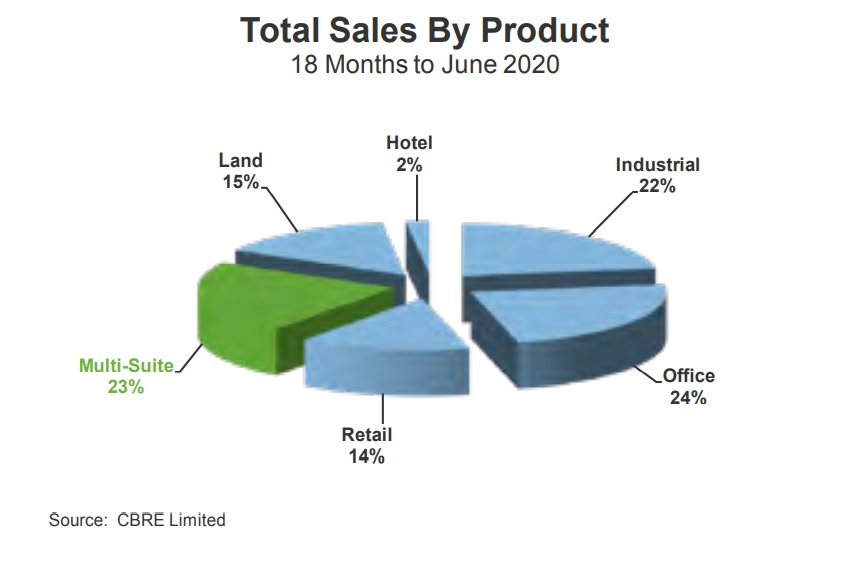
Investor confidence in the multi-suite residential and industrial property sectors remained robust throughout 2020, according to Morguard’s new Canadian Economic Outlook and Market Fundamentals Report. Meanwhile, sales of retail and office property softened as a result of heightened sector uncertainty.

For 2021, Morguard forecasts investors will continue to approach investments with caution while monitoring the national economic recovery.

“The outperformance of industrial and multi-suite residential assets was driven in part by relatively stable rental fundamentals, boosted by demand for warehouse and logistics space and government transfer payments to renter households, respectively.” said Keith Reading, Director, Research at Morguard. “Investors will continue to tread carefully with regard to acquisitions in 2021, given a heightened level of uncertainty surrounding the economic outlook.”

Multi-suite residential

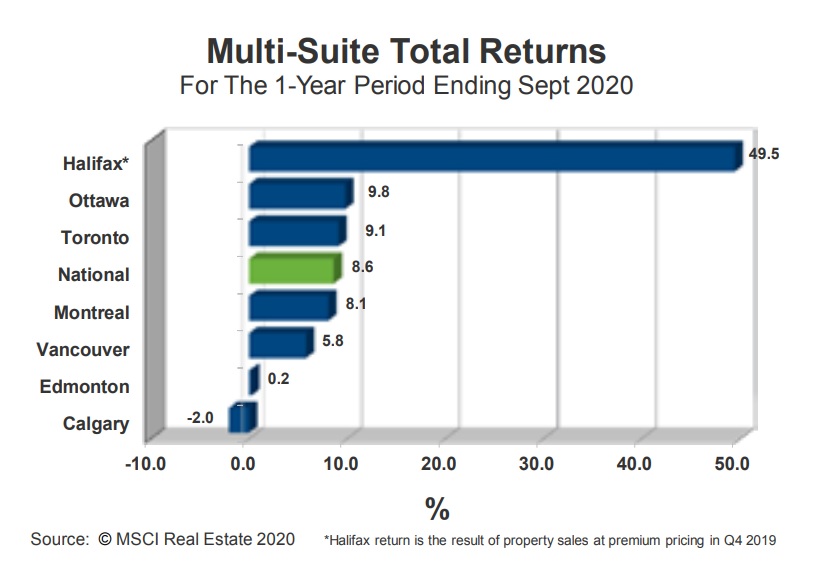
Despite the uncertainty surrounding the effects of COVID-19, investor confidence in the multi-suite residential segment was maintained, resulting in the segment’s healthy investment activity levels following the trend seen over the past several years. Over $3.9 billion in transaction volume was reported during the first six months of 2020, comparable to the record-high $4.0 billion in sales tallied in the first six months of 2019.

A reduction in rental demand resulted in increased vacancy compared with the pre-pandemic record lows reported in several cities and submarkets. The segment is expected to experience a steady recovery in tandem with the anticipation and distribution of a COVID-19 vaccine that will ease restrictions for physical distancing, and as a result, boost rental demand.

Other commercial real estate sectors

The industrial segment showed a significant level of resilience in 2020. The national availability rate stood at a healthy 3.5 per cent by the end of September 2020, up slightly from the record low 2.9 per cent reported in September 2019. Increased online shopping and demand for delivery and logistics services supported the segment’s outperformance when compared with retail and office real estate.

Investment demand remained healthy during 2020, as institutional and private capital investment groups were attracted by the segment’s durability through the pandemic-driven economic downturn. Looking ahead, strong e-commerce-related activity and a gradual economic recovery will continue to boost demand in the industrial segment in 2021.

The retail segment continued to adapt to industry change and COVID-19-related restrictions in 2020. The closure of non-essential stores throughout the first and second waves of the pandemic resulted in significant losses of revenue for business owners, who pivoted to e-commerce platforms and various curbside and delivery strategies to generate sales revenue. New shopping dynamics and lockdowns across the country in the fall of 2020 led to additional brick-and-mortar store closures, adding to the upward vacancy trajectory. During the first six months of 2020, $2.1 billion in retail property sales volume was recorded in the country’s largest urban centres combined, down 30.6 per cent from the same time period a year earlier. Going forward, managing to increase vacancy and adapting to tenants’ changing needs will continue to represent key challenges for landlords. Retail redevelopment, changes to the tenant mix, the introduction of more service retail and the consideration of alternative uses are expected to continue in 2021.

Following an extended period of healthy performance, the office segment softened throughout 2020 due to the economic contraction and work-from-home dynamics brought on by COVID-19. The decline in economic activity eroded private-sector confidence, resulting in the delay or cancellation of expansion plans and leasing-related decisions. Some organizations reduced their office space footprints and looked to offload space in the sublease market in order to reduce costs. During the first six months of 2020, $3.0 billion of office property was sold in the major Canadian urban centres combined, down 46.0 per cent from the same time period a year earlier. Leasing market conditions will soften over the near term, during a period of gradual economic recovery.

Economic factors

Efforts from the federal government and Canada’s central bank to support Canadian households and businesses during COVID-19 led to an economic rebound from the historic decline at the beginning of 2020. Meanwhile, the Bank of Canada implemented cuts to the overnight interest rate to offset the negative impacts of the pandemic on Canada’s businesses and consumers. These measures bolstered consumer confidence levels, resulting in increased levels of spending during the summer and early fall of 2020.

By the end of September 2020, more than two-thirds (76 per cent) of the job losses suffered as a result of the pandemic lockdown had been recovered. The optimistic employment landscape in early fall was a by product of the reopening of non-essential businesses after the first wave of the pandemic. Despite this strengthening, Canada’s labour market remained weak in 2020 when compared to the pre-pandemic period. More than 700,000 people remained on layoff at the end of September and youth employment stood below pre-pandemic levels.

Canada’s labour market is expected to strengthen at a moderate pace in 2021. The pace at which the country’s economy recovers will be relatively slow, given an increase in the number of COVID-19 infections and the targeted lockdowns that began in the fourth quarter of 2020.

About the report

The 2021 Canadian Economic Outlook and Market Fundamentals Report is a detailed analysis of the 2021 real estate investment trends to watch in Canada. The full report, including analysis for the real estate markets in Halifax, Montreal, Ottawa, Toronto, Winnipeg, Regina, Saskatoon, Calgary, Edmonton, Vancouver and Victoria is available at morguard.com/research.


Manitoba aims to elevate waste diversion rates

The Manitoba government is aiming to elevate waste diversion rates with new technological applications and updated regulations. A provincial review and public consultation has been launched to seek input on current industry-funded stewardship programs and enabling legislation in the Waste Reduction and Prevention Act.

“We are excited at the possibilities this review will explore,” says Sarah Guillemard, Manitoba’s Conservation and Climate Minister. “The intent is to improve programming and reduce the amount of waste heading to landfills.”

This is the first review since the current waste diversion programs were introduced more than 10 years ago.

Manitobans are invited to complete an online survey, which will be available through the government’s consultation portal until Feb. 10. Workshops have also been promised for various stakeholder groups involved in the production, distribution and/or consumption of recyclable materials such as paper and packaging, batteries, tires and electronics.

Investment confidence awaits vaccine boost

A surging second wave of COVID-19 tempered investment confidence in commercial real estate during the fourth quarter of 2020. Newly released results of the REALPAC/FPL Canadian Real Estate Sentiment Survey finds participating senior executives expressing slightly less optimism in market conditions than they exhibited three months earlier. Notably, though, data was collected in October before the confirmation of approved vaccines.

In assessing both survey responses and accompanying insight from interviews with more than 50 influential Canadian players, analysts with FPL Advisory Group conclude that some indicators aren’t telling much of a story. In particular, the survey’s conventional focus on real estate asset pricing has shifted largely to macro-level observations, but there are more tangible details to report on access to capital.

“Transaction volume remains low, resulting in inconclusive asset valuations. Distressed transaction activity has yet to emerge in Canada,” the survey summary states. “Lenders remain active. There is an increased level of scrutiny during the due diligence process with many less willing to engage in higher risk investments. Equity capital is available; however, investors are increasingly discerning when evaluating investment track records and leverage ratios.”

Analysts also suggest “uncertainty” characterized the October snapshot, but that came with some perspective on a potential stabilizing force. “Many remain hopeful that a vaccine is imminent,” they advise.

Survey respondents — representing owners, asset managers and affiliated professional service providers in all property sectors — collectively nudged the overall index score down to 43 on a scale of 100. Confidence ebbed in both current and future market dynamics compared to the third quarter outlook.

Canadian executives were somewhat more positive about current conditions than were their U.S. counterparts — delivering an index score of 28 versus the U.S. consensus at 27. However, Canadian expectations for a future bounce-back were more modest — translating into an index score of 58 compared to the U.S. score of 61.

Nearly one-third of Canadian respondents deemed market conditions in the fourth quarter to be “much worse” than they had been 12 months earlier. That’s a significant jump from the 13 per cent expressing that view in Q3. Nevertheless, there was a small gain in respondents who perceived conditions were “much better”— climbing to 14 per cent from 10 per cent in Q3.

A larger share of respondents expected a longer-lasting downturn, with 27 per cent suggesting that market conditions will be somewhat or much worse by Q4 2021 compared to 23 per cent in Q3. Accordingly, fewer respondents foresaw “somewhat better” times ahead, with 47 per cent making that prognosis for 12 months in the future versus 51 per cent in Q3. A steady 18 per cent of respondents in both quarters predicted conditions would be about the same one year hence.

Despite the lack of transactions, 86 per cent of respondents pegged asset values at somewhat or much lower than they had been one year earlier. That’s an increase from 72 per cent expressing that view in Q3, which also encompasses a sizeable jump — from 6 to 24 per cent — in the quotient calling values much worse. Looking forward, 35 per cent of respondents expect asset values to drop further during the next 12 months, while 39 per cent of respondents expect “somewhat” improvement. That’s also more pessimistic than Q3.

The report’s selection of anonymous quotes from leading industry sources reiterate many common themes of 2020, including preference for industrial and multi-residential assets, the pandemic’s hard hit on already struggling retail assets and unease about tenants’ prolonged absences from office space. Those are consistent trends among lenders and equity investors, as industry sources note that wariness of office and retail assets is serving up competitive jockeying to lend on industrial and multi-residential assets. Alternative lenders are also forging more presence in the market.

Generally, respondents reported more hurdles to secure capital in Q4, with 69 per cent gauging it was somewhat or much more difficult to get debt financing and 67 per cent saying it was more difficult to obtain equity capital than it was in Q4 2019. Looking forward, 56 per cent anticipate that equity capital will be somewhat or much more abundant by Q4 2021, while 45 per cent expect lenders will be somewhat or much more amenable.

Ontario Nurses’ Association urges province on airborne transmission

The Ontario Nurses’ Association (ONA) has written an open letter to Premier Doug Ford urging the mandating of N95 masks for healthcare professionals in the fight against COVID-19.

Writing “on behalf of 68,000 nurses and healthcare professionals on the front lines of Ontario’s response,” Vicki McKenna, RN, President of the Ontario Nurses’ Association emphasized the dire risks healthcare workers are faced with on a day-to-day basis.

Noting that the association had written a previous letter to Ford and the Chief Medical Officer of Health on November 26, McKenna urged the province to take more decisive action to recognize the threats of airborne transmission.

“Nurses and healthcare professionals can wait no longer as they continue to become infected with COVID-19 at record rates,” wrote McKenna. “It is surprising that a developed jurisdiction like Ontario is experiencing such devastation. It is not inevitable but is preventable.”

The devastation is real. Cases of COVID-19 infection among healthcare and other care staff have been significant, and earlier this month, there was another high-profile example of a nurse dying due to the virus.

The ONA letter urgently advised Ford and his government to update their directives and guidance to mandate precautions for airborne transmission. Key among the recommendations was that the use of N95 respirators for all nurses and healthcare professionals who come into contact with any suspected or positive COVID-19 carriers be mandated.

“Only N95 respirators, at a minimum, or other superior respirators, are designed to protect the wearer against aerosol-transmitted diseases,” stresses the letter. “Surgical masks do not protect against this mode of transmission… The pandemic began 10 months ago and despite persistent infection rates and consensus on aerosol transmission, the government has still failed to act. Nurses and health-care professionals will remember this moment in time as pivotal. I urge you to meaningfully recognize the gravity that lives are at risk by taking immediate action to mandate airborne level of precautions for nurses and health-care professionals.”

McKenna’s letter notes that the Public Health Agency of Canada (PHAC) recognized on November 4, 2020, that SARS-CoV-2 is transmitted by fine aerosols, as well as larger respiratory droplets. That consensus has been matched by communications from The Center for Disease Control and Prevention (CDC) and the World Health Organization (WHO).

This is just the latest call for Canada to wise up. On January 4, 363 scientists, occupational health specialists, engineers, physicians, and nurses from across the country called on the government and public health officials to further recognize airborne transmission of COVID-19 and to act accordingly.

TPH calls on facilities to ramp up IPAC measures

Due to confirmed cases of the highly contagious U.K. B.1.1.7 variant of COVID-19, Toronto Public Health is asking people who oversee the daily operations of facilities, such as long-term care homes, correction facilities and child care centres to ramp up infection prevention and control measures (IPAC).

In a memorandum posted today, fueled by the outbreak at Roberta Place long-term care home in Barrie, health officials urged facilities to review, audit and reinforce consistent implementation of their current IPAC measures to reduce transmission of COVID-19 and any variant.

These measures include:

  • Passive and active screening for visitors and staff (be sure to screen for recent travel)
  • Universal masking
  • Personal protective equipment
  • Proper hand hygiene
  • Physical distancing
  • Environmental cleaning
  • Surveillance testing
  • Auditing

The Public Health Ontario Laboratory is now conducting surveillance for COVID-19 variants and has developed indications to test for them. Should new variants be identified, they would be promptly reported to Toronto Public Health.

Diamond Schmitt names new associate positions

Diamond Schmitt (DSA) has named new associate positions and promotions within the company. They include a senior associate architect, the promotion of 10 architects to associate positions, and the appointment of a new director.

According to principal and co-founder Donald Schmitt, the firm has “…gone from strength to strength and continues to deliver exceptional architecture. Despite the global pandemic keeping us all socially distant we have remained resilient, grown stronger and more focused to serve our projects. Our capabilities are in no small part due to these recent advancements and appointments.”

Liviu Budur, OAA, LEED AP (Toronto) advances to the position of senior associate architect. The 10 new associate architects include: Erin Broda, OAA, PHD (Toronto) Stephanie Huss, OAA (Toronto)Persis Lam, OAA (Toronto) Jeff Geldhart, AAA (Calgary) Mehdi Ghiyaei, OAA (Toronto) Sid Johnson, Architect AIBC, LEED AP (Vancouver) Helmut Kassen, PhD, CMA (Toronto) Cameron Turvey, OAA (Toronto) Javier Zeller, OAA MRAIC (Toronto) and Haley Zhou (Toronto). Melanie Coates (Toronto) has been appointed as the firm’s communications director.

These individuals are active ambassadors of the firm and are exemplary for their demonstrated expertise and commitment to the pursuit of excellence for every project commission. The collective talent of these experts’ university and professional accreditations spans the globe, from the heart of Romania, across Canada, along the eastern USA and into northern Iran.

DSA notes all have a commitment to environmental stewardship, upheld by their many LEED accreditations and Passive House design certifications. Their community engagement is further demonstrated by ongoing civic activism and active memberships with the Black Architects and Interior Designers Association (BAIDA) and Building Equality in Architecture Toronto (BEAT), an independent organization dedicated to the promotion of equality in the profession of architecture.

Safety concerns abound as students head back to school

Health and safety in education facilities is a key priority for Canada right now as provinces and advocates push for students to go back to school safely.

On Monday, January 25, more than 100,000 Ontario students return to in-person learning, and classes are set to restart in Toronto, Peel, Hamilton, Windsor, and York regions on Feb. 10. In other provinces like Quebec and British Columbia, many students have been back in class for two weeks now.

It’s a tricky balance: assessing the health, safety, and infection control risks against the value of children having access to physical classes.

Support for returning to class

For what it’s worth, the return to class has gained the support of the Paediatricians Alliance of Ontario (PAO), which emphasized the gap that can open up if in-person education remains off the table.

“Ontario paediatricians are witnessing first-hand the effect of school closures on children and youth,” says a PAO statement. “The closures are having a major immediate effect on the emotional functioning and physical health of children and families. Paediatricians are seeing a sharp increase in suicidal attempts, depression, anxiety, substance abuse, overdoses, eating disorders, obesity, and late presentation of a host of medical conditions in patients.”

The statement added that schools are an essential service, and that the PAO “strongly urges the Government of Ontario to widely publicize and promote supports that our children, parents and educators need to function better during this COVID-19 pandemic.”

Prioritizing safety

However, it stressed that while it “wholeheartedly” supports the return to in-person learning, “enhanced safety measures” must continue. The PAO cites the likes of systematic testing, vaccinating teachers, reducing class sizes, wearing masks, hand hygiene, and maintaining two metres of physical distance as known strategies that will keep schools and society safe.

In its own statement issued Sunday, the Ontario government took pains to alleviate public concerns by emphasizing that health and safety measures remain its priority.

Education Minister Stephen Lecce stressed that “additional and tougher layers of protection” will be in place.

“Ontario has the most comprehensive and highest funded school safety plan in Canada, which includes the largest increase in teacher and staff hiring, an enhanced screening and masking policy, and the highest investment in ventilation improvements,” noted Lecce. He added that other measures will include provincewide targeted asymptomatic testing, more comprehensive screening protocols, and mandatory masking for students in Grades 1-3 and outdoors where physical distancing cannot be maintained.

Concerns over air quality

The mention of ventilation is notable, as HVAC safety has been a major focus of debate in recent months during the pandemic.

Over in Quebec, where schools have been open for the last two weeks, the Centrale des syndicats du Québec (CSQ) and affiliated federations are formally demanding a prompt response from the provincial government to recommendations made by a group of air quality experts.

The CSQ, which represents more than 200,000 members including approximately 125,000 education staff, notes that union leaders were left “unconvinced” by the results of air quality tests and the plan to address HVAC issues in schools. While their statement focuses on education in Quebec, the concerns are prevalent nationwide and beyond.

“We deplore the lack of foresight and action in the school system, given that the second wave was inevitable,” wrote Sonia Ethier, CSQ President, in a letter to deputies Roberge and Dubé and Public Health Director Dr. Arruda. “For decades, we’ve been calling for measures to improve the air quality in our schools and centres, but due to austerity policies, we’ve reached a point where we have to open our classroom windows in the dead of winter, which is unacceptable.”

In addition to making “all necessary and urgent corrections immediately,” the CSQ and its federations are demanding:

  • The immediate closure of unventilated spaces with no windows, including small meeting rooms. If no safe alternatives are found in these situations, telework should be made mandatory
  • The removal of pregnant women from the buildings, with no conditions
  • In rooms with windows, the installation of air purifiers as backup, and ensuring they are installed by school support staff or a qualified professional
  • The establishment, in the short term, of a full equipment register and a detailed maintenance and testing calendar for each facility, and making it available to the public

For what it’s worth, Ontario’s government notes that SickKids confirmed that the province’s return to school in fall was successful at a time when community transmission was low.

Ontario says its return-to-school plan has been informed by the best medical advice available, including that of SickKids.

In its updated guidance for reopening published last week, SickKids wrote that the suspension of in-person learning should be “a last resort for pandemic control” given the “significant negative impact” it can cause.

Vaccination priority list omits security guards

Union officials argue security guards should be added to Ontario’s vaccination priority list given that the provincial government is relying on them to mitigate COVID-19 risks in long-term care (LTC) homes. UFCW Local 333 leadership is also calling on Premier Doug Ford to affirm that security guards are essential workers.

“We hope that it is merely an oversight that security guards working in LTC homes and hospitals have not been placed on the priority list,” Jeff Ketelaars, UFCW Local 333’s secretary-treasurer wrote in an open letter released today. “Throughout this crisis, security guards have been working with other workers who have been deemed essential. At many long-term care homes, they are tasked with not only providing security, but transporting those who have passed to funeral service providers. In hospitals, they are tasked with guarding entrances to emergency departments and COVID-19 testing centres.”

It’s now expected that security guards will be integral to the rollout and operation of vaccination clinics. That’s in addition to security guards’ ongoing role in ensuring that public health protocol is followed in a sweeping range of commercial and institutional venues.

Ketelaars reiterates that security guards have performed “hazardous work” since the outset of the pandemic. “We are asking for security guards to be properly recognized for the essential work that they do,” he asserts.

Apartment rent trends reflect EU holidaying dip

Paris flouted apartment rent trends seen in many other major European cities, posting a 5.5 per cent year-over-year uptick at the end of 2020. The recently released HousingAnywhere International Rent Index, charting average rents for available one-bedroom, studio apartments and rooms, reveals lower rents relative to December 2019 in 13 of 22 surveyed cities with increases of less than 2 per cent in five other cities.

Paris also posted the highest average rents for available one-bedroom apartments at year-end 2020, at €1,803 (CAD $2,777) — a 2.7 per cent increase from the third quarter — which surpassed average rents of London’s available apartments for the second consecutive quarter. However, HousingAnywhere analysts link the upward trajectory to an influx of higher-priced units previously marketed for short-term uses rather than to competition for accommodation.

“We have seen the available supply on HousingAnywhere triple since March 2020. This is a clear indication that holiday rentals offered on Airbnb, Bookings.com and similar platforms are being withdrawn from the general housing stock,” maintains Djordy Seelmann, the company’s chief executive officer. “Rental markets continue to be dictated by the global pandemic, and it looks like the volatile days are not behind us just yet. Before vaccines become available to all population groups throughout Europe, we will have to deal with another series of lockdowns and its impacts on the rental market.”

London, Amsterdam, Munich and Helsinki round out the five priciest surveyed cities. London saw a 1.9 per cent rent increase in asking rents for one-bedroom apartments over the course of the year, with the average pegged at €1,780 (CAD $2,741) in Q4. In addition to COVID-19’s impact, the now finalized Brexit hits a longstanding pool of renters: international students.

Seelmann reports many are now seeking educational opportunities in other countries, both within and outside the European Union, as Italy, Germany and India all enjoy growing interest. “We expect this trend to continue well throughout 2021, further lowering London rental prices,” he says.

Advertised rental rates declined in the other three costliest markets — dropping most significantly in Munich. Average rents for available one-bedroom units slipped nearly 5 per cent from the third quarter in the German city, to rest at €1,451 (CAD $2,234) by year-end.

The decline was even steeper in its sister city, Berlin, which recorded the most severe drop among all surveyed markets. There, the average rent of available one-bedroom units fell by more than 12.5 per cent last year, including a 8.6 per cent decrease between the third and fourth quarters. Average rents of €999 (CAD $1,538) placed Berlin’s available one-bedroom units among Europe’s best bargains as 2020 closed out.

Only Turin, Valencia, Florence, Vienna and Brussels offered apartment seekers lower rental rates. Like Berlin, most of those cities saw average rents fall over the course of the year, but Brussels was an exception where rents for available units rose a modest 0.9 per cent from Q4 2019, nudging up to €972 (CAD $1,497).

Frankfurt stood out from the two other German cities, registering a 3.4 per cent year-over-year increase in rents for available one-bedroom units. That included an 8.7 per cent jump from Q3 to Q4 to end 2020 at €1,103 (CAD $1,699).

Apartment seekers could find slightly better deals in Amsterdam in Q4 following a 2.8 per cent decline in rents for available one-bedroom units during 2020 — taking the average down to €1,635 (CAD $2,518). Average rents for available one-bedroom units dropped by 1.25 per cent in Helsinki in the same period, settling at €1,381 (CAD $2,127).

Nordic neighbour Reykjavik was in the minority of markets with upward apartment rent trends. Average rents for available one-bedroom units in the Icelandic capital rose 2.2 per cent since Q4 2019 to reach €1,097 (CAD S1,689).