




Articles Archive - Page 396 of 928 - REMINET
REMI

Vancouver’s Fire Hall 17 sets aggressive goals

Vancouver’s new Fire Hall 17 reflects the city’s design challenge to build a structure that meets the design certification requirements of the Canada Green Building Council’s Zero Carbon Building Program, one of 16 such pilot projects in Canada. The partners are also pursuing LEED Gold certification and, if approved, the building will be the first fire hall in North America to attain Passive House certification. These ambitious targets were set to align with the city’s sustainability policies. According to HCMA Architecture and Design, the building will reduce operational carbon emissions by 77 per cent, compared with the fire hall it is replacing.

The 1800 m2 (19,375 sq ft) facility comprises four drive-through apparatus bays, accommodations for two firefighting crews and offices in the main building, and a six-storey hose storage/training tower. Like all fire halls in Canada, the facility will serve as a post-disaster emergency hub, which requires a resilient building that can withstand seismic events.

To meet the seismic requirements of Canada’s National Building code, the building has a stout reinforced concrete structure with a structural steel frame for portions of the third level. The main building is clad in brick and metal panels that cant outward at the base giving the form a strong and sturdy presence.

Mitigating exterior and interior thermal bridging

Central to meeting zero carbon goals is the building’s high-performance envelope, which wraps reinforced concrete walls with a 20 cm (8 in.) thick layer of mineral wool board having an R-value of 33, and an air barrier that allows a scant 0.6 of air change per hour at 50 Pascals of pressure.

However, structural concrete and steel elements that penetrate the envelope between the main building and tower, maintained at dissimilar temperatures, would allow the unabated passage of heat energy, absent a thermal bridging solution.

“The fire hall has two thermal zones: the administrative offices and living spaces set to 20˚C and the ground-level apparatus bay and training tower set to 10˚C,” says Elise Woestyn, Passive House consultant with HCMA Architecture and Design.

The structures share a concrete frame at ground level, and are connected by combinations of steel frame and concrete bridges on levels two and three, and a steel frame at level four. Due to the temperature differences, the designers needed to thermally isolate the two zones, while maintaining structural continuity.

“Our need to address thermal bridging led us to structural thermal breaks,” says Federica Piccone, architect with HCMA.

At the connection points, the design team specified concrete-to-concrete and concrete-to-steel structural thermal breaks from Schöck North America. Each concrete-to-concrete module consists of a rigid foam block penetrated by stainless steel rebar that is tied into rebar on both sides of the slab or wall before concrete is poured conventionally. Each concrete-to-steel structural thermal break includes stainless steel rebar projecting from one side of the module that ties into rebar of the interior slab, and stainless steel threaded rod projecting from the opposite side of the module that bolts to exterior steel beam flanges.

Three concrete balconies also project from the tower’s facade. Concrete-to-concrete thermal breaks were installed between each balcony and interior slab to mitigate thermal bridging, while withstanding the rotational and shear forces created by these cantilevers.

In addition to reducing heat energy loss, the structural thermal breaks prevent concrete structures on the warm sides of both the exterior and interior walls from becoming chilled, reaching dew point, or supporting mould growth.

Installed between the concrete-to-concrete thermal breaks are special thermal breaks that resist seismic shear forces in compliance with National Building Code of Canada 2010 standards for seismic resistance.

“The most unusual application for structural thermal breaks was a high parapet wall at the top of the tower,” says Meredith Andersen, associate engineer with Read Jones Christoffersen Engineers. The parapet changes in height from about 1.2 to 4.3 m (4 to 14 ft) as the top of the building steps down behind it.

A parapet is essentially a vertical cantilever and, because of its height, can encounter significant moment, shear and seismic forces. Concrete-to-concrete thermal breaks were aligned horizontally at each “step” and vertically in the plane of the wall to prevent thermal bridging.

Other energy-saving measures

The high-performance building envelope allowed the designers to reduce the size of the building’s heat pump to one-fifth of that needed for a comparable code-compliant building in Vancouver. The heating/cooling system is supplied by a high efficiency ground-source heat pump served by 15 geothermal bore holes. An 80 kW solar panel array supplements electricity and six energy recovery ventilators transfer heat from outgoing interior air to incoming fresh air, reducing the required capacity of the HVAC system.

Overall energy savings allowed the designers to include elements that reduce energy loads further such as electro-chromatic glass that blocks heat gain and glare by becoming translucent when activated.

“This project responds to the urgency of the climate crisis,” says Darryl Condon, managing partner at HCMA. “It shows that even large, complex facilities can lead the way in reducing our industry’s carbon footprint, while still improving the public service they provide.”

In the words of Danica Djurkovic, director of facilities planning and development at the City of Vancouver, “This community facility is a leading example of the City of Vancouver’s climate commitments, showing that we can make near zero-emissions buildings the new normal, while enhancing occupant comfort, and reducing energy and water consumption costs.”

Force majeure clauses in contracts

Since the beginning of the COVID-19 pandemic, one issue that has garnered attention in contracts is the applicability of force majeure clauses and whether they can apply to provide relief, given how COVID-19 has impacted the ability of many parties to perform their obligations under their contracts.

Briefly, a force majeure clause aims to allocate the risk of non-performance or delayed performance due to intervening events which are beyond the control of the parties. In a construction project, a classic example of a force majeure event is a flash flood that impacts a construction site such that the contractor’s ability to continue to construct is significantly impaired or rendered impossible. Depending on whether or not there is a force majeure clause in the contract (and the nature of such clause), the contractor may be entitled to relief from non-performance or delayed performance (usually through some combination of time and/or monetary relief).

Force majeure clauses vary widely, with some common formulations as follows:

  • No force majeure clause – parties are generally not relieved from their obligations under a contract notwithstanding an intervening event beyond their control, even if it significantly impacts or renders impossible their ability to perform.
  • Broad and vague force majeure clause – these generally state that parties are not liable for failure to perform contractual obligations due to an event of force majeure, without any corresponding definitions or parameters, leaving it to the parties to determine what does and does not constitute a force majeure entitlement.
  • Detailed force majeure clause – these specifically list out the events that fall within the scope of a force majeure event (including things such as acts of terrorism, war, labour disputes, strikes and pandemics) and clearly outline the parameters around a force majeure claim.

Unsurprisingly, even in contracts where force majeure events are clearly defined, many of these definitions do not directly address a global pandemic. Where there are broad and vague force majeure provisions, there has been uncertainty as to whether these clauses would include a global pandemic. This has led to the question of whether COVID-19 can be “shoehorned” into a pre-existing force majeure clause and in turn grant relief to the requesting party.

COVID-19 and Force Majeure

When determining whether or not a party has a force majeure claim due to COVID-19, the party must first determine whether COVID-19 “fits” within the parameters of the force majeure construct in the relevant contract. We have seen the most successful claims for force majeure events due to COVID-19 when the force majeure event definition includes pandemics, government action, public health emergency or communicable disease outbreak. If the contract only has a broad and vague force majeure clause, the parties will likely have to discuss whether or not COVID-19 constitutes a force majeure event.

Once it has been determined that COVID-19 constitutes a force majeure event, the claiming party must then generally show that it is impossible for it to perform its contractual obligations and that the consequences of COVID-19 were beyond the reasonable foresight and skill of the parties at the time the contract was entered into. In addition, force majeure clauses usually contain a number of requirements with which the party seeking the benefit of the provision must comply, including:

  • Notice – written notice provisions are included to ensure certainty if a party invokes its right to rely on a force majeure event for non-performance or delayed performance. This notice must be given following the occurrence of the triggering force majeure event and failure to provide notice within the stipulated time period can void the right to make a claim.
  • Reasonable Steps – the claiming party must take reasonable steps to prevent the event from occurring in the first place. In the context of COVID-19, reasonable preventative steps could include quarantine protocols, increased sanitation and policies with respect to travelling, remote work capabilities or seeking guidance from public health officials.
  • Mitigation – the claiming party must mitigate the effects of the force majeure event, so far as possible, and remedy the situation in good faith, with due diligence.

 Key Takeaways

Whether or not a party will be entitled to a force majeure claim due to COVID-19 will depend on the nature of the force majeure framework in the contract. To the extent there are no force majeure provisions, a party’s ability to claim force majeure relief will be challenged. If there are force majeure provisions, a party’s ability to claim (and likelihood of a successful claim) will be dependent on the nature of the relevant provisions. Prescriptive force majeure definitions that include “public health emergency, pandemic, and communicable disease outbreak”, for example, are more likely to accommodate a COVID-19 claim. It will then be incumbent on the claiming party to demonstrate that its contractual duties are impossible to perform due to COVID-19 and that the effects of COVID-19 were unforeseeable at the formation of the contract. Once this has been proven, there are often additional requirements the claiming party must follow to achieve the benefit of force majeure.

In such an uncertain time, entities negotiating construction contracts should be mindful of force majeure clauses and may need to engage in negotiation with their counterparties to ensure that COVID-19 risk is properly shared and addressed.

Samantha Cunliffe is a partner, business law group, and Liezl Behm is associate at McCarthy Tétrault LLP. 

Ottawa Library facility gets net-zero carbon funding

Significant enhancements to achieve net-zero carbon are being made to the joint Ottawa Public Library (OPL)–Library and Archives Canada (LAC) facility, which will soon take shape in downtown Ottawa.

The project is receiving $34.5-million from the federal government in order to help the joint facility achieve its net-zero carbon goals.

“There is great value in modern and greener cultural spaces such as the one we are building in the heart of our capital. Not only will this building showcase our collective history and heritage, it will also point the way to a more sustainable future where clean growth is the rule,” said The Hon. Steven Guilbeault, Minister of Canadian Heritage.

Designed by Diamond Schmitt, in association with KWC Architects, the joint facility’s design draws from Ottawa’s rich history and natural beauty with a dynamic form reminiscent of the nearby Ottawa River; the stone and wood exterior reflect the adjacent escarpment and surrounding greenspace on the western edge of downtown. The windows, top floors and rooftop offer unparalleled views of the Ottawa River and Gatineau Hills in Quebec.

Prior to these changes, the building’s design already complied with the LEED Gold standard, an independent certification that takes into account ecological land and water use, energy efficiency, and sustainable materials. Funding from the federal government will allow for:

  • upgrades to the building’s envelope and insulation;
  • triple-glazed windows;
  • solar panels on the rooftop and embedded in the facade;
  • additional sustainable materials; and
  • an indoor green wall.

These investments in a net-zero carbon facility will result in a 30% reduction in greenhouse gas intensity. This represents the equivalent of approximately 170 fewer metric tons of CO2 produced per year, or taking 37 passenger vehicles off the road.

Construction of the OPL-LAC joint facility is set to begin in 2021, with its completion scheduled for late 2024.

Multifamily assets surpass 2020 index average

Multifamily assets were the second best performers last year for the 44 institutional real estate portfolios represented in the REALPAC/MSCI Canada Property Index. Newly released 2020 investment results find industrial and multifamily on the positive side of the national average total return for 2,356 directly held standing assets, which registered -4.1 per cent.

That further breaks down to a 3.9 per cent income return and a 7.8 per cent decline in capital value. The index value rested at $158.1 billion at year-end 2020, compared to 2,723 directly held standing assets collectively valued at $184 billion 12 months earlier.

“The headline return of 4.1 negative is masking a 28 per cent spread from the best — industrial at 12.7 per cent, which would be a good return in any kind of year — down to negative 15 per cent for retail,” Simon Fairchild, executive director with index producer MSCI, observed during last week’s online results presentation. “That spread between best and worst is twice as big as it was last year, and last year it was the largest that we’d seen.”

With a total return of 5.7 per cent, multifamily performance slipped further behind industrial than in 2019, but also pulled further ahead of office properties, which slipped to a negative 1.5 per cent total return. Multifamily assets delivered average capital growth of 2.2 per cent and an average income return of 3.5 per cent.

Multifamily assets account for 13 per cent of the capital weight of the index — up from 11.4 per cent at year-end 2019. Industrial properties now represent nearly 16 per cent, climbing from 13.2 per cent 12 months earlier.

Investors saw a 2.7 per cent decline in multifamily net operating income for the year — a gentler downward slope than the 30 per cent plunge for retail assets. Meanwhile, sales values dipped from recent years, but stayed above the benchmark analysts typically use as an indicator of a strong market.

Historical data reveals that, on average, assets in the index sell at about a 5 per cent premium over their market-adjusted evaluation — a trend Bryan Reid, MSCI’s executive director, real estate research, attributes to a conservative valuation bias, buyers more actively seeking assets with unrealized potential and vendors more motivated to sell when they can reap a premium.

“There’s a certain amount of sample selection going on there, but you can also see that the premium will increase or decrease over time,” he advised. “In periods of market strength, we tend to see a higher premium than average, and during periods of weakness or uncertainty, that premium tends to decrease or perhaps even becomes negative.”

Real estate continues to draw investment

The latter is the case for retail properties, which recorded average transacted values nearing 10 per cent lower than market valuations in 2020. In contrast, multifamily, industrial and office assets all surpassed the 5 per cent premium. Although the year’s averages are drawn from about half the number of transactions that occurred in 2019, Fairchild reiterated that real estate continues to draw investment.

He pointed to the 7.7 per cent 10-year return on the Canada Property Index versus 5.6 per cent on equities or 4.1 per cent on bonds in the same time period. This year’s return is just the third negative juncture since 1985, with the others occurring in the real estate meltdown of 1990-1997 and the briefer two-year interval of the financial crisis in 2009-2010. The 2020 income return of 4.1 per cent also remains competitive with other investment classes.

“Now, while the asset class may not look terribly favourable right now, it’s that stability that really comes through. With a 4 per cent yield, this is actually not a bad asset to hold whatever is going on, and, clearly, 4 per cent is attractive over the other asset classes,” Fairchild asserted. “The new money going into these portfolios has actually gone up, from about $3.7 billion (in 2019) to $3.9 billion. That’s maybe not what people would have expected.”

Multifamily drew more than $660 million of that net new capital investment. That’s about half of the nearly $1.3 billion directed to industrial development, but well ahead of the $220 million the retail sector captured.

Mobile workforce has repercussions for non-portable assets

While the multifamily sector has shared the same concerns about tenants’ economic stability that office and retail owners/managers have experienced, there is less uncertainty about long-term demand or the rising competition from work-at-home options and e-commerce that the other two sectors now confront. However, in contemplating possible pandemic-fallout, commercial real estate insiders do foresee potential vulnerabilities of non-portable assets in a world where employees are increasingly untethered from their workplaces. Industry executives enlisted to provide on-the-spot insight into the 2020 returns reflected on possible implications for multifamily assets in major and secondary markets.

“The bigger underlying trends are very important,” reiterated Colin Lynch, head of global real estate investments with TD Asset Management. “One: the Millennials are forming families — that’s happening later than before, but it is happening — and people are looking to bigger spaces to form those families; and two, especially in the USA, there is a cost dynamic that’s been going on for more than a decade where people are moving to cities such as Dallas, Houston, Atlanta, Raleigh and Durham. Why? Because those areas of the USA are cheaper.”

“The aggregate demand for real estate or shelter doesn’t really change. As long as we have people working, living and breathing, we need shelter to operate under. It’s just that the location of those functional elements of the economy may disperse to more affordable regions,” concurred Peter Cuthbert, president and head of global real estate with Fiera Real Estate Investments. “Or, if you can telecommute, maybe this a possible solution for mobility issues that we’ve been experiencing in our big cities.”

Barbara Carss is editor-in-chief of Canadian Property Management.

CIRI to host Healthy Buildings 2021 – America conference

Connecting the worlds of academic research with field practitioners, the Cleaning Industry Research Institute (CIRI) will host Healthy Buildings 2021 – America (HB2021), a biennial event sponsored by the International Society of Indoor Air Quality and Climate (ISIAQ). The event is scheduled to take place on Aug. 10-12, 2021, at the Hawaii Convention Center in Honolulu, Hawaii.

The theme of this year’s conference is “Bridging the Gap Between Research and Practice – In the Age of COVID-19 and Beyond.”

It will feature more than 200 science-based workshops, oral presentations and poster presentations. For the first time, this unique conference — which usually is nearly 100 percent academic research — will expand to include practice-based research and discussions.

Professionals in cleaning, disinfection, restoration, and remediation will team with researchers representing the nation’s top academic institutions to build bridges between research and practice. Presentations will focus on indoor exposures, with a special emphasis on COVID-19 and implications on the indoor environment for current and future generations.

“The pandemic has brought to light the critical importance of maintaining buildings in a way that enhances the health and wellness of their occupants,” said Dr. Kerry Kinney, President of HB2021–America. “This seminal event will allow ISIAQ researchers to directly engage with practitioners. Developing a two-way dialogue and information exchange between these respective groups is a key step forward in creating best practices that improve the health and wellness of the built environment.”

Healthy Buildings 2021-America will offer a variety of research-based presentations on the topics of ventilation, building maintenance, indoor chemistry, cleaning, disaster restoration, biological contamination, comfort, and health implications of indoor exposures. Contractors involved in cleaning, restoration, facility management or operations of residential or commercial buildings are invited to attend.

“With separate as well as joint tracks for both researchers and practitioners, there will be something for everyone during Health Buildings 2021,” said John Downey, Executive Director of CIRI. “Bringing researchers and practitioners together will benefit both groups. Research needs to be applicable to real-world scenarios and practices need to be based on sound science. The result will be the development of better methods and processes to clean and restore buildings in ways that enhance the health and wellness of the people occupying them.”

Individual presentation abstracts are due by March 15, 2021. Organizers also seek sponsors for the event. Limited sponsorships are available for platinum and gold levels and there are unlimited silver sponsorships. Click here for more information on sponsorship opportunities.

Early bird registration is available through May 3, 2021. In addition to in-person attendance, a livestream that includes all general/plenary sessions as well as featured breakouts will also be made available via livestream recording. Click here to reserve your seat at the CIRI event.

Disinfectants: Are we at the end of the road?

SARS-CoV-2 and COVID-19 are susceptible to most disinfectants, that has been proven. Particularly, those containing 70 per cent ethanol are effective against the virus and should be able to kill it fairly quickly.

But there is a growing risk of resistance to disinfectants and antibiotics, says a group of South African scientists at the University of the Free State who are at the cutting edge of researching the current pandemic.

UFS research scientists have found that some bacteria are highly resistant to several commercially available disinfectants. These bacteria are currently still quite rare.

The work of the Veterinary Biotechnology group at the University of the Free State (UFS) aims to prevent the development of more highly resistant bacteria.

The research group in the Department of Microbial, Biochemical and Food Biotechnology is working on disinfectant resistance. They recently published an article titled “Molecular basis of bacterial disinfectant resistance”.

According to group member and laboratory manager Samantha McCarlie, the work being done on disinfectant resistance is largely attributable to the major issues currently experienced with antibiotic resistance.

“Antibiotic resistance is becoming one of the biggest life-threatening challenges of our time – even overshadowing the current COVID-19 pandemic – as multidrug-resistant infections are becoming increasingly difficult to treat. Bacterial infections that are present in hospitals and agriculture are becoming unresponsive to many of the antibiotics currently in use, marking the start of a post-antibiotic era.”

It is predicted that by 2050, antimicrobial resistance could lead to as many deaths as cancer causes today and could account for between 10 million and 50 million deaths per year.

Lack of proper biosecurity

McCarlie says the resistance to antibiotics is spreading rapidly due to a lack of proper biosecurity measures in the food and agricultural industry as well as in the hospital environment, even if the COVID-19 pandemic has gone a long way towards increasing the awareness of hospital staff to the importance of good biosecurity.

“Currently, the best viable protection we have against bacteria is biosecurity and disinfectants. Biosecurity relies heavily on the use of disinfectants to control bacterial growth. This makes it only more troubling that disinfectant resistance is emerging at an alarming rate.”

She believes it is important to understand the mechanisms of resistance in order to combat resistance to disinfectants. “Once the mechanisms are identified, possible solutions can be investigated.”

The research group is currently monitoring disinfectant resistance, looking at which microorganisms are resistant to which disinfectants. They take environmental samples and test the levels of disinfectant resistance to observe the development and spread thereof.

Once they have an understanding of the development of disinfectant resistance, the Veterinary Biotechnology group will be able to make recommendations to hospitals and the agricultural industry on how to prevent the development of these resistant microorganisms.

“As we learn more about these highly resistant isolates, it will direct day-to-day treatment of multidrug-resistant infections and hopefully aid in the fight against antibiotic and disinfectant resistance,” says McCarlie.

The dangers of over-prescribing

“Resistance to antimicrobials such as antibiotics and disinfectants is a natural occurrence. We did not invent antibiotics, we discovered them, and so bacterial resistance has been around for as long as antibiotics have – as a survival strategy,” says McCarlie.

“However, the widespread use of antimicrobials creates selective pressure for those microorganisms that are resistant to the antimicrobial being used. Over-prescribing and improper use of antibiotics has led to widespread antibiotic resistance. We expect the same trend to be seen with disinfectant resistance in the near future.”

She urges the public to take note that disease-causing microorganisms can become resistant to antibiotics and disinfectants if they are not used correctly. A course of antibiotics should always be taken at the correct time and until the last dose. In the same way, disinfectants should be used at the recommended level and not diluted below that level.

These resistant organisms are causing major issues in the agricultural and medical industries, but this effect has not been seen in households yet. As long as disinfectants are used correctly, most will be able to kill the novel coronavirus.

There is, however, a need to establish tests on the efficacy of the massive number of hand sanitizers that are now suddenly available.

Mc Carlie adds that the excessive use of poor-quality disinfectants as hand sanitizers can result in bacteria developing resistance to these disinfectants. “It is therefore very important that reliable high-quality disinfectants are used as hand sanitizers during this COVID-19 crisis, otherwise we will be replacing one crisis with a potentially even bigger crisis.”

Mc Carlie believes there is a need to start looking at alternatives to control bacterial growth. “Disinfectants are currently the only viable option, and if these microorganisms become resistant to disinfectants as well, we will have nowhere else to turn.”

Embracing the rich history of the Waverley Hotel

Leasing has begun at Toronto’s newest boutique rental community, The Waverley, located at the corner of College and Spadina, just steps from Kensington Market, U of T’s St. George Campus, Little Italy, Hospital Row, and Chinatown.

Once the famed site of the iconic Silver Dollar Room and the Waverley Hotel, the new 166-unit rental property, developed by Fitzrovia Real Estate Inc., pays homage to its vibrant musical roots with a new venue adjacent to the lobby featuring the original bar, stage, murals, floor, and famous Silver Dollar Room sign that occupied the space for decades.
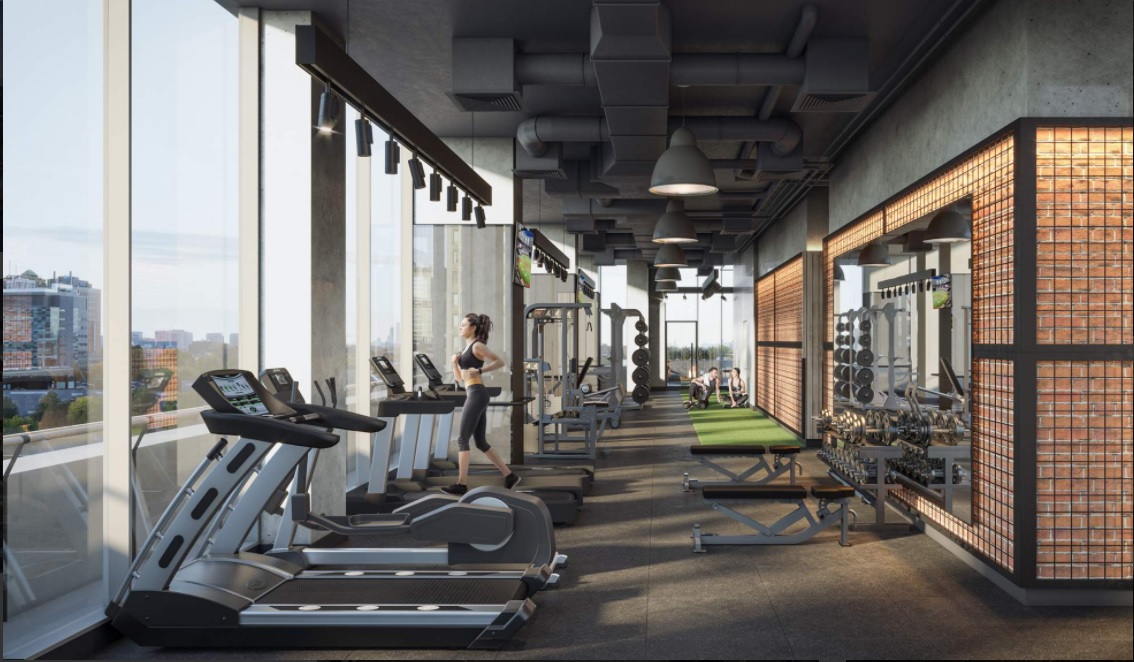

Meanwhile, the all-new rental building features what Fitzrovia describes as “thoughtfully curated common spaces” and premium suite finishes by award-winning interior designer DesignAgency. It also incorporates artistic contributions from Toronto-based artist Thrush Holmes and a custom lobby mural by Bird-O (Jerry Rugg).

Set to open April 2021, residents fresh out of a challenging pandemic year will have access to a 5-star amenity package that includes an integrated lobby lounge offering Boxcar Social and Greenhouse Juice, a rooftop infinity pool, a penthouse commercial-grade fitness facility, 24/7 concierge service, an immersive theatre, a fully equipped pet spa, and more.

“We’re extremely excited to launch our fifth Boxcar Social location at The Waverley,” said John Baker of Boxcar Social. “It became clear, early in the process, that Fitzrovia was the perfect team to pay homage to the old, historic Waverley Hotel. Their passion for design and keen eye for detail have produced a beautiful and grand lobby space, reminiscent of boutique hotels from years gone by – the perfect backdrop to enjoy a quality espresso or wine.”

The Temple – Penthouse Fitness Centre at The Waverley. Images courtesy of Fitzrovia

The former Silver Dollar Room

Residents, guests and music lovers will get to relive the glory days of Toronto’s famed Silver Dollar Room, which operated from 1958 to 2017 and played host to some amazing talent, including Bobby Bland, Curley Bridges, Bob Dylan, Levon Helm, The Barenaked Ladies, and Blue Rodeo.

The Silver Dollar“The former Silver Dollar Room is a registered heritage landmark. Many of the venue’s original elements will be reincorporated into the new space, including the venue’s bar, stage, murals, terrazzo floor, and of course, the iconic Silver Dollar Room sign,” said Adrian Rocca, CEO of Fitzrovia. “We are thrilled to introduce The Waverley, a new boutique rental community. Fitzrovia has teamed up with world-class designers, artists, and service providers to ensure Waverley residents enjoy a rental experience that has been truly reimagined.”

In suite, residents will enjoy “an elevated living experience” with free high-speed 1Gig internet, keyless smart lock entry, Wifi enabled NEST thermostats, 9-foot ceilings, quartz countertops and backsplashes, KitchenAid stainless steel appliances, wall mounted medicine cabinets, under cabinet LED lighting, and in-suite laundry.

About Fitzrovia Real Estate Inc.

Describing itself as a vertically integrated developer and asset manager of Class-A apartment buildings across the Greater Toronto Area, Fitzrovia partners with public institutions, pension plans and high net worth investors favouring long-term cash flow generating assets. In addition to focusing on traditional asset management, Fitzrovia focuses on “driving income through active lifestyle management and exceptional customer service offering residents unique lifestyle choices that redefine urban living.”

More about The Waverley can be found here: www.thewaverleylife.ca

Alignvest Student Housing launches Academic Assets

Alignvest Student Housing announced it has launched Academic Assets, a real estate development vehicle focusing on purpose-built student accommodation (PBSA). 

The subsidiary will be led by Patrick Miksa, who will build on his experience as a pioneer in the asset class within the Canadian market. Prior to launching Academic Assets, Patrick led the academic portfolio at Knightstone Capital Management Inc., which developed one of Canada’s largest PBSA portfolios.

“I am truly excited to be able to partner with ASH,” he said. “The portfolio of high quality projects acquired and managed by ASH on behalf of Canadian Student Living Group Limited Partnership and Alignvest Student Housing Real Estate Investment Trust to date is impressive and speaks to the team’s ability to be a leader in the Canadian PBSA market and execute on strategic initiatives.”

Although new development and strategic alliances with higher education institutions will be its core focus, Academic Assets will also consider redevelopment, repositioning, and partnerships with landowners in close proximity to campuses. With fiscal constraints and challenges facing some higher educational institutions, the group says the timing is right to launch a real estate vehicle that will assist these institutions in delivering on their core mandate of providing a superior education experience.

“Patrick is a leader in the Canadian student housing sector,” said Sanjil Shah, Managing Partner of ASH. “The opportunity to partner with Patrick to launch our development vehicle is an important milestone in our evolution as we seek to become the leading PBSA provider across Canada.”

With various development opportunities already being explored, Academic Assets will seek to continue to be a leader within this historically stable asset class that has demonstrated its resiliency through the COVID-19 pandemic.

“Learning today is not confined to the classroom, as we have seen over the past year,” Miksa said. “There is a necessity to create educentric spaces that ensures students have all the tools to succeed no matter their surroundings. Our goal is to be progressive and we aim to ensure Canadian higher education programs are viewed domestically and globally as something to be sought after and experienced. Our developments will assist in delivering on these objectives.”

Visit www.alignveststudenthousing.com for more information.

Work resumes on the Trans Mountain pipeline

The Trans Mountain pipeline expansion project has restarted work after a two-month shutdown due to two serious workplace incidents. A staged remobilization of the company’s 7,000-strong workforce will begin this week.

Trans Mountain executed a voluntary safety stand down and undertook a thorough review and examination of all workplace safety protocols and practices following the incidents. The Canada Energy Regulator and other regulators continue to independently examine these events and Trans Mountain is working in full co-operation with their respective inquiries.

As part of the safety stand down process and the investigations into the incidents, the company and its contractors identified opportunities for enhancements to safety measures, some of which may have been contributing factors to the events of the past few months. The company focused on and reviewed matters of compliance, communication, near-miss worksite reviews and reporting, and workers’ fitness for duty, as a post-incident investigation revealed an isolated case of a worker failing a drug and alcohol test.

In response to the thorough review of safety programs within Trans Mountain and with its contractors, the board and senior leadership of Trans Mountain have taken immediate steps to enhance the safety culture to ensure the company’s workplace practices and procedures are of the highest safety standards. Workplace safety is the highest priority.

The restart process will begin with the safety re-training and re-orientation of all supervisors and workers – before construction resumes.

Specific enhancements to Trans Mountain’s safety procedures include:

  • More rigorous job-site safety training, particularly regarding the safe operation of equipment in proximity to other workers and communication between workers;
  • Enhanced worksite inspections and regular audits;
  • Rigorous incident and near-miss reporting supported by corrective action plans and systems;
  • Upgraded communications equipment and protocols for its effective operation on job sites;
  • Strengthened site supervision and the identification of daily site safety champions.

New Vancouver centre to produce vaccine doses

Precision NanoSystems Inc. in Vancouver has received $25.1 million from the Government of Canada’s Strategic Innovation Fund to create the country’s first centre of manufacturing excellence of nanomedicine-based RNA vaccines, gene therapies and cell therapies.

The $50 million centre will support the Government of Canada’s national biomanufacturing strategy to expand production capacity of critical medicines for the prevention and treatment of diseases such as COVID-19.

“PNI’s centre of manufacturing excellence of nanomedicine will be a state-of-the-art facility for the development and manufacture of genetic therapeutics and vaccines,” said James Taylor, CEO, Precision NanoSystems.

“The centre will continue Canada’s leadership in the creation of innovative solutions for the development and production of new medicines for the benefit of patients in Canada and beyond. This support from the Government of Canada helps PNI to further achieve our mission of accelerating the creation of transformative medicines that significantly impact human well-being.”

Once the 40,000 square foot biomanufacturing centre is completed, targeted for March 2023, PNI will have the capacity to produce up to 240 million doses of its self-amplifying ribonucleic acid (RNA) COVID–19 vaccine every year.

On October 23, 2020, the government invested $18.2 million in PNI to support the development of its promising COVID-19 self-amplifying RNA vaccine candidate through clinical trials.

This project will help PNI establish a Biomanufacturing Centre that will expand Canada’s epidemic and pandemic preparedness capacity and will enable PNI to expand its development and manufacturing services to support the clinical development and supply of new medicines.

“Our government is bringing back the vaccine manufacturing capacity that Canadians expect and need. These investments will help to ensure that Canada has modern, flexible vaccine manufacturing capabilities now and in the future,” said François-Philippe Champagne, the federal Minister of Innovation, Science, and Industry.

“Our government is helping Canadian companies advance made-in-Canada vaccines and therapies, while securing domestic manufacturing options for international vaccine candidates.”

In addition to the Vancouver centre, the federal government is funding new vaccine facilities in Saskatchewan and Quebec.

Parkview Homes receives funding for Peterborough rental project

Parkview Homes has received $8.5 million in funding through CMHC’s Rental Construction Financing initiative for a three-storey, 27-unit rental building located in Peterborough, Ontario. One of the largest residential homebuilders in the Kawartha region, Parkview Homes commenced construction on this project in July of 2019, and substantial completion is expected soon.

In addition to surpassing accessibility requirements, the building is designed to achieve a decrease in energy intensity of 16.6 per cent and a decrease in greenhouse gas emissions of 18.5 per cent relative to the 2015 National Energy Code of Buildings.

“COVID-19 has reminded us that nothing is more important than a home,” said The Hon. Maryam Monsef, Member of Parliament for Peterborough. “As we all do our part to contain the spread, homes have become a sanctuary – a place of safety and refuge in challenging times. [This] announcement means more than $30 million has been invested by the Government of Canada to renovate, subsidize and build 1,600 housing units in Peterborough-Kawartha. That’s 1,600 families with a safe roof over their head, 1,600 families who get to live, grow, and excel in this community we are all fortunate to call home. And there is more to come.”

“Peterborough has a significant need for more safe and accessible housing,” said Diane Therrien, Mayor of Peterborough. “I would like to thank MP Monsef for her work to push this project forward, as well as CMHC and Parkview Homes for their commitment to providing secure, energy efficient units that meet the needs of our community.”  

The RCFi, a National Housing Strategy (NHS) initiative delivered by CMHC, supports rental housing construction projects to encourage a stable supply of rental housing across the country for middle-class households struggling in expensive housing markets.

More about the types of funding available can be found at Canada’s National Housing Strategy (cmhc-schl.gc.ca).


Adapt today, optimize tomorrow

The role of property owners or facility management in the task of building cleaning and maintenance has been in a constant state of fluctuation for the last year-and-a-half. Not only did they have to reinvent their role in what they do in a day, but they’ve had to rethink old safety and maintenance methods. Property owners and facility managers have had no choice but to dive wholeheartedly into new protocols that embrace the current crisis today and into the future.

The pandemic has unveiled cracks in the system. The old way of doing things has broken down under the pressure of an invisible threat that commands attention and pushes aside any attempts to provide “business as usual.” The world has irreversibly and maybe even forever changed for property owners and facility management, in that traditional cleaning of buildings has metamorphosed into cleaning for the health and safety of occupants more frequently than ever before.

A new agenda for change has emerged wherein cleaning and disinfecting with a focus on infection control is the new way of doing things. Building ownership and facility management has had to assess risk like never before and change their procedures and processes for cleaning and disinfecting, as well as their occupational health and safety requirements for business/building continuity. Their budgets have also been analyzed and changed to further accommodate workspace and workplace safety, and the necessary transition from outdated operation models to allow for the hiring of more cleaning, maintenance, and security staff. 

Cleaning crews have been thrust into the mindset of stringent cleaning and disinfecting of high-touch services, tighter restroom care, and new standards of hygiene. Maintenance personnel are observing best practices for HVAC and forced-air systems, while security teams are on heightened alert for large gatherings, lack of physical distancing and possible aggression.

Getting back on track with surveillance

Elevated cleaning, disinfecting, maintenance, and security standards can be further optimized with technology. More than 50 per cent of companies plan to increase investment in building technology to protect the health and safety of occupants. There are various phases of business reopening going on across the country. The government is trying to get people back to work and the economy back on track.

So how can facilities do that and take advantage of the technology that’s out there today?

There are four different technology sets that could be helpful for facility management in today’s building sanitation and safety efforts. They comprise of getting creative and using existing solutions that we have available to us today, as well as technologies that are developing as we speak for tomorrow’s challenges.

1-     Occupancy estimator

Occupancy management is very prevalent in retail, healthcare, and banking building settings. We have multiple solutions today that allow for occupancy management and then the generation of data for the end customer.

Occupancy management makes it easier to follow physical distancing restrictions by not allowing too many people in one place at the same time. It also helps with cleaning and determining which locations need to be cleaned and when via people-counting – understanding the number of people entering or exiting a facility or a room. Look at washrooms and how often they need to be cleaned. Facilities can mount cameras with people-counters nearby to trigger messages to cleaning staff. Data on usage and sanitation from the cameras can then be collected, analyzed, and tied into an appropriate cleaning schedule.

With an occupancy estimator, facility management and owners can keep track of how many people and staff are in spaces, determine high-traffic times, and get real-time alerts when cleaning is required. Consider something like an occupancy estimator: a tool for occupancy management analytics. It’s a three-part solution that entails a camera as a sensor, the occupancy estimator analytic, and a trigger: for example, how many people have entered and exited the washroom, and what trigger could be set up to counteract that action.

2-    Low-touch access control with face detection

Door stations or systems for touchless access control, along with face detection, make it easier to comply with increased hygiene requirements. In this case, there’s no need to touch a call button or use a potentially unsanitized guest fob. Network door stations notify the building when someone is at a door. They combine video surveillance, two-way communication, and contactless remote entry based on a QR code, wave sensors (where you wave your hand to get buzzed in), or facial recognition, which also minimizes high-touch door handles.

3-    Audio alerts and live public announcements

Facility owners and managers can improve communications with occupants and cleaning staff with the use of IP speakers. Combined with existing surveillance cameras, these provide a comprehensive and easy-fit solution for communicating health, safety, and cleaning protocols via a complete public address system that quickly, clearly, and automatically can be utilized based on a building’s specific requirements.

Other than live and pre-recorded announcements/alerts, audio solutions can help:

  • Keep occupants informed with public announcements of when to stay out of a specific room until it’s been cleaned and sanitized, or alert them to how many people are allowed in a room. A speaker near a washroom can play a message saying “please do not enter the washroom as it’s being disinfected; please wait until further notice. You may use the washroom at XX entrance instead.” This then gives cleaners the time to properly clean the washroom without anyone entering it.
  • Keep cleaning staff in various locations within the building informed with announcements of when a room needs to be cleaned and sanitized with real-time and scheduled pre-recorded messaging alerts, and help customize different cleaning schedules depending on the room.
  • Improve occupant and employee confidence and safety with the use of IP audio. When occupants hear messaging around cleaning and disinfecting measures, they’ll feel more comfortable working in the building knowing that someone is setting off the audio announcement. Meanwhile, building owners, facility management, and cleaning staff will feel like they are on top on things.

4-     Remote communication

It’s easier than ever before for facility owners and managers to access their buildings and avoid unnecessary visits to them with remote services. They can look into their cleaning and disinfecting efforts and communicate with staff in any of their facilities, using remote connection, planning, and device management. Most facilities already have a surveillance system of some kind, and owners and managers can ask integrators or manufacturers for case management examples of how they can use what they currently have and optimize it for the new normal.

Aside from improving the system they have, they can consider linking every building system to gather collective information/monitor their sanitation efforts all from one main control board system. They can design a surveillance system, connect to remote cameras, upgrade firmware or renew certificates, and manage all devices from any location.

Scalability is key to long-term benefits

Like “cleanliness is next to godliness,” scalability is next to future. What facilities should consider is an end-to-end surveillance solution of both hardware and software components to keep their cleaning and disinfecting measures in check. A knowledgeable integrator or manufacturer will recommend avoiding any system that is closed or locked down and that will not be scalable for other measures beyond cleaning or the current pandemic. Network cameras, potential sensors, and switches themselves are considered the hardware. Things like the Video Management System (VMS) are considered the software applications running on the board that provides the cleaning analytics and necessary tracking to ensure your facility cleaning and disinfecting goals are met and that risk is minimized to occupants.

Gavin Daly is the Architect and Engineering Manager (A&E) at Axis Communications, Inc., providing technical expertise and personalized advice for both internal and external customers. Gavin’s industry insight and experience provides value and practical expertise to ensure customers achieve full realization of their surveillance needs while solving technical issues that may prevent obstacles in a project. 

Green financing framework steers Allied issuance

Allied Properties Real Estate Investment Trust has issued $600 million in debentures, representing its first offering under a newly introduced green financing framework. Proceeds from this and future green offerings will be applied to financing or refinancing four categories of assets — certified green buildings and data centres; projects supporting resource efficiency and management; clean transportation infrastructure; and renewable energy infrastructure — to be known as eligible green projects.

“Not only is this a meaningful step forward for our ESG (environmental, social, governance) program, the use of proceeds will improve our interest coverage ratio, extend the weighted average term of our debt and augment our pool of unencumbered investment properties,” observes Michael Emory, Allied REIT’s president and chief executive officer.

The offering, through a syndicate of agents led by Scotia Capital Inc., BMO Nesbitt Burns Inc. and CIBC World Markets Inc., is expected to close on or around Feb. 12, 2021. The debentures will bear interest at a rate of 1.726 per cent per annum and mature on Feb. 12, 2026.

Under its green financing framework, Allied commits to transparently report the allocation of all proceeds from green issuances along with ESG metrics for eligible green projects. The framework itself has validation from the independent ESG risk rating service, Sustainalytics, that it aligns with the International Capital Markets Association Green Bond Principles 2018 and the Loan Market Association Green Loan Principles 2020.

As of December 2020, Allied REIT held $9.4 billion in assets, encompassing 14 million square feet of gross leasable area in seven Canadian cities. It began reporting to the GRESB assessment of real estate portfolios’ ESG performance in 2020.

Construction coalition calls for infrastructure investments

A coalition of construction sector associations is urging the federal and provincial governments to deliver on infrastructure investments.

The newly formed Building for Recovery coalition includes Associated Equipment Distributors (AED), the Canadian Construction Association (CCA), Association of Consulting Engineering Companies – Canada (ACEC – Canada), and the National Trade Contractors Council of Canada (NTCCC).

“The construction sector is ready to rebuild Canada’s economy but all levels of government must deliver on infrastructure investments now to get projects started,” says Brian McGuire, AED’s president and CEO.

The Building for Recovery coalition was developed to encourage individuals working in and supportive of the construction sector to send a letter to their local representative at both the federal and provincial levels, asking for support to deliver infrastructure investments to help rebuild the Canadian economy in the wake of COVID-19.

“Despite billions of dollars of existing infrastructure commitments, these investments have been slow to roll out. Infrastructure Canada’s website shows that of the nearly 17,000 approved projects, fewer than 900 have received funding,” said John Gamble, president and CEO of ACEC – Canada.

While rebuilding Canada’s economy from the pandemic’s impacts will require a comprehensive stimulus plan, investing in infrastructure has a proven return on investment. The Public Policy Forum has found that for every dollar invested in public infrastructure, governments can expect to see a return of two to four dollars.

“History shows that investments in infrastructure are not only the best way to stimulate the economy, but they also create immediate employment opportunities and improve the economic and environmental quality of life for all Canadians,” said Sandra Skivsky, Chair of the NTCCC.

“With federal and provincial governments working in collaboration with Canada’s construction sector, we can ensure that we build back a stronger, more resilient country from the pandemic,” continued Mary Van Buren, president of CCA. “The time is now to deliver on billions of dollars of investments so we that can start to rebuild our economy.”

Condo landscaping tips for curb appeal

Residents of multi-unit condominium towers share the same front door. It should be on every condominium management and board of directors to-do list to keep the front entrance up to date and in A-1 condition. After all, keeping up curb appeal not only brings owners the daily enjoyment of arriving and leaving their homes, but also reduces yearly maintenance headaches for management. It also allows realtors to feature listings inside the condo with a new face. The return on investment is always favourable.

The problem for many GTA condominium properties is that their current exteriors do not match the investment already made on renovated lobbies and corridors. As a result, residents start to ignore entrances to their buildings and a downward spiral of tired-looking hardscape and eyesore patchwork repairs takes hold.

Architectural Accessorizing

One of the simplest ways to cheer up a tired entrance is to add exterior awnings. Not only will they provide sun and snow protection, but they can also develop new branding for the condo through well-chosen colours, logos and lettering.

Working with an experienced awning company is crucial to determine the necessary signage and awning related by-laws. A good design rule of thumb is to avoid awnings that sit at the base more than 21 inches out from the wall of the building. More than 21 inches would create an awning angle that will not be acceptable to the local municipal building department.

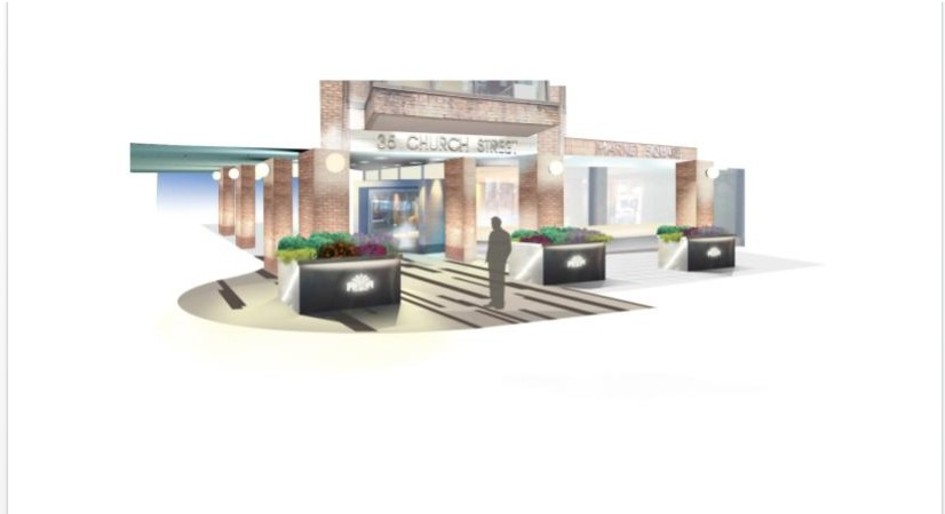
Awnings can also illuminate an entrance with the latest LED pot lighting—mounted to the underside soffit portion. These pot lights can tie into new LED building wall-mounted fixtures that balance with the landscape lighting and illuminated letters on the front of a focal-point, like a steel planter.

More Than Meets the Eye

Consulting a legal survey to determine the front property line is an essential first step to any improvement project. A front entrance could, in fact, be situated on city property. Many condominium entrances in Toronto were realized under special development agreements that allowed construction on the municipal right-of-way.

To renovate such an entry, project managers will need to navigate a number of permits for construction and facilitate an encroachment agreement between their clients and the city. This will ultimately protect the investment from damage that could be caused by future municipal underground utility or streetscape improvements.

Careful planning, high and low-design cost options and a “look at me” approach to the streetscape design will quickly transform any curb-appeal project into improved real estate value.

Curb Appeal Case Studies

Following the feel and flavour of the lobby interior is always a good way to springboard the design of the entrance exterior. Despite the seasonal climate, think of the inside and outside as one space.

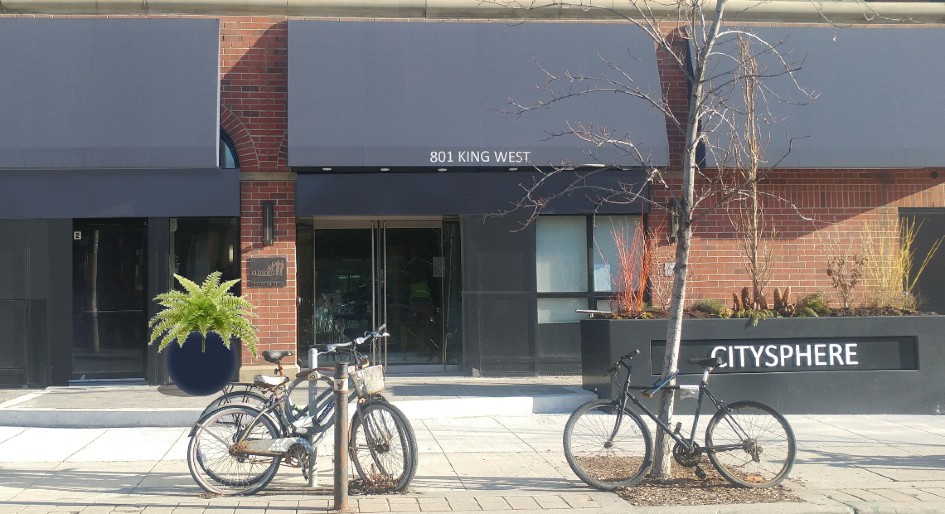
At Citysphere Condominiums, an existing landing, ramp and railings were dysfunctional, the landing too small and the ramp too narrow. A first step was looking to improve ease of access with an expanded landing and a wider wheelchair ramp and railing. Existing granite pavers were recycled when creating the new landing and ramp. Dry-laid granite and other durable stones are preferable as opposed to mortaring them in place.

The use of de-icing salt has intensified by snow removal contractors to the point where mortar joints are quickly eaten away, creating an ongoing maintenance headache. The advantage of dry-laid paving is that it makes spot repairs easy, bypassing the need for jack-hammering out existing surfaces that adhere to a concrete base. Matching new stone or concrete with old can prove impossible as these surfaces age and change in tonality.

curb appeal

Citysphere Condominiums

At Market Square downtown, the floor patterning of the interior lobby renovation was finished with dramatic alternating horizontal sections of through-body colour porcelain tiles. The goal was to echo this pattern into the exterior pavers and include a new welcome mat of all season durable porcelain pavers extending right out to the street curb. A dramatic acrylic light box feature connects the interior design aesthetic with the exterior and provides much-needed entrance illumination for the shaded pedestrian areas leading up to the front door.

curb appeal

Market Square Condos


Kent Ford is founder and principal of Kent Ford Design Group Inc., a Toronto-based landscape design and project management firm. (www.kentforddesign.com). He can be reached at 416-368-7175 or [email protected].

Feature photo: Unique plant materials, such as Arnold’s Promise witch hazel, come into full, fragrant bloom in February and lasts for weeks.

Manulife earns GBAC STAR real estate accreditation

Manulife Investment Management has become the first Canadian real estate landlord to achieve the GBAC STAR Facility Accreditation from the Global Biorisk Advisory Council (GBAC), a Division of ISSA, the worldwide cleaning industry association.

Seven Manulife facilities in Montreal have been accredited:

  • Centre Manuvie – 2000 Mansfield St.
  • 1001 de Maisonneuve Blvd. West
  • 2000 Peel St.
  • 420 Notre-Dame St. West
  • 465 McGill St.
  • 485 McGill St.
  • 715 Square Victoria St.

Manulife’s accreditation shows the value the accreditation has to real estate providers at a time when enhanced cleaning and infection control measures — and communication of those measures — has never been more important for facility managers and the public.

“Now more than ever, we’re focused on providing safer and healthier spaces for our tenants, employees and visitors. We’ve aligned ourselves with global health authorities and local government regulations to develop our return to office program,” said Stephen Nicoletti, Managing Director, Real Estate Asset Management, Eastern Canada at Manulife Investment Management.

“Our teams are committed to establishing and implementing comprehensive practices to ensure the health and safety at our buildings.”

GBAC STAR is an industry accreditation focused on ensuring a clean, safe, and healthy environment in public and commercial facilities of all sizes. The program outlines best practices, protocols, and procedures to control risk factors associated with infectious disease, including SARS-CoV-2, the virus responsible for COVID-19.

RELATED: ISSA’s GBAC STAR accreditation success is a sign of a cleaner world

Facility accreditation means that venues’ cleaning, disinfection, and infectious disease prevention programs implement best practices to prepare for, respond to, and recover from outbreaks and pandemics like COVID-19.

As of January 15, more than 1,100 facilities worldwide have achieved the certification and another 2,700 have committed to it.

It has mainly been taken up by large facilities with high occupancy or high visitation, such as hotels, stadia, and convention centres.

In Canada, places like Toronto’s Exhibition Place, the Vancouver Convention Centre, and Montreal-Trudeau Airport have already secured accreditation.

The full list of facilities to have been accredited around the world can be found via the GBAC STAR Facility Directory.

“GBAC STAR is the gold standard of safe facilities, providing third-party validation that ensures facilities implement strict protocols for biorisk situations,” said GBAC Executive Director Patricia Olinger. “Accreditation empowers facility owners and managers to assure workers, customers, and key stakeholders that they have proven systems in place to deliver clean and healthy environments that are safe for business.”

MediaEdge is a proud reseller of the GBAC STAR and GBAC fundamentals online course. Please see the program details and links below and remember to use the promo codes when registering as they provide discounts.

  1. Commercial facility owners looking for GBAC STAR accreditation can find more information here.
  2. ISSA has also released a new GBAC fundamentals online course specifically designed for cleaning workers on the frontlines of the coronavirus fight. Please click here to register and receive a discount off normal prices.

For additional program details and information, please email [email protected] or call (416) 803-4653.

New handwashing app aimed at education

Essity has launched a handwashing app that aims to educate children about the importance of proper hand hygiene.

Ella’s Handwashing App is now available for free download on mobile.

It is set up to encourage young children to wash their hands properly and form good habits.

The interactive story-based app follows Ella and her friends Max, Sam, and Dino on a quest to get clean after playing outside. It features an interactive handwashing game.

Essity has released the app as part of the Global Handwashing Partnership, a coalition of international stakeholders who work explicitly to promote washing hands with soap and recognize hygiene as a pillar of international development and public health. Essity has been a member since 2017 and has become a leading strategic partner. Other members include government agencies, multilateral organizations, corporations, non-governmental organizations, and academic institutions.

“Hand hygiene is essential for our well-being and with an ongoing pandemic we all need to do more to increase hygiene practices, now and in the future,” says Magnus Groth, CEO and President of Essity.

Ella’s Handwashing Adventure app has been combined with a variety of playful and engaging materials into a toolkit that also includes:

  • Brochures and information for school staff: Presentations, brochures and leaflets with an introduction to the Ella toolkit, information about hand hygiene as well as games, tips and tricks to teach handwashing to pre-schoolers and kindergartners
  • Ella poster: A colourful poster of different situations where it’s more important or less important to wash hands
  • Other interactive materials, such as an Ella coloring poster and an Ella Diploma
  • Max’s Handwashing School: For older children aged 6-10, Max’s Handwashing School materials can be found here.

Essity’s Tork brand supports hand hygiene through products like paper hand towels, soap, and sanitizers.