Articles Archive - Page 392 of 928 - REMINET
REMI

Alignvest set to acquire two new student housing assets

Alignvest Student Housing announced it has entered into a binding agreement to acquire two new student housing assets located at 315 King Street North and 328 Regina Street North in Waterloo, Ontario.

“We are excited to further solidify our position in Waterloo with the acquisition of these two high-quality student housing assets,” said Sanjil Shah, Managing Partner. “This purchase continues to expand on our growth strategy in the student housing market and propels the REIT’s bed count from 3,394 to 4,189 beds. These properties are located near the REIT’s existing assets at 333 and 339 King Street North and provides us with an opportunity to achieve additional scale efficiencies from having 2,205 beds in the Waterloo market.”

“Preston House” & “Bridgeport House”

Preston House is a purpose-built student housing accommodation (PBSA) property located at 315 King Street North in Waterloo, Ontario, a 10-minute walk to Wilfrid Laurier University or a 4-minute drive to the University of Waterloo. Preston House is a 17-storey modern building that was constructed in 2013 with 310 beds in 62 fully furnished units. The property has historically been at 100 per cent occupancy and is currently at 93 per cent occupancy.

Bridgeport House is a PBSA property located at 328 Regina Street North in Waterloo, Ontario, an 11-minute walk to Wilfrid Laurier University or a 5-minute drive to the University of Waterloo. Bridgeport House is an 18-storey modern building that was constructed in 2014 with 485 beds in 97 fully furnished units. The property has historically been at 100 per cent occupancy and is currently at 91 per cent occupancy.

The two properties offer high-quality amenities, including exercise facilities, games rooms, study rooms, conference/boardrooms, and laundry facilities. The two buildings have highly desirable suite configurations, with every bedroom having a private ensuite bathroom.

Visit www.alignveststudenthousing.com for more info.

Life sciences growth potential flagged

Growth potential in the life sciences sector has investors assessing opportunities to meet demand for laboratory, manufacturing and associated support space. Real estate analysts likewise point to burgeoning momentum in Canada’s strong research institutions, increasing calls for domestic production capacity and the STEM (science, technology, engineering, math) job creation engine.

“Employment growth in scientific R&D has outpaced even the tech sector,” observed Paul Morassutti, CBRE’s vice chair, valuation and advisory services, during last week’s online release of the firm’s 2021 Market Outlook. He cited Oxford Properties’ recent foray into the sector in the United States with a USD $276 (CAD $350 million) deal for four buildings and announced plans to invest a further USD $500 million (CAD $635 million) on expansion and redevelopment of those facilities.

“Here in Canada, we have seen considerable activity in Montreal and Vancouver. We fully expect this sector to follow a similar trajectory that we witnessed in the U.S., albeit on a smaller scale,” Morassutti submitted. “Supporting sectoral fundamentals include: increased life expectancy; technology and AI facilitating scientific breakthroughs; on-shoring of the medication supply chain; and strong funding availability — all of which has been accelerated by the pandemic.”

JLL’s newly released 2020 review and 2021 projections draws similar conclusions. “COVID has exposed Canada’s undersupplied life science and lab sectors. Growing employment and private investment on the demand side are making the case for more investment in this space. Real estate investors, especially long-term-oriented institutional groups, are taking a closer look at this space and we expect a supply response over the next few years,” it states.

Avison Young’s examination of global trends influencing real estate in 2021 also highlights two factors in life sciences growth potential: deglobalization and governments pouring stimuli into the economy.

“The pandemic has understandably led to a focus on medical facilities and life sciences. Venture capital funding for medical research has increased substantially, with medical infrastructure and R&D spending now increasingly seen as relevant to national security and demand for lab space likely to increase,” it forecasts.

Alberta’s education mill rate nudges up 0.1 bps

Alberta’s education mill rate has nudged up 0.1 basis point, adding $0.01 per $1,000 of assessed value to the provincial portion of property tax bills. The newly released 2021 provincial budget increases the non-residential mill rate to $3.76/$1,000 and the  residential/farmland mill rate to $2.56/$1,000 as the Alberta government looks to collect about $2.48 billion in property tax revenue for the coming fiscal year.

“As property assessments have fallen slightly, the mill rates used to calculate the tax also need to be adjusted slightly,” the budget document advises. The new formula brings a $10 tax increase for every $1 million of assessed value.

The 2021-22 education tax apportionment again remains frozen at the 2019 level. As part of last year’s COVID-19 relief measures, the provincial government halted an earlier announced 3.4 per cent increase, cutting about $87 million from the originally envisioned 2020-21 levy. During the same period, it fast-tracked a planned corporate income tax cut, introducing a new 8 per cent tax rate that had been scheduled for January 2022 in July 2020.

The resulting split will see the Alberta government collecting 13 per cent of its projected 2021-22 revenue from education tax and less than 10 per cent from corporate income tax. The projected corporate income tax intake of $1.89 billion for 2021-22 is dramatically down from $4.1 billion garnered in 2019-20 due to the combination of deliberate rate cuts and slumping corporate earnings. It’s also the lowest corporate income tax quotient of the past 14 fiscal years — a drop of more than 67 per cent from the 2014-15 peak when Premier Jim Prentice’ Conservative government collected nearly $5.8 billion.

In contrast, Alberta aims to collect the second highest amount of personal income tax, budgeted at $11.6 billion for 2021-22, of the past 14 years. More optimistic budget targets suggest corporate income tax tallies will climb back up to $3.1 billion by 2023-24, narrowing this year’s unprecedented 6-to-1 spread between the two revenue sources.

Meanwhile, commercial and residential property taxpayers could see other shifts arising from the Alberta’s government review of property tax assessment in the oil and gas sector. The following incentives are characterized as interim measures:

  • Beginning this year, tax on well-drilling equipment will be eliminated, and lower-producing wells will be depreciated, thus diminishing their assessed values;
  • A 35 per cent reduction of assessed values for shallow gas wells and associated pipelines, which has saved owners an estimated $84 million in combined municipal and education property tax, will be extended to the end of the 2023 tax year; and
  • As of 2022, new wells and pipelines will be exempt from property tax until 2025.

“The review was intended to modernize the assessment model for oil and gas properties to enhance the sector’s competitiveness while ensuring municipal viability,” the budget document states. “Given the magnitude of the potential impacts and the ongoing economic uncertainty, the government decided not to implement comprehensive changes at this time.”

Alberta municipalities with delinquent accounts resulting in uncollected taxes on oil and gas properties can apply for the Provincial Education Requisition Credit, which will provide an exemption for the unpaid portion of education taxes.

Top 10 distinctive flooring trends for 2021

With consumers housebound in 2020 due to the pandemic, many of them focused on updating their interiors, including flooring. Based on those buying patterns and looking ahead, Flooring America/Flooring Canada (a North American cooperative of over 500 locally owned flooring retailers) identify its 2021 Style Watch, a “floorcast” of this year’s top 10 most distinctive flooring trends.

The top flooring trends are:

Going Gray. The color gurus at Pantone named Ultimate Grey as pick for colour of the year, and this is true when it comes to flooring. Wide luxury vinyl planks with the natural appearance of authentic hardwood in shades of grey will be hot this year. Not only for the look but for its durability and waterproof qualities that make it a great choice for laundry rooms, playrooms, and other areas of a home where accidents are likely to occur.

Farmhouse Chic. Farmhouse chic has been a huge trend when it comes to interiors and furnishings – and now the flooring industry offers amazing options that combine the distinct antique, well-worn look with modern technology. Luxury vinyl flooring (durable and made for high performance) that has a natural wood appearance with textured planks that look aged and worn will be a top option this year.

Distressed For Success. White weathering on genuine hickory hardwood emphasizes the natural beauty of this wood floor’s mineral streaks, knots, and natural character, making distressed a highly sought selection for shoppers who want to create a modern space with a timeless vintage vibe.

Super Sized Ceramic. Look for over-sized, rectangular, stone-look ceramic tiles in light neutrals like gray, white and cream to be installed for those looking for flooring that marries style, durability and efficiency.

Loving Laminate. There are so many varieties of laminate that bring a distinct wood-look into a room, but in the laminate category watch for ashy browns that include unique graining and contrasting brown hues to rule.

Waterproof Hardwood. In 2020, the new generation of waterproof real hardwood floors was one the most significant new products in the industry – and the category shows no signs of slowing in popularity for 2021. Perfect for active homes with pets and kids, designs with unique wire-brushed finishes will maintain their reign.

Sage Is The Rage. When it comes to soft surface, consumers seek softness, durability and stain resistance and that won’t change this year. What is predicted is a surge in slightly left of neutral non-traditional colors, particularly hues of sage.

Playing With Pattern. What else is in the crystal ball when it comes to the carpet floorcast? Unique, striated pattern, highlighted by a loop-cut carpet, is ideal for homes looking for a touch of modern, contemporary, and industrial design. Shades of gray will again be prominently seen to complement the design.

Statement Carpets. Hand-in-hand with the pattern prediction is the “statement” carpet. There are striking options in soft surface, from the beautiful movement of arabesque to distinctive elevated patterns that make a design statement from the ground up.

Talking Texture. Another soft surface trend in 2021 will be mixed texture in carpet. Loop-cut-loop provides a textured look that is both modern and masculine, but also delivers durability, stain, and fade resistance.

Wood is a viable option for industrial buildings

Advances in timber engineering technology are leading to new design possibilities from long-spanning roof structures to tall timber towers. Improvements to wood products and prefabrication methods, and the suitability of mass timber as a low carbon material that can fit within fire regulations, has led to a re-branding of wood construction as a viable, economical alternative for the industrial development sector.

Mass timber products offer flexibility and efficiency

Traditional wood construction has a proven track record of longevity and durability, and aesthetic appeal. But recent innovations in engineered wood products have broadened the application of mass timber so that it makes sense in an industrial environment, too. These products are factory made, using computer-aided design with CNC machinery, and components are precision cut, reducing waste and on-site inefficiencies—resulting in a more cost-efficient project. Because components are made in a temperature-controlled facility, progress can be made in the winter months, keeping to schedule.

Cross-laminated timber (CLT), used in floors, roofs and walls, and strong glue laminated timber (glulam) used for posts and beams, and large open spans, are two better known examples of mass timber products that are allowing larger buildings with wood. Other engineered products, such as laminated strand lumber (LVL), laminated strand lumber (LSL) and parallel strand lumber (PSL), are strong products that are often used in header applications, where high bending strength is needed.

Wood industrial construction makes a comeback

Wood industrial buildings are nothing new: prefabricated mass timber design builds upon a long history of wood industrial construction. Many century-old brick and beam multi-storey buildings—with timber beams and columns and masonry exteriors—have survived and been converted to highly marketable residential lofts and commercial spaces. There are more recent examples that demonstrate why wood should again be the go-to material for industrial applications, says the Wood Industrial Buildings report, written by Equilibrium Consulting and Hemsworth Architecture for BC Wood and FPInnovations.

The reasons for going with wood (or a hybrid of wood and another material) almost always involve cost efficiencies, speed of construction, reduced waste of materials, use of a local resource, energy efficiency and—although not always a chief design concern for industrial buildings—aesthetics.

Wood is also much lighter than concrete and steel, and easier to transport. New wood products also have the strength and durability comparable to conventional materials and meet fire code requirements.

Public industrial buildings demonstrate wood’s capabilities

In the last decade, a series of important public industrial buildings have demonstrated the high-tech capabilities of wood, which is an abundant resource in the province. The single-storey glulam post-and-beam Wood Innovation Research Lab in Prince George, B.C., is the first industrial building in North America to be designed to a Passive House standard. Built in 2018, the nearly all-wood building is a striking example of architectural design. Its mass timber components were made in a dry, temperature-controlled factory environment. This meant the typical shrinkage or swelling of wood that occurs on an outdoor job site wasn’t a concern.

The Alexandra District Energy Utility Expansion—a geothermal utility building—is also a striking hybrid/wood post-and-beam structure built from prefabricated mass timber. Constructed from glulam columns and beams, with CLT roof and walls, the build took just five days to put up.

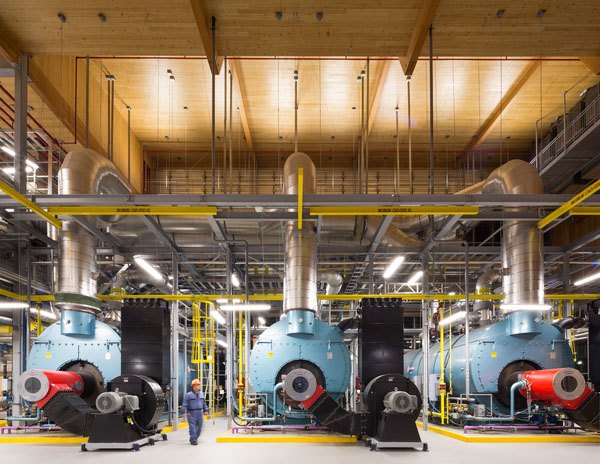
The UBC Campus Energy Centre burns natural gas to produce thermal energy for the UBC Vancouver campus.
Architect: DIALOG  Photo credit: Ema Peter

The University of B.C.’s Campus Energy Centre could have been an understated water boiler facility, but because of the unique application of mass timber, it’s a contrast of operating mechanics and warm Douglas-fir glulam timber that glows from within through massive windows. The building is also responsible for reducing the university’s greenhouse gas emissions by 33 percent. The campus’ Bioenergy Research building, where wood chips are converted into fuel, is a study in exposed glulam timber columns, beams and CLT panels. It makes for an extremely pleasant work environment, but not just visually. The thick wood panels also reduce the sound transfer of loud equipment. And the system also fulfilled the province’s building code requirement for non-combustible construction in a facility of this type.

In all examples, the use of prefabricated mass timber enabled a faster—and more cost efficient—construction process through computerized design of building components.

Read the report to learn more about industrial timber buildings.


New report identifies shift in renter preferences

To explore how Canadian renter preferences have shifted since the onset of COVID-19, real estate analytics provider Local Logic gathered and compared data from various sources to compile a comprehensive analysis of what’s currently influencing apartment seekers.

Before the pandemic struck, features in top-demand included swimming pools, pet-friendly amenities, multi-use common areas and entertainment rooms. Since March, when social distancing and work-from-home requirements took force, renter preferences have shifted toward amenities that support work, play, rest, and everything in between, at home.

Post-COVID residents are looking away from smaller, crowded spaces in seek of larger multi-room units “that can flexibly deliver all their new needs: a home office, a virtual schoolroom, and even a home exercise space,” the report says.

The new white paper, entitled Helping Multifamily Developers Through the Pandemic, also identifies “the outdoors and green space” as another key priority, along with units that provide nearby necessities, like grocery and convenience stores.

In cities that rely on mass-transit, residents are willing to accept longer commutes to the downtown core in exchange for larger living spaces. On the flip side, in secondary and tertiary cities, downtown and main street areas are spiking in demand.

Choosing suburban vs. urban

Aside getting away from the crowds, there are other lifestyle motivators prompting the urban exodus: namely that the transition from Monday through Friday in-office schedules to the flexibility of remote work has alleviated commuting concerns.

At the same time, this new lifestyle demands more space and outdoor access, all of which is available in suburban neighbourhoods. As a result, post-pandemic residents are more willing to consider housing options further from the city — locations that previously were not even options because of their longer commute times.

“Today’s residents may be deviating from the 25-storey apartment building, which is more common in metros, and towards the typical suburban 5-storey complex,” the report says. “In addition, residents are also looking for multifamily communities that provide the lifestyle amenities they’re looking for. Residents want to live in a place where all their needs are met without the burden of long-distance travel.”

For the complete white paper, click visit Local Logic.co 

One quarter of millennials bought a home during COVID

The majority of millennials who took part in a recent national survey by Royal LePage say remote work has made it more likely they will move further from employers. Among this cohort, 68 per cent intend to purchase within five years and 40 per cent have already racked up savings since the pandemic began.

Nearly half of millennials already own a home, one quarter sealed the deal during the COVID-19 crisis, and about 16 per cent wish to become homeowners in a year’s time. The survey looked at 2,000 Canadians aged 25 to 35 and was recorded online between December 29, 2020 and January 8, 2021.

Lower mortgage rates and investors divesting from renter-fueled properties are known factors clearing the path to ownership. Phil Soper, president and CEO, Royal LePage, noted that higher than typical demand from millennials, combined with older homeowners who have been more reluctant to put their property on the market during the pandemic, has contributed to a near-crisis shortage of listings in parts of the country.

“Measures necessary to prevent the spread of COVID-19 have motivated many of our younger Canadians to buy, while the health crisis dissuaded many of our older homeowners from selling,” said Soper. “Some young people living with parents or roommates found their work-from-home environment uncomfortably crowded. Others saw a once-in-a-decade affordability window open on their dream of home ownership. On the other hand, many older homeowners whose homes are adequate for changed employment circumstances have delayed their desire for a housing upgrade until the medical crisis is under control.”

Confidence in Canadian real estate is strong and despite economic challenges related to the pandemic,

These Canadians have a healthy personal financial outlook. Ninety-two per cent surveyed agree that owning a home is a good financial investment. Seventy-two per cent are confident in their short-term financial outlook and 78 per cent are confident in their long-term financial future.
“In many ways, the pandemic has sucked the joy out of our normally kinetic young adults’ lives. No dining out, no concerts with friends or winter escapes to the sunny south,” observed Soper. “The silver lining is in soaring savings; unspent money that is finding its way into real estate investments.”

Nearly two thirds of Canadians in this age group say the ability to work for an employer that allows the option of remote work is important. Overall, 39 per cent are considering a move from their current home to a less dense area as a result of the pandemic, while 46 per cent said the pandemic had no impact on their desire to move to a less dense area.

When given the choice, 45 per cent said they’d prefer to live in a city. Similarly, 47 per cent said they would choose small town or country living. The top responses for the most attractive feature of living in a city are walkability, and access to events, attractions and other entertainment options, diversity of people and cultures, and more employment opportunities. The top reasons for wanting to move to a less dense area are access to more outdoor space, lower home prices and more affordable larger homes.

Experts across the country noted young buyers felt comfortable with the safety measures in place around the home buying process during the pandemic, states Royal LePage.

“Younger buyers are exceedingly comfortable with online research, be it for the latest personal tech, a pair of running shoes, or a home,” said Soper. “This group has had no problem adapting to our enhanced use of virtual tours and electronic contracts.”

Major capital projects rose in 2020 despite pandemic

A report by the Chartered Professional Accountants of British Columbia (CPABC) shows despite the COVID-19 pandemic, major capital projects continued to rise in 2020.

B.C.’s inventory of major capital projects, those valued over $15,000,000, increased to $369.8 billion in Q3 2020, up 4.8 per cent compared to the same period last year. As of Q3 2020, nearly a third of the major projects were under construction, including the LNG Canada Facility ($36 billion) and the Coastal GasLink Pipeline Project ($6.2 billion).

“B.C.’s major projects, driven by natural resource and infrastructure projects, provide thousands of both direct and indirect jobs and are spread across every region in the province. With employment and GDP expected to remain below pre-crisis levels in 2021, these projects will meaningfully increase economic growth and help pay down the large provincial debt incurred to support businesses and citizens through the pandemic,” said Lori Mathison, CPABC president and CEO.

CPABC’s BC: Check-Up INVEST report focuses on investment and business activity across the province and in each of the province’s seven regional developments. The report highlights major capital project activity, the decline in private non-residential investment, housing starts and business activity resulting from the COVID-19 pandemic.

The report notes investment into both residential and private non-residential projects cooled in 2020, and despite recent price gains, housing starts steeply declined. The overall number of units started was down by nearly a fifth (-18.3 per cent) through 2020 compared to the number started in 2019. Attached units, such as condos and townhomes, accounted for the majority of the decline, according to CPABC.

The economic climate also pushed private non-residential investment down to $5.0 billion in 2020, representing a 7.9 per cent decline compared to the level of investment in 2019.

“Economic uncertainty saw investors delay or cancel both residential and non-residential investment projects in 2020,” said Mathison. “Over 7,800 fewer residential housing units were started compared to 2019, and over $430 million less was invested in private non-residential developments. This is worrying as construction has been a large factor in the province’s robust economic growth. However, both attached and detached starts have rebounded from earlier in the year and major projects were up in 2020.”

Prior to the COVID-19 pandemic, British Columbia experienced record levels of investment activity. In fact, by 2019 the number of active businesses, housing starts, and private non-residential investment each reached record highs, and the province was forecast to continue leading the country in economic growth. Unfortunately, due to the economic uncertainty arising from the COVID-19 pandemic, investment and business activity took a significant hit in 2020.

Corporate Real Estate Week set for mid March

Corporate executives and officers are encouraged to reflect on the role their in-house real estate teams play in supporting business operations and workforce productivity during Corporate Real Estate Week, March 15-19. CoreNet Global, the global association for corporate real estate professionals, has planned a slate of virtual seminars, presentations and networking events tied to five different daily themes, and will also be releasing new studies and relevant data throughout the week.

“The pandemic has forced a reckoning with remote and distributed work that corporate real estate professionals were well prepared for, and it will be up to our profession to chart the way forward after the crisis has ended,” says Angela Cain, CoreNet Global’s chief executive officer. “Corporate Real Estate Week will be both an acknowledgement of those contributions and an opportunity to think strategically about the return to the workplace.”

More than 11,000 CoreNet Global members in 50 countries have been grappling with COVID-19-triggered upheaval in corporate organizations’ space and facilities management needs over the past year. With key responsibilities for choosing sites, ensuring safe and healthy accommodations and overseeing building and technical support infrastructure, corporate real estate professionals have experienced a surge of new demands and pressures to facilitate remote work and ensure the well-being of staff within company facilities, as well as sudden shifting priorities for office locations.

Asked to reflect on these new circumstances in a survey CoreNet Global conducted last month, 88 per cent of respondents project that offices will now primarily accommodate team or collaborative tasks, while individual work moves off-site. Accordingly, they expect workers will spend less than half the work week in a traditional office setting with the remainder spent at home or occasionally at a co-working location. Thirty-six per cent foresee a 10 to 30 per cent cut in their organization’s real estate footprint within the next two years, while 16 per cent are looking for satellite hubs located closer to workers’ homes.

For this year, 58 per cent of survey respondents projected a return to 50 per cent office occupancy some time after June. Fewer than 9 per cent reported that their organizations would require workers to be vaccinated before they returned. However, more than three quarters indicated that workers would not be travelling internationally until at least later in the summer.

More than half of respondents affirm that more credence will be given to the host locale’s crisis readiness and potential vulnerabilities when choosing a site. The same number expect a retrenchment of employees from other global centres to their home countries.

City of Terrace takes building permits online

The City of Terrace in northwest B.C. will now be able to process building permits and complete building inspections online.

A partnership with e-permitting software Cloudpermit will allow the city to simplify and streamline the permitting process for permit applicants, consultants, and city staff alike. The building department hopes to have full  integration in place by the spring 2021 construction season.

“We’ve been searching for something like this for almost 10 years. We talked to a handful of different software companies, but none were building permit–specific, and in the end, we started the process of developing something in-house,” said David Block, director of development services.

The city is the first in B.C. to make use of the software, which allows applicants to apply for a building permit online, track the progress of their application, and receive their results all in one convenient online portal. Cloudpermit will also enable consultants, such as those required for Energy Step Code compliance, to engage in a more project-specific way in their client’s permit application process.

“This comprehensive software will allow us to efficiently process, track, and follow up with permits all in one place,” said Nathan Brooks, building official for the City of Terrace. “It will help ensure effective communication with everyone involved in a building project—we can provide updates and request inspections all within a web browser.”

The city also has plans to explore outsourcing its services to nearby municipalities who may not have trained building inspectors on staff. “Logistics and distance made this challenging before, but with the ability to do inspections virtually, there are lots of opportunities to develop service agreements and build partnerships in order to lend a hand to neighbouring smaller local governments,” said Block.

CloroxPro partners with ISSA to support small businesses

CloroxPro has collaborated with ISSA and the Global Biorisk Advisory Council (GBAC) to help foodservice and hospitality businesses maintain a cleaner environment and reinforce confidence in visiting their facilities during the COVID-19 pandemic and beyond.

Foodservice and hospitality businesses are invited to apply to the program for the chance to be awarded a Clorox Total 360 System and scholarship for the GBAC Fundamentals Online Course: Cleaning & Disinfection Principles, pending eligibility.

“Businesses are more committed than ever to making their public and shared spaces safer, and this heightened awareness of health and safety should be a continued focus, even after the pandemic ends,” said Chris Tucker, Vice President and General Manager of CloroxPro. “Cleaning and disinfecting are a key part of a holistic strategy to help reduce the spread of illness-causing germs, and CloroxPro is proud that through this program, we can help support businesses with tools and education to help maintain a healthier and safer environment.”

CloroxPro will donate up to 1,000 Clorox Total 360 Systems to businesses fitting the application criteria. Priority will be given to small businesses that have been severely impacted by the COVID-19 pandemic. The electrostatic sprayer works by charging and atomizing Clorox solutions, delivering a powerful flow of charged droplets that are attracted to surfaces with a force stronger than gravity. This allows the product to quickly and uniformly coat hard, non-porous surfaces including hard-to-reach areas that manual cleaning can often miss.

RELATED: GBAC STAR Service Accreditation now available for cleaning providers

In addition to the device donations, CloroxPro will donate $100,000 in GBAC Scholarships enabling recipients to further their cleaning, disinfection and infection prevention education.

The GBAC Fundamentals Online Course teaches fundamentals of cleaning and disinfecting for health as well as prevention, response and control measures for outbreak situations such as SARS-CoV-2, the virus that causes COVID-19.

“We are proud to partner with CloroxPro to continue to support the professional cleaning industry and our members in a time of need,” said John Barrett, Executive Director, ISSA. “We are thankful for CloroxPro’s continued support and dedication to further education and offering the tools to enhance our members’ operations amidst the COVID-19 pandemic and beyond.”

Applications for the program are now open and will close on March 31, 2021 at 11:59 p.m. PST. To apply for the program or get more information, visit www.issa.com/clorox-gbac.

How Green is Your Green Roof?

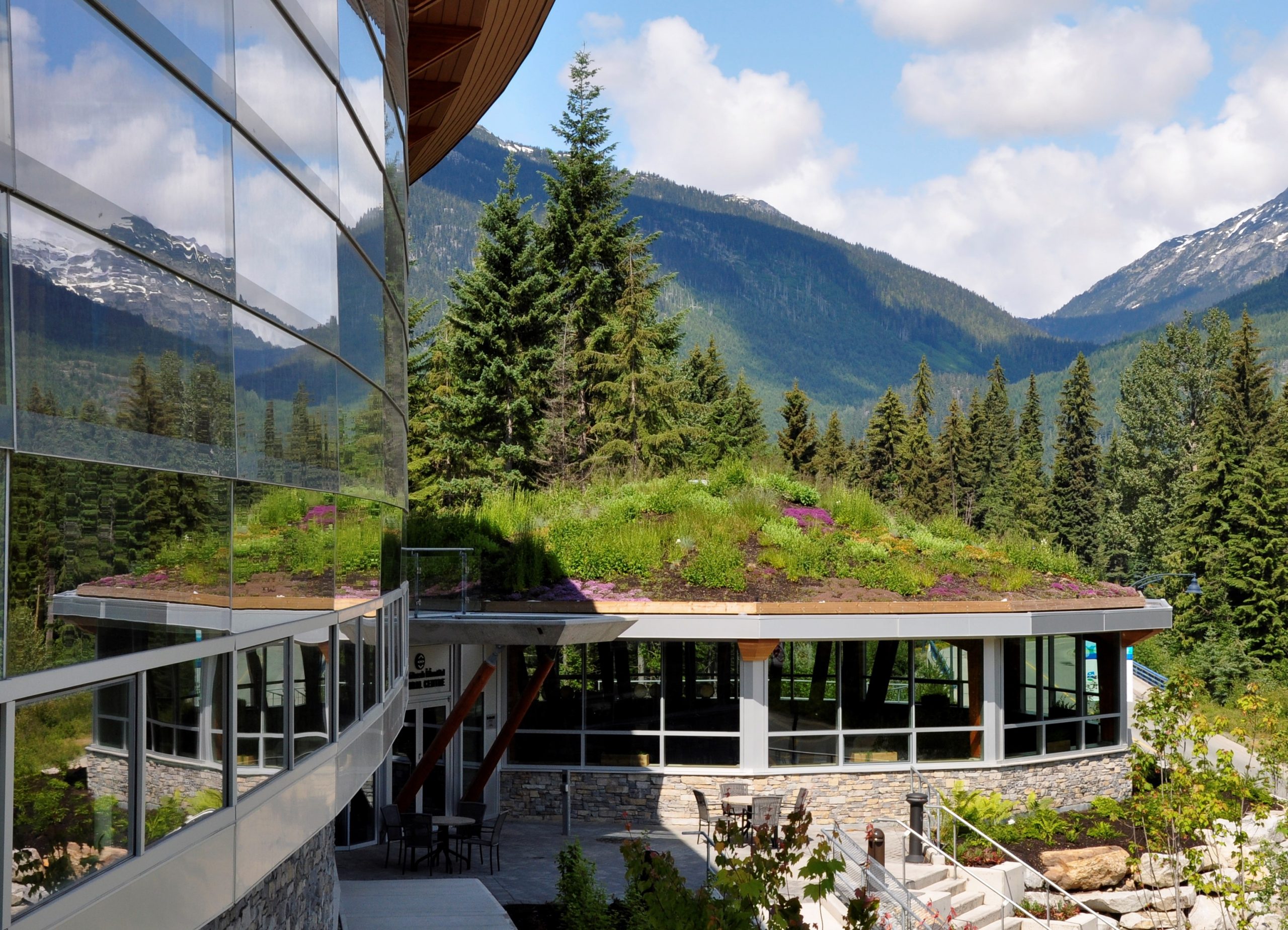
Green roofs are nothing new; however, their potential has greatly surpassed what it used to be when they first emerged from Europe as an effective means for energy conservation. Touted for a variety of socio-economic and environmental benefits, including rainwater absorption, added insulation, creating valuable greenspace, helping to lower urban air temperatures, and mitigating the heat island effect, the trend took off in Canada around the mid-2000s. But just as the pursuit of carbon neutral has raised the bar on commercial building design, so too has it raised the bar on green roofing systems.

Colin Tougas, Project Engineer with RJC Engineers, has been entrenched in the evolution of the green roof for some time. He recently conducted a study with Pearl Yip, Landscape Architect with PWL Partnership, comparing various sizes, layouts and reusable materials when used alongside lower embodied carbon products.

“The carbon neutral green roof assembly pushes the building envelope by providing an actual measure of a green roofing system’s performance,” he says. “Many professionals in our industry are wary of greenwashing, which is to make something appear “greener” while not considering the impact on sustainability.”

Planting the seeds: the emergence of green roofs in Canada

In 2009, the City of Toronto incorporated a new bylaw requiring green roofs to be included in all new developments. Meanwhile, other Canadian cities were also on board. In 2010, the Vancouver Convention Centre finished installing its green roof in order to promote sustainability, making it the world’s first double LEED Platinum certified convention centre. In 2005, Ottawa installed one of the largest green roofing systems in North America over the Canadian War Museum to demonstrate its commitment to sustainability.

Since then, sustainability practices have evolved considerably with the new goal being to achieve lowered embodied carbon. With green roofs, there is great potential to push the results beyond “zero”, exceeding carbon neutral to create an environmental benefit; in other words, to intentionally remove carbon dioxide from the atmosphere.

“By making carbon neutral assemblies the new standard, we are moving closer to green roofing systems that are carbon positive,” explains Tougas. “A carbon positive system begins to offset the carbon footprint of the underlying structure and building beneath the green roof.”

Aiming for longevity: the key to carbon positive green roofs

The typical components of a green roof system include vegetation that is planted over a waterproofing system designed with a root barrier and adequate drainage and irrigation systems. In terms of size and scope, these systems can be complex or simple with space, budget and maintenance constraints ultimately steering the outcome.

As Yip puts it, “Green roofing is more expensive than a ballasted or paved roof, and the inclusion of landscaping adds to the maintenance requirements, but the cost of these cheaper alternatives is an increased carbon footprint.”

The limiting factor with most green roofs today is the service life of their waterproofing membrane, which typically only last about 30 years regardless of condition and performance history. This means that all your lush, beautiful greenery will need to be removed at the end of that service life to access and replace the waterproofing membrane.

“Designing waterproofing for green roof systems with extended service lives will allow for the landscaping to maximize its potential,” Tougas says.

Adds Yip: “The longer the living components can remain in service, the greater the potential to offset the embodied carbon of the entire system.”

green roofs RJC

All photos provided by: PWL Partnership Landscape Architects Inc

Choose local

Another important step, according to Tougas, is to choose locally manufactured and sustainable materials that still meet the long-term performance requirements of the overall system. This combined with your chosen vegetation can significantly improve sustainability.

The main restriction in terms of design will stem from how tall your plants will ultimately grow. “If you allow for collaboration between professional landscape architects and the building envelope engineers, these impacts can be mitigated,” he says. “But going with a green roof doesn’t necessarily mean increasing your structural requirements.”

Finally, Yip suggests owners keep it simple by opting for gardens featuring local plant species as a way to promote habitats for local birds and insects.

“Local plants would reduce the maintenance requirements and need for irrigation,” she says.

3 ways to get more from your green roof design:

  • Design for a waterproofing system with an extended service life.
  • Choose locally sourced materials and components.
  • Select local plant species to reduce maintenance and irrigation needs.

To find out more, visit www.rjc.ca or contact Colin Tougas directly at [email protected].


Canadian students in design competition finals

Canadian graduate students have been named finalists in the Urban Land Institute’s annual design competition, which gives five-member, multidisciplinary teams a two-week timeline to devise a development plan for a designated site in a North American city. This year, 105 teams from 61 universities in Canada, the United States and Singapore took up the challenge to forge a mixed-use, mixed-income scheme for the East Village neighbourhood in downtown Kansas City, Missouri.

Frances Grout-Brown, Leorah Klein, Yanlin Zhou, Ruotian Tan and Chenyi Xu — collaboratively representing Ryerson, York and Western Universities and University of Toronto — earned a place in the final four with a plan for a LEED neighbourhood that emphasizes sustainability, resiliency and connectivity to the existing urban fabric. They’ll now have an opportunity to confer with stakeholders in Kansas City and further refine their plan before presenting it to a jury of professionals working in various fields of commercial real estate, land use planning and urban design.

“The final four teams had a strong vision aligned with the challenge, balanced urban design with financial feasibility, demonstrated teamwork, and showed potential to improve on their original proposals in the finals,” observes Diana Reid, the jury chair and an Urban Land Institute trustee from Pittsburgh, Pennsylvania. “It was inspiring for the jurors to see the next generation of the real estate industry.”

The Canadian quintet has advanced to the finals along with teams from the Georgia Institute of Technology, University of California Berkley, and another collaborative effort from students at University of Houston, Pennsylvania State University and Columbia University. As finalists, they’ll receive USD $10,000 and are eligible for the USD $50,000 top prize, with $5,000 of that earmarked for their university or universities.

Two other Canadian teams, representing University of Calgary and University of Waterloo and University of Toronto, were among eight honourable mentions.

Building Benchmark BC releases first annual report

The first Building Benchmark BC annual report has been released, offering insights from energy and emissions data on hundreds of properties according to building type, use, and location.

Building benchmarking is the process of collecting and monitoring energy and greenhouse gas data from a large number of buildings over time, allowing owners, managers, occupants, and governments to compare the performance of similar properties. It helps governments and building owners direct resources into the best interventions, in the right buildings, to achieve the highest climate benefit.

In this first report, building owners and managers pledged to submit building performance data on 765 individual properties. As a result of pandemic-related delays and reprioritization, ultimately data was received for 534 properties, or 70 per cent of pledged buildings.

Collectively, the submitted properties to date represent 1.9 million square metres of conditioned floor space.

“This first year far exceeded our expectations,” said Donovan Woollard, the Managing director of the OPEN Green Building Society, which is hosting the project. “Building owners and operators who collectively oversee close to two million square metres of space have recognized the value of voluntarily measuring and disclosing their properties’ energy use and emissions.”

The data allows building owners and managers are gaining a deeper understanding of their energy use while getting out front of upcoming carbon requirements. The City of Vancouver, a Building Benchmark BC participating jurisdiction, has already committed to requiring annual energy reporting starting in 2023 and regulate emissions from existing large commercial buildings starting in 2025.

“It’s an open secret that the policy landscape is changing, and we’re convinced that benchmarking gives us a competitive edge, to make sure we stay on top and out front,” said Oskar Kwieton, director of facilities, operations & maintenance, for Shape Management, a Building Benchmark BC participant.

Building Benchmark BC launched on January 21, 2020 as a pilot initiative of local governments organized by the OPEN Green Building Society.

The online tool that can be used to interact with the data is available here: buildingbenchmarkbc.ca/data

ISSA Canada names Environmental Stewardship Award winners

ISSA Canada has announced the 2020 winners of the ISSA Canada Environmental Stewardship Award, including Yorkdale Shopping Centre in Toronto, Manulife Investment Management in Montréal, and Rogers Place in Edmonton, AB.

“ISSA Canada has long been recognizing the outstanding initiatives that Canadian facilities have implemented to help the environment and reduce their carbon footprint,” said ISSA Canada Executive Director, Mike Nosko. “This year’s recipients are once again a great reflection of how Canadian facilities continue to embrace the environment and help save our planet.”

Yorkdale Shopping Centre, Toronto

Yorkdale Shopping Centre is no stranger to the concept of sustainable practices and environmental initiatives. In fact, the two-million-square-foot shopping centre has consistently embraced green practices from its green roof right down to all facets of the facility’s operations.

“Yorkdale Shopping Centre is extremely honoured to be recognized with this prestigious ISSA Canada Award,” said Joe Rodrigues, Maintenance Manager at Oxford Properties. “Oxford Properties is always seeking ways to proactively address the environmental impacts of our operations and incorporate the principles of our environmental mission statement into our work.

As one of Canada’s first shopping centres to implement a recycling program, Yorkdale has consistently increased its annual waste reduction targets since 1994. Currently equipped with 12 compactors, the facility recycles all cardboard, paper, bottles, cans, and plastics on site.

When it comes to housekeeping, Yorkdale has consistently utilized EcoLogo products and has remained on the leading edge when it comes to implementing the latest technologies for the betterment of the indoor environment. In addition to adopting a flat mopping system for floor care, the facility became a flagship retail space for the introduction of robotic technology, currently having two units in operation within the facility.

“Adopting the latest technologies helps Yorkdale maintain its environmental initiatives through improving efficiencies and resource conservation,” Rodrigues said. “We continuously measure and benchmark our sustainability performance and also effectively implement the technologies to drive us forward. Our industry is evolving, along with the use of these innovative solutions. I see the use of robotic technology increasing for even more cleaning applications such as vacuuming, scrubbing, and disinfecting.”

When it comes to green product usage, Yorkdale Shopping Centre was one of the first in the retail space to purchase their cleaning product in drums, in order to reduce waste. In fact, the facility had a retention wall installed in the back end of the mall to house these drums and meet various compliance codes. By purchasing cleaning products in bulk form and using an automated dispensing system, Oxford has been able to effectively reduce the environmental footprint of this facility.

“By simply using one drum, we are eliminating the use of 44 plastic, 4.73L bottles each time it is refilled,” Rodrigues said. “We are saving on the storage, shipment, packaging, and plastic recycling of each bottle. Waste is further reduced as the chemical drum is refilled by the vendor and can be reused multiple times before being recycled at its end of useful life. Our staff also find it very easy to use, as it properly dispenses the correct chemical dilution, and even saves on time. We lowered our chemical use by approximately 25 per cent using this Quickfill dispenser.”

Manulife Investment Management, Montréal

Céline Laforce, property director at Manulife Investment Management, is a dedicated manager who is engaged in her projects and contributes to the promotion of responsible management practices throughout the industry. She relies on innovative practices to support the energy performance of a group of three downtown Montréal buildings.

Last September, one of the facilities in Laforce’s portfolio was awarded a prize in the energy performance improvement component of BOMA Quebec’s Défi Énergie en immobilier (DÉI). The DÉI is a four-year competition aimed at reducing the energy consumption and greenhouse gas (GHG) emissions of commercial, institutional, and multi-residential buildings in Quebec.

The winning facility – located at 1001 de Maisonneuve West – was among the 15 recipients which stood out from the 162 candidates submitted for the award. The recognition obtained in this competition demonstrated that the energy management strategy developed by Laforce and her team made it possible for the building to improve energy performance in a concrete and sustainable manner by reducing energy costs, operating budgets and ultimately GHGs.

“Regularly undergoing performance audits, the visual average of three buildings in my portfolio is well above the minimum standard of 85 per cent – and are compliant in terms of visual cleanliness,” Laforce said. “In the early months of the COVID-19 crisis, Manulife Investment Management quickly took action to intervene and restore security in its buildings for the benefit of employees, tenants, partners, clients, and visitors.”

In fact, these three facilities were among the first in the province of Quebec to obtain GBAC STAR™ Facility Accreditation, through ISSA’s Global Biorisk Advisory Council® (GBAC) division. To date, Manulife Investment Management has had a total of seven of its facilities GBAC STAR accredited.

In addition to its GBAC STAR accreditation, air filtration units with double HEPA filters and UV lamps were installed in all the elevators of the Manulife Centre, located at 2000 Mansfield St. These high-performance filtration units are specifically designed for elevators and proven to eliminate 99.9 per cent of airborne virus and bacterial particles.

“Manulife takes the environment and the health of its building occupants very seriously, and we have taken steps above and beyond to ensure this is the case,” Laforce said. “In addition to the latest air filtration systems, green housekeeping practices and a host of other environmental initiatives, our fulfillment of the GBAC STAR Accreditation proves that we also care about the health of people. It is an honour to be recognized for all the hard work and diligence our teams have demonstrated to ensure our buildings are safe for the planet and provide assurance to our occupants that they are in a healthy space.”

Rogers Place, Edmonton

“Since opening the venue in 2016, Rogers Place has had a focus on environmentally sustainable practices, especially as it relates to our cleaning program,” said Jay MacDonald, Director of Operations at Rogers Place. “This includes the use of EcoLogo products, electrostatic sprayers to reduce product volumes, and a robust recycling program achieving a 93 per cent landfill diversion rate.”

In addition to its cleaning and waste management programs, the LEED Silver certified facility also features an energy-efficient design that has helped the facility achieve energy cost savings of more than 20 per cent over ASHRAE 90.1-2007. Additionally, the use of low-flow plumbing fixtures is expected to reduce water consumption by more than 5000m3 annually.

Providing exceptional day-lighting capability with its extensive glazing on the exterior of the building, occupants also benefit from improved air quality due to a new, modern and more efficient air handling system.

“It is such an incredible honour to be recognized with the ISSA Canada Environmental Stewardship Award,” MacDonald said. “It truly validates the hard work of so many people here at Rogers Place as we strive to be a leader in the sports and entertainment industry when it comes to sustainability. Environmental initiatives are so crucial for the safety of the planet, and we are thrilled to be able to contribute to awareness of this critical aspect of facility management.”

Recognizing environmental dedication

ISSA Canada’s Environmental Stewardship Award recognizes and honours organizations committed to environmental management and a dedication to the value of clean. Each year, ISSA Canada presents up to six awards (one in each region of Canada), where nominations have been submitted by a current ISSA Canada member company. Winners are selected by the association’s executive staff based on their ability to meet four of the six award criterion.

“Each year we see the dedication of so many facilities as they strive to achieve benchmarks for environmental safety and occupant health,” Nosko said. “This year has been no different. We are extremely pleased to recognize our outstanding recipients for their hard work and commitment to green practices, as well as the safety of their frontline staff and building occupants. Congratulations to each of them.”

For more information on the ISSA Canada Environmental Stewardship Award and its past recipients, please visit www.issa-canada.com.


Boosting morale during COVID-19

While the current COVID-19 pandemic presents many challenges, it is also driving best practices in the construction industry. Companies have responded quickly to adapt and adopt new protocols to comply with provincial health and safety regulations to ensure jobsites stay operational.

Smaller groups on site, adjusted schedules, signage, hand sanitizing and other strategies have been implemented by the industry to maintain productivity on projects while respecting physical distancing. Technology and virtual platforms have become key to keeping teams connected and informed.

For example, CANNEPP introduced weekly virtual “water cooler” sessions via Google Hangouts. With most of the staff working remotely, it was an effective way for the company to ensure team members could still connect with one another.

At BCCA Employees Trust, chief executive officer Arthur Chung says with their operations very much linked to the healthcare sector, they reacted quickly to the global pandemic and moved staff to their homes with weekly virtual team meetings.

“To keep the team linked, we introduced a weekly Zoom call every Friday afternoon, to catch up on what we were working on and more importantly, how we were all doing and encouraged everyone to share things that were more personal,” says Chung.

As COVID-19 continues to spread, so do the feelings of anxiety and uncertainty. Many employers are responding by supporting their employees and boosting morale through different initiatives.

For Pitt Meadows Plumbing, it was important to find creative ways to show appreciation for their employees’ hard work and dedication. Staff enjoyed a Blueberry Picking Family event, a Thanksgiving lunch and a COVID appreciation bonus.

Bonuses have always been an effective business tool to incentivize and reward good performance. Recognizing the many challenges workers are facing with the pandemic, Pitt Meadows provided full time employees $1,000 and part time employees $500 as a one-time bonus.

“At Pitt Meadows Plumbing it is always important to us to show our appreciation to everyone that works here because our ability to serve our clients is dependent upon our amazing team. We are proud of what they contribute to our projects each and every day,” says James Zelinski, chief administrative officer. “However, like many other organizations, we had to pivot quickly in the midst of the COVID-19 pandemic because the things that we would normally do to show our appreciation, we simply couldn’t do.”

Olympic International in North Vancouver introduced a 30 day fitness challenge as well as a “12 Days of Christmas” where each day was designated with a fun activity or event such as Starbucks gift cards, food bank donations and gingerbread decorations.

“We did the 12 days of Christmas to try to connect in different ways and over a period of time with the idea that over the whole thing maybe everyone will be touched in some way,” says Olympic president Dana Merritt. “As we are all distributed these days it is easy to lose track of people and the time that goes by. Christmas especially is a time when we come together and a time for celebration. It is during those times we are reminded how our relationships are what makes us human. Our company is made up of relationships and we care deeply about our people. This year’s celebration was very limited and it required a need to be creative.”

Control Solutions also put a special focus on staff during the holidays. In lieu of the annual Christmas party, the company provided raffles, daily prize giveaways and gift cards in December to keep morale high. Account executive J.J. King notes their social committee also introduced a video submission contest (prize of $500) where staff was encouraged to submit a short video offering a “cheers” to everyone.

“We had a few funny videos and the top video included one of our departments all offering cheers including past employees who now live abroad… very well done,” says King, adding employees all received an extra paid day off on December 24th.

The crisis has forced the construction industry to change the way they work and to accelerate the adoption of technology like never before. It is also a reminder that the most valuable company asset is the people, which can make the difference between surviving and thriving.

Cheryl Mah is managing editor of Construction Business.

Quest to capture Passive House philosophy

The International Passive House Association (iPHA) is soliciting creative ingenuity to underscore its newly launched #EfficiencyFirst campaign. Adherents and social media followers have been challenged to use common household objects to symbolize the Passive House philosophy of maximum design synergy and minimal mechanical intervention.

“Our visual Passive House example is in need of a retrofit,” states the call for new concepts to replace the current thermographic images of an insulated thermos beside a pot idling on a coffee-maker element. The quest for new everyday items to exemplify Passive House is open until March 1.

The winning effort will be posted on the iPHA website and incorporated into a planned year of active messaging on the theme that energy efficiency is the foremost step in reducing greenhouse gas (GHG) emissions. The contest winner will also be offered his or her choice of complementary enrollment in the Passive House designer or PHPP expert course or free registration to the 25th International Passive House Conference in Wuppertal, Germany in September 2021.