




Articles Archive - Page 382 of 928 - REMINET
REMI

CSLA honours landscape architecture excellence

The Canadian Society of Landscape Architects (CSLA) has announced the recipients of the 2021 Awards of Excellence.

Winners were selected by a national jury of landscape architects. A total of 72 submissions were received with 14 projects receiving a national award.

Dale Hodges Park, by 02 Planning and Design and Source 2 Source Inc., was selected to receive the Jury’s Award of Excellence, which is given to one project annually which best demonstrates the CSLA’s vision — that of advancing the art, science, and practice of landscape architecture.

These award-winning projects are preeminent examples of Canadian landscape architecture. They illustrate the range of what landscape architects do and how landscape architects are helping to reshape communities by defining the places where we live, work and play.

“The award-winning projects highlight new approaches and illustrate the levels of expertise to be mobilized to address current social, cultural and environmental challenges,” said Bernard St-Denis, chair of the 2021 Awards of Excellence jury.

The 2021 National Award Recipients are:

  • Dale Hodges Park, by 02 Planning and Design and Source 2 Source Inc
  • Accidental Wilderness: The Origins and Ecology of Toronto’s Tommy Thompson Park, Walter H. Kehm
  • University of Guelph Child Care and Learning Centre, Earthscape Play Inc.
  • Gordonridge Community Multi-Sport Court, ERA Architects Inc.
  • Saugeen First Nation Creator’s Garden and Amphitheatre Restoration Master Plan, Brook McIlroy Inc.
  • Uptown Brampton Transit-Oriented Communities Toolkit, Yvonne Yeung, Ken Greenberg, Matti Siemiatycki for City of Brampton and Urban Land Institute Toronto District Council
  • Sumac Garden, Straub Thurmayr Landscape Architects, Dietmar Straub & Anna Thurmayr
  • The Future of Stephen Avenue, The City of Calgary, Gehl Studio and Stantec Consulting Ltd
  • Wanuskewin Interpretive Playground, Crosby Hanna & Associates
  • Place Alice-Girard, NIPPAYSAGE architectes paysagistes + EXP. architecture de paysage et ingénierie
  • Memoirs of Pioneering Landscape Architects of Quebec and Ontario, EVOQ Landscape Architecture (formerly ARCADIA STUDIO)
  • Biodiversity Corridor, Borough of Saint-Laurent, Montreal, Quebec, civiliti, LAND Italia, Table Architecture, Biodiversité conseil
  • Projet paysage de la MRC Brome-Missisquoi, Mille Lieux, coopérative de travail
  • Sève, Collectif Escargo

The awards will be presented during a virtual celebration to be held during the CSLA-OALA Congress on May 29th, 2021.

B.C. sets sectoral emissions targets

B.C. has announced sectoral greenhouse gas (GHG) targets for 2030 in transportation, industry, oil and gas and buildings and communities.

B.C. is the first province in Canada to set sectoral targets covering emissions across the economy. As part of legislated requirements, the government will revisit the targets in four years, with options to increase the number of sectors included and narrow the percentage ranges.

“British Columbia is leading the way forward in Canada by setting sectoral targets that will help increase accountability and clarity for each sector, as we work together to reach a world of net-zero emissions,” said Colleen Giroux-Schmidt, vice-president of corporate relations with Innergex Renewable Energy Inc., and co-chair of B.C.’s Climate Solutions Council.

The province has announced a new round of applications for emission reduction projects for 2021 through the CleanBC Industry Fund with temporary changes to increase the provincial share of funding up to 90 per cent of project costs with a cap of $25 million per project to encourage a greater number of proposals.

Officials have also introduced a new stream for the CleanBC Industry Fund to support industry projects that use advanced clean tech solutions for difficult emission problems. They are calling it the Innovation Accelerator.

“The CleanBC Industry Fund is helping build on the innovative work and commitment of cement producers in British Columbia to reduce emissions and support good local jobs,” said Michael McSweeney, president and CEO of the Cement Association of Canada. “The Canadian cement industry applauds the Government of B.C. on its continued financial commitment to support GHG reductions, support which, through prior funding, has enabled our industry to begin a transition to the use of lower carbon fuels and produce some of the cleanest cement in Canada, including a lower GHG-intensity Portland limestone cement.”

The province also aims to spend $33 million on 19 CleanBC Industry Fund projects. Officials noted this will unlock an additional multi-sectoral investment from industry of $51 million in cleaner technology and energy efficiency. Combined, these investments are expected to eliminate 1.1 million tonnes of carbon dioxide equivalent over the next decade.

″Sectoral targets are an essential tool in tracking B.C.’s progress toward building a clean economy and safe climate; it’s a model for all of Canada. While targets alone won’t reduce emissions, they give us a clearer picture of opportunities and challenges to reduce carbon emissions from specific sources. The targets show that we need to be ambitious with current policies – including reinstating the carbon tax increases – and ensure clean energy production and use across the province aligns with B.C.’s goals of creating clean jobs, reducing carbon emissions by 40 per cent by 2030, and setting B.C. up to be net-zero by 2050,″ said Karen Tam Wu, B.C. director, Pembina Institute.

CIRI webinar series examines cleaning for health research

A new three-part CIRI webinar series beginning April 15 assesses what research says about the impact of cleaning on health.

In its ongoing effort to provide facility cleaners and disaster restoration professionals with the latest research related to the science of cleaning and the restoration of the built environment, the Cleaning Industry Research Institute (CIRI) is hosting “Aerosols, Fomites and Indoor Air Quality: What Research Says About the Impact of Cleaning on Health,” a series presented by researchers at three of the country’s top academic institutions.

“People want to know how the products and processes used indoors will impact their overall health and wellness,” said John Downey, CIRI Executive Director. “This is a demand that has undoubtedly been accelerated by the pandemic. As we arrive at the new normal, this educational series is designed to equip attendees with the knowledge and research they need to maintain clean and healthy buildings.”

With concerns over indoor air quality, ventilation and surface cleaning, property managers and building owners are ramping up programs to improve the overall health and wellness of their portfolios. This is a practice that has proven to pay off. A recent study found that commercial buildings with healthy building practices in place received higher rental rates — a premium of as much as seven per cent.

Designed to help meet the growing demand for healthy buildings, the new CIRI webinar series will kick off on April 15. Researchers will discuss what research says about virus transmission indoors, surface and air cleaning, and how cleaning products can impact indoor air quality.

WEBINAR 1: “Environmental Persistence and Transmissibility of Respiratory Viruses: A Laboratory Perspective”

This will be presented by Karen Kormuth, Ph.D., Assistant Professor of Biology at Bethany College. This webinar will take place on Thursday, Apr 15, 2021, at 1:00 PM EDT.

WEBINAR 2: “Surface Cleaning, Air Cleaning and Indoor Air Quality: Expect the Unexpected”

Presented by Douglas B. Collins, Ph.D., Assistant Professor of Chemistry at Bucknell University, this webinar will take place on Wednesday, May 26, 2021, at 1:00 PM EDT.

WEBINAR 3: “What’s in Your Cleaner and Why Should You Care?”

The third part, hosted by Kerry Kinney, Ph.D. & Pawel Misztal, Ph.D., Department of Civil, Architectural and Environmental Engineering at the University of Texas at Austin. This webinar will take place on Wednesday, June 24, 2021, at 1:00 PM EDT.

Video recordings will be available for those who register but are unable to attend the webinars live. Continuing education credits are available for each webinar and attendees will receive a certificate of attendance.

Registration cost for the entire “COVID-19: The Second Wave” series of three webinars is $199 for non-CIRI members; individual webinars are $99 each. CIRI members can attend for the discounted rate of $99 for the series or $49 per webinar.

Click here to register for one or more of the webinar events. For more information about CIRI, please visit www.ciriscience.org.

Work begins on Edmonton South Soccer Centre

Construction has started on the $30 million Edmonton South Soccer Centre Expansion project, which will create two new indoor fields for Edmonton’s soccer, inline hockey, ball hockey and lacrosse sports communities.

“Over the past year, we’ve collectively witnessed how important physical and mental wellbeing are to the health and happiness of our city,” said Jason Meliefste, branch manager, infrastructure delivery at the City of Edmonton. “One of the best ways the city can support a healthy, growing population in a winter city is to invest in infrastructure that encourages active living all year long.”

The project is a partnership between the city, the Government of Alberta and the Edmonton Soccer Association. Delnor Construction is the general contractor. The design is by MJMA in collaboration with MBAC. Completion is scheduled for fall 2022.

“The Edmonton Soccer Association is delighted to see construction commence on the new extension,” said Adrian Newman, CEO of the Edmonton Soccer Association, “The new facility will house a year-round concrete field and upgraded turf field that will allow ball hockey, lacrosse and inline hockey to double their annual fall and winter programming.”

The project is the latest in the 30 plus year relationship between the City of Edmonton and the Edmonton Soccer Association, which has seen the development and operation of three indoor soccer centres, each with four fields, as well as the Bill Gilhespy Soccer Complex at Henry Singer Park.

“Alberta’s government continues to help our partners, like the Edmonton Soccer Association, build strong communities because strong communities build a stronger Alberta,” said Minister Leela Aheer, Minister of Culture, Multiculturalism and Status of Women, “The Edmonton South Soccer Centre Expansion will bring Edmontonians and Albertans from surrounding communities together through fellowship, enjoyment and sport.”

Ontario further extends deadline for virtual meetings

The Ontario government has extended the deadline for condo corporations to hold virtual meetings and permit electronic voting without a bylaw. The previous deadline of May 31, 2021, has now been changed to December 31, 2021.

The extension applies to owners’ meetings, directors’ meetings and Annual General Meetings. Condos will also be able to provide owners with electronic notice of meeting packages.

With a third wave of COVID-19 ripping across the province, many corporations have been wondering if the government would prolong the temporary legislative amendments.

Looking forward, the ministry of government and consumer services has been in consultations to determine if permanent changes to virtual processes are needed under the Condo Act and is currently considering feedback the industry has provided.


Saskatchewan to tax EV owners for road upkeep

The newly released 2021-22 Saskatchewan budget commits more than $937 million to upgrade the provincial electricity system and nearly $175 million to underwrite an electricity rebate for SaskPower customers. However, owners of electric passenger vehicles will be charged a new $150 annual levy, beginning in October, to cover a share of road upkeep costs that other drivers fund through fuel tax.

SaskPower’s capital injection for the coming year will go toward generation and transmission projects, including rebuilding power transmission lines, improvements at the EB Campbell hydroelectric station on the Saskatchewan River and construction of the new 350-megawatt natural gas-fired Great Plains Power Station in Moose Jaw. The latter is a multi-year project, with construction expected to begin this year aimed at a 2026 service date.

The $175 million budget allocation for the so-called economic recovery rebate — a 10 per cent discount on monthly SaskPower electricity charges — comes as little surprise since residential and business customers have received it since December 2020. The 12-month program, which was promised in the 2020 provincial election campaign, will cost the Saskatchewan government an estimated $260 million, with $85 million of that drawn from 2020-21 expenditures.

Saskatchewan Government Insurance is the appointed agent to collect the new tax on electric vehicles, which is labelled as a measure for “improving tax fairness” in the budget document. “These vehicles contribute to wear and tear on provincial roadways, but because they do not consume traditional fuels, they are not contributing to highway maintenance through the provincial fuel tax,” it states.

Other drivers aren’t shouldering the full burden either since the budget document also cites a $162 million shortfall between road-use fuel tax revenues and road maintenance expenditures during the 2019-2020 fiscal year. At $150 annually, electric passenger vehicle owners will mostly make a symbolic dent in that deficit, but other vehicle operators may be joining them in the future.

“While this tax will only apply to passenger vehicles, the Government will continue to examine the future potential for expanding the tax to commercial vehicles and interjurisdictional trucking. The Government will also consider options to apply a tax at charging stations,” the budget document states.

Mass timber demonstration projects receive funding

B.C. is providing funding for 12 mass timber demonstration and research projects.

These projects are supported through Stronger BC, British Columbia’s Economic Recovery Plan. The Mass Timber Demonstration Program (MTDP) provides $4.2 million for incremental costs in the design and construction of buildings that showcase emerging or new mass timber and mass timber hybrid building systems and construction processes.

“The face of construction is about to change in British Columbia through our government’s investments in mass timber,” said Ravi Kahlon, Minister of Jobs, Economic Recovery and Innovation. “By encouraging greater use of mass timber, we are supporting jobs in research, design, engineering, construction and forestry using B.C. expertise and materials.”

The demonstration projects reflect a range of different building types and approaches to using mass timber that will highlight the versatility and performance of this building material. These include a firehall with strict post-disaster requirements, an Indigenous health and culture centre and low-cost housing on Vancouver’s Downtown Eastside.

The research projects will study mass timber’s fire performance, the costs relative to steel and concrete, and carbon benefits. All project innovations and best practices will be broadly shared to promote learning and further advance mass timber use provincewide.

Forestry Innovation Investment (FII) is delivering the Mass Timber Demonstration Program on behalf of the province.

The province is also introducing a new mass timber advisory council. The advisory council is a group of experts from urban planning and development, First Nations, forest products industry, environmental non-profits, academia and local governments. The council will provide advice and guidance towards establishing B.C. as a leader in the production and use of mass timber, as well as the creation of a mass timber action plan.

“B.C. is well positioned to be the world leader in sustainable design and construction innovations that can transform our economy and positively support our environment and climate footprint,” said Michael Green, architect and mass timber advisory council member. “I believe that mass timber will reshape our skylines with beautiful buildings that respond to the needs of our communities and planet.”

Lafarge Canada starts highway improvements

Lafarge Canada’s Northern Alberta construction team is kicking off 2021 with upgrades at the Highway 19 and Highway 60 intersections west of Edmonton.

Highway 19 is a 12-kilometre, two-lane, high-volume, high-load corridor connecting Highway 60 and Highway 2. It is a critical piece of infrastructure that supports continued economic growth in the capital region.

“This has been a long time coming,” said Przemyslaw Skiba, vice president and general manager of Northern Alberta. “There was a lot of discussion and preplanning with the communities. Now that a consensus has been reached, we can have a huge impact on the safety of the motorists who use the road every day, and align with future plans for the Edmonton International Airport.”

The company will provide all raw inputs into the project as well as manage the construction, supplying 375 m3 of ready mix concrete, 66,000 tonnes of asphalt and 300,000 tonnes of aggregates. “We provide a one stop shop. We pair our interchange experience with resource and cost certainty, and it helps to maximize the tax dollars at work,” said Skiba.

Alberta Transportation awarded the contract to Lafarge in early 2021, triggering the construction of 3.5 km of four new lanes of highway, two new traffic signals and illumination at the Highway 19 and Highway 60 intersections. It also includes 1.5 km of widening on Highway 60, and one bridge culvert extension and one bridge culvert rehab.

“It will make a big difference to the people who live here,” remarked Skiba. “This was a dangerous roadway for a long time – lots of collisions and injuries. It feels good to know that Alberta Transportation is making this change for Edmonton, and that we can be a part of it.”

Construction on the project begins in the spring of 2021 and is scheduled for completion in October 2022.

COVID-19 and surety market challenges

While we are all no doubt extremely tired of hearing the acronym, COVID-19 presents challenges for the surety industry. How contractors respond to those challenges will go a long way to ensure relationships remain healthy, and maximum surety support can be maintained.

On a global basis, the surety market was valued at US$ 16.04 billion in 2019 and is projected to reach US$25.18 billion by 2027. It is expected to grow at a compound annual growth rate of 6.4 per cent during 2020-2027.

While of course much smaller, the Canadian market has also seen, and is expected to see further, growth with results over the past few years indicative.

While the industry remains healthy for the most part, surety underwriters must now consider pandemic-related risks on a backdrop of a recession, the severity and length of which is unknown. These related risks are for the most part outside the contractor’s control. They are difficult to quantify and evaluate. While not limited to, these include labour shortages, supply chain disruptions, reduced productivity due to safety measures, uncertainty over subtrade performance and in some instances, additional uncertainty over the owner’s ability to pay, particularly in the retail and tourism sectors.

Sureties support both single jobs and aggregate work programs that are, often, multiples of net worth. Projects can also run for two years or more. In most instances, the only security held is an indemnity agreement that states, among other things, the indemnitors will make the surety whole in the event of a valid claim under a bond. An interesting credit risk profile.

Surety underwriting is both a science and art. It involves a rigorous evaluation of creditworthiness and the ability of the contractor to perform without incurring a loss and indeed claims under both performance and labour and material bonds. While each surety is unique with respect to underwriting standards and may disfavour one sector of the industry over another due to experience, there are some common underwriting principals.

Many are familiar with the three Cs of underwriting: Capital – does the contractor have the financial wherewithal to carry a project and overall work program to completion? Can the contractor carry multiple holdbacks and absorb losses on a project? Due to many factors including productivity, unforeseen work conditions and subtrades, not all projects make money. Capacity – does the contractor have the experience, management systems, equipment and overall resources in place to successfully complete their backlog? And finally, Character – is the operation run fairly and with integrity? Will the owners and other management identify actual or potential problems and communicate these to the surety?

A fourth C which is related to character is communication. At a minimum, annual meetings, albeit virtual at this time, should be taking place. No underwriter can obtain a satisfactory comfort level with the contractor’s operation and character without them. This is especially true in a stretch situation. Suretys want to set up a programme that will meet the contractor’s needs. The last thing they like are surprises and last-minute requests that are not within normal parameters either with respect to job size, location or scope.

As noted above, while remaining profitable, the industry is tightening, and any contractor can now expect additional new questions and to provide more details. While not limited, these will include:

  • What federal and provincial relief programs have you availed yourself of if any?
  • Is there a COVID-19 strategy and business plan in place? Are there safety protocols in place with respect to both the field and office?
  • Capital levels and contingency plans. Are you reducing overhead, furloughing or laying off employees?
  • Banking relationships, operating facilities, margin requirements and covenants – have these been stressed tested to determine operational parameters and additional funding needs. Assess overall relationship with credit providers.
  • Access to funds to pay for ongoing operations. These could include repatriating funds lent to related entities, shareholder injections etc.
  • Is your construction lawyer reviewing contracts – the performance bond points directly to the terms of the contract?
  • What contractual provisions are there for force majeure and delays related to COVID-19?

Other changes occurring in the market place due to COVID-19 relate to surety bond placement, both at the tender stage and the provision of final bonds. With concern over physical distancing, closed or reduced staffed offices, and general distancing requirements, some owners are opting for electronic or e-bonds. There are several vendors in the market that provide online software solutions and services. The Surety Association of Canada has noted for the process to be effective, the provision of e-bonds must meet several requirements:

  • Integrity of Content: assurances that the document received is the true document executed and the content has not been changed or altered.
  • Secure Access: Restricting the access to the document to those authorized to view and/or download it.
  • Verifiability and Enforceability: All parties are assured the document was executed by the parties identified and that it is enforceable in law.

Having used e-bonds on numerous occasions, the automation of the process provides many benefits including the ease and economy of transmission, reduced chance of errors and instantaneous delivery.

COVID-19 and possible future pandemics present many challenges to the construction community and surety industry. But with challenges comes opportunity. Be prepared, engage with your surety, and embrace technology.


Graham McIntosh, senior vice president, construction services group at Aon Risk Solutions.


Promoting better hand & surface hygiene in schools

Among the many issues the COVID-19 pandemic has exposed is the lack of regular, proper handwashing in people’s daily routines. Not only is handwashing critically important in reducing the spread of disease, it is also a good habit to practice, regardless of a pandemic.

It’s never too early to instill healthy habits, particularly when it comes to hand hygiene. Yet, there’s a clear lack of knowledge surrounding children and hand hygiene in schools. More than 85 per cent of parents need to remind their child to wash their hands, and nearly half of parents (47.6 per cent) don’t know what protocols their child’s preschool has in place to encourage proper hand hygiene.[1]

The simple exercise of handwashing can go a long way in preventing the spread of germs and diseases, especially in schools where children frequently touch a variety of common objects, such as toys, books and school supplies. Maintaining a clean education facility is no longer enough. Proper hand hygiene training, heightened surface cleaning protocols and access to hygiene products are essential to keep schools open and provide a safe environment for students, faculty and staff.

Start Early and Make Hand Hygiene Fun

The earlier handwashing becomes a habit, the better. Preschool is the best age to teach kids about hand hygiene, as it is around the time when children begin to develop a solid foundation of life skills.

Tork, a supplier of hand towels, soap and hand sanitizer used in many schools, has launched the Ella’s Hand Washing School package, which includes an interactive app, hygiene brochures, teaching material, as well as activities to help make handwashing fun. This Ella’s Hand Washing Adventure app allows children to discover more about the best ways to wash their hands while having fun with Ella and friends, teaching preschool and kindergarten kids the mechanics of proper handwashing, and why it matters. There is also an app for older children aged 6-10, Max’s Hand Washing School. These apps are just some of the ways we can encourage proper hand hygiene and facilitate proper cleaning and disinfecting protocols in schools and higher educational facilities.

Keep Shared Spaces Hygienic

Promoting handwashing is just one way to boost hygiene. Because shared spaces can facilitate disease and germ spread, school restrooms must be cleaned rigorously, regularly and remain well-stocked with critical hygiene products.

The best way to ensure shared spaces are hygienic is by maintaining a checklist that monitors daily cleanings and selecting personal hygiene products that are high capacity and reduce the risk of run-outs. When reevaluating hygiene solutions, consider products that reduce maintenance and cross-contamination. Certain hand towel dispensers and other products can help optimize traffic flow with one-at-a-time towel dispensing that allows users to only touch the towel they take. Quick dispensing also enables students and faculty to move in and out of the restroom quickly.

In addition, rethinking the layout of your shared spaces and strategically placing paper hand towel, soap, and sanitizer dispensers, as well as trash cans, can make a difference in how compliant students, faculty and staff are in using hygiene products. In particular, making hand soap and sanitizer dispensers easily accessible in schools helps to reinforce proper hand hygiene and minimize illness transmission.

Just as smartly placed dispensers can help keep hand hygiene top-of-mind, so too can clearly-displayed – and age-appropriate – hand hygiene signage. Every educational institution should display hand hygiene posters that can help keep students, teachers and staff safer and reduce the spread of viruses and diseases.

A Safer Outlook

No matter what type of educational facility, proper hand hygiene education and proper surface cleaning has never been more important. These steps are one of the most effective actions people can take to protect themselves from the risk of infection, protect others, and ensure their communities are safer as they help decrease the likelihood of transmitting germs. By promoting proper hand hygiene and keeping schools and educational facilities clean and hygienic, we can all work together to keep students, faculty and staff safe.

Rachel Olsavicky is the regional marketing manager – commercial and public interest at Essity Professional Hygiene. 

1The survey has been executed by Questback on commission by Essity, during August and September 2013. The sample consists of 3,121 randomly selected parents with children in pre-school, distributed equally over the geographical regions; United Kingdom, Sweden, Finland, the Netherlands, Germany and France. Data has been collected through online panels with invites distributed through e-mail.

Property Management Institute of Canada partners with MediaEdge Communications

The Property Management Institute of Canada (PMIC) and MediaEdge Communications Inc. (MEC) are partnering to develop a series of certificates that will lead to a new Canadian building operator designation.

Real estate industry professionals across Canada helped to shape the program and will continue doing so based on concerns about existing skills gaps, industry shortages of skilled building operators, and the need to create a career path to support both the advancement and recognition of building operation professionals as an occupation.

“We are excited to partner with MediaEdge Communications to jointly develop and deliver this timely and important designation program for the benefit of the Canadian real estate industry and more specifically for building operators,” said Peter MacHardy, chair, PMIC. “The designation program will establish a baseline for building operations professionals while increasing their skills and competencies related to a number of important aspects of operating a building.”

The program will provide building operators with specific information that will help them advance their overall skills and knowledge, prepare them to select and liaise with various facility product and service suppliers, and to remain informed on new emerging technologies and new government legislations. The intent will be to work cooperatively with relevant and existing programs where there is an overlap to establish a comprehensive program that recognizes all the skills necessary to be a building operator.

“We are very excited to be involved with this important designation program and look forward to working with the PMIC, the building operator community, our valued association partners, and industry suppliers,” said Chuck Nervick, senior vice-president, MediaEdge Communications. “We recognize the importance of this designation program as well as its associated benefits and we sincerely look forward to moving this very worthwhile initiative forward in a timely and industry-collaborative fashion.”

Earning the overall designation will require the completion of all certificates or, in lieu of a given certificate, the completion of other licenses or programs that meet certain requirements. Each certificate will consist of several modules that will be delivered in the form of 20-minute videos, each followed by an associated exam. The number of modules per certificate will vary and will focus on the necessary requirements that building operators will need to demonstrate their competency. It is estimated that there will be about eight modules/videos/exams per certificate.

Individual certificates within the designation program include: building automation systems, ventilation/cooling systems, water treatment, customer service, heating systems, chillers/refrigeration, energy management, security/life safety, smart buildings, electrical systems, and others.

For additional program details and information, please contact Chuck Nervick, SVP, MediaEdge Communications at [email protected] or 416-803-4653.


New CPP entity stretches meaning of sustainable

Canada Pension Plan Investment Board (CPP Investments) has rolled its holdings in energy, resources, power and renewables into a newly dubbed sustainable energy group (SEG) with approximately $18 billion in assets — including some related to conventional power, upstream oil and gas production, midstream processing, storage and transportation activities and liquefied natural gas. In addition to stretching the definition of sustainable, an accompanying announcement states the new entity will consolidate capital and expertise for a stronger position in the global energy sector.

“The energy sector is one of the most important enablers of the global economy and is composed of a wide spectrum of suppliers from conventional to renewable,” says Deborah Orida, senior managing director and head of real assets with CPP Investments. “Along our unique investment horizon, we see a dramatic opportunity to invest in, and support the evolution and innovation occurring across the sector.”

Bruce Hogg, managing director and previously head of CPP Investments’ power and renewables group, has been named SEG head. Avik Dey, managing director and head of the former energy and resources group, will continue to serve as senior advisor to SEG and the office of the chief executive officer for six months before moving on to his own entrepreneurial projects.

“The creation of the sustainable energy group with significant, flexible capital, positions us extremely well to pursue the best market opportunities across the entire energy spectrum,” Hogg maintains.

Alberta announces Prairie Wood Design winners

Alberta Wood WORKS! announces the winners of the Prairie Wood Design Awards 2021 program. The projects included thoughtful restorations and exceptional new buildings that showcase the heritage of wood construction and create legacies within our communities.

“This year’s award winners showcase ingenuity and creativity in new construction,” says Rory Koska, program director of Alberta Wood WORKS! “And an affinity for wood by not demolishing buildings but celebrating wood in the restoration of history through engineering and craftsmanship.”

The 2021 WINNERS

  • Métis Crossing Cultural Gathering Centre – Smoky Lake, Alberta
    Manasc Isaac, Edmonton, AB
    This new cultural Gathering Centre features an exposed timber structure and butterfly-shaped roof, with an expansive 2,600 square foot deck and canopy on the south side.
  • University of Alberta Botanic Garden Welcome Centre – Devon, Alberta
    Manasc Isaac, Edmonton, AB
  • Bar U Ranch Work Horse Barn, Longview, AB
    1×1 architecture inc., Winnipeg, MB
    This heritage conservation project entails the rehabilitation of the Work Horse Barn. It celebrates the origins of wood construction and shows the simple yet complex log work construction that was once so prevalent.
  • The Confluence – The Summer Village of Waiparous, AB
    Southern Alberta Institute of Technology (SAIT) Green Building Technologies
  • Calgary Central Library- Calgary, AB
    Dialog, Calgary, AB and Snohetta, New York, NY
    AIA Calgary library
    The award winning Calgary Central Library is a showcase for wood, featuring western red cedar, western hemlock and white oak in a variety of interior and exterior applications.
  • Maison 9732 – Edmonton, AB
    Ethos Engineering Inc. Edmonton, AB
  • South Haven Centre for Remembrance – Edmonton, AB
    Group2 Architects, Calgary, AB, SHAPE Architecture Inc and PECHET studio, Vancouver, BC

    The charred-wood South Haven Centre for Remembrance creates a new non-denominational facility for the City of Edmonton. A 13-metre tall, angular tower marks its position in the cemetery and recalls the form of a gravestone.
  • Beacon – Calgary, AB
    5468796 Architecture, Winnipeg, MB

Pace of office sublet activity slackens in Q1

Industrial space got even tighter in Canada’s largest commercial real estate markets during the first quarter of 2021, while office sublet activity continued, but at a slower pace than in late 2020. Colliers Canada’s recently released national snapshot pegs the average office vacancy rate at 11.4 per cent across the 11 major markets and regional centres it surveys, ranging from a low of 6 per cent in Vancouver to a high of 27.8 per cent in Calgary. In contrast, industrial vacancy rates sit below 2 per cent in five of the surveyed markets — notably bottoming out at 0.5 per cent in Toronto — factoring into a national average of 1.9 per cent.

Across the 11 markets, approximately 5.8 million square feet of office space was returned to the market during the quarter, with downtown office representing more than 3.2 million square of that negative absorption. About 717,000 square feet of new office supply was completed, predominantly in the suburbs, while more than 20 million square feet is still under construction. Average asking net rents are pegged at $17.75 per square foot, largely on par with the fourth quarter of 2020.

“Asking rents have not decreased as much as expected, as landlords prefer to make concessions on shorter lease terms, free rent and other TIs (tenant improvements). Office tenants facing renewals are asking for shorter terms in order to mitigate the uncertainty related to work-from-home versus the return to the office,” Colliers analysts note. “Some believe, as 2021 progresses and employees start returning to the office, we will start to see more sublet offerings being removed from the market.”

CBRE likewise highlights subsiding sublet activity in its newly released first quarter statistics — contrasting the injection of 1.8 million square feet of sublet space across the 10 markets it surveys to the influx of 3.3 million square feet in Q4 2020. Scoping it to Canada’s big three markets, the accompanying report suggests there are few examples of large occupiers emptying out their downtown space.

“Touring activity is noticeably on the rebound,” observes Jon Ramscar, managing director with CBRE Toronto. “In fact, in March, Toronto saw the most office space tours since the onset of the pandemic, with demand highest among tech companies and law firms.”

CBRE pegs the downtown Class A vacancy rate at 11.9 per cent, up 120 basis points from Q4 2020, with average Class A net rent at $22.97 per square foot, representing a $0.35 drop from the previous quarter. Average net rents surpass that level in four cities, topping the chart at $43.46 per square foot in Vancouver, followed by $34.88 per square foot in Toronto, while hovering closer to the national benchmark at $25.33 in Montreal and $23.32 in Ottawa. Meanwhile, downtown Class B space is feeling the impact of flight-to-quality, registering a 6.3 per cent increase in vacancy across the 10 markets.

Turning to the industrial market, Colliers reports a national average net asking rent of $9.45 per square foot. More than 8.3 million square feet of space was absorbed across 11 markets and 3.4 million square feet of new supply was completed during the first quarter. Nearly 27 million square feet is under construction and expected to be quickly filled.

“It will unlikely be able to keep pace with demand, resulting in a chronic shortfall of industrial space,” Colliers analysts surmise. “As such, development proformas include strong rent growth expectations, which is ultimately further driving up land prices.”

Average net asking rents surpass the national average in six cities, including in Edmonton, which records the highest vacancy rate — at 7 per cent — among the 11 markets Colliers surveys. However, Edmonton is the only market in which average rents have slipped since Q4 2020.

Despite a 1.4 per cent vacancy rate, Montreal’s average net asking rent of $7.98 per square foot is one of the lowest in Colliers’ findings. Other markets garnering lower rents than the national average include: Halifax at $8.80 per square foot; Winnipeg at $$7.70 per square; and Waterloo at $6.79 per square foot.

Among larger markets, Vancouver commands the highest average net asking rent per square foot at $14.09, followed by Ottawa at $11.30 and Toronto at $10.54. The average net asking rent is $9.38 per square foot in Calgary, where the vacancy rate sits at 5.4 per cent.

“While Toronto, Montreal and Vancouver remain North America’s tightest markets, the largest quarterly compressions were recorded in Calgary (-140 bps) and Ottawa (-90 bps),” CBRE analysts advise. “National net absorption ranks as one of the largest quarterly figures in Canadian history. If sustained, this level of absorption would see several Canadian cities run out of logistics space before year’s end.”

B.C. boosts energy efficiency standards

The B.C. government has boosted energy efficiency standards to help save on energy costs and reduce pollution with the release of amendment 7 to the Energy Efficiency Standards Regulation (EESR).

The update to the Energy Efficiency Standards Regulation (EESR) will result in the reduction of 52,500 tonnes of CO2 in 2030 – the equivalent to taking 12,750 cars off the road – and will save 1.72 million gigajoules of energy in 2030.

Over the past two years, the seventh amendment to the EESR was proposed, consulted on, approved and ordered by the province. The amendment includes new and updated standards for residential windows, residential gas boilers and commercial gas boilers, as well as regulatory upkeep.

The EESR sets minimum energy performance standards at the point of sale and manufacture for products that use, control or impact energy use. These standards are frequently updated to ensure products in the B.C. marketplace continue to improve.

There have been six major amendments to British Columbia’s EESR since 2006. Amendment 7 delivers on CleanBC commitments to introduce new energy efficiency standards for space heaters and residential windows.

Residential boilers 

Residential boilers manufactured after Jan. 1, 2022 will be required to have an Annual Fuel Utilization Efficiency (ARUE) greater than or equal to 90 per cent efficient. The standard covers residential boilers and combo boilers. Product certification, labelling and reporting requirements are harmonized with the existing federal standards, as well as, the federal standards, which come into effect July 1, 2023.

Commercial sector 

The new standard requires small commercial gas boilers to have a thermal efficiency greater than 90 per cent. Large commercial gas boilers will be required to have a combustion efficiency greater than or equal to 90 per cent. The standard applies to products manufactured after January 1, 2023. The minimum energy performance standard aligns with the federal commercial boiler standard for the same products, which takes effect January 1, 2025. Regulated products must be certified by a designated tester or must have a valid report listed on the AHRI Directory of Certified Product Performance or the United States Department of Energy Compliance Certification Database that demonstrates compliance.

Refrigeration 

Refrigerators, combination refrigerators/freezers, and freezers are also part of amendment 7. The update makes minor revisions to the product definitions, efficiency standards and testing procedures. The update aligns the standard with the government of Canada, which applies to products imported into Canada or shipped between provinces.

Commercial Fenestration  

The update removes incoming requirements for NFRC CMA Label Certificates and retains the previous provision for commercial glazing to be listed on a certified product directory or verified by a designated tester. The update also clarifies the exemption for commercial fenestration installed in buildings built to the Energy Step Code.

Intelligent public washrooms: A promising solution for the future

The current coronavirus pandemic confirms more than ever the importance of hygienic and secure facilities. This adds a lot of pressure on building managers who must optimize their maintenance program to the fullest extent possible and still remain profitable.

According to statistics, more than 80 per cent of the building maintenance cost is accounted for by labour, while the cost of chemicals, accessories, and equipment represents approximately 20 per cent of the operating budget. Fortunately, technological advances in recent years have made it possible to develop innovative ways to manage maintenance intelligently, particularly for public washrooms.

Washroom cleanliness plays a decisive role in customer satisfaction. A study conducted by the Airports Council International (ACI), “Airport Service Quality: Clean Airports”, shows that washroom cleanliness, combined with terminal cleanliness, affects overall passenger satisfaction more than any other infrastructure factor. Moreover, according to Dimitri Coll, Associate Director of ACI, “clean restrooms are a major driver of satisfaction in airports, and if you want a pleasant experience, clean restrooms are a must.”

Improved technology

The cleaning industry has been greatly boosted by innovative and technological solutions in recent years. The concept of connectivity in the cleaning industry has gained significant momentum. Many distribution systems now offer technological solutions that exploit the Internet of Things (IoT) by collecting data to improve the quality and efficiency of operations.

This not only enhances the customer experience but also the cleaning staff’s overall operations. With these distributors, maintenance personnel can easily monitor supply levels and even receive alerts when they reach a certain pre-determined threshold. This eliminates problems before they occur by reducing customer complaints. Distributors can then be optimally supplied.

These systems not only eliminate the frequency of maintenance check-ups but by doing so allow more time for other tasks such as disinfecting high-touch surfaces.

Optimize work routes

Previously, employees had to check each washroom, floor by floor, without even knowing if the washroom had been used or not. Accumulated over a week, this value-free task represents a considerable waste of time and resources.

As a result, intelligent solutions are demonstrating their benefits by collecting data that not only monitors dispenser levels, but also measures bathroom traffic. This traffic can then be analyzed during a typical day to optimize work routes by returning more regularly to high-traffic washrooms and thereby reduce the frequency for others. Public washrooms that have not been used during the day will not require a thorough cleaning.

Thorough inventory management

By accumulating the data collected by these intelligent dispensers, it becomes easy to predict the amount of product required to maintain each washroom. Thus, over time, the system may be able to evaluate certain periods of the year when consumption is higher in order to forecast supplies accordingly. By having reliable data, we avoid placing over-orders of products and can reduce on-site inventory, thus optimizing space, which is often limited and, more importantly, controlling costs.

Karl Bédard plays a key role in the quality control of building hygiene for Building Hygiene Management. Certified as an internal auditor by the Mouvement québécois de la qualité, he analyzes client processes, offers effective solutions, and establishes systems that optimize team productivity, reduce costs and execution time, and ensure the quality of the work performed. He also trains personnel to perform audits, correctly follow internal procedures, and optimally use systems. He holds the LEED Green Associates Certification attesting to his commitment to eco-responsible management practices.

Boardwalk shares positive operational update

Boardwalk REIT released an operational update pertaining to its portfolio occupancy and rental revenue collection rates as COVID-19 continues to impact the housing market in Canada.

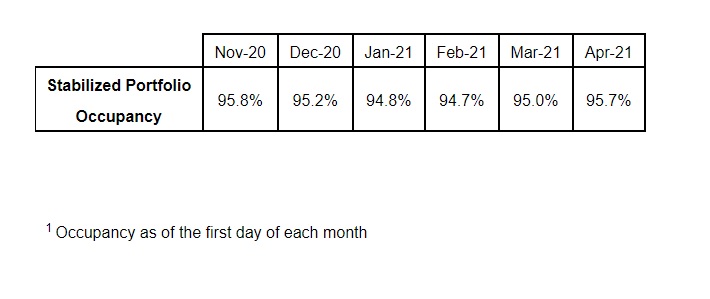
According to Sam Kolias, Boardwalk Chairman and CEO, Boardwalk’s move-ins exceeded move-outs in the months of January, February and March which have led to a significant 100 basis point gain in occupancy to 95.7 per cent.

“We cannot thank our Boardwalk team of heroes enough for continuing to provide safe and affordable homes for our resident members, as our brand of product quality, service and experience continues to lead in market share and performance,” he said.

With vaccinations well underway, the April operational update points to “positive leading indicators” for housing demand in the REIT’s largest market of Alberta. A population growth of 0.8 per cent, combined with low interest rates, improving sentiment in the energy sector, and steady news of companies choosing Alberta for their headquarters, has led to record home sales and a balancing of the housing market.

Additionally, the return to in-person learning at post-secondary institutions in September has further increased housing demand since the onset of the pandemic.

“Economic and rental market indicators continue to reflect Alberta’s economic rebound, which is grounded on some of the most affordable and desirable housing in Canada as we transition to the endemic economy,” Kolias said.

For the complete operational update, visit: Investors | Boardwalk REIT Webcasts, Distributions and Press Releases (bwalk.com)