Articles Archive - Page 367 of 928 - REMINET
REMI

VICA releases substance use in construction report

A report released by the Vancouver Island Construction Association (VICA) and its harm reduction team reveals the experiences of substances users in construction.    

The report is phase 1 of VICA’s four-phase Tailgate Toolkit harm reduction initiative. It consisted of in-depth qualitative interviews with members of the Vancouver Island construction industry who had past or present experience of drug use or were in supervisory positions and responsible for implementing harm reduction measures within their company or organization.

Findings of the report highlighted the stigmatization of opioid use within the construction/trades industry, while also describing the paths which led individuals towards substance use, such as self-medication for emotion or physical pain, and the culture of traditional masculinity and the barriers it creates when asking for help.

“The testimony within this report underscores the reality that not all substance users fit into a single category,” said Rory Kulmala, CEO of the Vancouver Island Construction Association.  “This report only reinforces the need for a multi-faceted approach to address the overdose crisis on Vancouver Island. We believe that these stories will resonate with folks in the industry, leading to those critical conversations allowing someone to seek help if they’re in need.”

The stakeholder engagement report will inform VICA’s harm reduction team as they work with Island Health’s overdose response team to implement the next three phases of the Tailgate Toolkit.

“We welcome this report from VICA, which offers valuable insights into the impact of the drug-poisoning crisis on people working in the construction industry,” says Dr. Richard Stanwick, Island Health’s Chief Medical Health Officer. “We’re grateful to everyone who shared their experiences – their stories are an invaluable contribution to the development of the Tailgate Toolkit, and to our understanding of this complex issue.”

Phase two of the Toolkit will be a training course for those in direct supervisory or front-line response positions which would cover recognizing substance use/impairment, mental health first aid, mental health, and substance use literacy with a focus on having effective and supportive conversations, a more thorough summary of services available, and naloxone trainer training.

To view and download the Phase 1 report, click here.

Beachside development approved in Kelowna

Movala, a beachside condo community project being developed by Stober Group in Kelowna, has been given final approvals from the city. It is located in the heart of Kelowna’s Lower Mission neighbourhood between popular Gyro Beach Park and Pandosy Village.

“This is an exciting time for our company, after many years of owning the land and careful consultation we look forward to building this significant residential community that is not only on a premium beachside location, but steps away from shopping, cafes, restaurants and outdoor activities,” comments Dave McAnerney, CEO, Stober Group.

“This is a showcase project for our company but also for our entirely local team that we have brought together.”

Designed by Kelowna-based Meiklejohn Architects, the concrete tower forms have dynamic curves and terraced features that offer private outdoor living spaces for the condominiums, with extensive decks and large windows taking advantage of the panoramic lake and mountain views. Interior design is by Begrand-Fast Design and general contractor is Greyback Construction.

Designed by Begrand-Fast Design, the interiors offer an enhanced year-round living experience with earthy, neutral colour palettes inspired by the natural local environment and features indigenous wood grains, soft stone and mountain hues, and sandy beach tones. The layering of these elements enriches sophisticated, urban living, and creates relaxing, inclusive spaces.

The buildings will offer residents a number of indoor and outdoor amenities including a business centre with work hubs, golf simulator, fitness centre and yoga studio, library, coffee bar, outdoor pool, hot tub, saunas and showers, a cabana beach club, bocce lawn and the ability to entertain guests on the outdoor platform BBQ’s and tables for al fresco dining.

Construction is anticipated to begin Spring 2022 with completion of Phase 1 estimated for Fall 2024.

Starlight acquires eight rental properties in Victoria, B.C.

Starlight Investments announced it has completed the acquisition of eight rental properties in Victoria, B.C. comprised of 485 units.

The eight rental properties are situated in close proximity to public transit retail shops, restaurants, and outdoor amenities including playgrounds, tennis courts, hiking and biking trails, and a petting zoo.

“Victoria offers great accessibility and a wide range of job opportunities, coupled with the surrounding natural environment, warm summers, mild winters and a high quality of life – people from around the world choose to make Victoria their home,” said Daniel Drimmer, President and Chief Executive Officer.

About the eight rental properties

948 Esquimalt Road – A five-storey mid-rise comprised of six bachelors, 102 one bedrooms, 19 two-bedrooms and nine three-bedroom units for a total of 136 units. The units are equipped with furnished kitchens including stainless steel appliances and private balconies or patios. The property, which includes a fitness centre, storage lockers, on site laundry and covered surface parking, will be managed by Devon Properties.

980 Wordsley Street – A five-storey mid-rise comprised of 47 one-bedroom and 18 two-bedroom units for a total of 65 units. The units are equipped with furnished kitchens including stainless steel appliances and private balconies or patios. The property, which includes on site laundry on each floor and covered surface parking, will be managed by Devon Properties.

1030 Pendergast Street – A four-storey building comprised of two bachelors, 41 one-bedrooms and 14 two-bedroom units for a total of 57 units. The units are equipped with furnished kitchens including stainless steel appliances and private balconies or patios. The property, which includes on site laundry, covered surface parking and storage lockers, will be managed by Devon Properties.

3185 Tillicum Road and 275 Burnside Road – The two buildings were built in 2013 to LEED Certified Platinum standards. The building at 3185 Tillicum Road is a five-storey mid-rise comprised of 15 bachelors, 20 one-bedrooms and five three-bedroom units for a total of 60 units. The building at 275 Burnside Road, is a six-storey mid-rise comprised of eight bachelors, 16 one-bedrooms, 16 two-bedrooms and four three-bedroom units for a total of 44 units. The units include quartz countertops, stainless steel appliances, luxury plank flooring and closet organizers. The property, which includes on-site laundry, bicycle storage and covered parking, will be managed by Devon Properties.

3255 Quadra Street – The three-storey building is comprised of three bachelor, 12 one bedrooms and 16 two-bedroom units for a total of 31 units. The units are equipped with furnished kitchens including stainless steel appliances and private balconies or patios. The property, which includes on site laundry and covered surface parking, will be managed by Devon Properties.

1126 Rockland Avenue – The four-storey building is comprised of six bachelors and 29 one-bedroom units for a total of 35 units. The units are equipped with furnished kitchens including stainless steel appliances. The property, which includes on site laundry and covered surface parking, will be managed by Devon Properties.

For more on the purchase of these eight rental properties, visit: www.starlight.com

Cases spotlight cost of poor communication

Condos are communities. In order for them to operate efficiently and effectively, good communication is key and, in most cases, economically resolves issues. However, in other condos, communication channels break down or don’t exist in the first place, causing unnecessary expenditures that corporations and owners must incur.

Judges, arbitrators and various decision makers who are called upon to resolve condo disputes have clearly sent messages through their decisions that inappropriate communication will subsequently cost the condo and owners money.

Lack of good faith communication with owners

One recent example is Amlani v. York Condo Corporation No. 473 (Amlani). This case from 2020 may look familiar as many have spoken about the indemnification provisions in declarations and the ability to chargeback costs to a unit owner. Yet another important message is that condo boards will face severe cost consequences if they do not communicate with owners appropriately.

In Amlani, the court made a point of highlighting the condo’s own bylaws that require both the corporation and the owner to use best efforts to resolve disputes through good faith negotiations before resorting to mediation, arbitration or legal proceedings. The court found that the corporation did not behave in accordance with the bylaw; rather, the corporation refused to meet with the owner despite the owner’s attempts to communicate with the board to reach a resolution. The corporation failed to engage in communication that would be considered “good faith” negotiations. As the court stated:

“Instead of meeting with Mr. Amlani to discuss solutions, however, the Corporation got its lawyers involved and demanded that Mr. Amlani stop smoking immediately and warned him of enforcement costs. Its position became intractable. For whatever reason, it appears to have become rigid and motivated by animus towards Mr. Amlani that blinded the Corporation to simple practical solutions.”

At the end of the day, the corporation’s lack of good faith communication with the owner cost the corporation over $100,000 in legal fees, s. 135 oppression damages paid to the owner, and its own legal fees. Had the corporation been willing to communicate in good faith instead of taking a hardline position, the owners of York Condominium Corporation No. 473 would likely not have been saddled with such an economic liability.

Handling noise complaints

Another important case from 2020 that reinforces the importance for corporations to communicate effectively with all parties involved in a dispute is the MTCC No. 933 v. Lyn case (Lyn), which involved a noise complaint regarding Ms. Lyn’s unit. The corporation was successful in obtaining an order that the tenant breached the rules by creating excessive noise. The tenant was ordered to comply with the rules and pay $23,250 in costs. The corporation requested costs in the amount of $31,000 even though its actual costs were $34,469.73. The unit owner argued that she should not be responsible for any costs of the corporation in relation to this compliance application, of which the court ordered in her favour.

The court held that the corporation did not properly communicate with the owner regarding the complaints of the neighbour. The corporation failed to send any notice on two occasions and imposed arbitrary and unreasonable deadlines when it demanded the owner take steps to evict the tenant. Meanwhile, it failed to provide information that would have facilitated the owner in taking steps to end the tenancy appropriately.

While the corporation was successful in getting a costs award, the success was a hollow victory. First, they did not recover 100 per cent of their costs. As such, the amount not awarded by the court, but incurred by the corporation, is a cost all owners will bear. Second, the costs award was against the tenant and specifically not the owner of the unit, which means that the corporation will likely not be able to add these costs to the common expenses of the unit and collect such costs through the lien procedures in the Condominium Act, which gives condos a super priority over amounts owed to them.

It is unknown from the decision whether the corporation will be able to collect the costs awarded by way of garnishment or seizure of personal or real property of the tenant, and it is possible that the corporation will not be able to collect those amounts owing at all. As such, Lyn is a good reminder to property managers and boards to make sure that communication always includes both the owner and tenant. If you fail to do so, the corporation will pay the price.

Owners’ communication style

There has also been an increase in the number of cases where owners are harassing condo managers, boards, contractors or other owners. An owner’s failure to communicate effectively also results in costs being borne by the owner and puts their unit in jeopardy of being sold if costs are not paid.

An example of such a case is Ottawa Carleton Standard Condominium Corporation No. 671 v. Friend (Friend). The court was asked to prohibit the owner from using rude, demeaning and inappropriate comments while engaging with directors. This form of inappropriate communication spanned several years. Friend’s communication involved repetitive, lengthy and insulting emails, telephone calls or knocking on the door to speak to someone directly.

The court found Friend to be verbally assaulting, confrontational and aggressive and severely limited Friend’s ability to communicate with the condominium corporation, its staff, contractors and other residents. The corporation sought full indemnity costs in the amount of $14,321 and the court awarded these costs against the owner and ordered they be added to the common expenses of the unit. This allows the corporation to collect these costs by way of the lien procedures available under s. 85 of the Condominium Act and power of sale proceedings if the owner does not pay.

Cost decision of recent case an important reminder to owners

In a recent similar example from 2021, MTCC No. 580 v. Mills (Mills), the court was asked to determine how an owner can communicate with the condo corporation and third-party contractors. The situation between the owner and the condo corporation had persisted for years, with the corporation seeking many orders to restrict the owner’s ability to communicate with the board, its agents and contractors. Another order was sought to prohibit direct threats to the board and their legal counsel, and from posting unauthorized notices on the property and common elements and playing recordings on the common elements at any time.

The court recognized that the owner’s communication style, which consisted mainly of a vast number of emails, was oppressive despite the owner’s claim that his style of communication was required to accommodate his disability. The court stated:

“Reading, analysing, and responding to Mr. Mills’ emails represents the vast bulk of the work of the applicant’s staff and volunteers. Counsel frequently is required to become involved. Mr. Mills’ emails exceed any reasonable expectation for the sheer volume of communication without even considering the tone or content. They are prejudicial in that they have had a negative and costly effect on the applicant and its personnel. I have no hesitation finding the email communication oppressive under the Condominium Act, 1998 and granting the relief sought subject only to the exception referred in para. 31 for Mr. Mills real estate counsel.

As noted previously, I have no doubt that Mr. Mills finds his manner of communication driven by his disabilities. But it is oppressive and undue hardship to force others to endure harassment and oppression by him.”

In May 2021, the court released its decision on costs. The corporation sought costs in the amount of $155,000 and the court ordered Mr. Mills to pay $75,000. While the costs award is significant against an owner and a signal from the courts to owners that there are serious consequences for inappropriate communication within a condo setting, the court also took into account the consequences of s. 134(5).

The result in Mills is not the same as in Friend, where the court ordered all the costs incurred to be paid; however, the court in Mills acknowledged that despite any costs award, the condominium would still have the benefits of s. 134(5) to collect any amounts the court did not award.

When a court decides the issue of costs, it must follow specific principles. Most times, that does not lead to a costs award that provides full indemnity to the winner. However, because the condominium in Mills obtained a s. 134 compliance order against the owner, they still have the opportunity to add to the unit the reasonable costs incurred, but not awarded by the court. Under s. 134(5), if a condo obtains a compliance order under s. 134, plus an order for costs or damages, the condo can add the actual reasonable costs incurred to the common expenses of the unit, regardless of the wording in their declaration’s indemnification provisions

Unlike the Lyn case, the condominium in Mills will likely be able to recover all reasonable costs incurred and add them to the common expenses of the unit. The court did not find the hours billed unreasonable. The Mills and Friend cases are an important reminder to owners that inappropriate communication within a condo setting will cost you money and put your unit at risk.

Sonja Hodis is a condominium lawyer based in Barrie who practices condominium law in Ontario. She advises condominium boards and owners on their rights and responsibilities under the Condominium Act, 1998 and other legislation that affects condominiums and represents her clients at all levels of court, various Tribunals and in mediation/arbitration proceedings. Sonja can be reached at (705) 737-4403, [email protected] or you can visit her website at www.hodislaw.com.



Post-pandemic projects for multifamily buildings

The pandemic caused multifamily building teams to narrow their focus on health and safety. As a result, many electrical and mechanical projects fell under the radar. Now that the world is making a slow return to “normal,” it is time to bring critical maintenance and retrofit activities back into the spotlight.

“The last year-and-a-half has been stressful for multifamily teams, and some electrical and mechanical items had to be put on the back-burner due to COVID-19 transmission concerns, budget, or even time,” says Ed Porasz, Vice President with M&E Consulting Engineers. “The good news is we’re heading to a better place, and it’s a good time to revisit key considerations.”

These considerations include:

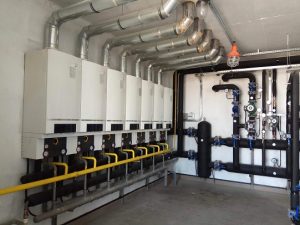
Energy-smart retrofits: It’s always a good time to revisit HVAC upgrades. Today’s high-efficiency boilers and chillers can dramatically reduce CO2 emissions, smaller environmental footprints, and generate significant energy savings. For example, a high-efficiency condensing boiler can create energy savings to recover your initial investment in as little as four to six years, while an oil-less and bearingless chiller can enable a payback of five to eight years.

Building automation systems (BAS) can also contribute to greater efficiency and operational savings. Moreover, they can help with ease of operation and enable faster responses to equipment failures and repairs. Here again, the initial investment can pay off over the long term.

Makeup Air: Indoor air quality (IAQ) has always been a critical consideration. Now, it’s a top priority. The ability to bring fresh, outside air into a building in a controlled manner reduces the risk of cross-contamination, maintains optimal comfort levels, and increases efficiencies. As such, a building’s makeup air system should be reviewed by staff and/or a professional engineer to make sure it is working as intended and that ideal pressure levels within suites, hallways, and public areas are being met. At the same time, it is worth looking into how the building can better dehumidify or cool makeup air to future-proof your building against rising temperatures.

Kitec pipe failures: If your apartment was constructed between 1995-2005, the suites may have Kitec piping. Unfortunately, these pipes have been found to fail after just 10 to 15 years from the initial installation. If you weren’t already replacing these pipes before the pandemic, now is the moment to revisit this issue.

“Kitec failings are a known concern. It’s not a matter of if they will fail, but when,” explains Porasz. “And since it typically takes a number of months to prepare design drawings and go to tender start the project, the best time to get started is yesterday.”

PEX piping risks: PEX pipes were installed on risers and recirculation lines in buildings built between 2005 and the present. PEX has been known to fail, if the velocity of water within the pipes exceeds manufacturer recommendations. Herein, it pays to have a professional engineer or service contractor come in to review the velocities within your piping system and take measures to extend their lifespan.

EV charging stations: The electric vehicle revolution started well before the pandemic. Now? It’s shifted into full gear. With eco-friendly attitudes higher than ever, more and more drivers are moving to cleaner, greener, and electric forms of travel. This is a good opportunity to add value to your building by installing EV charging stations for your residents and visitors.

“EV charging stations are going to be table steaks soon, so you want to consider them now rather than later,” says Porasz, adding, “Step one is working with an engineer to determine what infrastructure you’ll require, the best places for installation, and maintenance requirements.”



Catching up on essential projects

It’s been a trying time for multifamily teams. Between keeping owner and staff safe and productive, it’s understandable that electrical and mechanical initiatives fell by the wayside.

Nevertheless, electrical or mechanical projects can’t be put on hold forever. As we move into the post-pandemic, there are benefits to exploring the upgrades, repairs, and maintenance activities that will keep your building operating at its peak for years to come.

Ed Porasz is Vice President with M&E Engineering, a professional and multi-disciplined mechanical and electrical engineering firm serving clients in the GTA and across Canada. For more, visit www.me-eng.com. 

Australia awaits institutional-grade multifamily

Oxford Properties is targeting opportunities to pump up Australia’s institutional-grade multifamily inventory and capture renters locked out of the booming housing markets in Sydney and Melbourne. The Investa management platform, in which Oxford owns a 50 per cent interest, has unveiled plans to develop 5,000 built-to-rent apartments in amenity-rich projects located near transit hubs in active urban neighbourhoods.

The first two developments — a 234-unit apartment building near a new transit station in Sydney; and a 702-unit project in one of Melbourne’s inner suburbs — are now underway, and due for completion over the next three years.

“Our residents will enjoy security of tenure through long leases of up to three years, a proactive maintenance program, pet-friendly policies, the ability to personalize apartments and sustainable design and operations,” promises Sally Franklin, Investa’s group executive, real estate services and business operations.

Australia’s expanding ranks of long-term renters are expected to provide a stable tenant base in a country where house prices are projected to jump 16 per cent by 2023. Median house values are currently CAD $893,000 (AUD $950,000) in Sydney and CAD $700,000 (AUD $745,000) in Melbourne.

“We are excited to progress Oxford’s build-to-rent investment strategy in the nascent and highly sought after institutionally owned and managed Australian residential rental sector,” says James Greener, built-to-rent fund manager with Investa. “Supported by strong macroeconomic tailwinds, continued population growth across younger renting cohorts, record high housing affordability constraints and a structural undersupply of high-quality and professionally managed residential product, the potential of the sector is high.”

Multi-res tackles zero waste during COVID

The amount and type of household waste in Toronto-based condos has changed dramatically over the last year. Due to COVID-19, more deliveries mean more cardboard, packaging, and meals consumed at home.

While the type of waste has changed, this hasn’t necessarily led to an increase in garbage. In fact, a growing number of multi-res high-rises across Toronto have continued to reduce waste in 2020 by improving waste services.

The Zero Waste High-Rise Project, an initiative of non-profit Toronto Environmental Alliance (TEA), in partnership with University of Toronto researchers, has been working with teams of staff, board members and residents in high-rise buildings to reduce waste, create stronger communities and save money. Here’s a look at three buildings involved in the project and what was accomplished during 2020.

Make recycling easier

Issue

In many buildings, it’s easier to place waste in the garbage than it is to recycle. In the past year, the amount of recyclable cardboard and delivery packaging has multiplied, bringing this problem into the spotlight. For example, at the downtown building 120 Cornwall, garbage is collected in a waste chute while recycling is collected outside in large bins. The outdoor bins are difficult to access, especially in winter, and for residents using mobility devices, such as wheelchairs.

Solution

Building management decided to add accessibility recycling carts in the building’s lobby and laundry rooms so residents could drop off recycling indoors. Staff roll the cart outside when it’s full and transfer it into the blue bin. A real time-saver, staff now spend fewer hours removing contamination from the large outdoor bins and dealing with clogged chutes.

*TEAs Waste Collection Assessment tool will help review how accessible and convenient waste services are in a building.

Keep cooking oil out of drains

Issue

Discarded cooking oil poured down a drain is a major maintenance expense in most buildings. Over time, oil and grease build-up can result in clogged drains and even flooding. As a preventative measure, a growing number of buildings are collecting used cooking oil for recycling into biodiesel or animal feed.

Solution

Staff at 125 Scadding, a building in the Esplanade neighbourhood, noticed that more residents are now cooking at home and decided to start collecting used cooking oil. A board member worked with management to select a service provider that would provide an oil drum for collection and free pick-up. They put this oil drum in their recycling room and added a shelf of mason jars that residents can use to collect and transport used oil from their units.
Management distributed flyers and information posters to explain and promote the new service. The building officially launched the service in July 2020 and it has been popular with residents.

*See TEA’s How-To Guide to set up cooking oil recycling in a building.

Facilitate re-use

Issue

In the past year, residents did some “spring cleaning” throughout the seasons to make space for working and learning from home, causing unwanted household goods to pile up in the garbage. This includes contaminated recycling and goods that are still functioning.

Solution

The green committee at 5 Kenneth, a condo in North York, was inspired by what they saw in another building and created a reuse-it shelf for these items. They worked with their superintendent to ensure it wouldn’t get in the way and outlined a plan for how volunteers would manage the shelf. Residents leave undamaged items—toys, dishes or housewares—for neighbours to take for free. As a precautionary measure, the building paused the shelf in March 2020, but after reviewing public health advice about the safety of reusables, they relaunched it in September with additional safety reminders and guidelines. The shelf has been popular with residents who are thrilled to have the option to reuse.

*See TEA’s Guide on special waste and reusable goods collection for tips. Free resources for reducing waste

These are just a few examples from more than 50 buildings across Toronto where building management and residents have worked together to reduce waste during COVID-19. The Toronto Environmental Alliance’s free online program is open to staff and residents of any multi-unit building, and provides guides, tools and learning events to help condos move towards zero waste.

Sayan Sivanesan is the project coordinator for TEA’s Zero Waste High-Rise Project. He works with multi-residential buildings to develop and implement waste reduction plans. TEA is a non-profit that campaigns locally to find solutions to Toronto’s urban environmental problems.
The Zero Waste High-Rise project is a project of TEA in partnership with U of T researchers, with funding from the Ontario Trillium Foundation and the Social Sciences and Humanities Research Council (SSHRC). Check out the resources and sign up for information at: www.torontoenvironment.org/highrise_join

Darwin breaks ground on Phase 1 Lonsdale Square

Darwin Properties has begun construction on Phase 1 of Lonsdale Square, a 6.6 acre development that will transform the upper area of Lonsdale. One of the largest projects ever built in the City of North Vancouver, this upcoming mixed-used community will feature more than 800 new homes, including seniors housing, non-profit and below market rental housing, a new 2.25 acre city park and revitalized Harry Jerome Community Recreation Centre.

Phase 1 construction will include a 113-unit rental building with 8,000 square feet of retail space, a partnership between Darwin Properties and Minto Properties Inc. Phase 1 will also include the first seniors assisted housing in the city in 30 years. This facility will be six storeys with 100 units for assisted living and memory care.

“The vision for this new community is to create a hub that brings renewed energy, activity and amenities to the north end of the Lonsdale corridor and to build more housing options for all stages of life in the North Vancouver community,” says Oliver Webbe, CEO, Darwin Properties. “With the new Harry Jerome Rec Centre, this area will become a vibrant, new energy centre on the North Shore. As a North Vancouver company, we have worked hard to create a development that residents can enjoy for generations to come.”

Minto is providing financing for the development of the 113-unit rental building and will be the REIT’s entrance into the Vancouver-area market.

“Phase I of Lonsdale Square is Minto’s first investment in the Greater Vancouver Area, and we are proud to be partnering with Darwin on this exciting project,” says Michael Waters, CEO of Minto.

The overall Lonsdale Square development will include a variety of residential, commercial and amenity space to address the current and future needs of this North Shore community. At complete build-out, Lonsdale Square will encompass almost 700,000 square feet of office, retail and residential use. The second phase will include residential condos with additional rental housing, as well as restaurants, retail amenities and daycare facilities.

Completion of Phase 1 is expected in 2023.

Cold storage gathers investment steam

Ontario’s esoteric electricity pricing scheme is well matched to a burgeoning, but niche alternative real estate asset class. Cold storage facilities are flagged to deliver robust returns to investors due to the evolution of food retailing, demand for vaccines and other pharmaceuticals, and the thriving outlook for the warehouse/distribution and logistics sector in general. However, those prospects come with complicated and costly development and operating considerations.

“Cold storage facilities are very capital-intensive. The number I’ve heard is roughly two to as much as three times the cost of a generic warehouse,” observes Bill Argeropoulos, principal and research practice leader with Avison Young Canada. “It’s usually design-build to meet a user’s specifications for their products; ceiling heights generally exceed the 40-to-60-foot heights in a typical warehouse/distribution facility; and power consumption can be double or triple that of a generic warehouse.”

The latter factor could make Ontario more attractive for investors and developers still prepared to get into the market. Cold storage operators are deemed to have a strategic advantage in the provincial electricity pricing program for large consumers, which ties their allocation of global adjustment costs to their energy demand during the five hours of the year when highest system-wide demand is registered. Electricity customers with the foresight and flexibility to cut energy loads during those hours can lock in a favourable billing factor for the subsequent 12-month period from July 1 to June 30.

“Cold storage (in Ontario) has the cheapest electricity price in North America,” Scott Rouse, managing partner with the consulting firm, Energy@Work, noted during a recent webinar sponsored by the Building Owners and Managers Association (BOMA) of Greater Toronto. “They’ve got it figured out. They’ve got the monitoring in place to get an indication of when there’s going to be a potential peak. Then they shut off their compressors, don’t open their freezer doors and everything’s great.”

Online grocery shopping escalates in-progress trend

Even before the COVID-19 pandemic, analysts identified urban population growth, consumer appetite for convenient-to-prepare healthy food and the rise of e-commerce as trends that would flow through to demand for cold storage. Those trends have simply synergized during the past 15 months as public health concerns and controls upended food retailing — significantly undermining grocery stores’ competition from restaurants and moving an increased share of sales to online platforms.

CBRE Canada’s newly released spring 2021 retail report cites a 12.4 per cent year-over-year gain in sales volume for food and beverage retailers. That’s compared to the category’s long-term average of 3.8 per cent annual sales growth, and juxtaposed with the 32.7 per cent drop in clothing and accessories retail sales during the same period. The report projects continued elevated sales growth, at least in the short term, and permanent integration of online services that were introduced or upgraded as pandemic contingencies.

“Recent studies from J.C. Williams Group show that the majority of consumers who have converted to online shopping will continue to as such in the future. Convenience is a driving force behind this, and stores will need to strike the right balance of serving walk-in traffic and fulfilling digital orders in-store in order to capture customers,” the CBRE report states.

“Online grocery shopping, which is still in its infancy stage compared to other retail categories, will be a key driver in the demand for cold storage space in the future, especially among younger consumers,” Argeropoulos submits. “As e-commerce expands within the grocery arena, I consider cold storage/freezer facilities, along with self-storage and data centres, as an emerging alternative investment class within the broader industrial sector.”

Nevertheless, he characterizes cold storage as something of a hidden element — sometimes literally incorporated into even larger warehouse/distribution complexes — in a flashier backdrop.

“It’s difficult to quantify and categorize the cold storage market because of its unique premises and uses within a warehouse, but it represents a small portion of the GTA’s 890-million-square-foot industrial inventory and Canada’s overall industrial stock of almost 2 billion square feet. Because of its unique classification, it’s also challenging to single out cold storage facilities to gauge investment capital flowing into the sector,” Argeropoulos says.

Developer partnerships with facility operators an industry norm

Cold storage facilities are defined and marketed in terms of storage space per cubic foot rather than on a square foot basis — generating far greater rent income than similarly sized warehouses. Because they are typically built to suit a specific tenant, lease terms tend to be lengthy, and tenants themselves may be cold storage facility providers, which, in turn, sub-lease the space to various smaller users.

Looking to the U.S. market, circa-2018 analysis from JLL lists that country’s 25 largest cold storage operators, which, at that time, ranged from nearly 900 million cubic feet to 16.5 million cubic feet of business capacity.

“Most companies in need of refrigerated storage services outsource these functions to industry operators to avoid the substantial costs associated with operating these facilities. While privately operated facilities can provide companies a greater deal of control and flexibility over their product, the substantial start-up costs deter many smaller companies from entering the space,” JLL analysts advise. “As a result, this form of vertical integration has generally been limited to large-scale food producers like Nestle and Kraft controlling their storage facilities.”

Meanwhile, some investors are moving from a strictly landlord role to holding a stake in facility operations. Notably, last September, Canada’s Oxford Properties Group made a CAD $475 million investment in Lineage Logistics, which owns and operates more than 320 facilities worldwide, comprising 1.9 billion cubic feet of cold storage capacity.

“The cold storage industry is a sector that is poised for growth and demonstrates great resilience and defensive attributes in this current climate. Our investment will provide access to the sector’s market leader and supports its management team to execute its growth strategy,” Kevin Egan, Oxford’s head of investments in North America, said at the time.

Argeropoulos tallies three significant cold storage transactions in Canada over the past six months: Tricor Pacific Capital acquired a three-building portfolio from Confederation Freezers for a total of $168 million; U.S.-based Americold Realty Trust acquired three buildings from Brookfield Asset Management/Nova Cold Logistics for $337 million; and the consortium of Investment Management Corporation of Ontario (IMCO), TorQuest Partners and OPTrust acquired VersaCold Logistics from KingSett Capital and Ivanhoé Cambridge.

“VersaCold is one of Canada’s largest cold storage warehousing and food logistics firms,” he adds. “The sale price was not disclosed.”

Particularly for institutional players with deep pockets and long-term horizons for holding investments, the fundamentals also appear to support new development. JLL pegged those costs in the range of USD $250 to $350 (CAD $324 to $453) per square foot in 2018, but, given construction complications, Argeropoulos is skeptical that other approaches deliver discernible savings.

“Although converting an existing generic warehouse to a cold storage use might seem like an attractive option, it can be no more cost-effective to convert a building than to build one from the ground up,” he concludes.

Barbara Carss is editor-in-chief of Canadian Property Management.

Dialog among Canada’s best managed companies

Dialog has been named among “Canada’s Best Managed Companies” for 2021 by Deloitte Canada. The annual list includes privately owned Canadian companies with at least $25 million in annual revenue. Dialog appears on the list this year as a “Gold Standard” winner, a nod to the firm’s third consecutive recognition by the annual program.

Canada’s Best Managed Companies are identified by Deloitte each year through a rigorous and independent process that evaluates their management skills and practices.

Dialog operates from five studios in Calgary, Edmonton, Toronto, Vancouver, and San Francisco, currently employing an integrated team of nearly 600 architects, urban planners, engineers, interior designers, and landscape architects. Led by a collection of more than 50 partners, Dialog has maintained a clear commitment to foster innovation and practice.

“COVID certainly caused us to pause and adjust our approach to executing our company’s strategies. Moving from five studios to 600 ‘home studios’ required a fast and evolving plan, supported by our leadership team and a core response team. These leaders focused on taking care of our people and our community, instilling confidence in our response to the pandemic, and on minimizing impact to our clients,” said Dialog managing partner Jeff DiBattista.

By design, Dialog has kept its organization flat through the years since its founding. Responsibility for advances in important areas like sustainability, innovation, and building portfolio ownership are led by grassroots teams that include individuals across all experience levels. These grassroots teams are nutured by management and they help instill ownership for critical aspects of design success across the practice.

“This recognition as one of Canada’s Best Managed Company differentiates us on many fronts, including in the critical pursuit of top talent,” said Jim Anderson, partner and Dialog chair. “We are thrilled to be celebrating this honour, especially after such a unique year in the life of our operation.”

Two new residence halls open at SFU

Two new residence halls at the Simon Fraser University (SFU) Burnaby campus have opened.

The new halls, consisting of two seven-storey buildings, feature 482 single-occupancy rooms, as well as community and learning spaces. The project is targeting LEED Gold.

“We know how challenging it can be to find affordable housing in our region, especially for students,” says SFU president Joy Johnson. “The completion of this project is an important milestone in expanding our housing options. And we’ve kept our student needs at the forefront in designing these new, modern spaces, which include all the amenities and supports students need to make the most of living on campus.”

Designed by Dialog, the new residence buildings feature amenity spaces that will serve as a community hub for students, including community kitchens, wellness, music and activity rooms, multi-faith spaces and a learning commons. There are also shared washrooms, laundry, accessible room options and a mix of lounge, community and study spaces. Scott Construction was general contractor.

The opening of the $68.8 million project completes the first phase of a housing plan that will see student housing options at Burnaby campus expand to 3,250 beds by 2035. SFU worked with funding partner Centurion Asset Management to make this project a reality.

Phase two of the student housing plan is already underway and will include 369 additional rooms and a Housing Services office, which will centralize services for residents and provide space for residence and housing staff. It is slated to open early 2023.

“This is a very special day for Simon Fraser University students and everyone who has been involved in the important work of increasing on-campus student housing,” says Anne Kang, Minister of Advanced Education and Skills Training. “We are well on the way to adding about 8,000 new student housing units throughout the province, and we are thrilled to be working with SFU towards that larger goal.”

Vaccine efforts ramp up for residential builders in Ontario

The Residential Construction Council of Ontario (RESCON) has stepped up efforts to ensure that builders and workers know how to register for their COVID-19 vaccinations.

The COVID-19 information section on its website now has details on rapid testing resources, a vaccine policy template, health and safety best practices and a guidance sheet that outlines steps workers can take to find out where and when they can get vaccinated, with links to register for the shots.

“This website information is another tool to ensure that everybody has the information they need to stay safe, get tested and find out where they can get vaccinated,” says RESCON Vice-President Andrew Pariser. “The key to ensuring our industry remains safe and leads the Ontario economy out of this recession is rapid testing and vaccinations.”

The vaccine guidance sheet is updated several times a week by Ahd AlAshry, policy and programs analyst at RESCON. It provides members, the construction industry and public with critical information, so that they are able to quickly register and get vaccinated as soon as possible.

The site also has links to posters and flyers, information on everything from glove sanitizing to correct handwashing techniques, proper use and care of face coverings on worksites, and more. Visitors to the site can also click on links that provide information on caseloads across Ontario and Canada.

RESCON has also held three webinars to educate members about regulations, best practices and public health measures related to COVID-19 and will be hosting another in late June. The organization’s rapid testing group now has more than 10 members administering thousands of tests a week on dozens of sites.

Modernizing property cleaning & maintenance beyond 2021

The shock of the COVID-19 pandemic has placed facility and property cleaning and maintenance services at the forefront of essential services. Prior to the pandemic, these services had never been in the spotlight, nor were their processes and performance placed under significant scrutiny.

Moving forward in 2021, it has come to light that services related to sanitization and maintenance have been long hiding under the radar of technological innovation. This is likely because the trend of digitization and application development was predominantly focused on the improvement of the business-to-consumer (B2C) customer experience.

Even in business-to-business (B2B) cases, technological improvements concerning cleaning and routine maintenance had been left in the dark.

A forgotten need

It may be because more exciting and lucrative opportunities were available elsewhere in comparison to the perceived mundane process of routine janitorial services.

In addition, because of the minimal focus on technology for these services, cleaning and maintenance companies that attempted to move forward and improve their workflow did so by repurposing readily available scheduling software.

Although this may seem like a very logical step forward, it is far from what is desired by property managers, as simple scheduling only scratches the surface of the complexities involved in managing the cleaning for multi-residential and commercial properties.

Managing cleaning and maintenance

For property managers, overseeing cleaning and maintenance operations is a long and cumbersome process, riddled with inefficiencies.

Property management can involve daily scheduling and monitoring hundreds of thousands to millions of square feet of property. Each of these spaces can be part of multiple properties, with varying sizes and unique functions. Even within individual properties, areas can have specific uses depending on the tenants and building visitors.

For example, in commercial spaces, property managers cater to a diverse range of tenants, where each tenant may have a unique use for each unit. These can range from retail stores to office space and production.

Daily issues faced by property managers

Communication and reporting

Communication and reporting can lead to frustration by both the property managers and the maintenance teams if expectations are misunderstood or not met.

Quite often, the proof of service delivery is forgotten, misplaced, or not provided by the cleaning company. Sometimes, even the completed paper reports or entire clipboards can get misplaced or buried under paperwork, adding to the confusion.

Scheduling

Scheduling alone can be an administrative nightmare for property managers. More often than not, property managers experience scheduling conflicts, no-shows, and last-minute cancellations.

Although some conflicts may arise from inconsistent scheduling by the property managers, the majority can be attributed to scheduling inefficiencies by the maintenance companies themselves.

To make matters worse, companies and personnel can be frustratingly challenging to get a hold of. Even for urgent cases, many property managers experience delays in receiving a response, and often the answers are very short with no context or elaboration.

Compliance and quality control

Another source of aggravation for property managers is the work involved in monitoring compliance and quality control. Problems occur when maintenance companies assign cleaning staff to perform tasks they are not adequately trained for, yielding less than favourable results.

Furthermore, companies may not perform a thorough-enough quality (QC) inspection as per the requirements of the property manager, as they expect the property managers themselves to verify the completed work through their own inspection. This is a highly inefficient process as it involves duplication of tasks assigned to the cleaning company within an already constrained timeframe.

To further emphasize this inefficiency, the process requires the property managers to be on-site for each inspection, often working on weekends or taking overtime hours to accommodate these additional tasks. Property managers already have a multitude of tasks to manage and, as a result, have a limited amount of time they can allocate towards verification of cleaning and maintenance.

This process contributes to a negative feedback loop where neither party takes full accountability for the inspections, resulting in continuous dissatisfaction by tenants within those properties.

Too many inefficiencies

The inefficiencies described above are just a fraction of the challenges faced by property managers on a daily basis.

Therefore, now more than ever, there is a greater need to modernize and digitally transform the inefficient and time-consuming processes which plague the cleaning and maintenance industry. It is time to modernize an industry that has lagged behind for many years.

Moving forward

Fortunately, companies are stepping forward to take on this challenging area of neglected innovation. State-of-the-art technology platforms and professional cleaning service teams are reinventing the process of cleaning and maintenance for property managers, saving them time, aggravation, and, ultimately, money.

Charlotte Gummesson is co-founder of iRestify and strives to modernize antiquated industries to create and drive greater efficiencies. Through the combination of a fully integrated tech platform and professional cleaning and management teams, iRestify has been vastly improving service levels for many of the top brands in North America. 

Radical Code Changes are Coming

Bringing older residential buildings up to code can be a daunting undertaking, and it’s common for certain key areas to be overlooked. While window, roof, and wall insulation replacements are accessible upgrades widely carried out, some areas—like airtightness—are becoming more urgent as radical building code changes loom.

Driven by local climate and environmental forces, as well as new federal and provincial policies, building codes are a set of rules written as the minimum requirements all structures must conform to in order to meet safety, efficiency, accessibility and other standards.

Presently, these codes are changing, both fundamentally and at a rapid pace, explains Sameer Hasham, Project Engineer with RJC Engineers. “The approach has shifted from a prescriptive design approach to a performance-based approach,” he says. “In B.C. for instance, the British Columbia Energy Step Code is now well-established for new buildings, which has been a great success. Overall targets for energy use intensities are becoming well defined with a clear roadmap outlined to meet the Net Zero-Ready targets by 2032. Radical code changes, and a shift in how we approach the built environment, will pave the pathway to Canada’s decarbonisation goal.”

By 2050, Hasham points out that Canada’s existing building stock will have significantly aged, and it will account for a considerable portion of emissions from buildings if not addressed in parallel to new construction.

“Governments at all levels have recognized the importance of tackling the existing building stock,” he says. “As such, a specific code for existing buildings will soon be implemented. The Pan Canadian Framework has committed to the development of a national model code for existing buildings by 2022, and this will have a profound impact on how we deal with the aging and inefficient building stock.”

Incentives & tax credits

Building upgrades and deep energy retrofits can come with a hefty price tag—a deterrent well-recognized at all government levels. As such, Hasham says part of the new framework will be to encourage improvements by offering incentives, grants, tax credits and other strategies to help offset costs and lessen the burden on the end user.

“Various programs are already well established, and provincial and federal governments are committing funds for climate action,” he says. “We expect these programs to get stronger, particularly as the model code for existing buildings prepares to be rolled out. I would not be surprised to hear funding programs announced in tandem with code changes in the near future.”

Improving airtightness

According to Hasham, one area that is often overlooked in terms of upgrades—and shouldn’t be—is airtightness. “Leaky buildings are inefficient and cost a lot to operate,” he says. “They are a significant source of heat loss, and they also present a risk for moisture-related issues like condensation build-up within walls.”

Air leaks are typically found around windows, doors, vents, and electrical outlets, which can easily be identified using tools for air leakage testing such as blower doors, thermal imaging and smoke tests—and once detected, they can be easily sealed.

Poorly detailed roof attics is another key area that impacts airtightness. Most owners tend to add insulation into their attic spaces for better thermal comfort as this is a simple and cost-effective solution, however, another option is to remove the older insulation first, which exposes the air barrier transition between the roof and the walls—a very common location of air leakage and heat loss.

When undertaking any roof work, Hasham advises that ducts and penetrations through the attics be sealed, along with sealing and fire caulking the fire separation walls inside attic spaces.

Windows and roofing

While windows and roofing replacement projects are common as they can be easily changed without significantly impacting the use of the building, Hasham does caution around the installment of renovation-style windows. “Although these are marketed as a cost-effective approach, they tend to rely on sealant and do not transition well with the surrounding envelope,” he says.  “These can cause adverse effects in failure of the envelope, and do not effectively manage air leakage or moisture.”

In addition, when replacing your older windows with a thermally efficient upgrade, be sure to remove the surrounding cladding to expose the envelope component. “Good practice is to tie-in the new window assemblies to the envelope, and to maintain continuity of the moisture, vapour, thermal and air control layers,” he says.

The benefits of code compliance

Keeping up with code changes benefits everyone—from homeowners and building occupants, to our neighbourhoods and cities at large. By making the necessary upgrades to your existing residential building stock, you’ll be achieving the following:

  • Increased occupant comfort
  • Better indoor air quality and healthier interior environments
  • Sound control
  • Savings in operational costs (i.e. reduced heating bills.)
  • A more desirable/marketable property
  • Increased property value

It is expected that costs for electricity and gas will continue to increase over time. Add to this government policies, like carbon taxes, and costs over the next 10 to 15 years could continue to soar.

“In Canada, we are extremely fortunate to have access to plenty of natural resources. However, because of this, it’s easy to take them for granted,” Hasham warns. “We have to recognize that we must adapt to the challenges of the environment—and that means continuing to improve our buildings and keeping up with codes changes. For instance, with the International Energy Agency recommending the phasing out fossil fuel boilers by 2025, building owners anticipate this now.”

For more information, visit www.rjc.ca or contact Sameer Hasham 

Great Lakes figure in low-carbon logistics

A new container ship service linking the Ports of Hamilton and Montreal is being promoted as a low-carbon logistics option. The joint venture of the Hamilton Container Terminal, Hamilton Oshawa Port Authority (HOPA) and Quebec-based marine merchant, Desgagnés, launches this week, ready to take up to 350 containers to outbound destinations via a Great Lakes channel.

“Highway congestion, greenhouse gas reduction targets, driver shortages — all of these factors are combining, so marine is making more sense for short journeys than ever before,” maintains Ian Hamilton, president and chief executive officer of HOPA Ports. “We know there is a demand in the market for more sustainable, efficient and competitive options for container movements.”

The container feeder ship will embark from Hamilton’s Pier 14 carrying cargoes to be transferred to other ships at the Port of Montreal. A second Hamilton-Montreal voyage is planned for July, while the three partners anticipate enough business for 20 shortsea hauls over the course of 2022.

Looser office densities deemed viable in Toronto

Looser office densities could be an easier economic stretch in Toronto than in some major U.S. cities similarly competing to draw and retain investment and employment. Newly released analysis from JLL’s global benchmarking services places Toronto among seven global markets with a combination of space and cost factors that could appeal to tenants seeking to enlarge space-per-person ratios.

Employers who have conventionally housed substantial workforces in highly priced space are expected to have less appetite for expanding their quarters to allow for more social distancing or for accommodating a now diminished daily occupancy in their pre-pandemic footprint. JLL analysts identify a number of so-called high-order global business hubs — Hong Kong, London, New York, Frankfurt and Tokyo — where average allotted space-per-person shrank in the years leading up to 2020, along with some select markets where they gauge flexibility to stretch ratios wider. Toronto is the lone North American candidate in the latter category.

“There is another group of cities with comparatively tight densities but where relatively lower space costs mean that the opportunity cost of de-densification may be more compelling — Singapore, Sydney, Melbourne, Toronto, Paris, Milan and Madrid, for example,” the benchmarking report states.

The benchmarking exercise assesses nearly 97 million square feet of office space in 32 global markets spanning North America, Europe and Asia-Pacific, which housed nearly 800,000 employees in pre-pandemic times. Density is calculated on a standard definition of total usable floor area.

Prior to the COVID-19 pandemic, Toronto’s average office density, at approximately 138 square feet per person, was tighter than the global 143-square-foot average. Toronto office workers were also compacted into less space than their peers in Chicago, Los Angeles, Washington, D.C., Houston or New York. Chicagoans notably enjoyed an average of 245 square feet per person, while New York, with an average ratio of 172 square feet per person, is characterized as a having a tight density “relative to its national average”.

Among the seven markets tapped for potential de-densification, Singapore and Sydney are coziest with respective ratios of 107 square feet and 119 square feet per person. Toronto and Madrid, both at 138 square feet per person, are the most spacious, and are tied at 13th on the list of 32 cities.

Meanwhile, JLL’s premium office rent tracker places Toronto midway in the pack of 100 global markets as of December 2020, with average space costs (net effective rent and additional costs) pegged at CAD $89.11 (USD $70) per square foot based on the exchange rate as of Dec. 31. That compares to CAD $134.94 (USD $106) in downtown New York; CAD $113.30 (USD $89) in Los Angeles; and CAD $98.02 (USD $77) in Washington, D.C.. In the list of cities with de-densification potential, premium rents are higher in Singapore, Paris, Sydney and Milan, lower in Melbourne, and equivalent to Toronto’s in Madrid.

Beyond space costs and pre-pandemic densities, JLL analysts see the economic and employment base as an indicator of workers’ demands and employers’ general propensity to expand per-person allocations, retain existing office footprints or, alternatively, sublet space deemed unnecessary. In this, Toronto’s STEM (science, technology, engineering, math/medicine) job engine and traditional financial services stronghold could both come into play.

“There are clearly sector differences in the ability to work remotely. Technology companies are most able to operate remotely, while the health care sector (especially those roles requiring lab access) are less able,” the report observes. “Cultural factors, too, will have a bearing, with sectors tending to be more traditional in their approach to work and management styles expected to see less change. The legal sector — where densities can be typically around 30 to 35 square metres (323 to 376 square feet) per person — will likely experience fewer pressures to de-densify.”

IICRC opens nominations for HoF awards

The Institute of Inspection, Cleaning and Restoration Certification (IICRC) is now accepting nominations for the 2021 Hall of Fame Awards until June 30.

The Hall of Fame awards are open to all past and present IICRC constituents who have at least 25 consecutive years in the inspection, cleaning and/or restoration industries. To be considered, the nominee must have verifiable proof of previous or current IICRC certification and have made a positive impact on the IICRC.

Posthumous, product innovator, and technique creator nominations are welcome, but current board members or officers are not eligible for the award.

“The Hall of Fame award is presented to individuals who have made an important and significant impact on the IICRC and its constituents,” said Board Chairman Kevin Pearson. “We look forward to honouring this year’s inductees and all of the hard work and years of service they have offered to the inspection, cleaning and restoration industries.”

Up to five inductees will be announced at this year’s Annual Instructor’s Meeting (AIM) on September 25 in Las Vegas. Inductees will receive free travel to and accommodation at the event and will receive a special plaque at the AIM awards dinner. A separate plaque will also be displayed in the IICRC Hall of Fame at the Global Resource Center in Las Vegas.

To submit a nomination, access the nomination form here. To learn more about last year’s inductee, Jeff Bishop, watch the video here.

The IICRC is a global standards developing organization (SDO), accredited through the American National Standards Institute (ANSI), as well as a credentialing body that certifies individuals in 20+ categories within the inspection, cleaning, and restoration industries.