Articles Archive - Page 324 of 928 - REMINET
REMI

Construction starts on transit upgrades on Hwy 99

Construction is underway on upgrades to the Highway 99 corridor in B.C. to make transit more reliable and cycling more accessible.

Southbound bus-on-shoulder transit lanes are being added to Highway 99 between Highway 17A and the Ladner Trunk Road off-ramp, and northbound from Ladner Trunk Road to the existing start of the high-occupancy vehicle lane on Highway 99. Eventually, they will tie into the new tunnel to improve transit reliability along the corridor.

The new lanes are expected to be complete in 2023. The upgrades are part of the Highway 99 Tunnel Program, a new, eight-lane immersed tube tunnel (ITT) that will replace the existing George Massey Tunnel on Highway 99.

“Extending bus-on-shoulder lanes will make trips by transit quicker and more reliable. This is the first step to provide relief to traffic congestion on the corridor leading to a new eight-lane toll-free tunnel,” said B.C. Minister of Transportation and Infrastructure Rob Fleming.

Construction of the Bridgeport Road bus connection and improvements to the Highway 99/17A interchange will also get underway early in 2022. This part of the Highway 99 Tunnel Program includes the creation of a new multi-use pathway from the Oak Street Bridge into the Richmond cycling and pedestrian network, improvements to the bicycle shuttle pullout on Highway 17A and improvements to cycling facilities along Highway 17A, including new ramp crossings and better connection into the existing network.

The Steveston Interchange Project is also part of the Highway 99 Tunnel Program, which will improve traffic congestion in the area when the new five-lane overpass opens in 2025. This project is in the request-for-proposals stage.

With a successful contract award this spring, construction on the Steveston Interchange is planned to begin in summer 2022. The new interchange will improve connections for vehicles, pedestrians and cyclists, while addressing the current bottleneck.


Keeping your renovations pest-free

Expansions and renovations bring a lot of excitement for tenants and management alike. However, disruptions to buildings can also disrupt pests’ habitats, as well as attract them.

If your facility is undergoing work, there are key steps you can take to help prevent pest infestations and invasions before, during and after construction.

Before construction

Before your construction begins, we recommend a pest management consultation to assess the site for pest types and pressures, review your plans, and develop a preventive program to help ensure as pest-free a design as possible. You’ll also want to take into consideration the additional challenges construction presents in keeping buildings sealed and shut properly: in particular, open wall voids and insulation provide harbourage and nesting to ants, rodents, and raccoons. Set up a meeting with your pest management provider to ensure all your bases are covered through your construction process.

Ensure any existing pest activity is controlled ahead of time to help reduce potential re-infestation and pest activity during construction. Pretreat any relevant areas for termites and other wood-infesting insects and, when possible, use non-cellulose building materials to minimize the chances of a termite issue. Avoid wood-to-ground contact at all costs throughout the construction (and supply storage) stage as well as in the construction planning.

Always have your construction manager inspect building supplies before bringing them onto the job site and again before using them to ensure pests do not hitchhike their way onto your site. Ensure a proper waste management plan is in place, such as what type of bins will be used and a schedule for emptying them, cleaning up wood or sawdust at the end of each day and removing old materials promptly from the site to avoid pests taking up residence in such areas or materials. Ensure landscaping is properly trimmed and not overgrown around the site perimeter to discourage pests from seeking shelter near or on the construction site.

During the work

Often during construction, typical physical barriers such as walls, windows, and doors are removed temporarily. Even if these openings are temporarily sealed off with plastic drapery or plywood structures, they are still an entry point for pests.

Work with your pest management provider to set up a primary line of defence through temper-resistant bait stations or traps around the exterior construction site. Utilize temporary bird monitoring or sound deterrents to avoid birds loitering around the site. Ensure the property has been properly graded so any collected water runs off away from the construction site and does not sit stagnantly, which attracts pests as well as breeds mosquitoes and midges. Ensure all gaps around the perimeter of these temporary structures are properly sealed off. Using weather stripping and sandbags can help keep these areas sealed without using permanent fixtures.

Finally, ensure the construction site stays clean. Food, trash, and wood debris are welcome snacks and shelter for pests, so keeping them off the job site can go a long way in helping keep pests away. If your construction site remains lit at night, use yellow (sodium vapour) lights to avoid attracting insects to the site where they will eventually end up indoors.

For the long haul

By thinking through your renovation plans ahead of time, you can design your building to be less friendly to unwanted pest tenants in the long run as well.

The first line of defence is the placement of exterior openings. For doors, windows, air vents, plumbing, and more, think about the location of these regarding pests. Note that roof structures are very prone to bird infestations, as birds find these to be the perfect location for a nest. Birds can also nest in ventilation along the sides of the buildings, so ensure proper mesh screens are placed on these openings to prevent any pests from roosting inside.

For ground-level structures, ensure openings at the building’s foundation are sealed. Double-check that your construction manager used weatherstripping on doors and that it was properly installed leaving no gaps. Make sure to address even small cracks or openings on the building’s foundation.

As mentioned above, cellulose-free building materials can do a lot of heavy lifting in terms of fending off termites. Termites feed on the cellulose in wood, so materials that do not contain cellulose reduce the risk of termite infestation down the line.

Sodium vapour lights are less attractive to flying pests than other light sources for outdoor areas. For outdoor areas, switch up the bulb type and keep them away from entry points as often as possible, which will help keep flying pests out of your building long term.

When planning landscaping for your building, avoid pest-attracting plants such as fruit trees, flowering shrubs, and ivy as well as other ground-covering foliage. When possible, place landscaping at least one metre away from the building to help keep pests away from the walls.

Whenever you decide to renovate or add on to your building, do so knowing you’ve done everything possible to mitigate potential pest problems down the road. Your pest management provider should be seen as a partner throughout the entire process to ensure your specific concerns are addressed.

Alice Sinia, Ph.D. is quality assurance manager of regulatory/lab services for Orkin Canada, focusing on government regulations pertaining to the pest control industry. With more than 20 years of experience, she manages the quality assurance laboratory for Orkin Canada and performs analytical entomology as well as provides technical support in pest/insect identification to branch offices and clients. For more information, email Alice Sinia at [email protected] or visit orkincanada.ca.

Passive House Canada joins Vancouver B2E Coalition

Passive House Canada has joined the Building to Electrification (B2E) Coalition, the newest program by the Zero Emissions Building Exchange (ZEBx) in Metro Vancouver.

B2E is a British Columbia member-based coalition which was launched in September 2021. Its purpose is to create opportunities for multiple stakeholders to work collabo­ratively to identify and address barriers to electrification and take actions which contribute to a meaningful market shift to decarbonizing the province’s building sector.

Passive House Canada, a non-profit professional association advocating for the Passive House high-perfor­mance building standard, joined the coalition to help ZEBx in its mission to help British Columbians benefit from low-carbon buildings. Building electrification is a critical component to reducing carbon pollution because of the province’s abundant supply of clean, renewable electricity and the mature state of high-efficiency, electric technologies for most building space and water heating applications.

“To be successful in this emerging market, we need to work together with industry. We at Passive House Canada are thrilled to partner with the B2E coalition and ZEBx as we continue to see electrification spearhead the energy conversation,” said Chris Ballard, CEO of Passive House Canada.

“Passive House has always believed in efficiency first, by bringing the energy consumption levels down, and by using renewable sources of energy to heighten electrification. This method optimizes the move into electrification without putting tremendous strain on the grid while trying to meet the surge in demand.”

In 2016, the City of Vancouver released its Zero Emissions Building Plan, which requires most new buildings to be near-zero emissions by 2025 and all new buildings to be zero emissions by 2030. In 2017, British Columbia released the BC Energy Step Code, which allows local governments to mandate a standard set of minimum energy-efficiency requirements for new developments and sets the path for almost all new buildings to be net-zero energy-ready by 2032.

Lockdown relief temporarily more generous

The federal lockdown relief program will be open to an expanded range of applicants who are subject to pandemic-related constraints during the eight-week period from Dec. 19, 2021 to Feb. 12, 2022. Affected businesses in Ontario will additionally be eligible for other property expense discounts and provincial tax deferrals.

As announced late last month, businesses located in jurisdictions where lockdowns have been imposed could temporarily receive federal rent subsidies directly proportional to the percentage decline in their current monthly revenue, up to a maximum of 75 per cent of eligible costs. To qualify, applicants must suffer at least a 25 per cent drop in monthly revenue, operate at least one establishment where capacity has been restricted by at least 50 per cent, and demonstrate that at least 50 per cent of pre-lockdown revenue was generated from sources where pandemic-related restrictions are in place.

Until now, the lockdown portion of both the forerunner Canadian Emergency Rent Subsidy (CERS) and the follow-up program launched on Oct. 24, 2021 covered 25 per cent of eligible property expenses in full lockdown scenarios. Original parameters for the current 28-week iteration of the subsidy also required recipients to show a 40 per cent decline in monthly revenue.

In Ontario, where newly announced restrictions on gatherings will be in place until at least Jan. 26, the provincial government has unveiled plans to offer property tax and utility rebates to affected business operators. More eligibility details and an application portal are promised for later this month, but, as outlined, venues where indoor occupancy is prohibited will be fully reimbursed for eligible costs during the period of restrictions. Venues where the allowable occupancy has been cut in half will be eligible for rebates of 50 per cent.

The Ontario government has also introduced a six-month grace period, until July 1, 2022, for submitting 10 provincially administered taxes including employer health tax, insurance premium tax, fuel tax and beer, wine and spirits tax. An estimated 80,000 businesses can defer payments without penalty or interest, and the provincial government is urging the federal government to implement a similar deferral policy for submitting collected HST, beginning with December 2021.

Brian Connolly named EllisDon vice president, civil

Brian Connolly has been appointed to the role of EllisDon vice president civil, Western Canada.

Connolly has more than 20 years of combined civil, infrastructure and buildings experience split between Ireland, England and Canada.

For the past three and half years, he has been focused on one of EllisDon’s largest light rail transit (LRT) projects, the Valley Line LRT located in Edmonton, Alberta, as a construction manager.

“Brian’s efforts on the Edmonton Valley Line LRT have proven to be invaluable and we believe his natural leadership is in full alignment with the EllisDon core values,” says David McFarlane, senior vice president, Western Canada. “Brian combines a strong technical acumen with problem-solving and planning capabilities to successfully deliver construction projects and to lead our Western Canada team.”

Connolly enjoys being a part of, as well as managing and motivating, a successful and productive team and thrives in highly pressurized environments. EllisDon is excited to see the future of Western civil under his leadership.

“I am honoured to be given the opportunity to step up into this role and to be trusted with leading the EllisDon Western Civil team on our next step in becoming the industry leader in the Alberta and British Columbia markets,” says Connolly. “Over the last three years the team has shown great innovation, perseverance and resilience to establish a foothold into the market here and I know they all share my motivation to build on our current relationships to create something even more successful and sustainable for 2022 and beyond.”

Western Civil focuses on transit, infrastructure, environmental and small civil projects and operates out of EllisDon’s already established hub centres in Western Canada with plans to expand further west into British Columbia. Western Civil will lean on their self-performing concrete form, place, and finish capability for increased competitiveness across the region.

Ontario returning to modified Step 2 of reopening

The Ontario government announced it is temporarily moving to a modified version of its “Step 2” in the roadmap to reopening in an effort to control the surging Omicron variant. Time-limited measures, announced January 3rd, include returning to remote learning, further reducing indoor capacities at retail settings, closing gyms and restaurants, and requiring businesses and organizations to ensure employees work remotely unless their work requires them to be on-site.

“As we continue with our provincial vaccine booster efforts, we must look at every option to slow the spread of the highly contagious Omicron variant,” said Premier Doug Ford. “Putting these targeted and time-limited measures in place will give us more opportunity to deliver vaccines to all Ontarians and ensure everyone has maximum protection against this virus.”

While less severe than other variants, evolving data is showing that the Omicron variant has higher transmissibility, resulting in a larger number of hospital admissions relative to ICU admissions. Staff absenteeism is also expected to rise and affect operations in workplaces across Ontario due to Omicron infection and exposure, including in hospitals and schools.

Effective Wednesday, January 5, 2022, at 12:01 a.m. for at least 21 days subject to trends in public health and health system indicators, the new measures include:

  • Reducing social gathering limits to five people indoors and 10 people outdoors.
  • Limiting capacity at organized public events to five people indoors.
  • Requiring businesses and organizations to ensure employees work remotely unless the nature of their work requires them to be on-site.
  • Limiting capacity at indoor weddings, funerals, and religious services, rites and ceremonies to 50 per cent capacity of the particular room. Outdoor services are limited to the number of people that can maintain 2 metres of physical distance. Social gatherings associated with these services must adhere to the social gathering limits.
  • Retail settings, including shopping malls, permitted at 50 per cent capacity. For shopping malls, physical distancing will be required in line-ups. Loitering will not be permitted, and food courts will be required to close.
  • Personal care services permitted at 50 per cent capacity. Saunas, steam rooms, and oxygen bars closed.
  • Closing indoor meeting and event spaces with limited exceptions but permitting outdoor spaces to remain open with restrictions.
  • Public libraries limited to 50 per cent capacity.
  • Closing indoor dining at restaurants, bars and other food or drink establishments. Outdoor dining with restrictions, takeout, drive through and delivery is permitted.
  • Restricting the sale of alcohol after 10 p.m. and the consumption of alcohol on-premise in businesses or settings after 11 p.m. with delivery and takeout, grocery/convenience stores and other liquor stores exempted.
  • Closing indoor concert venues, theatres, cinemas, rehearsals and recorded performances permitted with restrictions.
  • Closing museums, galleries, zoos, science centres, landmarks, historic sites, botanical gardens and similar attractions, amusement parks and waterparks, tour and guide services and fairs, rural exhibitions, and festivals. Outdoor establishments permitted to open with restrictions and with spectator occupancy, where applicable, limited to 50 per cent capacity.
  • Closing indoor horse racing tracks, car racing tracks and other similar venues. Outdoor establishments permitted to open with restrictions and with spectator occupancy limited to 50 per cent capacity. Boat tours permitted at 50 per cent capacity.
  • Closing indoor sport and recreational fitness facilities including gyms, except for athletes training for the Olympics and Paralympics and select professional and elite amateur sport leagues. Outdoor facilities are permitted to operate but with the number of spectators not to exceed 50 per cent occupancy and other requirements.
  • All publicly funded and private schools will move to remote learning starting January 5 until at least January 17, subject to public health trends and operational considerations.
  • School buildings would be permitted to open for childcare operations, including emergency childcare, to provide in-person instruction for students with special education needs who cannot be accommodated remotely and for staff who are unable to deliver quality instruction from home.
  • During this period of remote learning, free emergency childcare will be provided for school-aged children of health care and other eligible frontline workers.

In addition, the Chief Medical Officer of Health will reinstate Directive 2 for hospitals and regulated health professionals, instructing them to pause all non-emergent and non-urgent surgeries and procedures in order to preserve critical care and human resource capacity.

The government is also expanding the new Ontario Business Costs Rebate Program. Eligible businesses  required to close or reduce capacity will receive rebate payments for a portion of the property tax and energy costs they incur while subject to these measures. Those required to reduce capacity by 50 per cent, such as smaller retail stores, will receive a rebate payment equivalent to 50 per cent of their costs, while businesses required to close for indoor activities, such as restaurants and gyms, will receive a rebate payment equivalent to 100 per cent of their costs. A full list of eligible business types will be made available when applications for the program open later this month.

Effective January 1, 2022, the government is providing up to $7.5 billion for a six-month interest- and penalty-free period for Ontario businesses to make payments for most provincially administered taxes, supporting businesses now and providing the flexibility they will need for long-term planning. It is also exploring more support options for businesses and workers impacted by the new measures, including grants.

“As cases continue to rise at a rapid rate and evidence on the Omicron variant evolves, additional time-limited measures are needed to help limit transmission as Team Ontario continues to get booster doses into arms,” said Christine Elliott, Deputy Premier and Minister of Health. “While this was not an easy decision, these measures will help preserve hospital bed capacity and prevent our hospitals from becoming overwhelmed.”

ServiceMaster Clean: Dedication to clean

Gone are the days when cleaning was a task that faded into the background of the public’s perception.

Heading into 2022, the cleaning and maintenance industry continues to be defined by the progress of and the response to the COVID-19 pandemic. Cleaning providers and building service contractors are truly leading from the front across Canada, North America, and the world.

ServiceMaster Clean, as always, is helping to lead that charge in Canada.

The company has a long history in the commercial cleaning industry in Canada, dating back to the 1960s. These days, it services thousands of businesses worldwide, including a family of entrepreneurial business franchises stretching from coast to coast in Canada.

Its National Director in Canada, Gavin Bajin, notes that while the needs and processes involved in the delivery of its service have certainly changed in the decades since, its core mission hasn’t: putting the customer at the forefront of its delivery.

Bajin began his career with ServiceMaster a little over a decade ago. “In the last 10 years, my goodness, we’ve seen a lot of different changes and trends, whether it be the green movement or sustainability or the movement toward operational efficiencies,” he tells FC&M.

Facilitating a cleaner office

In an industry with a pre-existing propensity for change, the last two years have nevertheless been something of a watershed time. ServiceMaster Clean works extensively in office facilities and Bajin acknowledges that the focus has shifted.

“We have long preached the message that clean offices equal healthier offices,” he explains. “Typically, we had concentrated this message during flu season, when commercial spaces are most impacted by people in the facility and germs. But maintaining a healthy work environment has been part of our modus operandi for many years inside the industry.”

Prior to COVID-19, cleaning in offices was all about maintaining a healthy workspace. That is still the case, but the meaning of the phrase – and the target end goal – has morphed. “Now, obviously, we’re seeing changes around maintaining a healthy workplace as it relates to pathogen prevention and reducing COVID-19’s opportunity to spread.”

A particular example of how communication of the approach to commercial cleaning has changed is in the renewed focus on carpets. Evidentiary assessment has shown that carpets can be a haven for pathogens such as SARS-CoV-2. Bajin notes there can be a tendency to lean on infrequent cleaning of carpets in environments like office facilities, sometimes once a year or even less frequently. “But maintaining a clean carpet is critical because it is essentially a giant filter of your space,” he emphasizes.

Office facilities bring unique challenges of their own, too, of course. A primary one, as rudimentary as it may sound, is simply getting to the surfaces to provide a sufficient level of clean. It’s vital to be certain that pathogens are removed from a space, but in a cluttered environment, this can create an awkward blurring of lines when it comes to the preference to not move personal property in an individual’s workspace. So how can cleaning service providers ensure that workspaces are adequately cleaned and disinfected without crossing those boundaries?

Communication and education are critical

The answer, it seems, is in another facet of the job that has risen to the fore during the pandemic: communication of cleaning practices.

“Customers understanding that clean environments are healthier has certainly been a challenge,” Bajin admits. “Cleaning offices is not just about dusting and wiping away surface dirt; offices are full of germs that require disinfection. Prior to COVID-19, the communication of that was not necessarily misunderstood, but it was perhaps never taken with the level of concern that it needed to be.”

It’s fair to say that has changed drastically.

These days, in a time when anyone and everyone is taking a more direct interest in how and when areas are cleaned and disinfected, BSCs have had to rise to the challenge.

Bajin notes that while the general public has become somewhat more demanding of a certain level and visibility of clean, ServiceMaster Clean has seen an improved appreciation from customers for its methods and tools.

“The importance of having a clean workspace, the peace of mind that it delivers to an employee in that workspace, really comes at the hands of the commercial cleaning company and the industry,” Bajin acknowledges. “A big change in the industry has been not relegating disinfection to simply healthcare or foodservice, where you would expect the utmost level of germ prevention. People appreciate that it has a role in all workspaces.”

There has still been a certain degree of education required, though, particularly when it comes to what Bajin terms “the cross-section of science, cleaning processes, and budget.” Educating both customers and end users on the different ways and products through which to deliver the required level of clean has become essential to ServiceMaster Clean’s work. It’s no longer good enough to announce the delivering of clean. Bajin notes people are starting to ask ServiceMaster Clean about disinfectants, whether they are approved on the Health Canada list, whether they have a particular dwell time, etc. “People have done considerably more research around our processes and you have to be able to answer those things, so educating the customer is critical.”

Constant innovation

To answer the COVID-19 challenge, ServiceMaster Clean introduced a new program called Protect3 Advance with the aim of educating on the science behind the company’s methods. The three-step program – clean, disinfect, and fortify for long-term protection – is intended to provide greater peace of mind for the customer as well as a better management of the budget.

Part of that is assessing innovative ways to use different products to allow the clean to last longer.

Bajin notes there have been continued innovations in the industry for efficiencies, both in products and equipment. For example, ServiceMaster Clean now utilizes long-term durable antimicrobials to help protect surfaces against different pathogens. A lot of product manufacturers are finding ways to produce disinfectants with lower dwell times, too. “If it kills pathogens in, say, a minute or three minutes as opposed to 10 minutes of dwell time, that’s obviously appealing,” adds Bajin. “It’s something we’re seeing a lot a year later.” Other trends have included the mass adoption of electrostatic equipment as a commonplace tool for efficient cleaning.

Delivering sufficient clean and peace of mind within often restrictive budgets has perpetually been part of the challenges faced by the industry, opines Bajin. But he suggests that while the overall operational budget of BSCs’ customer are not necessarily likely to increase, he expects to see the trends in intensified cleaning and disinfection processes and needs reflected in some sort of bump in the budget allocated to those processes.

When it comes to commercial and office facilities, Bajin assesses that one particular evolving challenge is the increasing proliferation of shared workspaces. That, of course, makes sufficient disinfection paramount and would drive a higher level of cleaning and disinfection.

Again, it ties in to increased customer and public awareness. “There is a higher level of understanding at the office worker level of protocols that they feel are important to make them feel comfortable in the workplace,” explains Bajin. “It’s almost becoming a groundswell of support. Delivering peace of mind at the worker level is certainly part of the facility managers’ and property managers’ set of considerations. That can be as simple as individual and worker-controlled solutions such as wipes at desks or the ability to request a cleaning of a workstation on demand. All of those kinds of things I see being considerations in the workplace of the future.”

Indeed, the considerations moving forward will be numerous. Companies like ServiceMaster Clean are leading the way, though, as the cleaning and maintenance industry – and the world – continues to find its feet in the new normal.

Rental market fundamentals forecast to strengthen

Morguard’s 2022 Economic Outlook report, released in late December 2021, predicts that the modest softening of rental fundamentals observed since the onset of COVID-19 will improve in 2022 with the eventual easing of pandemic restrictions.

Rental demand weakened in the late spring of 2020, a trend that carried through 2021 as international borders remained closed preventing migrants and foreign students from entering the country and occupying rental accommodations. This weakening demand was more pronounced in the downtown and central areas of Canada’s major cities, where Canadian residents unable to attend in-person classes further diminished need.

Meanwhile, weaker youth employment patterns negatively impacted rental market fundamentals, causing demand to soften and the average vacancy rate to rise. According to Morguard’s data, the national vacancy rate rose 100 bps to a four-year high of 3.2 per cent over the 12-month period ending October 2020. The upward trend was more pronounced in the downtown and central areas of Canada’s larger metros compared to suburban areas where vacancy was relatively stable.

Investment market trends

Canadian multi-suite residential rental sector investment market trends were broadly positive during 2020 and much of 2021, the report states. Investment demand outstripped supply across the country, in keeping with medium-term trends. The asset class remained a prime target of a range of institutional and private investment groups. Buyers looked for acquisition opportunities in the country’s largest metropolitan areas. The demand-pressure drove transaction volume to a benchmark high level in several regions.

Multi-suite residential rental properties were trading at a record pace during the first half of 2021, with $6.6 billion in closed transactions recorded for the period. Generally, investors continued to bid aggressively, particularly for concrete high-rise properties or assets with development or rent upside potential. Cap rates continued to compress, with cycle-low averages reported in most regions. Sector investment performance patterns were also broadly positive during 2020 and much of 2021.

Properties contained in the MSCI Index registered an annual average total return of 5.2 per cent for the 12-month period ending June 30, 2021, on the heels of a 9.4 per cent return over the previous 12-month period. The healthy near-term performance pattern was one of several broadly positive investment market trends reported over the recent past.

Rent growth outlook 

Looking ahead, Morguard predicts that rental sector fundamentals will gradually strengthen over the near term, following a brief period of modest erosion. Demand will gradually strengthen as post-secondary schools and offices continue to open, assuming the Omicron variant is effectively managed after the holidays.

Additionally, rental demand will increase with the return of international students to the country’s major urban centres. As vacancy levels decline, central area and downtown effective rents will stabilize, as fewer landlords offer incentives to prospective tenants. The combination of stronger demand and declining vacancy will eventually drive rents to a benchmark high level in most markets.

In summary, rent growth outlook will continue to support the multi-suite residential rental sector’s position as a preferred acquisition target with investors. As a result, sales activity will continue to peak, assuming product availability.

For the complete report, click here: Morguard 2022 Economic Outlook 

B.C. announces new COVID-19 restrictions

In an effort to slow the spread of the surging Omicron variant, the Province of B.C. announced new restrictions that will take effect this evening, Wednesday, December 22, 2021, at 11:59 pm, and remain in place until January, 18, 2022:

  • No indoor organized gatherings of any size (e.g. weddings, receptions, Christmas parties, celebratory events, etc.)
  • Bars and nightclubs ordered to close.
  • Gyms, fitness centres and dance studios ordered to close.
  • Seated events reduced to 50% capacity regardless of venue size. Vaccination checks and masks are mandatory.
  • Maximum of six per table at restaurants, cafes, pub, etc.
  • Personal gatherings limited to your household plus one other household or 10 guests, all vaccinated remains in place.

These restrictions are in addition to those previously announced, and will remain in place until Jan. 31st at the earliest:

  • Indoor personal gatherings, including rental vacation properties, are limited to the household or resident plus 10 other individuals if they are all vaccinated.
  • Sports tournaments are cancelled.
  • BC Vaccine Card QR codes will need to be scanned for entry to any organized event.
  • All organized New Year’s Eve events are cancelled.
  • Restaurants must restrict movement and mingling between tables at all times.
  • Retail stores need to have COVID-19 safety plans in place for holiday and Boxing Day sales to avoid crowding.

Additionally, masks are required in all public indoor settings for all people born in 2016 or earlier (5+). For those living in congregate settings such as apartment and condominium buildings, this includes all indoor public amenity spaces like lobbies, elevators and hallways.

Announced earlier in the month, long-term care facilities have stricter guidelines in place to protect vulnerable residents and staff.  All the provincewide regulations can be found here: Provincial and regional restrictions – Province of British Columbia (gov.bc.ca)

Breaking the cycle of housing instability

Amid the dual crises of a nationwide housing shortage and the COVID-19 pandemic, policymakers and advocates looking for solutions to housing instability have been turning to policies like rent regulation, eviction moratoriums and other emergency means to keep vulnerable tenants in their homes. But are these policies working—and how are they impacting supply and affordability in the long-run?

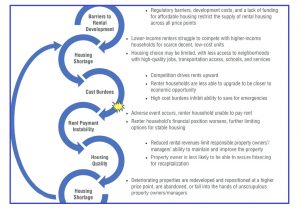
A new report released by the Urban Land Institute delves into the benefits and drawbacks of prevailing housing strategies while looking at ways to encourage new development. Entitled “Stable Residents, Stable Properties: Perspectives on Rent Control, Eviction Moratoriums, and Other Contemporary Approaches,”  the report asserts that the stability of renters cannot be separated from the stability of the rental properties in which they live. Offering strategies to offset housing disparity, the detailed analysis includes the perspectives of more than 300 renters, tenant advocates, public officials, housing affordability researchers, property owners and developers, and identifies numerous factors that threaten the well-being of tenants and housing providers alike.

As the saying goes, desperate times call for desperate measures, and therefore the general consensus among respondents was that interventions were necessary to prevent a surge in homelessness.

“The onset of the COVID-19 crisis and associated economic disruption has created considerable challenges beyond the baseline level of vulnerability,” the report contends. “The combination of eviction moratoriums, rental assistance, stimulus payments, and enhanced unemployment benefits has spared many (though certainly not all) households the most disastrous financial consequences.”

In 2020 and 2021, moratoriums and other supports in the U.S. helped contribute to an eviction rate that was half its 2019 size. Better still, the “eviction tsunami” feared when the federal moratorium expired in August 2021 didn’t fully materialize, although filings by landlords increased.

Still, the long-term trajectory remains unclear. As the Omicron variant rips through North America creating further economic upheaval, many are predicting a sustained upward and elevated eviction trend is on the horizon—a scenario that would benefit no one. As one interviewee put it, “Eviction causes loss…not just a loss of home(s). People lose their communities. Kids lose their schools.”

Challenges facing rental housing practitioners


Meanwhile, for those in the business of rental housing, the most frequently cited challenge thoughout 2020-2021 was the inability to evict tenants during eviction moratoriums, even after practitioners felt they’d demonstrated a commitment to working with tenants affected by the pandemic. Many said they felt moratoriums led to fewer tenants seeking emergency resources or working to access rent support. Some cited concerns that regulations were affecting their ability to remove tenants who were destructive to property or threatening other tenants.

Furthermore, an emerging pattern suggests that many housing providers have faced the “twin financial difficulties” of decreased rent collections and increased payroll and operating expenses related to enhanced health and safety measures. A 2020 survey of owners and operators by the National Apartment Association found that respondents spent about half their rental revenues on mortgage payments and property taxes, which are often inflexible and must be paid to avoid default or tax foreclosure. An additional 38 per cent of earnings was spent on “keeping properties up and running.”

In terms of rent collection, a survey of landlords conducted by the Housing Crisis Research Collaborative found that the share of landlords who collected 90 per cent (or more) of charged yearly rent in 2020 fell from 89 per cent to 62 per cent, while 9 per cent of respondents collected less than half.

As in Canada, smaller property owners were more likely to face considerable nonpayment challenges, which can develop beyond lost profits and affect the owner/manager’s ability to address both acute and long-term maintenance issues. When deferred for too long, issues with the building can compound into larger, more costly problems leading to health, safety, and “quality of life” issues for tenants.

“Deteriorating housing quality eventually exacerbates the shortage and heightens competition for the remaining modestly priced, decent rental homes, creating further instability,” the report concludes. And thus the cycle of instability continues…

So what are the recommended strategies?

There are ways to break the cycle of housing instability and move toward a more stable, balanced supply. For instance, as the COVID-19 crisis shifts from an acute emergency to an endemic reality, the goal should be to move beyond emergency measures like eviction moratoriums and create a more sustainable policy framework. Strategies  explored in the report include:

  • Increasing funding for emergency rent assistance and long-term supports, like permanent supportive housing and financial coaching programs;
  • Creating more rental housing for low- and moderate-income households, through approaches like zoning reforms that allow for more multifamily housing;
  • Implementing “anti-gouging” policies that prevent landlords from raising rents above a certain percentage;
  • Improving access to tenants’ rights information and empowering renters to know their options for defending themselves.

This is a merely a preliminary overview of some of the discussion points raised in the report. For the detailed analysis, please click here.


Coquihalla Highway reopens after a month of repairs

The Coquihalla Highway (Highway 5) has reopened between Hope and Merritt to essential commercial vehicles only following a month of extensive repairs. It was closed by multiple washouts on Nov. 14.

Flooding and washouts associated with the November rain event damaged more than 20 sites along 130 kilometres of the Coquihalla Highway between Hope and Merritt. This included seven bridges where spans completely collapsed or were otherwise heavily damaged.

“The people who build and maintain roads in B.C. have a reputation second to none, and their response to the recent disaster has been remarkable,” said Rob Fleming, minister of transportation and Infrastructure. “Ministry teams, maintenance contractors and hundreds of workers going flat out in challenging conditions have allowed us to reopen the Coquihalla Highway, giving B.C.’s commercial drivers a safe, efficient route between the coast and Interior.”

The repairs to the Coquihalla Highway are temporary, with travel pattern changes and reduced speed limits.

More than 300 workers using 200 pieces of equipment moved more than 400,000 cubic metres of gravel, rock, and other material to repair and reopen the highway in just 35 days.

According to Kelly Scott, president, BC Road Builders and Heavy Construction Association, the reopening of the Coquihalla Highway is a testament to the strong working relationship between the BC Road Builders and the Ministry of Transportation and Infrastructure,

“This relationship allowed the road builder industry and government to come together almost immediately, unified in the goal of reopening this vital link. We are grateful for all the women and men who worked safely and tirelessly around the clock to achieve our goal,” he said.

Travel restrictions have also been lifted from Highway 99 between Pemberton and Lillooet. However, vehicles over 14,500 kilograms GVW are still not permitted on this section of Highway 99.

When travel restrictions are lifted from Highway 3 and Highway 99, these routes become available for general use.

HDR announces new design principal in Vancouver

Matthieu Grady has joined HDR as design principal based in the firm’s Vancouver studio. Grady has more than 21 years of experience working for firms around the world and will be advancing HDR’s delivery of strong, grounded, smart and human-centered design for its clients and their end-users.

In his role as design principal, Grady will champion design excellence across all types of projects and scales and throughout all phases of development.

“Opportunities for design excellence exist everywhere, from the first business development discussions to the specifications and installation of hardware,” he noted. “My days will be spent interacting deeply with teams, iteratively studying design excellence opportunities, and motivating and empowering everyone at HDR to create world-class design work.”

Grady is an ardent advocate for the value that architecture brings in cultivating the deep changes needed in our culture and society today. “I believe that hyper-contextualized projects have the best chance of adding meaningful and impactful additions to our cities and lifestyles,” he said. “I am most passionate about architecture that is shaped responsively and intelligently by the unique factors of the site, context and environment within which a project sits. I am especially passionate about how this type of contextual architecture can impact our increasingly serious environmental crisis.”

Previously, Grady has worked alongside globally recognized design firms like Jean Nouvel, Morphosis, and Diamond Schmitt, among others. A “generalist” architect, he has worked on the design and delivery of a wide range of award-winning, world-class projects in the commercial, industrial, institutional, corporate and retail fields throughout North America, Europe, the Middle East and North Africa.

Notable projects include the Abu Dhabi Louvre Museum, the 300m Phare Office Tower in Paris, the Chateau La Coste Winery in Southern France, and the Emily Carr University of Art & Design in Vancouver.

CRE’s demographic imbalance shifts tentatively

Commercial real estate’s demographic imbalance in favour of white men becomes increasingly apparent with rising seniority. Newly released results from a global survey of the industry’s diversity, equity and inclusion (DEI) policies and practices show that a majority of respondents are intent on broadening their base of employees, but, for now, white men still fill the decision-making echelon to a disproportionate degree.

For example, women account for 41 per cent of the workforce in North American firms participating in the survey, and hold 29 per cent of senior-level professional roles and just 20 per cent of executive management positions. In the same companies, the proportion of white employees rises from 70 to 84 per cent in the ascent from the mid-level to senior-level professional ranks, while proportional representation of Asian, Hispanic/Latino and Black professionals slips by as much as half in the senior-level gradient.

However, 92 per cent of the 175 survey respondents — which collectively represent about 435,000 employees and have USD $2.4 trillion in assets under management — report that they are working to increase diversity and are re-examining approaches for evaluating merit and promoting staff. The U.S. based research firm, Ferguson Partners, conducted the survey and accompanying analysis on behalf of seven prominent industry associations representing private and listed real estate companies, developers, investment managers and institutional investors throughout North America, Europe and Asia Pacific — and concludes that participants’ willingness to disclose potentially unflattering data is evidence of their commitment to change.

“Most firms are early in their journey in adopting sustainable policies that will make an impact, and even defining what is a successful DEI outcome is difficult,” the report’s executive summary observes. “With this study acting as a benchmarking tool, we hope to provide a valuable shared approach for the industry to keep itself accountable and measure progress on this critical issue in the coming years.”

Majority of participating companies have DEI initiatives underway

Survey participants were asked to describe their DEI programs and outline the metrics they use to measure program outcomes related to recruitment, employee retention, professional development opportunities, inclusivity and pay equity. They also provided a breakdown, to the degree that was possible, of the composition of their current workforces.

Much of the resulting data is drawn from firms with employees in North America. About 40 per cent of all participants conduct business and have staff in more than one global region so that, across the entire database, 89 per cent are active in North America, 45 per cent operate in Europe, 33 per cent operate in Asia Pacific, 4 per cent operate in Latin America and 1 per cent does business in Africa and/or the Middle East.

A slightly larger share of respondents — 47 per cent — report they have formal DEI programs, while 45 per cent characterize their efforts as a looser assortment of initiatives and policies aimed at supporting diversity. One quarter of companies participating in the survey have a staff position solely dedicated to DEI. Just 8 per cent have no DEI programs.

In addition to gender and ethnicity, 70 per cent of firms with DEI policies also address sexual orientation. “Other dimensions still needing to gain traction are physical disabilities, socioeconomic backgrounds, mental health and neurodiversity,” the report notes.

Women most evident in junior and mid-level professional ranks

As with the E in ESG (environmental, social, governance), regulatory influences tend to shape the DEI path European operators are taking, with a larger quotient reporting they have formal policies and that they collect data on the gender pay gap. Nevertheless, women currently have the lowest rate of representation in the senior ranks of European-based companies. They fill just 16 per cent of executive management roles and make up just 14 per cent of board of directors, while comprising 38 per cent of the total workforce.

The data also hints that women in European companies are more likely to stall in the mid-level professional ranks, where they account for 53 per cent of positions. Stepping up to senior-level professional roles, their presence shrinks to just 23 per cent of positions.

Similarly, although women account for the majority of junior-level professionals in North America, Europe and Asia-Pacific — at 52, 55 and 54 per cent respectively — there is no way to determine what reflects new hires versus the failure of mature workers to advance. Across all survey responses, 56 per cent of participants indicate they would like to see more women in executive management, suggesting that 44 per cent are fine with the status quo. Meanwhile, a majority of respondents — 52 per cent — sees no call to increase pay equity transparency.

Data on workforce composition far from complete

Survey respondents were more likely to advocate the advancement of individuals from underrepresented groups, with 69 per cent endorsing more varied ethnic representation in their companies’ leadership. Looking at the current data, non-whites are a small fraction of the commercial real estate workforce at every level of seniority in North America.

Non-whites are disproportionately bunched in junior-level professional roles, where they make up 40 per cent of the ranks despite accounting for just 31 per cent of North American staff. This suggests that they are a growing quotient of new hires, while accounting for 16 per cent of senior-level professional positions and 15 per cent of executive management. At the board level, their presence shrinks again, to 13 per cent.

An ethnic breakdown of workforce composition is not provided for Europe and Asia Pacific, where there is more emphasis on collecting data about age. This highlights the need for more reporting with standardized metrics in order to track how stated DEI intentions flow through to outcomes. It’s expected these first survey results will underpin a benchmark, helping companies to gauge their own performance and compare it against other industry players, and all sponsoring associations are encouraging their members to participate in the 2022 survey.

For now, upwards of 60 per cent of survey respondents report they are engaging with diverse job candidates to ensure they are considered for openings, and are examining where biases exist in the hiring process and attempting to remove them. More than 90 per cent already have or plan to implement communication strategies related to DEI within the coming year.

“The scale of engagement among our members, partners and stakeholders in this survey very clearly demonstrates the strategic importance of equity, diversity and inclusion in our industry, and the urgency of removing barriers to equitable opportunities,” says Michael Brooks, chief executive officer of Canada’s REALPAC, one of the survey sponsors. “Through intentional action, we can celebrate diverse perspectives, significantly enhance our businesses and support economic prosperity.”

Southpark on Whyte earns a LEED Gold first

Southpark on Whyte, an urban, mixed-use redevelopment, has been awarded LEED Gold certification and is the first LEED V4 multi-family project in Edmonton.

Southpark on Whyte was conceived and developed in partnership with ONE Properties and Wheaton Properties and is professionally managed by ONE Properties. Located on Whyte Avenue in Edmonton’s popular and lively neighbourhood of Old Strathcona, Southpark on Whyte opened Phase 1 (99 rental suites) to residents in late 2020. Upon completion, there will be a total of 660 residential suites and 26,900 sq. ft. of retail space.

“Achieving the first LEED V4 multi-family project in Edmonton recognizes deliberate design, construction and operations, and reflects ONE Properties and Wheaton Properties’ commitment to lead on sustainable development and property management practices,” said Graham Halsall, director of sustainability at ONE Properties. “Southpark on Whyte integrates valuable energy, water and carbon-reduction initiatives, while supporting resident health, wellbeing and comfort.”

Examples of green building innovations implemented at Southpark on Whyte include:

  • Reclamation of a previously contaminated site in one of Edmonton’s most pedestrian-friendly and low-carbon neighbourhoods;
  • High-performance, high-efficiency WaterSense and Energy Star-rated fixtures and appliances to reduce energy and water use;
  • Locally sourced construction materials, including 100 per cent of concrete aggregate from the immediate area;
  • Strategic waste diversion strategy which reduced the amount of construction material sent to landfill by over 40 per cent compared to a typical project; and
  • Exclusive use of no and low-VOC interior paints, coatings, flooring and insulation to prevent off-gassing and support healthy indoor air quality.

Winnipeg cleaner named 2021 ARCSI Professional Cleaner of the Year

ISSA has announced that Corrin Larson, a professional house cleaner and owner of NeedCleanerNow, has won the 2021 ARCSI Professional Cleaner of the Year Award.

The award is given by the ISSA Residential Cleaning Council, which represents the residential cleaning industry through the Association of Residential Cleaning Services International (ARCSI), a Division of ISSA, to recognize an individual each year whose commitment to excellence, integrity, and professionalism embodies the standards and values of the industry.

NeedCleanerNow is an ARSCI member and an on-demand home cleaning service based in Winnipeg, Man. that provides a full suite of cleaning services for homes of any size. ISSA says Larson is known for her kindness, creativity, and positivity. She is dedicated to 100 per cent customer satisfaction and giving back to her community through volunteer work.

“Our homes are treasured places where we build memories with loved ones. Residential cleaners do the important work of keeping these environments clean and safe for individuals and families, children, the elderly, and everyone in between,” said Erin Lasch, ARCSI Program Manager. “Corrin is truly deserving of this recognition for going above and beyond to care for her employees and customers.”

“Residential cleaners make an enormous impact, especially when they serve their communities with professionalism and positivity,” said Jeannie Henderson, the new chair of the ISSA Residential Cleaning Council. “Corrin is an exceptional business owner who leads by example to prioritize safety, respect, and appreciation for her staff. Congratulations!”

The Association of Residential Cleaning Services International (ARCSI)  was established in 2003 to assist residential cleaning service owners in starting, promoting, building, and expanding their businesses. As the residential cleaning arm of ISSA, ARCSI brings together members in Canada, the U.S., and across the world by providing valuable information and opportunities to ensure the growth and development of its members’ businesses through education, networking, and collaboration.

Ethics of workplace surveillance draws scrutiny

Organizations across Canada have increasingly turned to surveillance technologies during the pandemic as a way to monitor their employees’ work behaviour.

Emerging digital innovations, including those used to collect sensitive biometric information like eye movements, facial muscles and tone of voice, are under growing scrutiny as remote work models are predicted to endure.

“This current entrenchment of worker surveillance is partially a consequence of cheaper and more available surveillance technology,” says Vass Bednar, executive director of the McMaster University’s Master of Public Policy and Digital Society program.

She was speaking at an event, hosted by the Cybersecure Policy Exchange at Ryerson University, which released its Workplace Surveillance and Remote Work report in October 2021. As it stands, there are few studies that examine workplace surveillance in Canada. This research builds on pre-existing findings and explores the impacts amidst COVID, revealing gaps and opportunities in the post-pandemic workplace.

Joe Masoodi, senior policy analyst at the Cybersecure Policy Exchange and lead author of the report, says AI-driven technologies could lead to bias treatment, yet empirical research on impacts to marginalized and vulnerable communities is significantly lacking. “There’s also little in-depth research on the cybersecurity risks posed by surveillance technologies, despite the steep increase in cyber attacks on workplaces since the beginning of the COVID-19 pandemic.”

A growing appetite to surveil

Companies like Hubstaff, Sneek, Prodoscore and TransparentBusiness reported an increase in customers between 400 and 600 per cent from March to June 2020. Emerging technologies, specifically AI-driven, are ushering in new ways to surveil, track employee behaviours and measure performance. Health data is also being monitored to track compliance with COVID-19 safety measures, such as social distancing.

This takes a toll on employee morale. Workers who perceive higher levels of on-the-job surveillance were found to exhibit more negative attitudes towards such measures. “And because there’s a power imbalance between employers and employees, that typically favours employers, workers may agree to surveillance measures in order to avoid potential consequences that a refusal may bring, such as retaliation or joblessness,” says Masoodi.

Closely monitoring employees is nothing new. Peggy Nash, chair of the advisory committee at the Centre for Labour Management Relations, says that as technology evolves, motives among managers remain consistent: to increase control, monetize data and capitalize on the information it brings.

“Technology is neutral,” she says. “It’s people who decide which technology is going to be used and how it’s going to be used. And for the most part, it is employers that decide. In many workplaces, workers have zero input, zero control.”

Privacy priorities

There are challenges with current employee privacy protections—a key message reverberating through the report. As Bednar says, despite employment standards that dictate vacation time, sick days and the hours one works, there is no labour legislation that protects people from technologies that automate tasks and “force an unhealthy pace of work” through algorithmic manipulation.

Technology is relying more on granular forms of data collection linked to AI and other analytics tools, such as emotion monitoring software to measure employee productivity, which is rife with potential gender and race biases.

Such technology is also creeping into homes as the border between work and personal life blurs, evidenced mainly through personal devices and networks for work-related activity.

“Canada’s current legal framework with respect to workplace surveillance provides employers with considerable leeway to surveil employees, so long as the surveillance is linked appropriately to employers interests and goals,” says Masoodi.

To make sure that workplace surveillance does not go beyond what is reasonable and appropriate, private sector employers will need guidance in the post-pandemic workplace to develop better policies on how such technologies are used remotely and in-person, he adds.

Greater regulatory enforcement is also crucial. As it stands, the Office of the Privacy Commissioner (OPC) is not able to issue final binding orders of compliance or levy fines, even if it finds the entity in question has violated the provisions or principles set out in the federal Privacy Act or the Personal Information Protection and Electronic Documents Act [PIPEDA].

Unlike powers given to data protection authorities in the UK and Australia, the OPC doesn’t have the ability “to proactively inspect the practices of private sector organizations, in the absence of a complaint or open investigation.”

Organizations must balance the valid business interests of the company with employees’ reasonable expectations of privacy.

Jessica Kearsey, partner at Deloitte Legal Canada, says the legal language around privacy in the workplace, may be moving away from this “balancing of interests” to more of a human rights framework, as technology grows more omnipotent—extending beyond its original intent to the detriment of employees.

For instance, existing literature on the topic of ‘function creep’ shows how data collected about workers for one objective can be repurposed for other, more discriminatory uses.

In November 2020, the federal government proposed Bill C-11 as one concrete step towards privacy law reform. It would enact the Consumer Privacy Protection Act (CPPA) and repeal parts of PIPEDA that concern protecting personal information.

Bill C-11 would also create the Personal Information and Data Protection Tribunal, which would both hear appeals of certain decisions from the OPC and impose penalties for the violation of certain provisions of the CPPA. The industry is hailing these changes as a step forward.

And there is also much to smooth out. After reviewing the legislation, the OPC stated that the provisions of the bill would actually give individuals less control; for instance, penalties would “not apply to the most common and frequent violations of the proposed CPPA related to consent.”

Empower or deprive?

Besides the intrusive nature of surveillance, some have argued for its potential to detect burnout, thus empowering workers and resulting in wellness initiatives.

“I think technology can be very useful for both employers and employees, depending on context,” says Kearsey, pointing to high-risk workplaces with little supervision, such as the night shift on a 911 dispatch where PTSD is a known reality. As just one “part of the puzzle” to help flag safety issues, consulting with employees and a union on how to best use the technology is key, along with conversing with workers to understand the context behind the burnout, which extends beyond a particular shift.

Kirstie Ball, professor of management at the University of St. Andrews, in the U.K., says autonomy figures highly into how surveillance and empowerment intersect, if employees are given more control as technology intensifies.

Allow workers the ability to “opt out without being socially stigmatized for doing so,” she explains, and give them access to their performance data, so they can analyze and choose what the development needs are, in turn, offering those opportunities to them.

Also crucial is inviting workers to question and participate in “ethically robust policies that govern surveillance,” and negotiating with them to create agreement over what was surveilled.

Within larger organizations fraught with invasive technology and non-unionized workers, Nash observes that it is still difficult to imagine surveillance as empowering.

While technology can make work more comfortable and easier, for instance, automation in place of back-breaking work, it is often “one-sided and negatively perceived outside of personal security situations.”

“It’s difficult to imagine positive scenarios, but there ought to be,” says Nash, adding that the development of technology, often funded by public dollars and capitalized by the private sector, should be used for the public good.

“And so much technology, generally, is used for the public good in medicine and vaccine production,” she notes. “But I think when it comes to surveillance, I struggle to see too many opportunities for positivity, from the perspective of workers.”

To access the full Workplace Surveillance and Remote Work report visit the Cybersecure Policy Exchange at https://www.cybersecurepolicy.ca/reports.