



Articles Archive - Page 296 of 928 - REMINET
REMI

REMI Show 2022 promises forum on the future

REMI Show 2022 celebrates the resumption of in-person networking with the theme, Facing the Future TOGETHER, as it returns to the Metro Toronto Convention Centre, June 8th and 9th. Two days of learning and social experiences promise dynamic discussion of key property and facilities management issues and up-close demonstrations of products and technologies with immediate feedback to questions posed.

Together with leading industry associations, MediaEdge Communications Inc. has developed a robust event with five streams of educational seminars, a tradeshow floor with 125 suppliers and service providers covering a sweeping range of management and operational supports, and plenty of opportunity to interact with knowledge specialists and industry peers in purposeful sessions and relaxed situations.

“We are thrilled to reconvene a face-to-face setting after two years of virtual events and virtual fatigue,” says Chuck Nervick, senior vice president with MediaEdge Communications. “We’re excited to see everyone in person once more, and we have a lot to discuss.”

A single free registration offers attendees a gateway to any of the five concurrent education agendas, which are reflective of commercial real estate’s range of property types and multi-faceted service needs. These include: ISSA Show Canada, geared to cleaning and maintenance; an IFMA Canada program for facilities managers; and focused sessions for the multifamily rental and condominium sectors. As well, the generic REMI stream will take a broad based approach to tackle emerging and enduring concerns that COVID-19, climate change and relentless competitive pressures have brought to the forefront.

Each educational program brings its own slate of high-calibre speakers and panelists, sharing legal, technical, managerial and social insight in streamlined 45-minute sessions. Collectively, they cover off several angles of facing the future, whether that be post-pandemic supply chains, mental health, ESG, net-zero targets, smart buildings or effective communications with staff and tenants.

That’s all informed with input from REMI Show partners for 2022: Building Energy Innovators Council (BEIC); Canada Green Building Council (CAGBC); Canadian Federation of Apartment Associations (CFAA), Community Associations Institute (CAI) Canada; Federation of Rental-housing Providers of Ontario (FRPO); the Hamilton and District Apartment Association (HDAA); Heating, Refrigeration and Air-conditioning Institute (HRAI); the International Facility Management Association (IFMA); Institute of Real Estate Management (IREM); ISSA Canada; the Real Estate Institute of Canada (REIC); and the Toronto Construction Association (TCA).

Beyond this informational context for facing the future, the tradeshow floor will provide a look at the tools and explanations of how to deploy them. And true to real estate’s multidisciplinary nature, the tradeshow floor will also be the venue for conversation and refreshment during two end-of-day receptions on June 8th and 9th.

“After two years of online research, it’s an opportunity to get up to speed with the latest and greatest products and services in one walkable, friendly venue,” Nervick notes. “Attendees can look forward to valuable takeaways as we once again network with industry colleagues, experts and suppliers.”

ISSA, IWBI form new coalition for workplace health and safety

The International WELL Building Institute (IWBI) and ISSA have launched the Healthy Workplaces Coalition.

The new coalition consists of nearly 40 U.S. organizations, industry leaders, and trade associations collaborating to support and advance federal policy aimed at helping businesses and organizations better afford and implement health and safety improvements in workplaces and across the built environment to benefit the health and well-being of employees, customers, and the public.

Members of this new advocacy coalition launched will work together to not only support federal policy promoting healthy workplaces but also raise awareness using a collective voice to help the public, policymakers, and businesses understand the imperative of workplace health and safety during the COVID-19 pandemic and beyond.

In addition to IWBI and ISSA, the coalition’s leadership team includes the following steering committee members:

  • American Institute of Architects (AIA)
  • ASHRAE
  • American Society of Interior Designers (ASID)
  • Building Owners and Managers Association International (BOMA)
  • Green Seal
  • International Facilities Management Association (IFMA)
  • The Real Estate Roundtable (RER)
  • U.S. Green Building Council (USGBC).

“While COVID-19 increased the public’s attention to the importance of cleaning, air filtration, and hand hygiene, there is now an increased focus and commitment by businesses and buildings to invest in healthy spaces,” said ISSA Executive Director John Barrett.

“As more workers head back to physical workplaces, the demand and expectation for clean, healthy, and safe environments will continue to increase. This coalition will help to educate policymakers about the need to support policies to help employers make these essential investments in healthy workplaces.”

“For the first time, many of the nation’s most important building organizations and leading businesses are uniting to advocate for workplace health,” said Rachel Hodgdon, President and CEO of IWBI. “This kind of collaborative advocacy will help drive the level of investment necessary to get us safely back to business now and fortify our workplaces for the future.”

Businesses need education and financial assistance to accelerate and deploy proven workplace solutions and strategies to address health threats such as COVID-19 as well as broader health and safety-related issues of the future. While several relevant policy proposals have emerged, further action is needed to incentivize businesses to create and maintain healthy workplaces.

ISSA members who have already joined the Healthy Workplaces Coalition include Arxada, Fellowes Brands, Honeywell, Kimberly-Clark Professional, Poppy, PortionPac Chemical Corporation, Pritchard Industries, and Spartan Chemical Co.

“Workers are much more cognizant of the spaces they spend time in than they were prior to the COVID-19 pandemic, and they want viable evidence that the buildings they use every day for work, school or care are healthier and use technology that helps to foster their well-being,” said Manish Sharma, vice president and general manager of sustainable buildings, Honeywell. “We look forward to working with the Healthy Workplaces Coalition to further educate, advocate and support the adoption of federal policy that fosters healthier, more sustainable buildings.”

The coalition continues to welcome interested participants and anticipates that membership will expand over the next several months. Contact ISSA Director of Government Affairs John Nothdurft for more information at [email protected].

Green leases go platinum for Canadian companies

Canadian companies are well represented in this year’s inaugural platinum tier of the Green Lease Leaders program. The annual U.S.-based awards recognize landlords, tenants and specific leasing deals for adherence to energy efficiency, sustainability, accessibility and inclusion in the management and operation of commercial and multifamily buildings.

For 2022, six Canadian landlords are among the 46 to receive platinum, gold or silver accolades through the program, which is jointly sponsored by the U.S. Department of Energy’s Better Building Alliance and the Washington D.C. based Institute for Market Transformation. Notably, Dream Office Real Estate Investment Trust (REIT) is one of just eight landlords in the new platinum ranks.

TD Bank Group, likewise a platinum honouree, is one of the five tenants recognized this year. It also enjoys platinum standing in the team transaction category along with its confreres, Canderel Commercial Property Management and LaSalle Investment Management.

“Green leases are a common sense, proven solution to create high-performing buildings and improve our communities. We have seen that they not only reduce energy use, but also promote strong relationships between landlords and tenants,” maintains Lotte Schlegel, executive director at the Institute for Market Transformation.

To be recognized as a Green Lease Leader, landlords and tenants must comply with the program’s prerequisites for integrating energy efficiency requirements into their leases. They must also attain at least five credits from a range of optional measures largely focused on energy management, but with two credits tied to carbon intensity and to the establishment of social impact goals for health, resiliency, diversity and climate. Only participants that claimed the latter credit could quality for the new platinum level recognition introduced this year.

Canada’s four gold level landlords for 2022 include BentallGreenOak, Dream Industrial REIT, First Capital REIT and RioCan REIT. Triovest Realty Advisors achieves silver standing.

Just three Green Lease Leaders are recognized in the team transaction category, which drills down to the collaborative dynamic of the lease negotiating process. To qualify, applicants must represent at least two parties to the deal — i.e. landlord and tenant — and the lease must reflect at least two prerequisites and five credits from Green Lease Leader criteria for either landlords or tenants. For 2022, two platinum and one gold ranking arre bestowed.

Collectively, the 2022 Green Lease Leaders oversee or occupy nearly 2 billion square feet of space, representing a 23 per cent expansion from 2021. Each year’s field of Green Lease Leaders retains the designation for three years, equating to a total of 5 billion square feet of space currently recognized through the program.

“These leading organizations are driving lasting change by creating mutually beneficial agreements between landlords and tenants to pursue emissions reduction targets,” says Maria Vargas, director of the Better Buildings Initiative.


Hazelview supports displaced Ukrainians with housing, ongoing aid

Hazelview Properties is among several rental housing providers that have banded together to support displaced Ukrainians since the war began in March 2022. To date, collective efforts by Boardwalk REIT, CAPREIT, Hazelview Properties, Homestead, InterRent REIT, Minto Apartment REIT, and Starlight Investments have helped  hundreds of families impacted by the ongoing humanitarian crisis.

For its part, Hazelview has provided more than 50 suites from Halifax to Winnipeg via the company’s housing support program. Additionally, team members have been stepping up to help newcomers in other ways, including collecting, storing and delivering donated items, making financial contributions, and assisting with employment searches.


“My husband and I just wanted to say thank you for your help in finding a place to live,” said Kseniya, who arrived with her family in early April and has been living in a Hazelview apartment. “We love it a lot and are so happy that we were able to find such good people as you are.”

To ensure the Ukrainian families continue to get the essential supplies they need, such as strollers, diapers, furniture and appliances, Hazelview recently launched a fundraiser using the GoFundMe platform. Those who donate are automatically entered into a raffle to win an original painting from Toronto artist Ric Santon.

“I think this project and movement is amazing,“ said Diana Swift, a property manager with Hazelview Properties who’s helped with ongoing efforts. “It is another reason why I am so proud to be part of the Hazelview family.”

“I am incredibly proud of the Hazelview team for coming together to support this program and the Ukrainians who have been hit the hardest by this conflict,” added David Melo, Managing Partner & President of Hazelview Properties. “We remain committed to supporting displaced Ukrainians arriving in Canada for as long as they require it.”

To learn more visit hazelview.com.


Sustainability best practices for businesses

Sustainability is an increasingly important focus for many cleaning service and janitorial businesses, as well as facilities. Climate change is affecting our lives and the planet, which means sustainable business practices are vital for business owners, leaders, and administrators.

Awareness is a good starting point for businesses looking to become more sustainable. The more aware organizations become of the current impacts their business practices have on the environment, the more likely they are to make strides in reducing their company’s carbon footprint and take on roles as industry leaders.

Waste and sustainability

Waste continues to be a growing issue, and 20 businesses have been found to generate roughly 55 per cent of global plastic waste. Before it’s too late, these leaders must make sustainable changes to limit their organizations’ impact on our environment.

Studies show that consumers are willing to forgo brands that don’t support their values, and consumers supporting sustainable companies have grown in popularity. At least 50 per cent of consumers cite the pandemic for causing them to rethink what’s important to them, which changes their buying habits. By doing this, they’re setting the bar for industries to re-strategize and set new standards for meeting and exceeding expectations.

At least 76 per cent of consumers say they are attracted to businesses or brands that source services and materials in ethical ways. Additionally, 65 per cent of consumers say they would rather do business with brands that are environmentally friendly and provide credible “green” credentials for their products and services, minimizing harm to the environment and investing in sustainability.

Why businesses should care

Many CEOs have reported that their businesses have already experienced damaging effects due to climate change, and as a result, are ready to take action. These effects are considered a wake-up call with the goal of speeding up their transition to more sustainable business models. While some CEOs have already taken action, others may follow. It’s a matter of demonstrating behaviours crucial to achieving a competitive stance by way of sustainability.

With the increasing frequency of natural disasters globally, CEOs are forced to reckon with an urgent need to adapt and become more resilient, especially across supply chains. The pandemic has done little to help matters, particularly with pressure from investors and capital markets pushing for quick climate action.

According to President Biden’s Federal Sustainability Plan, ambitious goals are underway to deliver an emissions reduction pathway pursuant to President Biden’s goal of reducing U.S. greenhouse emissions by 50 to 52 per cent from 2005 levels by 2030. Through this plan, the Federal Government aims to achieve 100 per cent carbon-pollution-free electricity by 2030, including 50 per cent on a 24/7 basis, 100 per cent zero-emission vehicle acquisitions by 2035, and net-zero emissions buildings by 2045, including a 50 per cent reduction by 2032, among others.

Incorporating sustainable practices

When it comes to incorporating sustainable practices, there are several ways in which organizations can do their part. Some examples include:

Looking for third-party certifications:

Facility managers are working to make washrooms more environmentally friendly, which is why it’s important to consider the impact of paper products on sustainability. While many facility managers cite using recycled paper products as a way to comply with green-purchasing plans and contribute to their organization’s sustainability goals, third party organizations like Green Seal have developed standards for products, including those used in a facility washroom.

CDP ratings are also important. CDP is a nonprofit organization supporting investors, companies, cities, countries and regions globally to manage their environmental impacts. This organization’s Supplier Engagement Rating measures the ability of suppliers to engage in the fight against climate change. Companies should choose to work with businesses with a CDP “A” rating, demonstrating its commitment to fighting climate change.

Using tracking technology:

There are now technologies available that make it easy to track cleaning measures and limit doubling up on procedures.

Gone are the days of using a piece of paper to track when cleaning professionals service a washroom or other area of a facility. Consider partnering with companies that provide technology to quickly analyze how often areas are being serviced and help ensure tasks are getting done on time. Facility managers can also optimize time by logging and analyzing cleaning and disinfecting activity for each respective zone – this reduces overservicing and lowers the cost of labour and products used.

Mitigating corporate water risk:

There are a number of ways in which facilities can reduce the amount of water waste. These include reducing pollution and integrating water management into their business strategies. Several corporations are taking steps to efficiently limit their water consumption. It’s important that companies consider the impact water usage has on their bottom lines, including areas of business that are vulnerable to water shortages, and ways in which to reduce consumption.

The business of going green

Sustainability is important not only for the environment, but also for your business. As industry leaders, it’s imperative to lead by example, which is why making greener decisions puts your business at the forefront of the competition.

CEOs taking strides toward a more sustainable business model have cited seeing significant improvements to their infrastructure and bottom line.

Incorporating sustainable practices takes effort, which can be demonstrated by partnering with third-party certifications and introducing tracking technology to the business to reduce paper usage.

Mark Kirchgasser is VP of Sales, Away from Home, at Sofidel America and a 30-year veteran of the tissue industry.

Execs identify office cleaning as most important incentive to workers

Many more workers are working in offices now than they were for most of 2021, but that doesn’t mean they are completely over the pandemic. That seems to be something that C-level executives are recognizing, as a recent survey found that they have identified that office cleaning practices are the number one incentive for workers to return to a workplace.

The new survey from the Cleaning Coalition of America, a partnership of six of the nation’s largest facilities services companies, found that three-quarters (75 per cent) of respondents to their survey of C-suite executives cited office cleaning as the most important measure to ensure employees are happy to return.

It’s fair to say this is likely to be a priority for executives, given that 76 per cent of the respondents said that an in-person workplace is essential to their company’s bottom line and revenue.

Most respondents said they believe that generally stricter cleaning protocols will improve employee confidence in returning to the workplace.

The survey also found that 68 per cent of C-suite executives have moved their office location during the pandemic.

In addition, one in five (20 per cent) cited the importance of cleaning as the most important lesson they learned from the pandemic, followed by the importance of improved technology (17 per cent) and the benefits of remote work (15 per cent).

RELATED: The new commercial office takes shape

“The pandemic required businesses to fundamentally rethink their operations and the value placed on workplace health and safety,” said coalition member Paul Budsworth, Diversey North America president.

Fellow coalition member Stanley Doobin, Harvard Maintenance Inc. owner and CEO, stressed that in the post-pandemic era, increased cleaning and disinfection “must be the new standard for any shared space”.

Landscape architecture honoured with CSLA awards

The Canadian Society of Landscape Architects (CSLA) announced the recipients of the  2022 Awards of Excellence. This year, 15 projects received a national award.

Agguttinni Uumajunut Pimmariuninginnut (Territorial Park) by NVision Insight Group Inc. with John Laird Associates earned the Jury’s Award of Excellence, which is given to one project annually that best demonstrates the CSLA’s vision – of advancing the art, science, and practice of landscape architecture.

These award-winning projects are preeminent examples of Canadian landscape architecture. They illustrate the range of what landscape architects do and how landscape architects are helping to reshape our communities by defining the places where we live, work, and play.

Waterfront Park

The 2021 National Award Recipients are:

  • Touch the Water Promenade, Dub Architects, Stoss Landscape Urbanism, ISL Engineering
  • Find your Centre: Mount Pearl City Centre Renewal Plan, Mills & Wright Landscape Architecture
  • Wanuskewin, Crosby Hanna & Associates
  • Waterfront Park, PWL Partnership & WSP
  • Seneca’s Centre for Innovation, Technology and Entrepreneurship (CITE), Quinn Design Associates Inc.
  • Aménagement du paysage et eclairage de la Maison Brignon-dit-Lapierre
    Vlan paysage, IGF Axiom, City of Montreal, Civiliti: urban designer + urban study, Enclume: historical study
  • Plage de L’Est (La Débâcle), Ni Conception designed in close collaboration with Ruccolo + Faubert Architects
  • Bloor-Annex BIA Parkettes, DTAH
  • Morgan’s Garden: Healing, Engaging, Empowering, Virginia Burt Designs, Canada Inc.
  • Steveston Nikkei Memorial, Hapa Collaborative
  • The Fraser River Delta Collaborative: Advancing Design for Sea Level Rise in the Fraser River Delta
    UBC School of Architecture and Landscape Architecture (SALA), Hapa Collaborative, PFS Studio, PWL Partnership, space2place
  •  The 2020-2030 Iqaluit Recreation Master Plan 
    2020-2030 ᐃᖃᓗᐃᑦ ᐱᓐᖑᐊᖅᑐᓕᕆᓂᕐᒧᑦ ᐊᑐᖅᑕᐅᓪᓚᕆᒃᑲᔭᖅᑐᖅ ᐸᕐᓈᖅ, George Harris Collaborative Inc.  (Calgary)
  • Les Habitations de Saint-Michel Nord, Vlan paysage
  • Cabot Trail Retreat, Outside! Landscape Architects Inc.

“The 2022 CSLA Awards of Excellence recipients are like a cross-Canada tour of our country’s landscapes: the expanse of the western Prairie, the majesty of the Arctic, the Pacific coast, and the Atlantic coast, the magnificent river valleys and the diverse urban places set amongst them. The jury this year was taken with the diversity of scope and geography that the profession of landscape architecture in Canada embraces. The recipients of these national awards are remarkable, but the collective statement made by all 57 submissions received in 2022 is a testament to the impact and the scope of the profession,” said George Dark, chair of the 2022 Jury.

What’s ahead for Ontario’s condo market?

We are currently seeing a dramatic shift in the housing market with housing activity slowing down, thanks to a drop in demand. The housing market cool-down was prompted by rising interest rates, with the most recent quote for two-year fixed mortgage rates rising to 4.03 per cent.

Mortgage insurers in Canada are seeing a drop of nearly 40 per cent on unit application volume. Borrowers who are up for renewal will see their rates double in many cases, creating some real risk in the markets. The sales-to-new listings ratio in Toronto suggests that sales and selling prices will begin trending downwards at a rapid pace. In addition, other inflationary pressures such as fuel, the cost of food and other worldwide conflicts and challenges risk pushing the economy into a recession.

The dual impact of rising rates

One of the impacts of interest rate increases on potential homebuyers is with respect to their house-buying power, which has been reduced by almost $100,000 in many areas. However, we have also seen increases in household income, which has helped to temporarily ease the loss in house-buying power, that is, until we see another rate increase.

Another impact of rising interest rates is the financial disincentive that is created for sellers to sell their homes and buy a new home at a higher mortgage rate, which will further constrain housing supply and make real house price declines potentially unlikely. As a point of reference, the 30-year average fixed five-year rate is just over eight per cent, compared to where we have been and the current posted rate of four per cent.

Housing related-measures

Building

The housing accelerator fund, rapid housing initiative and multi-generational home renovation tax credit will not impact the supply or market materially. These measures still have yet to be passed, and to be meaningful, overhaul of the municipal approval process and reduction of red tape is required to accelerate delivery times of new homes.

Saving

The proposed Tax-Free First Home Savings Account, increase to the First-Time Home Buyers Tax Credit (HBTC) as well as the proposed increase to the Home Accessibility Tax Credit (HATC) are all positive measures, but will not provide any material boost to enable those already marginally qualified to be able to enter the housing market. Notwithstanding that Canadians saved record amounts during the pandemic, the recent spike in borrowing costs coupled with the increases in prices, services have easily eroded any additional buying power that they may have had.

Anti-flipping and foreign investment ban

The proposed anti-flipping and foreign investment ban are not based on any sound data or research. While politically this may appeal to voters, the fact remains there is little research to back up the “assumption” that the overheated market has been caused by foreign buyers and other investors.

Condo market

While overall activity has declined, condo supply continues to remain very constrained in the primary GTA markets. However, new pre-construction launches continue to be very popular.

Signs that developers are having to be more competitive, such as offers of rental guarantees, upgrades, inclusion of parking spaces, cash back and more flexible deposit structures are being seen now.

The key going forward is for buyers to ensure that the developers have “cost certainty” around their proformas. Recent reports of buyers having to cough-up additional funds to cover the massive increases in construction costs have made pre-construction buyers a little wary of what they are getting into.

According to data from Right at Home, looking at January to May 2022 versus January to May 2021, we see price increases of 22 per cent on sales and a 13 per cent increase in rentals. On the transaction volume side, there is a decline of nine per cent, while lease transaction volume has declined by 11 per cent over the same period.

A 2022 Forecast

Rate increases, conflicts, supply constraints, savings and the recent relaxation of travel and other COVID-19 related measures will all contribute to the consumer taking a break from the real estate market and heading off to cottages and other destinations.

As such, we will continue to see a drop in market activity. This should not be translated into a crash, or bubble bursting or even major price drop. While the price acceleration will certainly slow, inflationary pressures will keep the new home/condo markets at their current levels and the continued restrained supply of resale homes will also serve to keep prices from dropping precipitously.

Subject to world events and federal policy makers being able to impact rising inflation in a positive way, we could see a slight rebound in the fall real estate market. Effectively, the 2022 spring market has been a “no-show”. Given that comparisons to 2021 and 2020 are not as relevant, we feel, 2019 is a much better frame of reference and as such, this is still a healthy real estate market. . . for now.

John  Lusink is president of  Right at Home Realty.

BCIT appoints new director for welding technologies

The British Columbia Institute of Technology (BCIT) has appointed Dr. Matthew Smith as the director of the Centre for Welding Technologies and Metallurgy Research in the School of Construction and the Environment (SOCE).

The position is is a collaboration between Seaspan Shipyards (Seaspan) and BCIT to enhance BC-based industrial research capabilities in advanced welding and metallurgy—two of the most foundational and critical areas of marine manufacturing—with the opportunity to expand and provide knowledge outside the immediate marine sector.

Over the span of five years, Seaspan has agreed to invest $1.65M to fund the new research director and centre of expertise managed by industry professionals and associated research equipment and materials. This investment with BCIT is part of Seaspan’s Value Proposition commitment under the National Shipbuilding Strategy (NSS).

“The Seaspan-funded research director in Welding Technology and Metallurgy at BCIT is a fabulous collaboration between industry and post-secondary that will advance the state of practice in welding technology for the broader good of the marine sector as well as help to develop a marine-centric highly skilled workforce,” says Wayne Hand, dean, BCIT School of Construction and the Environment.

Smith brings more than 15 years of practical experience to this newly created role in the field of welding engineering, welding inspection, and non-destructive testing. He is certified with the Canadian Welding Bureau (CWB) and has extensive experience in implementing welding programs including the qualification of welders and welding procedures to Canadian, American, and international standards. He has worked across a wide variety of industrial sectors including aerospace, marine, defence, oils & gas, construction, power generation, and material handling.

Smith, a registered professional engineer in B.C., aims to develop several educational programs to promote understanding of the science behind welding and metallurgy with a sharp focus on practical applications. His first objective is to develop new programming which will provide students with the hands-on education needed to begin a career in welding quality control.


Second building launches at Highland Commons

A second condo in the Highland Commons two-building development has launched, following a four-day sell-out of the first building.

The boutique condo marks Altree Developments’ first residential project in Scarborough and is up for a 2022 BILD award for best mid-rise design.

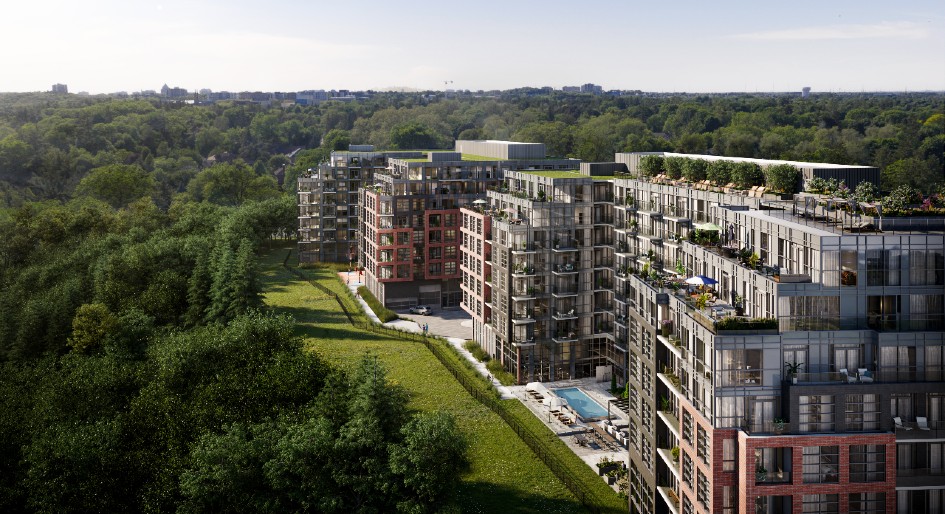
Building B, as its called, features walk-up townhomes paired with units that range from studios to three-bedroom suites, all offering variations of accessible layouts and each named after vintage cars. Kohn Architects designed the eight -storey residence with a co-working lounge, life-size chess, a squash, and a basketball court.

Highland Commons

Image by Norm Li

“Single-detached homes make up roughly 80 per cent of the housing surrounding Highland Commons, making it incredibly difficult for first-time homebuyers and downsizers to be a part of this fantastic neighbourhood,” says Jordan DeBrincat Mintzas, vice-president of Altree Developments.

Streams and trails run behind the residence and travel southward to Lake Ontario. Colonel Danforth Park, one Toronto’s largest parks, is adjacent to the site. The 500-metre-long Valley Land trail connects the University of Toronto’s Scarborough campus to Highland Commons and is fully accessible.

Highland Commons

Image by Norm Li.

A private shuttle bus will carry residents to the nearby GO station, into Toronto’s financial district and beyond.

“Our vision was to create a diverse offering of suite designs and amenities that supports an active urban lifestyle,” says Zev Mandelbaum, founder of Altree Developments. “The launch of Highland Commons was met with a great deal of support and positive feedback.”

Feature image by Norm Li

Unique canopy roof achieves ambitious goals

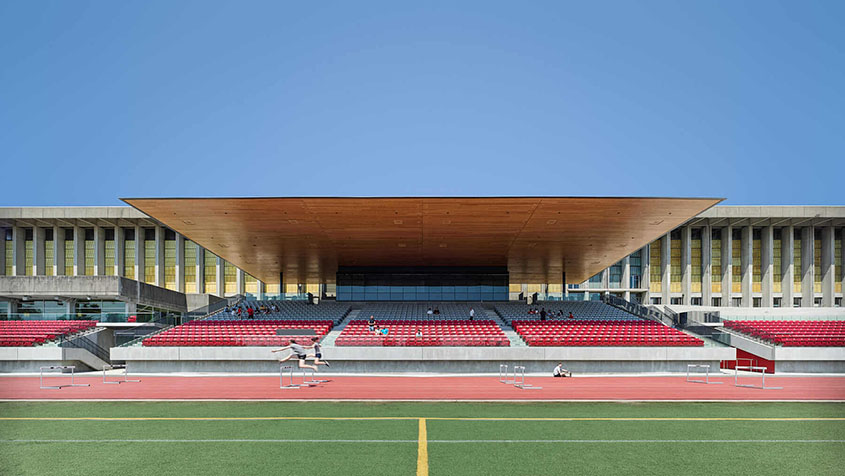
The new 1,800-seat stadium at Simon Fraser University is the first ever outdoor home for SFU Athletics and a new facility for community and student events. The crowning piece of the design is a striking CLT canopy which cantilevers 16 metres, providing weather protection and unobstructed views.

In order to achieve the vision of a seamless floating plane of CLT, innovation and careful structural detailing was required by the structural engineering team at Fast + Epp. Designed by Perkins Will and built by Chandos Construction, the stadium was completed in August 2021.

The current building site was a grassy mound situated between the modernist Lorne Davies Complex (LDC) building by renowned local architect, Arthur Erickson and the SFU running track. The structural solutions had to ensure the LDC building and running track remain operational throughout the construction schedule. Being on top of Burnaby Mountain, high seismic and snow demands also added complexity to the design.

To meet the loading demands and facilitate efficient construction the project material choice follows the principles of the “right material for the right place”. Concrete was chosen for the main primary framing as a durable material that can achieve the unusual stand geometry, efficiently achieve gravity and seismic demands. The mass of the concrete structure provides a counterweight to the overturning forces associated with the canopy cantilever, which combined with ground anchors, provide global stability to the cantilever system.

Custom fabricated shaped steel box girders were used to facilitate the long cantilever canopy, tapered to match the structure demand, and maximize material efficiency. High strength stainless steel rod, using a specific grade of rod commonly used on oil rigs, was used for the “tie back” to minimize spatial impact on the public concourse and provide high durability for this critical structural element. Prefabricated CLT panels facilitated a simple canopy surface construction.

The structural solution drew on local expertise trade including specialist steel and CLT fabricators based in British Columbia, contributing to the local economy. The prefabricated strategy resulted in fewer errors on site and a shorter overall construction time and minimise impact on site adjacent ‘live’ sites. The completed use of wood structure celebrates the sustainable credentials of the wood product as both a structure and a finish.

Fast + Epp earned a 2022 ACEC-BC Building Award of Excellence for the SFU Stadium project.


 Latreille Architectural Photography

How to prepare properties for tornado season

Some people might be surprised to learn that Canada is the world’s second most tornado-prone nation after the United States. Canada experiences 80 to 100 tornadoes every year during the tornado season of March through October.

When thunderstorms are brewing, if weather conditions are right, the storms can produce severe winds and even in some circumstances, tornadoes. Property managers are encouraged not to underestimate the potential and power of the elements when thunderstorm warnings are issued.

The deadly storm that devastated large parts of Southern Ontario this past Saturday did so with little warning. In its aftermath, 10 people are dead and the tornado-grade winds of the storm, called a ‘derecho,’ left behind massive damage and destruction to buildings, including condos.

Last August, Barrie, Ontario was hit by a tornado that left a five-kilometre-long path of destruction resulting in $75 million in damage. It reached wind speeds of up to 210 km per hour, displaced many people and families and wreaked havoc on over 150 homes. Fortunately, there were no fatalities, but 60 homes were deemed “unsafe to enter”.

While there’s little that can be done to protect a building from the direct hit of a tornado, certain building types can withstand high winds more than others, and there are also considerations for how new building structures can be designed to withstand intense windstorms.

Concrete and steel buildings, by their nature, are more resilient structurally to severe wind impacts. However, this does not mean they are impervious. Often these structures are clad in glass curtain walls which can be very susceptible to impact damage during a storm. When damage occurs, it also allows for water to enter the structure, as well as creates the hazard of falling glass in the surrounding area.

Conventional wood frame structures are not generally as structurally strong as concrete ones. Direct impacts from tornadoes or extreme straight-line winds can often result in substantial structural damage, including the displacement of roof structures and in some circumstances total structural failures (collapse).

Modern construction practices are now being adopted in some areas, including the requirement for hurricane straps on trusses and vertical reinforcements to be installed during the framing stage that can substantially increase the survivability of these structures. Unfortunately for legacy buildings, these modifications are not normally possible or practical due to the extensive redesign that would be required.

Owners and managers of legacy wood frame structures should always look to upgrade their building envelope (roofing, cladding, windows and doors) to make them more resilient to wind damage. During new construction, especially in areas that are prone to these wind events, additional structural reinforcement of these types of buildings, even in excess of local codes, is highly recommended.

Beyond building design and focusing on structural resilience, property managers should be proactive in prioritizing planning and response plans in the event of a severe weather event. Thunderstorm events and storms that contain high winds with the potential to develop into tornadoes develop very quickly and with little warning.

With any disaster, awareness of potential hazards and preparedness is key to mitigating and managing damage to properties and maintaining safety of residents. By having a comprehensive plan in place, property managers can get back on their feet as quickly as possible after an event takes place.

Here are tips property managers can include in their emergency preparation plans for their properties and their residents:

● Stay informed. When a severe thunderstorm, windstorm or tornado develops, there may not be a lot of time to prepare, but sometimes there is an early warning.

● Ensure health and safety of occupants through proper communication and protocols before, during and after an event.

● Secure loose outdoor objects. Any unsecured item, such as garbage bins, potted plants, bikes and toys, can become a deadly projectile in high winds. Move these indoors, or tie them down, to avoid injury to people or damage to the property.

● Install surge protectors. Windstorms and tornadoes often down trees which can cause power outages, followed by power surges when electricity is restored. Surge protectors help protect electronic devices from voltage spikes caused by power surges.

● Back up electronic devices. This step is critical for building management and residents. Critical data should be stored off-site in case physical computers or devices are damaged or inaccessible due to a tornado.

● Ensure there is adequate insurance coverage. Property managers should check their policies to make sure they’re covered for damage caused by wind or rain. This generally includes damage caused by flying debris or falling branches or trees, or damage when water enters through openings caused by high winds.

● Inspect buildings after a disaster. Tornadoes’ strong winds have the potential to hurl debris hundreds of metres, so it’s always best practice to inspect your building for damage. Otherwise, the next time it rains, you may have some substantial water damage.

● Test emergency plans. Testing emergency response plans can often reveal areas that need improvement. Annual testing can ensure that everyone knows what to do should the need arise.

● Establish a partnership with a full-service property restoration company. Having a program in place and knowing whom to call can provide property managers with peace of mind. It’s important to have a team you can count on if damage does occur to your property.

● While there is no way to guarantee complete protection from weather-related events, preparedness and awareness of risks will help managers ensure they can weather the storm no matter which direction the wind shifts.

Jim Mandeville is senior vice-president, Large Loss Canada for First Onsite Property Restoration.

This article appeared in the September 2021 issue of CondoBusiness magazine and since been updated to reflect recent wind events.

Zeidler Architecture wins Block 2 design competition

Zeidler Architecture, in association with David Chipperfield Architects (London, United Kingdom), was selected as the winning team in the Architectural Design Competition for the redevelopment of Block 2. Block 2 is the city block directly facing Parliament Hill in downtown Ottawa. It is bounded by Metcalfe, Wellington, O’Connor and Sparks streets.

The redesigned Block 2 will provide office space for the Senate and the House of Commons and will allow for the future consolidation of parliamentary accommodations, including space for the Library of Parliament. It will also include renovated retail space in the Sparks Street Mall.

The winning design concept, chosen by an independent jury, best responded to the complex and historical considerations of the area. Block 2 sits at the heart of Canada’s Parliamentary Precinct and brings together the past, present and future, mixing heritage-designated buildings with modern landscaped courtyards and a public square facing the Peace Tower. The design concept also demonstrates a high level of respect for and understanding of the significance of a future Indigenous Peoples’ Space, which will be located in the centre of Block 2.

The redevelopment of Block 2 will bring a new vitality to Canada’s Parliamentary Precinct. This work will transform a mix of functionally obsolete buildings into an innovative complex that will meet the needs of a 21st-century parliamentary democracy in a way that respects our past while also embracing our future. Public Services and Procurement Canada (PSPC) will now enter into negotiations with the Zeidler/Chipperfield team to establish a contract so that the design concept can be further refined in anticipation of construction beginning in 18 to 24 months.

Taking second place in the competition was NEUF Architects (Ottawa, Canada), in joint venture with Renzo Piano Building Workshop (Paris, France), and Watson MacEwen Teramura Architects (Ottawa, Canada), in joint venture with Behnisch Architekten (Boston, United States), was the third-place team.


Leduc interchange construction starts this summer

Construction of a new interchange at Queen Elizabeth II (QEII) Highway and 65 Avenue in Leduc is expected to begin this summer.

The $96 million interchange will be cost-shared by the Government of Alberta and the City of Leduc. The province anticipates 470 new construction jobs to be created.

“The QEII is the busiest stretch of highway in Alberta and a critical economic and trade corridor. The Edmonton International Airport is growing as a significant cargo hub. This project supports hundreds of jobs while providing carriers, commuters and consumers safer and more efficient access to the area,” said Rajan Sawhney, minister of transportation.

The project will deliver safer and more efficient connections between the City of Leduc, the Edmonton International Airport and area businesses. Completion is expected in 2025.

The QEII Highway and Leduc 65 Avenue interchange project includes:

    • a new overpass over the QEII Highway
    • new on-off ramps from the QEII Highway
    • improvements to some existing ramps
    • intersection improvements at 65 Avenue and 50 Street in Leduc
    • completion of Perimeter Road and 65 Avenue, west of the QEII Highway.

“Unlocking the full economic potential of our region is a top priority for the City of Leduc and our Edmonton Metropolitan Region board partners, and this critical infrastructure investment is a groundbreaking step forward. We are thrilled for the development to move ahead with the support and collaboration of the Province of Alberta and our valued regional partners,” said Bob Young, mayor, City of Leduc.

Richmond Minoru Park Renewal project underway

The Richmond Minoru Park is undergoing extensive revitalization of its lakes district.

Renewal of the lakes, located in the northern area of the park, is a result of a combination of factors including ageing and inefficient infrastructure. Extensive public consultation through the broader Minoru Park Vision Plan made it clear that lakes are a valued amenity. New designs were developed in keeping with the original form while integrating needed enhancements.

Work on the Minoru lakes will be done in two phases with initial work focusing on the main lake body and renewals to the lake liners, embankments, mechanical systems, irrigation, drainage, pathways, plaza spaces, plantings and furnishing.

The updated design features a new cascading waterfall, new plaza areas, site furnishings, paved pathways and boardwalks with lighting, planting focused on ecological benefits, and more. The design incorporates best management practices where possible related to sustainability and circular economy initiatives. The lakes will have a new water source from rainwater and stormwater.

Areas closed during construction include the existing lakes and plaza areas, pathways and trails north of the canal including the pedestrian bridges, and portions of the Bowling Green Road parking lot. Other amenities within the 26 hectare (65 acre) Minoru Park remain open including the Minoru oval track, sport fields, playground, and chapel gardens.

Once the work is complete, the Minoru lakes district will be similar in size and character as it is today. It will be a place of tranquility and respite, where visitors can quietly stroll or rest and connect with nature. The revitalization work will improve environmental and ecological benefits, the form and function of the lakes, and reduce ongoing maintenance requirements.

Completion is scheduled for spring 2023.

B.C.’s Residential Tenancy Branch to record hearings

B.C.’s Residential Tenancy Branch (RTB) announced it will begin recording all dispute-resolution hearings effective immediately in an effort to promote fairness and transparency.

“This change will help bring more fairness, transparency and justice for everyone involved in a tenancy dispute,” said Spencer Chandra Herbert, chair of the Rental Housing Task Force and MLA for Vancouver-West End. “The recording of dispute-resolution hearings fulfils an important recommendation of the Rental Housing Task Force. Renters and rental housing providers all agreed this change was important to improve accountability and confidence that justice has been served.”

The Residenital Tenancy Branch says that having an audio record of what happened during a dispute-resolution hearing will give all parties more confidence in the process and promote good conduct. The change was also called for by tenant advocates and the Office of the Ombudsperson, who collectively felt that not having these recordings made it difficult for parties to challenge a decision they believed was unfair.

Moving forward, all participants involved in any dispute resolution via the RTB may seek a copy of their hearing’s recording free of charge.

“The Tenant Resource & Advisory Centre has always hoped that this Rental Housing Task Force recommendation would be implemented,” said Andrew Sakamoto, executive director, Tenant Resource & Advisory Centre. “All dispute-resolution participants deserve a right to procedural fairness, and recording hearings will go a long way toward improving transparency, accountability and consistency at the Residential Tenancy Branch.”

The RTB’s dispute-resolution process is designed to provide an open, consistent, efficient and just opportunity for all parties to tell their story and present evidence to an independent decision-maker. Dispute-resolution hearings are conducted over the phone to ensure equitable access throughout the province.

Learn more by visiting: https://www2.gov.bc.ca/gov/content/housing-tenancy/residential-tenancies

Saskatchewan parks to remain dry this summer

Picnickers still won’t have a legal option to consume alcohol in Saskatchewan parks this summer since the provincial legislative assembly has adjourned until October before making a decision about changing the rules. However, a proposed amendment to Saskatchewan’s Alcohol and Gaming Regulation Act would give local governments, park authorities and Regina’s provincial capital commission flexibility to allow alcohol in the outdoor public places they oversee.

In introducing the enabling bill earlier this week, Jim Reiter, the Minister responsible for the Saskatchewan Liquor and Gaming Authority (SLGA) noted that a similar liberalization of the rules has occurred in Alberta and British Columbia, and that many people in Saskatchewan, including members of the opposition NDP, have endorsed the concept.

“I believe communities throughout this province know their citizens, know their public spaces and know their resources,” he said. “This knowledge places them in a good position to make decisions around alcohol consumption in public spaces.”

Under the proposed amendment, municipal or park authorities would have to pass a by-law or issue a resolution or order to establish the boundaries within which alcohol would be allowed and the hours when it could be consumed. Signage with this information would also have to be posted in the designated areas.

The provincial Minister responsible for the Parks Act would have authority to designate areas within provincial parks where alcohol would be allowed. Nevertheless, in cases where a provincial or regional park falls partly or completely within a municipality’s boundaries, the local council would have to give its approval.

NDP deputy leader Nicole Sarauer, who represents a Regina constituency, maintains the enabling bill was introduced too late in the legislative session — just four days before the scheduled recess — to make it a reality for the summer of 2022.

“Since this discussion began on this issue about a year ago, from both sides of the Assembly, we’ve heard some strong opinions both for and against,” she observed. “We have been reaching out to stakeholders, specifically municipal stakeholders. Those who have spoken so far have been pretty clear that they want to make sure that this legislative process is done thoughtfully and carefully.”