Articles Archive - Page 295 of 928 - REMINET
REMI

Park Property acquires London portfolio for $571 million

Park Property Management has purchased the iconic Cherryhill Village in London, Ontario, for a record-setting $571 million. The 12-tower, 2113-unit property and shopping mall was sold by Minto, KingSett Capital and a private partner in what’s being reported as the largest reported single multi-residential asset transaction in Canada.

According to Margaret Herd, senior vice-president of Park Property Management, the company had previously sought to purchase the same portfolio back in 2011, when it was acquired by Minto Group for $215 million. With the addition of the Cherryhill Village  apartments, Park Property Management now owns 10,141 rental units in Canada and manages 11,275.

About Cherryhill Village

Built between 1968 and 1975, the towers sit on a 40-acre property, offering the new owner the opportunity for significant expansion. The mixed-use community is located in West London approximately 15 minutes from Western University.

The suites are described as spacious and pet-friendly with in-building laundry, security controlled access, private balconies, in and outdoor parking, a fitness centre, BBQ area, in and outdoor pool, sauna and tennis courts. The property is close to numerous amenities and schools, with several healthcare facilities nearby making it an attractive option for seniors.

For more on this development, visit: Cherryhill Village | Park Property Management

BOMA BC celebrates 2022 award winners

B.C.’s commercial real estate leaders were awarded for their outstanding achievements during the BOMA 2022 Awards Gala at the Fairmont Waterfront Hotel in Vancouver.

There was a record number of award entries and nominations. The awards highlight B.C.’s thriving CRE community and shine a well-deserved light on the companies and individuals exceeding the expectations in industry service, performance and sustainability.

Along with established local and nationally recognized awards like The Outstanding Building of the Year Award (TOBY), this year’s program included the new Leap Froward Award, which acknowledges buildings that have undertaken significant energy / GHG reduction strategies within the past three years.

2022 BOMA BC Awards Winners:

The Building Of The Year (TOBY): 250,000 – 499,999 sq.ft.
Arthur Erickson Place, 1075 West Georgia Street managed by Colliers (Photo above)

TOBY: 100,000 – 249,999 sq.ft.
1188 West Georgia Street managed by GWL Realty Advisors Inc.

TOBY: Corporate
Facility Pacific Blue Cross managed by GWL Realty Advisors Inc.

TOBY: Historical
1090 Homer Street managed by GWL Realty Advisors Inc.

TOBY: Renovated Building
Robson Court, 840 Howe Street managed by GWL Realty Advisors Inc.

Earth Award
RCMP ‘E’ Division Headquarters managed by Bouygues Energies & Services

Leap Forward Award
HSBC Building, 885 West Georgia Street managed by Cadillac Fairview Corporation Ltd.

Pinnacle: Innovation Award
Nuvoclean Surface Restoration

Pinnacle: Customer Service Award
First District Mechanical

Pinnacle: Above and Beyond Award
Ashley Penny | Colliers

Health & Safety Award
GWL Realty Advisors Inc.

Building Operations Team of the Year Award
GWL Realty Advisors Inc. | Suburban Team

Member of the Year Award
Elizabeth Han, Warrington PCI Management

83-acre Assembly Park officially launches in Vaughan

Assembly Park, an 83-acre, multi-building project is moving forward in the downtown core of Vaughan, with an official launch to mark the expected 12-year build-out.

Developed by QuadReal and Menkes, the mixed-use community will bring housing for more than 6,500 residents, new schools, retail, parkland and public spaces that host farmer’s markets, culinary festivals and arts and culture events.

“The creation of Assembly Park will transform the Vaughan we know today, making it not just a suburb of the GTA, but rather a destination in and of itself,” Alan Menkes, president of Menkes High Rise, said at the ribbon-cutting event.

Giannone Petricone Associates and IBI Group will design a pedestrian-first hub of entertainment, shopping and dining options.

Among several residential projects are Mobilio, Festival and Grand Festival, which have already sold. The third phase of Festival (Bravo) is next to launch.

As the project shapes up, temporary community spaces are in place. The Studios is filled with an art and content studio, gallery, and event space. For starters, a 7,000-square-foot mural, FUTURA, by Toronto artist Andre Kan, was unveiled in late 2021. The Gardens is 1.47 acres of green gathering space for communal dining, group yoga, herb, flower and vegetable gardens, gardening classes, picnics and private moments.

“Inspired by Vaughan’s diversity, Assembly Park will bring together people and families of all backgrounds and serve as a focal point for arts and culture within the Vaughan Metropolitan Centre,” said QuadReal Executive Vice -resident Toby Wu.

Photo: Executives from Cortellucci Vaughan Hospital join Mayor Maurizio Bevilacqua as they are presented with a cheque from QuadReal Property Group and Menkes Developments Ltd.

Skylines hold gravitational energy promise

The ever-ascending heights of its high-rise building stock potentially positions Toronto to produce and store gravitational energy. The concept is still theoretical, but researchers with the International Institute for Applied Systems Analysis (IIASA) suggest elevators could present an option for generating a small but steady supply of sustainable power to augment battery storage and intermittent renewable sources.

In a recently published paper in the academic journal, Energy, they sketch out the broad elements of what they’ve dubbed lift energy storage technology (LEST). Gravitational energy is most commonly a source for centralized hydroelectric generation, where above-dam reservoirs are the storage receptacle. LEST is decentralized and on a much smaller scale, but embodies the same basic principle in which energy is stored within a mass as it is lifted upward and then released from the mass as it falls downward.

As envisioned, it would rely on: a regenerative braking system in elevators; up and down transport of containers holding a dense storage material such as sand or stone; storage areas at the top and bottom of the building; robots to transport the storage containers; and a software-based operating system. The greater the distance between the top and bottom storage areas, the greater and more cost-effective the system capacity.

IIASA researchers project the global storage potential at 30 to 300 gigawatt-hours and tap Toronto as one of a handful of North American cities, along with New York, Chicago, Los Angeles, Philadelphia and Seattle, where it would be most feasible. They estimate the cost of installed capacity energy storage at USD $128 per kilowatt-hour (kWh) where the distance between the top and bottom storage areas is 50 metres. That drops to USD $62/kWh if the distance stretches to 100 metres and USD $21/kWh at 300 metres.

Among qualifications, the upper area would have to bear the load of the weighty storage containers. “It is rather unlikely that buildings in the past have been designed with the idea that they might serve as energy storage facilities in the future,” the paper acknowledges.

However, the researchers suggest that robots would have the capability to manoeuvre the containers to counterbalance swaying in high winds or earthquakes. As for the potential disruption of robots moving the containers in and out of elevators, IIASA researchers frame it as an opportunity for building owners to derive value from an existing structural component that frequently isn’t in use.

“Policymakers and power system regulators need to adopt strategies to incentivize end users, in this case, high-rise buildings, to share their distributed storage resources, such as LEST, with the central grid,” urges Behnam Zakeri, a coauthor of the study and a researcher with the IIASA’s Integrated Assessment and Climate Change Research Group. “Environmentally friendly and flexible storage technologies like LEST are set to become more and more valuable to society in a future where a large share of its electricity comes from renewables.”

The future of water in buildings is smart

In a much-repeated but important axiom, it has long been said that water is the new fire. In the past, risks like fire and theft were more well-known and understood as the more costly insurance risks to Canadian properties, but that is no longer so.

Water creates levels of risk throughout all stages of a building’s life cycle and is a major cause of loss during and after construction. For example, condo floods are one of the most expensive losses for insurers. Everything from the main pipe coming into the building to all the common areas, like pools and fitness centres. Claims due to pipe bursts are through the roof, so to speak. Water is the second most frequent insurance claim and can cost hundreds if not thousands in unnecessary water bills for facilities.

Why it matters

Water gives us life, but it can also create a perilous state for facility managers and people who live and work in buildings. It disrupts families, displaces people, and destroys property. It accounts for 70 per cent of all insurance claims by dollar value, with $7 billion spent annually in North America. Billions of litres of water are spilled annually due to leaks. And while much flooding is nature-based (overland) plenty is mechanical – things such as a slow leak, a burst water pipe, or a failure with municipal infrastructure.

Across facilities in manufacturing, retail, restaurant and grocery, education, and multi-residential, many issues are shared, while some are industry-specific. In certain industries, such as retail and grocery, cost/loss is magnified by the damage to goods as well as significant interruption to business operations during restoration. In hospital and healthcare settings, water damage is detrimental to the welfare of patients.

Are certain types of buildings or industries at greater risk?

All types of buildings are at risk for water damage, but it is predominantly high-rise buildings. These buildings face considerable risk, particularly during the final stages of construction. A pipe may burst early Saturday morning, leaking upwards of 50 to 100 litres per minute of water. When the construction crew shows up on Monday morning, there can be millions in damages, setting back the project months – but with the proper system in place, the water can be immediately shut off, averting much of the loss.

The average claim cost of a single-family home is around $15,000; for a commercial building, it’s $130,000. The more floors and equipment with water running through pipes increases the risk of water damage, and even things like an upstairs neighbour filling the bathtub and forgetting about it can cause damage several floors below.

Examples of major disruptions in high-rise and commercial spaces

One of our clients recently shared that they faced a significant loss in the recent past which involved a burst pipe on the 11th floor of a nearly completed building. The event damaged floors and ceilings and set the project back months, resulting in a multi-million-dollar loss. Another client described a large flood that breached the elevator shafts and the parking lot, costing upward of $500,000 in repairs.

Water detection and leak protection is becoming more of a priority across all industries, as insurance carriers have realized the advantages of encouraging intelligent shutoff systems. The majority of water within a building comes from internal issues (such as appliance failures and burst/leaking pipes), and proactive systems help to considerably reduce the risk of water escape.

What do facility managers need to know about leak detection?

IoT leak protection systems can be installed during construction and in new or retrofit buildings. The technology is easy to install and is supported by insurance companies through in-suite discounts to residents and incentives to buildings.

These systems make facility management easier, providing insights and oversight to a massive threat, all of which requires little maintenance and effort on the manager’s part.

Technology for predictive maintenance and lower operating costs

IoT-enabled technology provides both data and remote capability to facility managers, lowering overall operating costs. During COVID-19 isolations, for example, our system allowed for remote monitoring of buildings that were largely unoccupied due to work-from-home protocols, ensuring that the building was still safe from water damage issues. Further, data analysis provided from IoT technology allows for predictive maintenance and overall better control over appliances and equipment.

Another major challenge in building design is building input materials such as concrete and rebar, which pose connectivity issues for devices that rely on Wi-Fi or cellular technology. Long Range Wide Area Network (LoRaWAN) is a low radio frequency that ensures connectivity in these designs.

Finally, beyond cost and safety, sustainability is a major focus for facility managers and building owners. It is imperative to outfit modern buildings with ESG-focused tools to reduce a building’s water footprint, including those that reduce wastewater and conserve energy used to heat and move the water.

All these challenges require a new and different manner of service for owners and facility managers – something that is based on IoT and has the supporting tech to process all the inputs and keep the vast amount of data organized and useable.

Travis Allan is Chief Executive Officer & President of Eddy Solutions, a North American company specializing in water monitoring and leak detection.


Workers now expect more from employers — a human factors approach can help

People have become more conscious of their well-being during the pandemic and are now looking to see if the organizations they work for align with their personal health needs.

As a result of this inward reflection, there is a shift across many industries, with people wanting more from old-school employers.

In their article, The Great Resignation: A Global Risk?, Noakes and Landmann refer to this epiphany as the great realignment. Employees are trying to find more purpose in their work and desire the culture of their organizations to support their physical, intellectual, and social needs.

This great realignment, where employees are switching companies or even roles within the same company, is an opportunity for employers to better understand their organization to ensure that the culture and vision “fits” with these new employee expectations.

Fit is an important consideration as it relates to employee well-being, work satisfaction, and ultimately job and organizational performance. To enhance how workplaces can fit employees, a great opportunity is to look at ergonomics and human factors approaches to the workplace.

The International Ergonomics Association defines ergonomics as the “scientific discipline concerned with the understanding of interactions among humans and other elements of a system, and the profession that applies theory, principles, data, and methods to design in order to optimize human well-being and overall system performance.” This ergonomics/human factors approach strives to create that fit between the work environment and the employee to improve their overall health, well-being, and ultimately their ability to thrive within a workplace.

While organizations may think of ergonomics as adjustable chairs and standing workstations, it goes much further to focus on employees as assets, technology as tools to assist people to perform their best, respecting individual differences within the workplace, and responsibilities for all stakeholders to improve quality of life.

Hundreds of scientific studies have found that organizations, which embrace ergonomics and human factors, positively impact employee job satisfaction, performance, and overall health. By focusing on opportunities to improve job satisfaction and reducing the opportunities for injury there can be improved organizational retention and improved organizational culture.
Three areas that ergonomics and human factors can help to build workplace engagement and culture are: workplace design, support for hybrid workers, and opportunities for growth.

Workplace Design

A new employee can judge a workplace culture within seconds of seeing the workplace design. By taking an ergonomic and human factors approach and working with employees, there are opportunities to design work spaces geared towards different styles of work.
This includes designing open collaborative spaces with seating that encourages discussion, private environments that are either closed offices or areas with acoustic privacy, and hoteling spaces for those employees who work occasionally in the office and just need a space to sit with their laptop as well as spaces that support virtual technology to allow seamless interfaces with those employees who work remotely. Supporting the physical design should be a lighting scheme to reduce glare. Computer usage and reading can be opportunities to artistically create an attractive work environment.

Hybrid and Remote Workers

The pandemic has proven that work can happen anywhere and an ergonomic and human factors approach can support policies and programs for those working remotely. For hybrid or remote workers, it is important to focus on comfort, productivity, and health to allow them to perform their best regardless of work location. This can include developing policies for equipment provided to remote workers and overall safety requirements of the home office, along with supports for reducing risk factors for both physical and psychological injury. Research is beginning to recognize that individuals can struggle from disconnecting from work, while working remotely.

Opportunities for Growth

A foundation of ergonomics and human factors is to continually look at how the work environment and tools can fit the worker for improved performance. Through this approach and by listening and supporting employees, there is opportunity to create new learnings to improve workplace culture and ultimately employee retention. It is about creating a work environment, regardless of physical location, where people want to work to perform their best.

Employees who are engaged and satisfied with their jobs have higher levels of productivity, improved quality of work and performance. Overall, this creates an enhanced workplace culture. An ergonomic and human factors approach can be a foundation to create satisfaction in a healthy workplace.

Aaron Miller is an ergonomics consultant based in Kelowna, B.C. As a Canadian Certified Professional Ergonomist (CCPE), and president of the Canadian College for the Certification of Professional Ergonomists, Aaron specializes in leading design and corporate initiatives to improve organizational efficiency, effectiveness, and opportunities for change. Aaron can reached at [email protected]

Energy upgrade projects receive FCM funds

The Federation of Canadian Municipalities (FCM) has released $3.2 million in Community Buildings Retrofit funding for 16 energy upgrade projects. The largest share — $2 million — will go toward a targeted 44 per cent reduction in energy use at the aging Arthur J. Leblanc arena in Dieppe, New Brunswick. The remainder will underwrite preparatory studies and one smaller capital project in municipalities in Alberta, British Columbia, Nova Scotia and Saskatchewan.

The Community Buildings Retrofit initiative, announced in the spring of 2021, promises $167 million over six years to support energy monitoring, recommissioning/retro-commissioning and capital projects that result in energy savings and reductions in greenhouse gas (GHG) emissions. Most Canadian municipalities, excluding seven large cities covered in a separate initiative, are eligible for different streams of grants ranging from a maximum of $25,000 to implement energy monitoring to a maximum of $1.25 million for major retrofits. The latter can be combined with low-interest loans, allowing municipalities to obtain up to $5 million from the fund.

“Pursuing energy efficiency upgrades in community buildings across the country will help us achieve our climate targets while also saving municipalities money on energy bills,” maintains Jonathan Wilkinson, Canada’s Minister of Natural Resources.

Work at the Arthur J. Leblanc arena is in the fund’s GHG pathway stream for projects that take a step toward ultimately achieving net-zero emissions. New energy efficiency measures will result in a projected 307-tonne reduction in GHG emissions, while project proponents aim to demonstrate innovative design approaches and building materials that could be replicated elsewhere.

“Dieppe’s vision is to be a welcoming, dynamic and ecologically responsible city, and this funding will take us one step closer to achieving the environmental part of that vision,” says Yvon Lapierre, the mayor or Dieppe. “The Arthur-.J.-LeBlanc Centre has been an integral part of the active life of our community for many years, and we are proud to be able to make a number of energy efficient improvements to it.”

RJC Engineers welcomes sustainability leader

Wendy Macdonald, a respected sustainability consultant, has joined RJC Engineers. With 23 years of experience, she is a pioneer of sustainable design. A professional engineer with a background in energy conservation, sustainability and mechanical design, Macdonald channels her expertise and passion for sustainable design into the delivery of sustainable projects and service in this discipline.

“The addition of Wendy to RJC furthers our ability to provide informed, holistic advice for better performing buildings. Wendy is a champion of sustainability, an educator, and an experienced consultant who understands and advocates for the future of green building,” says managing principal Terry Bergen. “We’re thrilled for Wendy to share her insight with clients, partners, and colleagues across Canada.”

Macdonald sits on the Canada Green Building Council’s (CaGBC’s) Energy & Engineering Technical Advisory Group and the CaGBC Zero Carbon Building Standard Steering Committee. She chaired the Technical Advisory Group Energy Modelling Task Force that advised the development of the LEED Canada 2009 Supplementary Energy Modelling Guidelines. In 2017 she received a Canada Green Building Council Volunteer Leadership – Technical award for her contributions.

She translates technical concepts into plain language for peers, colleagues and industry partners. She is passionate about better design, and helping others to understand, develop, clarify and realize their sustainability goals. As a sustainability consultant, she has acted as the LEED consultant and guided the sustainability strategy for a wide variety of project types.

“RJC, being long-time heavy hitters in the worlds of structural and building envelope, deeply respected in the industry, and already backed by a wonderful team of sustainable professionals, are in such an amazing position to affect awesome change in the areas of carbon and energy. I’m excited to be a part of it and help,” said Macdonald, who will be based in the Victoria office.

B.C. investing $2.4B for transit improvements

B.C. is contributing more than $2.4 billion through TransLink to advance key transit and infrastructure priorities, including the Surrey Langley Skytrain and electrification of the bus fleet, as part of its ongoing commitment to fund 40 per cent of the Mayors’ Council 10-Year Vision.

“We’re making investments to support a better future for people throughout Metro Vancouver with more affordable and convenient travel options, cleaner air and less climate pollution,” said George Heyman, minister of environment and climate change strategy and minister responsible for TransLink. “By supporting TransLink to help provide public transit options that connect us to our communities, workplaces, friends and families, we’re building more vibrant communities with easier access to jobs, housing, recreation and services people depend on.”

TransLink’s investment plan includes actions to: maintain and expand transit service; support faster, more reliable bus service through bus-priority infrastructure; transition bus fleets from diesel to zero-emission vehicles; and increase active transportation investments. The plan will help TransLink replace more than one third of its diesel bus fleet with approximately 500 battery-electric buses and buses that run on renewable natural gas. It will also provide opportunities to build more complete, liveable communities with affordable housing and increased density around transit lines.

“It has been a challenging few years, and we thank the provincial government for its commitment to ensure transit continues to serve residents throughout Metro Vancouver,” said Kevin Quinn, CEO of TransLink. “This investment plan and the province’s support will ensure that TransLink is on solid ground while advancing priority projects for the region.”

In April 2022, an additional $176 million in provincial and federal funding was announced for TransLink for 2023 to 2025.

April 2022 average rent similar to 2019

The average rent in April 2022 for all Canadian properties listed on Rentals.ca was $1,821 per month, representing an annual increase of 9 per cent from a year ago and down just 1.5 per cent from pre-pandemic highs in 2019 and 2020.

The most expensive units are single-family homes, with landlords asking $2,776 per month on average compared to $2,265 for townhouses, $2,235 for condo apartments, $1,651 for rental apartments, and $1,590 for basement units.

At the national level, rental apartments, which make up the majority of the listings on Rentals.ca, experienced a month-over-month increase of 0.3 per cent from $1,646 in March to $1,651 in April.

At the provincial level, British Columbia had the highest rental rates for April, with landlords seeking $2,347 per month on average for all property types (median: $2,200), representing a monthly increase of 2.7 per cent.

Ontario had the second highest rental rate at $2,093 per month (median: $2,000), while Newfoundland had the lowest at $950 per month (median: $875).

Saskatchewan had one of the highest monthly changes in average rental rates, increasing by 2.3 per cent to $1,051 per month. Alberta also had a relatively high month-over-month increase in average rent, increasing by 2.1% to $1,289 per month.

Rent per square foot

Condo apartments have more or less stayed the same month over month from February to April, remaining between $3.11 psf and $3.13 psf. However, the April 2022 rent level has increased by 8.7 per cent from the April 2021 average of $2.88 psf. The market had bottomed out in February of 2021 at $2.82 psf.

Rental apartments have also stayed relatively steady, declining slightly from $2.24 psf in March 2022 down to $2.22 psf in April 2022. This also represents an annual increase of 3 per cent from the April 2021 average of $2.15 psf.

For the complete report, click here: Rentals.ca May 2022 Rent Report

Skyline Living honoured with two CFAA awards

Skyline Living announced it has received two prestigious Canadian Federation of Apartment Associations (CFAA) National Rental Housing Awards for Rental Development of the Year and Rental Housing Provider of the Year.

The CFAA is the national voice of the apartment housing industry in Canada and engages in advocacy on behalf of the industry as a whole. Held each year in May, the awards commemorate housing providers that go above and beyond in serving their tenants and the communities in which they operate.

“At Skyline Living, we pride ourselves on examining our practices and working towards continuous improvement,” said BJ Santavy, Vice President, Skyline Living. “This past year, we have focused on our sustainability goals and are proud to see those efforts recognized in the rental housing industry,”

This year’s awards were held in-person at the Toronto Hyatt Regency after two years of virtual presentations due to COVID-19.

“There were many amazing entries in each category, and we congratulate all of our peers on their tireless work to advance our industry and set a high standard every day,” Santavy said. ” It’s an honour and a privilege to be recognized amongst our industry’s best.”

For Rental Development of the Year, the winning property was Carrington View Apartments located in West Kelowna, British Columbia. Described as a beautiful three-building, 186-unit luxury rental development with spectacular views of Okanagan Lake, Carrington View was designed to be net-zero energy ready, and features an array of solar panels that are expected to produce enough power to operate all common areas of the property.

CFAA’s Rental Housing Provider of the Year Award recognizes a rental housing provider that has demonstrated exceptional leadership through an action, practice, or a dedicated initiative. Skyline Living is proud to be recognized for its deep focus on Environmental, Social, Governance (ESG). In early 2021, Skyline Group of Companies, the parent company of Skyline Living, formalized its ESG initiatives with an official and measurable Sustainability Plan it has since put into effect. 
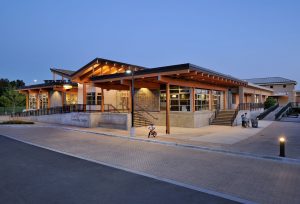
“These changes are key toward making a positive difference in our world in every way we can,” noted Santavy.  “The data acquired through this formal process has helped to effectively determine which efforts would have the greatest impact. Many other rental providers have begun implementing their own ESG plans, and we hope to continue to have a positive influence in this regard. This process enshrines Skyline Living’s concept of a housing provider as not only a business but a contributor toward its community.”

For more information, visit Home | Skyline Living


Toronto rent bank strategy up for review

The Toronto rent bank supplied funds to help 1,744 financially stressed households avoid eviction during an 11-month pilot loan forgiveness period that came to an end March 31, 2022. City staff are now recommending a permanent transition from interest-free loans to a grants-based model, while continuing to collect some of the outstanding loans previously disbursed through the program.

A report prepared for City Council estimates the ongoing annual cost of this approach at roughly $4.8 to $6 million, of which the largest share would come from the recently launched provincial homelessness prevention program. Projected adequate funding for the next fiscal year has already been allocated in Toronto’s 2022 city budget.

“If Rent Bank issues the same number of grants in 2022 as it did during the pilot time period (May 1, 2021 to Mar 31, 2022), at the average payable amount of $2,747, it would cost the program $4.79 million. If Rent Bank sustains its Q1 2022 service levels throughout the 2022 year, it is projected to cost the program $5.94 million,” the report to City Council states.

The pilot was part of a package of enhanced relief measures introduced over the course of the COVID-19 pandemic. As well, the loan (or grant) ceiling was raised from $3,500 to a maximum of $4,000 to cover up to three months of rent arrears and the threshold for income eligibility was increased by $15,000.

The rent bank additionally supplies funds to cover rent deposits, calculated as the following average amounts per unit size:

  • $1,500: studio
  • $1,700: 1-bedroom
  • $1,900: 2-bedroom
  • $2,100: 3-bedroom or larger.

Although previous loan recipients were offered a 12-month repayment hiatus in sync with the pilot program, 2,935 continued to render payments — collectively contributing about $457,000, which was, in turn, granted to new program applicants. The pilot period saw a 52 per cent increase in households receiving support — up from 1,150 in 2020 — which the report frames as an ultimate saving on costs in the city’s shelter system. Nearly 4,100 applications were submitted during the 11 months.

“The grants pilot was also more efficient to administer as clients did not need to submit banking information (which was required in the loans program), thus making the grants program more accessible for clients who may not have been eligible previously as a loans program,” the report states.

If City Council opts to switch over to a grants-based model, the report recommends selective forgiveness on existing loans depending on the ability to repay. There is currently an unpaid balance of about $12.5 million since the rent bank was launched in 1998.

“Repayments that are collected will supplement the Rent Bank Fund beyond the approved base funded budget and allow more grants to be provided,” the report notes.

The report will go to Toronto’s planning and housing committee for consideration on May 31.

Innovation Awards to honour advances in clean at ISSA Show North America 2022

ISSA, the worldwide cleaning association, will recognize some of the greatest advances in the cleaning industry across North America at the ISSA Show North America 2022 in October.

The Innovation Awards Program celebrates companies in the commercial, institutional, and residential cleaning community that are addressing challenges with new products and services. Organizations are encouraged to inquire now to participate in the awards program and secure exhibit space.

“Our members are innovating constantly to enable greater cleaning efficiency, prevent the spread of infection, and enhance cleaning results,” said ISSA Executive Director John Barrett. “I look forward to seeing this year’s candidates who are defining the future of clean.”

This year, the program includes the first Sustainability Award to recognize an industry leader in environmental innovation.

The program will also grant four Industry Choice Awards, five Innovation of the Year Award Honorees, and one overall Innovation of the Year Award winner.

Products and services from distributors, wholesalers, manufacturer representatives, building service contractors, residential cleaners, and in-house service providers are eligible for consideration in the awards program.

Award winners will be selected based on online votes and an independent panel of industry experts who will evaluate nominees for sustainability, originality, practicality, and more.

Winners will be announced during ISSA Show North America 2022 taking place October 10-13 at McCormick Place in Chicago. For more information about the awards, visit https://www.issashow.com/en/exhibit/exhibitor-resources/innovation-awards-program.html.

To see a list of last year’s winners, visit https://www.issashow.com/en/exhibit/exhibitor-resources/innovation-awards-program.html.

Image: McCormick Place

Development land opens near Edmonton airport

Adjustments to the buffer zone around Edmonton International Airport will open up more development land in the suburban city of Leduc. The Alberta government has filed a regulation to trim the airport vicinity protection area (AVPA) by 30 per cent, citing aircraft technology advancements that make previous assumptions about noise exposures outdated.

The new rules respond to requests from both Leduc city council and the Edmonton International Airport to relax constraints on commercial and industrial development. Residential development will also be allowed in some once forbidden areas, but, as of May 2023, the city of Leduc will have to file a caveat on the title of lands approved for subdivision and residential development to formally notify prospective homebuyers of the flight path above.

“We are pleased that the amended regulation creates an environment where new opportunities for residential, commercial and industrial development in Leduc are possible,” says Leduc’s mayor, Bob Young. “This will have significant, positive long-term impacts on the city of Leduc and our ability to grow for decades to come.”

About 80 per cent of the municipality falls within the previous 40-year-old noise exposure forecast (NEF) map, which marked out gradients of expected aircraft noise across the vicinity. Tom Ruth, president and chief executive officer of Edmonton International Airport, likewise commends the updated NEF values, maintaining they’re further evidence in favour of 24-7 operations.

“Enshrining 24-7 airport operations in legislation provides certainty for international businesses to more likely choose our region for launching companies, as well as creating enhanced export opportunities for existing companies in our region,” he submits.

The 6 Principles of Sustainable Building Envelope Design

Canada’s apartment sector has come a long way in terms of sustainable design and construction. With large commercial buildings now accounting for 13 per cent of Canada’s Greenhouse Gas (GHG) emissions, developers and owners are seeking ways to lower their carbon footprint and build healthy, resilient, cost-effective structures that decrease the negative impacts on the environment.

In fact, sustainability objectives are largely driving today’s commercial design and construction projects—and given the building envelope is an essential component that serves to protect the interior of a structure while facilitating climate control (keeping the occupants both safe and comfy), its importance cannot be understated.


Broadly speaking, achieving a sustainable building envelope means avoiding resource depletion of raw materials, energy, and water, to prevent environmental degradation caused by operation demands of buildings and their infrastructure throughout their life cycle. It’s a complicated pursuit with long-lasting benefits that impact all aspects of an apartment building.

Here, RJC Engineers shares six principles of sustainable building envelope design that are driving the industry forward.

  1. Designing for resilience – “a tough skin”

Just like we say that someone who can withstand whatever life throws at them has a “tough skin”, a similar thing might be said of a building envelope. A resilient building envelope is designed to factor in the changing climate conditions on our planet, as well as the current local conditions of the area like moisture, humidity, wind, and temperature fluctuations. These climate patterns and projections influence the materials of construction and the long-term energy performance strategies for the building, ensuring that interior comfort is protected while energy demands of heating and cooling systems are minimized.

2. Optimizing energy use – “the right jacket”

Wearing the right jacket will keep us warm in the winter and block out damaging sunrays in the summer. Similarly, the right building envelope will protect the interior space from the exterior climate, resulting in less consumption of resources. A sustainable envelope relies on efficiency and passive design measures for its operation as much as possible and includes features like spectrally selective glazing, thermal insulation, solar shading devices, building integrated photovoltaics (BIPV) and passive ventilation to meet or exceed applicable energy performance standards. The building commissioning process includes the building envelope to determine that performance requirements related to energy efficiency, such as air tightness, are met.

3. Use of sustainable materials – “healthy food”

If eating healthy food keeps our bodies healthy, then building from sustainable materials keeps our buildings and planet healthy. Sustainable building envelopes should be constructed using materials that optimize service life and minimize life-cycle environmental impacts. Considerations include length of service life, global warming potential of materials, resource depletion, human toxicity, as well as embodied energy and GHGs due to materials acquisition, manufacturing, packaging, transportation, installation, use and reuse/recycling and disposal. The goal is to eliminate materials that have a short service life, are pollutants or toxic, and consider the use of building envelope assemblies that can be deconstructed and re-used at the end of the building service life.

4. Enhancing indoor environmental quality – “sunshine and clean air”

The indoor environmental quality of a building has a significant impact on occupant health, comfort, and productivity. Increased airtightness and better thermally broken systems help control energy losses but must be met with corresponding improvements in ventilation and indoor quality. Daylighting is an important feature of indoor environments, and energy efficiency can be maintained by using high performance glazing systems that control energy flow while maintaining high levels of visible light transmission. Even when inside a building, or maybe especially when inside a building, we still want to see some sunshine and breathe clean air.

5. Optimizing operational and maintenance practices – “regular workouts”

Kind of like how it takes regular exercise to improve our fitness levels, incorporating operations and maintenance considerations into the design of a building envelope contribute to operational efficiency over its lifetime. Building occupants and operators should be appropriately trained in a comprehensive preventative maintenance program to keep all building systems associated with the building envelope functioning as designed.

6. Retrofitting existing buildings – “getting a physical, new wardrobe and a make-over”

Things are not as they used to be. Building practices have changed, and so has our climate. Canada needs to retrofit many of its existing buildings to achieve our GHG emissions commitments. Building envelope retrofit strategies have evolved to the point where buildings can be retrofitted while fully occupied and brought up to the performance levels associated with Passive House standard. Retrofit strategies are an important part of the construction industry’s future, since nearly all inefficient buildings in Canada have already been built. It is usually more sustainable to renovate or retrofit an existing building or facility than to tear one down and construct an entirely new one. Improvements to building envelope systems reduce concerns related to air infiltration and leakage, moisture diffusion, surface condensation, and rainwater entry—issues that can negatively impact the building’s energy performance and indoor environmental quality.

For more information on sustainable design, reserve fund studies, structural engineering, structural restoration, building envelope design etc. check out RJC Engineers at www.rjc.ca


.


The hiring question: experience or training?

When a cleaning or janitorial service provider is hiring new people, there are generally two broad options: hiring someone with experience or training someone on the job.

The question of which is the better approach is not a simple one and depends on your particular company or facility’s circumstances and goals.

Janitorial Manager writes for CleanLink that, like any major business decision, there is a balance in determining which one is better for you as an employer.

Pros of hiring someone with experience 

For a start, you can expect less time for the new hires to get up to speed. This means more productivity and less stress for other employees who don’t have to worry about covering for them. Any training you do can most likely be quick — just enough so they understand your approach to commercial cleaning and customer service.

Another pro is that new hires with experience may also bring fresh ideas or skills to your team and often come with a wealth of knowledge around equipment maintenance and repair. It can also be a great way to expand your service as new hires may have certifications or additional skills like carpet cleaning and hardwood floor cleaning that your current and previous staff did not.

Cons of hiring someone with experience 

With experience often comes cost and it’s important to weigh up the effect on your bottom line. If everyone on your team is certified in carpet care, you might not need another person with that skill. There is a time and a place to pay for experience and skills, but choose carefully.

Additionally, employees with experience may be stubborn and opposed to learning new tasks and procedures, following your in-house best practices, or providing the level of customer service expected by your clients.

Pros of hiring someone without experience 

On the flipside, when you hire someone without experience, you are starting fresh with someone you can train to do the job to your standards. From customer service to how you use supplies to the best way to handle difficult stains, you can train them to do things the way you want them done, advises Janitorial Manager.

Plus, a new hire may give you the chance to get your more experienced employees to help out with the training, thus providing them with the chance to learn management skills.

Cons of hiring someone without experience 

However, the key drawback of choosing to hire someone without experience is the cost, time, and resources required to train them in your company’s work, procedures, and best practices across the board. Training takes time and attention away from the day job, and means the rest of your team may need to temporarily expand their workload until your new hire is up to speed

The bottom line

Ultimately, the bottom line is that regardless of whether a new hire has experience or not, they should strengthen your company and add something to the team. Make sure that whoever you hire, they are a good fit for your company culture and bring a positive attitude to the team.

Source: Janitorial Manager via CleanLink

Nicole Bryant joins B.C. northern association as CEO

Nicole Bryant has been appointed to the position of CEO of the Northern Regional Construction Association (NRCA).  She takes over from Scott Bone, who announced his retirement effective June 1, 2022. The NRCA board said he has agreed to work with Bryant throughout the month of June to facilitate a smooth leadership transition.

Bryant brings a diverse background of experience to the association. Throughout her career, she has developed a comprehensive understanding of the construction industry from business development and sales to project management and coordination.

Through her work in business development, she has maintained a relationship with the NRCA, bringing services and education to the membership base. She looks forward to looking at ways the association can enhance the member value proposition and engage members from all areas of the region.

Education has always been an important part of Bryant’s career development and she is currently completing her undergraduate studies in commerce, with a major in marketing. After completing her bachelor’s degree in 2023, it is her intention to go on to complete her MBA.

Born and raised in Prince George, her family is a part of the very fabric that is Northern BC. She is proud to call this area home and is pleased to be working with organizations of all sizes in the region.

The association said she is looking forward to working with the board of directors and team to bring NRCA into the next chapter.

Bone leaves the role of CEO after seven years at the helm and since that time, he has played a critical role in the restructuring of the organization to ensure its ability to serve the diverse needs of its membership in an evolving construction environment.